
The First Trek Comics
Gold Key & Whitman (1967–1979)
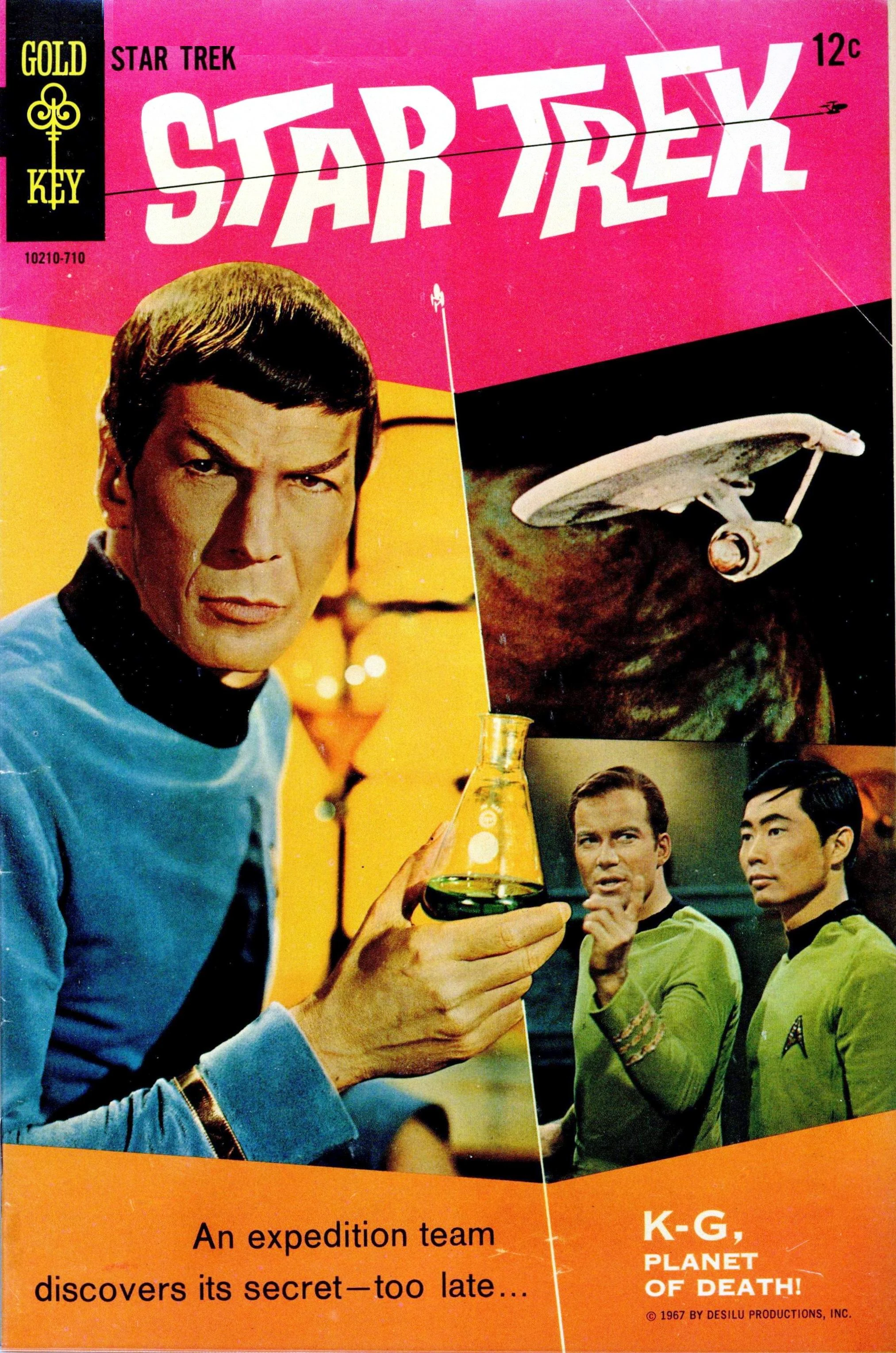
The very first Star Trek comic appeared in July 1967, and almost nothing about it looked like the show. The writers at Gold Key had no access to scripts, reference materials, or production documents. What they had was a rough awareness that Star Trek involved a spaceship called the Enterprise, a captain called Kirk, a pointed-eared alien called Spock, and some kind of galactic organisation. From there, they largely invented everything else.
The Enterprise fires energy blasts from its nacelles. Spock displays emotions that Roddenberry would have crossed out before the ink dried. Uniform colours are wrong, technology behaves according to no known logic, and in one of the more memorable issues, the ship deploys a physical anchor in space. These are not mistakes made with awareness of the source material. They are the work of artists and writers constructing a version of Trek from the outside in.
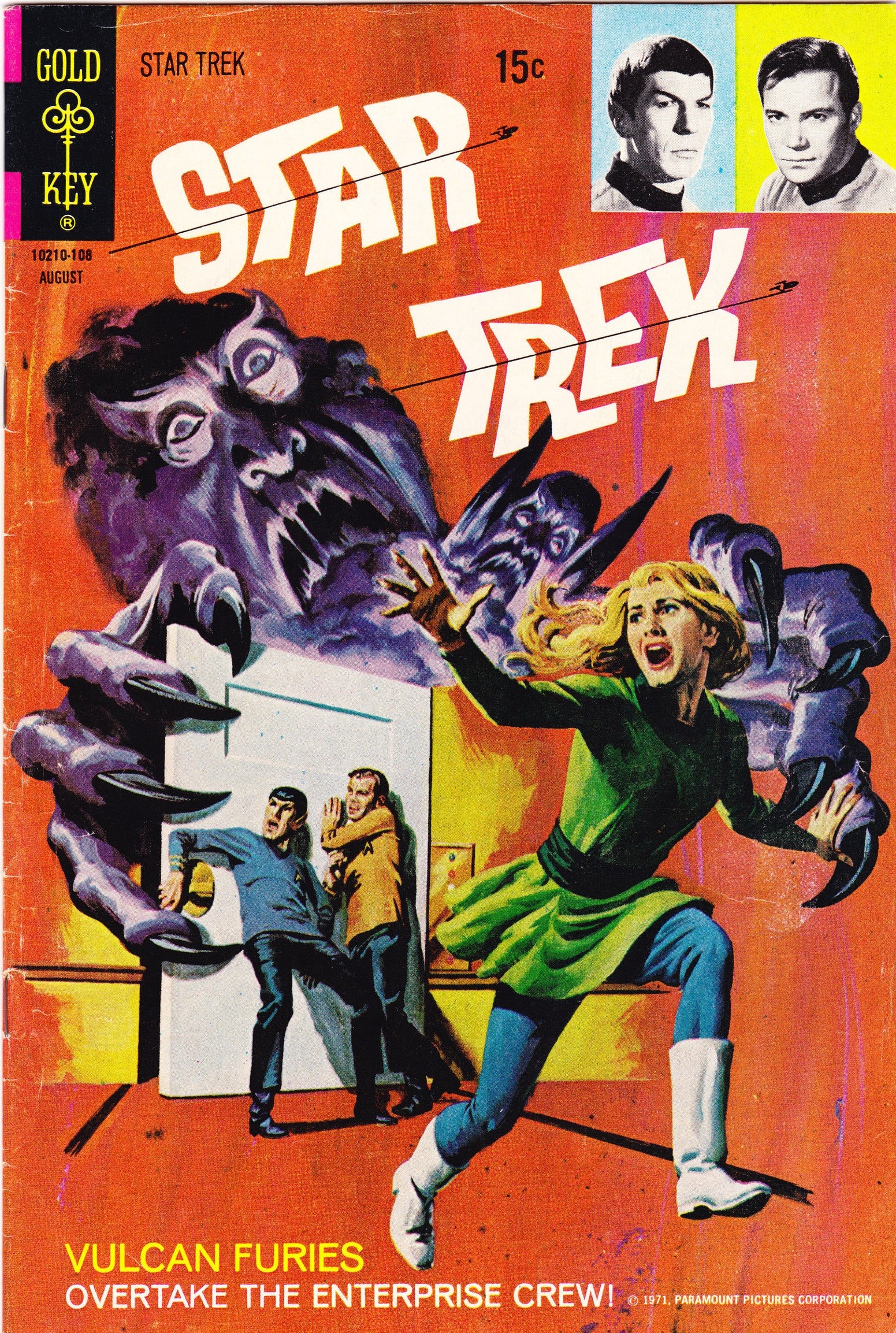
None of which is a reason to dismiss what Gold Key produced. It is a reason the series exists in its own category entirely. This is a parallel Trek — running in print while the television series was still defining itself onscreen, shaped by people working primarily from imagination. The result is pulpy, strange, frequently visually inventive, and unlike anything else the franchise has produced in any medium. By the mid-1970s the series had settled into a more reliable rhythm as conventions and repeats made the show more accessible. The final issues under the Whitman imprint are the most technically competent.
All five Archives volumes are out of print but findable through secondary market sellers. Issues #21–61 have no collected edition and require back issues. The Eaglemoss Graphic Novel Collection reprinted selected issues with new introductions before the line ended.
Gold Key Archives Vol. 1 gives you the era immediately — the strangeness is there from page one. If you find yourself charmed rather than frustrated, work through the volumes in order. If you’d rather find the series when it’s more coherent, start around Vol. 3.
You want to understand where Trek’s print history begins and you’re willing to meet it on its own terms. Mid-century American comics aesthetics, a parallel Trek that went places the show never did, and the specific pleasure of a source filtered through an incomplete telephone game.
Review coming.