Harry Mudd: Can You Improve a Man Who Doesn’t Want to Change?
At the end of “The Escape Artist”, Harry Mudd has finally found the perfect product: Harry Mudd.
The real Harry has been using android duplicates of himself to swindle bounty hunters. They think they’ve captured one of the galaxy’s more persistent criminals. In reality, they’ve paid for a copy while Mudd slips away with the money. It’s a neat little joke, but it also feels like the natural destination for a man who has spent his entire life manufacturing versions of himself for other people.
Harry the merchant. Harry the victim. Harry the lover. Harry the wronged husband. Harry the innocent businessman who can’t understand why the authorities keep taking such an unreasonable interest in him. Eventually, even Harry Mudd becomes something Harry Mudd can sell.
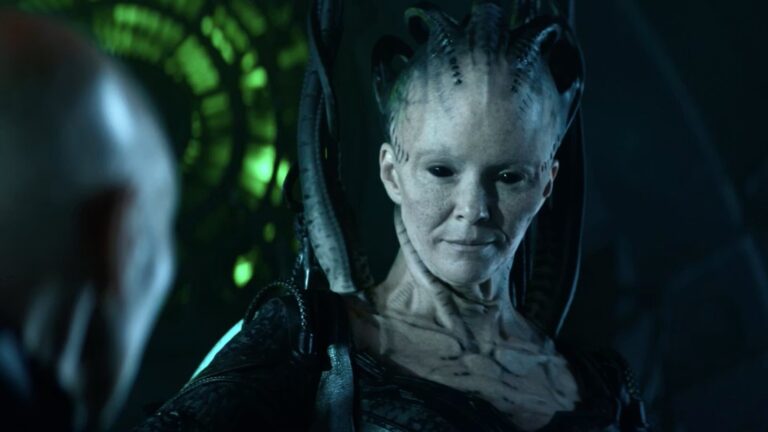
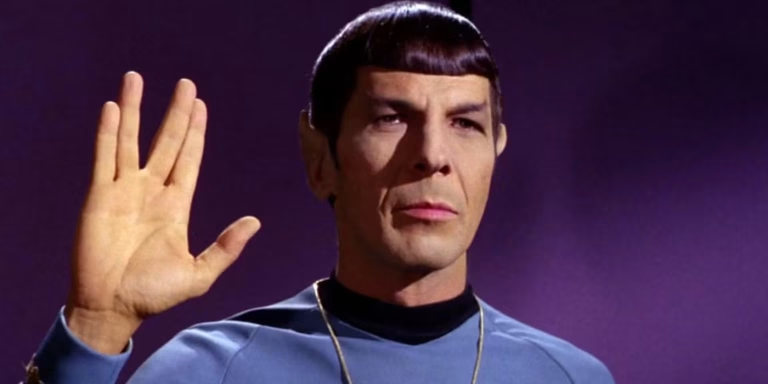
That’s why he’s more interesting than the recurring comic rogue he can sometimes appear to be. Star Trek is full of people trying to become better versions of themselves. Spock spends a lifetime reconciling the different parts of who he is. Data searches for humanity. Seven of Nine has to build an identity after the Borg.
Harry changes too, in the sense that he learns constantly. He just never improves, and that gap between learning and improving is the whole character.
Everything has a price
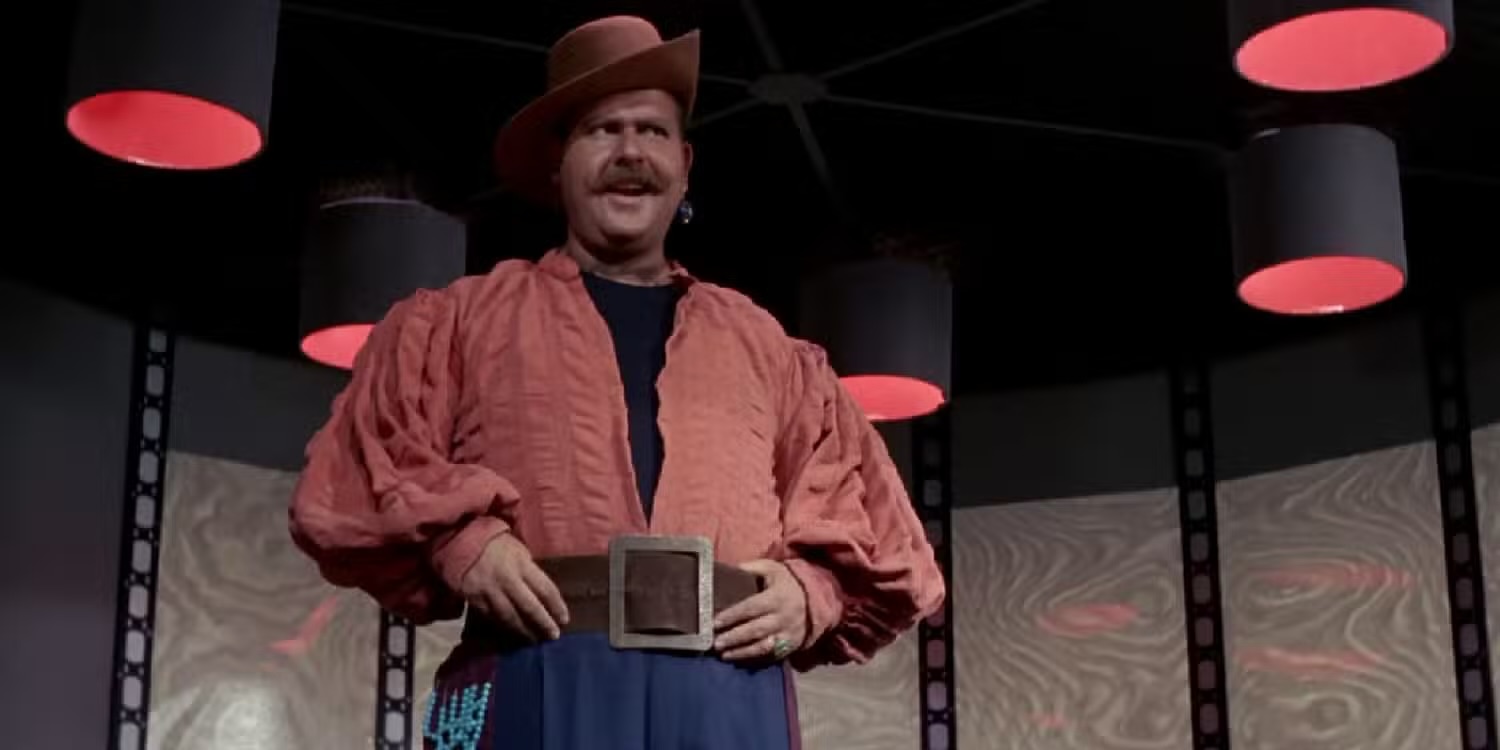
Almost everything important about Mudd is already there in “Mudd’s Women”. He arrives aboard the Enterprise pretending to be Leo Francis Walsh. His record already includes smuggling, transporting stolen goods, buying a spacecraft with counterfeit currency, and psychiatric treatment that has apparently done little to redirect his talents.
His latest business involves Eve, Ruth, and Magda, three women he’s transporting to prospective husbands on a frontier settlement. The episode repeatedly describes them as his cargo, and Eve makes the uncomfortable point that Harry is used to buying and selling people.
The comedy around Mudd can make the situation feel lighter than it is. He’s arranging women as part of a commercial exchange, secretly using the illegal Venus drug to alter their appearance, and trying to turn the Enterprise’s need for lithium crystals into bargaining power.
What interests me most is that Harry doesn’t really create anybody’s desire. He spots it.
The miners want wives. The women want another life. Kirk desperately needs the crystals. Harry looks at those competing needs and sees a market.
That tells us more about him than simply calling him greedy. Greed suggests somebody who wants to own things. Harry seems far more interested in the moment of acquisition. The pitch, the manoeuvre, and the satisfaction of getting something he wasn’t supposed to have all seem to matter as much as whatever he gets at the end.
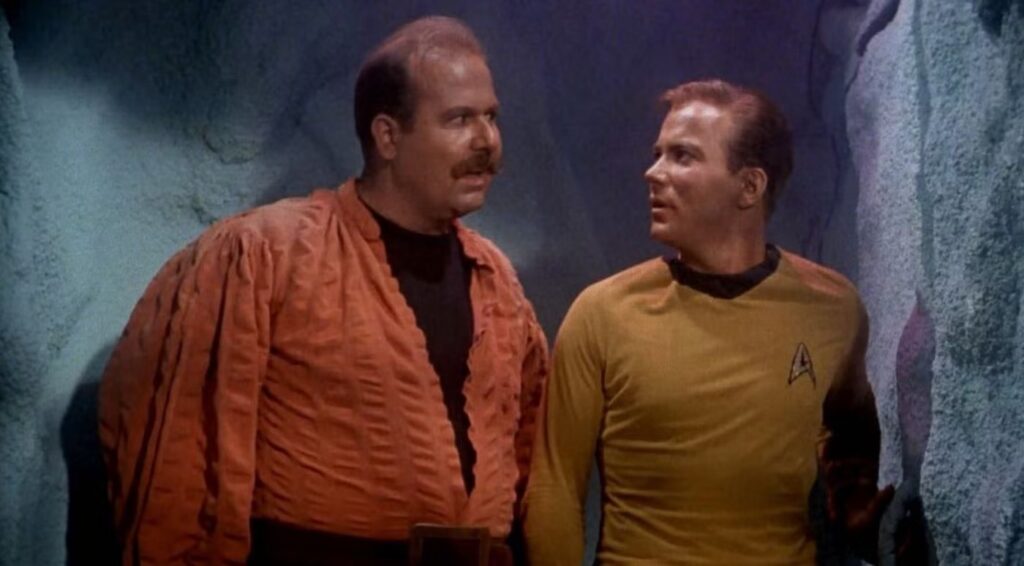
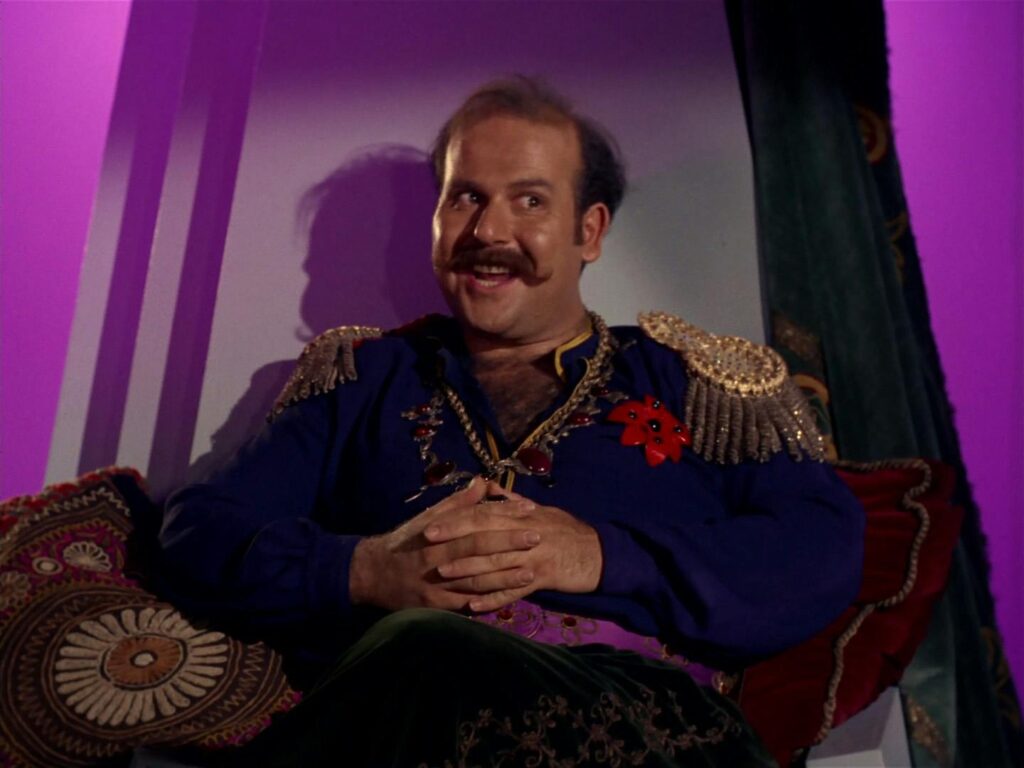
Roger C. Carmel makes that work because his Mudd is always performing. Stephen Kandel conceived the character as a comic foil to Kirk, and Carmel plays him with the volume turned comfortably above everyone else in the room. He flatters, protests, boasts, pleads, and performs wounded dignity with magnificent commitment.
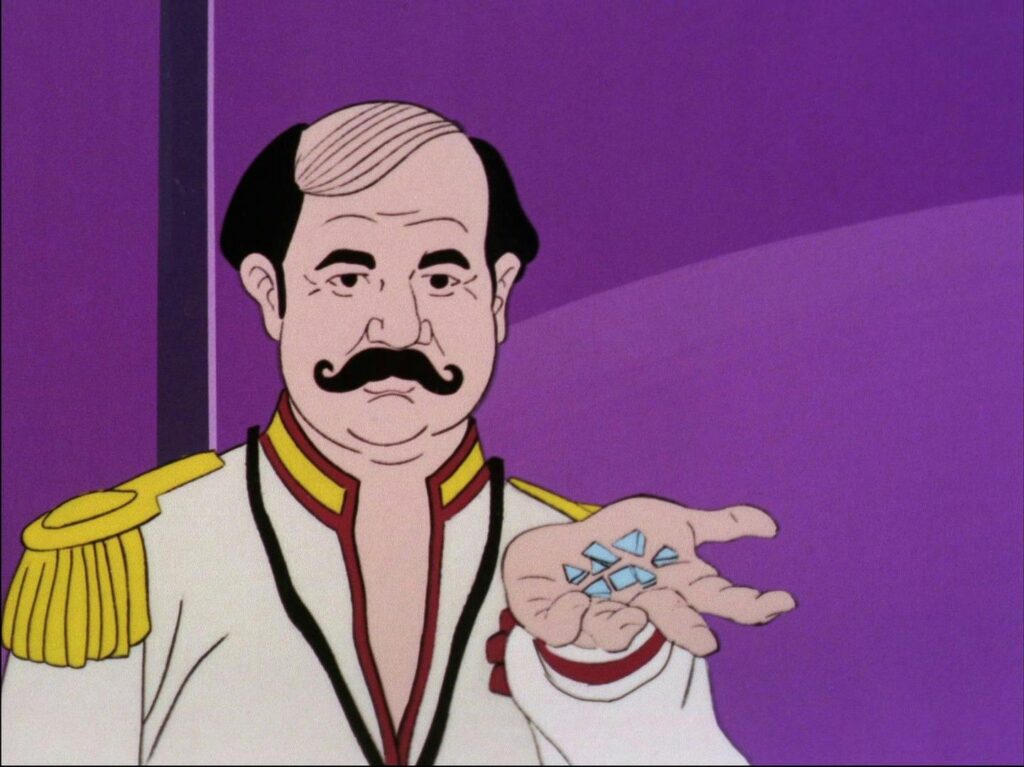
Harry is selling Harry long before anyone pays him for an android copy.
There is even a nice parallel with the Venus drug. It changes the presentation while leaving the person underneath untouched, which is much the same thing Mudd has been doing to himself for years.
Paradise, with conditions
“I, Mudd” gives Harry something close to everything he claims to want.
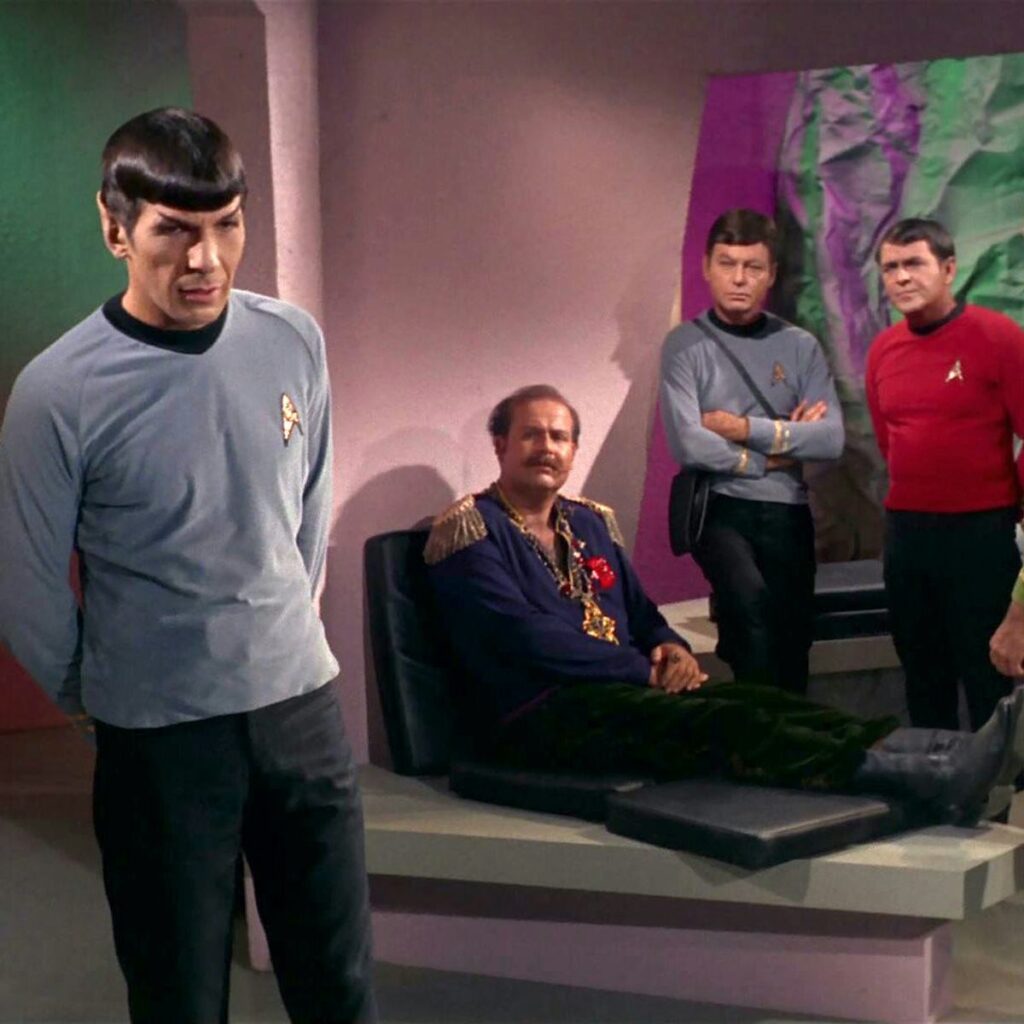
After escaping custody and returning to fraud, he ends up on a planet populated by more than 207,000 androids. They make him their leader, give him comfort, status, companionship, and almost anything he asks for. The only thing they refuse to give him is permission to leave, and Harry hates it.
For somebody apparently driven by material gain, that tells us quite a lot.
Abundance isn’t enough. Harry needs movement, risk, and another deal waiting round the corner.
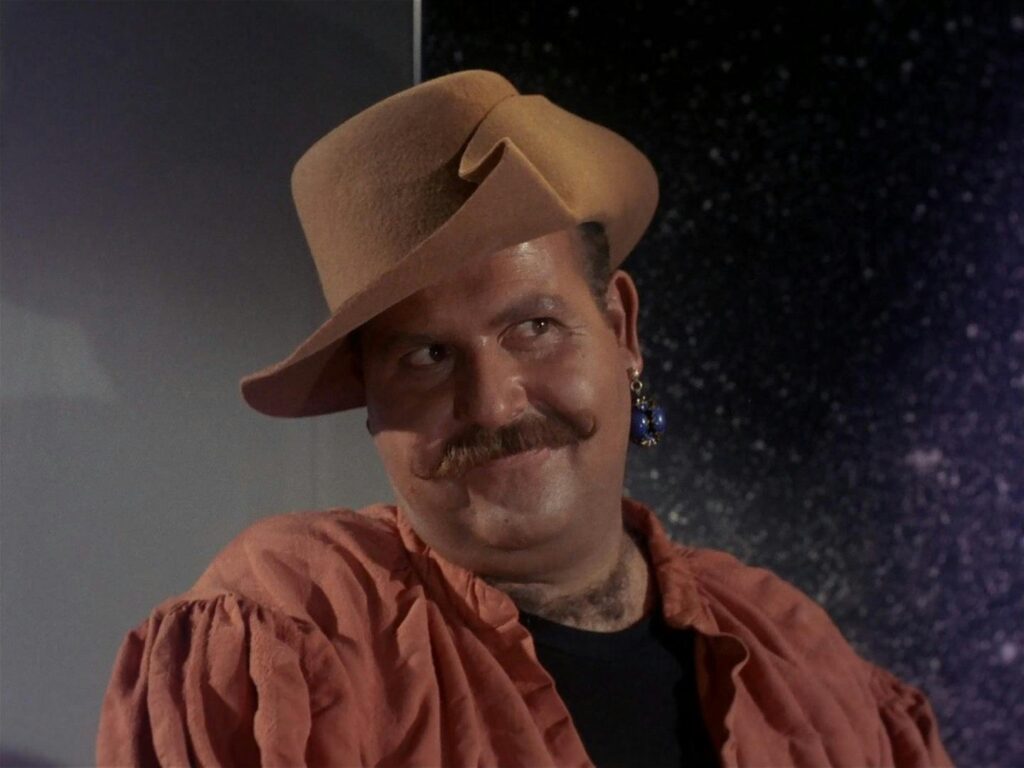
When Norman hijacks the Enterprise and brings Kirk and his crew to the planet, Harry immediately starts manoeuvring again. His plan is to leave the crew behind and take their ship. When the androids decide instead that humanity would be safer under their control, Mudd switches sides and helps Kirk defeat them.
It would be easy to see cooperation there and call it a flicker of growth, but Harry is simply doing what he has always done. He adapts. He is very good at working with other people when working with other people is suddenly the best option for Harry.
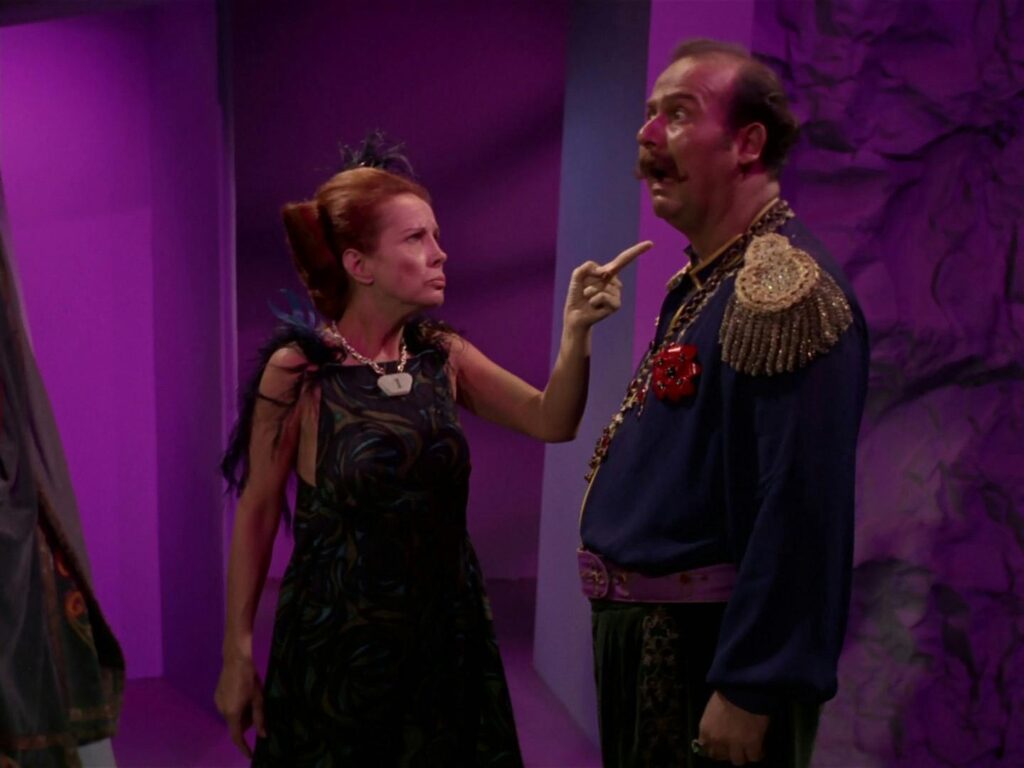
The episode also gives us Stella, or at least Harry’s version of her. He has an android replica of his wife that complains about him in exactly the way he remembers. The difference is that Harry can order this Stella to shut down.
It’s a broad 1960s joke, but underneath it sits something revealing. Harry hasn’t imagined a different wife or a happier marriage. He’s recreated the conflict and changed who controls when it ends.
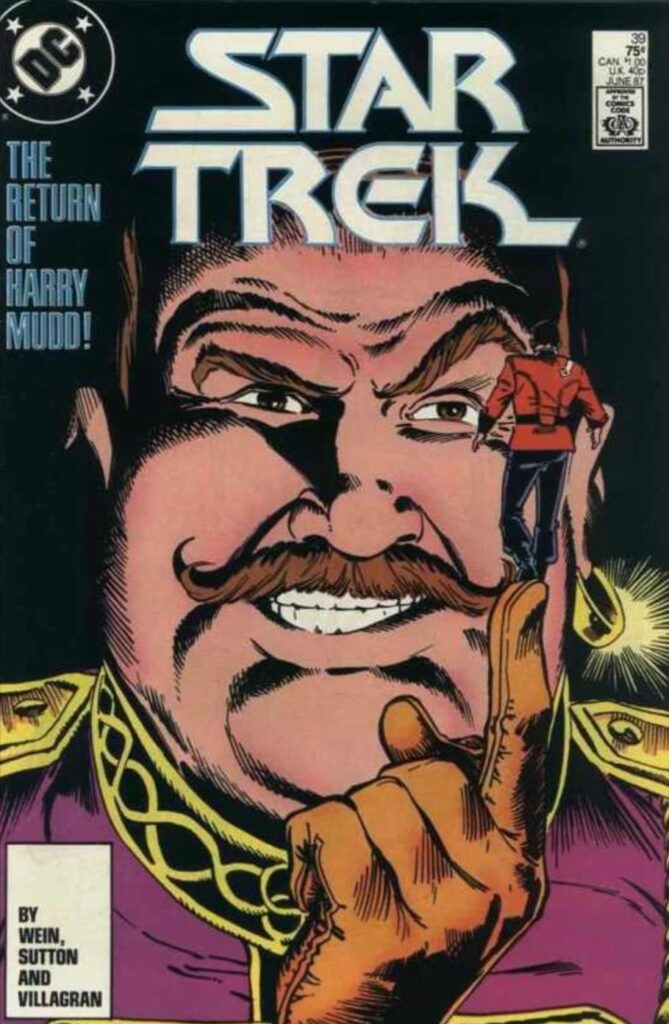
David Gerrold, who carried out an uncredited rewrite of Stephen Kandel’s script, later recalled expanding the Stella material and adding the massed female android gag. Kirk’s eventual punishment takes that idea to its logical extreme. Harry is left under the supervision of 500 Stella replicas, and this time none of them has an off switch he controls.
Surely that should teach a man something.
Instead, Harry learns how to escape.
Rehabilitation failed
By “Mudd’s Passion”, he’s back at work. Another escape, another product, and another collection of people whose wants can be turned against them.
This time Harry is selling love crystals. He doesn’t even realise at first that they genuinely work. What he understands perfectly well is that people will pay for the possibility that they might.
Again, he finds the want before he finds the product.
He exploits Christine Chapel’s feelings for Spock, steals her phaser and identification, escapes custody, and takes her with him. By the end, he’s remanded to the authorities and, once again, marked for rehabilitation.
There’s something wonderfully hopeless about Starfleet repeatedly applying the idea of rehabilitation to Harry Mudd.
It’s not that Harry can’t learn. He’s been proving the opposite for years. His schemes change, his salesmanship adapts, and his instinct for finding a weakness gets sharper. What never seems to occur to him is that the lesson might be about Harry.
When the joke draws blood
That’s where Discovery makes the character more difficult.
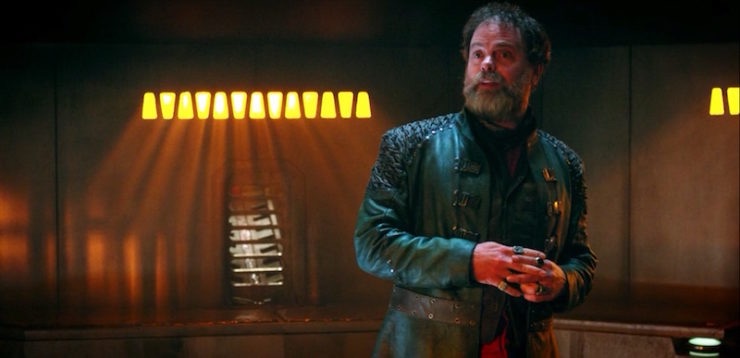
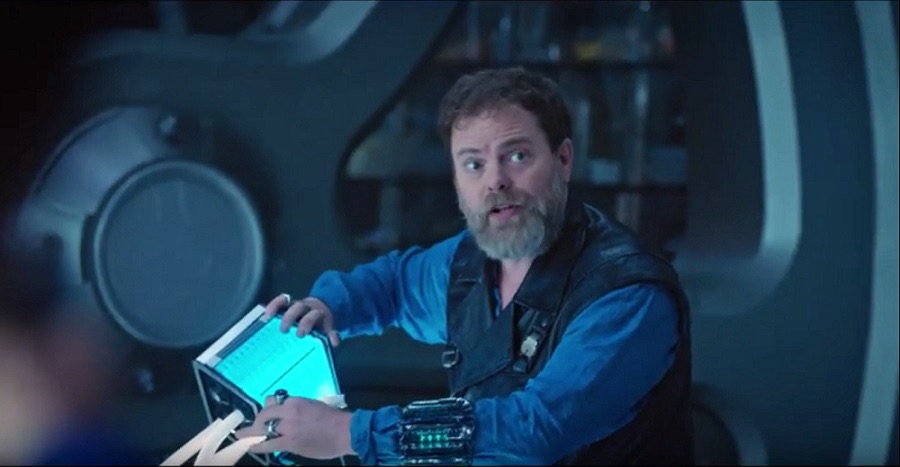
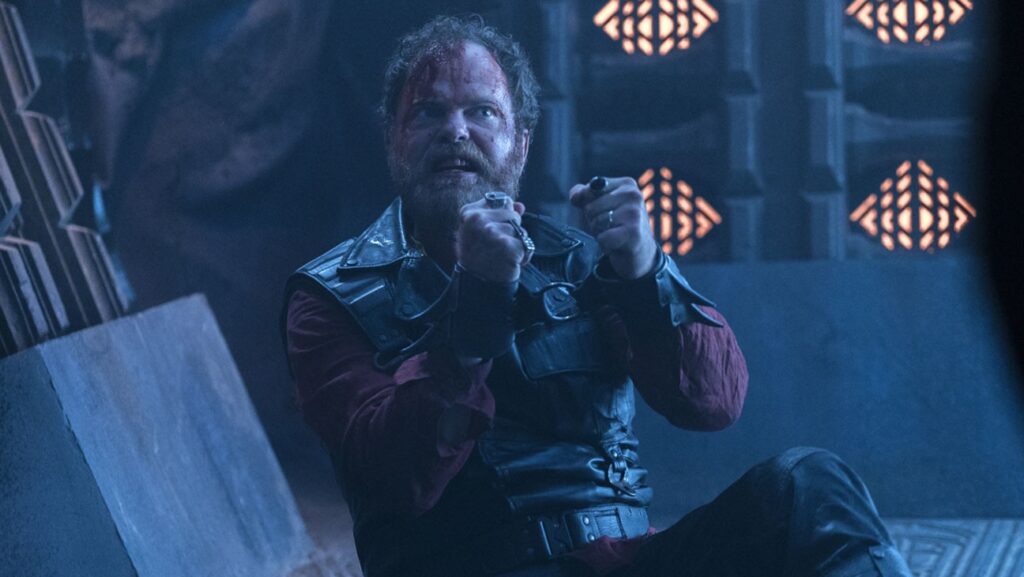
Rainn Wilson doesn’t discard Roger C. Carmel’s Mudd. He’s spoken about deliberately carrying forward Carmel’s comedy, charm, verbosity, mercenary streak, and darker edge, and the ornate costume helps too. Wilson has described his Mudd as partly pirate and slightly operatic, which feels about right for a man who could probably turn being arrested into an entrance.
But Discovery removes some of the cushioning around him.
In “Choose Your Pain”, Mudd is imprisoned by the Klingons alongside Lorca and Tyler. His resentment towards Starfleet isn’t entirely ridiculous. He’s not Starfleet, he’s caught in a war being fought by much larger powers, and Lorca really does leave him behind.
Harry has a point.
The trouble is what he does with it.
He survives captivity by informing on his fellow prisoners and diverting punishment towards them when he can. Even when Mudd has a legitimate grievance, he can’t resist making himself the only person in the story who really matters.
That gets much darker in “Magic to Make the Sanest Man Go Mad”.
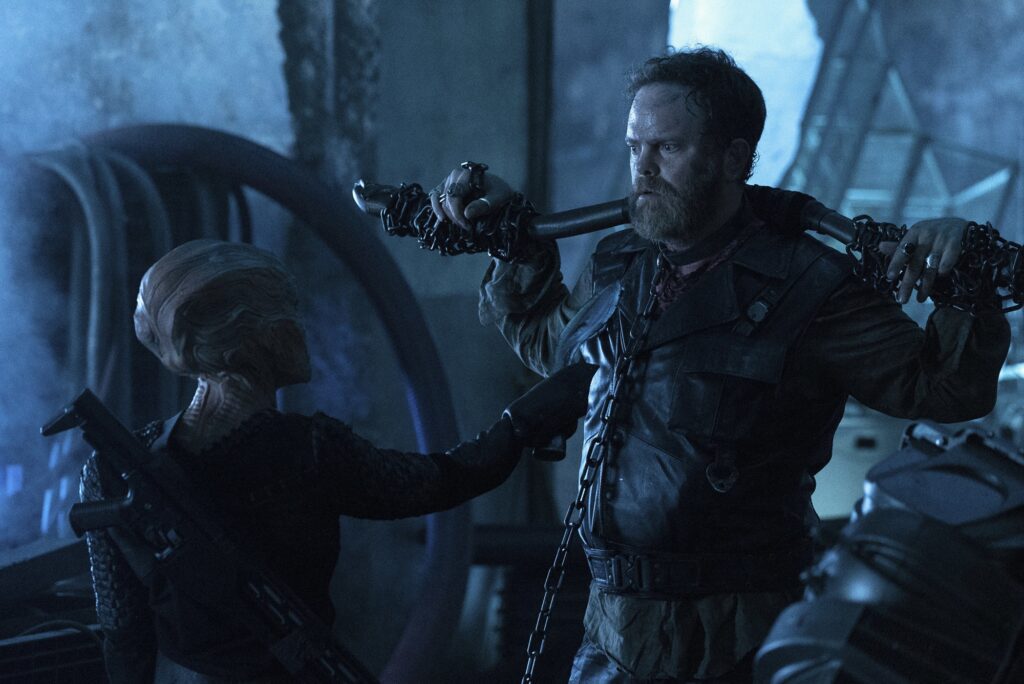
Using a time crystal, Mudd traps Discovery in a repeating loop. Each reset gives him another opportunity to understand the ship, its systems, and its crew. He learns where people will be. He learns how they respond. He learns what matters to them and how to take control.
It’s Harry’s defining trait turned into science fiction.
Every failure makes him better at the next attempt.
All that accumulated knowledge makes him more efficient, more dangerous, and better at taking the ship. It does nothing to make him better. Along the way, he repeatedly kills Lorca and clearly takes pleasure in it.
This is the point where the seam between the two performances becomes visible.
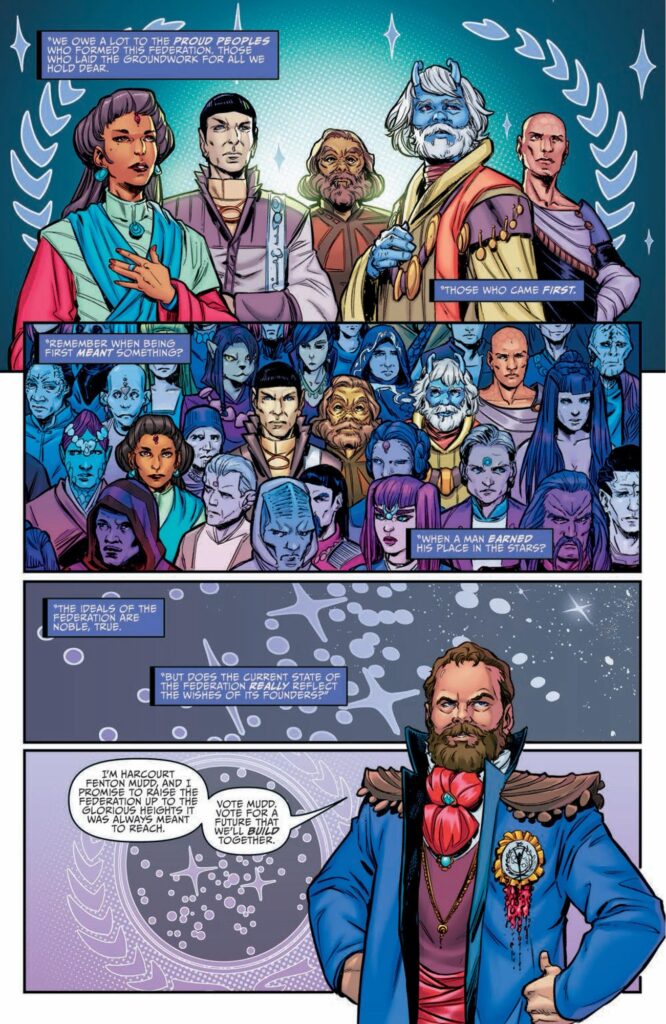
Carmel’s Mudd is selfish, reckless, manipulative, and willing to place other people in serious danger. Wilson’s version goes further. The darkness wasn’t invented by Discovery, but the degree certainly changes.
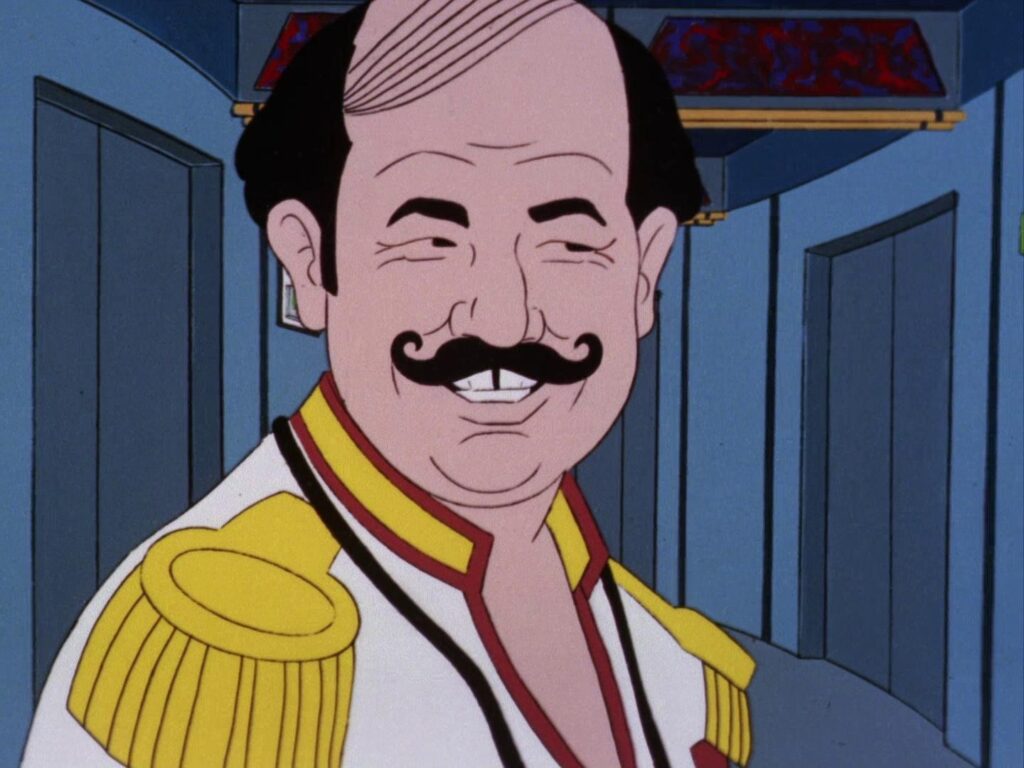
Wilson himself has described playing Mudd as a balance between the lovable shyster and the Machiavellian villain, and that’s exactly where the modern version works best for me. He should be funny enough that we understand why people keep listening to him, but dangerous enough that we remember they probably shouldn’t.
The story Harry tells
Discovery also does something clever with Stella.
The Stella we meet in Harry’s younger life still loves him. She knows enough about him to recognise the rogue, but she remains smitten when she and her father arrive to collect him from Discovery. Years later, “I, Mudd” gives us Harry’s story of an unbearable wife who drove him away.
Both can be true.
People change, and marriages certainly do. Spending years married to Harry Mudd also feels like the sort of experience that might adjust a person’s temperament.
More importantly, The Original Series mainly gives us Harry’s side of that relationship, and Harry isn’t exactly the witness I’d choose if accuracy mattered.
His version of almost every story works the same way. Authorities persecute him. Stella torments him. Lorca betrays him. Customers fail to appreciate him. A perfectly sensible commercial venture somehow becomes a criminal matter.
Responsibility has an extraordinary ability to leave the room whenever Harry enters it.
That may be the confidence trick beneath all the others.
Harry doesn’t merely sell false versions of himself to his victims. He appears to have sold one to himself. If every disaster is something that happened to Harry Mudd, rather than something Harry Mudd helped create, why would he ever need to change?
Mudd, multiplied
That brings us back to “The Escape Artist”.
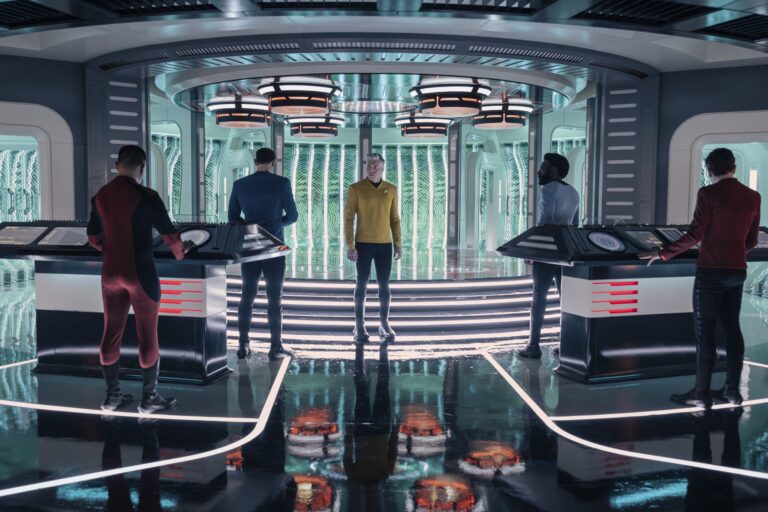
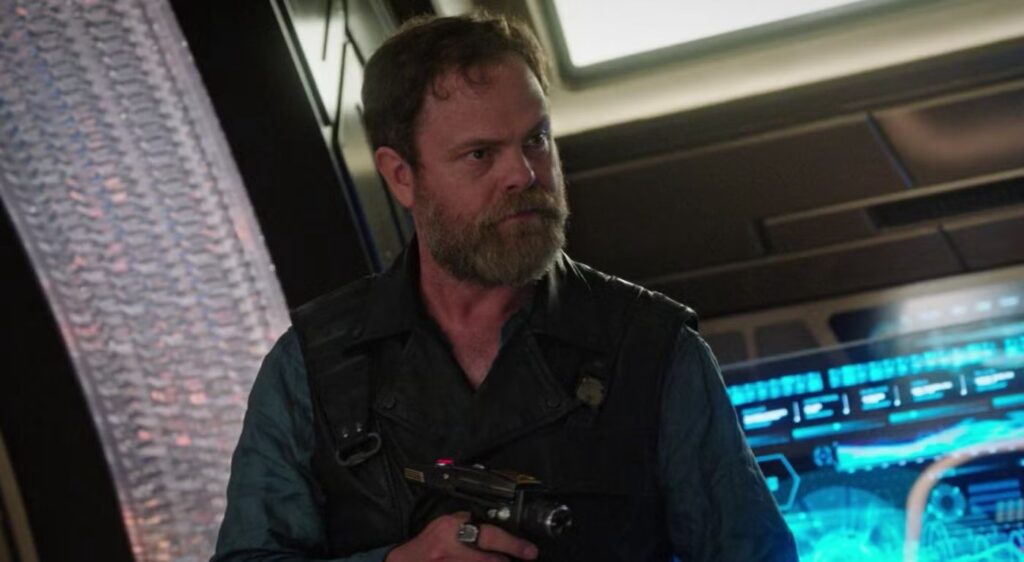
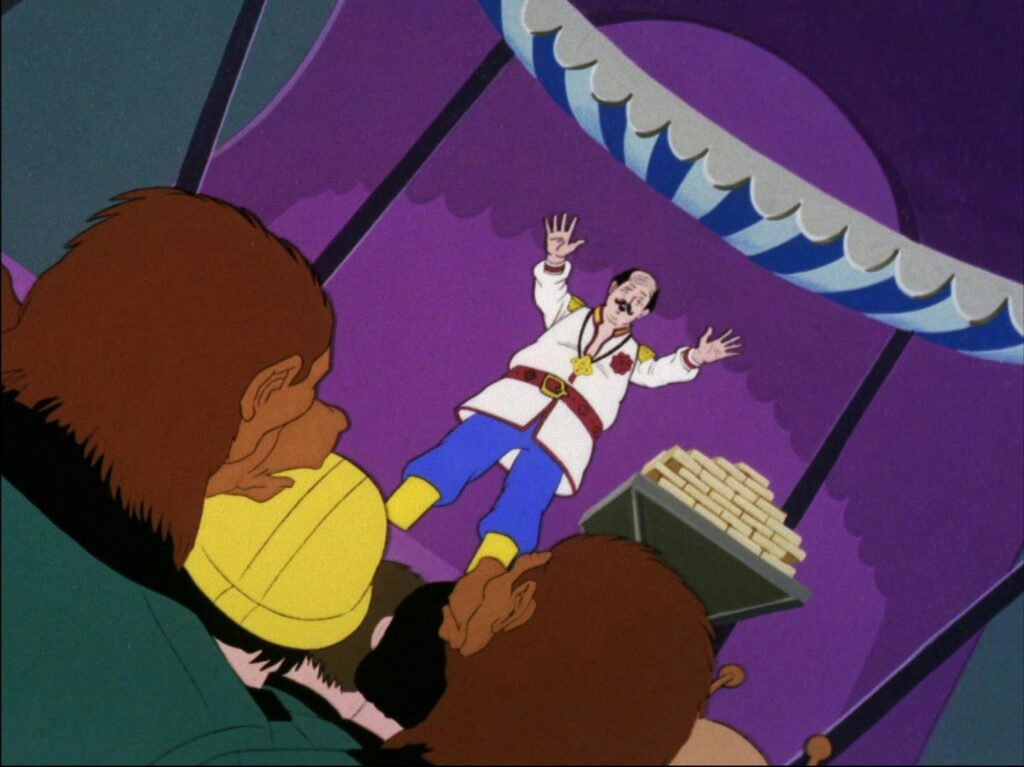
By now Harry has become the product. He uses android replicas to play himself while he adopts another role, sells those copies to bounty hunters, and profits from his own reputation.
The con works because everybody involved wants something. The hunters want money for turning him over. Starfleet wants Harry. Harry wants the hunters’ money. As ever, he finds the desire already sitting there and works out how to stand in the middle of it.
Character-wise, the short almost feels like a conclusion.
The man who sold women now sells himself. The man who spent years performing different versions of Harry creates literal copies. The man who kept escaping consequences turns his own wanted status into another revenue stream.
Even after all these years, Harry has found a new trick.
Not a new principle.
Choosing Harry
Star Trek’s optimism is sometimes described as though a better future automatically produces better people.
Harry Mudd is a useful correction to that.
Society can offer opportunity, comfort, treatment, rehabilitation, and another chance. None of those things can make somebody want to change.
Harry has been arrested, exposed, imprisoned, marooned, humiliated, outsmarted, trapped by androids, captured by Klingons, and confronted by Stella. He survives all of it, and more importantly, he learns from it.
The next scheme is different. The technology gets better. The performance adjusts. Harry becomes harder to catch because Harry has been paying attention.
He simply applies every lesson to remaining exactly who he already was.
That doesn’t undermine Star Trek’s belief in self-improvement. If anything, it makes that belief more meaningful.
Improvement has to be a choice.
The future can offer Harry Mudd every opportunity to become a better man.
His greatest talent is finding a way to turn the opportunity into another deal.