Star Trek: TOS — “Balance of Terror” (S01E14) Review
Two captains spend most of “Balance of Terror” trying to kill one another without ever learning each other’s names.
That might be one of the smartest choices in an episode full of them.
Kirk knows his opponent through his decisions. The Romulan commander knows Kirk in much the same way. They watch movements, anticipate tactics, recognise traps, and slowly build an understanding of a man they have never met. When Kirk changes course, the Romulan commander understands why. When the Romulan does something unexpected, Kirk recognises the thinking behind it.
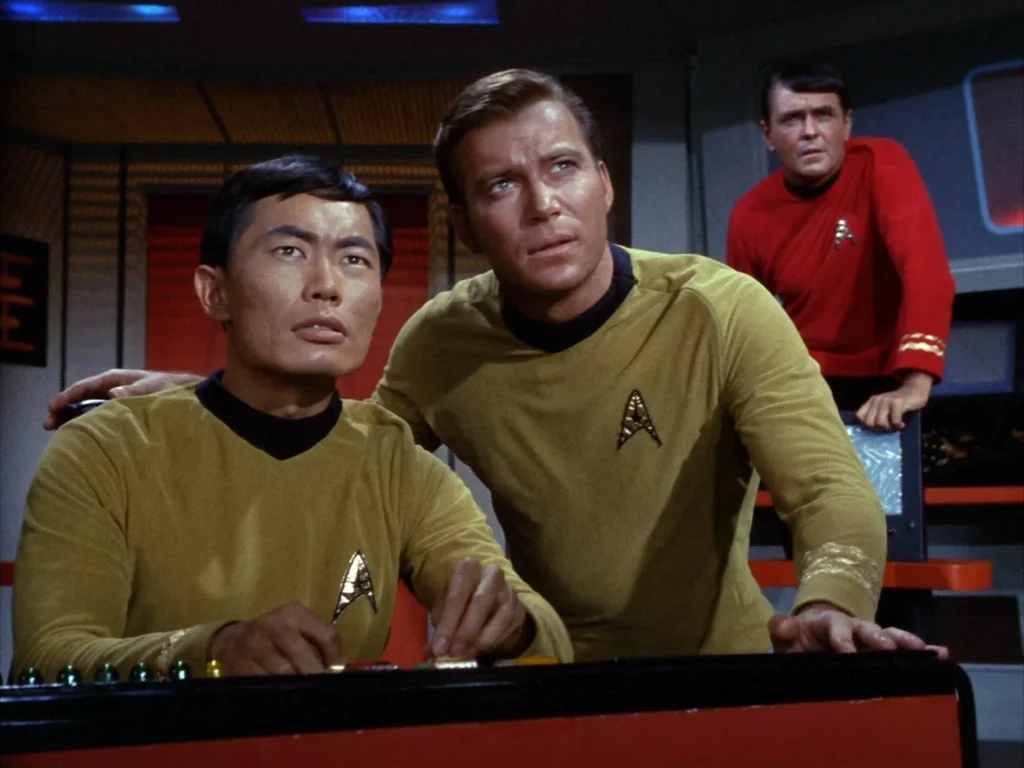
By the time they finally see one another, the episode has already done the important work. The enemy has stopped being an abstraction.
“You and I are of a kind. In a different reality, I could have called you friend.”
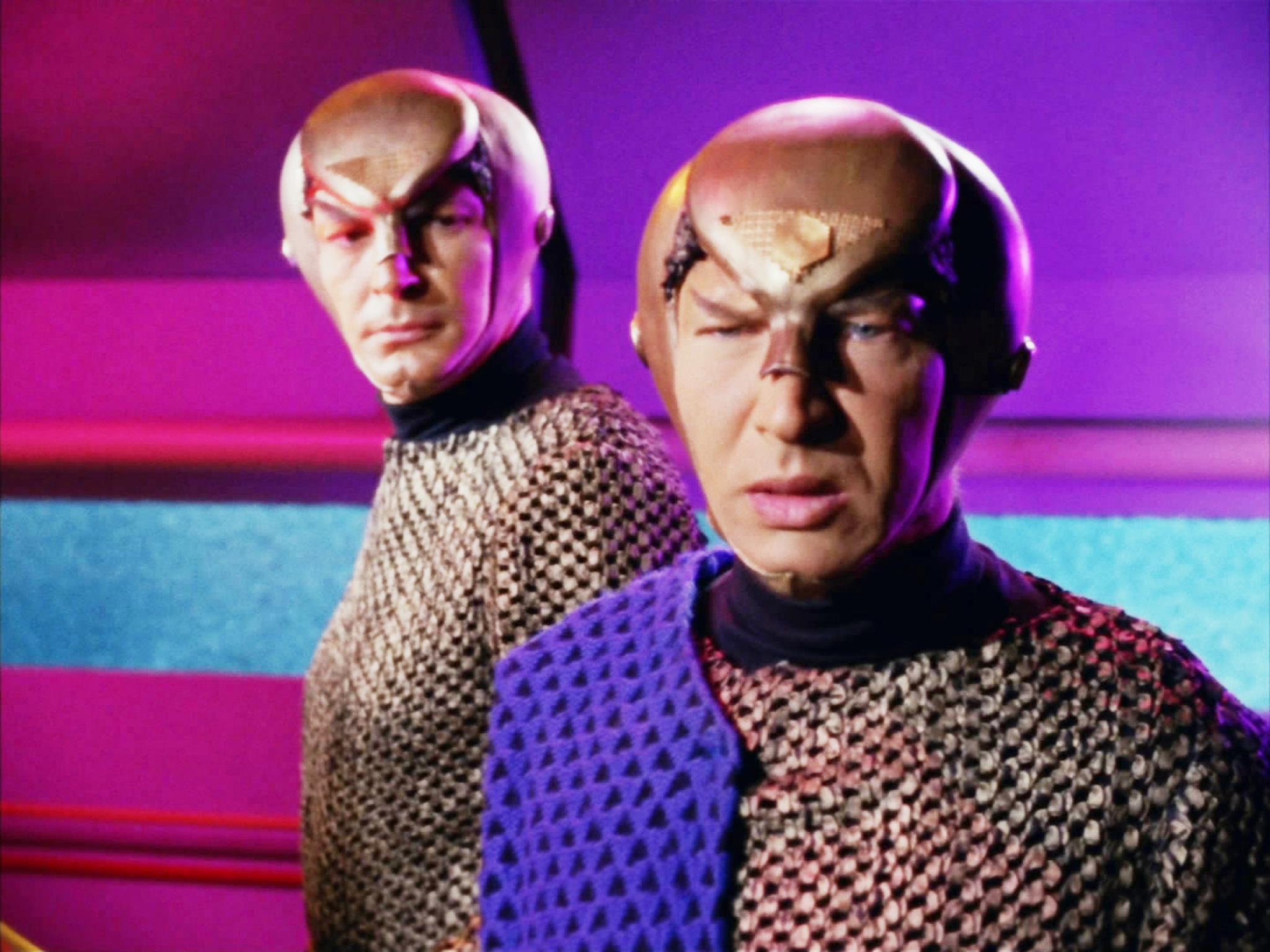
It would have been quite easy for early Star Trek to introduce the Romulans as another collection of hostile aliens standing between the Enterprise and next week’s adventure. Instead, “Balance of Terror” gives us Mark Lenard, and much of what makes the episode exceptional begins with him.
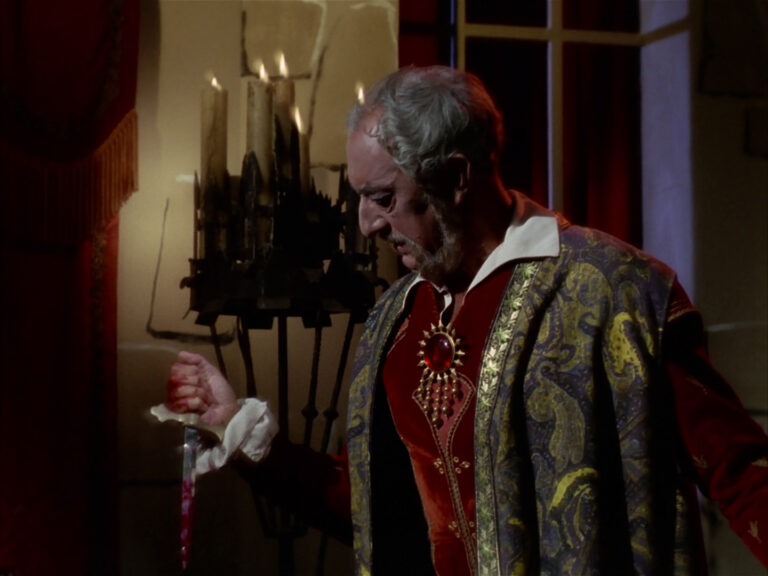
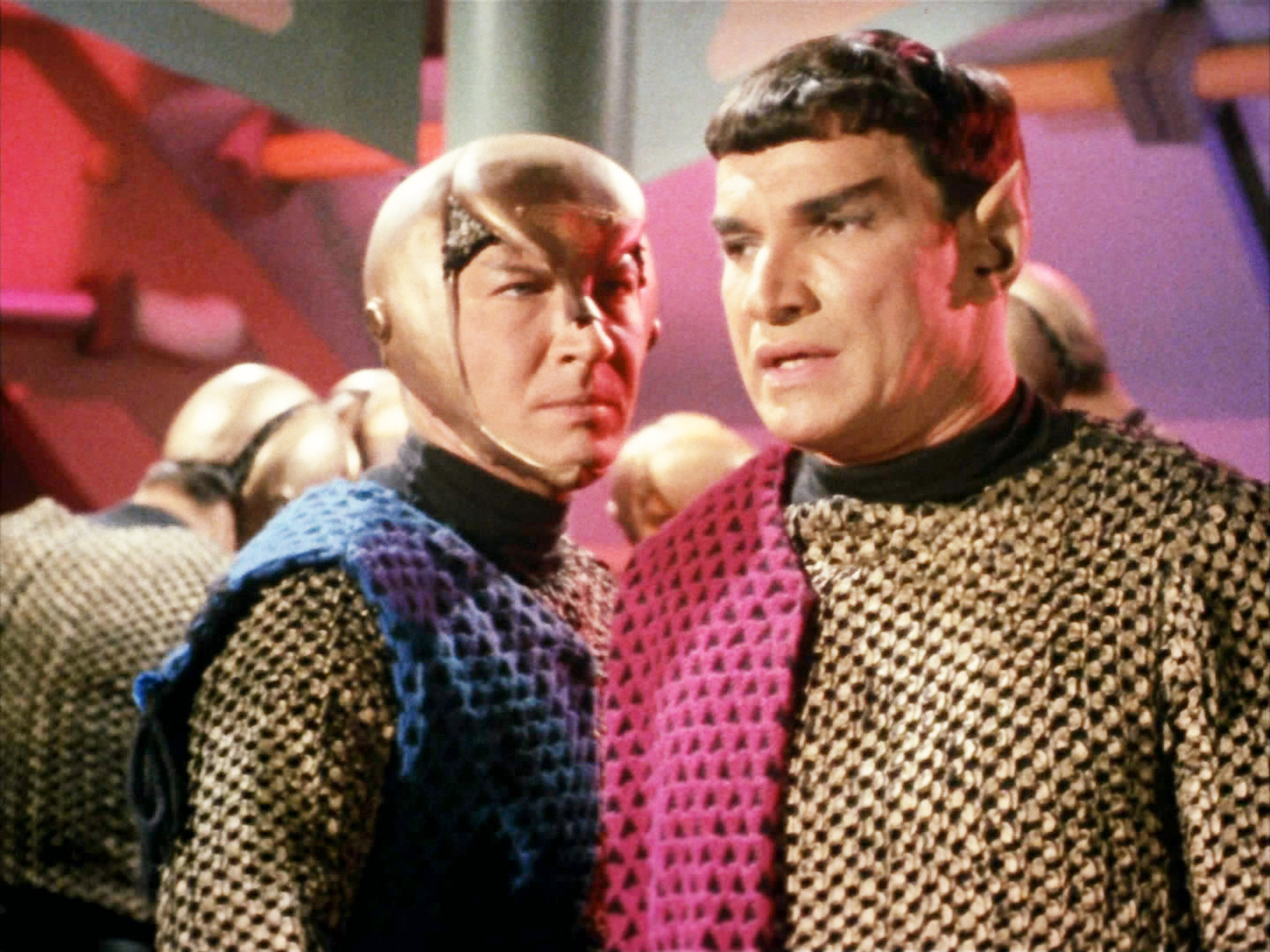
His unnamed commander is intelligent, experienced, dangerous, and clearly exhausted by the machinery he serves. He does not want another war, but that does not make him harmless. He has destroyed Earth outposts. He is prepared to sacrifice his dead Centurion’s body as part of a deception, and he will eventually destroy his own ship rather than surrender. This is not secretly a nice man who happens to be wearing the wrong uniform. He is a professional soldier whose sense of duty has become inseparable from a system he increasingly seems to distrust.
The contrast with Decius tells us a great deal. The younger officer talks about glory and duty with the confidence of someone who has not yet had enough of either. The commander talks about death. One has inherited the romance of war. The other knows what all those stirring words mean once people start dying.
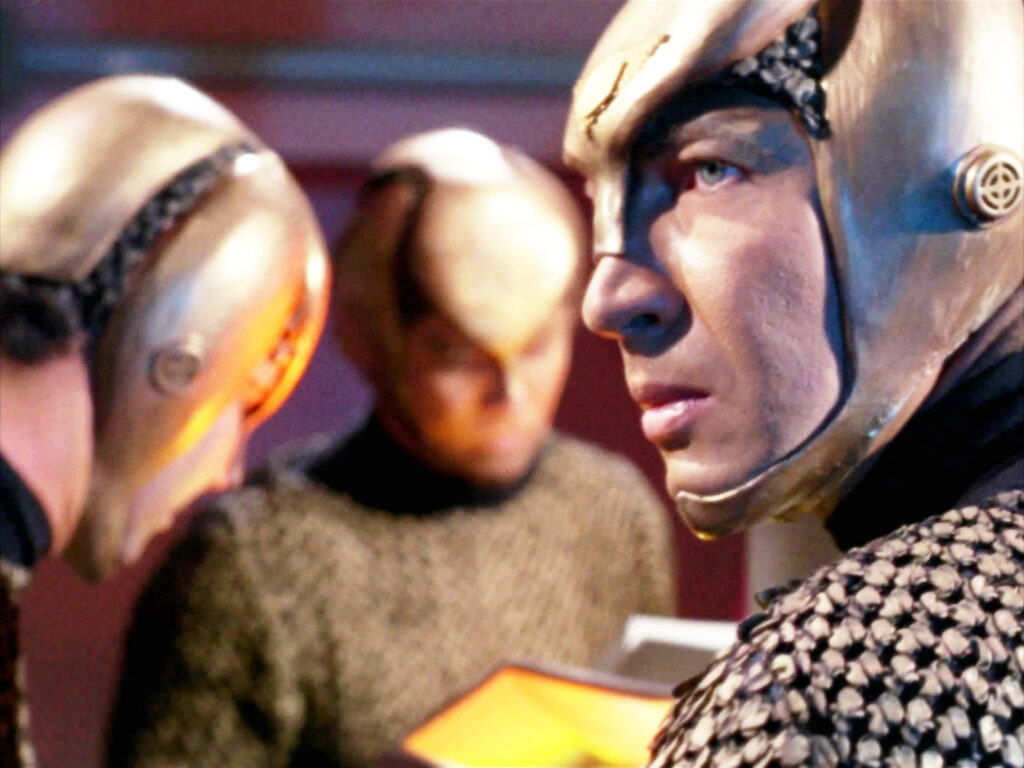
Lenard carries much of that himself. There is a tiredness to his performance before the script has fully explained why, and it makes the Romulans immediately more interesting than simple villains.
It also gives Star Trek something it has lacked until now. A genuine political adversary.
Earlier episodes have given the Enterprise monsters, godlike beings, dying civilisations, dangerous individuals, and strange phenomena. “Balance of Terror” gives it a border.
There is a Neutral Zone, an old war, treaties, listening posts, competing powers, and political consequences extending far beyond whatever happens aboard the Enterprise this week. This was the first appearance of the Romulans, and it begins giving the wider Star Trek universe a sense of history rather than simply giving it more places to visit.
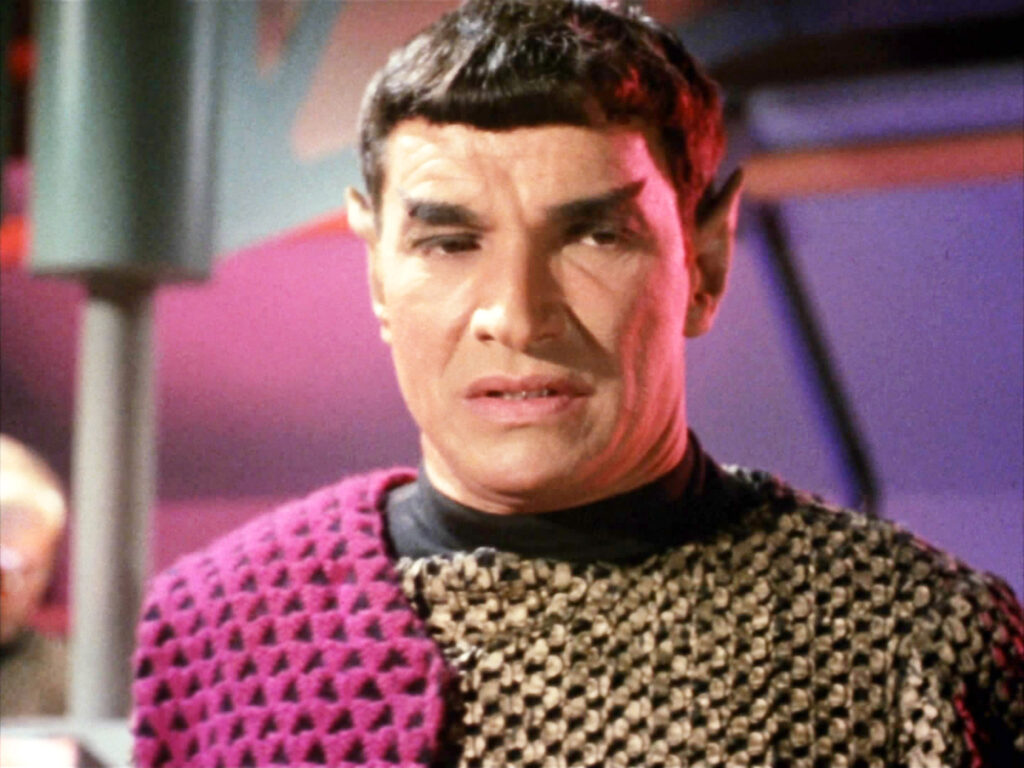
That is the thing I find most important about “Balance of Terror.” Until this point, space has often felt like somewhere the Enterprise travels until it bumps into something strange. Here it feels occupied. Other people have histories, territory, grudges, military doctrine, and their own understanding of what happened before Kirk arrived.
The world suddenly feels larger because it has a past.
What impresses me as much is how little wasted movement there is in the storytelling. There is no separate B-plot wandering off for twenty minutes. The wedding, Stiles’ prejudice, Kirk’s uncertainty, Spock’s position aboard the ship, and the Romulan commander’s internal conflict all feed into the same confrontation.
Paul Schneider’s teleplay very deliberately uses the language of submarine warfare. StarTrek.com itself compares the Enterprise to the surface vessel and the invisible Romulan ship to the submarine, with The Enemy Below an obvious reference point.
Once you know that, it is impossible not to see it.
What matters is what Star Trek does with the structure.
Neither ship is simply stronger. The Romulans have a devastating weapon and a cloaking system, but both have limitations. The Enterprise has speed, endurance, and Kirk’s determination to keep the pressure on. The result is closer to chess than the sort of ship combat where everybody fires increasingly colourful weapons until somebody’s bridge explodes.
Kirk and the commander keep reading each other correctly. Kirk realises his opponent has done exactly what he would have done. The commander describes Kirk as if he can read his mind. The comet, the debris trick, the silent waiting games, and Kirk firing blind into space all work because both men are trying to think a move ahead.
There are points where I think it becomes slightly too enamoured with the submarine game. Some of the manoeuvring starts repeating the same dramatic beat rather than increasing it, and there is only so far, I can follow the idea of everybody working quietly aboard spaceships before remembering that there is rather a lot of vacuum outside.
The phaser control room might be the biggest example.
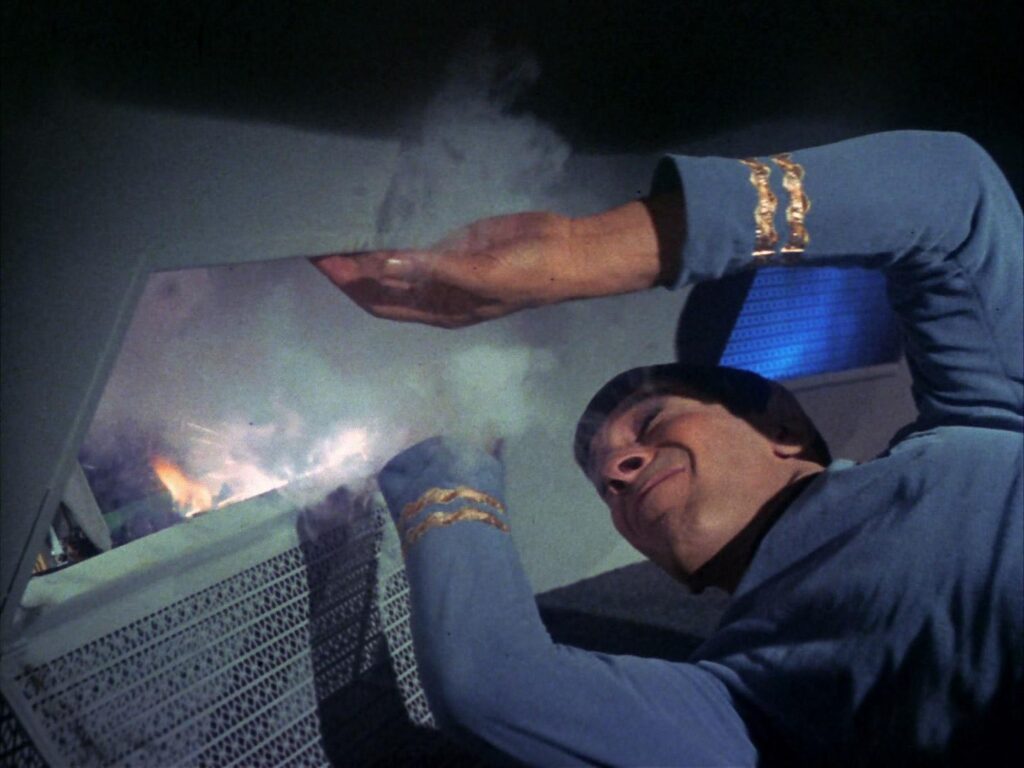
People manually prepare the weapons. Coolant starts leaking. Lights dim. Men scramble around machinery while the bridge waits for somebody below decks to fire.
It is pure wartime naval drama transported onto a 23rd-century starship, and technologically it makes truly little sense.
Dramatically, though, I like it.
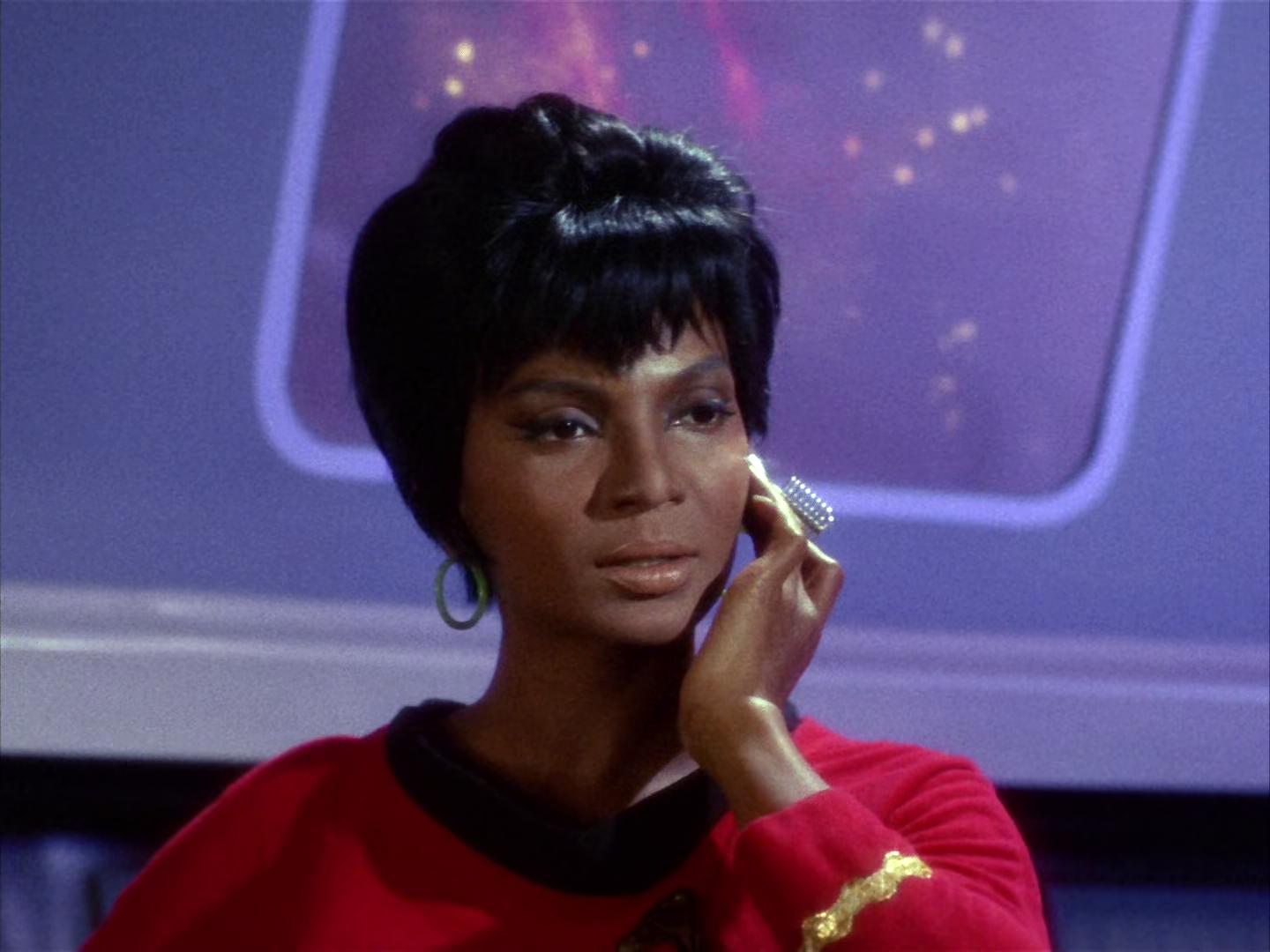
When Kirk orders weapons fired, somebody must carry out that order. There are people below decks doing dangerous jobs, and when things go wrong, those people pay for decisions being made on the bridge. Later Star Trek often makes starship weapons wonderfully simple. Push button. Phaser appears. Something explodes.
Here there are people at the other end of the command.
That matters because Robert Tomlinson is one of them.
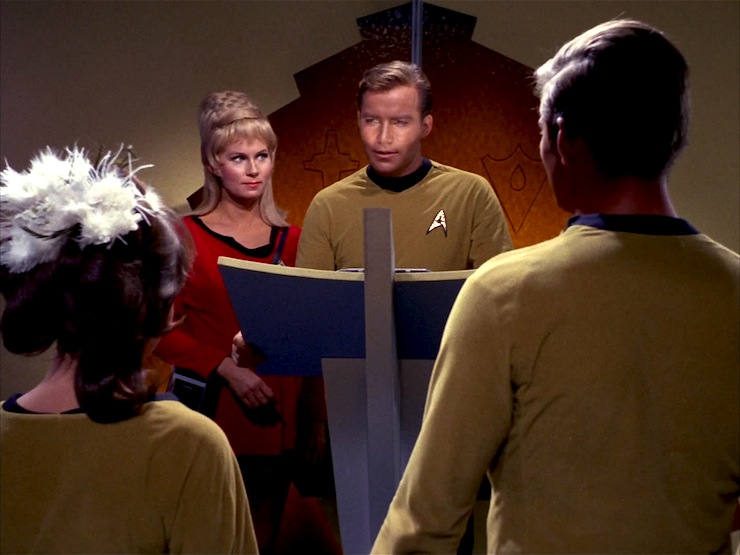
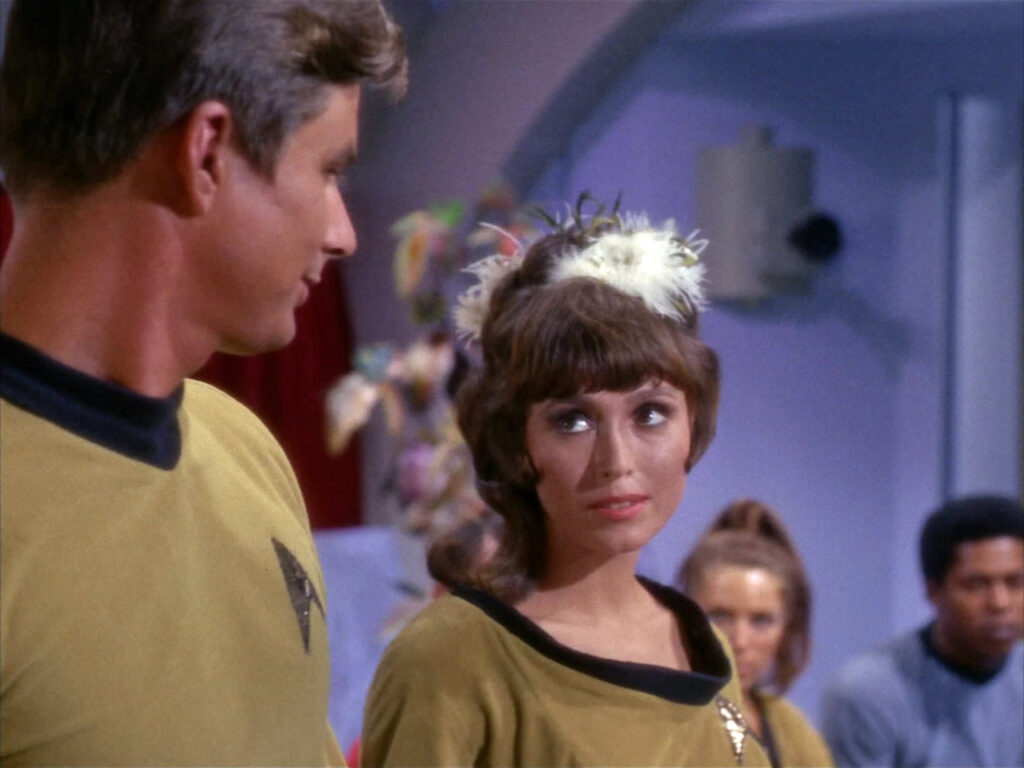
The episode opens with Kirk preparing to marry Tomlinson and Angela Martine. The alert interrupts the ceremony. By the end, Tomlinson is dead and Kirk returns to the same chapel to face the woman he was supposed to marry him.
It is simple, but it works.
Tomlinson is not an anonymous casualty added to make the battle appear dangerous. We saw the life that was supposed to come next. That gives his death weight without the episode needing to stop and tell us how tragic everything is.
It also changes the meaning of Kirk’s victory.
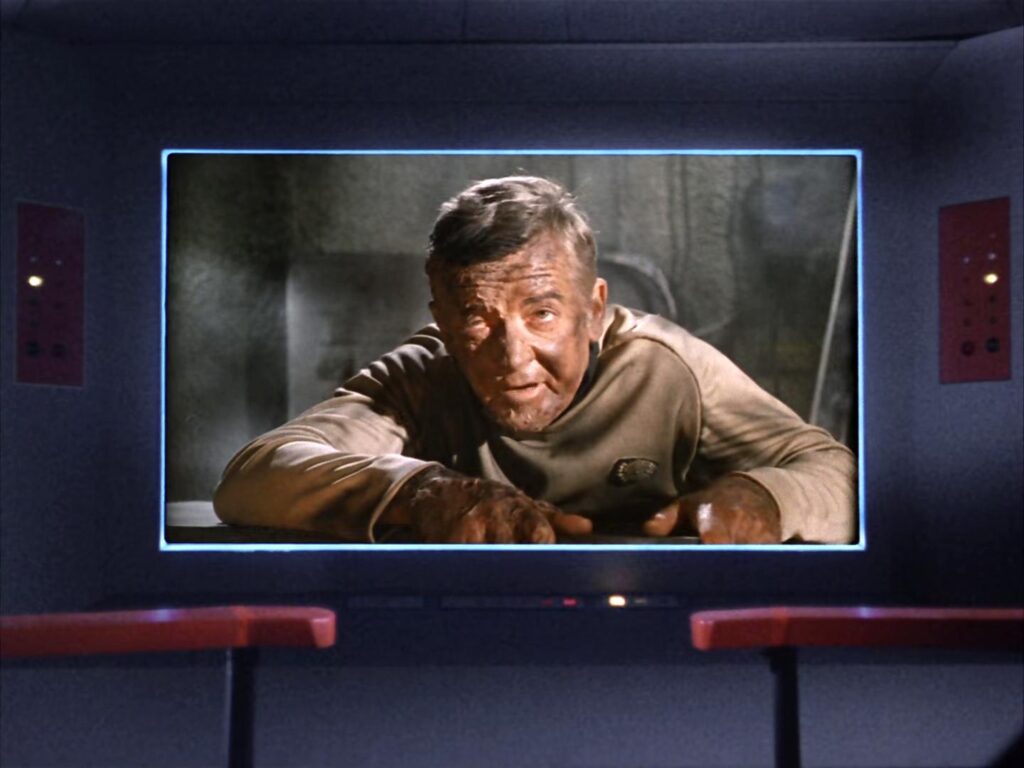
He has stopped the Romulan ship. He may have prevented another war. He made the decisions he believed were necessary.
Angela Martine has still lost the man she was going to marry.
That human cost is where the episode finds something deeper than an incredibly good tactical thriller.
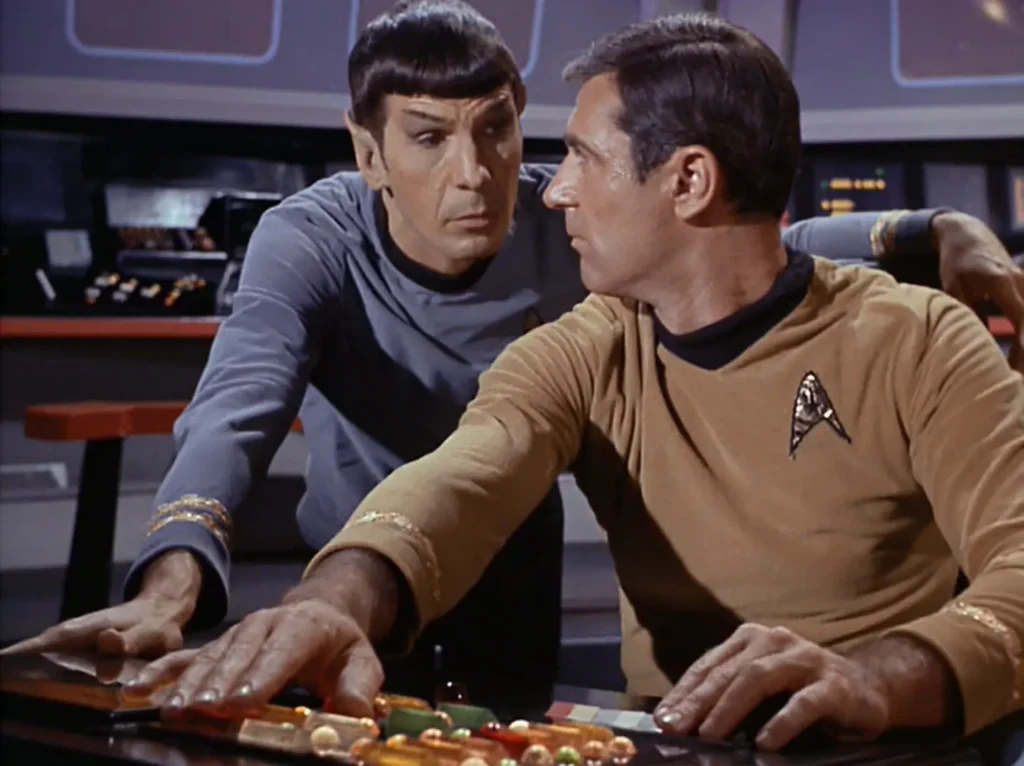
Kirk’s position throughout the confrontation is equally interesting because the script does not pretend command means having access to the correct answer. He asks for opinions. Spock, Stiles, Sulu, McCoy, and the others give him different versions of what they think should happen. He listens and then must decide.
There is no admiral conveniently available to take responsibility away from him.
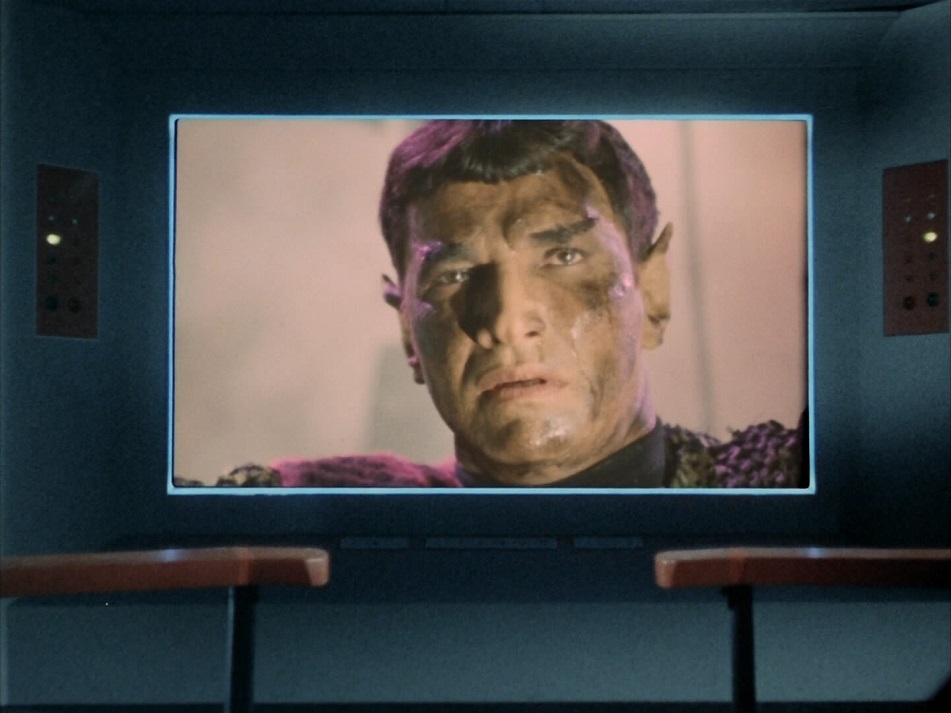
Kirk sends his judgement to Command and proceeds before a response can reach the Enterprise. Only when everything is finished does Starfleet finally get back to him and say they will support whatever decision he made.
Very helpful.
William Shatner is excellent through all of this. A lot of the characteristics people like to parody about his performances are simply not present. Kirk is focused and intelligent, but he is also tired and occasionally uncertain. You can see him thinking.
His scene with McCoy is particularly good.
McCoy’s reminder that among all those millions of planets there is still only one of each person can sound almost absurd when reduced to the mathematics, but DeForest Kelley sells it. More importantly, it cuts directly across everything happening around them.
Kirk is being forced to think in terms of ships, borders, governments, military consequences, and potentially millions of lives.
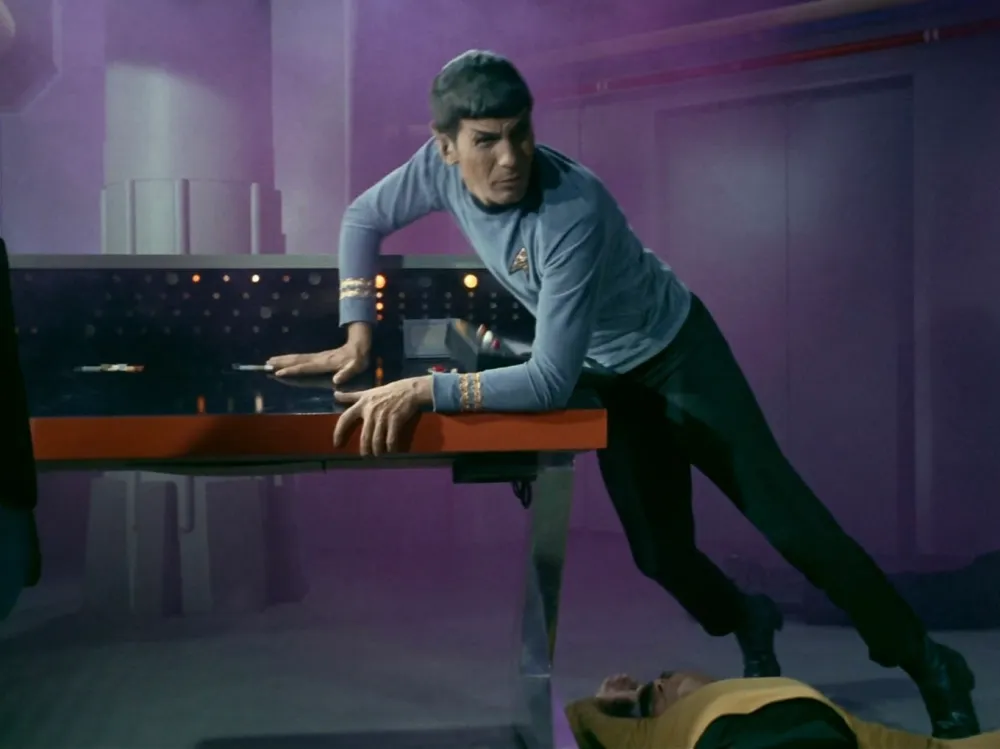
McCoy reminds him not to lose sight of individuals.
The episode then spends its ending proving why that matters.
Stiles brings the same argument much closer to home, although this is where “Balance of Terror” becomes less subtle.
Once the crew sees that the Romulans resemble Vulcans, Stiles turns his suspicion towards Spock. His family history explains where the prejudice comes from, but the writing lays it on with all the delicacy of a brick through a window.
Kirk’s response remains one of the episode’s strongest moments.
“Their war, Mister Stiles. Not yours.”
That is the kind of Star Trek optimism I find much more convincing than simply telling us humanity has somehow evolved beyond prejudice. Stiles is evidence that it has not. Old hatred can survive. Fear can still become suspicion, and intelligent people can behave badly under pressure.
What has changed is the standard expected of them.
Kirk does not indulge Stiles. Spock does not retaliate. The crew is expected to be better even when one of them is failing to meet that expectation.
The problem is the resolution. Spock saves Stiles from the coolant-filled phaser room and suddenly the prejudice appears to have been shaken loose.
I understand what the episode wants to do. I just do not completely buy it.
Real prejudice is usually stickier than that. One decent act does not normally dismantle years of resentment, and the speed of Stiles’ change makes the point feel cleaner than the subject deserves.
There are a few other things I simply must accept if I am going to enjoy the story.
The idea that Earth and Romulus fought an interstellar war, negotiated its end, established a Neutral Zone, and maintained that border for a century without either side getting a decent photograph is asking quite a lot.
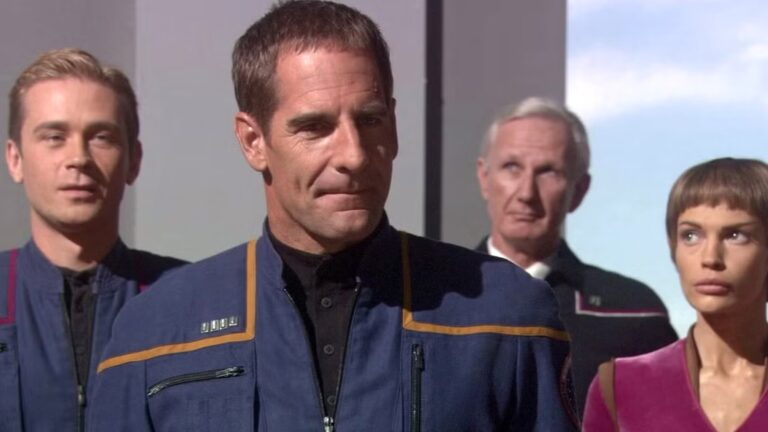
Later Star Trek would work hard to preserve that history. Enterprise, for example, maintains the idea that humanity’s early encounters with the Romulans did not reveal their appearance.
Within “Balance of Terror” itself, though, it is mostly there because the reveal that the Romulans look like Spock is too useful to lose.
I can live with it.
Artistically, this might be one of the strongest episodes of the first season so far.
The Enterprise feels darker than usual. The lighting gives the bridge an enclosed, slightly oppressive quality that suits a story taking place at the edge of known political space. The familiar ship suddenly feels smaller.
The Romulan vessel goes further. It is cramped, shadowy, militaristic, and uncomfortable. Yes, occasionally something falls from the ceiling in a way that makes you wonder whether Romulan starships are constructed from the same material as 1960s television studios. The helmets are not exactly elegant either.
Yet the overall design works for me.
The Enterprise has colour and relative openness. The Romulan ship feels compressed and rigid. The commander and Centurion are given faces we can read, while much of the crew sits beneath severe military headgear. Some of that was practical production necessity, but it ends up contributing to the feeling of the culture.
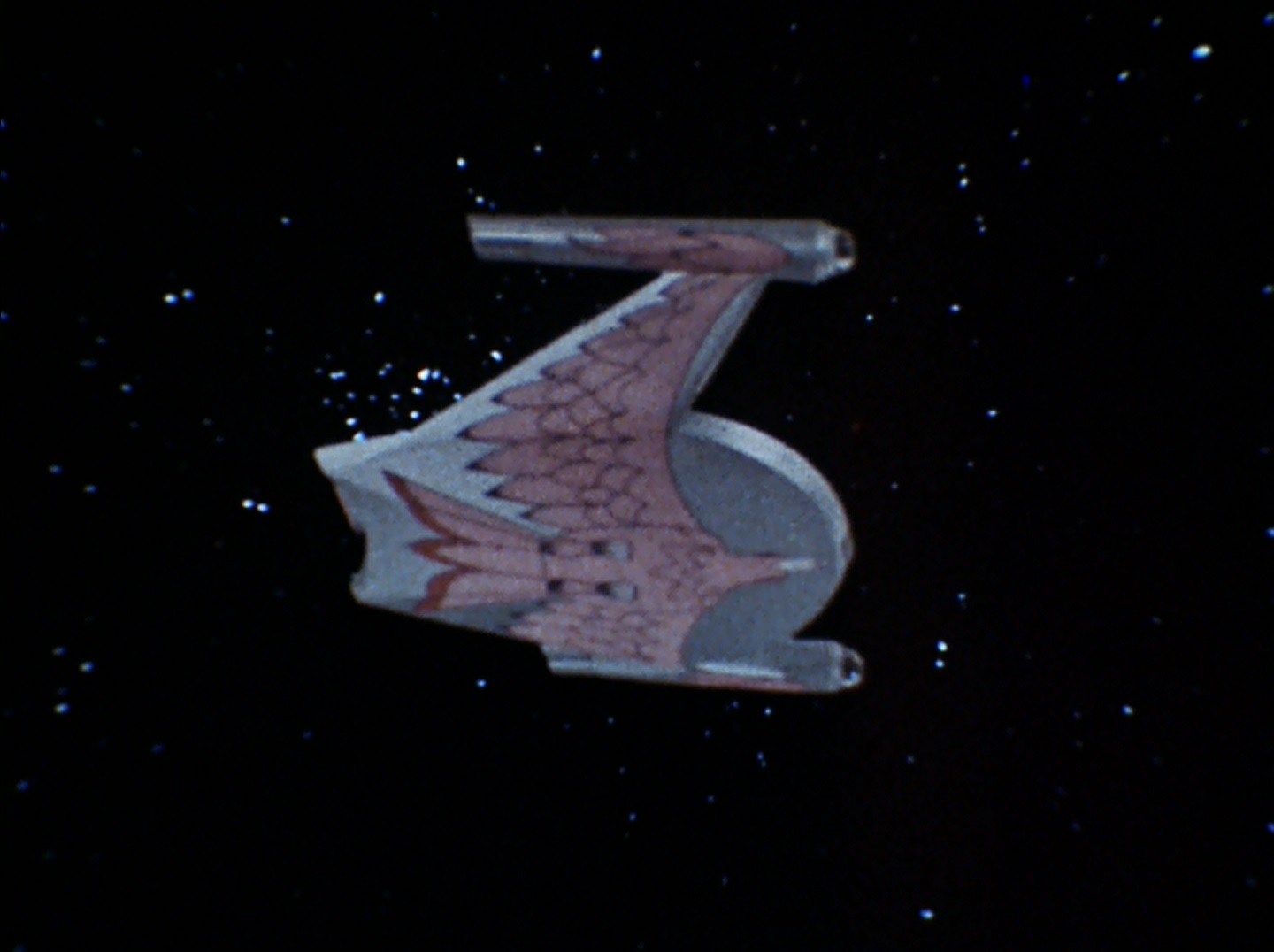
The Bird-of-Prey itself is wonderful.
Wah Ming Chang designed the ship, and the enormous painted bird across its underside still gives it an identity unlike anything else in the series at this point. He also supplied the Romulan helmets, although his work went uncredited at the time because of union complication
Most of all, I like how comfortable Vincent McEveety’s direction is with faces and waiting.
There are long stretches where nobody needs to run anywhere. Kirk watches. The Romulan commander considers. People wait for the other side to make a mistake.
The episode understands that anticipation can be more tense than spectacle.
That carries through to the ending.
Kirk wins, but there is no real victory scene.
The Romulan commander refuses rescue and destroys his ship. Tomlinson is dead. Martine is alone in the chapel. Kirk tries to offer her something resembling an explanation, but the episode has enough sense not to pretend that strategic necessity makes grief any easier.
Then he walks away.
The final shot of Kirk moving through the Enterprise corridor is one of my favourite images in early Star Trek. The crisis has ended, people are moving around him, and the ship is returning to normal.
Kirk cannot quite do the same.
That brings the episode back to McCoy’s point. Governments can talk about borders and balances of power. Captains can make strategically correct decisions. Historians can later decide whether those decisions prevented something worse.
Someone still must tell Angela Martine that Robert Tomlinson is dead.
That is why “Balance of Terror” remains one of the high points of “The Original Series” for me. It is a superbly constructed tactical drama, but that is not really what makes it endure.
This is the point where Star Trek starts to feel as though its universe existed before the Enterprise arrived.
There are borders, histories, rival powers, inherited hatreds, political consequences, and people on the other side who are every bit as complicated as the people we already know.
Most importantly, the episode gives the enemy a face without pretending that makes him innocent.
The Romulan commander has killed people. Kirk has every reason to stop him. Recognising something of yourself in an enemy does not mean ignoring what they have done.
It simply makes killing them harder.
Nearly sixty years later, “Balance of Terror” is still willing to leave us with that discomfort.
9/10