Star Trek: Strange New Worlds — “A Case of Chiaroscuro” (S04E04) Review
“A Case of Chiaroscuro” looks like a gimmick episode before it has even properly begun. Everything is in black and white, the inhabitants of Mat’aar XII dress as though they have wandered out of a 1940s film noir, and before long Una Chin-Riley is wearing a fedora and pretending to be a resistance leader who happens to look exactly like her. Strange New Worlds has become increasingly fond of demonstrating just how many different kinds of television it can make, so I went into this one wondering whether the concept would serve the story or become the story.
For the most part, it works because the episode has something underneath the visual exercise. This is a story about occupation, resistance, and the difference between doing what Starfleet considers legally correct and doing what Una believes is morally right. The black and white photography gives that conflict a visual language without reducing it to a simple choice between right and wrong. Very little here is actually black and white once the decisions begin.
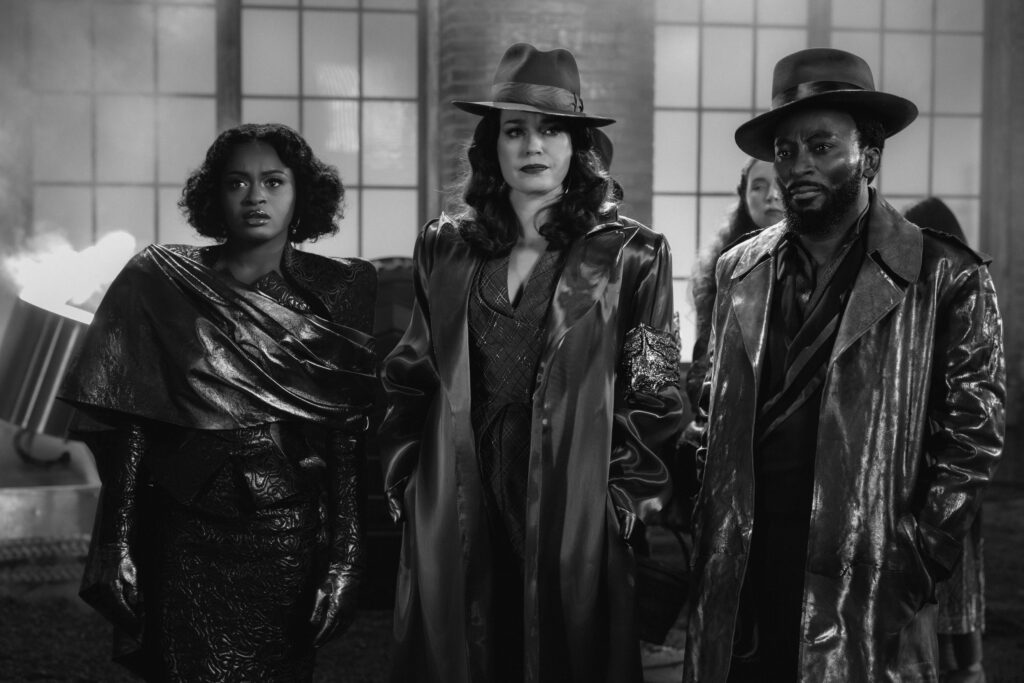
The episode also earns some goodwill immediately by giving the greyscale an appropriately Star Trek explanation. Radiation from the Mat’aaran star affects the way colour is perceived, which is just enough science fiction hand waving to establish the rules and move on. There is no holodeck malfunction, time travel, reality-warping entity, or constant stream of jokes about how strange everything looks.
Then it does something very sensible. It stops talking about it.
Unlike the puppets I apparently have to look forward to in an upcoming episode, nobody spends the next forty minutes reminding us what sort of television programme we are watching.
That commitment makes a huge difference. The Casablanca influence is obvious, with an occupied population, resistance fighters, collaborators, checkpoints, and a nightclub sitting at the centre of everything, but the episode never turns itself into a parody of Casablanca. It wants the atmosphere rather than the joke. The Original Series regularly dropped its crew onto worlds resembling gangsters, Romans, Nazis, and other fragments of Earth history without feeling the need to apologise for the premise, and there is something pleasantly confident about the way “A Case of Chiaroscuro” does the same thing.
I still cannot stand the doppelgänger device.
There are a few storytelling shortcuts that immediately make me aware of the writer moving pieces around, and doppelgängers sit alongside amnesia fairly high on that list. Una landing on the exact Klingon-controlled planet where she is identical to a dead resistance leader is an enormous coincidence. M’Benga can explain that the universe is large enough for these things to happen, but that does not make it feel any less convenient.
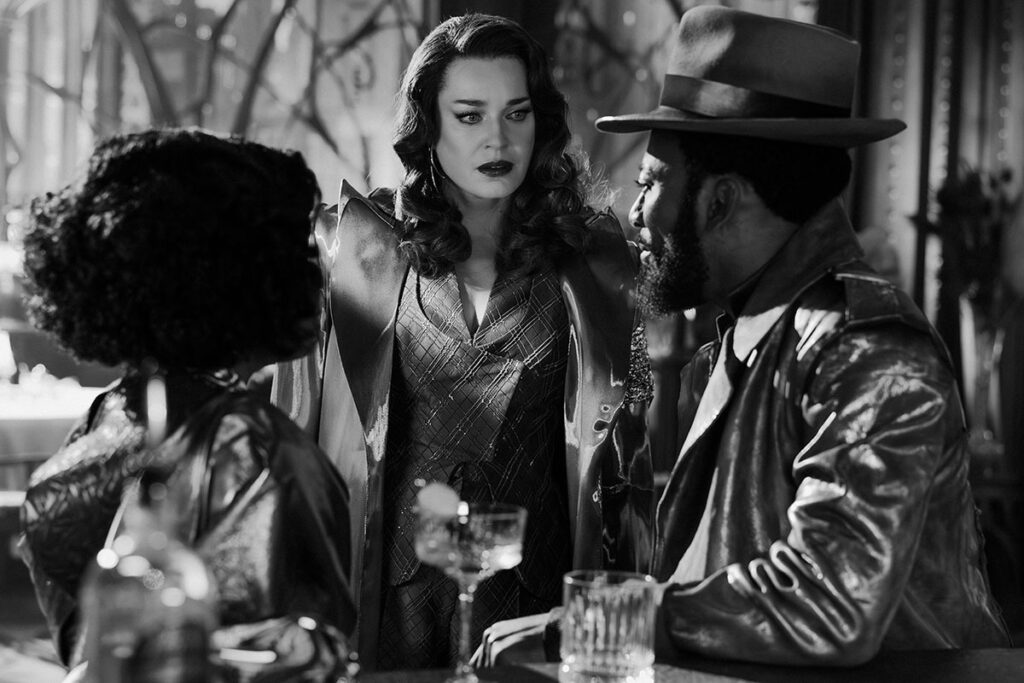
What saves it is that the episode actually does something worthwhile with the idea.
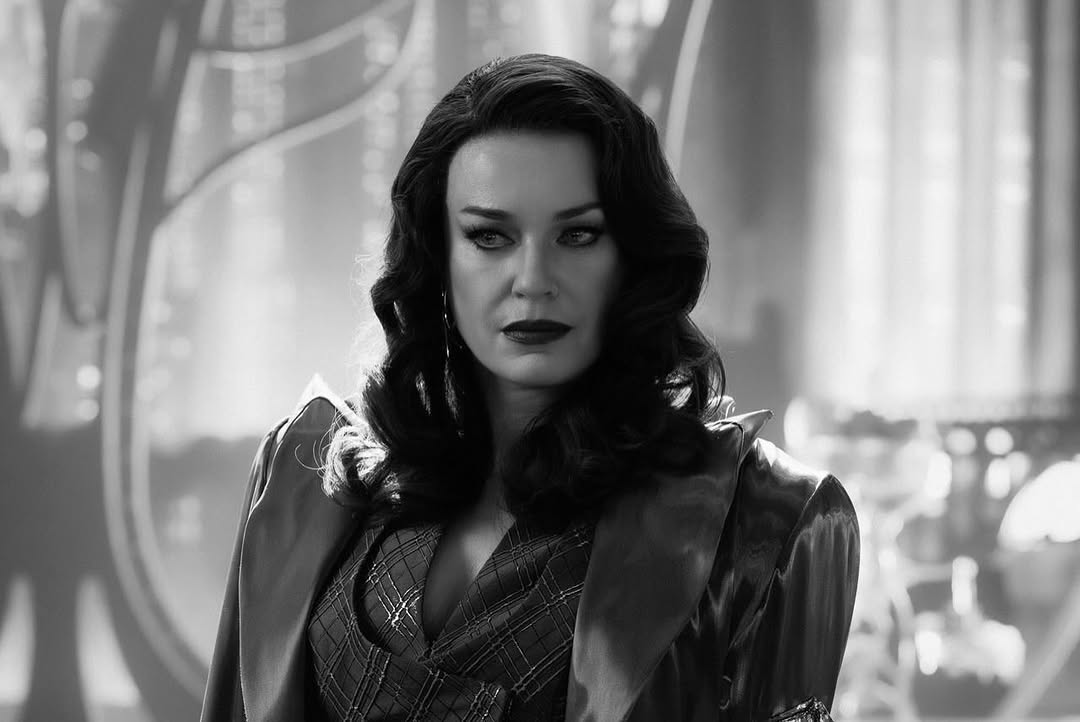
The dead resistance leader becomes more than an excuse to put Rebecca Romijn in a coat and fedora. She represents a path Una recognises but did not experience herself. “Ad Astra per Aspera” established the persecution surrounding Una’s Illyrian childhood and the fact that her family survived by concealing who they were. This episode takes that history and puts Una in the position of someone who chose open resistance instead.
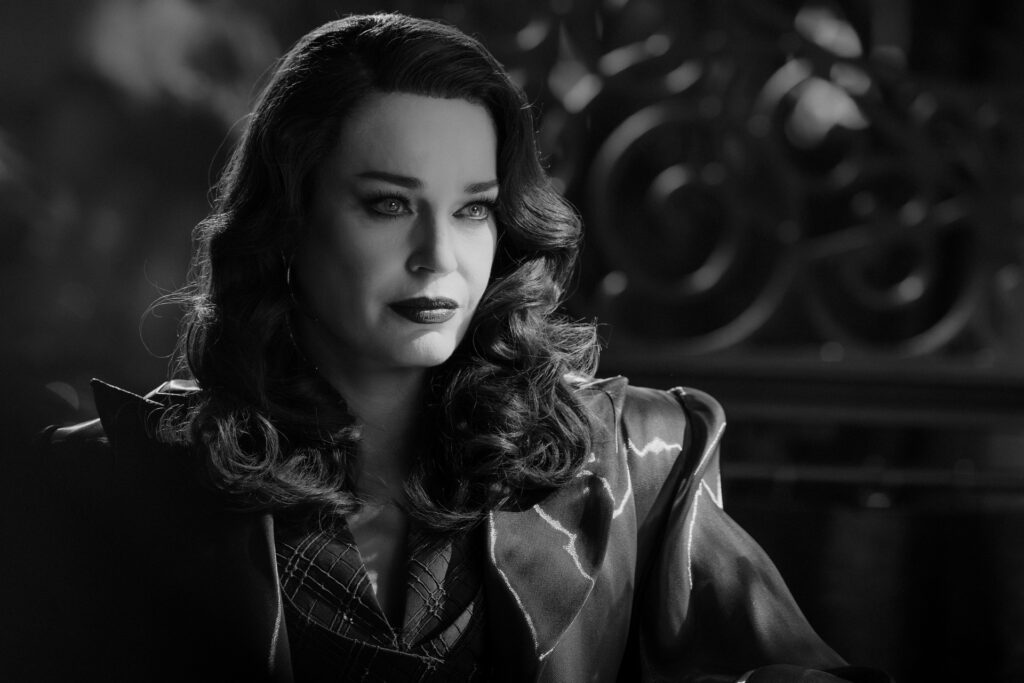
That gives her decision to help the people of Mat’aar XII a personal foundation. Starfleet has told her where the line is. They are in Klingon territory, they are not supposed to be there, and intervention risks consequences far beyond the immediate situation. Una can understand all of that and still look around at an occupied population being controlled through intimidation, checkpoints, collaborators, and restrictions on movement and decide that standing aside is also a choice.
Rebecca Romijn gets some of her strongest material in the series because Una does not suddenly become a different character to fit the genre. She remains careful, controlled, and highly aware of the risks around her. She improvises because she has to, occasionally gets lucky, and gradually moves from trying to get her team home towards accepting that she cannot simply leave these people behind.
The episode is also sensible enough not to turn her into the saviour of Mat’aar XII. Bringing down the force field gives the resistance an opportunity, not a victory. When Una passes responsibility to Che’Lim rather than remaining at the centre of their struggle, it feels right. She has interfered and she knows it, but the future of the planet cannot become another Starfleet project simply because she decided to help.
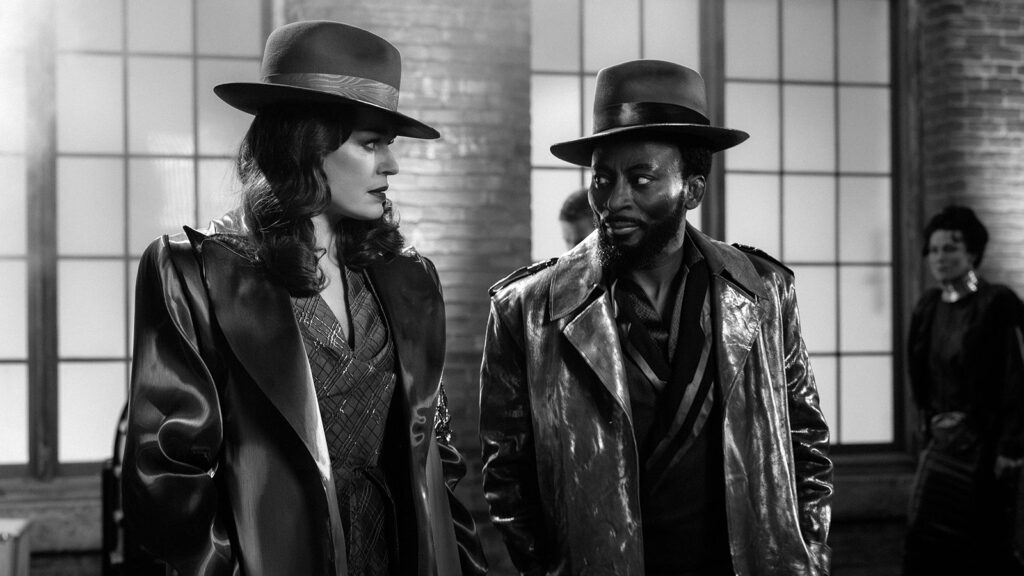
M’Benga is excellent again, which at this point is becoming one of the safest predictions anyone can make about Strange New Worlds. Babs Olusanmokun has given the character a consistency that carries from episode to episode, particularly when the Klingon War is involved. His past does not disappear whenever the story changes.
Watching him teach Uhura how to behave undercover is a particularly good use of that history. He tells her to keep her lies close to the truth, watch the room, and notice the people who are watching her. These are not skills we normally associate with a doctor, but they make complete sense for someone who survived the experiences shown in “Under the Cloak of War”.
His admission that medicine is his calling while some of his strongest abilities exist in direct opposition to it may be the best line in the episode. It captures the central contradiction of M’Benga better than another flashback probably could. He is extraordinarily capable of hurting people and has chosen to devote himself to healing them. The uncomfortable part is that circumstances keep finding uses for both versions of him.
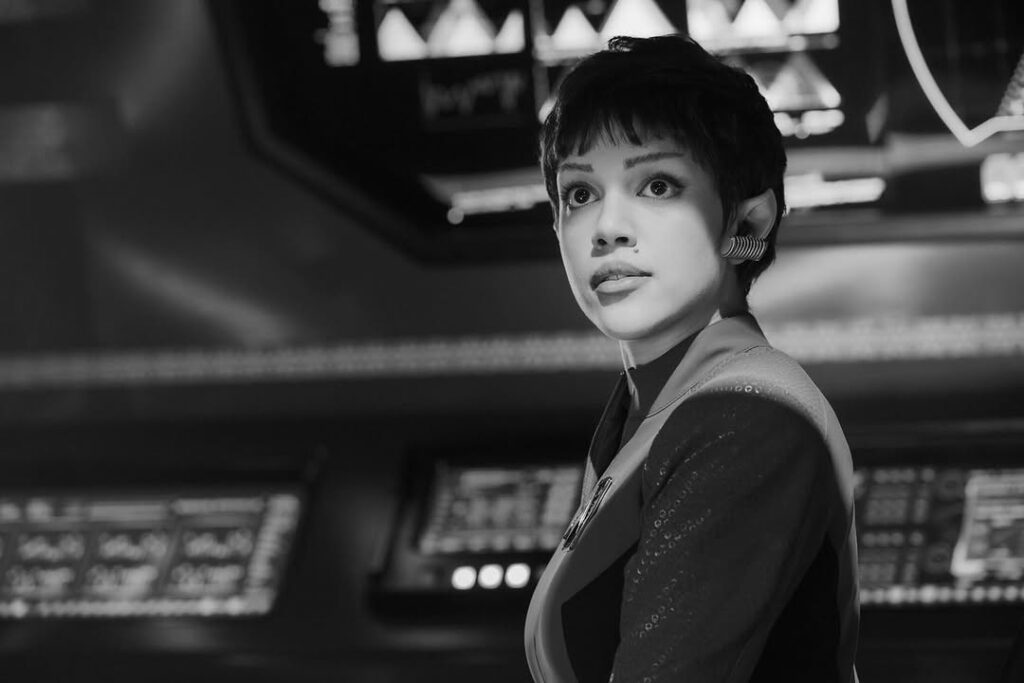
Uhura works well alongside him because the episode allows her inexperience to show. Her instinctive reaction when she sees an injured man nearly compromises her cover, but it is completely believable for Uhura. That compassion also leads to information the others need. She is not suddenly transformed into an expert undercover operative because the plot requires one. She makes a mistake, learns quickly, and contributes because of the same qualities that caused the mistake in the first place.
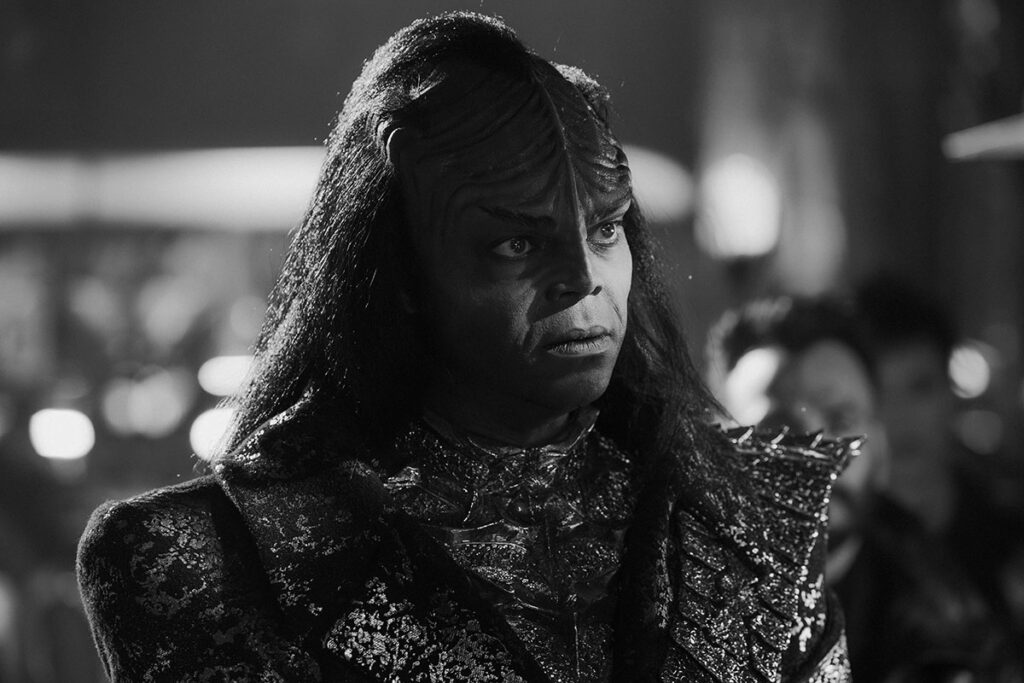
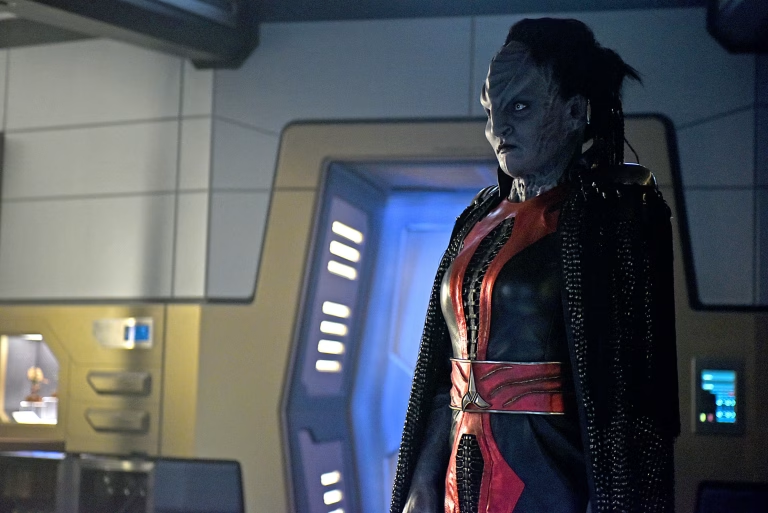
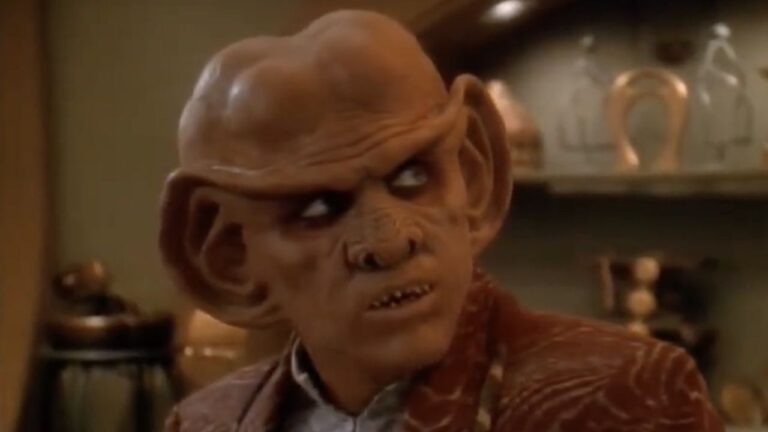
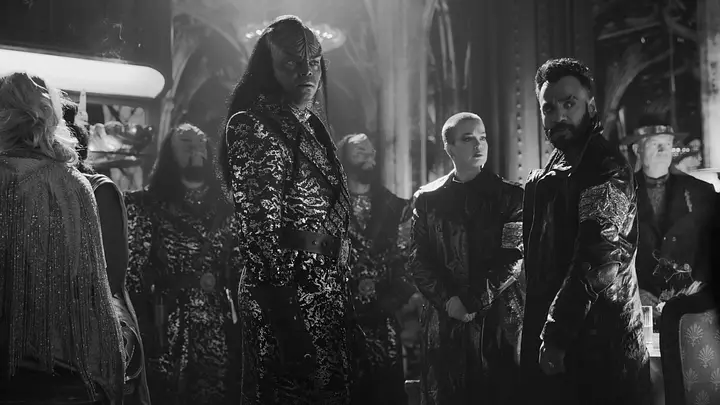
Kor’s presence gives the occupation another connection to older Star Trek. There are obvious echoes of “Errand of Mercy” in seeing Klingons subjugating a population while Starfleet officers wrestle with how much they can interfere. What I like more here is the way the occupation operates at street level. There are papers to show, checkpoints to cross, collaborators to navigate, and ordinary people adjusting their lives around a system designed to control them. The Klingons do not need to spend the entire episode talking about conquest because their control is visible everywhere.
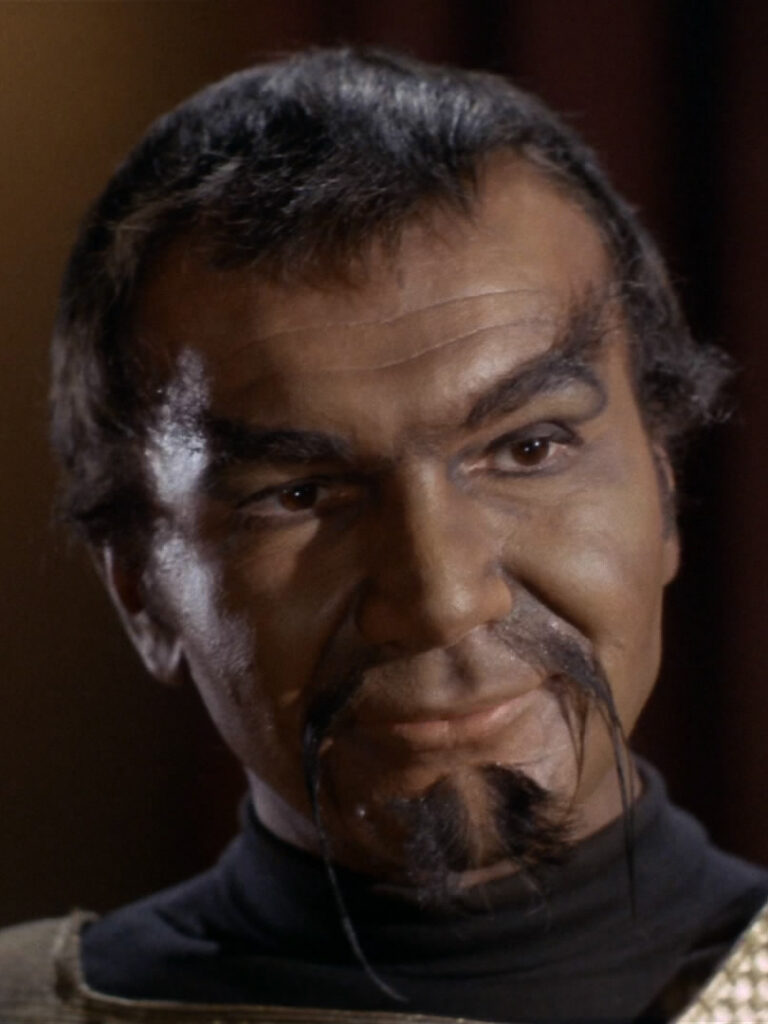
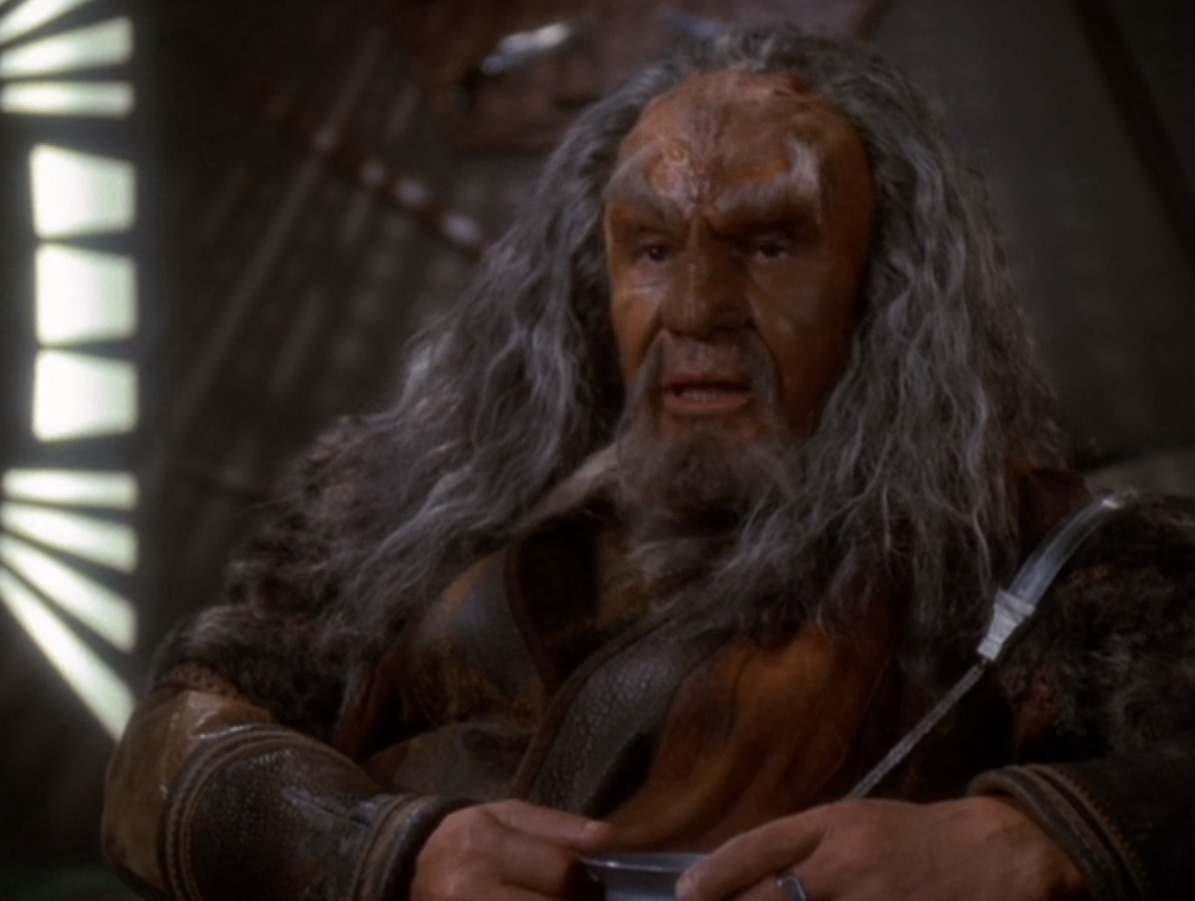
Kor also creates a slightly odd continuity wrinkle. This is the same man who will appear in “Errand of Mercy” with the smooth forehead associated with the Klingons of The Original Series, yet here he already has the familiar cranial ridges. Enterprise gives us enough canon to make it work. Kor could contract the Augment-derived condition sometime after this episode, lose his ridges before we meet him in TOS, and later have them surgically restored before his appearances in Deep Space Nine. None of that has actually been established for Kor himself, though, which means we are doing the continuity work for the episode. If this were simply another Klingon I probably would not give it much thought, but with Kor we already know exactly what he is going to look like only a few years later.
Unfortunately, the episode becomes much weaker whenever it returns to the Enterprise.
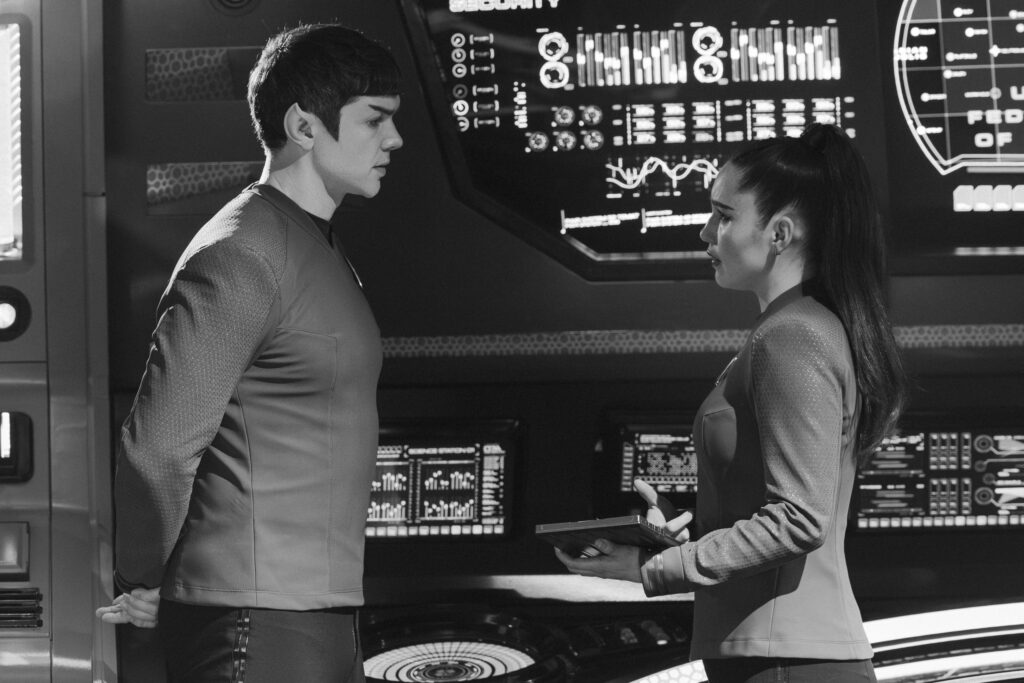
I like La’An and I like Chapel, which probably makes the disappointment worse. La’An becomes convinced that something happened to the recovered probe and spends much of the episode investigating a possible security breach. Scotty and Ortegas become red herrings, suspicious signals are followed, and eventually the trail leads to Chapel.
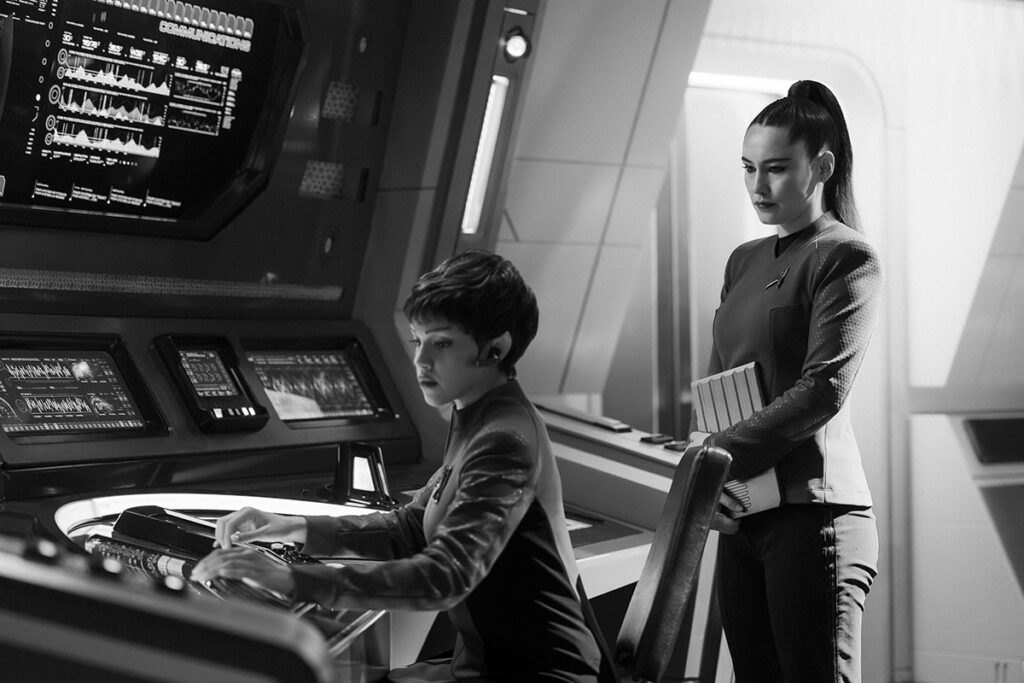
The explanation is that Chapel was protecting information connected to an unsanctioned Federation medical mission that crossed into Klingon territory to answer a distress call. The thematic connection to Una’s story is obvious. Chapel has also been involved in breaking the rules to help people on the wrong side of a political boundary, and La’An eventually has to decide whether her responsibility as a security officer outweighs her understanding of why Chapel did it.
The problem is that Una’s story is already exploring that conflict much more effectively.
The Enterprise material spends a considerable amount of time reaching almost the same moral question through a much less interesting route. After all the suspicion and procedural investigation, Chapel protecting people who acted out of compassion feels like a thin conclusion. The two stories rhyme, but repeating a theme is not necessarily the same thing as developing it.
It is a shame because both characters deserve stronger material. Chapel in particular feels reduced to the answer at the end of La’An’s investigation rather than someone genuinely wrestling with what she helped conceal. I would happily have traded some of this subplot for more time on Mat’aar XII, particularly if that additional space had allowed Una’s personal connection to the resistance to develop further.
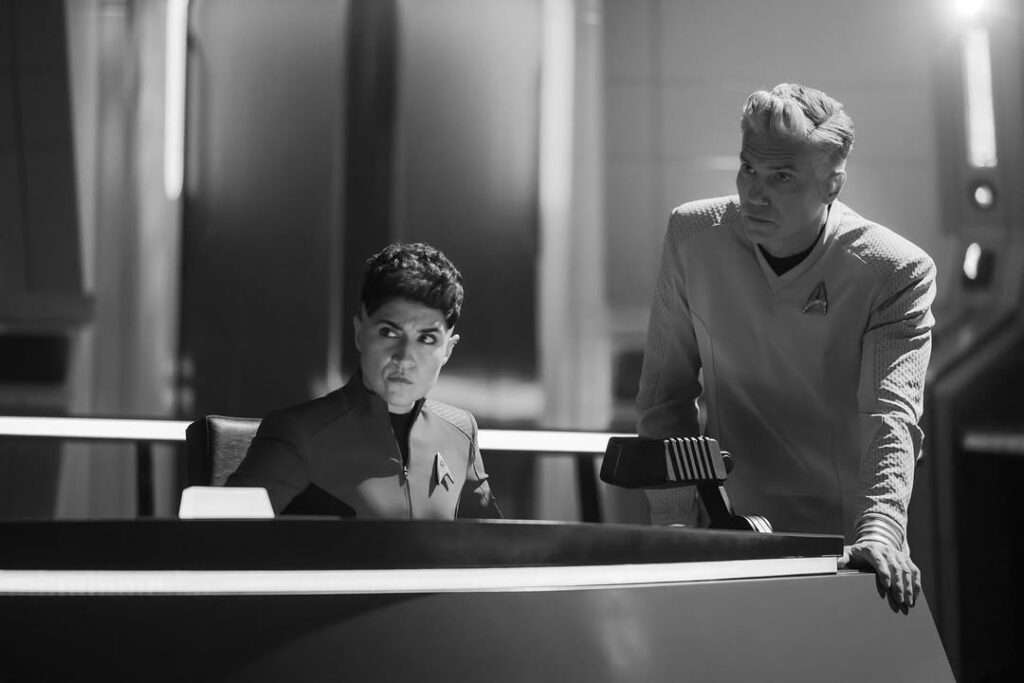
Visually, the episode is frequently beautiful. The cinematography does more than remove the colour and call the job finished. Faces fall into shadow, corridors become pools of light and darkness, and the smoky nightclub is framed in a way that genuinely understands what chiaroscuro is meant to achieve. The costumes are equally important because monochrome makes shape, texture, and silhouette do much more of the work.
Rebecca Romijn looks fantastic in the long coat and fedora, and most of the production design hits exactly the tone the episode is aiming for. I did occasionally find some of the clothing a little too polished, though. Certain jackets catch so much light that I found myself looking at how shiny and reflective they were rather than at the character wearing them. That sounds like an absurdly minor complaint, and it probably is, but in an episode where lighting and texture matter this much, those small details become much more noticeable. I would have toned some of that sheen down.
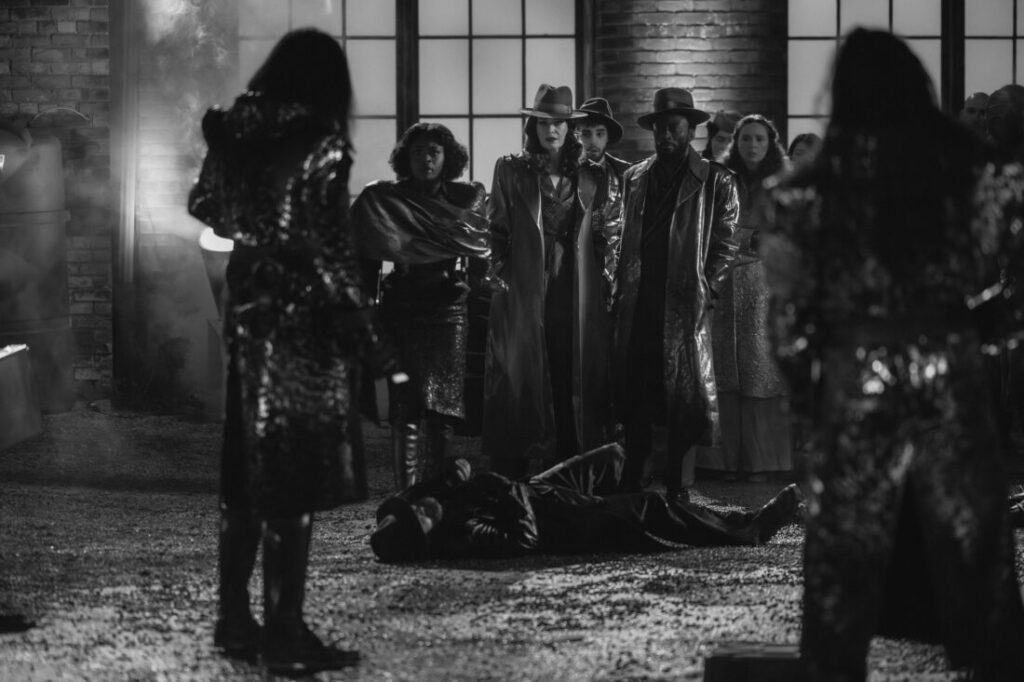
I am still unsure about extending the black and white photography to the Enterprise scenes. There is an in-universe explanation for why the crew continues to perceive things that way, so it is not a logic problem. I am simply not convinced it was the strongest visual choice. Keeping Mat’aar XII in monochrome while returning the Enterprise to colour might have created a stronger separation between the occupied world and the relative safety of the ship. As it stands, some of the Enterprise material looks slightly murky rather than atmospheric.
That is one part of the episode I want to reconsider on another watch because I can also understand the argument for maintaining the visual language throughout.
The return of colour at the end works beautifully. As the shuttle leaves Klingon space, colour slowly begins to seep back into the frame. It is simple and restrained, and nobody feels the need to explain the symbolism. Una has left the monochrome world behind, but she has not left with a completely clear answer about whether what she did was right.
That uncertainty is where “A Case of Chiaroscuro” is at its strongest.
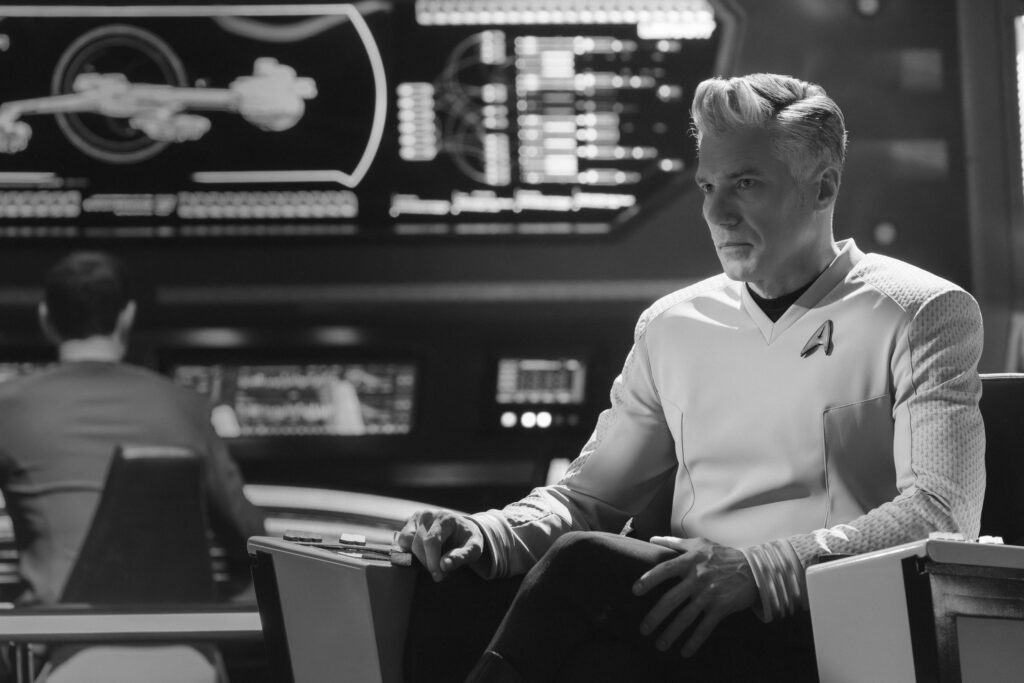
I admire the episode slightly more than I enjoy it. The photography, production design, performances, and central moral argument are all strong. The doppelgänger plot remains a huge contrivance for me, the Enterprise subplot takes up more space than it earns, and I think Una’s personal connection to the occupation could have been explored a little further.
Yet I cannot dismiss it as Strange New Worlds simply doing another gimmick.
The noir concept gives the episode its visual identity, but it is not what gives it weight. That comes from Una having to choose between the safety of Starfleet regulations and the uncomfortable responsibility of deciding when those regulations are no longer enough.
Starfleet can draw a demarcation line and tell her exactly where its authority ends. It cannot make the moral decision for her.
7.5/10