Star Trek: TOS — “The Squire of Gothos” (S01E17) Review
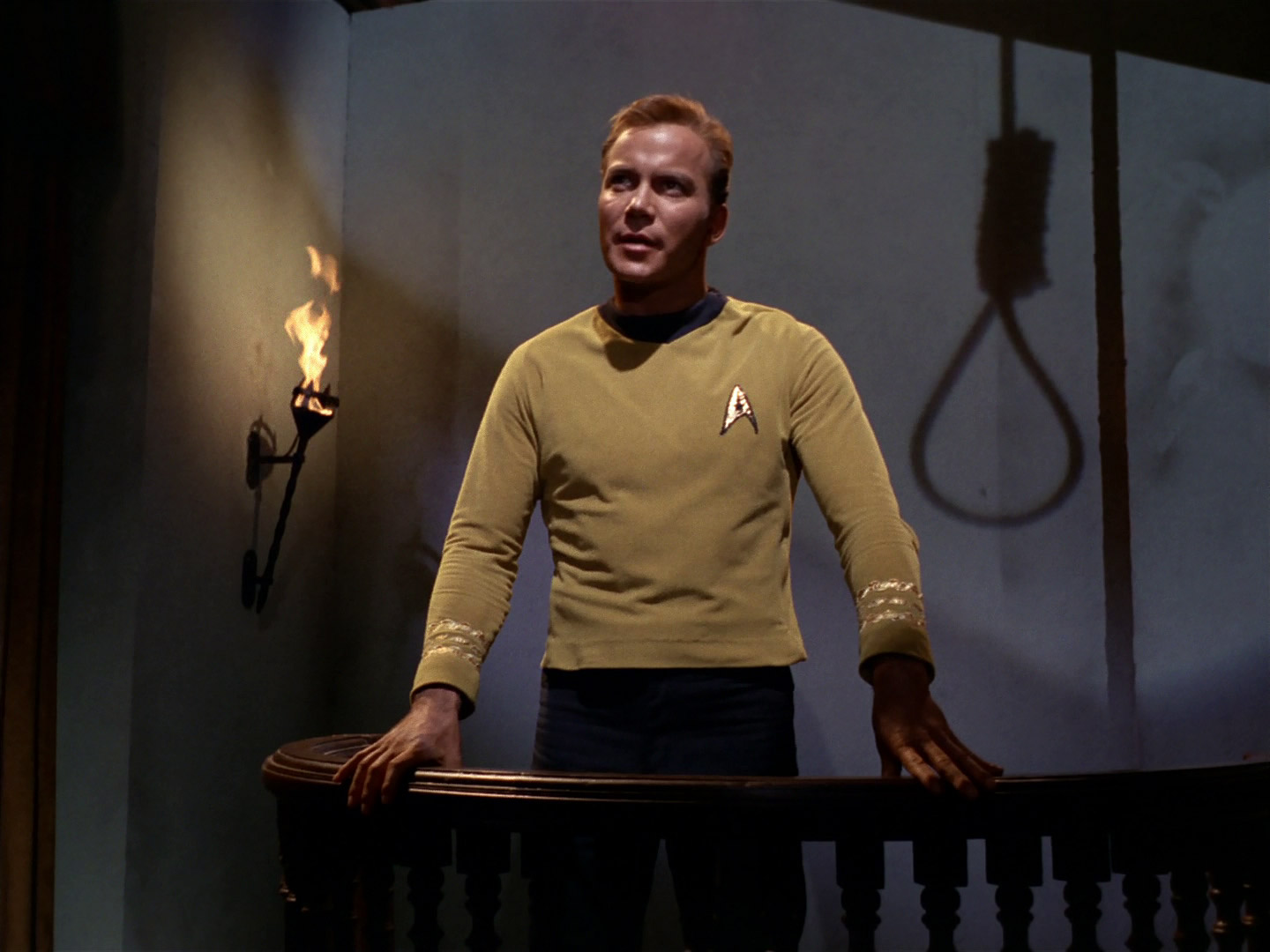
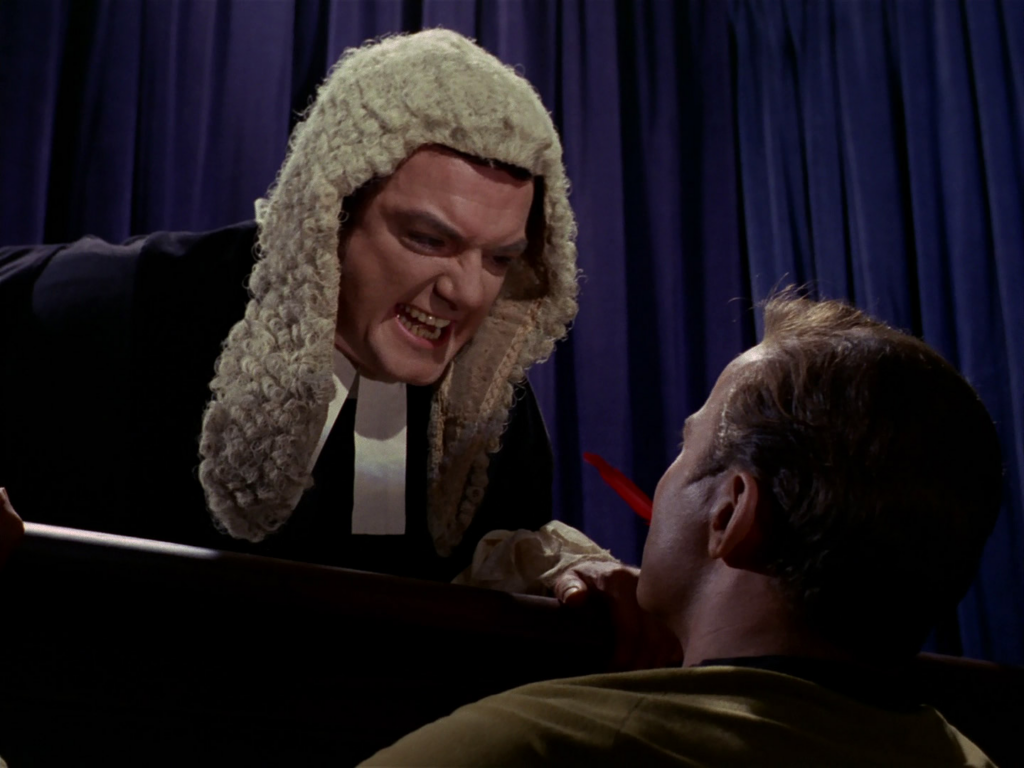
Trelane has the costume, the courtroom, and a prisoner. What he does not have is the slightest interest in justice. Kirk can answer his questions or refuse to answer them; the verdict belongs to the man enjoying himself behind the bench. Having discovered that his guest would rather leave, Trelane has decided to become his judge.
That is where “The Squire of Gothos” becomes most interesting to me. The absurdity remains, but the performance of civilisation has become an excuse for cruelty. His fire has no heat, his food has no taste, and his courtroom has no justice. Everything looks the part. Nothing does the job.
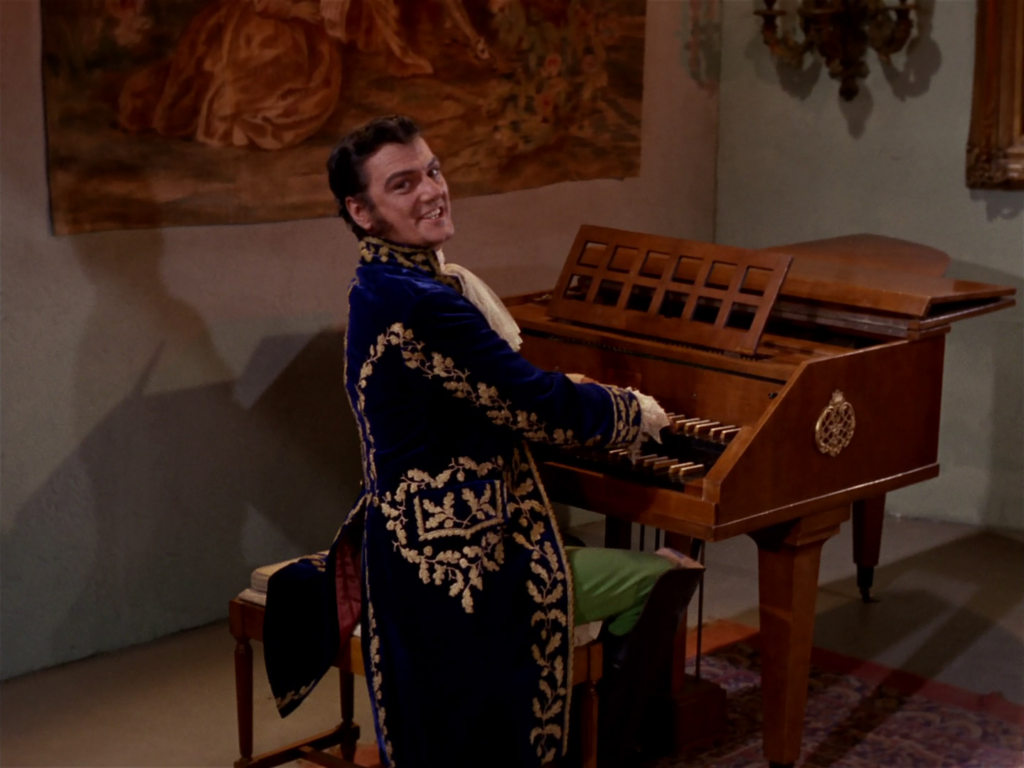
It is also where William Campbell makes it particularly difficult to look away.
Campbell is the main reason I enjoy this episode. His Trelane is delighted by practically everything about himself: his hospitality, his clothes, his elaborate manners, and his ability to make other people participate. There is something wonderfully exhausting about him. A short visit would be quite enough, even without a host who can fetch you back whenever he pleases.
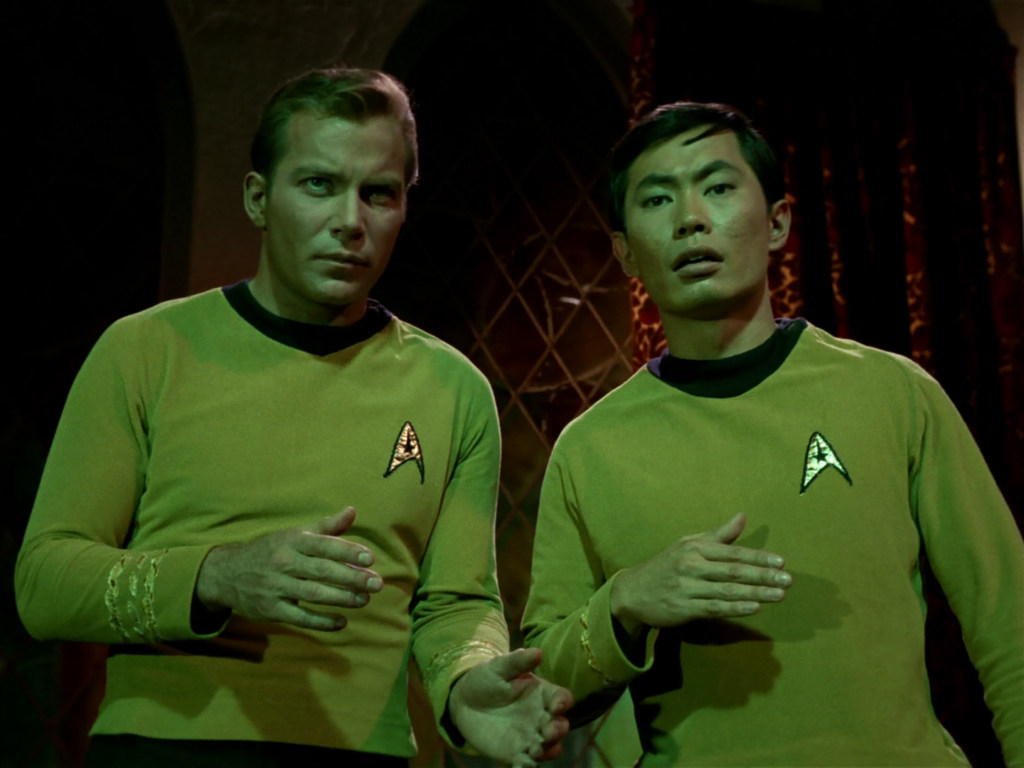
The performance is enormous, but it has a clear internal logic. Trelane expects appreciation. When he receives resistance instead, the pleasure curdles into wounded vanity. Campbell makes those changes feel like different expressions of the same personality, rather than abrupt switches between a comic character and a villain. The theatricality is funny until Kirk has to live with its consequences.
Knowing the final revelation does not spoil that performance. It makes the petulance easier to recognise. Trelane has been behaving like a child throughout; we have simply been distracted by the adult body and the impressive wardrobe.
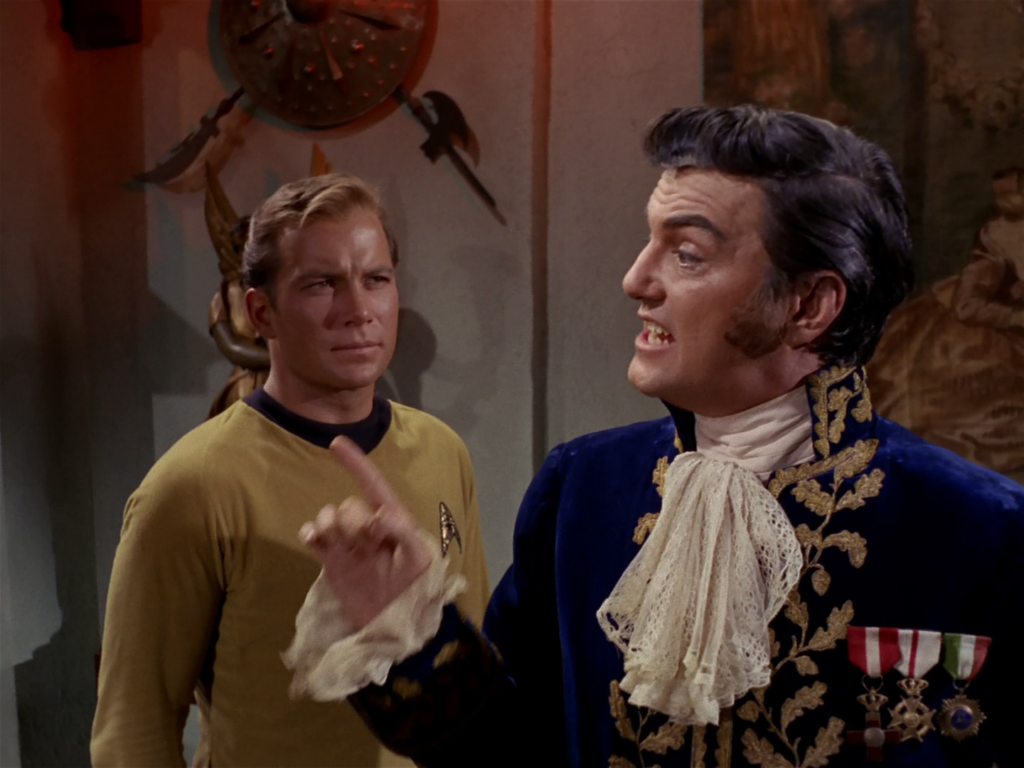
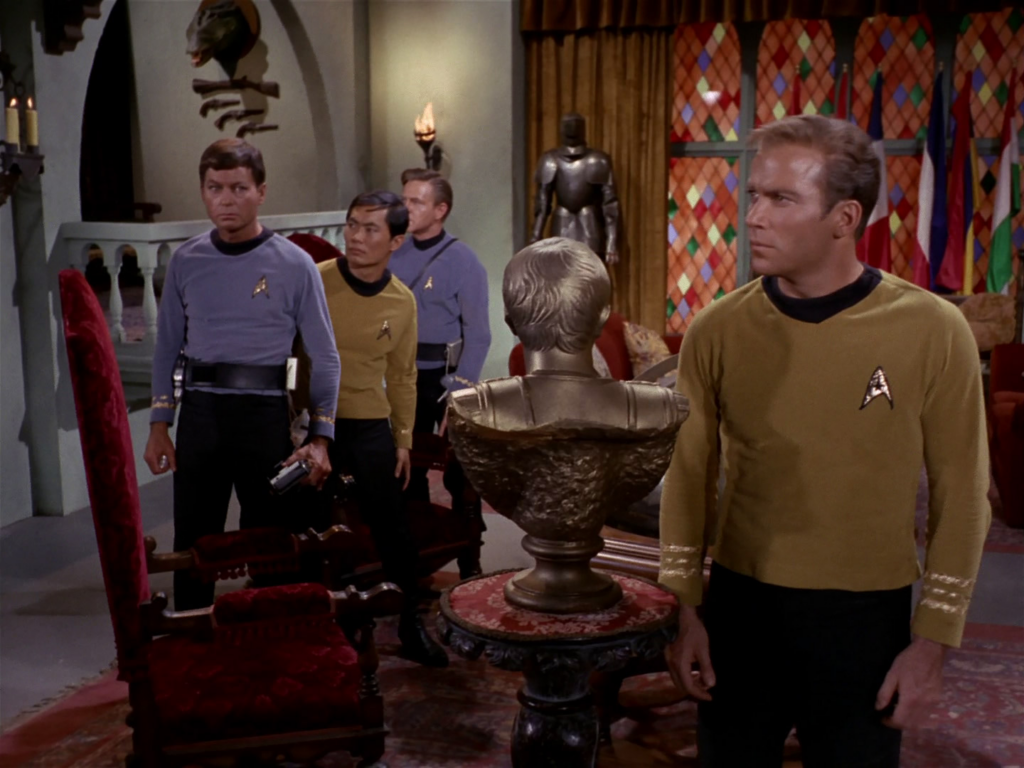
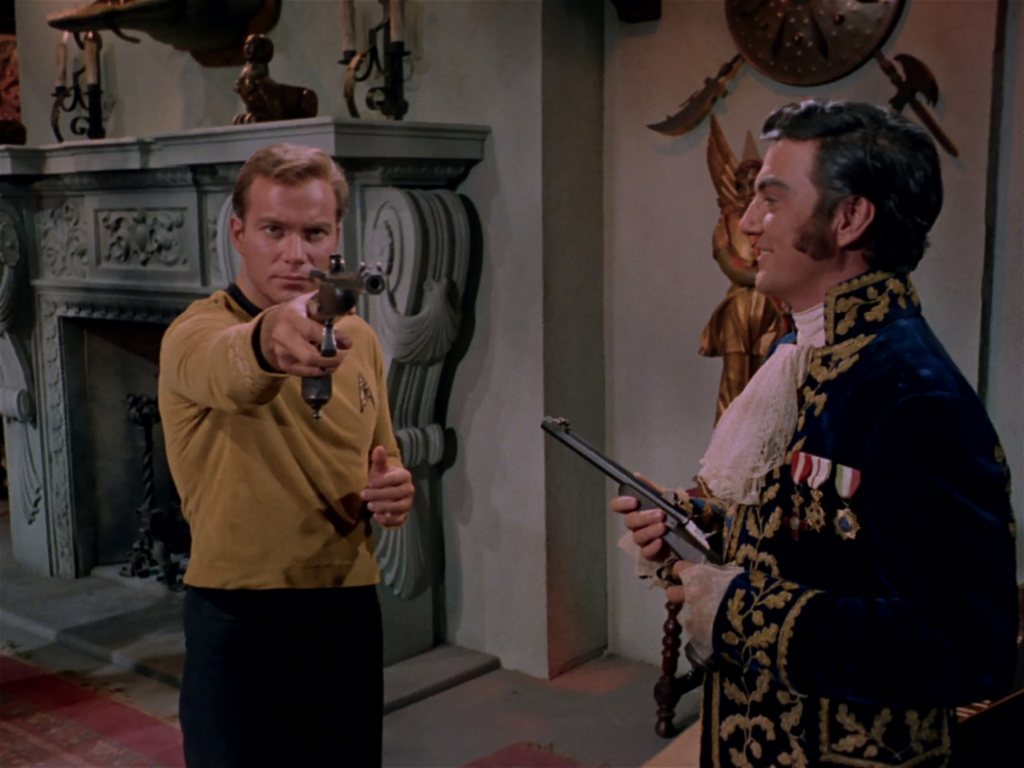
His drawing room is an extension of that pretence. It is furnished to impress, crowded with objects that suggest taste, experience, and authority. Yet the details betray how little he understands the world he is reproducing. He can provide a meal without knowing what makes food worth eating. He can imitate hospitality without understanding that a guest must be free to decline it.
The same failure shapes his enthusiasm for military history. Trelane admires the pageantry of conquest, but the people involved barely seem to register except as participants in an exciting spectacle. Starfleet’s practical uniforms look wonderfully out of place in his elaborate setting. He reads the crew through the historical roles he wants them to occupy, then becomes irritated when they insist on being themselves.
His treatment of Uhura makes that particularly unpleasant. He calls her a “Nubian prize” and assumes Kirk acquired her on a raid. An officer becomes a possession in his version of events. The ugliness sits beneath the polished manners. Courtesy means very little when the person offering it does not recognise your independence.
Spock identifies the problem directly: “I object to intellect without discipline. I object to power without constructive purpose.” It is a satisfying rebuke because Trelane takes such pride in his accomplishments. Spock sees nothing admirable in the ability to do whatever you want if you have never considered whether you should.
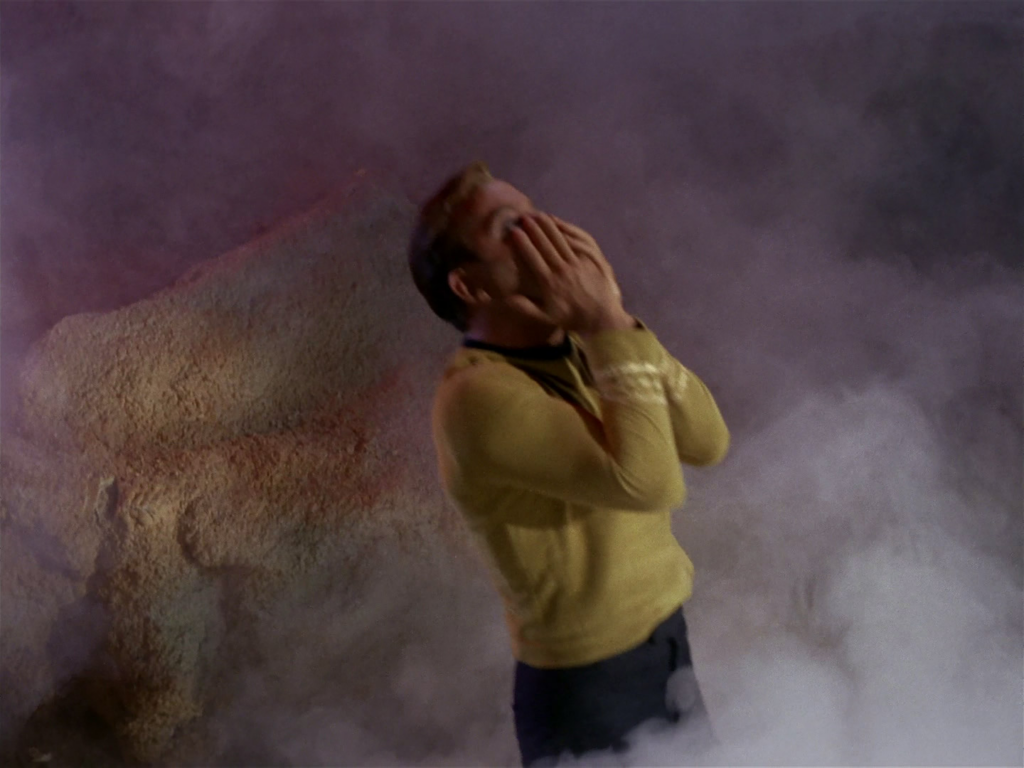
Kirk approaches the same problem more practically. He studies Trelane’s behaviour, works with Spock, and looks for a weakness he can use. Their suspicion that the mirror is connected to his power gives Kirk something to aim at. He provokes a duel, then uses his shot to smash the mirror and expose the machinery behind it. The challenge is a calculated attempt to turn Trelane’s preferred entertainment against him.
Kirk is observant, adaptable, and willing to take a risk for his crew. He cannot match Trelane’s capabilities, but he can recognise the vanity of someone who thinks his own superiority makes him untouchable.
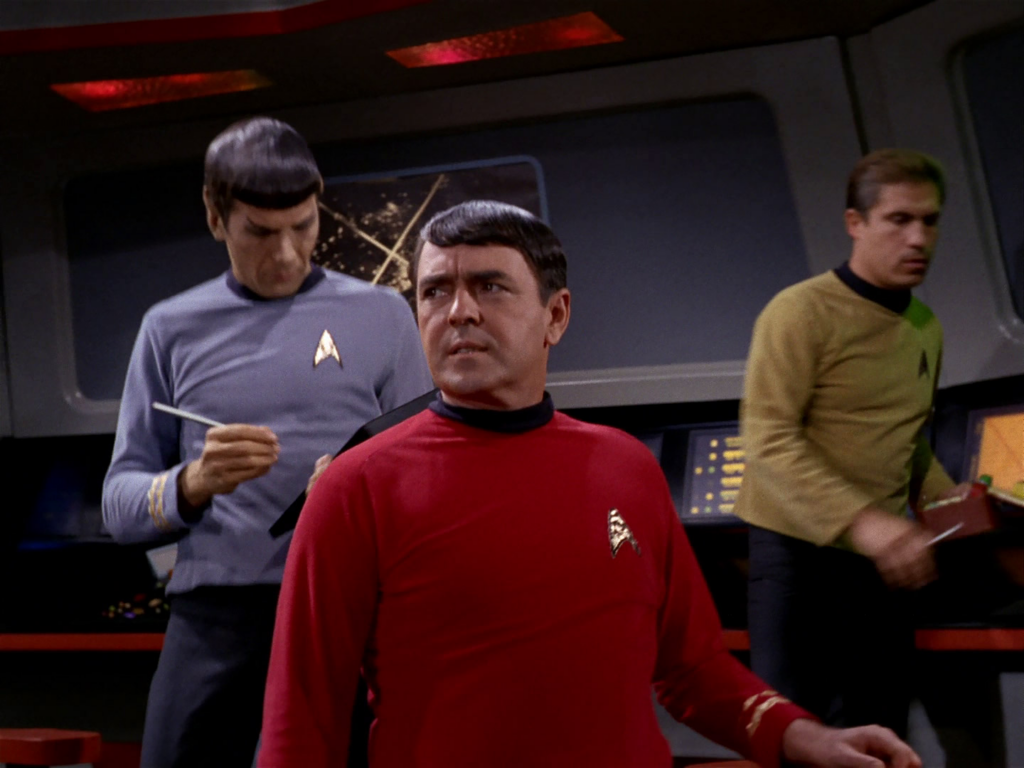
Unfortunately, the escape that follows barely lasts. Gothos keeps appearing in the Enterprise’s path, despite the ship changing course. Breaking the mirror has got them out of the room without getting them out of Trelane’s reach. It is an unsettling expansion of the threat, but it also starts to wear: Kirk finds a weakness, exploits it, and discovers that Trelane can carry on anyway.
The trial is the strongest development because it gives Trelane’s behaviour a more disturbing form. His hospitality has already concealed imprisonment; now legal ceremony conceals a personal grievance. The theatrical staging works because a courtroom ought to offer Kirk some means of being heard. Instead, the whole place exists to make Trelane’s anger look legitimate.
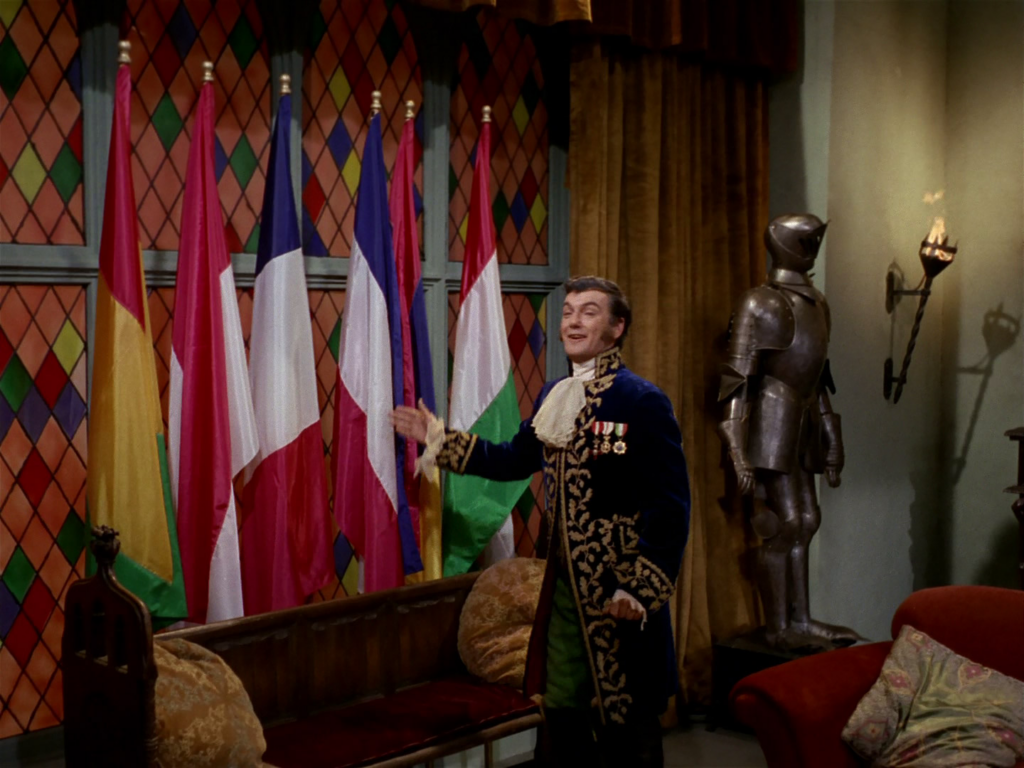
Kirk does find a way to use that vanity. He persuades Trelane that a hunt would offer more excitement than an execution, offering his own life as the stakes in exchange for the Enterprise’s freedom. That is a real achievement. He has understood his opponent well enough to negotiate a way out for everyone else.
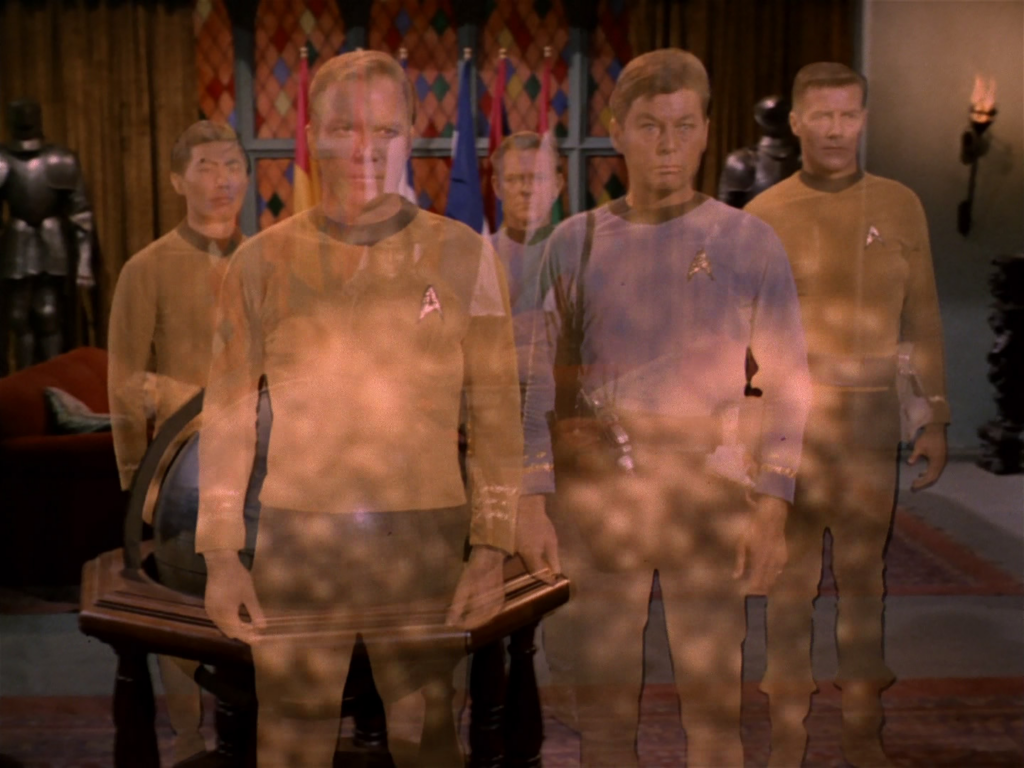
Then Trelane decides the hunt is such fun that he wants to bring the crew back. His agreement lasts only as long as it suits him. This is the repetition that bothers me: even a concession Kirk has earned can be withdrawn whenever the story needs to keep him trapped.
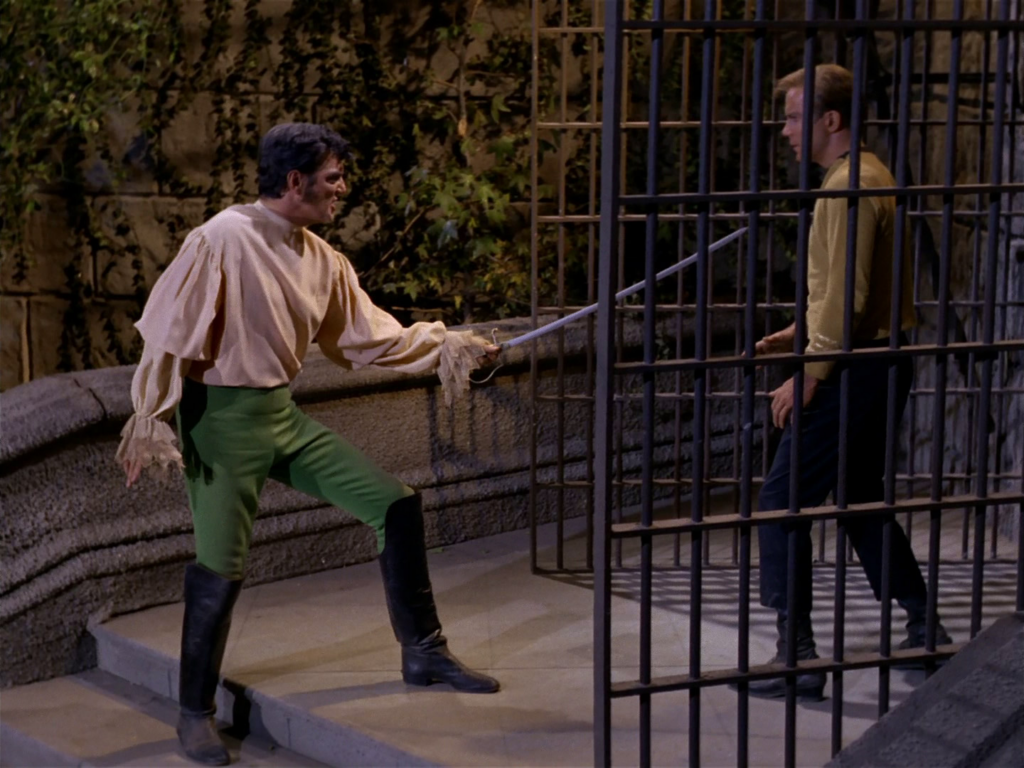
The arrival of the parents completes the character reveal, but it leaves that problem unresolved. Kirk refuses to submit and breaks Trelane’s sword, exposing the tantrum beneath the grand performance. His defiance matters, and the parents recognise the humans as beings with spirit. Yet the episode never establishes that Kirk’s resistance summons them or forces Trelane to release him. He wins the moral argument; someone else still has to stop the game. I wanted his understanding of Trelane to secure something the child could not simply take back.
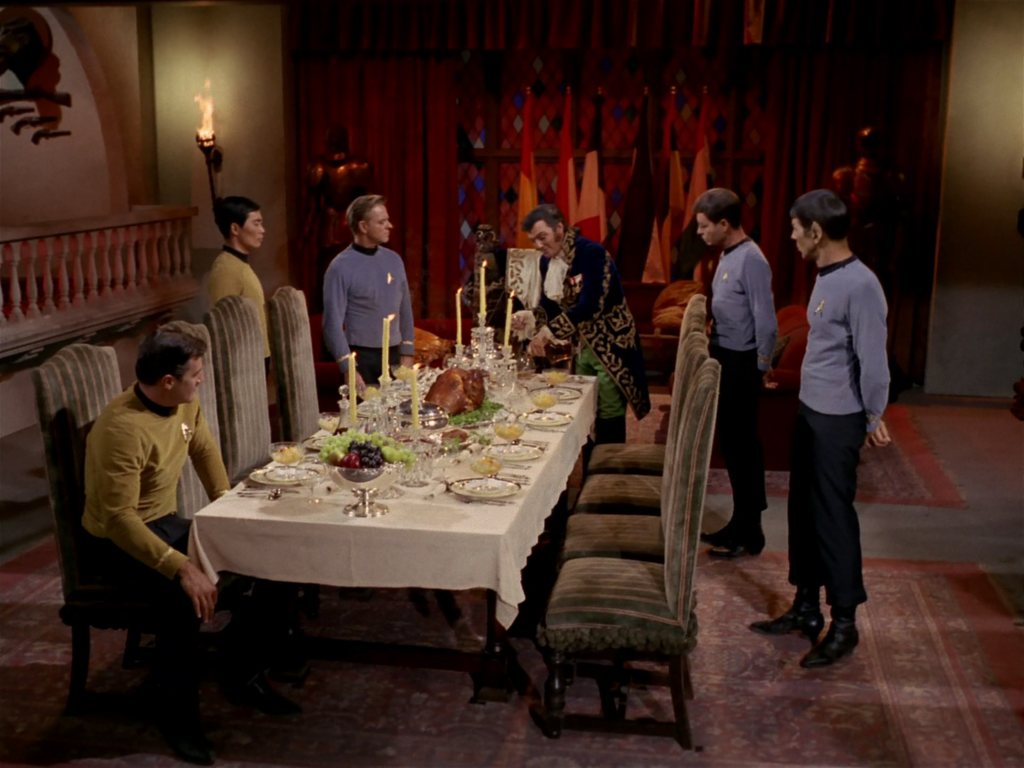
There is an obvious resemblance to “Charlie X”, although the emotional effect is different. Charlie’s removal is painful because of the human contact he is losing. Trelane is an indulged child being told that playtime is over. His humiliation fits, and Campbell sells it beautifully. The relief comes with a slight sense that the adults have arrived to finish an argument the episode could not settle.
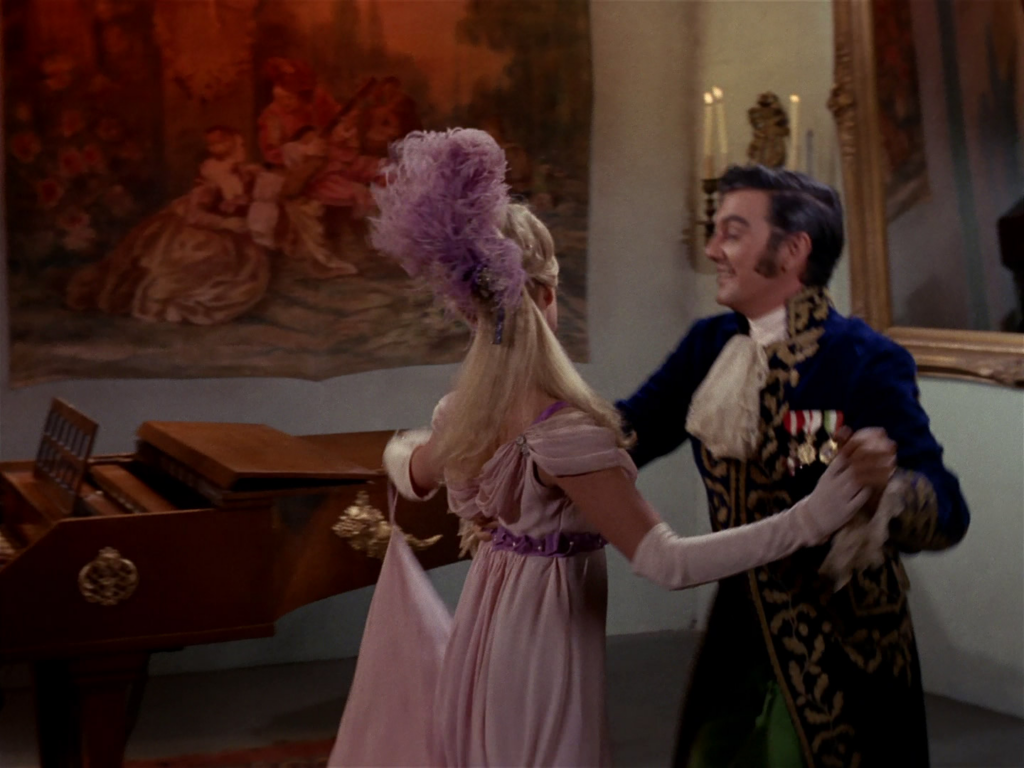
The ending explains Trelane better than it resolves that struggle.
Trelane does not need Q to justify his place in Star Trek, although the resemblance has a long history. Campbell wanted to play him opposite Q, and de Lancie has suggested that Roddenberry may have drawn on Trelane when creating the later character. Peter David’s 1994 novel Q-Squared had already made Trelane a member of the Continuum in licensed fiction, outside screen canon. Strange New Worlds went further in “Wedding Bell Blues”: de Lancie’s voice implies that the father is Q, with the producers confirming the relationship outside the episode. Q is not named on screen. I did not need the connection. Campbell’s performance works perfectly well on its own, and the Enterprise leaving without fully understanding what it has encountered helps preserve the scale of the universe.
The dating problem is a smaller irritation. The crew explain Trelane’s outdated picture of Earth through the 900 years its light would take to reach Gothos. With the Enterprise in the 23rd century, that should put his observations in the 14th, well before the Napoleonic trappings he favours. The numbers do not fit. It is worth acknowledging, but his misunderstanding of humanity is more interesting than any explanation I could invent for the arithmetic.
For all my reservations, this remains an episode I enjoy more than its repetitive plotting might suggest. Campbell gives Trelane an infectious delight that never quite conceals the danger, and the contrast between his cultivated surroundings and his emotional immaturity gives the spectacle something worth thinking about.
The courtroom stays with me because it exposes the limit of all that imitation. Trelane can reproduce the furniture of a civilised world. He cannot tolerate another person having a say in it.
7/10