What Do People Actually Do in Starfleet?
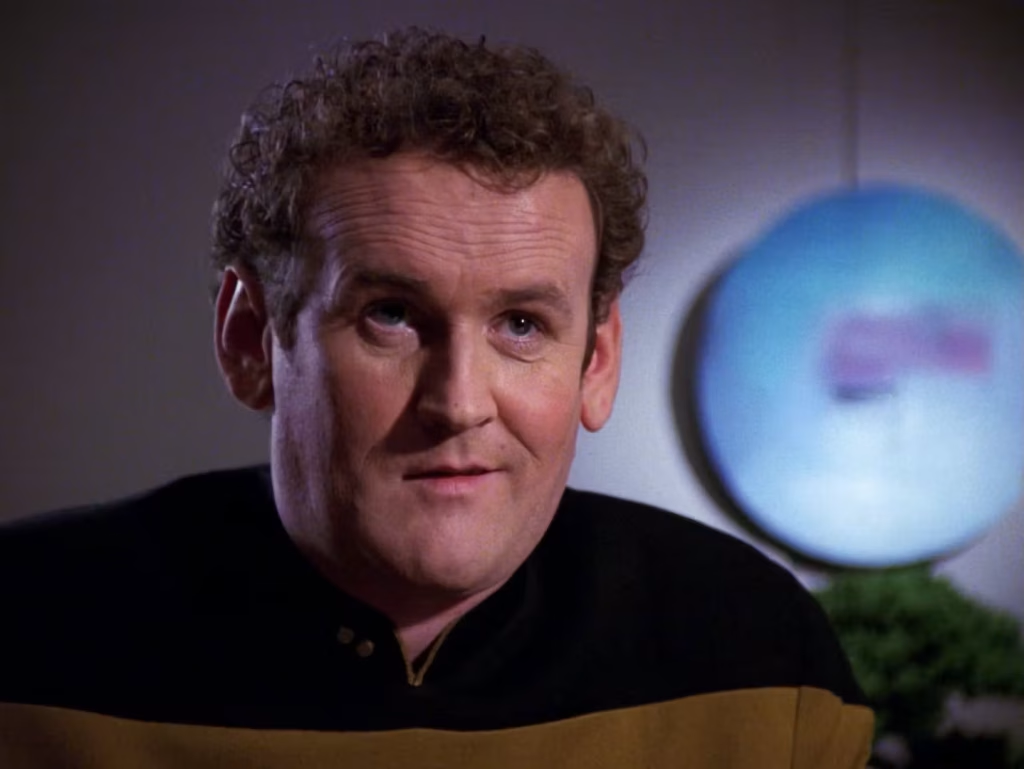
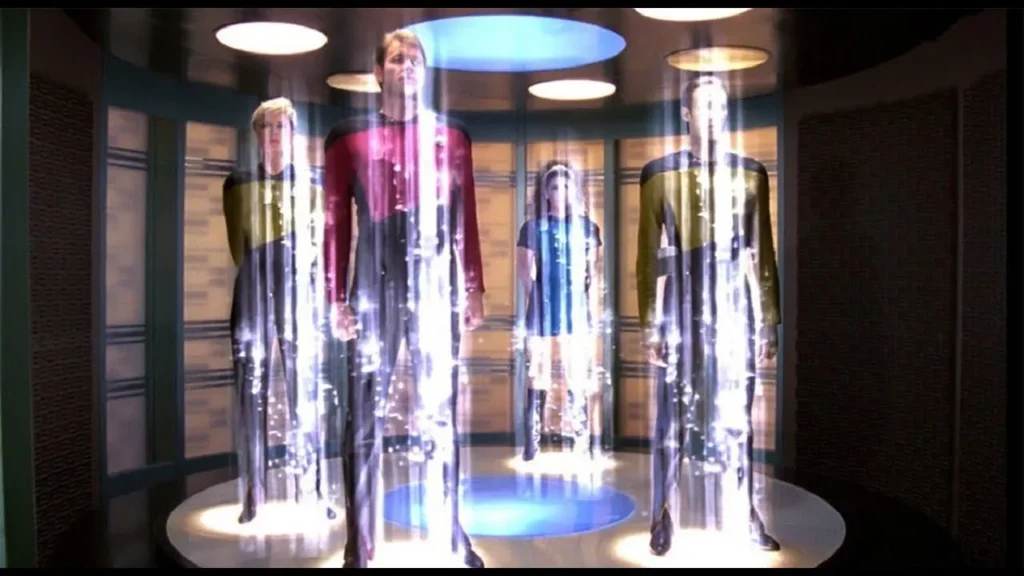
Miles O’Brien spends a surprising amount of The Next Generation standing behind a transporter console. People arrive, people leave, and occasionally somebody fails to arrive in quite the condition expected. O’Brien operates the machinery, reports whatever has gone wrong, and gets on with the job. For a man who would eventually become one of the most important technical figures on Deep Space Nine, it is an appropriately unglamorous introduction.
He isn’t the captain, the Chief Engineer, or somebody sitting at the centre of the bridge. For a long time, he isn’t even a character the series seems particularly interested in following. He is simply there, doing a job that has to be done. Even that gets complicated once you start looking closely, because O’Brien’s early rank presentation on The Next Generation is famously untidy. He appears with officer-style pips at various points, while the character who emerges more clearly later is an enlisted Starfleet specialist. By Deep Space Nine, there is no real ambiguity left. O’Brien is a non-commissioned officer who rises to become Chief of Operations.
That career eventually takes him from the Enterprise transporters to an enormous Cardassian-built station, through the Dominion War, and finally back to Earth to teach engineering at Starfleet Academy. StarTrek.com has even described that progression as moving from an enlisted crewman to professor of engineering. So, what, exactly, is his job?
It sounds like a simple question until you try to answer it.
I’ve watched Star Trek for long enough that I probably stopped consciously thinking about the uniforms years ago. I can look at the Enterprise-D bridge and read it almost automatically. Red means one thing, gold another, blue something else, and the layout of the room does half the organisational explaining before anyone speaks. It is one of those pieces of Star Trek visual language that works so well that you stop noticing it.
The problem comes when we mistake the shorthand for the organisation itself.
Starfleet is much messier than that, and the more closely I look at what its people actually do, the more interesting it becomes.
The uniform lies to us a little
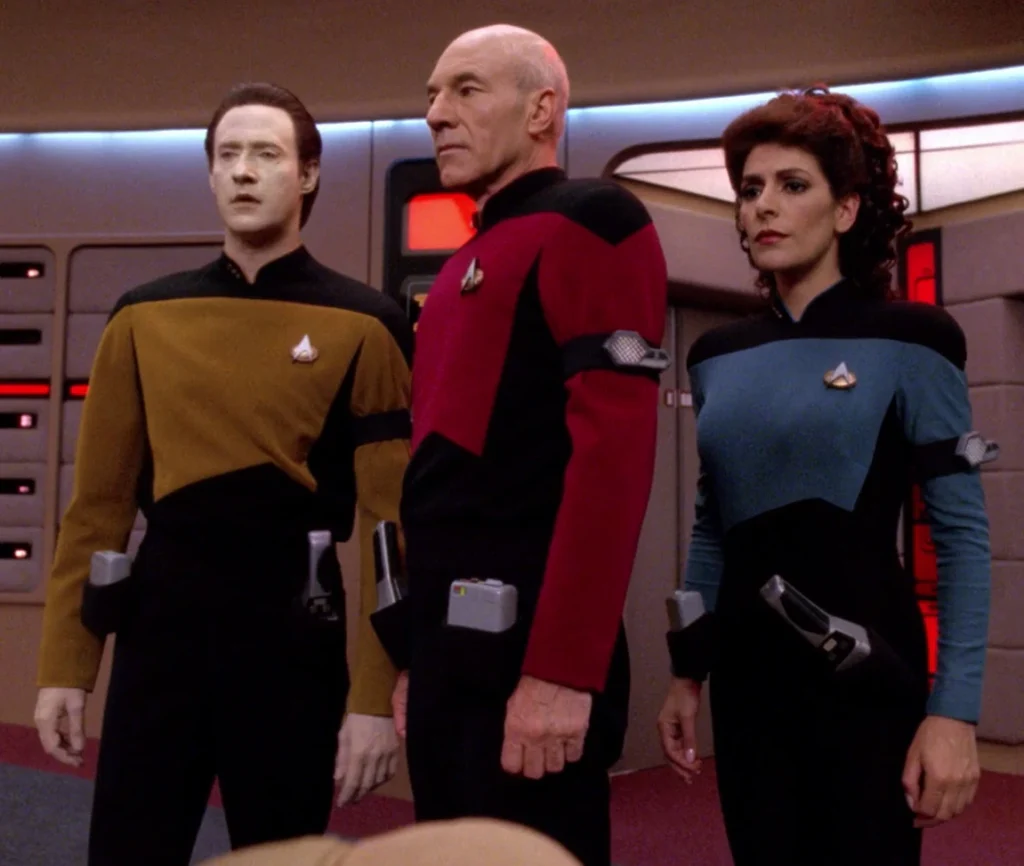
By the Next Generation era, the broad code is easy enough to understand. Command wears red, operations, engineering, and security generally wear gold, while sciences and medical wear blue. As television design, it is wonderfully efficient. Put an unfamiliar officer on screen and the audience already has some idea where they fit.
A division colour is not a profession, though. Data, Worf, Geordi La Forge, and Miles O’Brien can all wear gold while doing very different work. Beverly Crusher and an astrophysicist can both wear blue without sharing anything resembling the same professional training.
Geordi is perhaps the quickest demonstration of the problem. He begins The Next Generation as a lieutenant junior grade working at flight control, then moves into engineering and becomes the Enterprise’s Chief Engineer. His career changes, his rank changes, and his division colour changes with them. The uniform is telling us something useful, but it is not telling us everything.
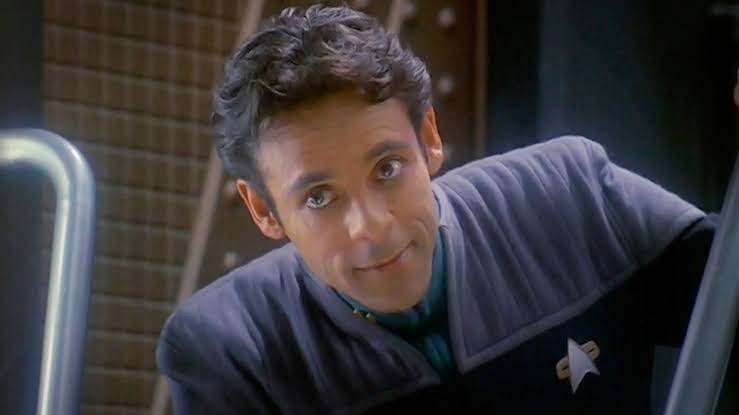
When we ask what somebody does in Starfleet, we are usually collapsing several questions into one. There is the organisation they serve, the department or division they belong to, their actual duty position, their profession or specialist training, and their rank. Sometimes those answers line up neatly. Sometimes they really do not.
Julian Bashir is a fairly clean example. He is a Starfleet officer in Medical, a physician by profession, and Deep Space 9’s Chief Medical Officer. He begins his posting as a lieutenant junior grade and later becomes a full lieutenant. Those descriptions overlap, but they do not mean the same thing.
O’Brien does not give us anything like that simplicity. Neither, once you start looking properly, does much of Starfleet.
The Enterprise-D only looks simple
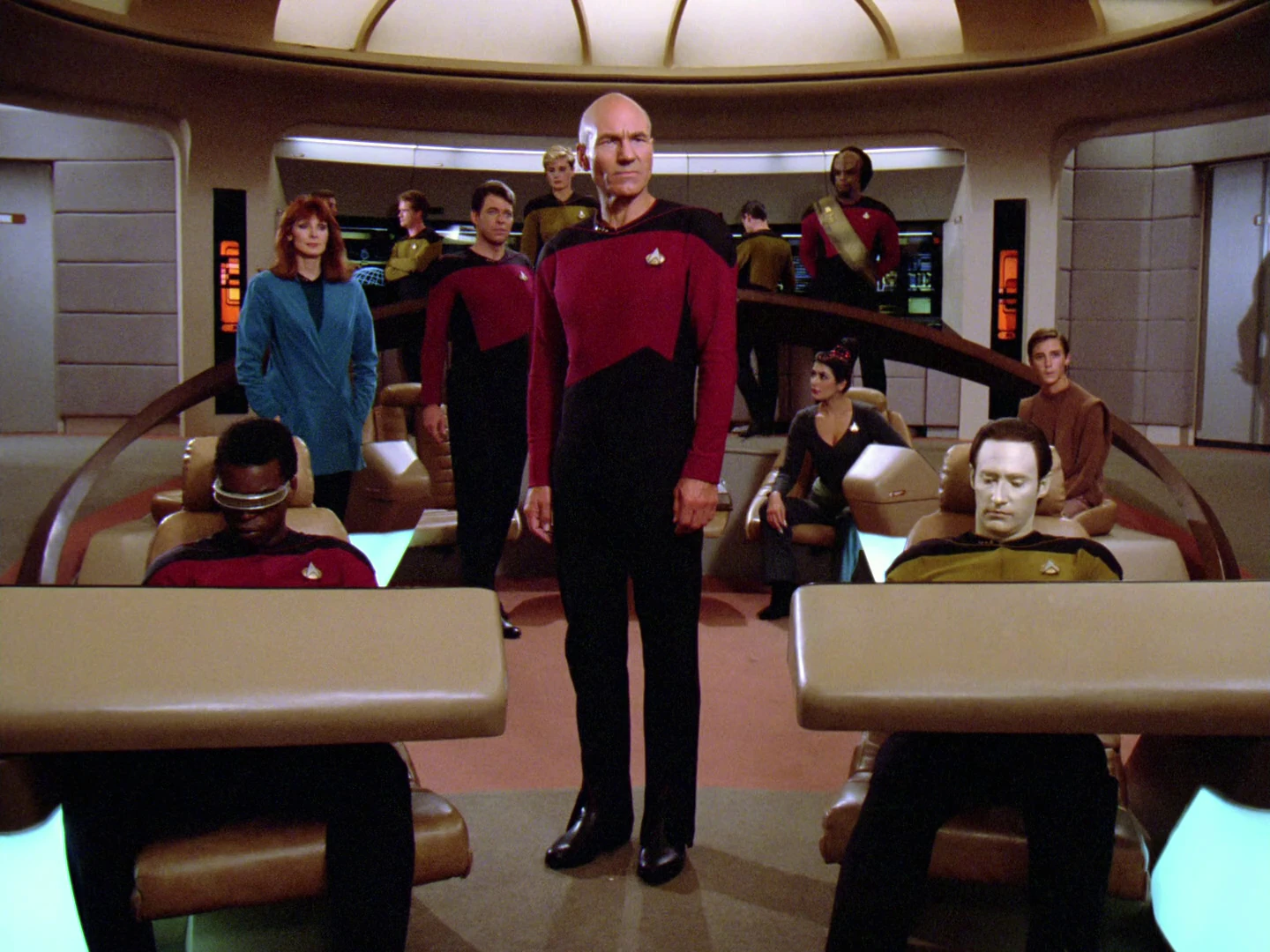
The Enterprise-D is probably one of the cleanest examples of Starfleet organisation we are ever given, partly because The Next Generation arranges its senior crew so clearly. Picard sits in the centre, Riker beside him, Data at Operations, Worf at tactical, while Geordi, Crusher, and Troi head or represent their own areas. The bridge is bright, open, and geometrically controlled. Everyone seems to have a place, and the room itself teaches us how authority flows.
Even there, the labels start slipping as soon as you inspect them.
Picard holds the rank of captain and the position of captain of the Enterprise. Those happen to match so perfectly that it is easy to forget they are two different things. Riker is a commander by rank and the Enterprise’s first officer by position. When Picard is unavailable, Riker takes command because he is the executive officer and next in that command structure, not simply because he happens to have three pips on his collar. StarTrek.com consistently identifies him as the Enterprise-D’s first or executive officer.
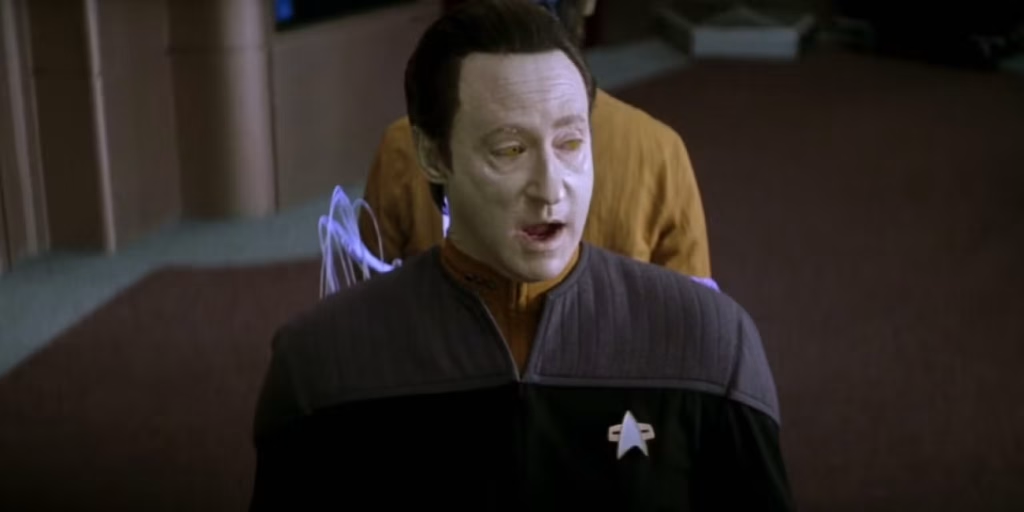
Data makes the distinction clearer. He is a lieutenant commander, the Enterprise’s second officer, and its Operations Manager. StarTrek.com notes that “Operations Manager” is the title shown for him on an on-screen crew manifest. His rank tells us one thing, his place in the command chain another, and his normal assignment something else again.
Operations are particularly useful because Starfleet seems to use the word with impressive flexibility. Data works at Ops on the Enterprise, Harry Kim performs the operations role aboard Voyager, and O’Brien becomes Chief of Operations on Deep Space 9. There is overlap between what those people do, but not enough that I would want to hand all three of them the same job description and quietly leave the room.
Troi gives us another version of the same idea in “Thine Own Self”. She is already the Enterprise’s counsellor when she decides to pursue bridge-command qualification. Passing the test and earning the rank of commander does not suddenly turn her into a different professional. She remains a counsellor who now also has the qualification and authority to take command when required.
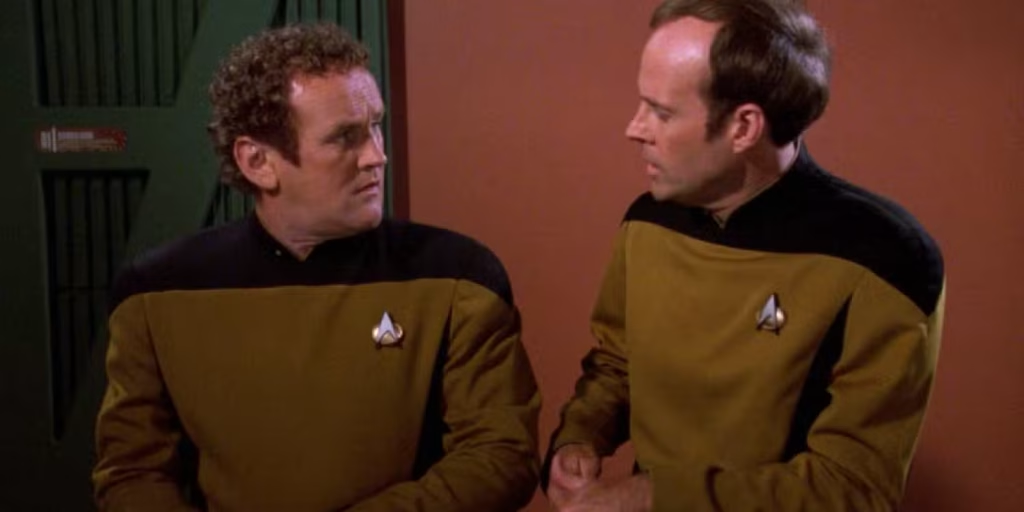
That is enough examples to establish the point. Starfleet careers are not character classes. People retrain, acquire qualifications, move departments, and take positions that do not always fit neatly inside the colour they started with.
O’Brien gives us a much more ordinary demonstration in “Realm of Fear”. Barclay is terrified of the transporter and convinced that something is happening to him during transport. O’Brien is not there because he outranks Barclay. He is there because he knows the transporter system, and when Barclay insists something is wrong, O’Brien and La Forge help investigate it. It is a small scene, but I like what it says about the organisation. Rank matters, position matters, and sometimes the person you need is simply the person who knows the machine.
The bridge crew are only the visible part of the Enterprise anyway. Beneath them are engineers, nurses, scientists, security officers, shuttle pilots, transporter personnel, laboratory staff, maintenance crews, administrators, and specialists whose names we may never hear. The Enterprise-D also carries families and civilians, which means people such as Guinan and Mot live or work within the ship without being Starfleet personnel.
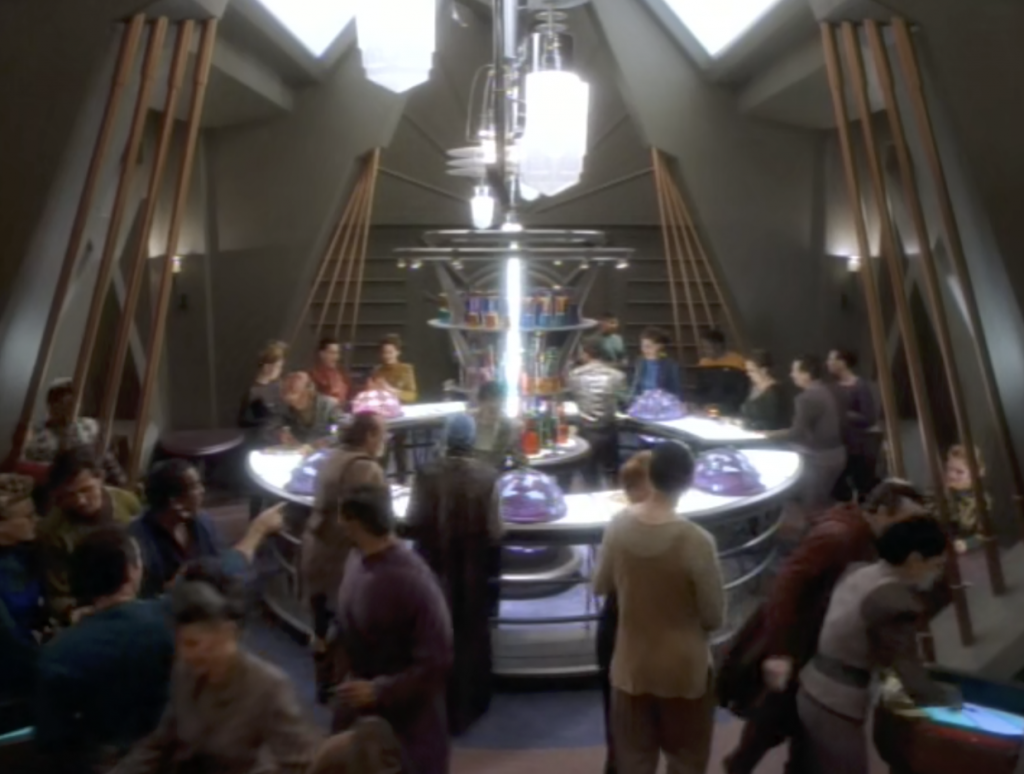
From the bridge, the Enterprise-D looks wonderfully tidy. From the corridors, it starts looking more like a small travelling city.
Deep Space 9 breaks the model
Then you arrive on Deep Space 9, and the neat version falls apart almost immediately.
Benjamin Sisko is a Starfleet officer commanding a former Cardassian station now operated through a Bajoran and Federation partnership. The station was Terok Nor under Cardassian occupation before becoming Deep Space 9, with Bajoran and Starfleet personnel working together after the Cardassian withdrawal.
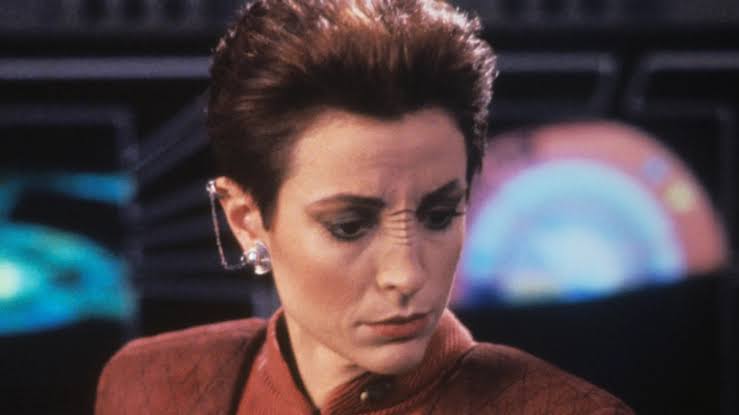
Sisko’s first officer is Kira Nerys, who is not a Starfleet officer at all. She is a member of the Bajoran Militia and serves as Sisko’s second-in-command for most of the series. The person immediately beneath a Starfleet commander in the station’s working hierarchy therefore belongs to another service and another government.
That alone should warn us against trying to draw DS9 as a simple Starfleet organisational chart.
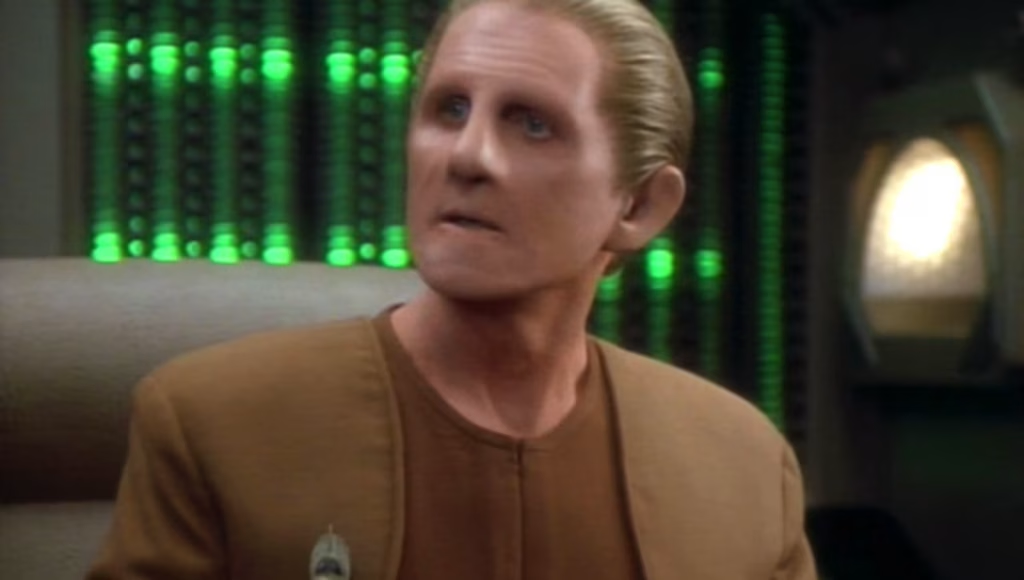
Odo makes it even clearer. He is the station’s security chief, but he is not a Starfleet security officer. He does not wear the uniform or carry a Starfleet rank, yet when there is a murder, theft, smuggling problem, or security threat on the station, Odo is the person everyone expects to deal with it. The authority exists without the Starfleet insignia.
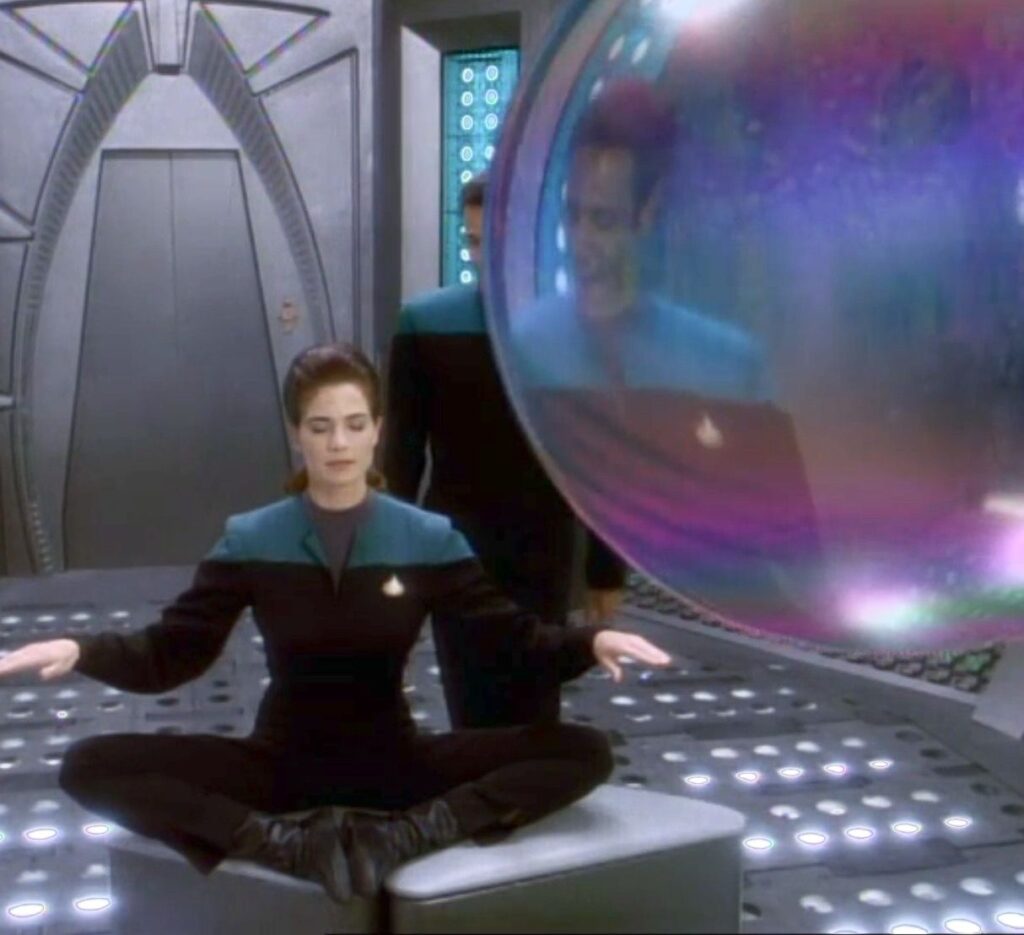
Bashir is much easier to place. He is Starfleet, he is a doctor, and he is the station’s Chief Medical Officer. Dax is its science officer, though that title is almost comically broad when applied to a joined Trill carrying several lifetimes of experience. StarTrek.com identifies Jadzia as DS9’s chief science officer and a Trill scientist.
Then we reach O’Brien, and this is where I think Starfleet becomes much more interesting than its uniforms make it look.
O’Brien is Chief of Operations while remaining an enlisted man. StarTrek.com identifies him as a Senior Chief Petty Officer and repeatedly describes his move from transporter chief aboard the Enterprise-D to Chief of Operations on Deep Space 9. His job puts him in charge of keeping an enormous Cardassian-built station functioning while Starfleet technology is grafted onto systems never designed with Federation engineers in mind.
There are commissioned officers aboard the station who outrank him. That does not make them his technical superiors in every situation. Anyone who has spent time in a large workplace probably understands this instinctively. The person with the grandest title is not always the person you want when something starts making a noise it definitely was not making yesterday.
That is one of the reasons O’Brien works so well as a character. His authority is partly organisational, but much of it comes from experience and expertise. Starfleet becomes a more believable workplace when competence matters alongside the formal hierarchy.
Worf’s arrival in “The Way of the Warrior” makes the same point from another direction. He has spent years associated with security and tactical duties aboard the Enterprise, but DS9 already has a security chief. Odo is not going anywhere simply because Worf has joined the cast. Worf instead takes on the role of Strategic Operations Officer, and StarTrek.com identifies that as his DS9 position.
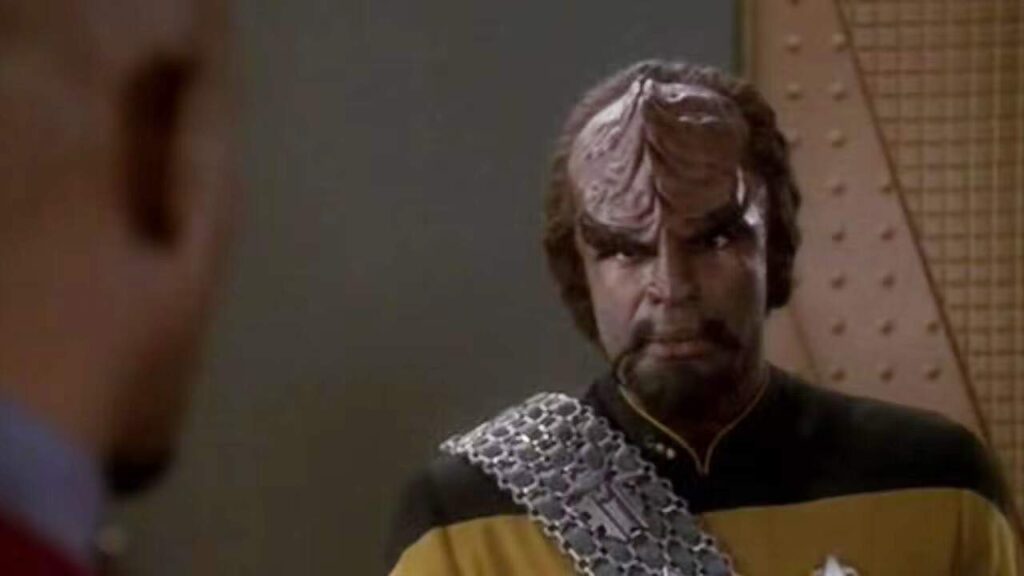
It is a lovely piece of world-building because nobody needs to stop the story to explain the organisational lesson. Worf’s previous experience remains useful, but DS9 needs something different from him, so his job changes.
The design of Ops reinforces all of this. The Enterprise-D bridge is built around obvious visual order, while DS9’s command centre is Cardassian architecture occupied by people who were never meant to work together there. Workstations rise around the room, Sisko’s office sits above the main floor, and Starfleet and Bajoran uniforms share the same space. The Enterprise bridge looks designed around its hierarchy. DS9 looks inherited, adapted, and negotiated.
The room itself looks like compromise.
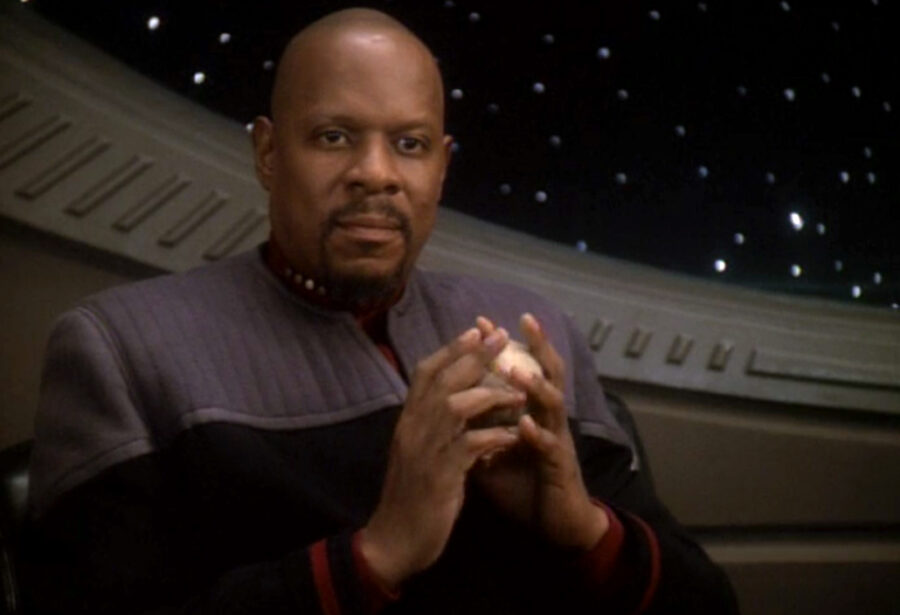
That is exactly what the station is.
Then there is everyone who does not fit either military structure. Quark runs a private business. Jake Sisko lives there without joining Starfleet. Garak runs a tailor shop while being, among several other things, Garak. Diplomats, traders, religious figures, refugees, visiting crews, and civilians pass through constantly.
Nog gives us the other side of that boundary because we actually watch him cross it. He begins as a civilian Ferengi teenager on the station, seeks admission to Starfleet Academy, becomes a cadet, and eventually serves as a Starfleet officer.
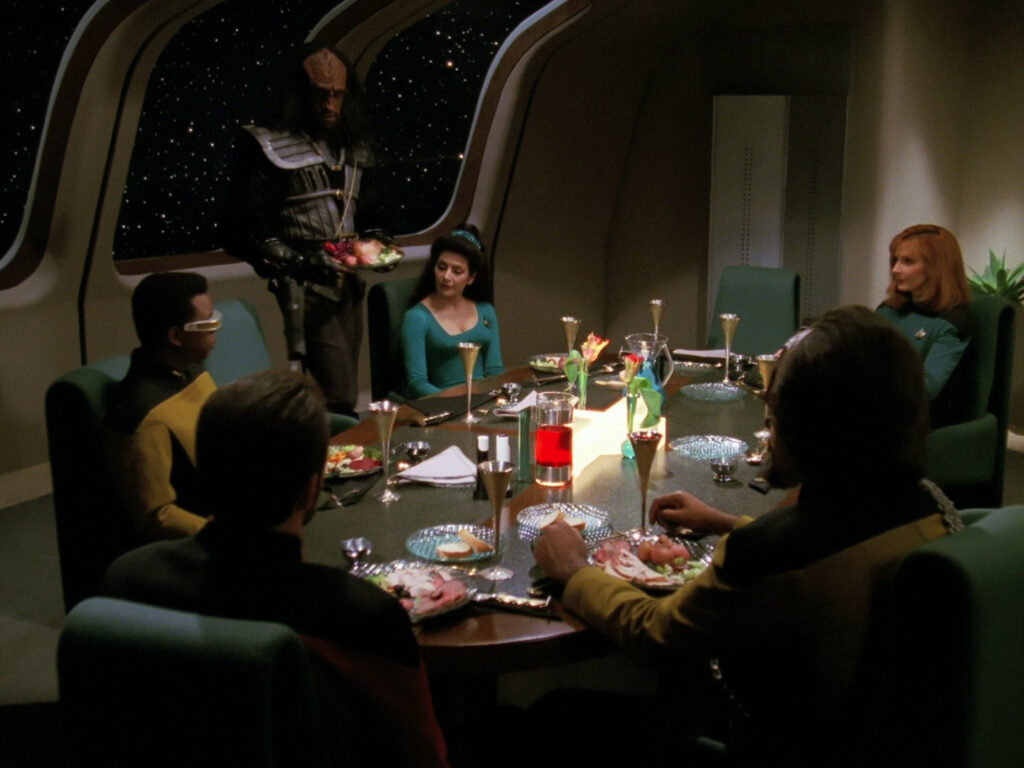
The Enterprise-D shows us Starfleet from inside one of its cleanest environments. DS9 lets us watch the edges, where Starfleet authority meets Bajoran authority, civilian life, diplomacy, commerce, religion, and people whose place in the hierarchy depends on which problem has just walked through the door.
That is where the simple uniform chart gives up completely.
The people the camera usually walks past
Once you stop treating the senior staff as if they are the whole organisation, Starfleet becomes enormous. Medicine, engineering, science, flight, and security are the obvious areas, but scattered throughout the franchise are archaeologists, psychiatrists, stellar-cartography specialists, medical technicians, intelligence personnel, legal officers, researchers, transporter specialists, Academy instructors, ship designers, and engineers working in disciplines narrow enough that we may only hear the title once.
I particularly like what Enterprise occasionally does with this. NX-01 belongs to a much younger Starfleet, and some of the production design hints at the organisation sitting behind humanity’s first Warp 5 ship. Its dedication-plaque material includes programme labels such as Spaceframe Engineering, with similar development and construction functions attached to the NX project. These are production-display details rather than jobs repeatedly established through dialogue, so I would not use them to build a rigid Starfleet org chart. They are still a lovely bit of texture.
They make the NX programme feel built. Archer and Trip did not wander into a hangar one Tuesday and decide humanity probably needed a Warp 5 starship. There had to be designers, engineers, testers, planners, analysts, technicians, and a small mountain of administration behind the thing before Archer ever got to complain that it was not going fast enough.
You can feel the aerospace programme behind the television show.
Lower Decks takes the people we usually walk past and puts the camera beside them. The Cerritos still has the familiar senior structure, but the series spends much of its time with junior Starfleet officers carrying out routine duties, training, changing assignments, chasing promotion, maintaining systems, and discovering that life in Starfleet includes a great deal more than arriving on the bridge just in time to save the quadrant. StarTrek.com’s own descriptions of the series emphasise its lower-decks crew getting on with their Starfleet duties while the senior staff handle the larger crises.
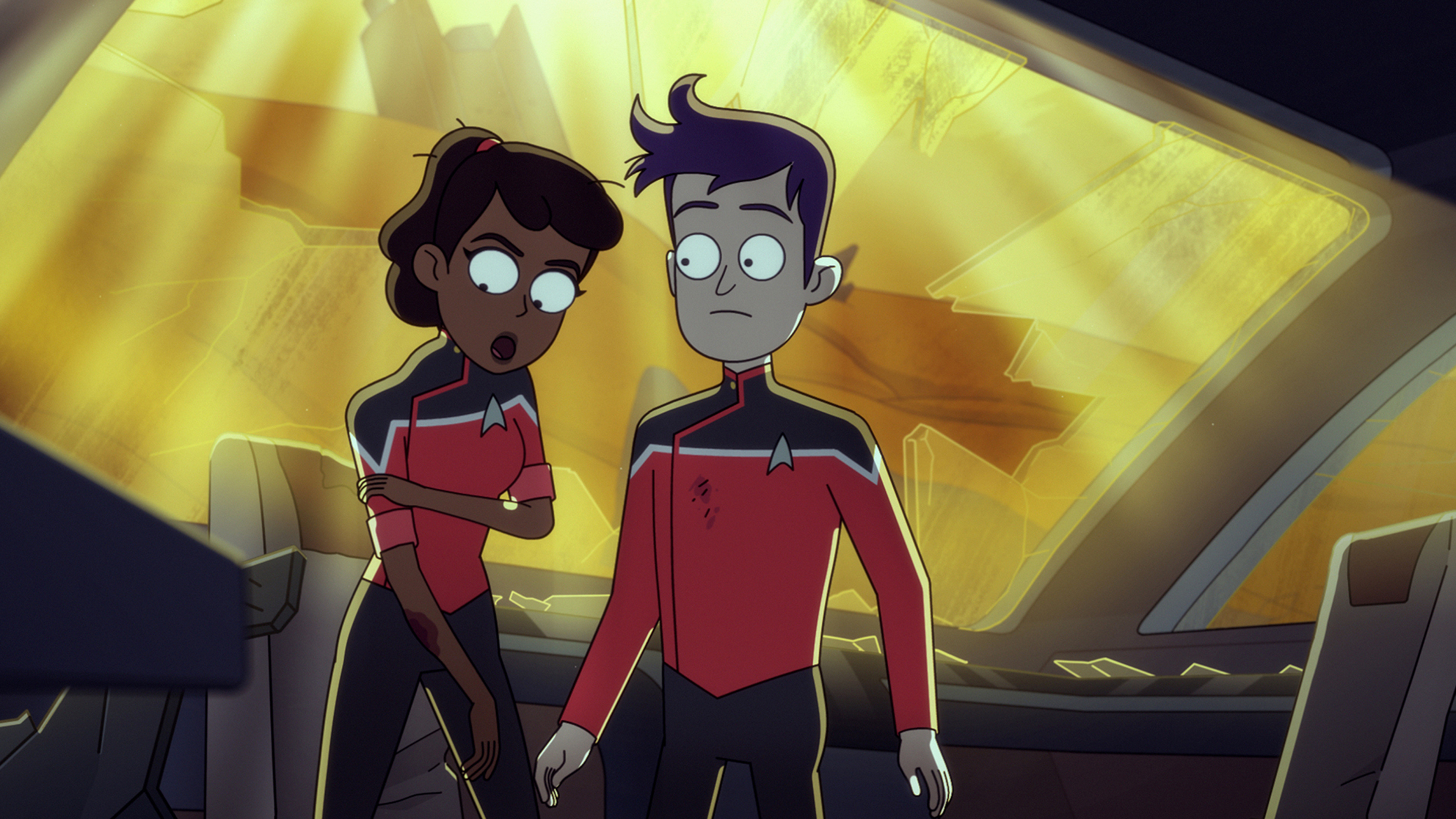
That may be one of Lower Decks’ best bits of world-building. It does not reveal that Starfleet suddenly developed ordinary workers in the 24th century. It just bothers to look at them.
Starfleet’s jobs change because Starfleet changes
There is another reason I do not think one perfect Starfleet organisation chart can ever work. We are looking at an institution across centuries.
The United Earth Starfleet of Enterprise feels closer to an exploratory aerospace service than the enormous Federation institution we see later. Travis Mayweather is the helmsman, Malcolm Reed is the Armoury Officer, and Hoshi Sato is a communications specialist and linguist at a point where speaking to the people on the other ship can still be one of the hardest technical and cultural problems in the room.
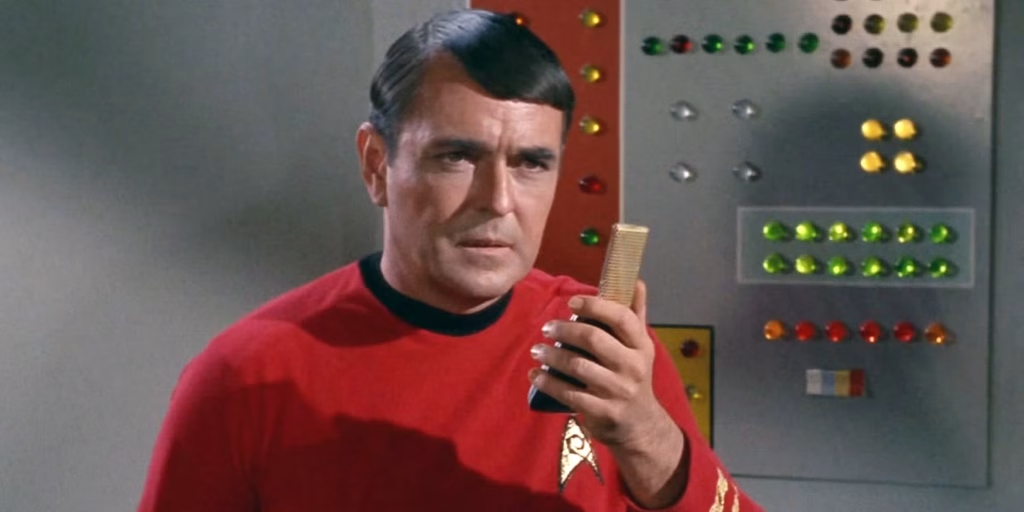
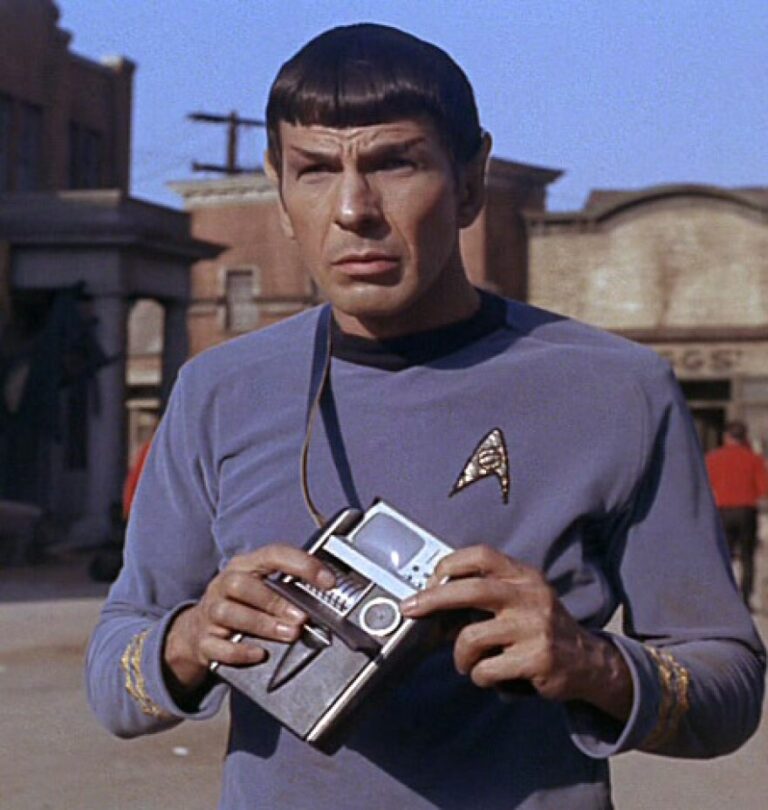
By Kirk’s era, the bridge positions are extremely readable. Sulu handles helm, Chekov handles navigation, Uhura handles communications, Spock is the Science Officer, Scotty runs Engineering, and McCoy runs Medical. The jobs are visually and dramatically distinct because the format benefits from them being so.
By The Next Generation, several of those functions have shifted or merged. Flight control absorbs work once split between helm and navigation, Operations becomes a broader bridge function, and communications increasingly disappears into other consoles, the computer, and the general running of the ship.
The work has not necessarily vanished. The technology has changed where the work lives.
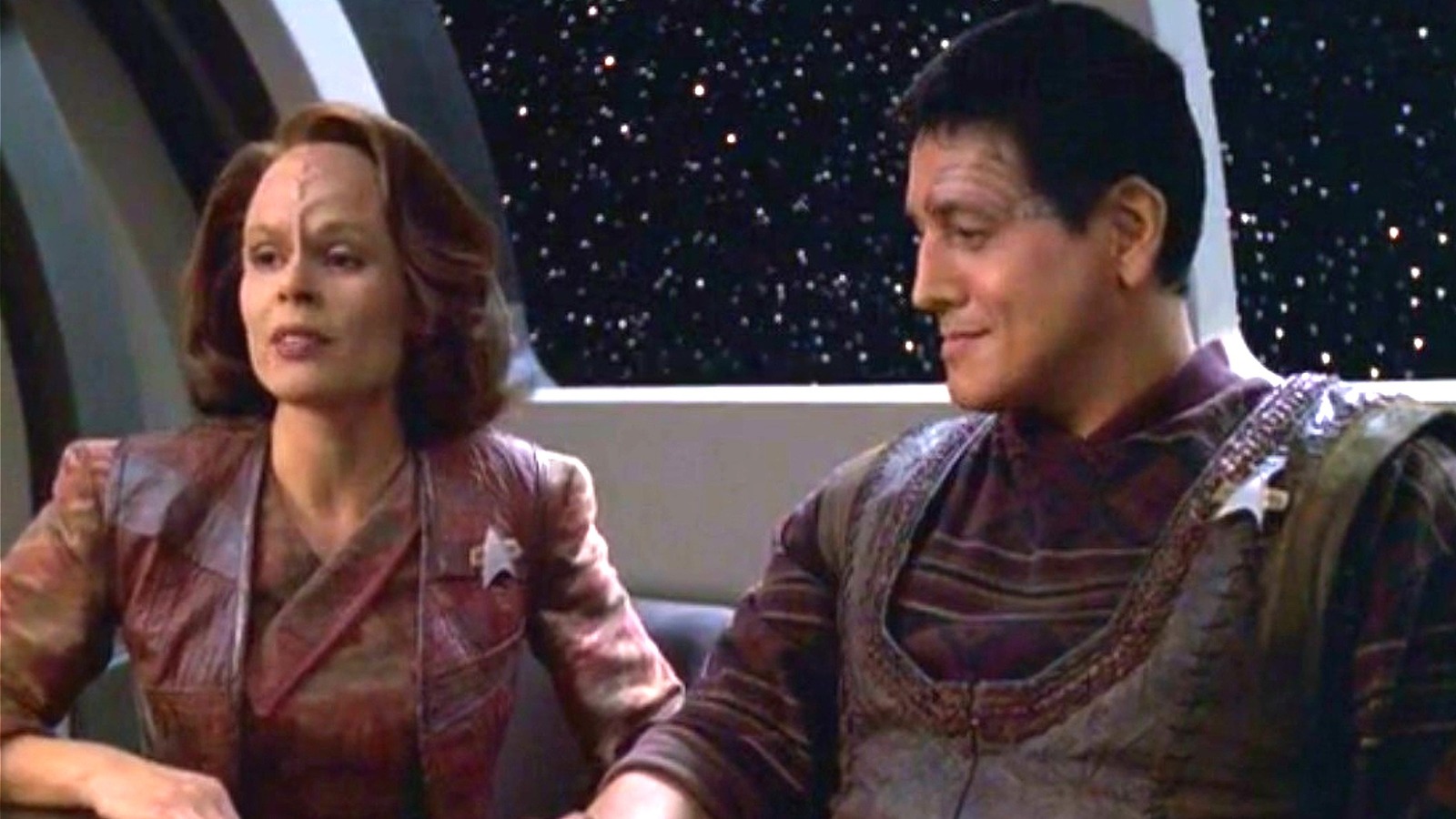
Voyager then shows what happens when the organisation cannot work as planned at all. Janeway loses key senior personnel almost immediately and has to merge Chakotay’s Maquis crew with her surviving Starfleet complement. Chakotay becomes first officer and B’Elanna Torres becomes Chief Engineer. The Emergency Medical Hologram becomes Voyager’s long-term doctor because the medical staff who should have filled that role are dead, while Kes trains as his assistant. After Kes leaves, Tom Paris takes on part-time medical-assistant duties alongside his normal work.
Seven of Nine adds another wrinkle. She becomes one of Voyager’s most useful scientific and technical specialists without holding a normal Starfleet commission during that period, working extensively in Astrometrics and contributing knowledge Voyager simply could not have obtained elsewhere.
Sometimes organisational theory meets reality and reality wins.
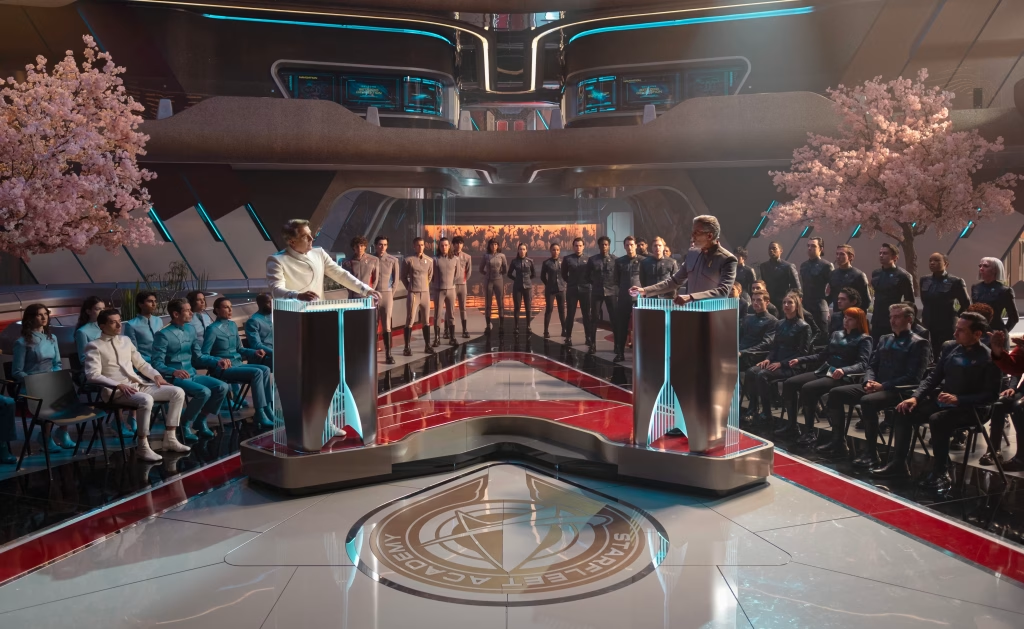
It is tempting to treat every variation in Starfleet staffing as inconsistency, and some of it inevitably comes from sixty years of television made by different writers and production teams with different stories to tell. O’Brien’s early rank insignia is a particularly obvious example.
But there is something more useful in the inconsistency too. Starfleet exists across different centuries, technologies, wars, disasters, missions, political arrangements, and kinds of ship. Of course the jobs move around.
It would almost be stranger if they did not.
Back to the transporter room
Which brings me back to O’Brien.
I think he works as the anchor for this whole subject precisely because his career never looks particularly glamorous from the outside. We first get used to seeing him behind a transporter console. He becomes Transporter Chief, then leaves the Enterprise to become Chief of Operations on Deep Space 9. By DS9, the series is explicit about what earlier TNG was not always very good at showing. O’Brien is an enlisted man, not another lieutenant who happens to be called Chief.
He spends years keeping a station alive that was never designed to work the way Starfleet wants it to work. He maintains and repairs systems through peace, crisis, and war, becomes one of the people Sisko depends on most, and gains the sort of experience that no Academy course could really reproduce.
Then he leaves Deep Space 9 for Starfleet Academy.
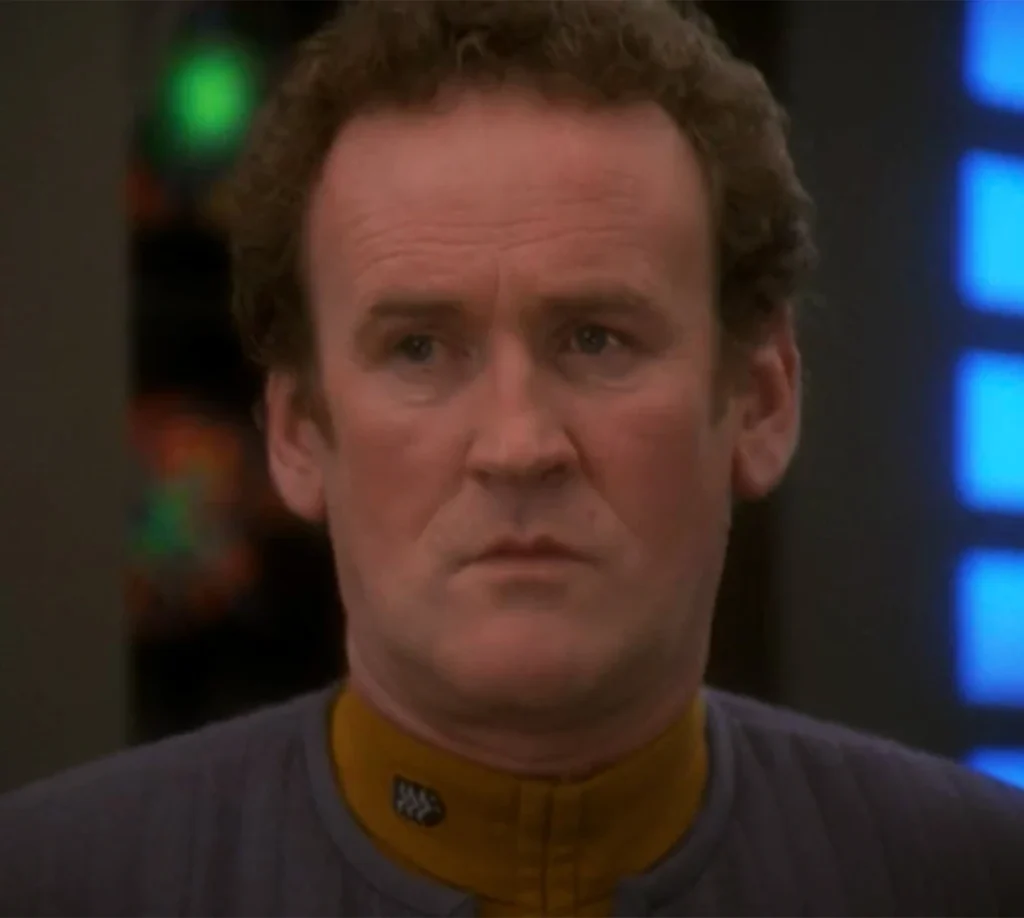
Not for a captaincy, and not for an admiral’s office. He goes to teach engineering. StarTrek.com and Lower Decks both preserve that as the destination of his career.
There is something wonderfully appropriate about that. The man we first knew because he could get a transporter working ends up teaching the next generation of Starfleet engineers what to do when the neat diagram in the manual stops matching the machine in front of them.
Picard can tell you where the Enterprise is going.
O’Brien is the man you want when it has to get home.