Star Trek: Holo-ween — A Halloween Special That Earns Its Ridiculous Premise
Star Trek has always been willing to try horror. The follow-through is another matter. “Catspaw” dressed up a base-under-siege story in Halloween trappings and lost the tone somewhere in the second act. “Wolf in the Fold” gave us a serial killer mystery and a villain genuinely disturbing enough to stick around, if anyone ever thought to bring him back. IDW thought to bring him back.
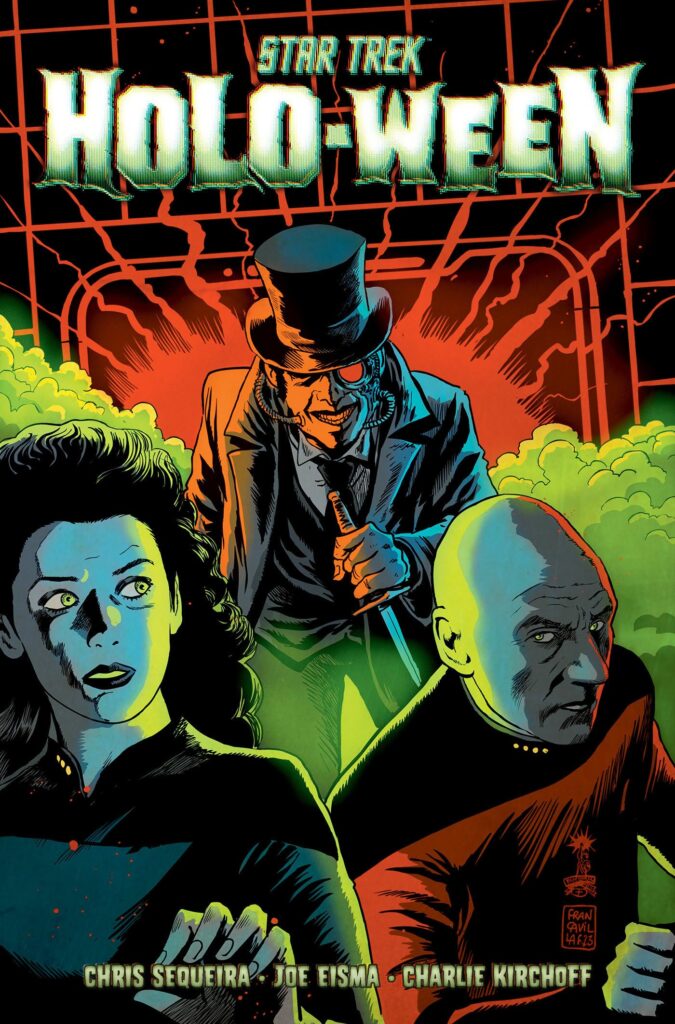
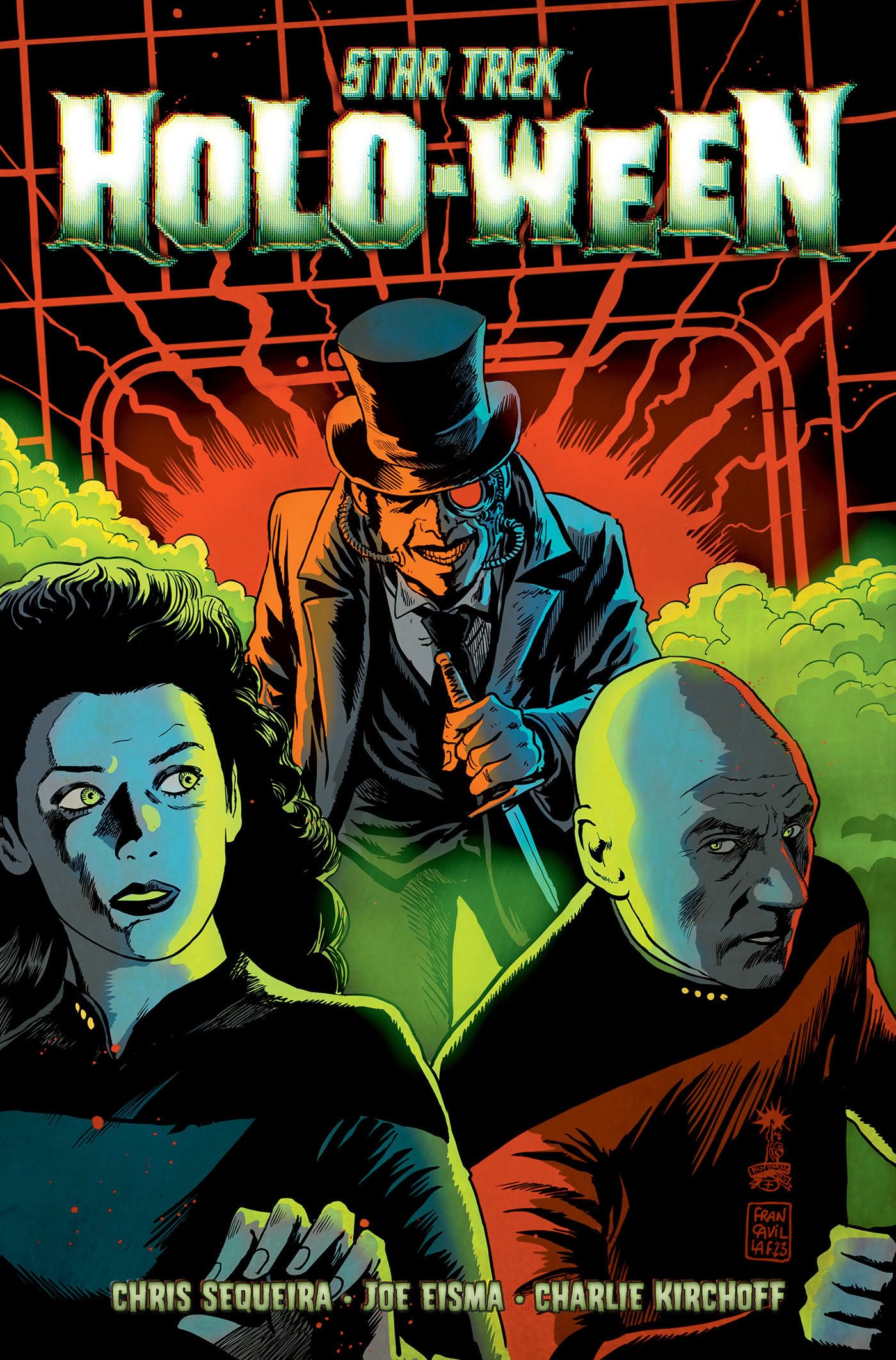
Holo-ween is a four-issue miniseries written by Christopher Sequeira, with line art by Joe Eisma and colours by Charlie Kirchoff. Set during The Next Generation‘s seventh season, it uses the holodeck as its stage and returns Redjac, the non-corporeal fear entity from “Wolf in the Fold,” as its antagonist. The premise sounds like something sketched on a napkin after the second round. The execution is considerably better than that.
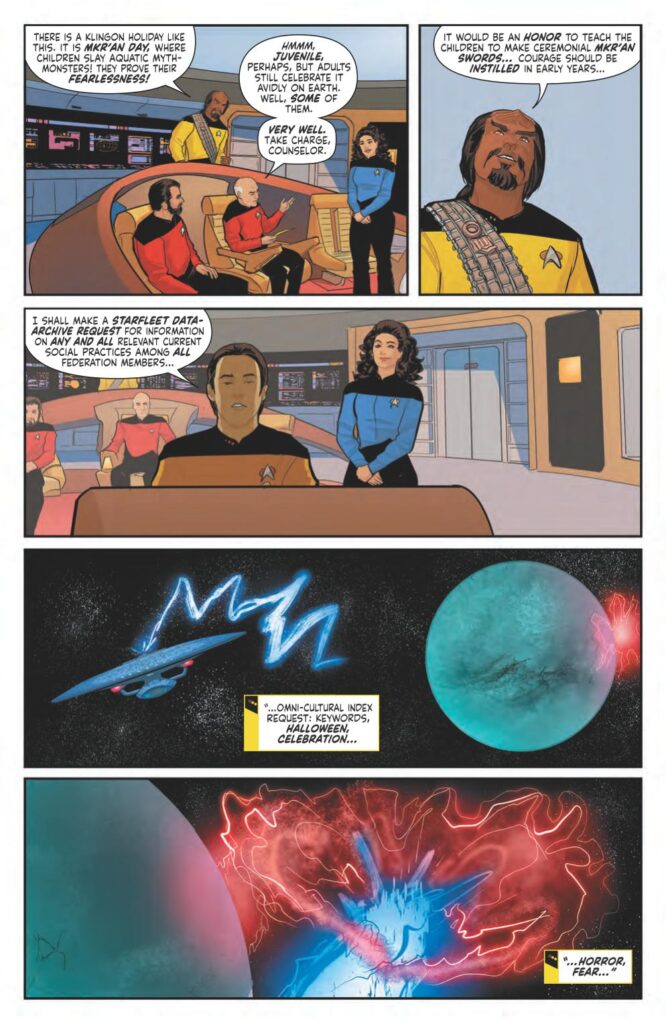
What grounds the whole thing is where it starts. Counselor Troi, reading a crew still shaken from a solar storm, suggests they mark Halloween on the holodeck as a way to process the collective anxiety. It’s a quiet, character-driven move, and it earns its place. Horror only works if you care about the people inside it, and using Troi as both the emotional entry point and the eventual tactical architect of the fightback is the right use of a character The Next Generation spent most of its run underserving before it finally got her right. She isn’t just the person who spots the problem. She’s the one who works out what to do about it.
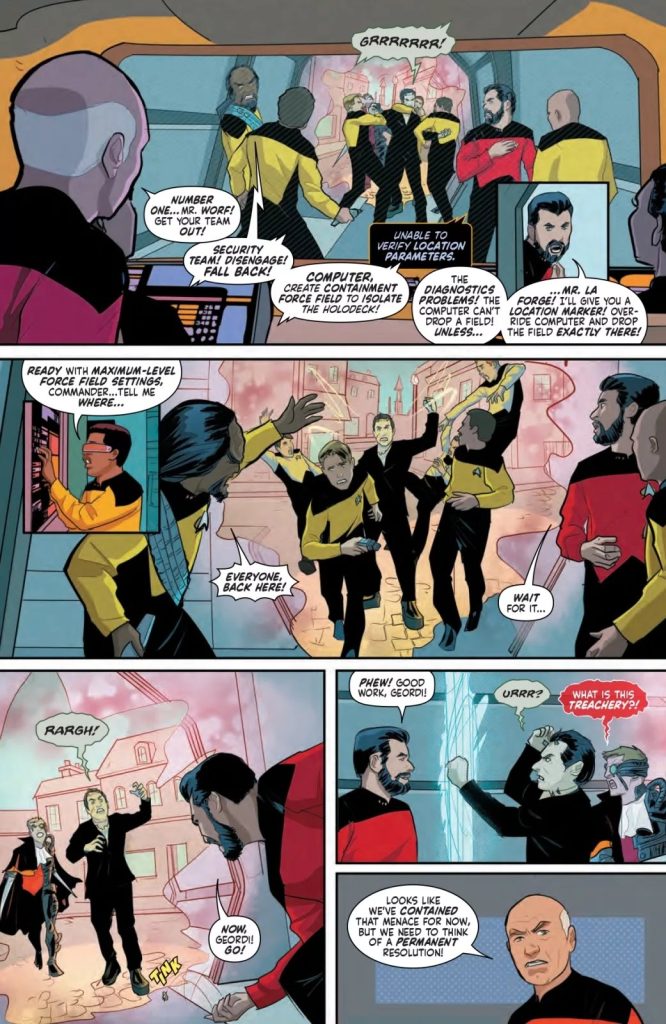
Sequeira treats Redjac seriously rather than reaching for nostalgia. The Original Series left this thread genuinely unresolved, and a non-corporeal entity that feeds on fear and has a working alibi for half the murders in human history is a better villain than the original episode perhaps gave it credit for. The book respects the internal logic of what Redjac is and what it does rather than retconning it into something more convenient, and Worf referencing Mkr’an Day, a Klingon cultural touchstone dropped in without explanation or fanfare, is the kind of detail that tells you the writer has done the reading.
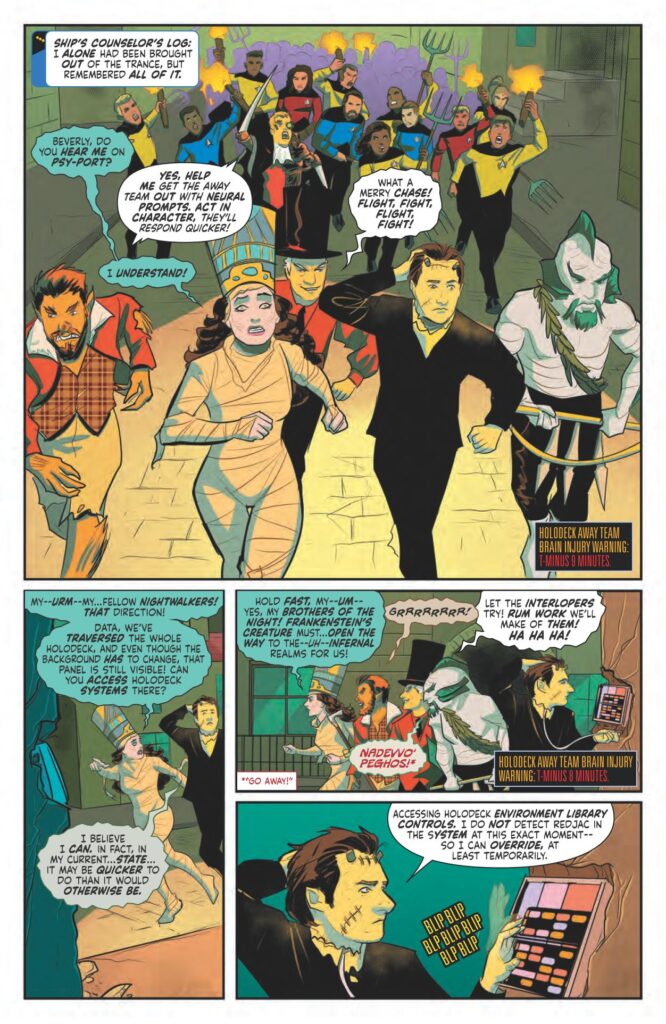
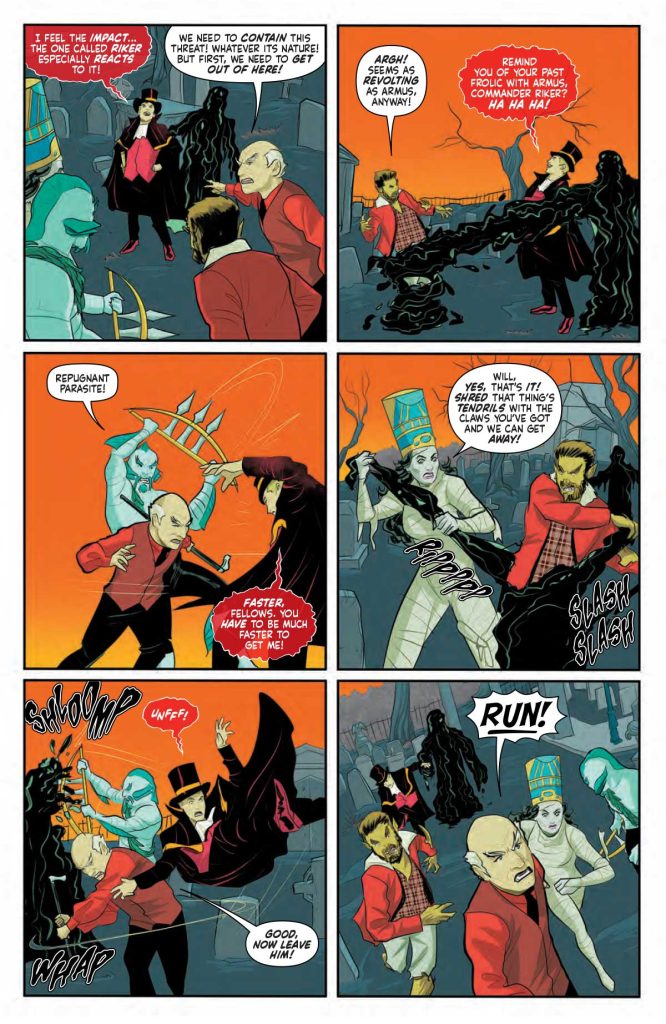
The holodeck works here as a legitimate dramatic engine rather than Trek’s usual all-purpose excuse for implausible jeopardy. Redjac taking control of it makes sense within the established rules, and a guest appearance from Scotty adds both emotional stakes and a generational dimension the series handles with more care than I expected. The escalation to an away team entering the holodeck under hypnotic suggestion is where the book starts to wobble. Picard adopts a gothic hybrid of Dracula and Hyde, Data becomes Frankenstein’s creature, Riker the Wolf Man, Troi the Mummy, and Worf draws on something out of Klingon legend. It’s fun, and it’s where Eisma’s art gets the most room to breathe. But you can feel the concept pulling at the characters rather than character logic driving the choices, and once I noticed that I couldn’t stop noticing it. The monster conceit is the set-piece the story was built around. That isn’t the same as it being the set-piece the story earned.
The third-act complication makes this worse. Redjac fusing with Borg nanoprobes to expand his power is exactly the shortcut modern Trek writing reaches for when it needs to raise stakes in a hurry. It undercuts the internal logic the earlier issues worked carefully to establish, and it’s been done before. There’s a version of this story where the escalation earns itself on its own terms. This isn’t quite that version.
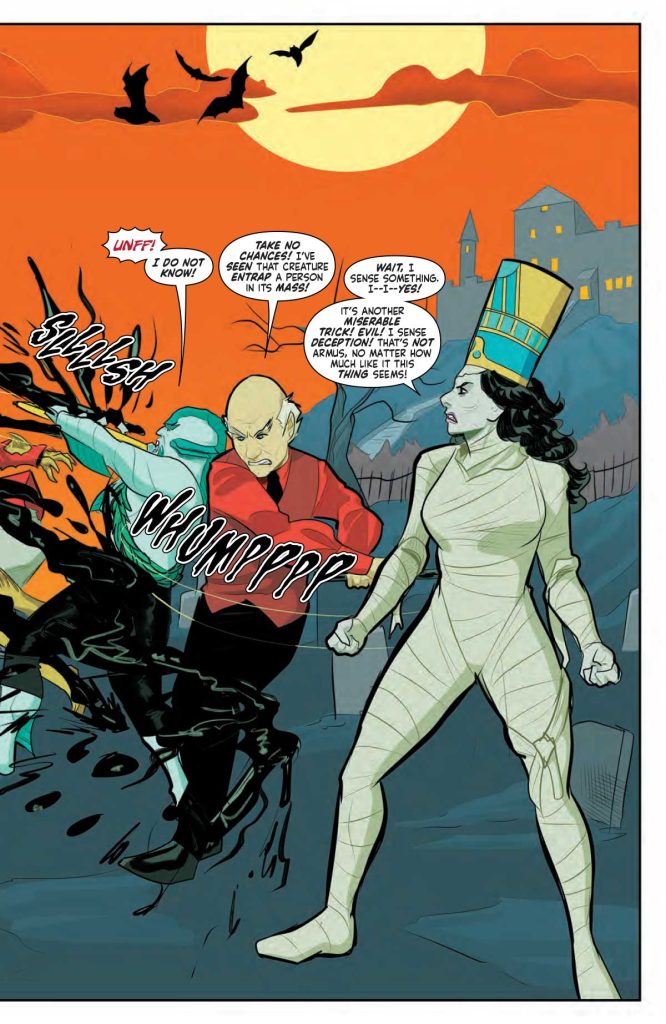
Visually, the book holds up. I spent time on the lettering and colour relationships, as I tend to, and Kirchoff’s palette is doing considerably more work than it gets credit for. Eisma’s line work is clean and expressive, balancing horror sequences against the pop-art kinetic energy that suits a book about an Enterprise crew remaining resolutely themselves inside a gothic nightmare. The cold blues and greys of the Enterprise-D corridors clash against high-contrast Victorian fog and the bleeding crimson of Redjac’s domain in ways that amount to a visual argument before the script gets there. These are distinct spaces with distinct psychologies. The colour tells you that.
There’s a distinction I keep coming back to with Holo-ween: admiration and enjoyment are not the same thing, and they don’t always arrive together. Formally, this is a silly, campy Halloween special. The concept is preposterous. The nanoprobe escalation is lazy. Nothing really costs anything by the end, and whatever philosophical weight the thing carries wouldn’t trouble a set of scales. And I enjoyed it. Genuinely. It’s built on lore integrity, the villain deserved another outing, and Kirchoff’s colour work is doing real dramatic heavy lifting in the background the whole time. You can admire something without entirely recommending it. You can enjoy something without quite admiring it. Holo-ween sits firmly in the second category.
It isn’t trying to be “In the Pale Moonlight.” It’s trying to give you a spooky night on the holodeck with a villain who earned a second chance. On that front, it delivers. I’ll probably come back to it every October. That’s not nothing.
8/10