The Gorn: People or Monster’s? (Race Spotlight)
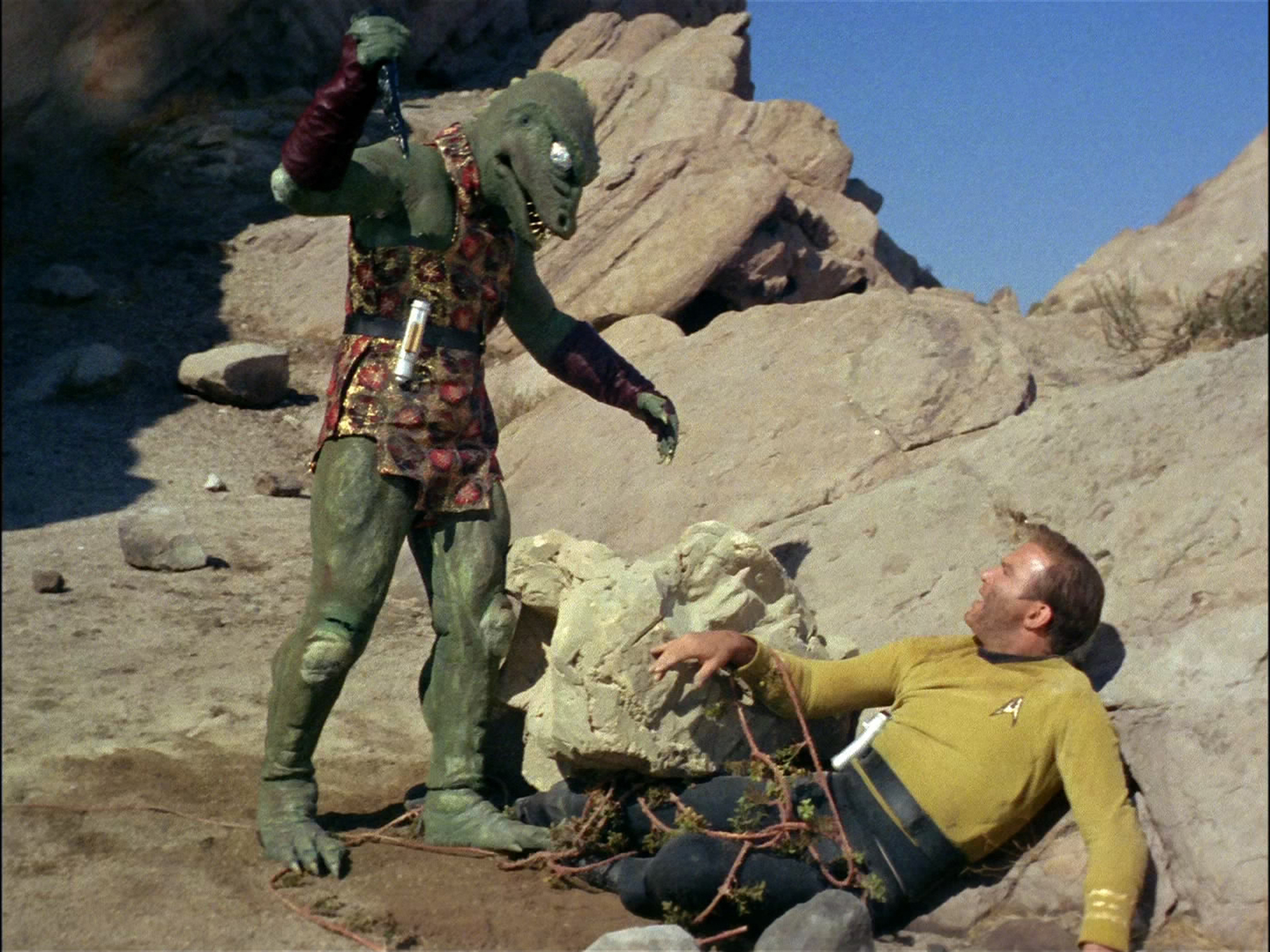
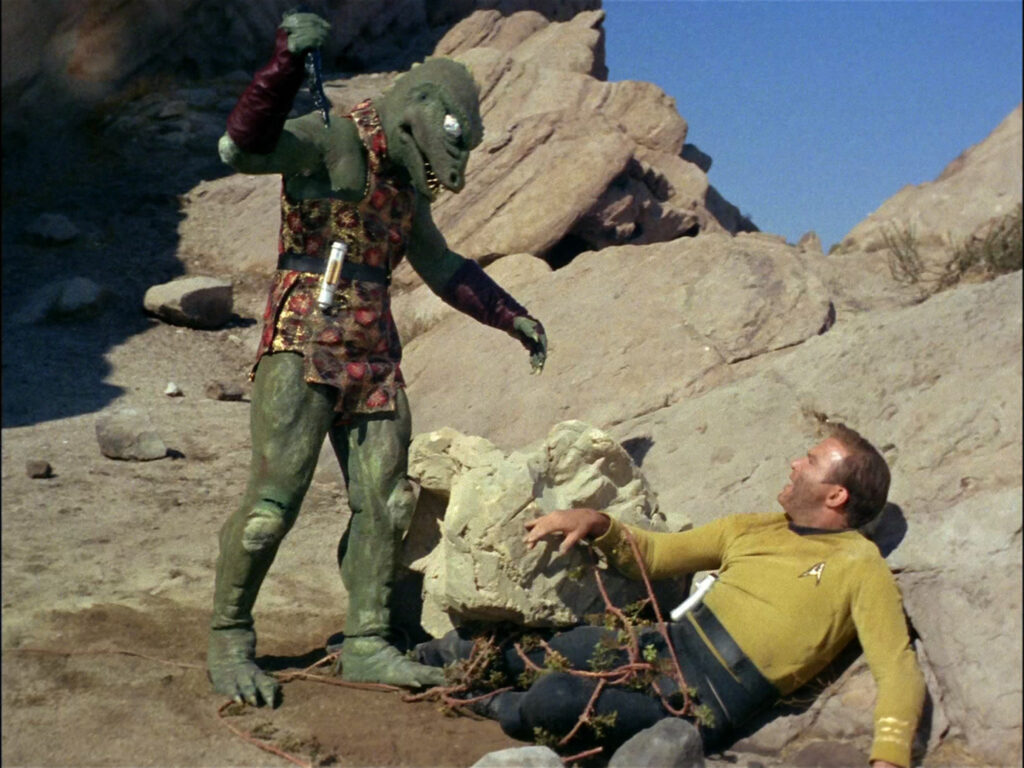
Kirk has the thing beaten. He has spent the back half of “Arena” turning a barren rock and a handful of raw minerals into a working cannon, sulphur and charcoal and a few rough diamonds packed into a length of bamboo, and now the Gorn captain is down in front of him, wounded and waiting for the killing blow. The Metrons have all but invited it. And Kirk lowers the weapon.
That is the moment the Gorn were born from, and it is worth holding onto, because almost everything the franchise has done with them since has pulled against it. The Gorn are the species Star Trek can never quite decide what to do with.
Across nearly sixty years they have been a man in a rubber suit, a lumbering punchline, a computer-generated assassin, and a swarm of parasitic predators lifted almost wholesale from Alien. In their very first appearance they were something else entirely: a sentient civilisation defending its own border against what it reasonably believed were invaders. Most Trek races settle into themselves eventually. The Klingons found their culture, the Vulcans their philosophy, the Romulans their paranoia. The Gorn never settled. Every era rebuilds them from the ground up, and underneath all that rebuilding sits one question the franchise keeps answering differently. Are the Gorn a people, or are they a monster?
Production Genesis
The Gorn arrived on 19 January 1967, and they arrived partly by accident.
Gene L. Coon wrote the teleplay for “Arena”, and somewhere in the writing it began to resemble a 1944 short story of the same name by Fredric Brown, in which a human and an alien are forced by a vastly superior power to fight as proxies for their warring species. Rather than risk it, the production bought the rights and credited Brown. The structure came from that story: two captains made to settle a war with their bare hands while something older and colder watches and judges. What Trek added was the part people actually remember. The mercy.
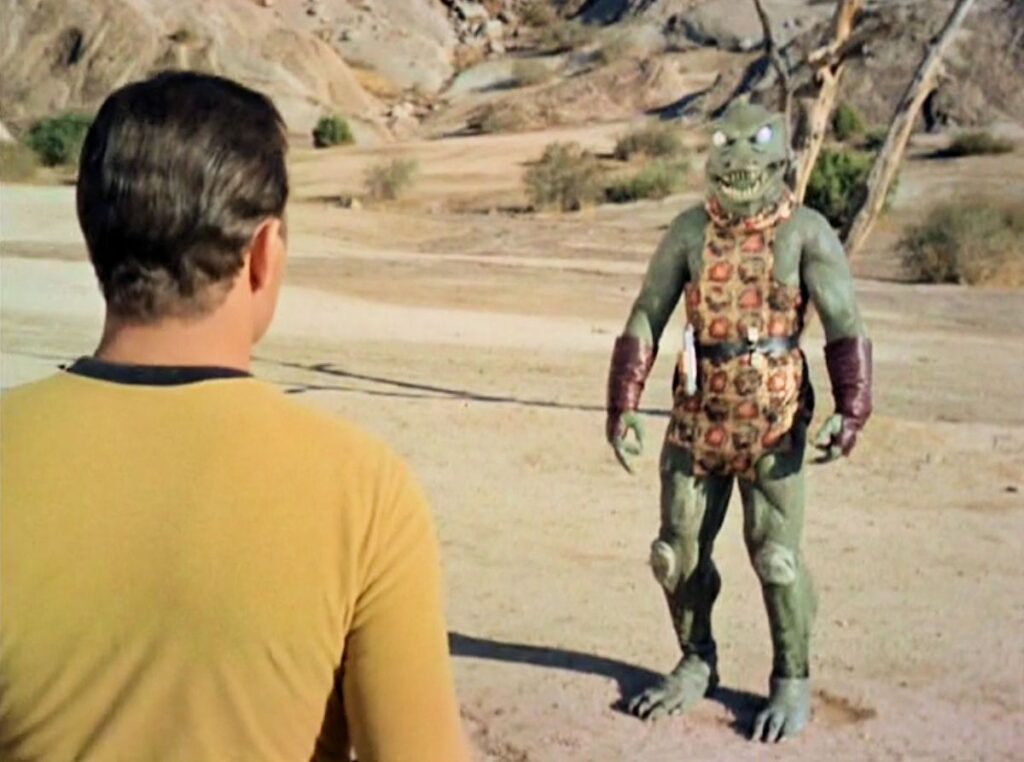
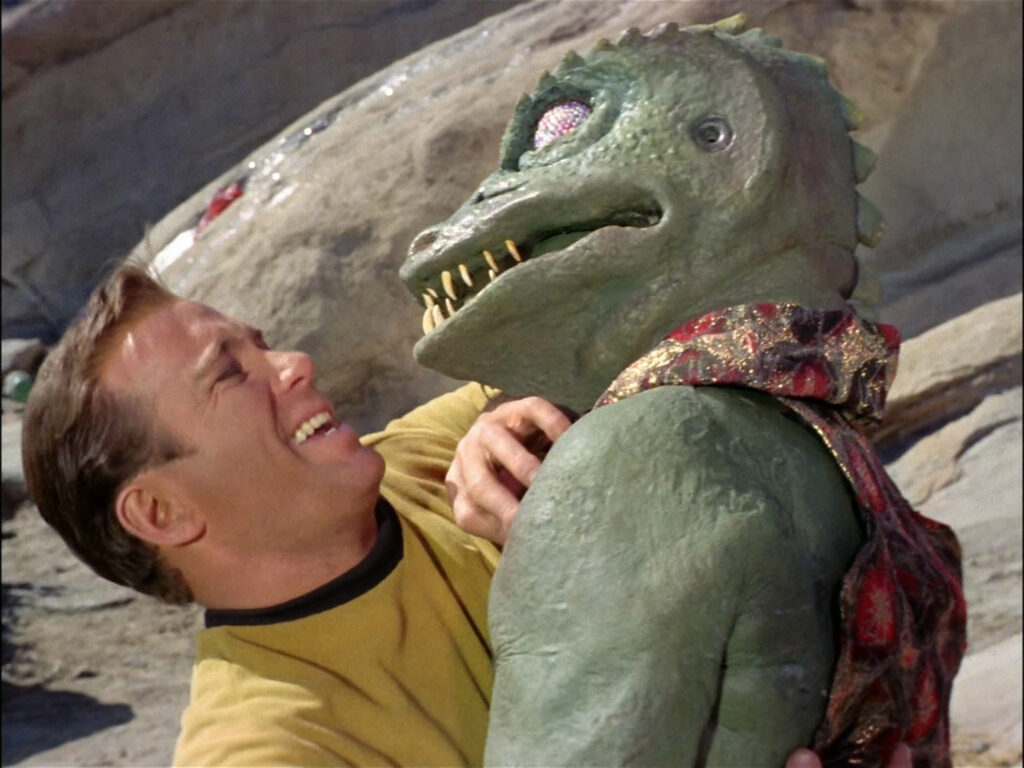
The creature itself was a Wah Chang design, a heavy reptilian suit with faceted compound eyes and a fixed, glittering snarl. The suit was worn by stunt performers Bobby Clark and Gary Combs, with Bill Blackburn handling close-up shots, while Ted Cassidy provided that unmistakable subterranean rumble. The suit could not move quickly and the production did not pretend otherwise, so the Gorn captain lumbers through the fight with a slow, deliberate menace. Plenty of viewers have found that slowness comical over the years, and the scene has been parodied often enough to become shorthand for cheap sixties television. That reading misses what the episode is doing. The Gorn is not meant to be fast. It is meant to be inevitable, and stronger than Kirk by every physical measure, which is exactly why Kirk has to out-think it rather than out-fight it.
The point of “Arena” is not the fight. The point is the moment after it, when Kirk works out mid-struggle that the Gorn attacked the Cestus III colony because it saw the colony as an incursion into Gorn space, and that from where the Gorn is standing, the humans are the aggressors. The killing blow is right there and Kirk refuses it. The Metrons, expecting savagery, call the restraint a surprise and a mark of a species worth leaving alone. The Gorn began life as a lesson about not mistaking an enemy for a monster. Everything since has been the franchise trying very hard to forget it.
The Punchline Years
For a long stretch, the Gorn survived on parody rather than presence.
The “Arena” fight is one of the most quoted scenes in the whole of sixties television, and almost none of the quoting is reverent. The slow grapple across the rocks, the foam boulder the Gorn heaves at Kirk that he sidesteps with room to spare, the two of them circling at a pace that would embarrass a Sunday league defender. All of it became shorthand for everything people found silly about old Star Trek. The scene has been homaged, slowed down, scored for laughs, and cut into reaction GIFs more times than anyone could sensibly count. The franchise leaned in too. Star Trek Online ran Gorn gags as a standing joke for years, and in 2013 a promotional ad reunited William Shatner with a Gorn for a knowing rematch, the whole thing built on the audience being in on it.
There is an irony buried in that. A species invented to argue against writing off your enemy as a dumb brute spent decades being written off by the audience as a dumb brute. The meme kept the Gorn alive, which is not nothing, but it kept them alive as a costume rather than a culture. By the time live action came back to them in earnest, they were carrying two reputations at once: the thoughtful first-contact parable, and the man in the rubber suit nobody could take seriously.
Who Are They
For a species this recognisable, the Gorn have spent most of their existence offscreen.
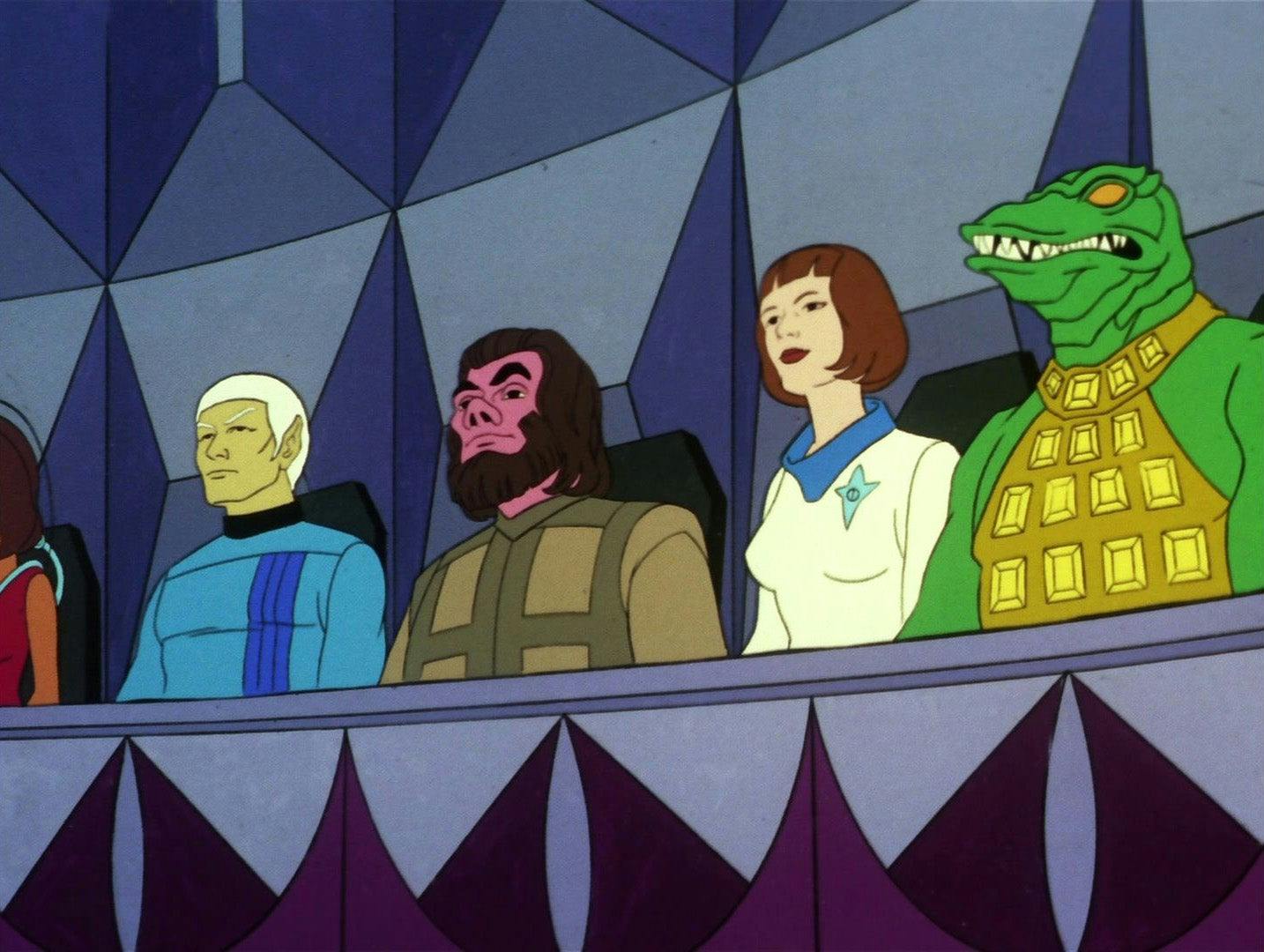
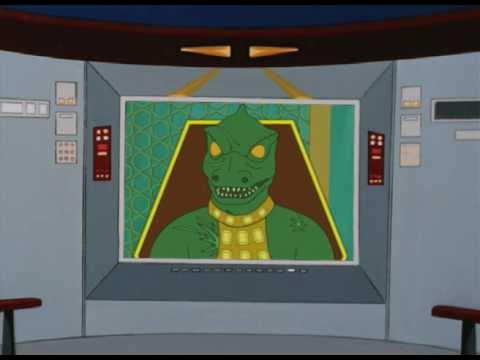
After “Arena” they turned up in animated form in “The Time Trap” in 1973, softened and a little less threatening, then effectively vanished from live action for decades. They surfaced in the expanded universe instead, where the novels and games did the patient work the shows never bothered with. The name of their government, the Gorn Hegemony, was eventually fixed on screen in the Enterprise episode “Bound”, and the prose fiction folded them into the Typhon Pact alongside the Romulans, Tholians, Breen and others, giving them a place in galactic politics rather than a single rocky planet and a grudge.
Their one live-action return before the modern era came in 2005, in Enterprise’s “In a Mirror, Darkly, Part II”, and even that came with an asterisk. The Gorn in question, named Slar, is a Mirror Universe creature, a saboteur picking off the crew of the Defiant one corridor at a time before Archer kills him. Because the whole story sits inside the Mirror Universe, it leaves the “Arena” first contact untouched, which is a tidy way of bringing the Gorn back without having to reckon with what they actually are.
Then Strange New Worlds made them the centre of a trauma. La’an Noonien-Singh arrives as the sole survivor of a Gorn attack, a piece of informal first contact that predates Kirk’s by a decade, and the show builds her around that wound. “Memento Mori” puts the Gorn ships on the board without ever showing the Gorn themselves, which is the most effective they have been in years precisely because they stay unseen. The two-part “Hegemony” story, opened at the end of season two and resolved in season three, finally commits to them as a standing threat by having them capture a chunk of the crew. And “Terrarium” does something the franchise had not tried since 1967, which is the part I will come back to.
The Shift from Lesson to Monster
The single biggest thing Strange New Worlds did to the Gorn happened in “All Those Who Wander”, and it is the cleanest break in their history.
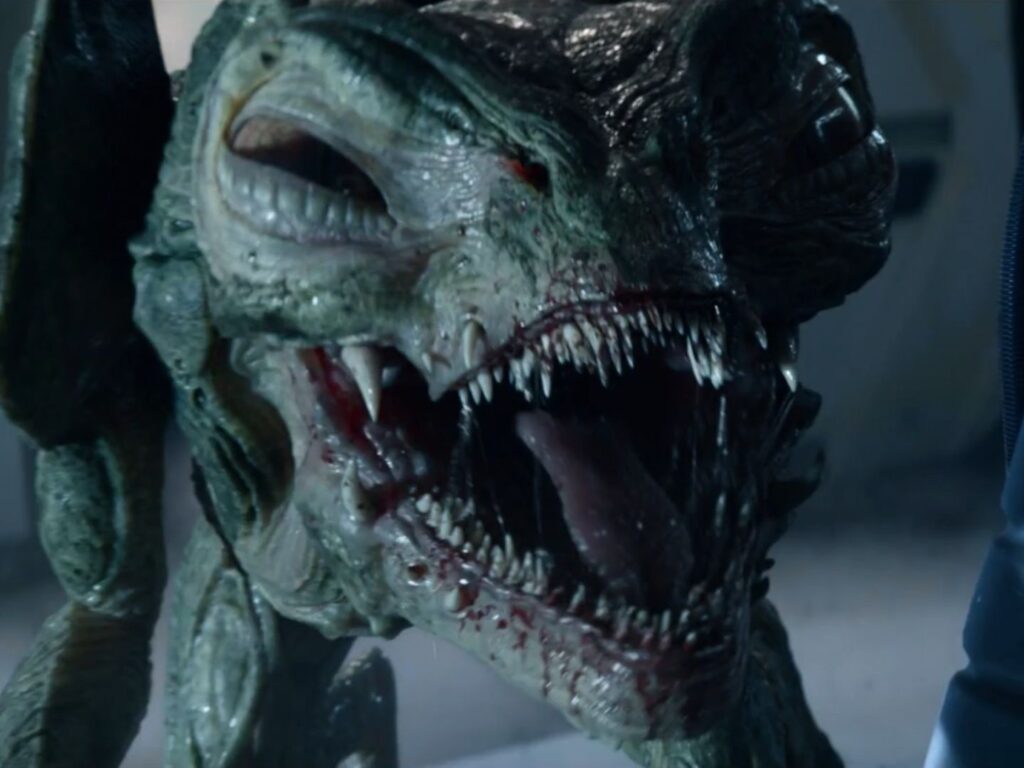
That episode reinvents them as a breeding horror. The Gorn reproduce by implanting parasitic eggs in a living host, the eggs incubate undetected because they have evolved to slip past Starfleet’s medical sensors, and they hatch by tearing their way out. The hatchlings are fast, lethal from the second they emerge, and they turn on each other until only the strongest survives. If that sounds familiar, it is because it is Alien, almost beat for beat, down to the chestburster and the doomed host nobody can save. Hemmer’s death, walking out into the cold to kill the eggs inside him before they can hatch, is genuinely affecting, and the episode is well made. It is also the moment the Gorn stopped being a civilisation and became a creature feature.
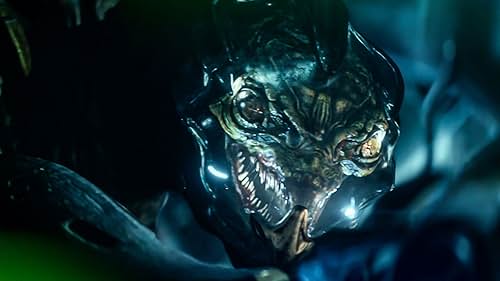
There is a real cost to that, and it is the same cost “Arena” warned about. The original Gorn captain could be reasoned with, or at least understood. He had a motive, a territory, a point of view that turned out to be more sympathetic than Kirk expected. The “All Those Who Wander” Gorn cannot be reasoned with because they are not a culture, they are a reproductive strategy with teeth. You do not negotiate with them, you exterminate them and feel relieved. That is a perfectly good horror engine and a poor fit for the species Star Trek invented specifically to argue against treating the unfamiliar as vermin.
It is worth being fair about why the show did it. A faceless reptilian punchline was never going to anchor a modern season of television, and La’an’s trauma needed a monster monstrous enough to have earned it. The breeding horror solves both problems at a stroke. But it solves them by spending the one thing that made the Gorn worth keeping, which is the possibility that the monster might have a case.
The Many Faces
No Trek species has been redesigned as completely or as often as this one, and the redesigns track the shift in thinking exactly.
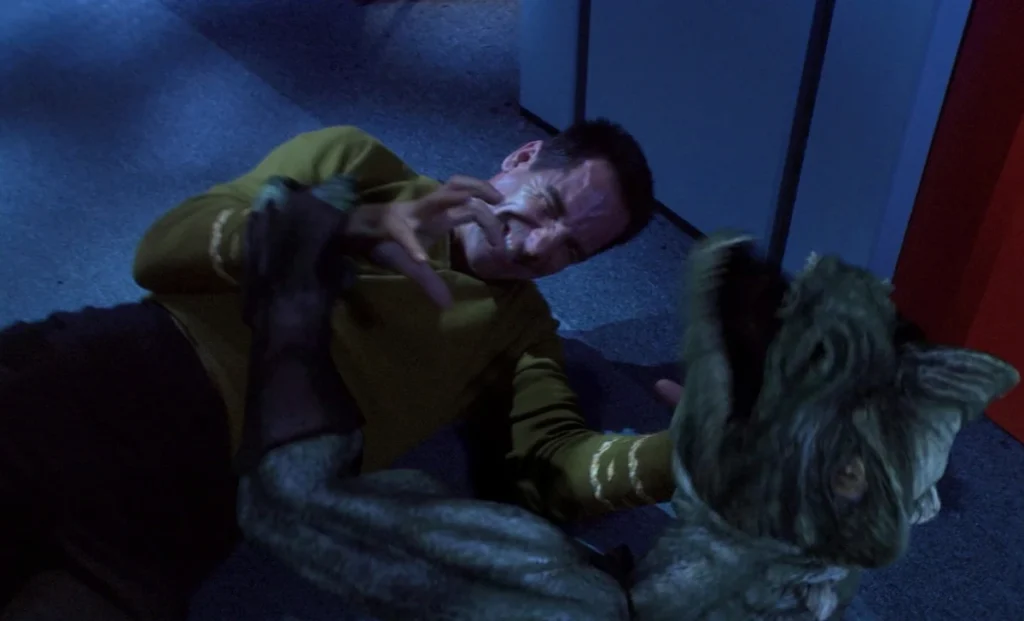
The “Arena” Gorn is a slow, dignified, deeply physical creature, a costume with weight and presence and those strange jewelled eyes. Slar, built in 2005 out of computer animation, threw most of that away. He moves fast, loses the compound eyes, and reads as a predator rather than a soldier, the first real signal that the franchise had started thinking of the Gorn as something closer to wildlife than to an opposing navy. Strange New Worlds went further still, modelling its Gorn on the look from the 2013 Star Trek video game, all spines and speed and insectile aggression, a design built to lunge out of the dark rather than to stand across a battlefield and be argued with.
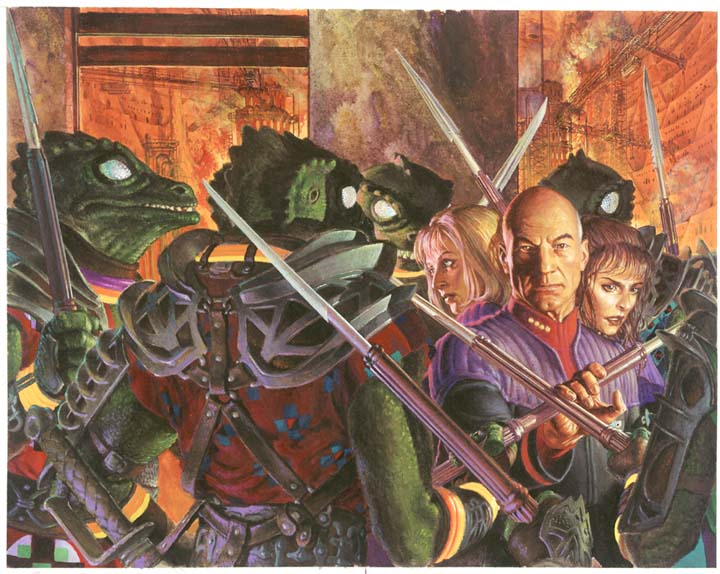
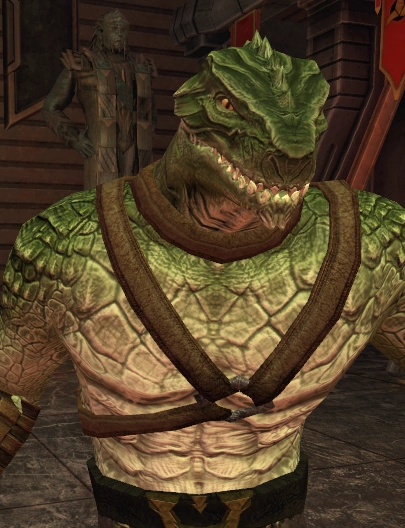
The expanded material pulled in the opposite direction, which is part of why the species feels so unresolved. The 2013 game made the Gorn extra-galactic invaders with a rigid caste system sorted by skin colour and intelligence, brutal but unmistakably a civilisation with structure and ambition. The long-running, non-canon Star Fleet Universe went the other way entirely and presented the Gorn Confederation as one of the more cultured and trustworthy powers in the setting, a rare ally the Federation befriends out of genuine mutual respect rather than convenience. Even a cut scene from Nemesis, where John Logan had planned a Gorn attending Riker’s bachelor party as a friend of Worf’s, imagined them as the kind of people you invite to a wedding. Depending on which corner of the franchise you stand in, the Gorn are either the thing in the vent or a guest at the party.
The Canonical Puzzle
Trying to assemble a single coherent Gorn from all of this is a losing exercise, and the contradictions are not minor.
The slow “Arena” creature and the sprinting Strange New Worlds hatchling are barely the same animal. The Hegemony of the shows and the Confederation of the older games cannot agree on what to call the government, let alone how it works. The biology only arrives in 2022 and arrives as horror, leaving fifty-five years of prior appearances to be quietly reinterpreted around it. The reference works place the homeworld at Tau Lacertae IX, the novels give them a seat at the Typhon Pact table, and none of it quite lines up with a man in a rubber suit defending a rock in 2267.
The most telling contradiction is the quietest one. The Gorn made territorial claims on the Cestus system in 2267, and by 2371 the Federation has a settlement there, peaceful enough that Deep Space Nine treats it as an ordinary colony rather than a frontier under threat. At some point in that century, something appears to have softened the border, a treaty, a withdrawal, a working accommodation between two powers who started by killing each other over real estate. The franchise has never dramatised it, but the implication is unavoidable and it sits squarely on the “people” side of the argument. You do not sign treaties with a swarm. You sign them with a state. [THEORY] Whatever cooled the Cestus dispute, it points to a Gorn Hegemony capable of diplomacy, which is precisely the Gorn the horror episodes set aside.
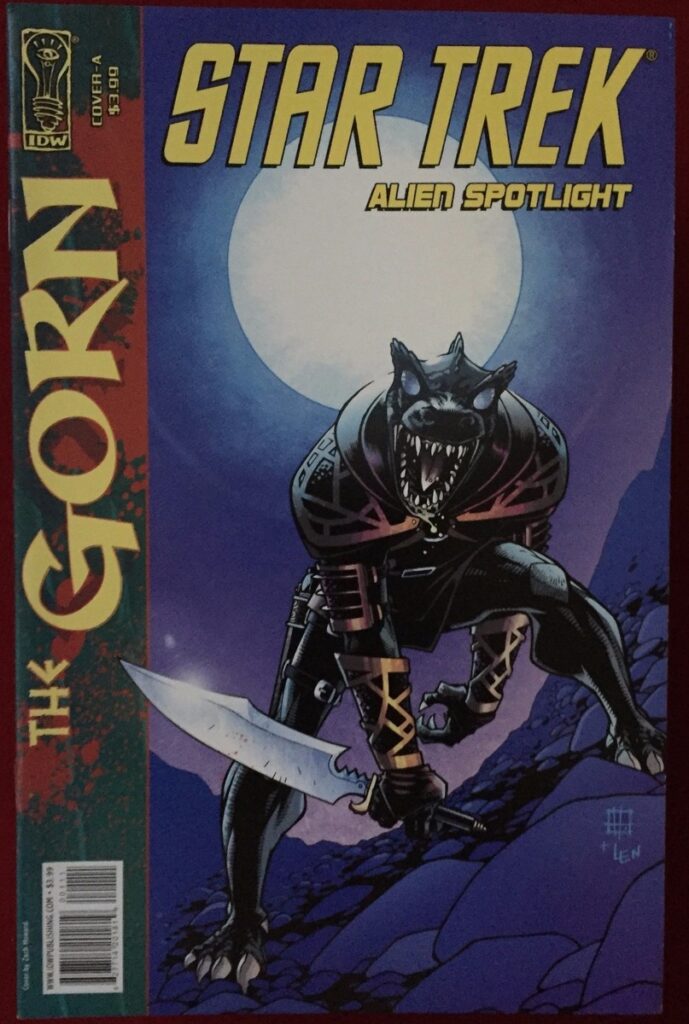
A People, or a Monster?
The debate does not resolve, because the Gorn have always been whatever a given era needed them to be. In 1967 the franchise needed a mirror to hold up to Kirk, an enemy that turned out to have a point, and the Gorn delivered the single clearest statement of Trek’s central faith: that the thing you are afraid of might simply be someone defending what is theirs. In 2022 the franchise needed a monster real enough to justify a survivor’s lifetime of fear, and the Gorn delivered that too, at the price of everything the first version stood for.
Both of those Gorn are canon. That is the honest position, and it is an uncomfortable one, because the two readings genuinely cannot share a room. A species that breeds by infestation and dies in the cold is not a species you make a treaty with at Cestus III. A species you make a treaty with is not a species you can write off as vermin. The franchise has spent decades letting both be true and hoping nobody checks the maths.
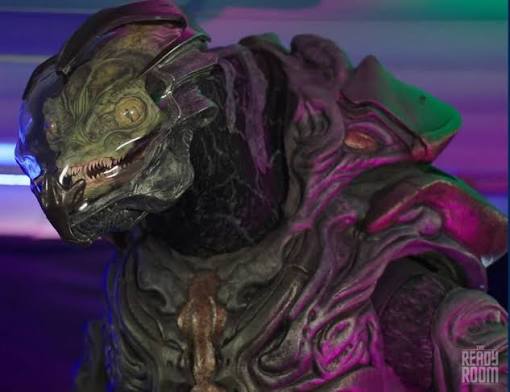
Which is what makes “Terrarium” the most interesting thing to happen to the Gorn in half a century. Stranding Ortegas on a planet with one of them and asking her to learn to communicate is not an escalation, it is a retreat, a deliberate walk back toward the room Kirk was standing in when he lowered that cannon. After years of treating the Gorn as the thing in the vent, the show is remembering that they were invented to teach us not to.
The monster was always the easy version. The people were always the point.