Star Trek Scouts: The Future Has to Start Somewhere
My middle child discovered Star Trek: Scouts through the Blaze and the Monster Machines YouTube channel. That sentence contains a small amount of absurdity if you have been watching Trek since the eighties, and a larger truth if you are willing to sit with it for a moment.
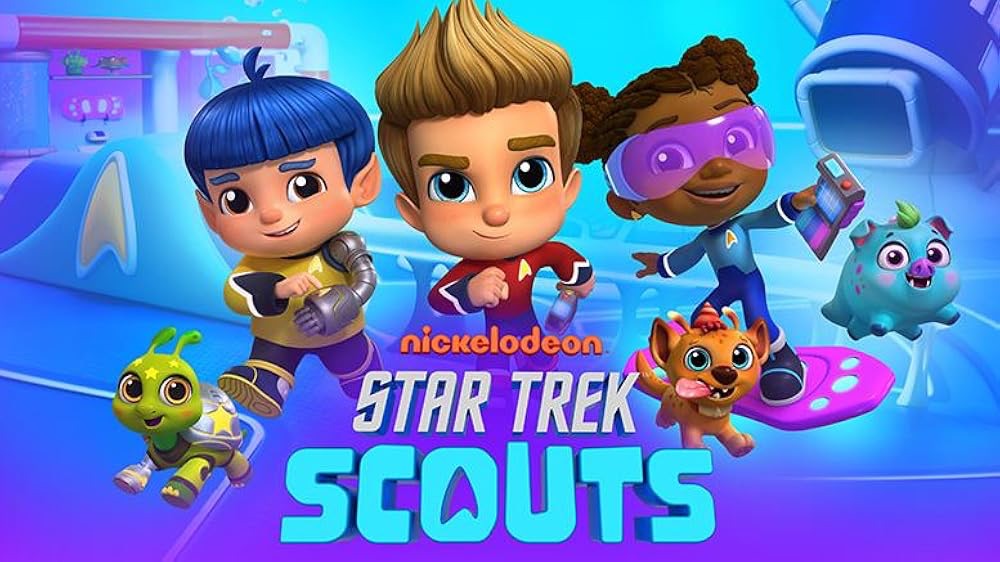
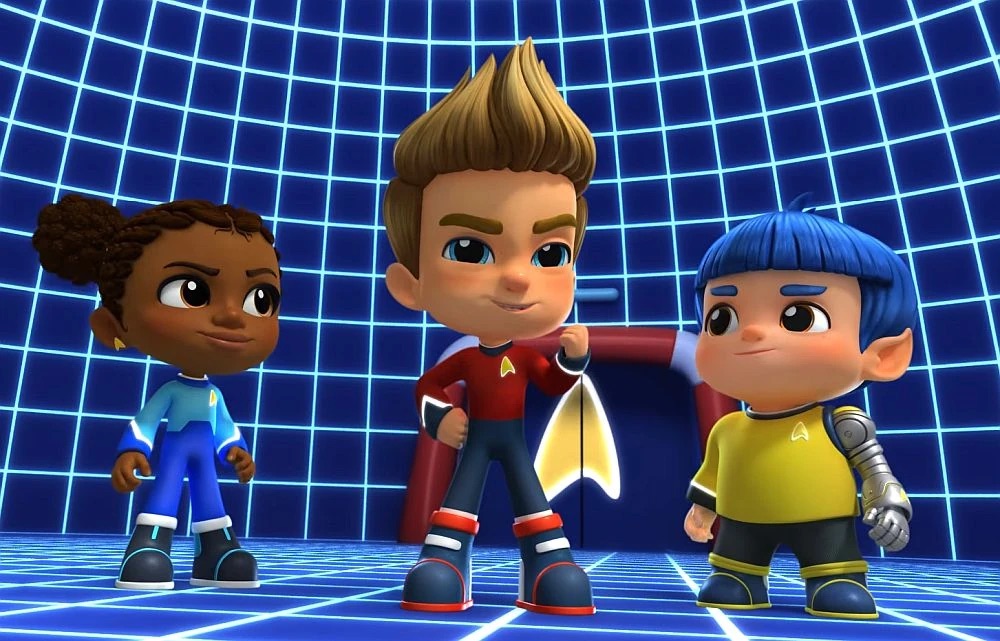
Star Trek: Scouts is the franchise’s first preschool series. Three eight-year-olds named JR, Sprocket, and Roo learning to become future Starfleet explorers in three-minute episodes, produced by Nickelodeon Digital Studio with CBS Studios. The first two episodes arrived not on the main Star Trek channel or a streaming platform, but through Nickelodeon’s Blaze and the Monster Machines YouTube channel, with a twenty-episode order rolling out from there.
For longtime fans, that placement is strange. We are used to Trek arriving through convention announcements, trailers, streaming banners, fan sites, and panel reveals. There is a whole infrastructure built around being told that new Trek is coming. Star Trek: Scouts did not show up where the fandom was looking. It showed up where its actual audience lives, which is somewhere between the algorithm and whatever’s on while someone tries to make toast without standing on Duplo.
That matters to me more than I expected. My middle child is 20 and severely autistic. He loves children’s animation, not because it is lesser, but because its rhythm, colour, clarity, and emotional shape work for him. Good preschool television does something adult genre television often forgets how to do: it says what it means. It trusts repetition. It makes kindness legible. Frankly, half of modern prestige television could learn from that and stop sulking in badly lit corridors.
The complaint, inevitably, is that this is not real Star Trek. Which is nonsense, frankly. Many of us first found real Star Trek while sitting on the floor, eating cereal, and understanding about a third of what was happening. Nobody gave us a canon primer. Nobody warned us about production order. We just saw people in bright uniforms arguing that the future might be better than the present, and something stuck.
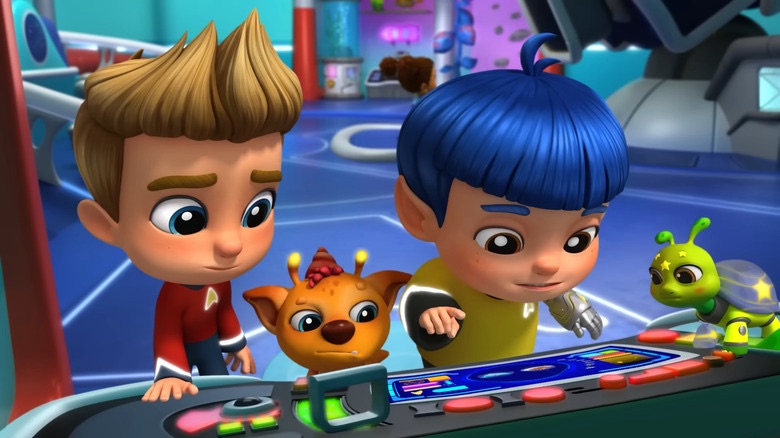
Yes, it is odd that Star Trek now shares digital shelf space with Blaze and the Monster Machines. It is also probably the most honest thing Paramount has done with the brand in years. If you want preschoolers, you do not wait for them to browse StarTrek.com. You go where the trucks are.
For a while, Paramount seemed to understand this. Modern Trek was not one thing. It was a spread: Prodigy for families, Lower Decks for the self-aware fans, Strange New Worlds for broad-access classic Trek, Starfleet Academy for younger viewers, and Star Trek: Scouts for the preschool end of the map. Different doors into the same idea. Messy, expensive, occasionally baffling, but not stupid.
The problem is not the idea. The problem is patience. Prodigy was probably the strongest version of youth-focused Trek we have had, and Paramount still managed to turn it into a streaming custody dispute. Starfleet Academy tried to build another rung and immediately hit the fandom woodchipper. Star Trek: Scouts now sits quietly beside a cartoon monster truck on YouTube. The ladder exists. Whether Paramount has the nerve to keep building it is another matter.
Star Trek: Scouts may vanish after its initial run. It may become one of those strange little Trek footnotes people rediscover in ten years and ask, “Hang on, did this actually happen?” But the instinct behind it is right. It is Star Trek remembering that optimism does not preserve itself. Someone has to hand it over before the world teaches children to roll their eyes at it.
If that handover starts on a YouTube channel next to Blaze and the Monster Machines, fine. The future was never going to arrive in the correct folder.