Spock: A Bridge Between Two Worlds (Character Spotlight)
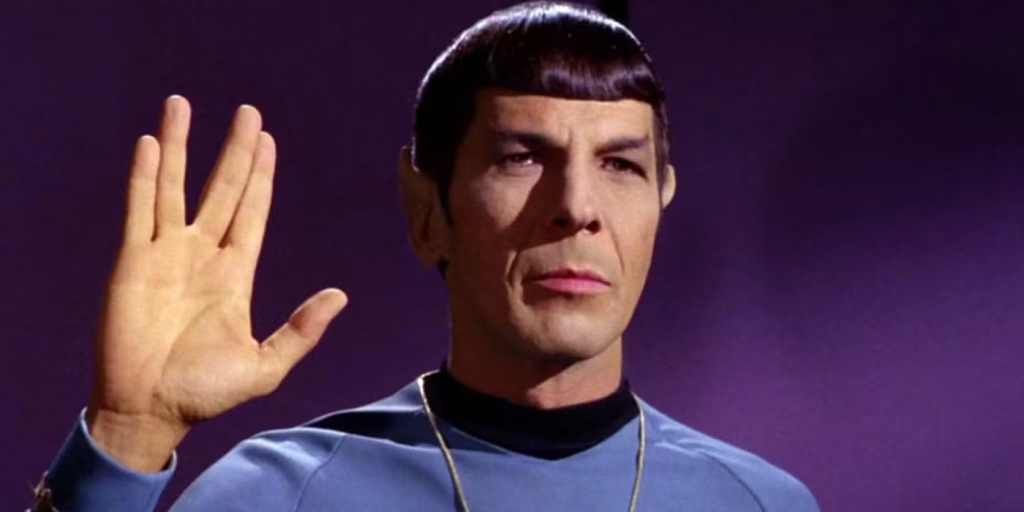
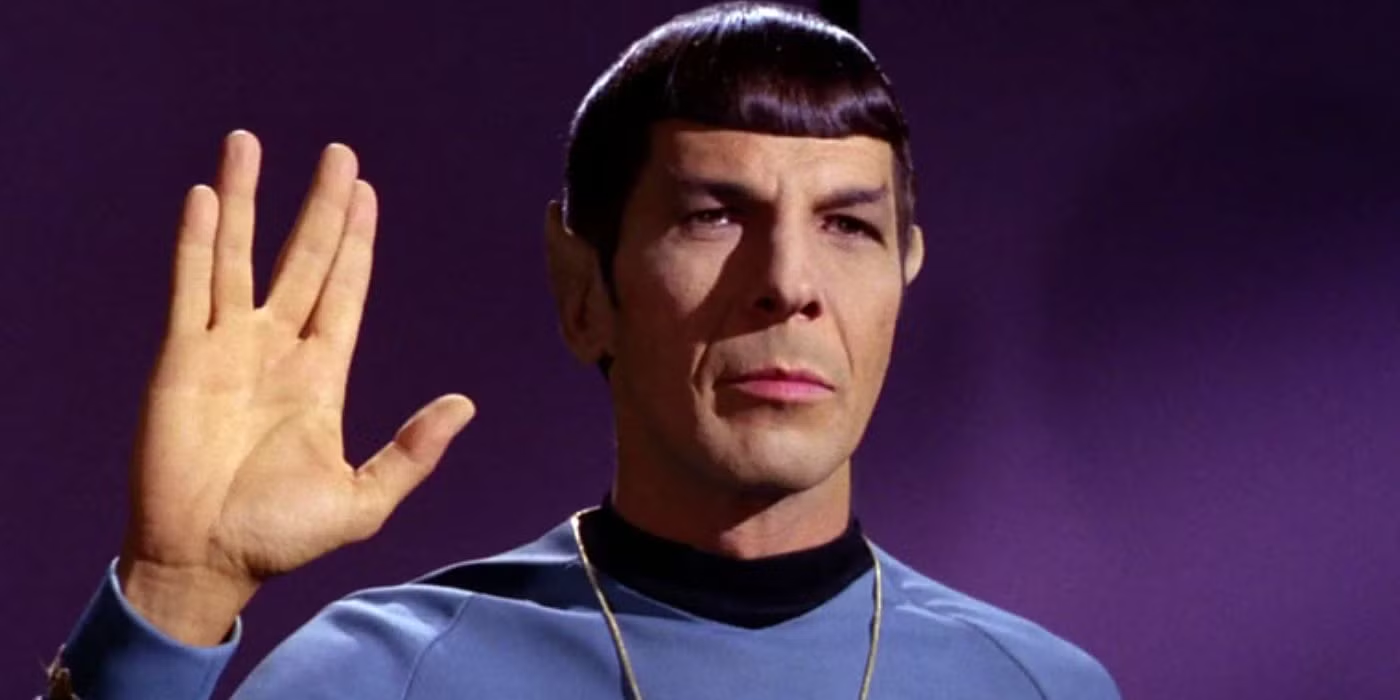
A bridge belongs to neither shore. Its purpose is to connect two places without ever becoming either of them. No character in Star Trek embodies that better than Spock.
Look at the moment in “Amok Time” when he turns and sees Kirk alive. Seconds earlier he believed he had killed his captain with his own hands, in ritual combat, on the soil of his homeworld. Then Kirk walks back into the room, and the most disciplined officer in Starfleet breaks into a grin and shouts his name before he can stop himself. “Jim!” Then comes the recovery, the face reassembling itself. The grin is the man. The recovery is the officer he has trained himself to be.
That gap, between what he feels and what he allows himself to show, is where Spock actually lives. We file him as the unemotional one, the logician, the cool head on a hot bridge. He is the opposite. He is the only person up there for whom every feeling is a dam under pressure. And the reason that pressure never eases, across sixty years and three actors, is that the franchise has never once let him belong cleanly to either half of himself. Too human for the Vulcans. Too Vulcan for the humans. A bridge, suspended, holding the weight of both.
The Boy Who Was Too Much
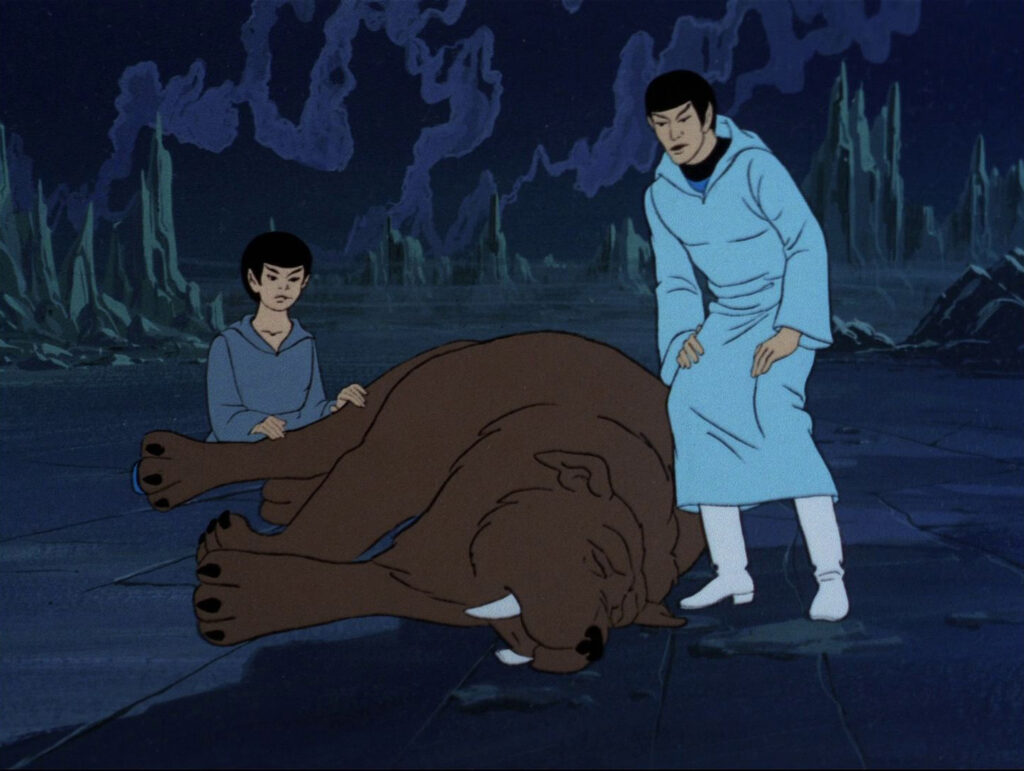
The rejection starts on the Vulcan side, and it starts early. Most accounts of Spock reach for the human world recoiling from the strange green-blooded outsider, but the order runs the other way. Long before any human found him too cold, Vulcan children found him too warm. They provoked him, waited for the feeling to show, then mocked him for it, the ordinary cruelty of children in a place where everyone is meant to be the same. “Yesteryear” shows it plainly, the small boy goaded into reacting and then shamed for reacting. In “Journey to Babel,” his mother, Amanda Grayson, gives the same wound its quietest description, the boy who came home stiff-lipped from the teasing while she watched, understanding the cost in a way the Vulcans around him never would.
The kindest version of the childhood lesson is also the cruellest. In the wilderness rite of passage, his pet sehlat, I-Chaya, is fatally wounded defending him. Spock is handed a choice: a prolonged, painful life for the animal he loves, or a clean release. He chooses the release. He chooses logic, it costs him, and that choosing is the moment he commits to the Vulcan road. Even his first true act of logic is a grief.
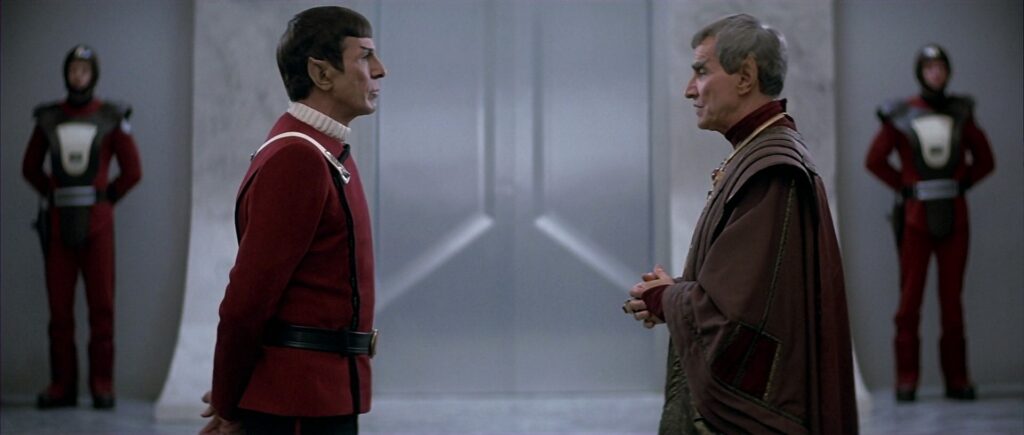
His father made the road harder, and did it out of love, which is the cruel part. Sarek loved his son. He expressed it through expectations Spock could never quite meet, through a distance that read as disappointment, and through a silence that lasted eighteen years once Spock chose Starfleet over the Vulcan path laid out for him. What Discovery later added sharpens the knife. The Vulcans would consider only one of Sarek’s children for the Expeditionary Group, and Sarek chose Spock over his adopted human daughter, Michael Burnham, expecting it was the path his son would want. Spock turned the place down for Starfleet anyway, which means Sarek wounded one child and estranged the other, both for nothing.
Burnham repays a closer look, because she is Spock turned inside out, a human raised to be Vulcan, carrying the same not-quite-belonging from the opposite direction. The household itself was a machine for producing children caught between two settings. When she needed to drive a young Spock away to keep him clear of the extremists who had targeted her, she did it by aiming at the exact soft place, calling him a half-breed who was incapable of love. Even the sister who understood him best knew precisely where the bruise was.
His half-brother Sybok went the other way entirely, throwing logic out for raw feeling, and it led him somewhere just as ruinous. Both of the clean answers fail. That is the argument the family keeps making without meaning to.
The Shield
By the time he reaches Kirk’s side, the shield is finished. The Spock of those years reads as stone. The trick of the performance, Leonard Nimoy’s understated genius, is that you can always see what it costs him to be stone.
When a contaminant strips the crew’s inhibitions in “The Naked Time,” what surfaces in Spock is not rage or appetite but shame. “When I feel friendship for you, I’m ashamed,” he tells Kirk, and the line gives the whole game away. The friendship was always there. The shame is the tax he pays on having it. In “This Side of Paradise,” alien spores switch his control off, and for a short while he is simply happy, in love, at ease in his own skin, and when the effect breaks and the discipline snaps back he says, quietly, that it was the first time in his life he had ever been happy. That is not the confession of an unemotional man. That is the confession of someone who has been holding his breath since childhood.
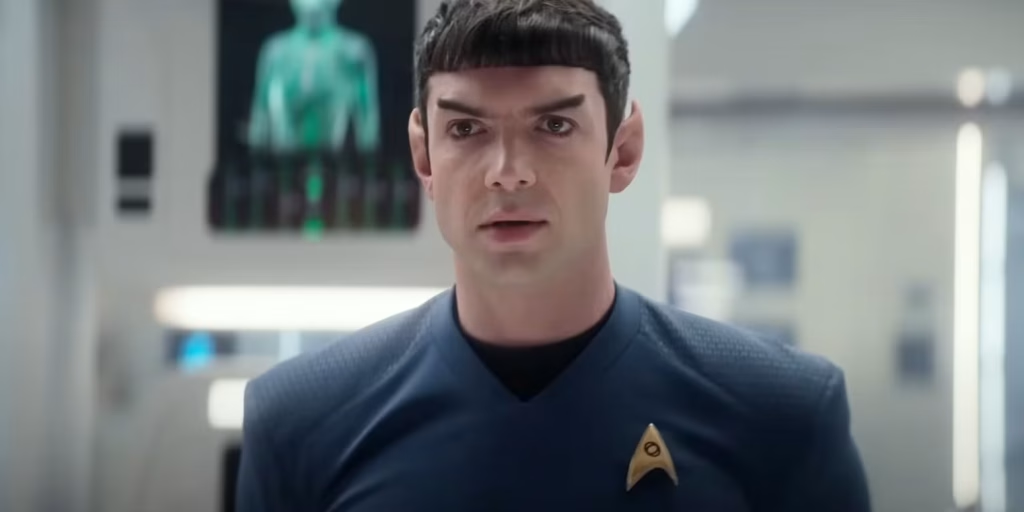
Strange New Worlds, reaching back to a younger Spock, makes the strain its centre. Ethan Peck plays him before the shield is finished, the human half far nearer the surface, and the show keeps finding ways to expose the seam. It swaps his body with his Vulcan betrothed and makes him live a day as her. It strips his Vulcan half away entirely and lets him find out, as a hungry, overwhelmed, badly behaved near-human, what the thing he has spent his life suppressing actually feels like from the inside. The series understands him completely. Wherever he sits, the table is the wrong shape.
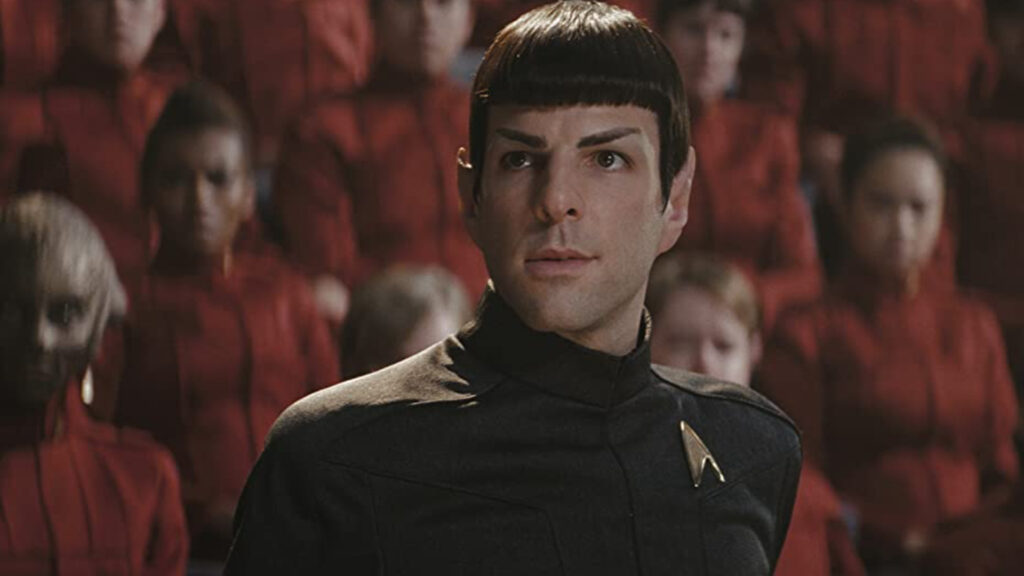
Zachary Quinto’s Kelvin-timeline Spock carries the same fracture from a harsher angle. He feels too much and has trained himself to show too little, the discipline breaking open the day he watches his mother and his whole world fall away beneath him.
Here is the part the character rarely gets credit for. The whole of that effort, the suppression, the shield, the straining to be a better Vulcan, is aimed at earning the approval of a people who have already decided he does not qualify. And the entire time, the acceptance he is breaking himself for is sitting right beside him, freely given, from the other side. McCoy needles him without mercy and would not hesitate to die for him. Kirk never once asks him to be more human than he is. The crew simply takes him as he comes. The people Spock is sure he must become more like are the ones who keep turning him away. The people he is sure he is nothing like never ask him to be anything other than himself. He spends a lifetime auditioning for the wrong audience.
The Amputation
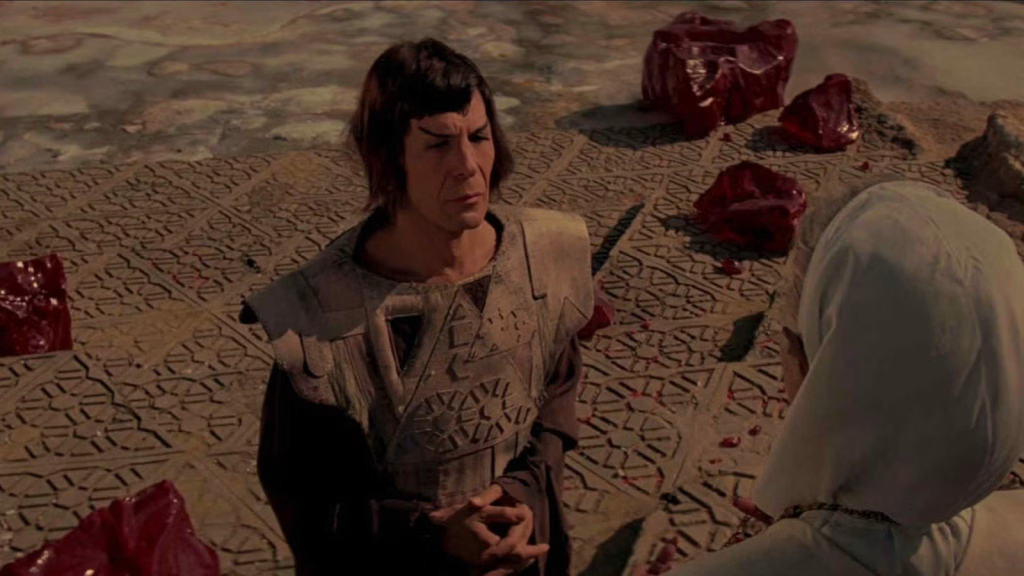
So he tries to remove the problem at the source. After the five-year mission, Spock returns to Vulcan to undergo Kolinahr, the discipline that burns away the last trace of emotion and leaves only pure logic behind. This is not the daily emotional control every Vulcan practises. Kolinahr is the final severance, the deliberate eradication of every feeling a Vulcan has left, permanently and by choice. The reasoning is brutal and simple. If he cannot belong to both halves, he will cut one away and belong wholly to the other.
It does not take. At the final moment, reaching for the prize, he senses a vast consciousness crossing the galaxy and feels it, against every intention, and the masters tell him he has failed, that his answer lies elsewhere. He goes back to the ship. Later he melds with that consciousness, V’Ger, and finds something stranger than a threat. Here is a being that has gathered all the knowledge in the galaxy and reached the very edge of it, and it is still asking whether this is all there is, because raw information cannot answer that question. It cannot make the leap past its own programming into meaning. Spock weeps. He takes Kirk’s hand on the biobed and tells him that this simple feeling, one person touching another, is beyond everything V’Ger is. That was the thing he had been reaching for on Vulcan, a self scrubbed clean of feeling, and it turns out to be a locked room. All the knowledge in existence, and no way out of itself.
That is the hinge. Most accounts treat The Motion Picture as a slow, strange interlude, a film where not much happens to anybody. It is the single most important thing that ever happens to Spock. It is the one time he tries to settle the question of which half wins by deleting the other, and the story flatly refuses to let it work. Everything afterwards is a man learning to live alongside a question he now knows has no clean answer.
The Bridge
What he learns is not how to win the argument. It is how to stop having it.
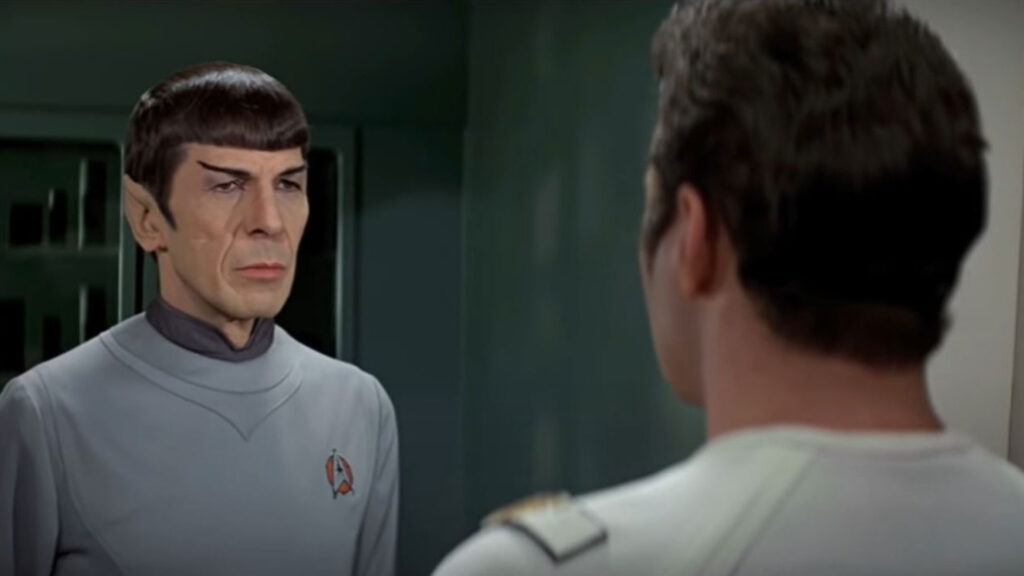
Consider the two halves in “The Wrath of Khan,” the moment everyone remembers. He walks into the radiation to repair the warp drive and save the ship, and the act is coldly, perfectly logical, the needs of the many weighed against the needs of the one, and it is also pure love, for Kirk, for the crew, for the people on the other side of the glass. For once the Vulcan and the human are not at war. They are doing the same thing in the same breath. Not because he has fused them into a single substance, but because the moment is large enough that he stops policing the border between them. “I have been, and always shall be, your friend,” he says, and it is the most logical and the most human sentence he ever speaks, both at once, with no daylight between them.
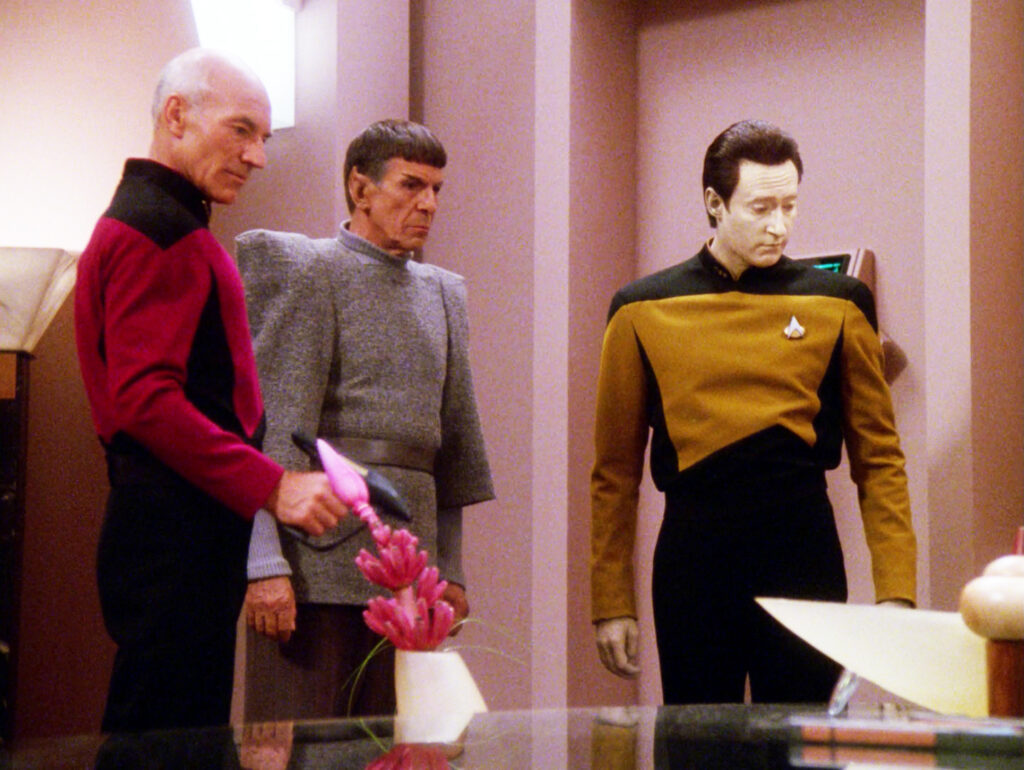
Then the destination. Decades on, in The Next Generation’s “Unification,” we find him an old man on Romulus, working in secret toward the reunification of the Vulcans and the Romulans, two peoples split from one root who will not stand in the same room. He has become a bridge. Not as a figure of speech. That is the actual job. The man who never belonged to one side has built a vocation out of being permanently between, because being between is the one thing nobody else can do. It reads as peace, and it is, but look closely at what kind. He is not happy because he has arrived somewhere at last and belongs. He is happy because he has found a purpose for not belonging. The sadness never left. He simply found something worth carrying it for.
Did He Prove IDIC, or Pay For It?
Which leaves the question the character was built to ask, the one stitched into him from the start. Spock is the living embodiment of the franchise’s favourite ideal, Infinite Diversity in Infinite Combinations, the Vulcan creed that difference, combined, makes something richer than either part alone. So which is he? The proof that the ideal works, the man who bridged worlds and was loved across all of them? Or the proof of what the ideal costs, evidence that being the walking advertisement for infinite diversity is a lonely way to spend a life, that the slogan is comfortable for everyone except the person actually made to live inside it?
Both, of course. He is the proof that difference enriches, and he is the proof that the one carrying the difference pays the bill. The bridge holds the weight of both, which is the entire point of a bridge.
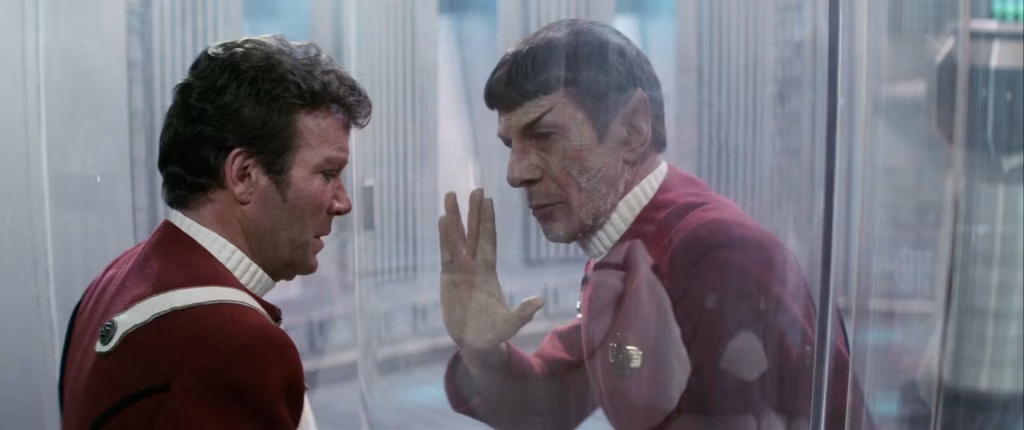
Kirk says it best, standing over the torpedo casing. Of all the souls he ever encountered, he says, Spock’s was the most human. It is a whole life folded into a sentence, and the irony of it is almost too much to carry. The finest thing his closest friend can find to say is to honour him, at last and completely, as the exact quality the Vulcans spent his childhood mocking him for. The gap never disappeared. The people who mattered simply stopped asking him to close it.
Spock spent a lifetime being told to choose a shore. In the end the bridge was the answer, and the bridge was him. A bridge is not a compromise. It is a purpose.