Star Trek: TOS – The Corbomite Maneuver (S01E10)
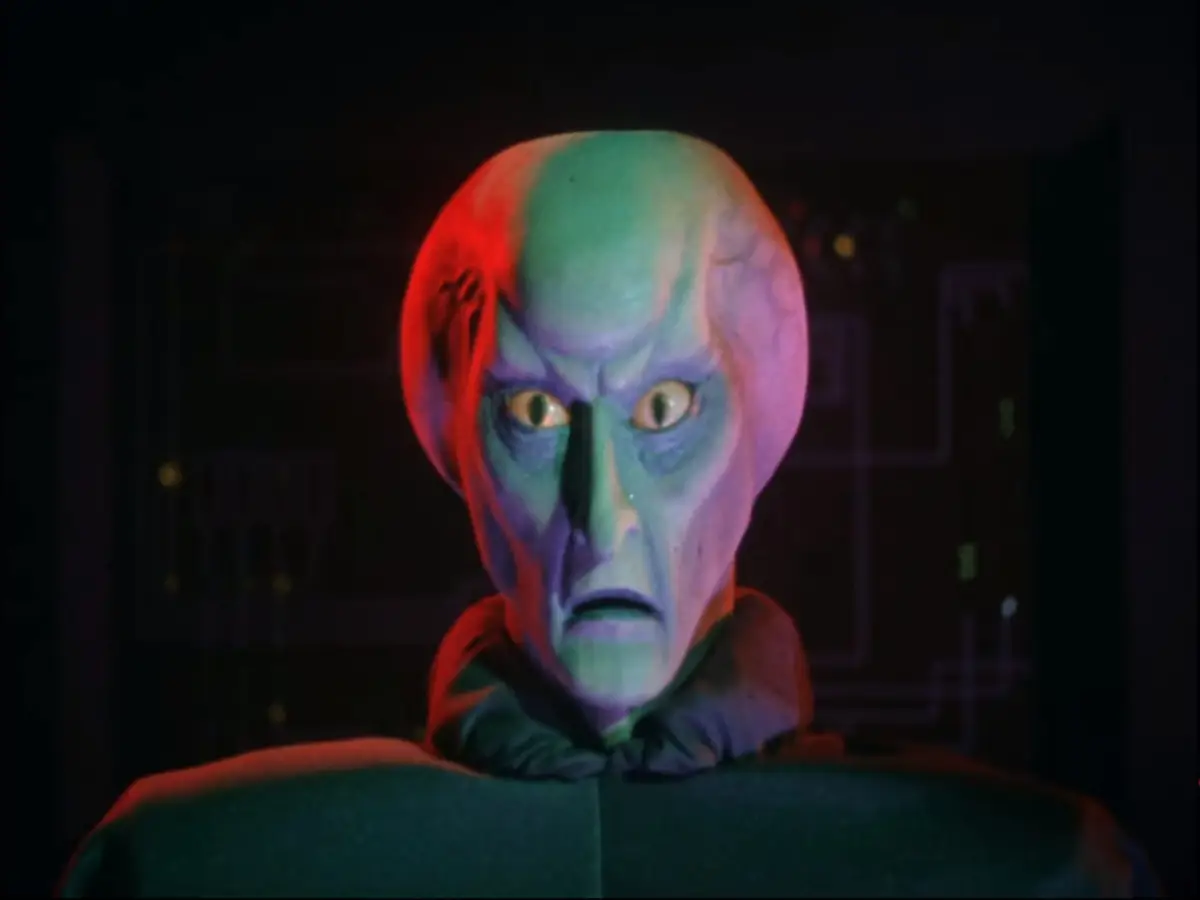
There’s a small moment early on that tells you more about this episode than the plot ever does. Spock looks at Balok’s face on the viewscreen, a snarling oversized puppet built to terrify, and instead of flinching he says one word: fascinating. Leonard Nimoy was still refining Spock at this point, and director Joseph Sargent reportedly told him to be different, be the scientist, be detached. That single word is where the Spock we all recognise really starts to emerge. It’s a quiet decision, and it tells you everything about what this episode is doing underneath the space bluff and the countdown clock.
This isn’t the first episode of Star Trek but it is the first one made after the show got picked up, the first with McCoy in the chair, the first time Uhura opens a hailing frequency. Broadcast order buried it well into the season, which is a shame, because watched in production order it plays as exactly what it is: the moment the show worked out what it believed, before it had the confidence to say so out loud in a mission statement.
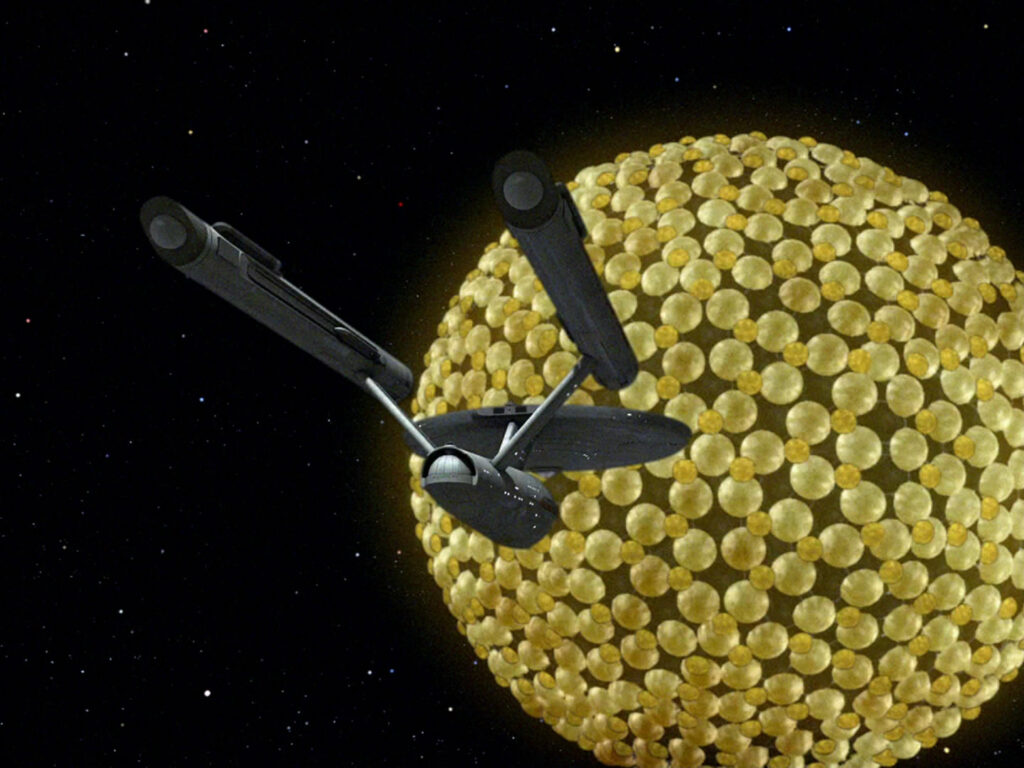
The plot is almost deceptively simple. A spinning cube blocks the Enterprise’s path, they destroy it, and a vastly more powerful ship called the Fesarius arrives to sentence them to death for trespassing. Kirk talks his way out of it. That’s the whole thing, and it’s almost entirely dialogue on two sets. What holds it together isn’t the situation, it’s what Kirk does with it. He doesn’t win through force, and he doesn’t win through a clever piece of science. He wins on nerve.
There’s something deeply satisfying about the bluff itself, and I don’t want to undersell it just because I’ve been circling the thematic stuff. Kirk isn’t solving an engineering problem. He isn’t exploiting an alien weakness. He’s sitting across a poker table from someone holding every card in the deck, and he calmly convinces them he has a royal flush he invented on the spot. Corbomite doesn’t exist. He makes it up in real time, sells it with a completely straight face, and it works. It’s absurd, and it’s brilliant, and it’s one of the defining Kirk moments in sixty years of the character. Every refusal to accept the no-win scenario that comes later, all the way to the Kobayashi Maru, feels like it traces back to a man in a gold shirt lying through his teeth to a giant glowing ball.
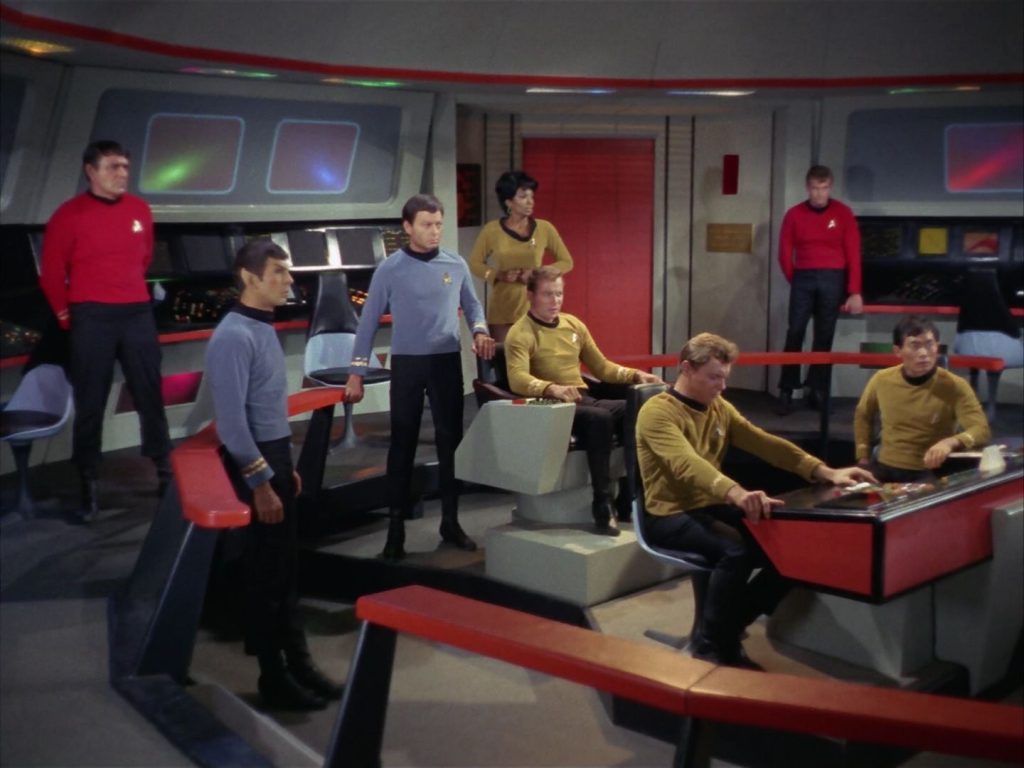
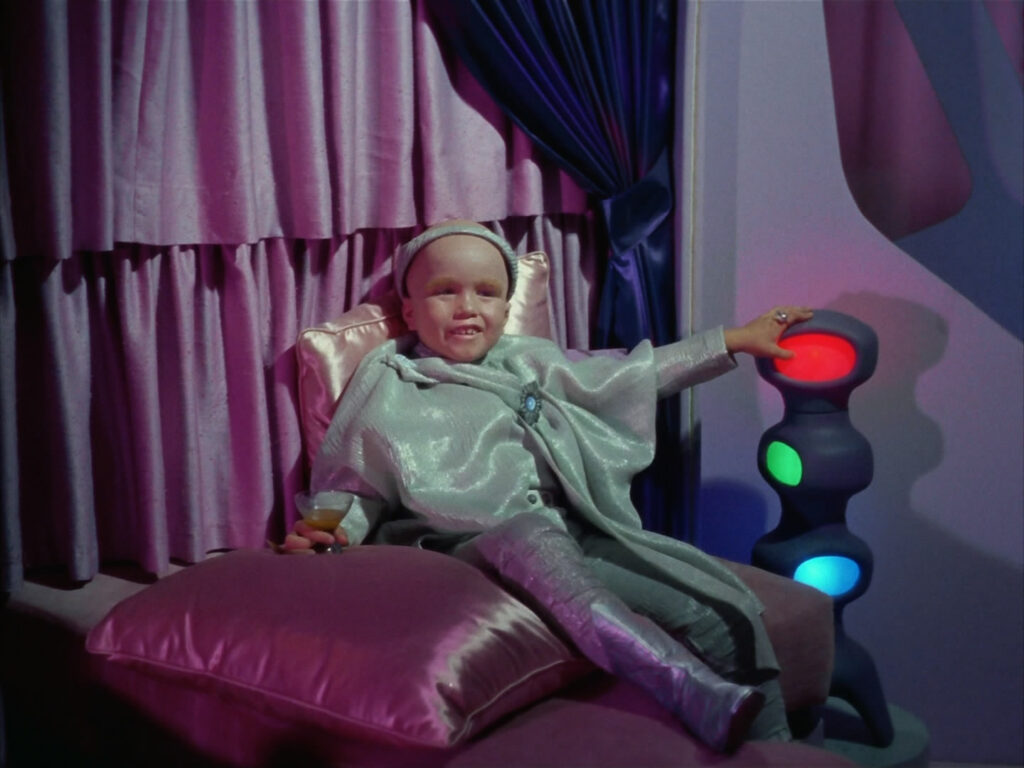
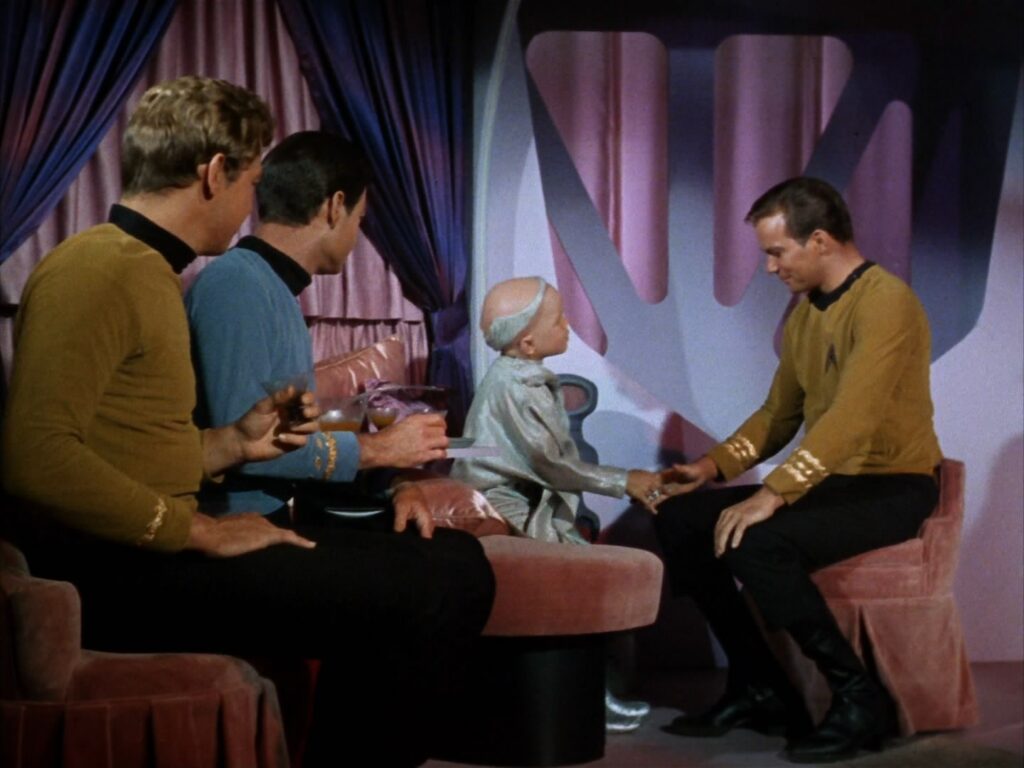
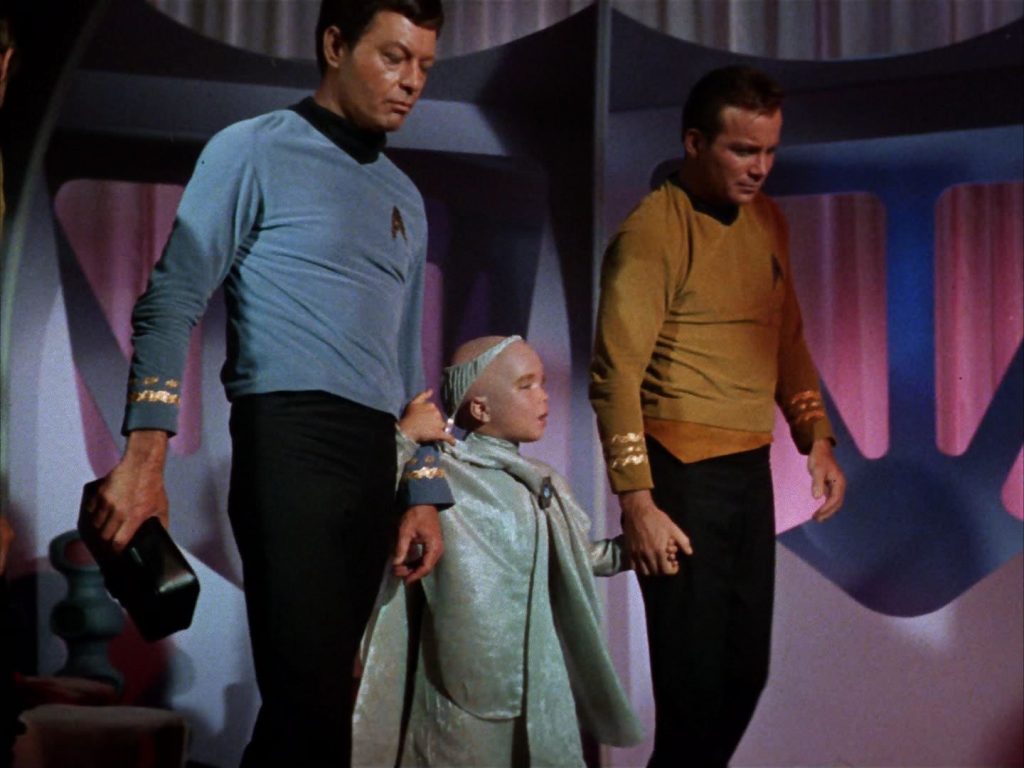
But the bluff isn’t what makes this Star Trek. Plenty of science fiction heroes talk their way out of a corner. What almost none of them do is the next thing. When Balok’s little ship signals distress, minutes after threatening to obliterate the Enterprise, Kirk turns straight round and goes to help him. That’s the bit that matters. The bluff is Kirk being clever. The rescue is Kirk, and the whole franchise, deciding what kind of people they are going to be. You can win the poker game and still choose to pull your opponent out of the water afterwards. Sixty years of Star Trek is built on that single instinct, and it turns up here fully formed and completely unselfconscious, as if the show already knew exactly what it was.
The Kirk, Spock and McCoy chemistry is already fully formed too, which genuinely surprised me rewatching given how early this was shot. Kirk runs on instinct dressed up as confidence. Spock offers detached analysis that occasionally slips into something close to resignation, which is interesting in itself, because it means the show hasn’t yet decided Spock is always right. McCoy cares about people over procedure and tells Kirk he’s wrong to his face. None of it gets explained to us. It’s just allowed to exist, and that restraint is the mark of a show that already trusts its own foundations.
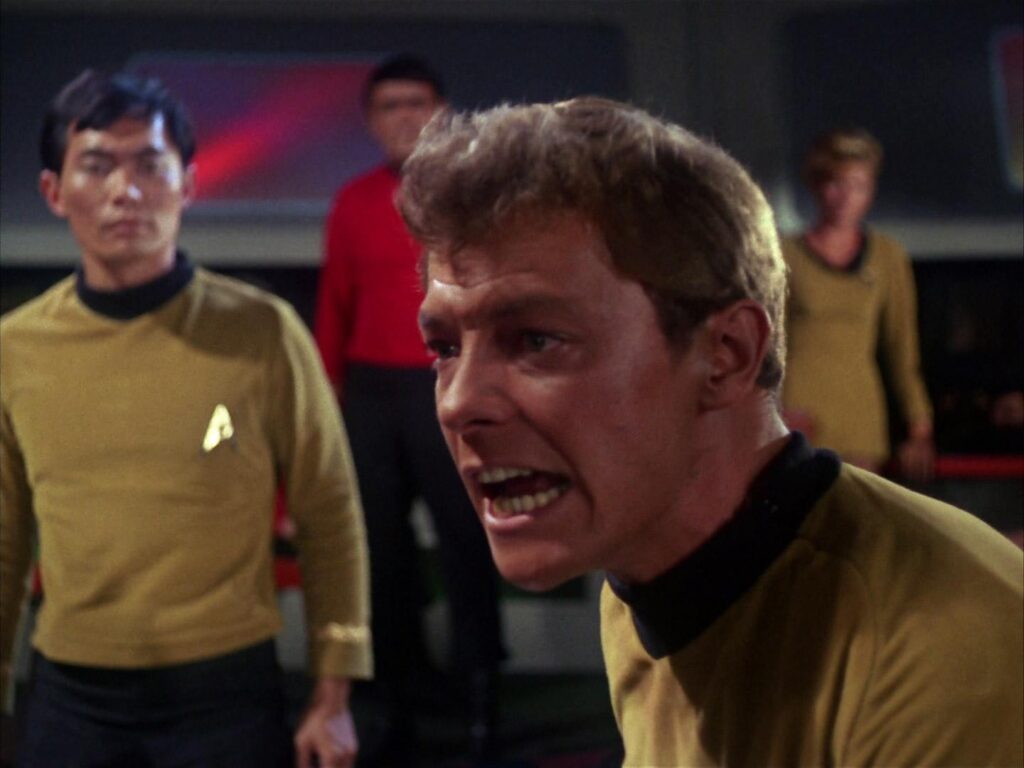
Here’s the thing that struck me most this time, and I don’t think I’d have clocked it the same way ten years ago. The episode isn’t really about bravery. It’s about professionalism. Watch what the crew actually does while a superior alien counts down to their destruction. McCoy calmly finishes Kirk’s physical. Rand still brings the captain his lunch. Scotty keeps working the problem. Sulu counts the clock. Spock keeps analysing right up to the point he concludes the odds are against them. Nobody panics. Except Bailey. And that discipline under total uncertainty turns out to be exactly what Kirk is evaluating, in the crew and in himself. I spend my working life watching people make decisions on incomplete information under pressure, and this episode understands something true about that. The test isn’t whether you’re afraid. Everyone’s afraid. The test is whether you keep doing your job while you are.
Bailey gets a rougher deal from most reviewers than he deserves, and honestly, he annoyed me less this time than he used to. He’s not likeable, but he isn’t meant to be. Everyone else on that bridge behaves like a seasoned officer. Bailey behaves like someone who’s just been told an alien civilisation intends to kill him in ten minutes, which is to say he behaves like a person. That’s arguably the most honest reaction anyone has. Where the writing lets him down isn’t the breakdown, it’s the resolution. Handing the officer who has just demonstrated he cracks under pressure the job of humanity’s first ambassador to an alien civilisation doesn’t follow from anything we’ve watched. It reads as a tidy bow rather than an earned outcome. It’s the one place the episode’s efficiency works against it. There isn’t enough runway left for that arc to land the way the script wants it to.
That efficiency cuts the other way as well. The bridge sequences in the first half build real tension, largely because nobody explains the mystery. We know the cube is solid, we know it follows the ship, and that’s it. No tidy readout resolves it for us, and the not knowing does all the work. I’d forgotten how well that holds. Once the bluff succeeds, though, the tractor beam sequence repeats the same dramatic beat two or three times more than it needs to, and the suspense that peaked at the countdown never quite recovers. It isn’t just slow. It’s diminishing returns on a trick the episode already spent.
Visually, this is more ambitious than the budget had any right to support, and it mostly gets away with it. The cube reads as hostile through pure geometry: hard edges, mechanical rotation, no attempt to communicate. It feels engineered, a machine doing a job. The Fesarius takes the opposite approach, spherical and glowing and almost baroque, and it feels ancient, something closer to an act of god. One is a device. The other is a civilisation that happens to have arrived in your path. The episode never spells that out. It just lets the shapes and the scale do the work, and that’s smarter visual thinking than The Original Series usually gets credit for this early. Fred Steiner’s score is doing at least as much as the design in the tense stretches, and it’s the reason a few of those repeated reaction shots land better than they should. Sargent keeps the whole thing confined to the bridge, which turns it faintly theatrical. We’re trapped there with the crew rather than cutting away to external action, and that containment is exactly right for a story about facing the unknown with nothing but nerve and a straight face.
Watch Trek after this in The Next Generation and it’s hard not to notice how directly this episode’s shape gets reused a generation later in Where Silence Has Lease. Same unknowable alien, same psychological test, same bluff, same first contact arrived at through trial. The Next Generation plays it darker, all dread and cosmic indifference. The Original Series plays it lighter, all nerve and dry wit, and for what this episode is trying to be, that’s the right trade.
So does the first proper Star Trek episode still work as drama sixty years on? For me, more than works. The pacing sags in the back half, Bailey’s ending is a shortcut rather than a payoff, and there’s a stretch of reaction shots that feels like time filled rather than tension built. I notice all of it, and I don’t much care, because none of it touches what the episode does. Exploration over conquest, curiosity over fear, mercy extended to something that was trying to kill you ten minutes earlier, discipline held while everyone quietly assumes they’re about to die. Every idea people reach for when they try to explain Star Trek is already here, shown through behaviour rather than speeches, in the very first thing the production made after the network decided it was worth funding.
This is one of my favourite episodes of The Original Series, and it might be one of my favourite hours of Star Trek full stop. Not because it’s flawless, because it obviously isn’t. Because when someone asks me what this franchise is actually for, this is one of the first things I put in front of them. It doesn’t explain Star Trek. It demonstrates it. A man bluffs someone who might as well be a god, wins, and then turns round to help him back onto his feet. Sixty years on, I still look forward to watching it, and I still think it’s one of the finest hours the show ever made.
9/10