Star Trek: TOS — Miri (S1E08)
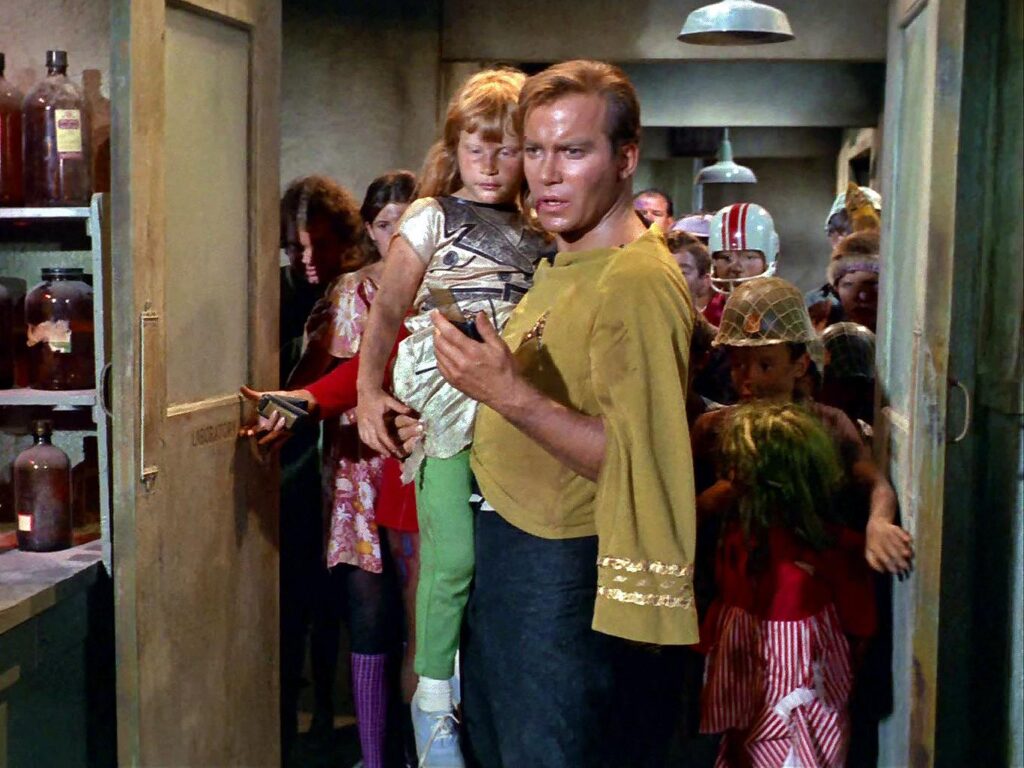
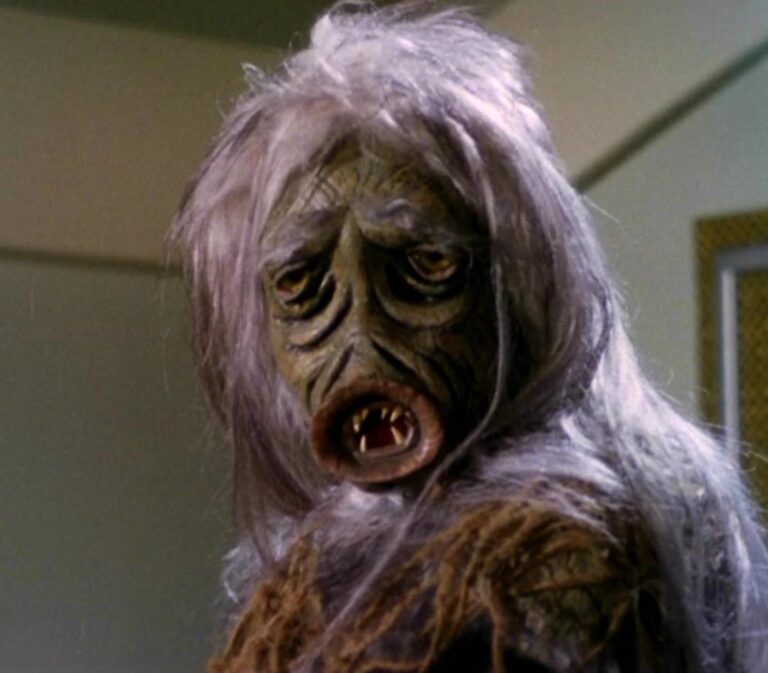
The children are heard before they’re seen. Voices carry down an empty street, a playground chant bounces off buildings nobody has lived in for centuries, laughter arrives with nothing funny behind it. Spock describes them scurrying away “like animals,” and for a stretch in the middle of it, “Miri” is one of the genuinely unsettling things Star Trek made in the 1960s. Long before zombies became a genre anyone could phone in, The Original Series built a dead suburb full of feral children and trusted the silence to do most of the work.
I came to this one through reruns, years after The Next Generation, with no childhood affection to soften the edges. And I keep landing on the same question every time it comes round. Can a brilliant premise still produce only a good episode?
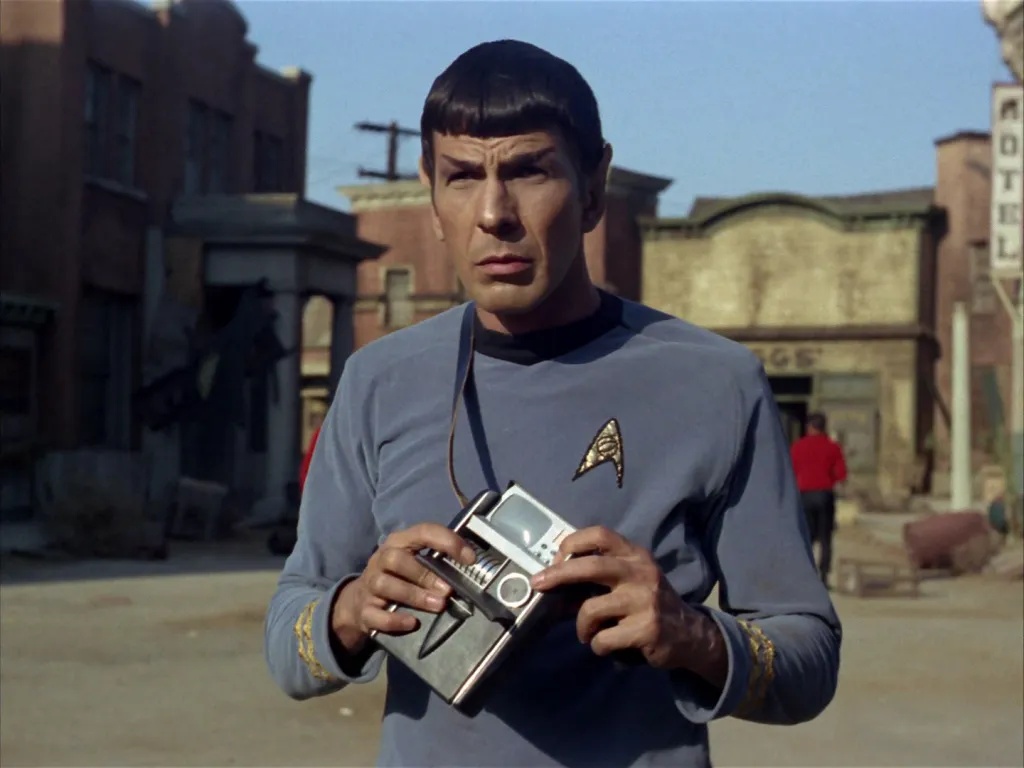
Because that’s exactly what “Miri” is.
Look at what it’s holding. Another Earth, an exact duplicate down to the shape of the continents. A dead civilisation. Children more than three hundred years old. A plague that waits politely for puberty and then kills you in an afternoon. Any one of those could anchor an all-time classic. “Miri” has all four, yet never becomes one, and the reason isn’t that the ideas are weak. It’s that the episode can’t decide which of them it actually wants to be about.
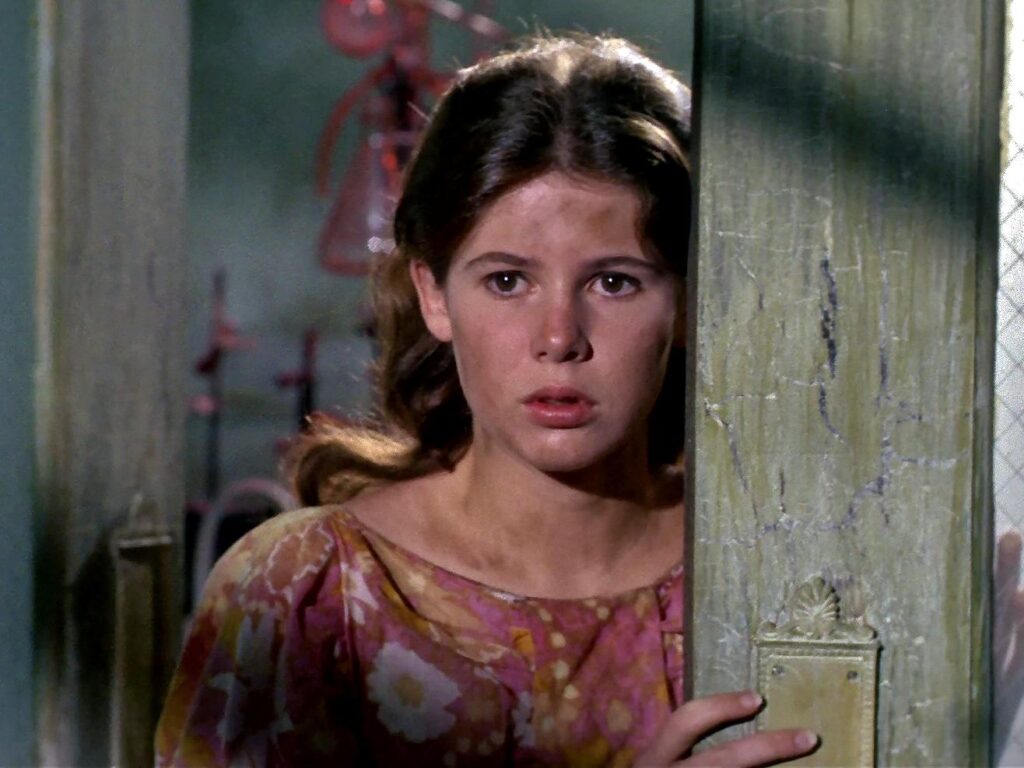
Take the strengths first, because they’re real. The horror lands, and it lands early. This is proper science fiction of the older kind, the cautionary “what if” rather than the space battle, humanity reaching to improve itself and engineering a catastrophe instead. That’s the sort of story The Original Series was built to tell, and the dread it generates without a single monster worth the name is impressive for the era. The BBC pulled the episode from repeats for years, alongside “Whom Gods Destroy” and “Plato’s Stepchildren,” which tells you it had a genuine edge.
McCoy carries more of it than you’d expect. This is one of Kelley’s stronger early outings, the scientist working an impossible problem who eventually rolls up his own sleeve and injects himself with an untested cure because somebody has to. It’s the quiet heroism he brings to the series at its best, and the scene where Spock can do nothing but stay beside him as he collapses is the episode’s most human moment. “I will never understand the medical mind” does more character work in one line than the Kirk and Miri material manages across the whole hour.
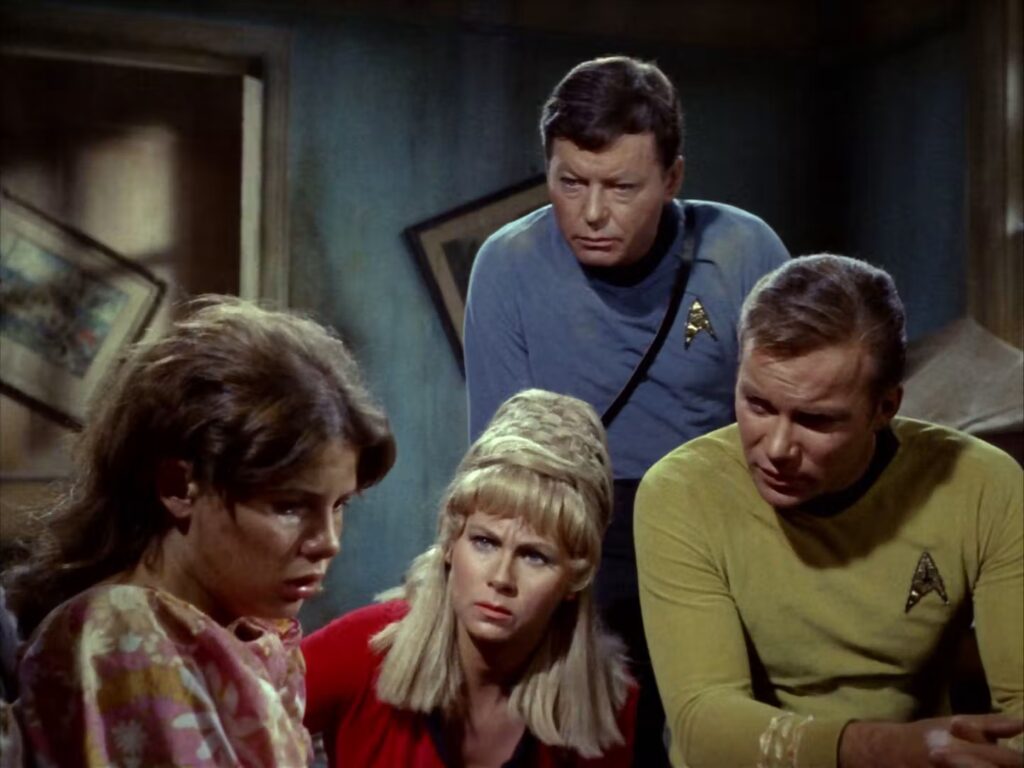
And the episode remembers what Star Trek is for. Nobody gets left behind. Nobody decides the children are beyond saving. The Enterprise stays to rebuild the world rather than curing the leads and flying off. That instinct, the refusal to write anyone off, is the thing the franchise keeps coming back to, and it’s here in an episode that could easily have lost it.
Then there’s the problem.
Or rather, several of them.
The duplicate Earth is where the episode breaks its promise. The teaser spends its entire running time telling us this is astonishing, a second Earth hanging in deep space, and then the episode forgets it exists. It’s there so the crew can walk around a 1960s backlot without anyone calling it unconvincing, and the moment that job is done the idea is dropped and never picked up again. I’ve written comics, and one thing the form teaches you fast is storytelling economy. If your opening page promises one mystery, you don’t quietly swap it for a different one twenty minutes later and hope nobody notices. James Blish had to bolt an explanation onto the prose adaptation because the episode couldn’t be bothered to supply one. Later, The Original Series would invent Hodgkin’s Law of Parallel Planetary Development to paper over the gap, then never mention it again. The hook cheats, and it cheats confidently. Somehow that’s even worse.
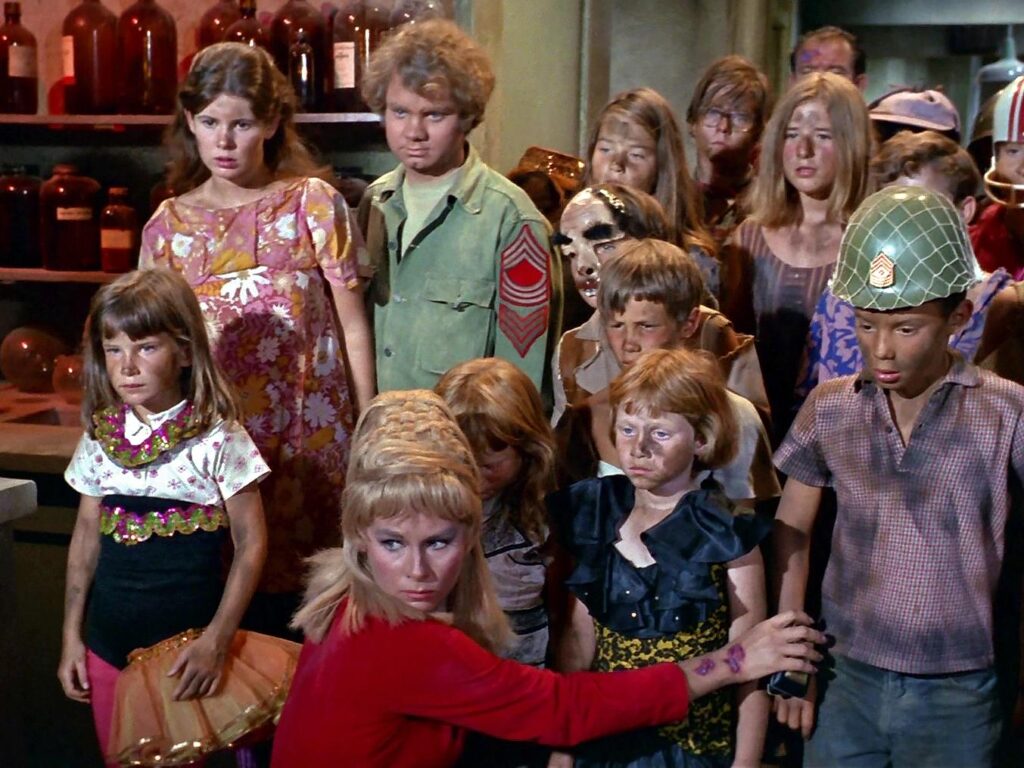
The children don’t survive scrutiny either. Three hundred years is an unimaginable stretch of time. Even with no adults to guide them, somebody learns. Somebody experiments. Somebody gets curious, teaches the others, grows up in spite of the rules. The episode needs them frozen in permanent childhood because the metaphor only works if they stay there, and it never does the work to earn that. They’re stuck because the script requires it, not because the world makes it true.
It drags, too, and that’s the part that surprises people who remember the concept more fondly than the hour. The laboratory scenes circle the same ground. The theft of the communicators feels manufactured, since the whole landing party conveniently leaves every one of them in a room and lets itself be lured outside. The countdown to death keeps losing its urgency because it stops every few minutes for another block of exposition.
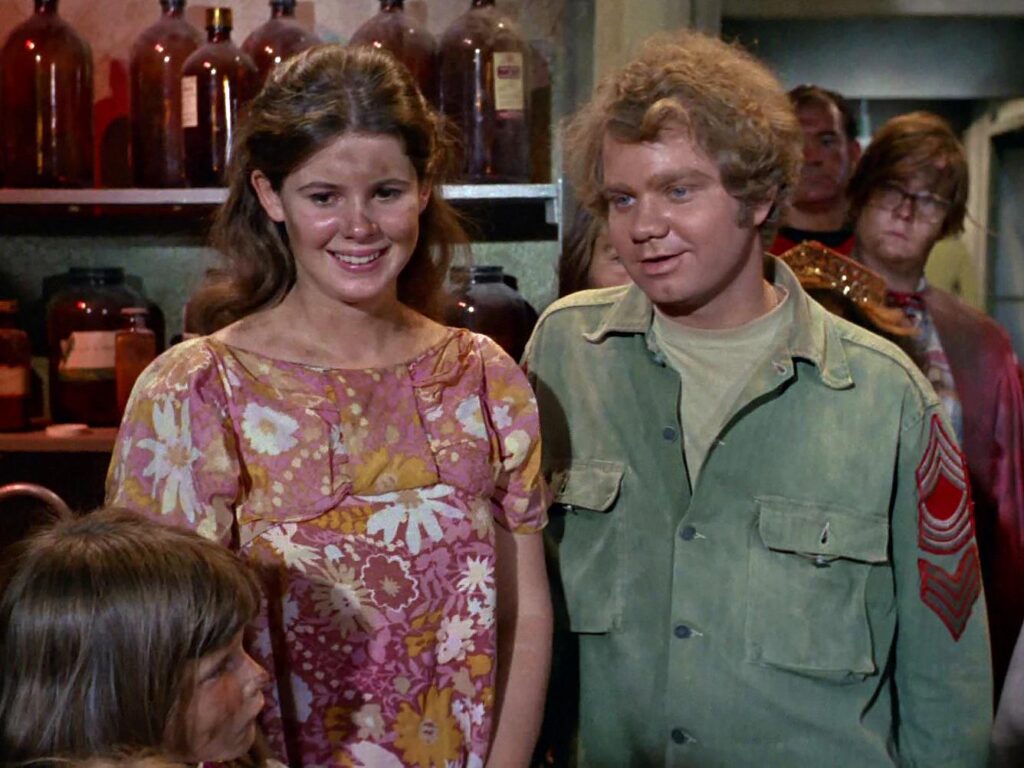
The Kirk and Miri material has aged awkwardly, and I’m not going to pretend otherwise. I don’t read anything sinister into the intent. I genuinely don’t think that’s what the episode is reaching for. But I also won’t tell you a modern audience finds those scenes comfortable, because they don’t. The problem was never Miri’s crush. Children form innocent attachments all the time, and that part is true to life. The problem is that the script keeps asking Kirk to lean into it, the “pretty young woman” line, the hand he doesn’t let go of, the speech about her becoming a woman followed straight away by setting her to sharpen pencils. Janice Rand catches the other half of it, handed “look at my legs” on what amounts to her last real outing in the show, then made the punchline of Kirk’s “I never get involved with older women.” This is where Rand effectively ends and the alien love interest of the week begins, and that’s a quiet loss the episode doesn’t seem to notice it’s making.
None of that is Shatner’s fault, and it’s worth saying he does some of his best early work here. Once Kirk realises they’re all dying, the frustration builds by degrees, and the big speech to the children lands because he plays it desperate rather than triumphant. He’s selling material that really shouldn’t work. Somehow, he makes it work anyway.
Even so, artistically this is doing far more than its reputation suggests. The production design is the smartest decision in the episode, and it’s the same decision the plot wastes. The decaying American suburb works precisely because it’s familiar. Land the crew on another rocky quarry and the horror evaporates. Give them playgrounds, classrooms, abandoned cars, and bicycles lying where children dropped them, and you’ve told the audience this place looked exactly like home before it died, without a word of dialogue.
The familiarity is the threat.
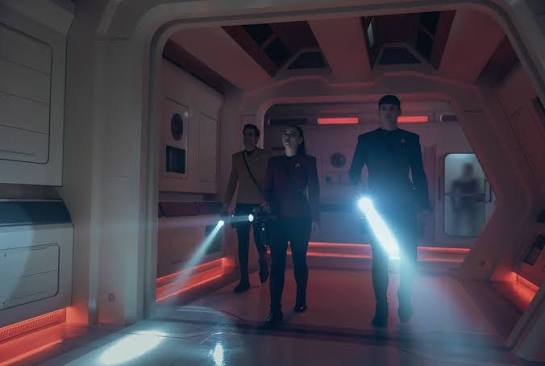
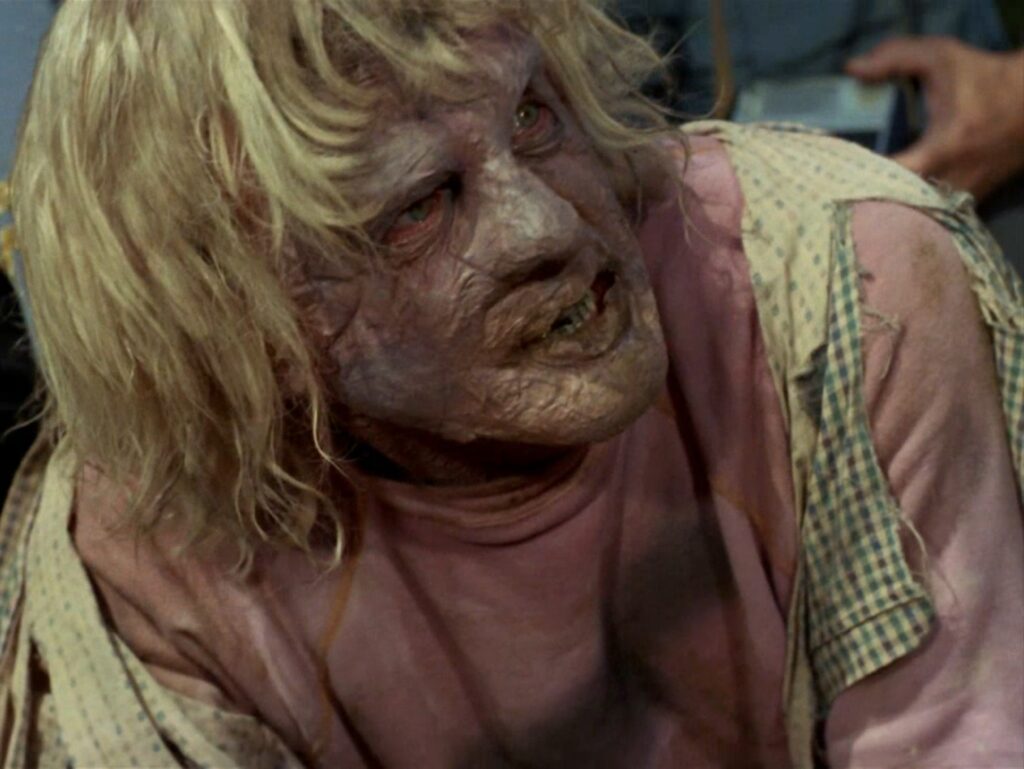
The lighting backs it up. There are deeper shadows here than The Original Series usually allows itself, and the interiors feel genuinely dusty rather than stage-dressed. The plague makeup works because it stays simple, those purple lesions doing the job without tipping into elaborate prosthetics that would only distract. I’d point to the costume detail as well, the way Kirk’s, McCoy’s, and Rand’s uniforms loosen and tear as the infection takes hold, collars coming open, the breakdown tracked on the bodies rather than announced in dialogue. And the sound carries the whole eerie register, the chanting, the distant laughter, the long stretches of silence. Alexander Courage even scores Kirk’s entrance with the main theme, so the captain reads as an extension of the ship. For 1966 television, that’s real direction, not just a camera pointed at a backlot.
So where does that leave it?
“Miri” is good.
It’s atmospheric, ambitious, willing to be genuinely eerie, and anchored by one of McCoy’s strongest early performances.
But…
It had the makings of something far better than good, and it spent them. The premise was a classic. The episode is only a good one.
Those aren’t the same thing, and “Miri” is the proof.
7/10