Star Trek: Voyager — Homecoming TPB Review
There is something slightly cruel about the final shot of “Endgame”. After seven years, seventy thousand light-years, dead friends, impossible decisions, Borg cubes, temporal shortcuts, ruined shuttles, and enough damaged systems to keep B’Elanna Torres permanently furious, Voyager finally reaches Earth. We see the planet, we see the fleet waiting for them, and Janeway tells Paris to set a course for home.
Then it ends.
That has never made “Endgame” a bad finale for me. Voyager’s entire journey was about getting home, and the episode fulfils that promise, but there is a difference between reaching your destination and actually arriving. We never really got Tom Paris introducing his daughter to his father, Tuvok reunited with his family, Harry back with his parents and Libby, or the rest of the crew discovering what life after Voyager was actually going to look like. Star Trek: Voyager — Homecoming exists almost entirely in that gap.
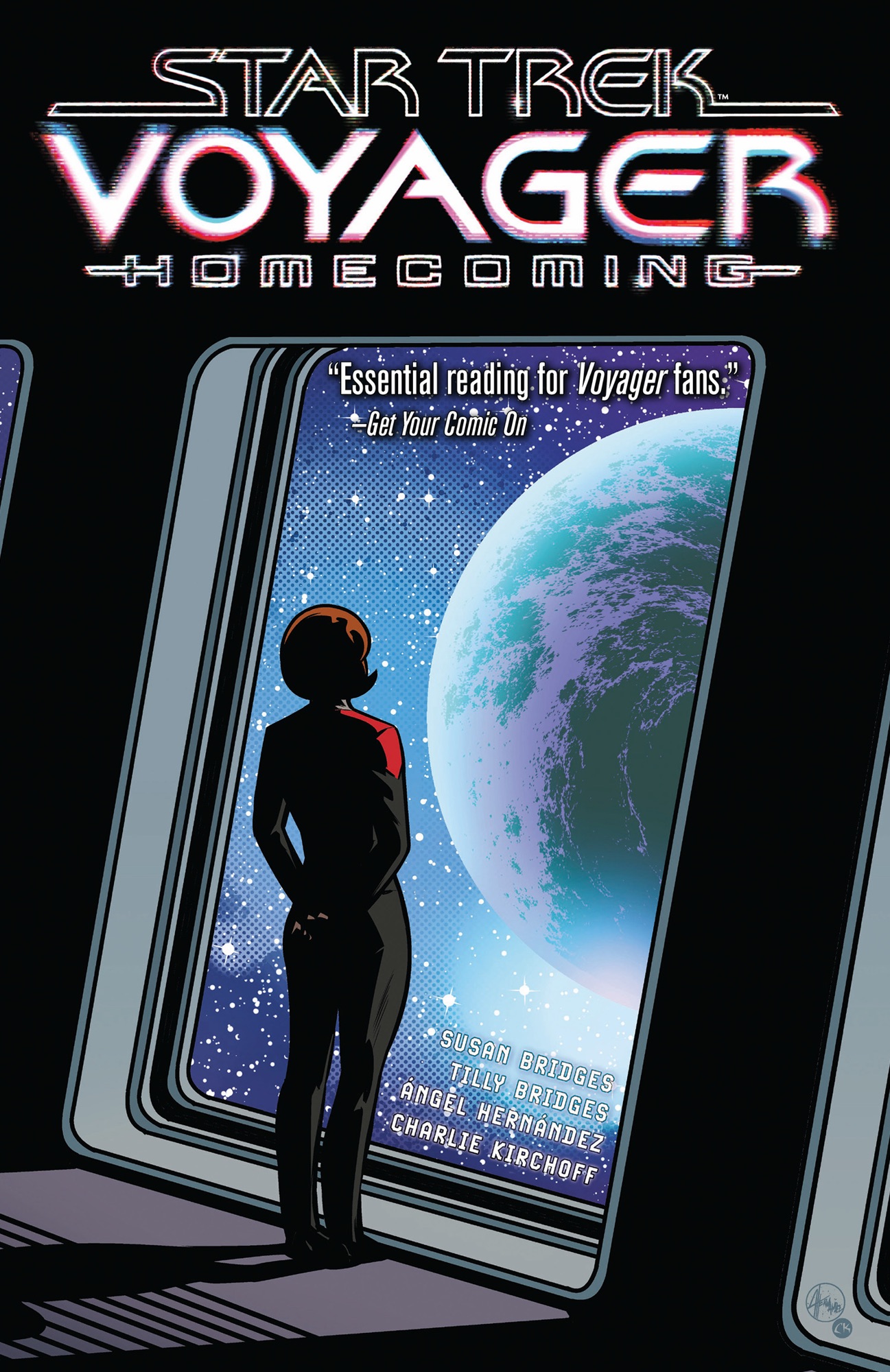
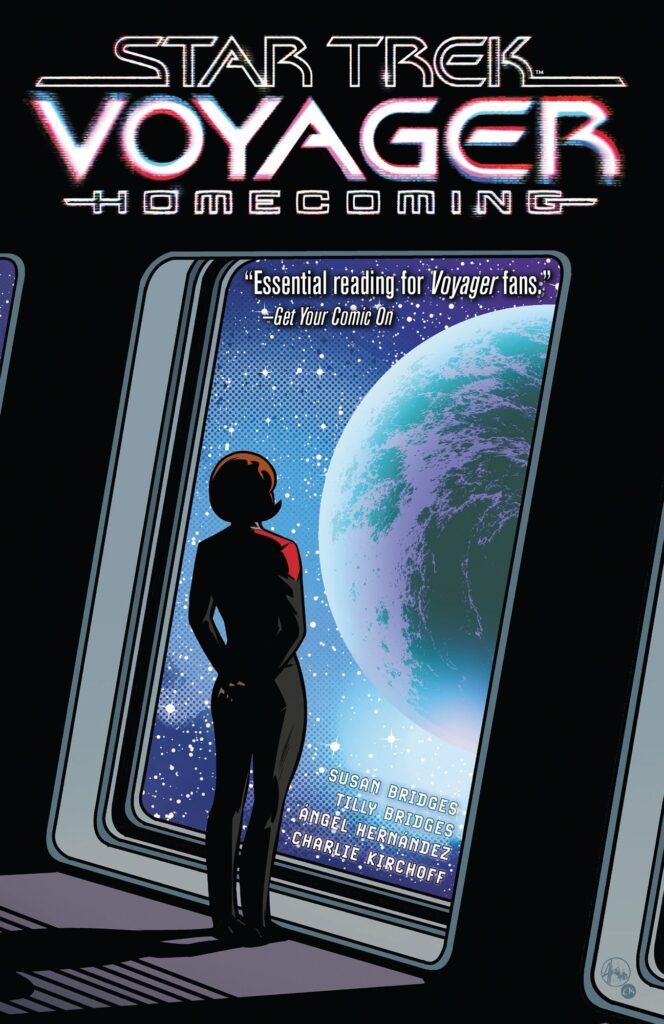
IDW is not particularly subtle about its intentions. The five-issue miniseries, written by Susan and Tilly Bridges, with art by Ángel Hernández, is sold as the ending fans have waited decades for, promising the character resolutions the television series supposedly denied them. The collected edition brings those five issues together into a 120-page trade, and that is quite a dangerous promise to make because I do not think “Endgame” needs fixing. It needs finishing.
What surprised me is that Homecoming largely understands the difference.
Before anyone is allowed so much as a cup of coffee and an awkward family reunion, though, Voyager gets stolen. Of course it does.
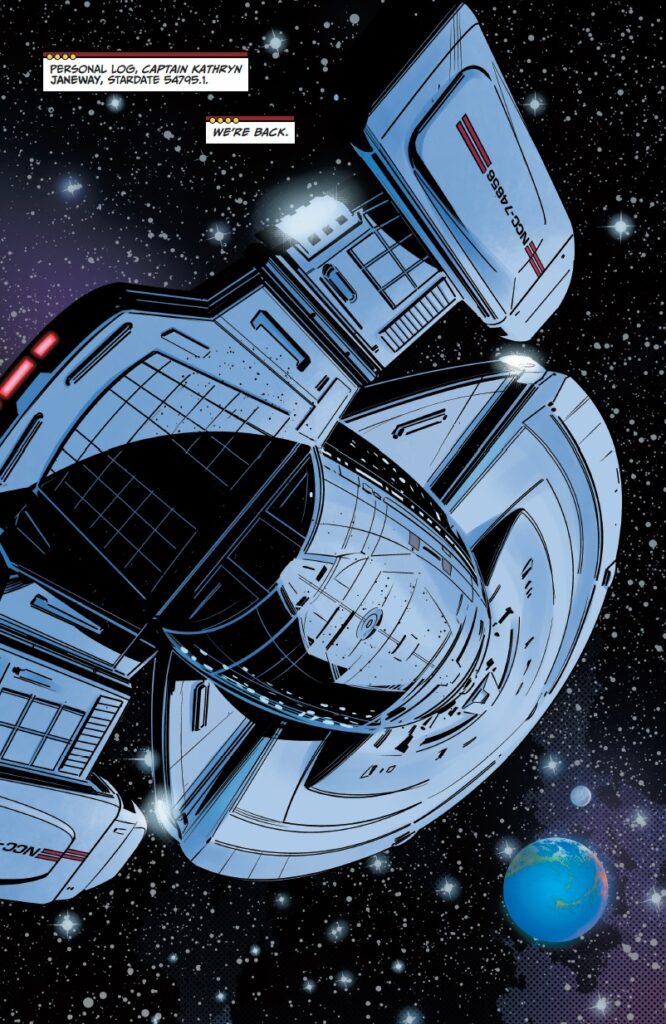
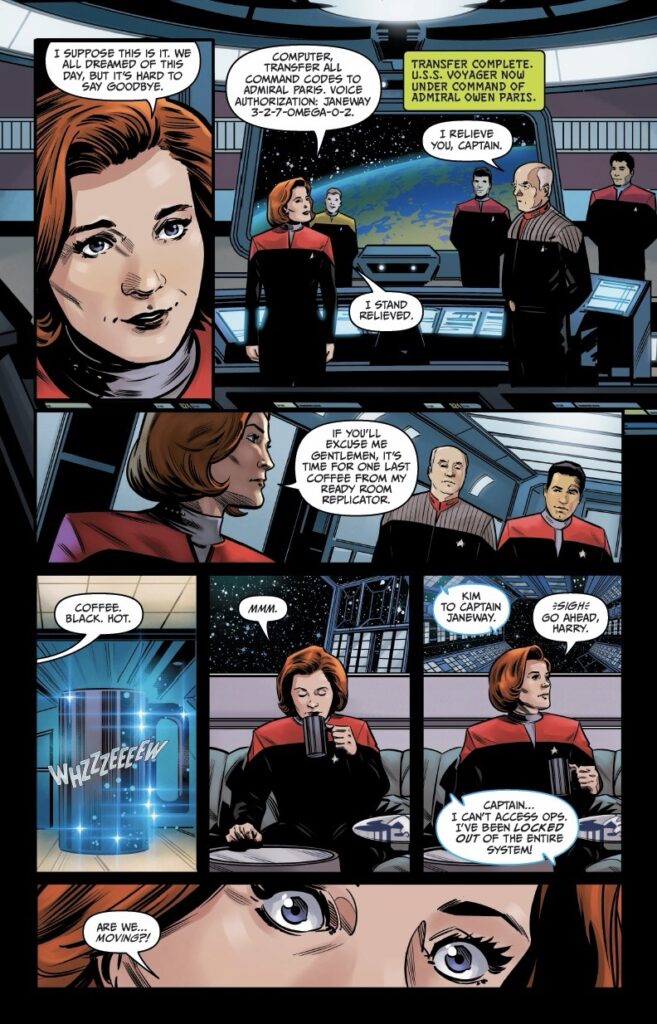
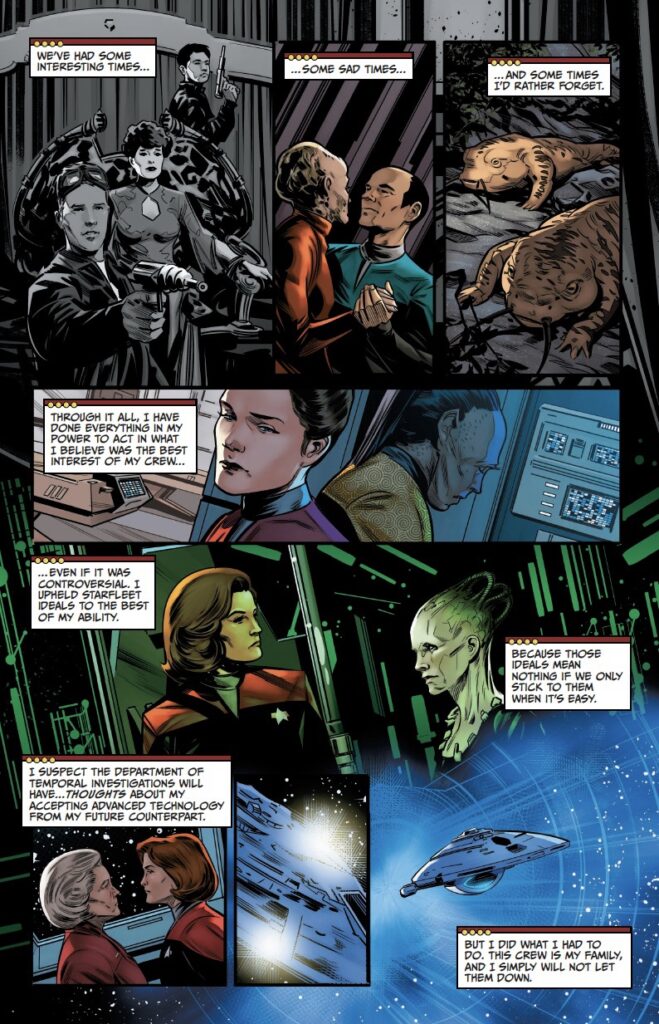
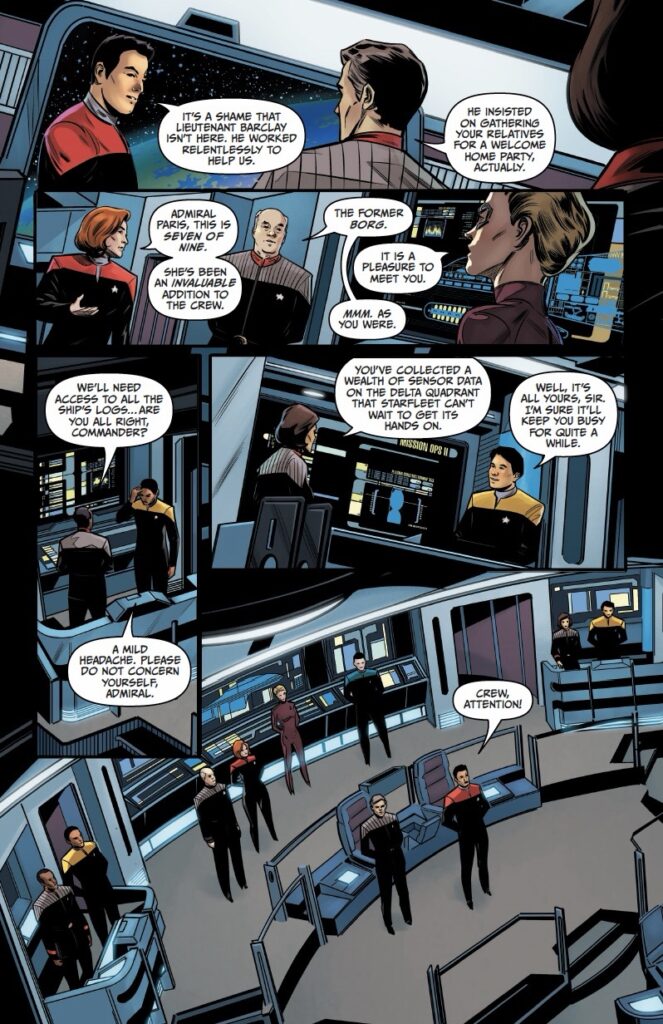
The opening works because it understands how strange this moment must feel. Janeway records her log, looks back across seven years of compromises and decisions, and prepares to hand Voyager over to Starfleet. There is a lovely melancholy underneath it because this is not simply a ship coming into port. These people have lived inside Voyager for seven years. It became home precisely because they could not reach the one they left behind, and handing it over carries more weight than simply transferring command of a Starfleet vessel.
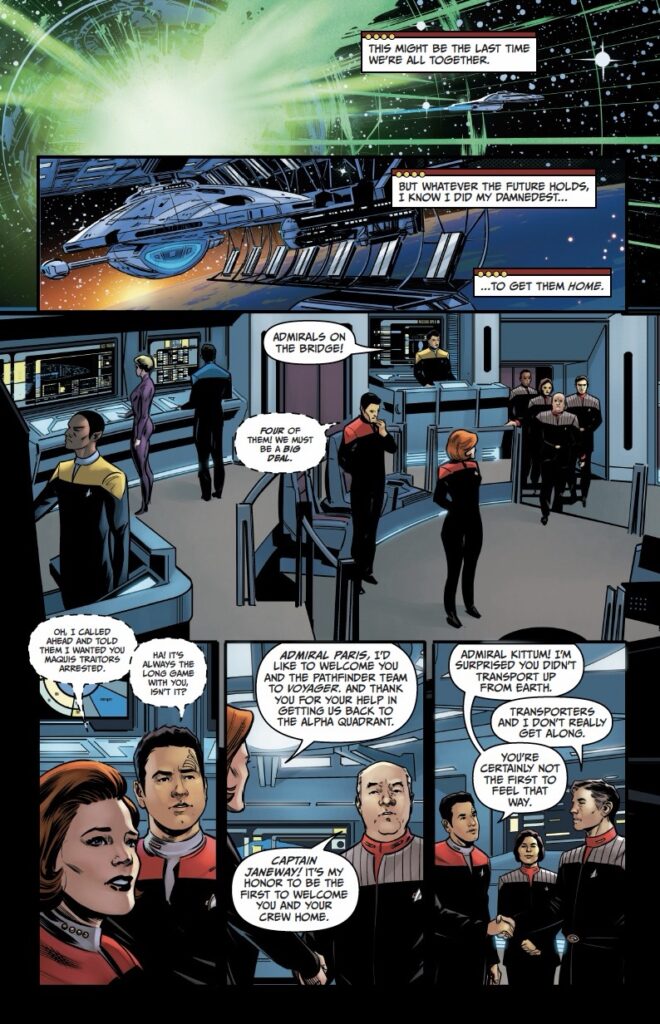
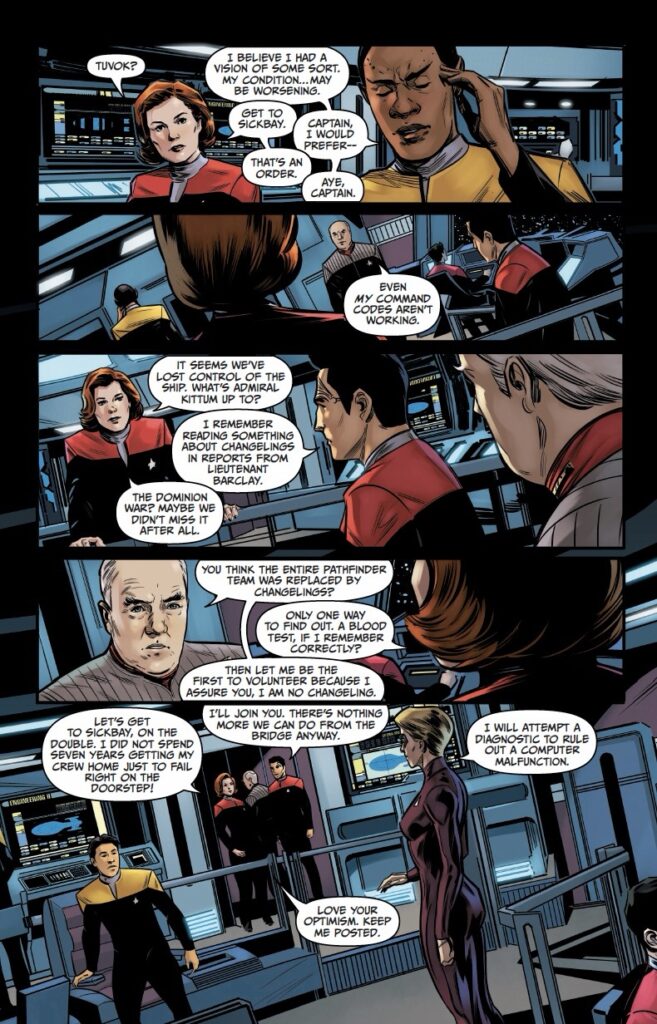
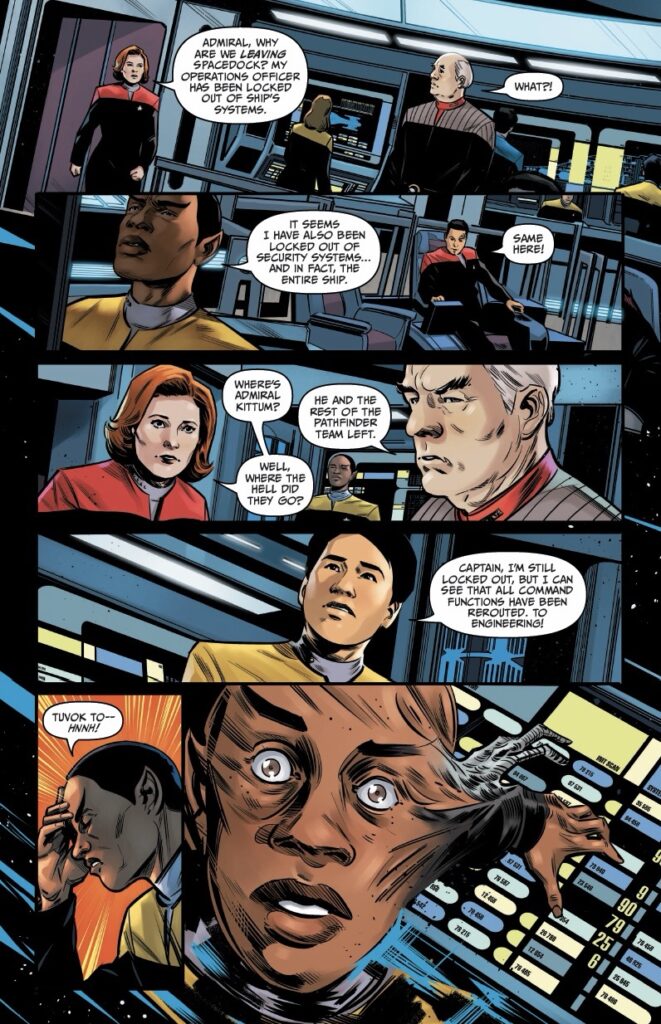
Then Admiral Owen Paris and the Pathfinder team arrive, command is formally transferred, Harry finds himself locked out of operations, Voyager begins moving away from Earth, and everything immediately goes wrong.
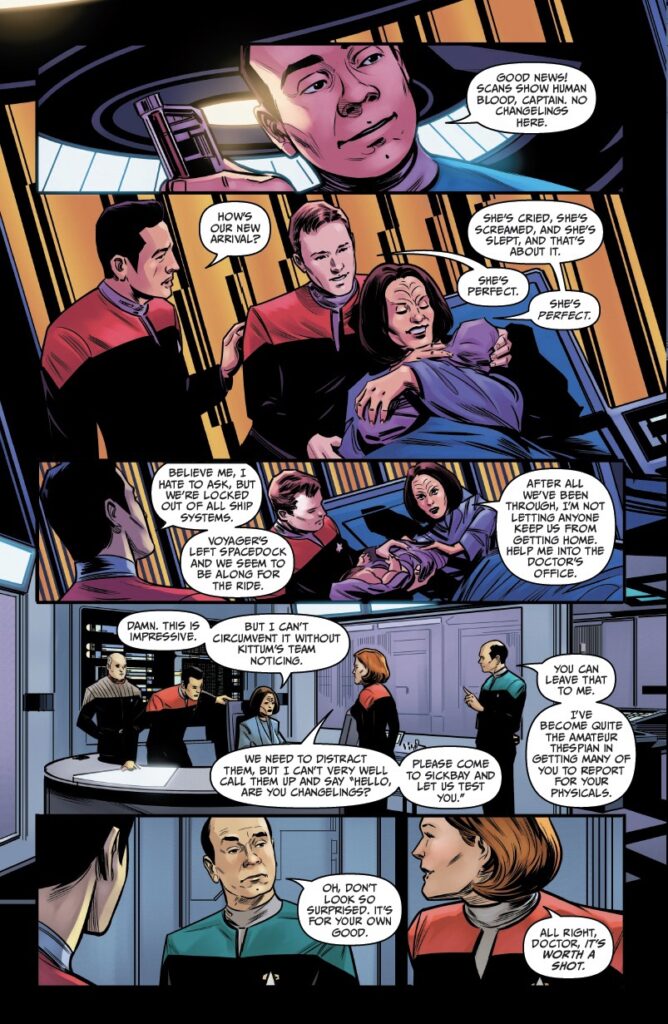
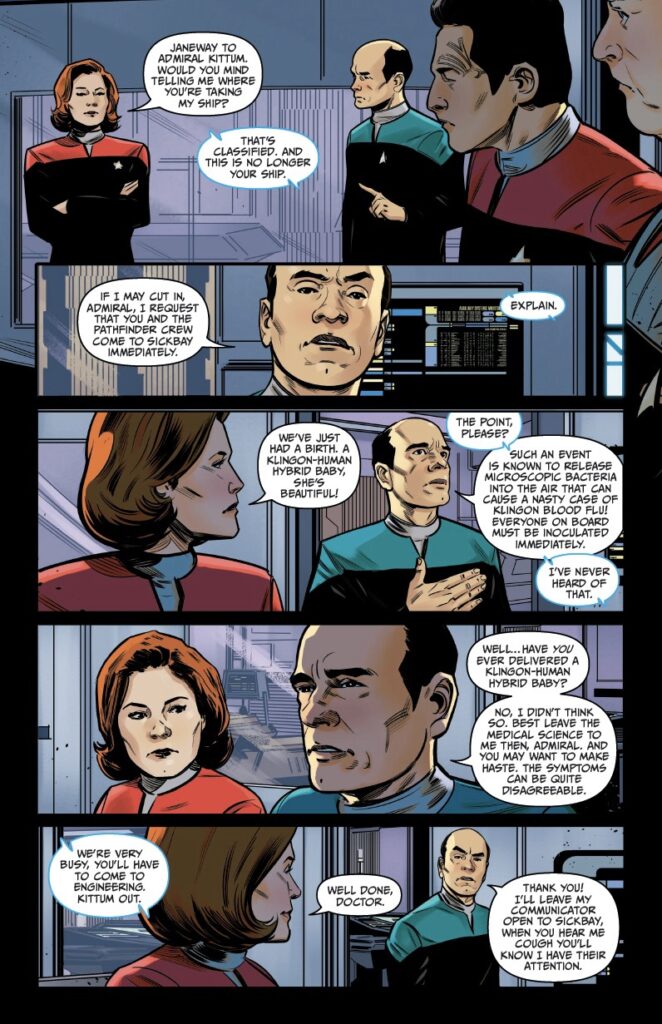
Susan and Tilly Bridges are very good at writing the crew through all of this. They do not feel like generic Starfleet officers wearing familiar faces. The Doctor inventing Klingon blood flu so he can secretly test the Pathfinder officers, Janeway instantly switching from reluctant former captain back into command mode, and Torres climbing out of bed not long after giving birth because somebody has interfered with her engines all feel recognisably Voyager. That matters more than it might seem, because licensed comics can reproduce uniforms, ships, catchphrases, and familiar bits of dialogue fairly easily. Recreating the rhythm of an ensemble is much harder.
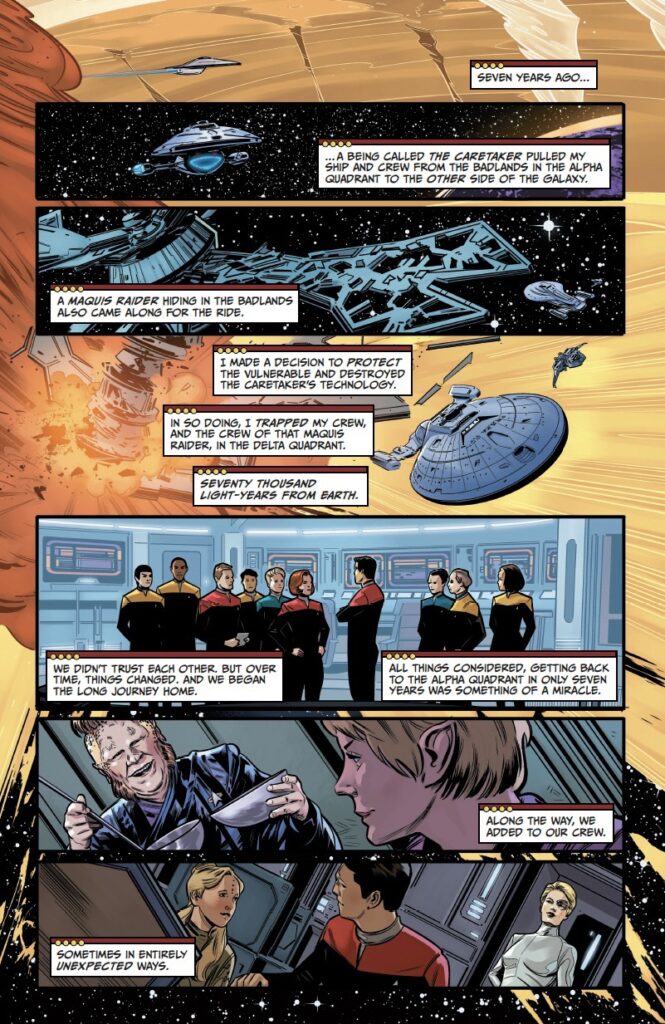
Voyager worked because these people had spent years learning how one another operated. There is shorthand between them, irritation, affection, trust, and occasionally the distinct sense that they have had the same argument about twenty times already. The Bridges understand that, and they understand Janeway too. When she says she did not spend seven years getting her crew home only to lose them on the doorstep, it could easily have sounded like trailer dialogue, but here it feels like the entire premise of the book reduced to a sentence.
The first major reveal is that the supposed Pathfinder officers are Species 8472, using perfected versions of the human disguises seen in “In the Flesh”. Voyager is dragged back into fluidic space, with 8472 now regarding Janeway and her crew as an existential threat because they have returned carrying technology from the future.
This could very easily have become cheap nostalgia. Bring back Species 8472, bring back the Borg, bring back “Scorpion”, and play the hits. Instead, Homecoming does something much more interesting and takes “In the Flesh” seriously.
Species 8472 were terrifying when they first appeared. “Scorpion” introduced something the Borg could not assimilate, could barely understand, and were genuinely frightened of. Later appearances inevitably softened them, and by “In the Flesh”, Voyager had reached a diplomatic understanding with individuals who had prepared for an invasion of Earth because they believed humanity posed a threat. Homecoming asks what happened after that, and the answer is considerably less comfortable than simply turning them back into monsters.
The 8472 who lived as Boothby and Archer were changed by their experience of humanity. They began questioning their society’s assumptions, retained their human forms, resisted orders to return to what they had been, and were eventually treated as aberrations by their own people. The Prime Hierarch’s faction views human influence almost like an infection, something that has corrupted members of their species and needs to be cut out.
That gives the antagonists something more useful than simple hatred, and one of the smartest choices in the book is the accusation they throw back at Voyager itself. Janeway met these people, entered their simulations, negotiated with them, and yet everyone continued using a Borg numerical designation for their entire species. Voyager never even asked “Boothby” and “Archer” for their real names.
It is a small detail, but a very Star Trek one. Starfleet talks endlessly about first contact, mutual understanding, and recognising other cultures on their own terms, yet here is an entire species still being identified by the number assigned to it by the Borg. The comic does not pretend Species 8472 are therefore right. They abduct people, experiment on them, threaten Earth, and become increasingly consumed by revenge, but it gives their anger enough foundation that Janeway cannot simply dismiss them as monsters. That is considerably more interesting than just putting the teeth back on Species 8472.
It is also around this point that Homecoming starts creating problems for itself, because there is a lot of story here. Voyager is hijacked, Species 8472 returns, Tuvok’s neurological condition rapidly worsens, Voyager becomes stranded in fluidic space, the deflector is destroyed, the crew discovers the remains of a Borg cube, they encounter 73 Borg drones cut off from the Collective, another faction of Species 8472 enters the picture, human prisoners are discovered, Boothby and Archer return, and the real Owen Paris is found alive.
All of that has to happen while the comic is supposedly giving its principal characters the emotional closure television never provided, and five issues suddenly does not feel particularly generous.
The pacing rarely becomes confusing, but it frequently feels as though the story is sprinting because it knows how much remains to be done. New complications arrive almost as quickly as the crew solve the previous ones, and while that gives the book plenty of momentum, it can also make the whole thing feel like an ambitious two-part episode someone accidentally scheduled into a one-hour slot. There are several ideas here that could comfortably have supported stories of their own.
The biggest example is Admiral Paris.
The real Owen Paris reveals that he was taken on stardate 51465, around four years before the events of Homecoming, placing his replacement well before the Pathfinder Project became such an important part of Voyager’s connection with home. That means the Species 8472 impostor was not simply posing as Paris for the final homecoming. The revelation potentially rewrites virtually every interaction Voyager has with Owen Paris after that point, from the letter Tom receives in “Hunters” through the later Pathfinder-era appearances and all the way to “Endgame”.
As a reveal, it works extremely well. As continuity, it is enormous.
A Species 8472 infiltrator has apparently spent years occupying the position of the father desperate to bring Tom home while simultaneously helping oversee Starfleet’s attempts to establish regular communication with Voyager. There is a genuinely fascinating story hiding inside that idea, especially once you start thinking about everything Owen Paris supposedly did during those years, but Homecoming barely has time to acknowledge the implications before racing towards the next emergency.
That is the book in miniature: clever enough to create genuinely interesting questions, but sometimes too busy to answer them.
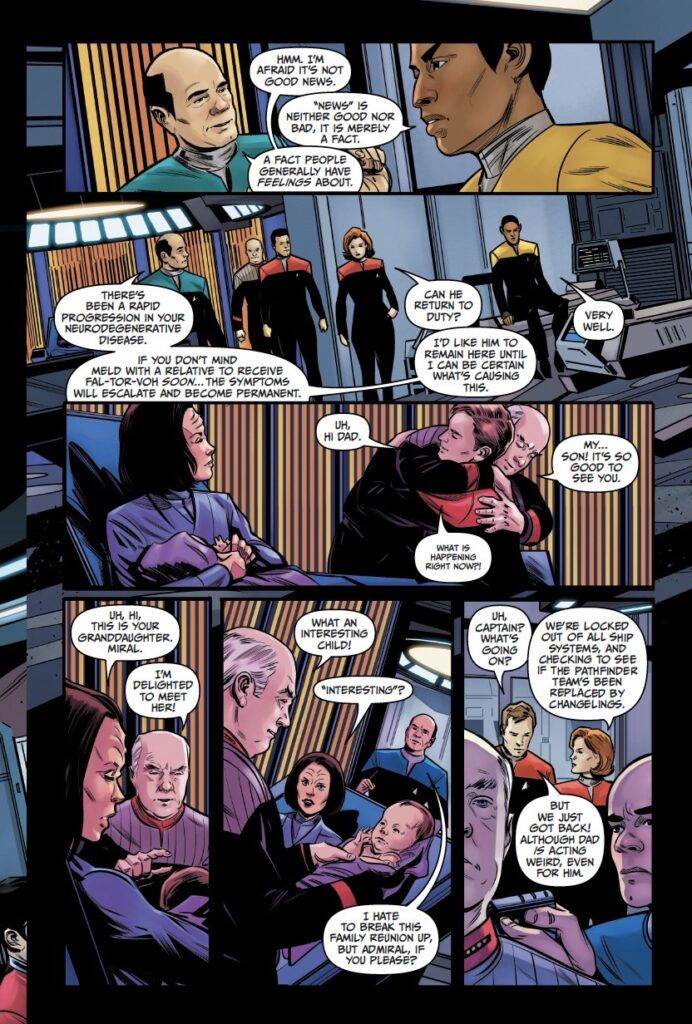
Oddly, some of its best material happens while very little is exploding. Tuvok’s degenerative neurological condition, carried forward from “Endgame”, deteriorates rapidly after exposure to Species 8472’s telepathy. Unless he receives fal-tor-voh through a mind meld with a relative, the damage will become permanent, and Janeway’s desperation to get him home gives the story an increasingly personal clock to run against.
Seven ends up providing some of the most memorable material in the whole book when she finds herself caring for both Tuvok and newborn Miral. She tries to comfort Miral while talking to Tuvok about his children, remembers the oppressive loneliness she experienced after being severed from the Collective, and keeps her communicator open so that he knows he is not alone. When Miral refuses to settle, Seven asks Tuvok what he did when his own children were infants.
Eventually, she sings.
It is such a small sequence compared with the battles surrounding it, but it understands Seven perfectly. She approaches caring for a child almost like another unfamiliar system to understand, only to discover that what Miral and Tuvok actually need from her is presence. Later, when Tuvok is finally reunited with T’Pel, receives the treatment he needs, and meets his granddaughter, the story quietly circles back to that moment.
No Borg cube exploding can really compete with it.
The Borg material is another pleasant surprise because, going in, their inclusion felt like one threat too many. Species 8472 and the Borg together sounds suspiciously like someone designing a Voyager anniversary story by asking which bits of the franchise people remember most, but the stranded drones become part of the comic’s moral argument rather than simply another enemy fleet.
The Borg Voyager discovers in fluidic space have been cut off from the Collective and formed a group of 73 survivors. Assimilation is impossible there, and they are beginning to develop individual identities. After the later battle, only 38 of those drones survive, and Seven immediately understands what that means in a way few others aboard Voyager really could.
When Janeway questions whether they are dangerous, Seven argues that they are no more responsible for what the Collective forced them to do than she is. Later, when Species 8472 moves to destroy them, Janeway accepts Seven’s judgement and orders the crew to save as many as possible because they are individuals rather than simply “the Borg”.
That creates a neat echo of “Scorpion”. Years earlier, Janeway allied Voyager with the Borg against Species 8472. Now she finds herself protecting former Borg from Species 8472. The pieces are familiar, but the moral arrangement has changed, and Seven has changed too. That makes the callback worthwhile rather than simply familiar.
For all the writing’s strengths, Ángel Hernández may still be the book’s biggest asset. Drawing recognisable television actors is an awkward balancing act because too little likeness and the characters stop feeling like themselves, while too much photo-reference leaves everyone looking as though they have been frozen into publicity stills.
Hernández sits comfortably between the two. Janeway looks like Janeway without every expression becoming an attempt to reproduce Kate Mulgrew perfectly. Paris has his physical looseness, Tuvok remains controlled even as his condition deteriorates, and Seven’s posture subtly shifts during the quieter scenes with Miral. These characters act rather than merely resemble the actors who played them, and that is far more valuable to a story relying so heavily on reunion and recognition.
Fluidic space gives Hernández and colourist Charlie Kirchoff far more interesting material than another sequence of Starfleet corridors. The Species 8472 environments feel biological. Corridors curve rather than joining neatly, controls are grown instead of constructed, and their ships and architecture appear to belong to the same organic ecosystem as the creatures themselves. When the Voyager crew moves through one of their vessels, there is a genuine sense that humans are travelling through something whose basic physical assumptions were never designed for them.
Kirchoff’s colours push that divide further. Voyager retains its familiar mechanical blues, greys, and controlled lighting, while fluidic space becomes murkier, greener, and increasingly oppressive. Neil Uyetake’s lettering also deserves credit because Homecoming carries a remarkable amount of dialogue, scientific explanation, tactical chatter, and character interaction without becoming unreadable. There are moments where even good lettering cannot disguise how much story is being pushed through the funnel, but the pages generally remain clear despite the density.
Eventually, though, the comic does what I wanted it to do from the beginning.
It lets them arrive.
Tuvok is reunited with T’Pel and his family and receives the treatment Janeway has been fighting to get him home for. Harry finally sees his parents and Libby again. The Doctor meets Lewis Zimmerman and Hugh and becomes involved with former Borg adjusting to life after the Collective. Seven decides to apply to Starfleet Academy. Chakotay finally confronts what remains between him and Archer, while his relationship with Seven comes to an end.
And Tom gets Owen back.
The crew finally stops being a crew long enough to become people again, and this is where the whole exercise earns its existence. Not because Homecoming repairs “Endgame”, because I still do not think “Endgame” was broken. It ended at exactly the point the series had spent seven years trying to reach, and there is something almost admirable about the confidence of cutting away as soon as Earth is finally there.
Emotionally, though, it leaves an obvious empty space, and Homecoming fills some of it.
Perhaps that is why the smaller scenes stay with me more than the battles. I enjoyed seeing Species 8472 become genuinely threatening again, I like what the story does with the former Borg, Hernández draws a tremendous Voyager, and the comic has enough momentum that five issues disappear remarkably quickly. But I remember Seven singing to Miral. I remember Tuvok getting his family back. I remember Tom finally having his father standing in front of him rather than speaking across thousands of light-years, and I remember Janeway repeatedly refusing to accept that getting most of her people home is close enough.
Those are the moments that justify coming back.
Star Trek: Voyager — Homecoming is ambitious to the point of occasionally getting in its own way, and there are probably two different comics fighting for space inside it: a tense Voyager-versus-Species-8472 story about the consequences of “Scorpion” and “In the Flesh”, and a quieter epilogue about a group of people discovering what happens after the mission that defined their lives finally ends.
The action story is good. The character story is better.
Susan and Tilly Bridges understand these people well enough that even when the plot threatens to disappear beneath Borg drones, biological starships, damaged deflectors, kidnapped admirals, telepathy, nanoprobe weapons, and yet another looming apocalypse, the crew remain the reason to care. Hernández and Kirchoff make the whole thing look like Voyager without simply reproducing television frames, and Species 8472 once again feels strange, dangerous, and genuinely alien.
I am less convinced by every continuity decision. The Admiral Paris reveal in particular creates far more questions than the comic has room to answer, and the story sometimes mistakes another complication for additional depth. Five issues simply cannot give every one of these ideas the attention it deserves, and there are several moments where I would happily have traded another action beat for an extra page of these people simply being home.
But I came away glad Homecoming exists.
IDW describes it as the finale Voyager fans always wanted, but I think that sells both “Endgame” and this comic a little short. “Endgame” already got Voyager home.
Homecoming gives the crew time to arrive.
8/10