Star Trek: TOS – The Enemy Within (S01E05)
There’s a moment roughly halfway through “The Enemy Within” where good Kirk, gentle, compassionate, and increasingly useless, tries to give an order and physically can’t hold the sentence together. He knows what he wants to say. The words just won’t come with any weight behind them. It’s a small moment, easy to lose in an episode full of bigger ones, but it’s the most honest thing the episode does. The argument isn’t really about good and evil. It’s about what actually holds a command together, and whether the things we’d rather not own about ourselves are, inconveniently, structural.
That’s a more interesting question than “The Enemy Within” usually gets credit for asking.
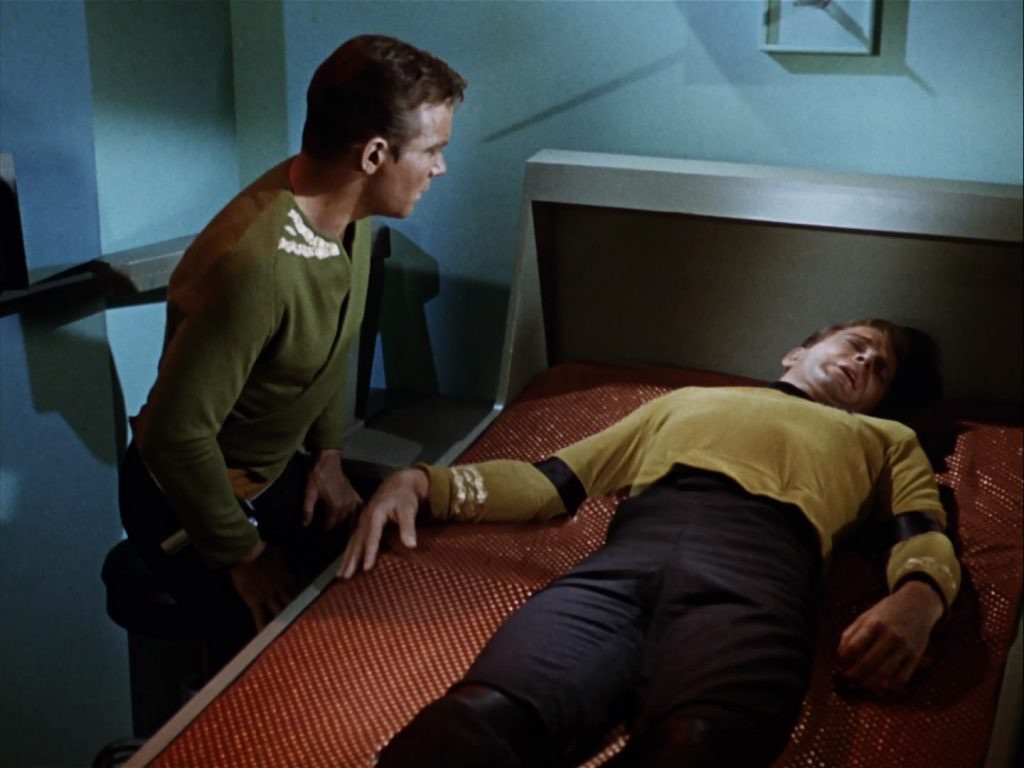
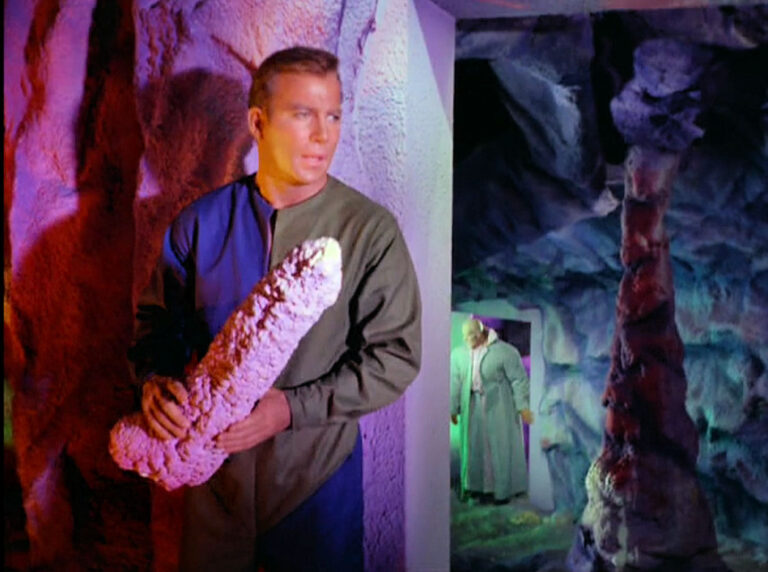
The premise is pure Trek in its best sense: high-concept science fiction using a ridiculous technological accident to say something real about human nature. A transporter malfunction splits Kirk into two functioning versions of himself. One gets the compassion, the reason, the doubt. The other gets the drive, the aggression, the appetites, and the eyeliner. The science is absolute nonsense, and the episode moves briskly past that to get to the actual subject. Which is good, because if you stop to think about why a duplicated creature can wander the ship causing trouble while the ship’s heaters sent down to Sulu’s freezing team simply fail, you’ll be there all afternoon.
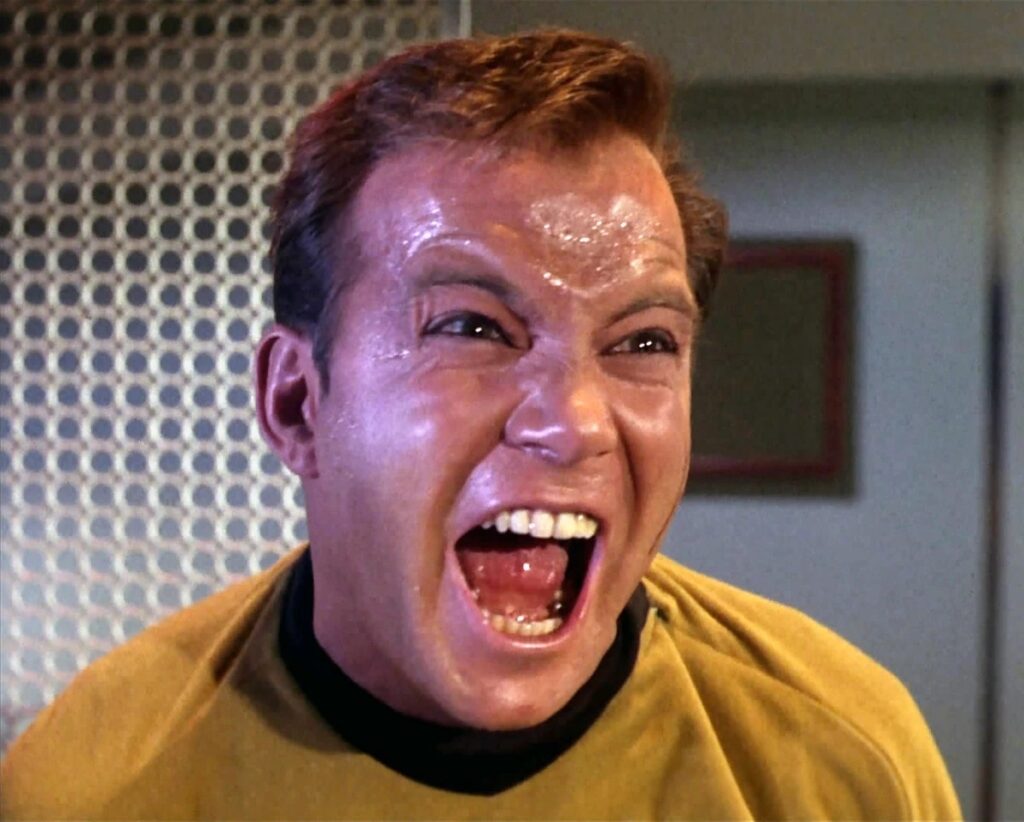
William Shatner is doing two very different things in this episode, and one of them is genuinely good. Evil Kirk is a performance you either enjoy or find exhausting, and I found it mostly exhausting. The brandy scene, the “I’M CAPTAIN KIRK” declaration, it’s the kind of acting that gave Shatner his reputation, which is not entirely a compliment. But good Kirk is something else. Shatner plays him as a man who feels himself hollowing out in real time, the authority draining out of his voice, the decisiveness gone, reduced to leaning on Spock for decisions he’d normally make in his sleep. That performance is subtle in a way the evil half never is, and the episode is better for it. The command chair has never looked more like a burden than when someone who can’t fill it is sitting in it.
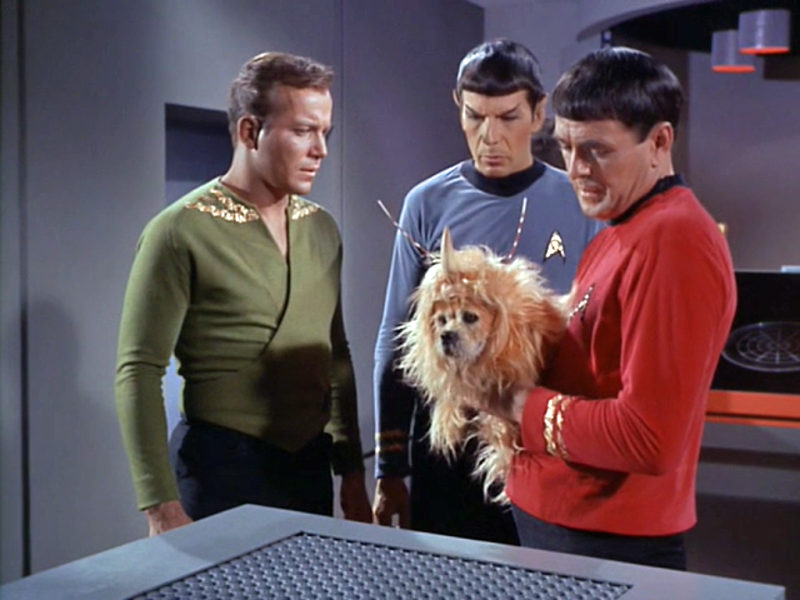
This is also, quietly, one of the first episodes where the Kirk-Spock-McCoy dynamic properly locks into place. Spock analyses the problem with what he’d probably call scientific detachment and everyone else would call unseemly fascination. McCoy argues from the gut, from care for the man in front of him. Kirk is caught between them, unable to adjudicate because adjudicating is exactly what he’s lost the capacity to do. The machine runs fine. The human element is the variable. That’s Trek philosophy working the way Trek philosophy should: arriving through character, not lecture.
Spock’s line, “being split in two halves is no theory with me, Doctor,” is the episode’s best. It does in nine words what a lesser episode would take a whole act to explain. His parallel struggle, Vulcan logic and human feeling in permanent negotiation, isn’t just thematic symmetry. It’s why he understands what’s happening to Kirk when nobody else fully does. This is The Original Series figuring out who Spock is in real time, and the result is someone worth watching across three seasons and six films.
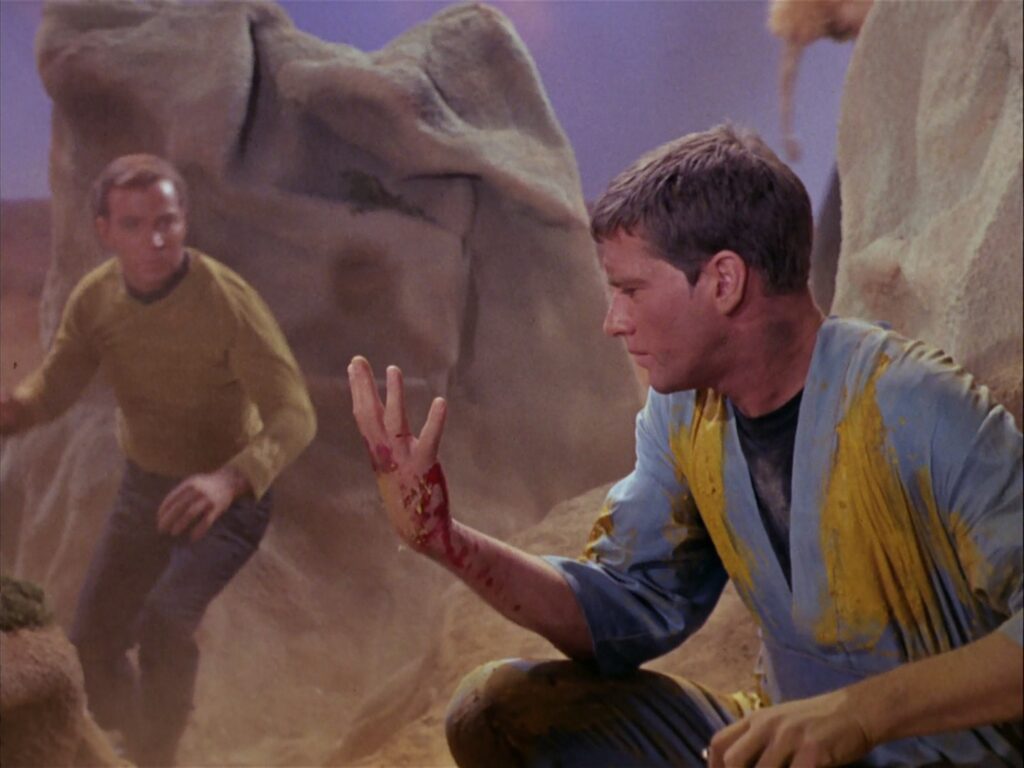
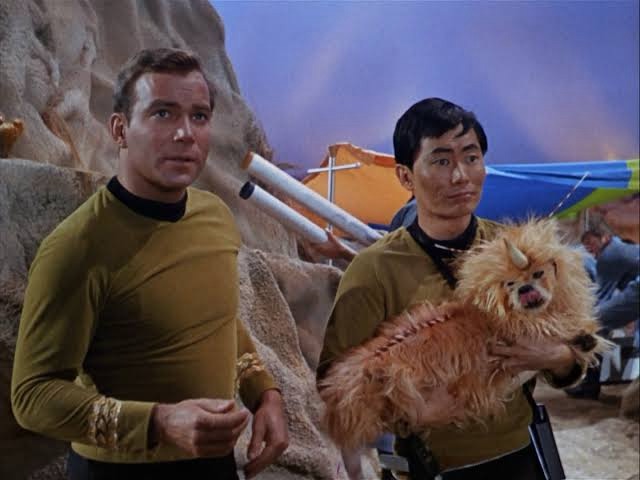
Sulu, meanwhile, is freezing to death on the surface of Alpha 177 and handling it with the kind of quiet, practical dignity that the episode never quite gives him enough credit for. Every few minutes we cut back to him, increasingly cold, keeping his team calm, sending sardonic requests for coffee up to a ship that can’t send anyone down. He’s doing the actual job of Starfleet, adapt, endure, don’t make it worse, while the philosophical emergency unfolds above him. I have time for Sulu.
Now. Yeoman Rand.
Evil Kirk assaults her in her quarters. She fights him off. A crewman named Fisher, already injured from an earlier transporter incident, enters the corridor just as Kirk is fleeing and finds a distraught Rand in the aftermath. When Rand later reports what happened, she says she wouldn’t have mentioned it if Fisher hadn’t been there. That line lands badly in 2026 and it was bad in 1966. The episode treats what happened to Rand as primarily a complication in Kirk’s identity crisis, a data point confirming the imposter’s existence rather than an event with its own moral weight. Nobody checks in on her. Nobody offers anything except awkward management of the situation. Kirk’s confusion about himself is given three times the screen space her trauma is.
And then Spock’s closing line. “The imposter had some qualities which I find rather admirable,” he tells the bridge, with Rand standing right there. Grace Lee Whitney, in her memoirs, wrote about how much she hated that moment, noting that the script required her to smile and look almost flattered. She had every reason to hate it. The episode has been trying, in its clumsy way, to say something meaningful about human darkness, and then it ends on a smirk. Whatever credit it had banked, that line spends a significant portion of it.
The problem runs deeper than the ending, though. The episode needs to argue that Kirk’s darker half is necessary for him to function, and it makes that argument while that darker half has spent the episode attempting a sexual assault. The thesis and the evidence are in direct conflict. “We all need our dark side” is defensible when you’re talking about drive and ambition and the willingness to take a hard decision. It’s a different argument when the behaviour being treated as functional is assault. The episode doesn’t notice the gap. That’s the failure, more than any individual scene.
What “The Enemy Within” gets right, and why it still matters nearly sixty years on, is the command question underneath all the noise. Good Kirk isn’t a better version of Kirk. He’s an incomplete one. The capacity to push through, to override doubt, to act when action is needed even when you’re not certain, those aren’t morally neutral qualities, but they’re not decorative either. A leader without them isn’t kinder. They’re just unable to lead. Deep Space Nine would return to this argument properly, in darker and more honest territory. Here it’s unresolved, half-stated, muddied by everything else the episode is doing. But the fact that it’s there at all, in the fifth episode of a science fiction show in 1966, is worth something.
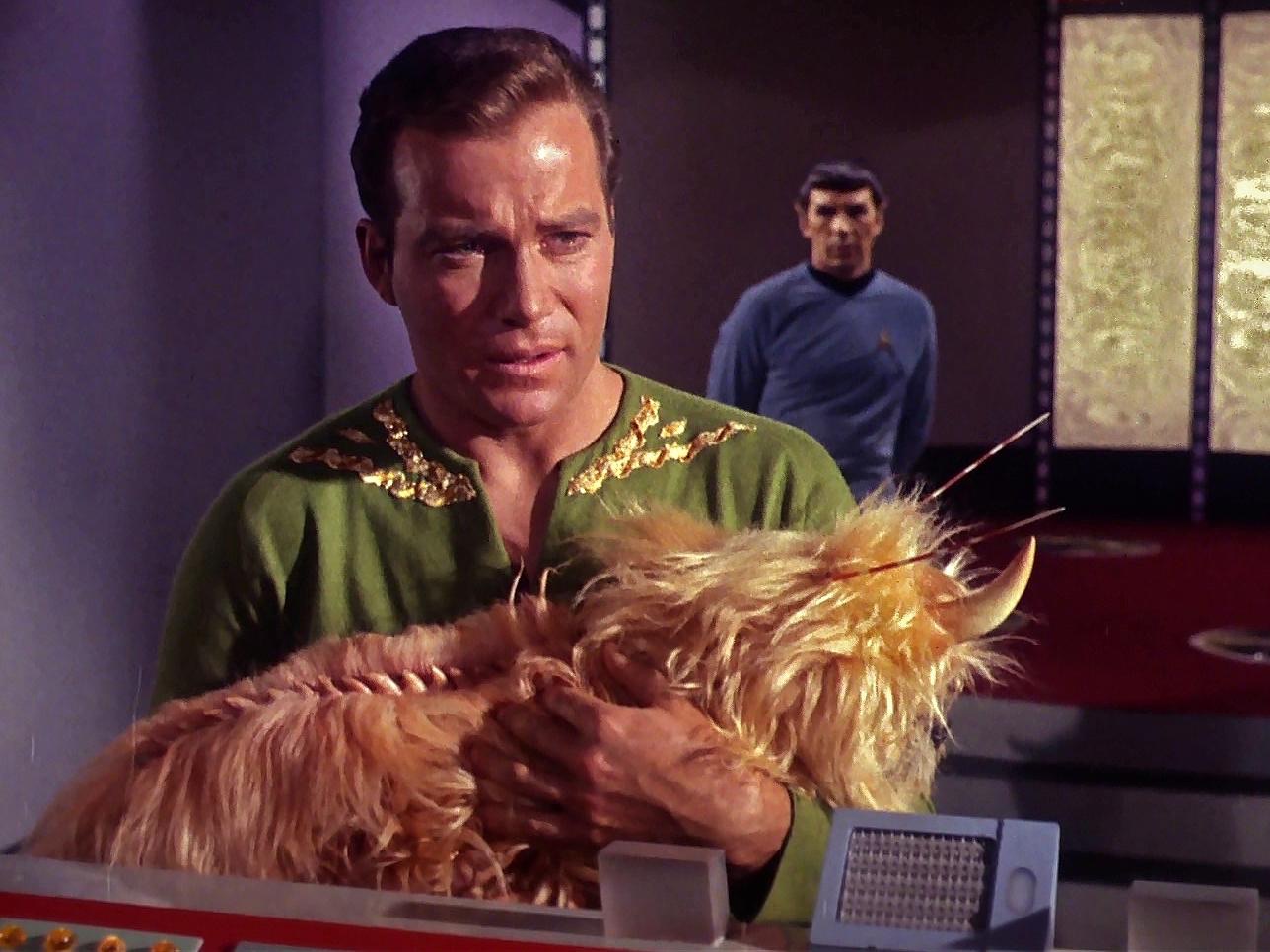
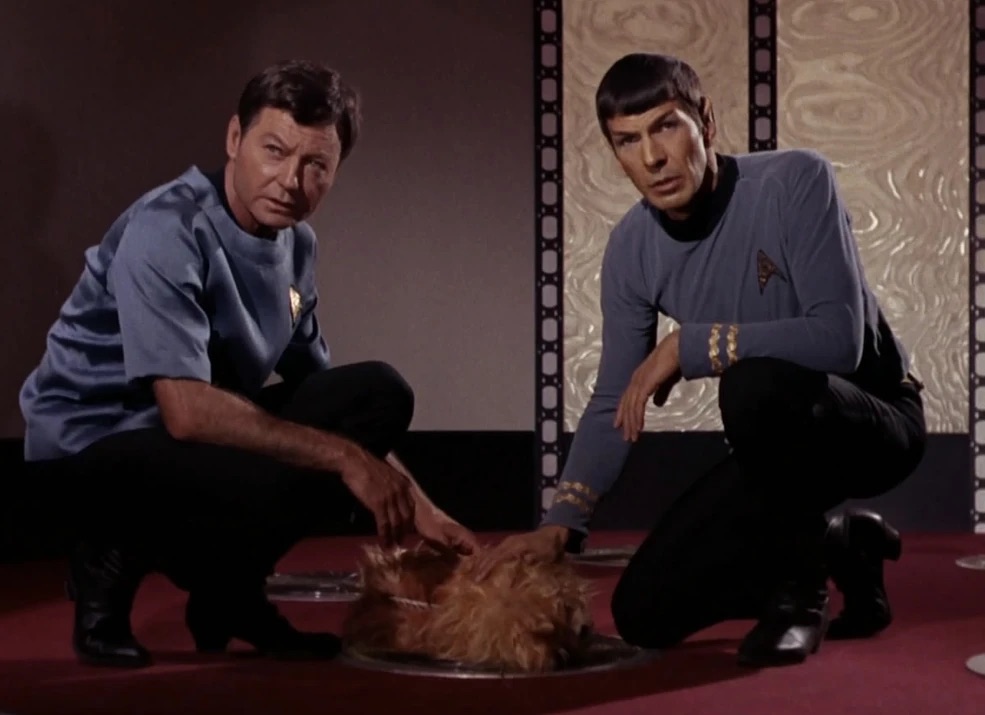
The Alpha 177 creature, incidentally, is a dog. In a costume. With a horn. I have nothing further to add.
6/10