Star Trek: TOS – What Are Little Girls Made Of? (S01E07)
There is a profound gulf between a clean, mid-century sci-fi concept and the messy realities of a weekly television production schedule. Robert Bloch, the mind behind Psycho, hands over a script packed with meaty questions about identity, transhumanism, and the exact boundary where a machine begins and a human ends. It is a fantastic template. What the production does with it is more complicated.
That tension is what makes What Are Little Girls Made Of? worth talking about rather than just watching and moving on.
The episode follows Kirk and Nurse Chapel beaming down to Exo III in search of Chapel’s long-missing fiancé, Dr. Roger Korby, a scientist so celebrated his work was required reading at Starfleet Academy. What they find is a man who has been doing things in the dark for five years that he’d rather not explain in the transporter room. Korby has been working with the android technology left behind by the Old Ones, a long-dead civilisation, building perfect duplicates and transferring consciousness, and somewhere along the way misplacing his own empathy without noticing. The horror isn’t that Korby went mad. It’s quieter than that.
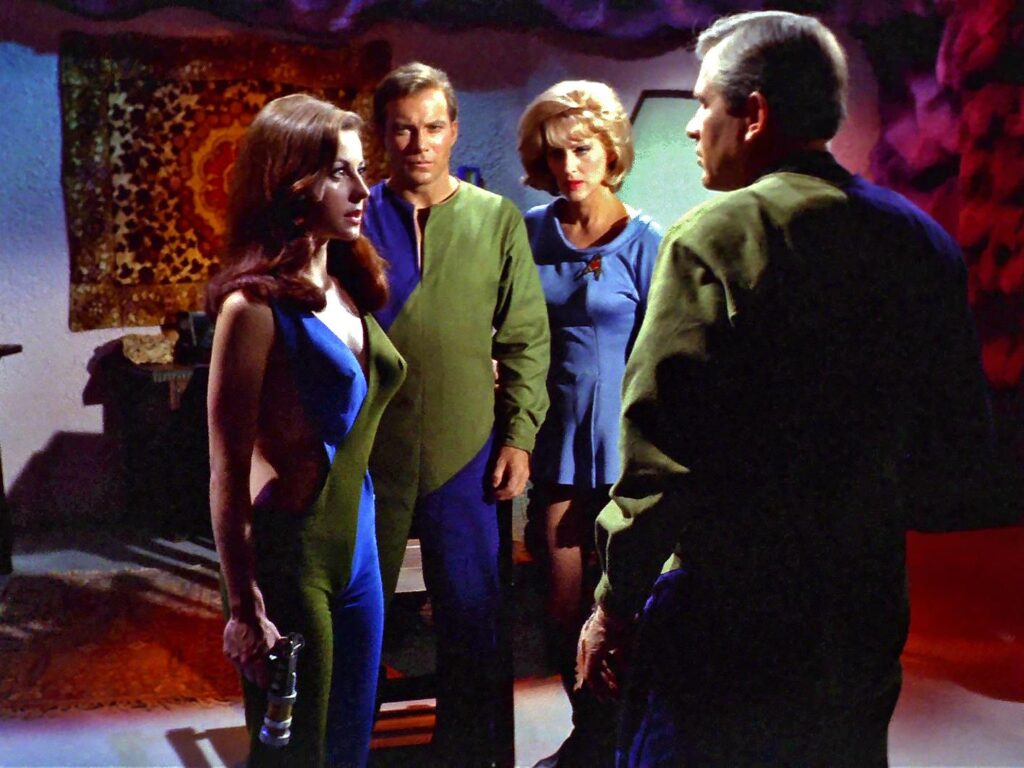
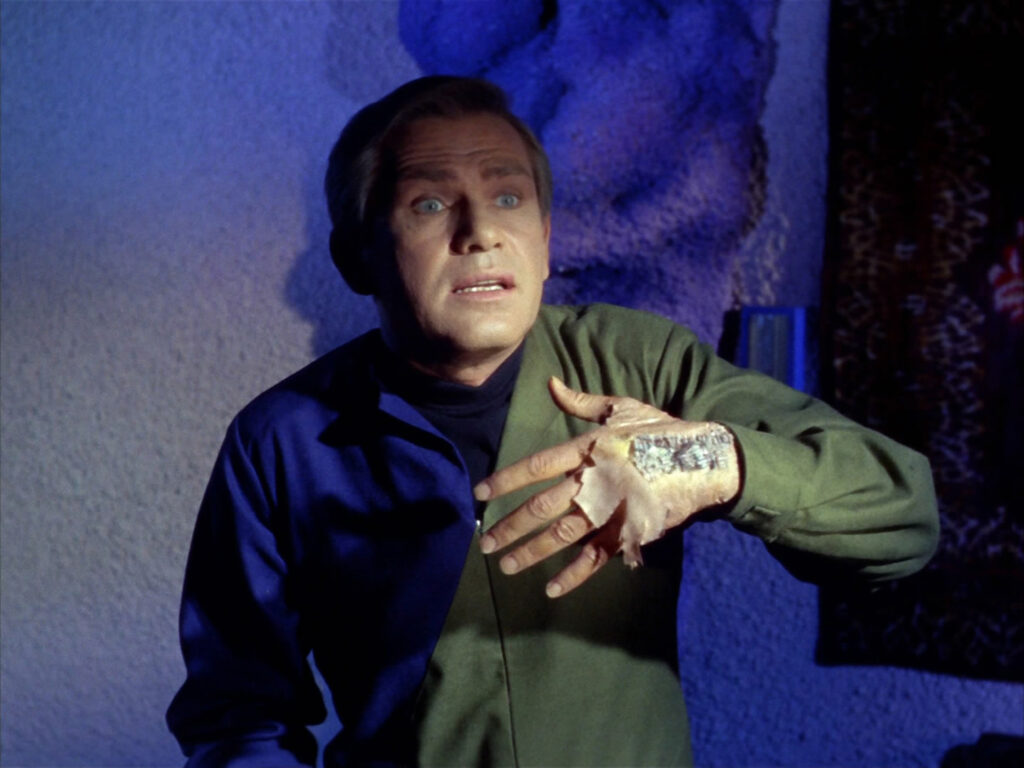
Michael Strong plays him with a rationalist’s conviction rather than a villain’s theatrics, and it’s the right call. Korby isn’t after power in any recognisable sense. He genuinely believes he is building a practical heaven, free of disease and hate and the inconvenient messiness of human biology. He’s wrong, but he’s wrong in an interesting way, he treated consciousness like source code and optimised away what he thought was noise, then couldn’t see what was missing. In 2026, when we are genuinely having mainstream conversations about AI and what it might mean to copy or upload a mind, his arc reads sharper than it probably did in 1966. Korby’s tragedy is the quiet one. Not that he became a machine, but that he can no longer recognise what that cost him.
The episode is less interested in whether androids can become human than in whether humans can stop being human without noticing.
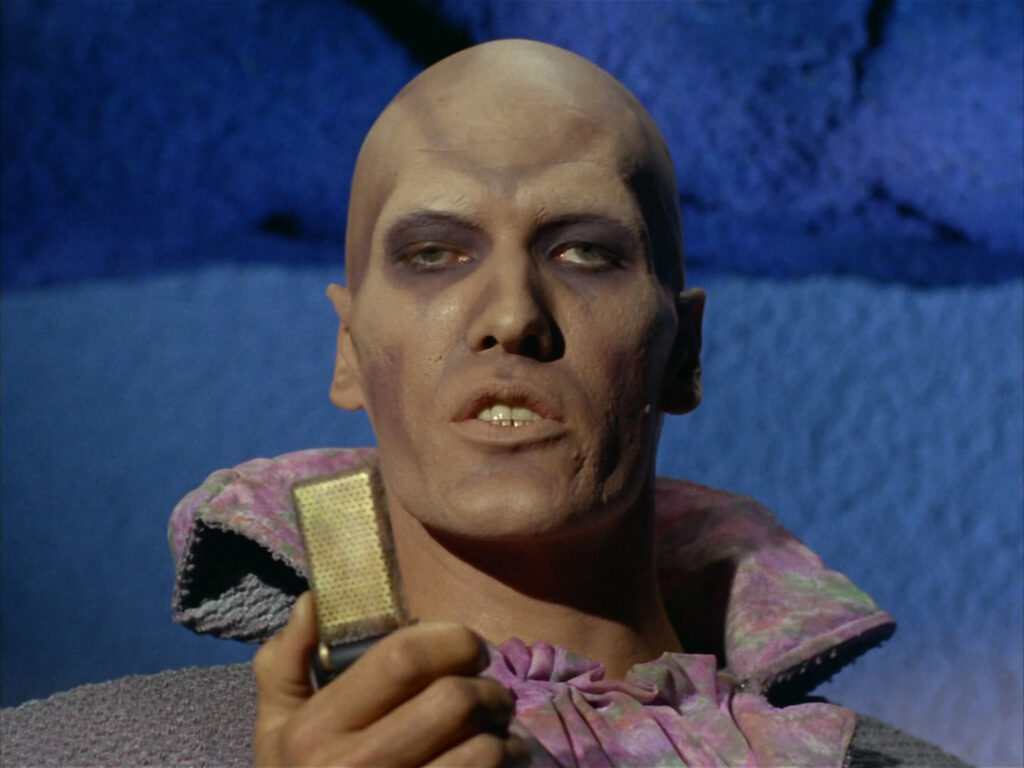
Ted Cassidy’s Ruk is one of The Original Series‘s great early one-episode creations, an ancient android caretaker left behind after the androids destroyed the Old Ones, looming out of the shadows with a presence that is a tad unsettling. Cassidy radiates something old and patient and dangerous, which is considerably more than the script strictly requires. Kirk’s method of disabling him is exactly the kind of thinking worth appreciating, rather than fighting Ruk directly, he pushes on a buried logical contradiction, making Ruk recall why the Old Ones feared what they’d built. It’s an argument as a weapon. It works.
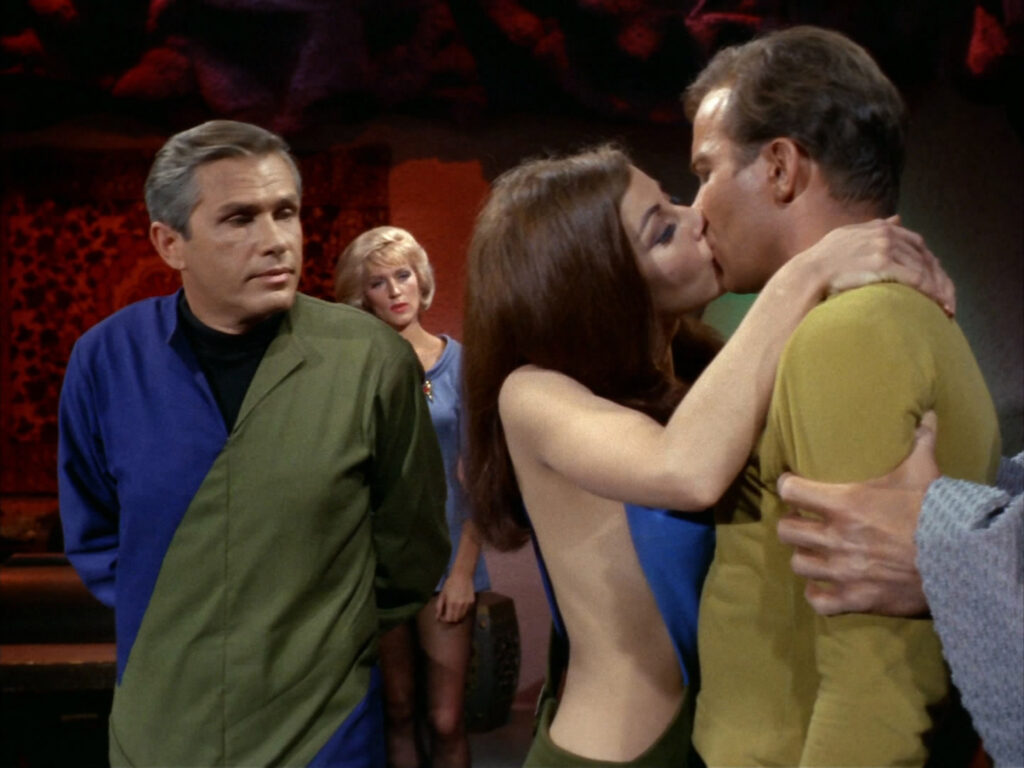
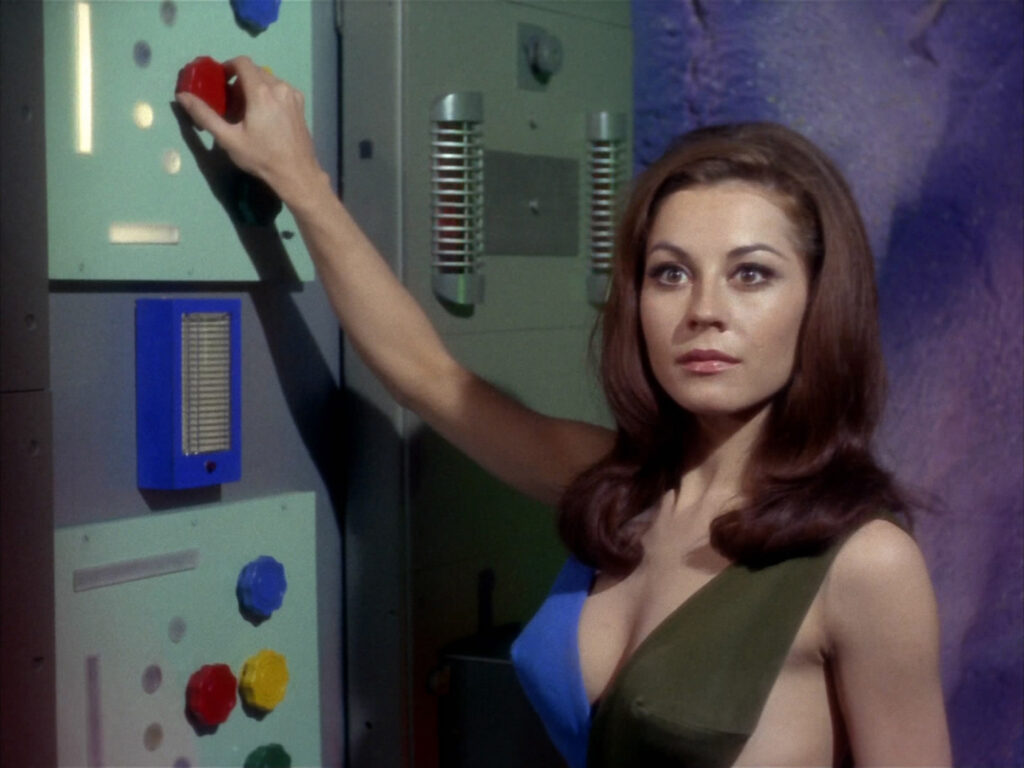
Sherry Jackson as Andrea gets about twenty minutes of screen time to sell a complete emotional arc, from constructed obedience to something the script frames as awakening desire running headlong into a situation it has no framework for. She sells it. The final moment, Andrea embracing Korby after he turns the phaser on himself, is strange and bleak and lands harder than the episode probably earned. Whether Jackson was supposed to make it hit that way is another question.
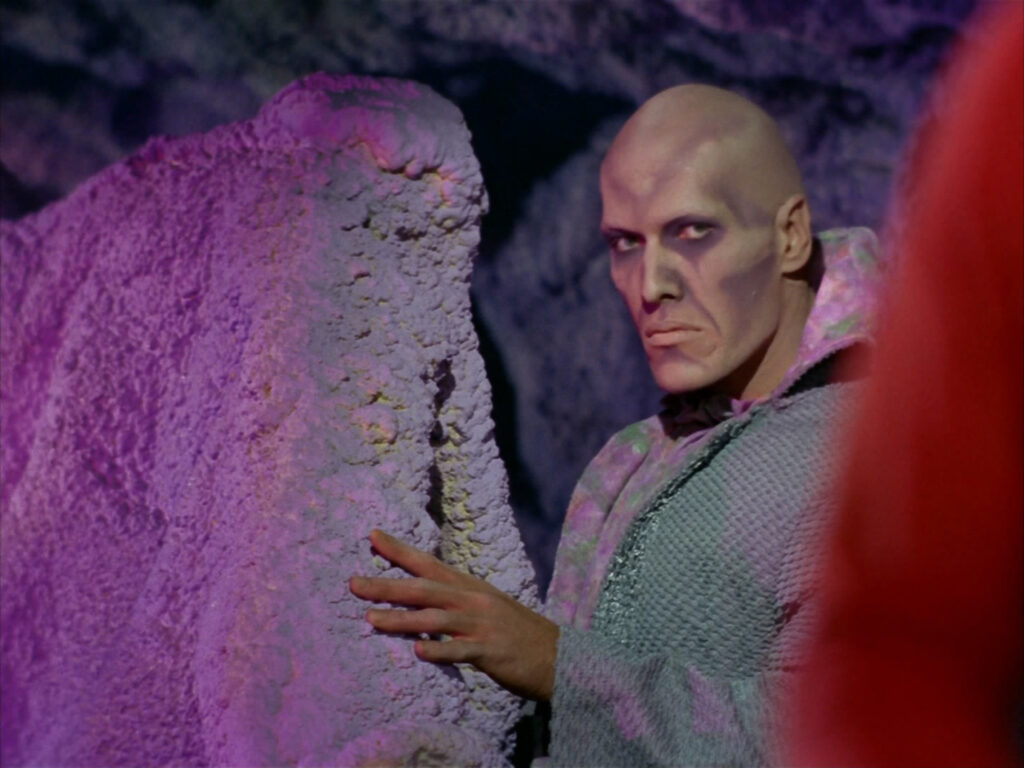
On the production side, the episode looks remarkable. Jerry Finnerman’s lighting does the dramatic work the cave sets can’t quite manage alone. The contrast between the hostile surface glimpsed through those broad windows and the deep, strange warmth of the underground cavern creates a visual argument the script never needs to spell out. Exo III feels like a place with a past rather than a set with a budget. William Ware Theiss’s costume design for Andrea is, if you’re paying attention to it as design rather than just reacting to it, a precise piece of engineering: the silhouette, the colour blocking, the way it sits at the absolute edge of 1960s broadcast standards. There’s craft in it, even if the camera doesn’t always treat it as such. Fred Steiner’s score reinforces the cold, eerie atmosphere throughout, marking Exo III as psychologically distinct from the usual The Original Series soundscape.
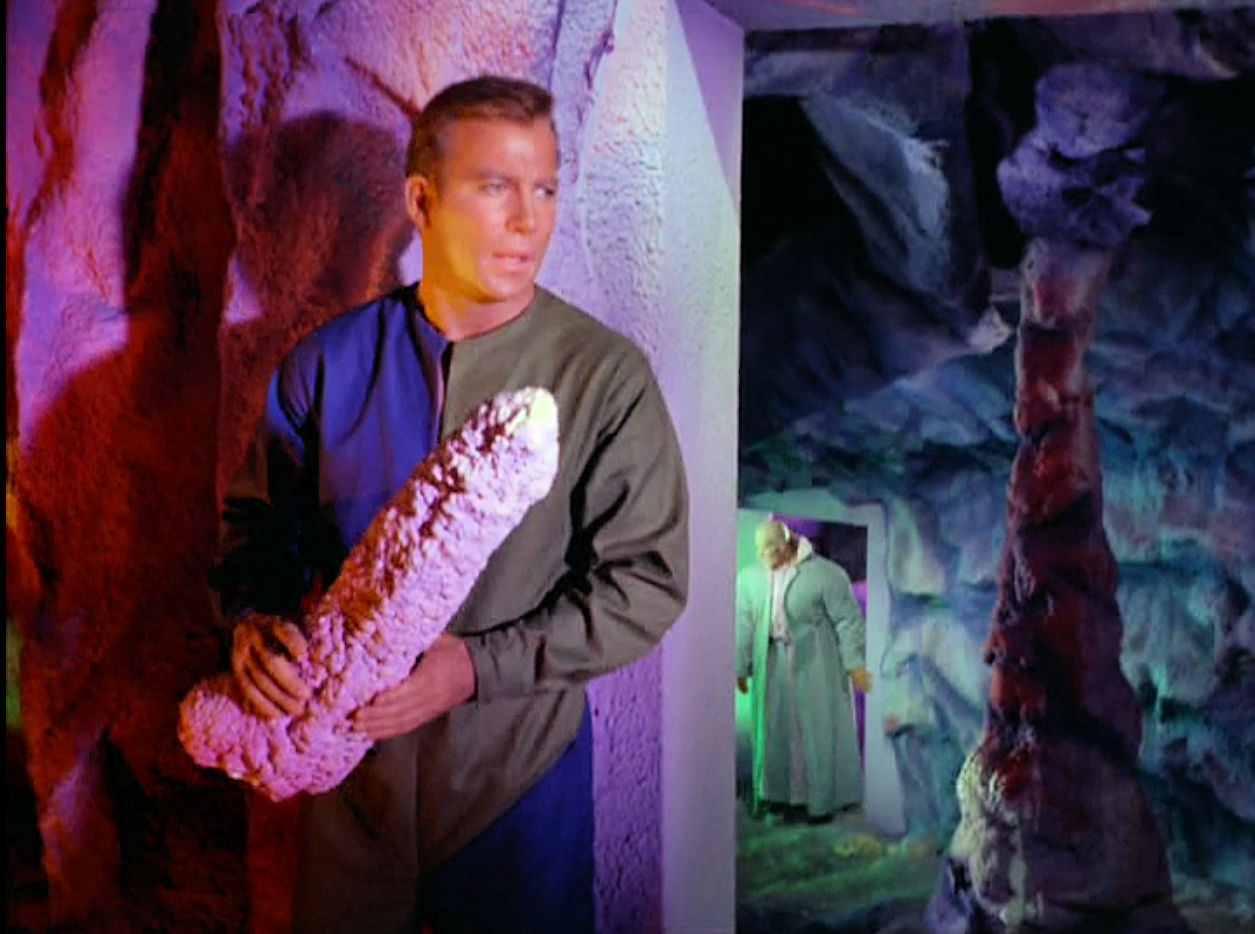
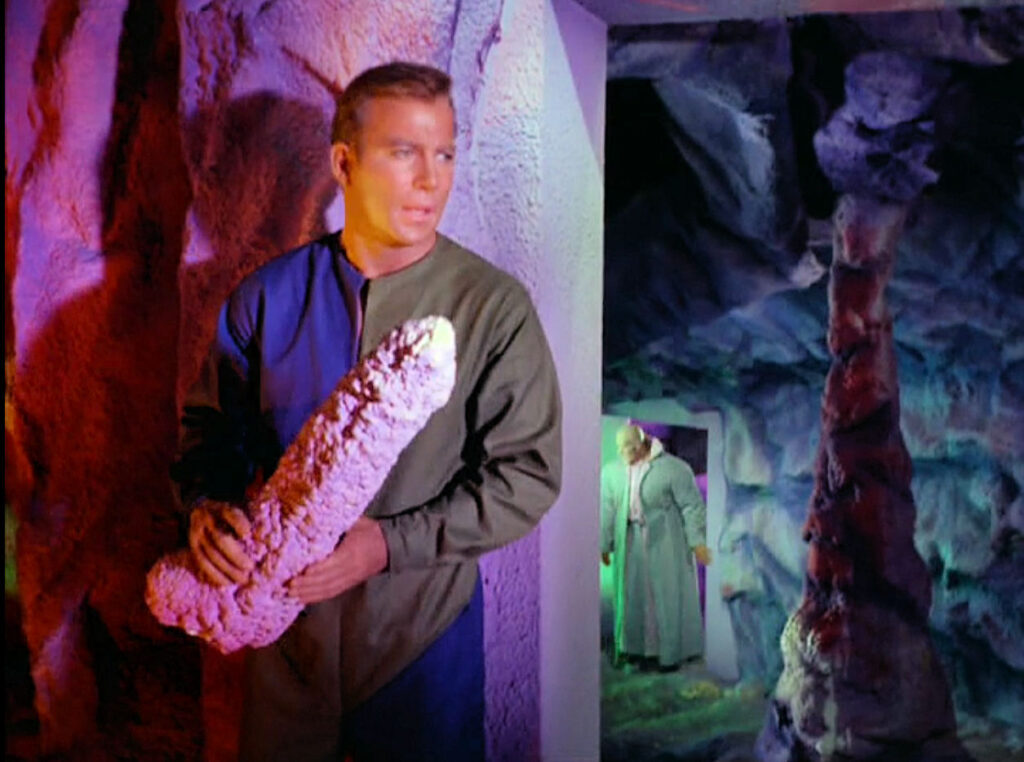
The android-making sequence specifically is the kind of handmade futurism The Original Series does better than almost anyone. The foam, the spinning table, the top-down framing: old-school practical movie magic that holds up precisely because you can see the craft in it.
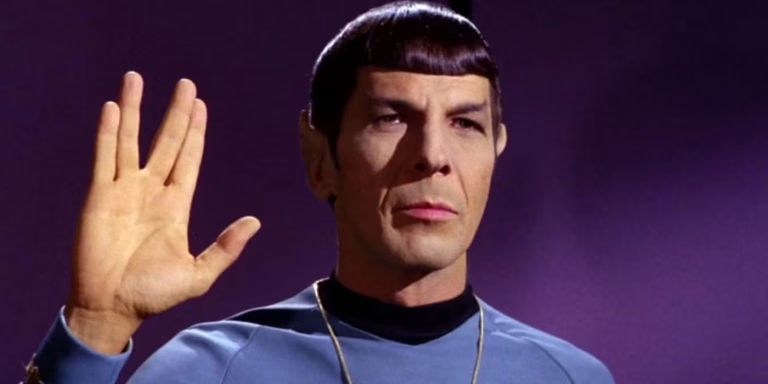
Kirk’s solution to the duplicate problem is the episode’s cleverest moment. Strapped to the table and about to be copied, he deliberately injects false data into the android’s behavioural record by repeating, with maximum conviction, “Mind your own business, Mr. Spock, I’m sick of your half-breed interference.” He knows that phrase will read as an indicator of compromise the moment the duplicate tries to use it. Spock’s threat-hunting instincts will flag it immediately. It’s not a gadget solve or a lucky punch. It’s Kirk treating his first officer’s brain as a detection system and deploying it correctly.
Where the episode struggles, it struggles properly. The script can’t decide how advanced these androids are, perfect undetectable duplicates in one scene, glitching out over a kiss in the next. That inconsistency isn’t a minor continuity wrinkle. It’s a structural problem that undermines the philosophical premise the episode is trying to build. If you can’t establish the rules of what your androids are capable of, the questions you’re asking about them lose their footing.
The pacing is the other serious issue. Kirk charging at Ruk, getting thrown across the cave, charging again, getting thrown again, isn’t tension, it’s runtime. A tighter edit would have sharpened the episode into something that matched its ambitions. By the final act, you can see the seams.
Coming so soon after The Enemy Within, the duplicate-Kirk device also arrives before it has had time to breathe. Two Kirk-copy episodes in seven is a lot, and the second one lands lighter for it. The writers clearly weren’t in the same conversation.
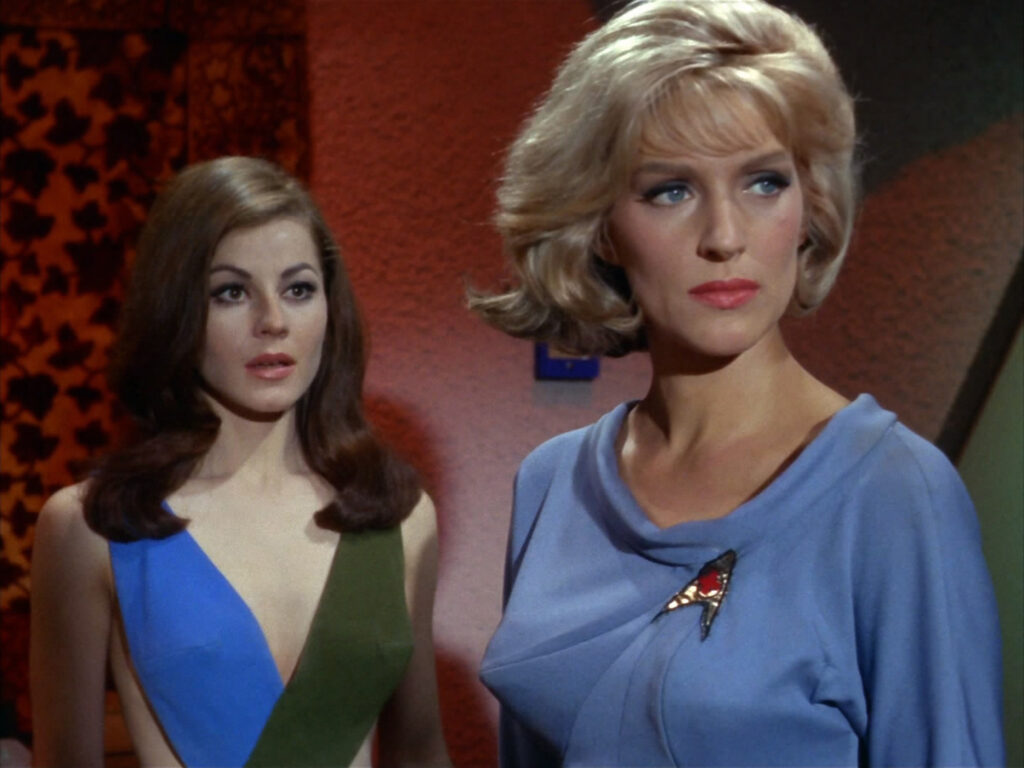
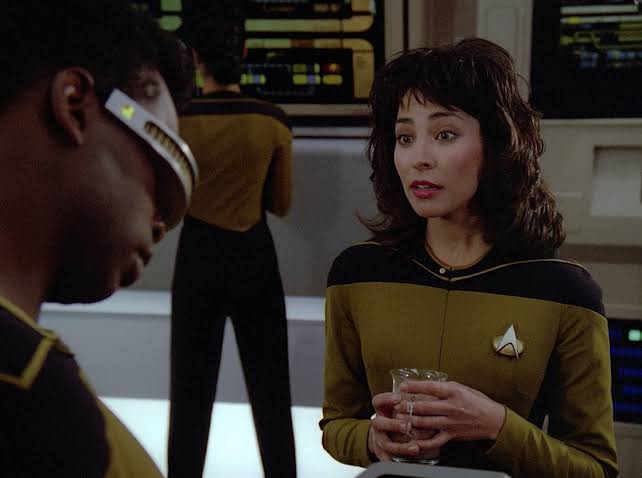
Majel Barrett carries Chapel as the emotional centre of the story in a way The Original Series wouldn’t often allow, and she does real work at the beginning and the end. The middle section wobbles, partly because the script parks her in a holding position while the plot moves around her rather than through her. It registers.
The final exchange lands where it needs to. “Dr. Korby was never here” is Kirk being kinder than he usually manages, protecting Chapel’s grief with four words rather than a debrief. It respects what she’s lost without sentimentalising it.
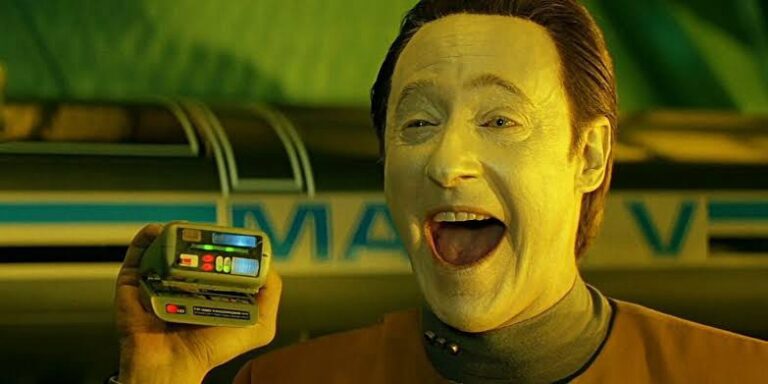
There’s something honest about the episode’s messiness. It wants to be a Frankenstein story, a love story, a warning about immortality, and a discussion about whether a copied mind is still the same person. It doesn’t balance all of those ideas, and the pacing gets in its own way more than once. But I’d rather watch something ambitious that doesn’t quite get there than forty-five minutes of competent nothing. Long before Data, before Lore, before the Borg and the synths and the debates in Picard, Star Trek was already asking what makes a person a person, and what happens when you strip out the parts that inconvenience you.
What Are Little Girls Made Of? doesn’t quite become a classic. You can see the shape of one sitting underneath it, which is probably a respectable legacy for an episode that never quite figures out its own rhythm.
7/10