What Makes Star Trek, Star Trek?
Try a thought experiment in two directions. Take everything people point at when they call something Star Trek. The Enterprise, the uniforms, the phasers, the Vulcans, even the Federation itself. Strip all of it out. Could a story still feel unmistakably like Trek with none of that in frame? Now run it the other way. Keep every ship, every delta, every familiar alien, and remove only the ideas underneath them. Would that still be Trek, or just cosplay with a budget? Hold both questions at once, because the gap between them is where the answer lives.
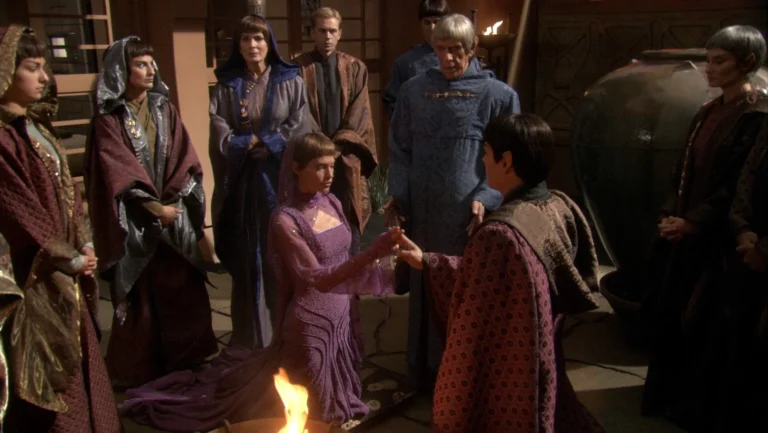
Take the courtroom from “The Measure of a Man” and strip it to what is actually in the room. Two officers arguing about whether a third is a person or property. A judge who would rather be elsewhere. A man whose life depends on the verdict, sitting quietly while others debate whether he counts as alive. You could stage that on a bare theatre stage with no set, no uniforms, and no starship within a light year, and it would still be one of the most Star Trek things ever filmed. The soul of the scene is not in the furniture. It never was.
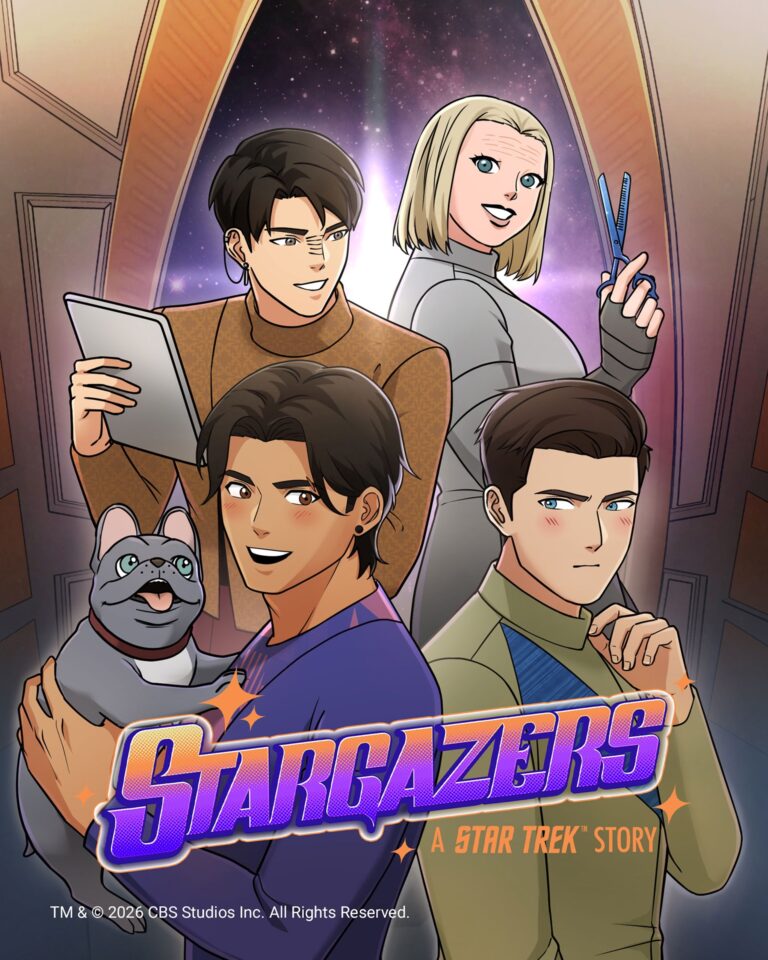
I’ve been thinking about this more than usual lately. Reading Star Trek: Stargazers made me realise I wasn’t really asking whether I liked a story. I was asking a much bigger question. What actually makes something Star Trek?
Ask the internet whether a given show is real Trek and watch where the finger goes. It goes to the things you can see. The cut of the uniform, the century on the title card, whether the stories run episodic or serialised, whether the tone is hopeful or grim, whether there is too much technobabble or not enough. All of it sounds like substance, and none of it is, because the franchise has swapped every one of those things out at some point and survived. Sixty years of television, films, novels, comics, and games have changed the surface too many times for the surface to be the thing.
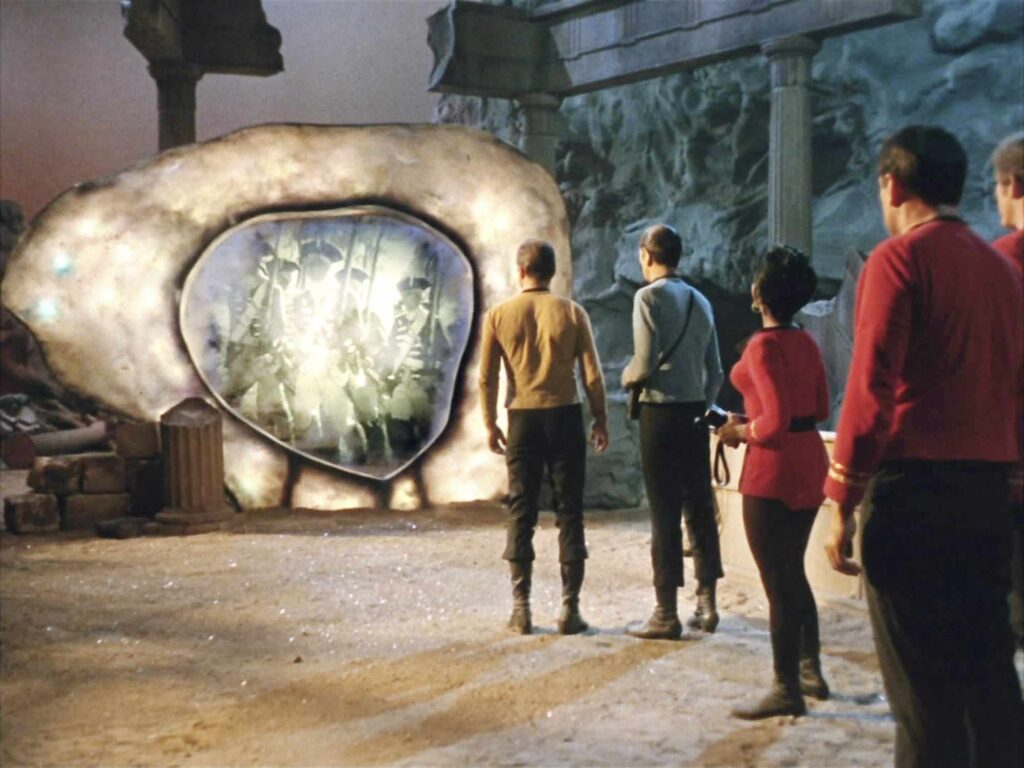
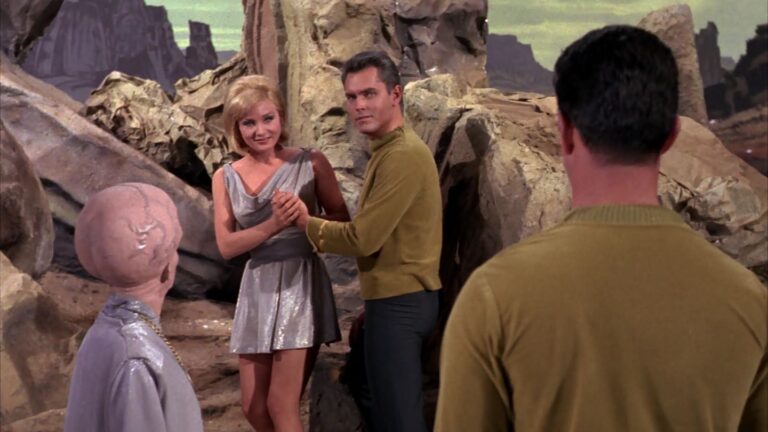
Look at how little the eras actually share. The Original Series is a space western with a swagger to it. The Next Generation is thoughtful diplomacy conducted in pastel and good lighting. Deep Space Nine is a long argument about war and compromise. Voyager is a survival story. Lower Decks is a workplace comedy that happens to know the canon better than most of the people complaining about it. The aesthetics change, the pacing changes, the whole storytelling grammar changes, and still, nobody seriously doubts that all five are the same franchise. They feel like Trek because they begin from the same place, not because they look alike.
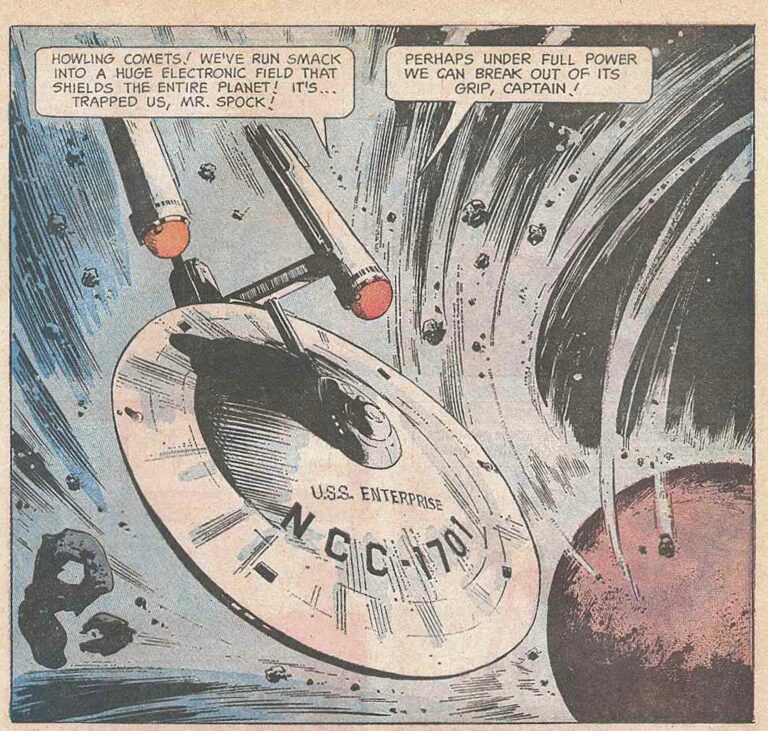
Push it past television and the point gets sharper. A Gold Key comic from 1968, a Lower Decks cold open, and “In the Pale Moonlight” share almost nothing you could photograph. Different characters, different tone, different decade, different medium entirely. One is daft, one is bleak, one was drawn before half the franchise existed. Something still marks all three as unmistakably the same thing, and it is not the logo on the cover or the delta on the chest. Whatever that something is, it survives translation across every format the franchise has ever tried. That is the thing worth naming.
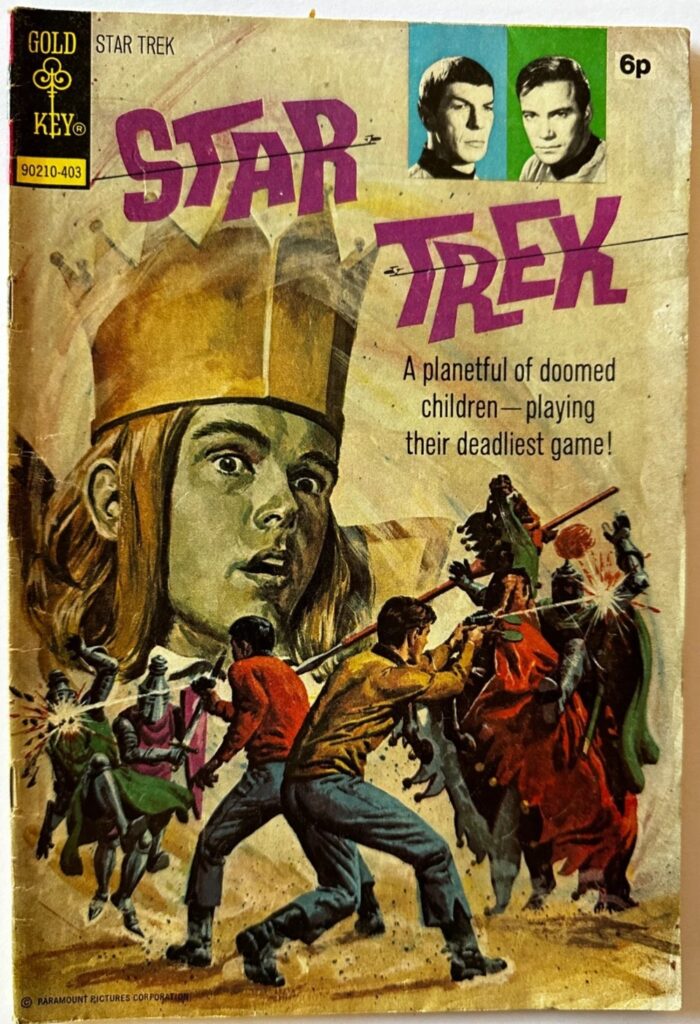
What carries across all of it is a posture, a set of convictions the work holds about people and about the future, steady enough that you feel them even when the surface looks nothing alike. It is why the captain was never really the protagonist. People remember Kirk, Picard, Sisko, or Janeway, but Trek has never really been about any of them. The captain changes, the crew changes, the ship changes. The questions are what stay.
Start with the one everybody half-remembers, the optimism. From Gene Roddenberry onwards, Star Trek has held onto the idea that humanity can grow up if it actually tries. It still feels radical because so much science fiction does not believe it. The common misreading is that this means a perfect future. It does not: Trek imagines people trying to build one and not always managing it. The Federation and Starfleet both make mistakes. Captains fail, admirals go quietly rotten, and wars happen anyway. The optimism is not the absence of any of that, it is the belief that the failures are worth confronting rather than accepting. Deep Space Nine is probably the best proof. It pushed on the dream as hard as anything in the franchise, dragged it through occupation and scarcity and compromises that should keep Sisko awake at night, and came out more Trek for it, not less. Cynicism in a Starfleet uniform is the failure state. Belief tested to its limit is the franchise working as designed.
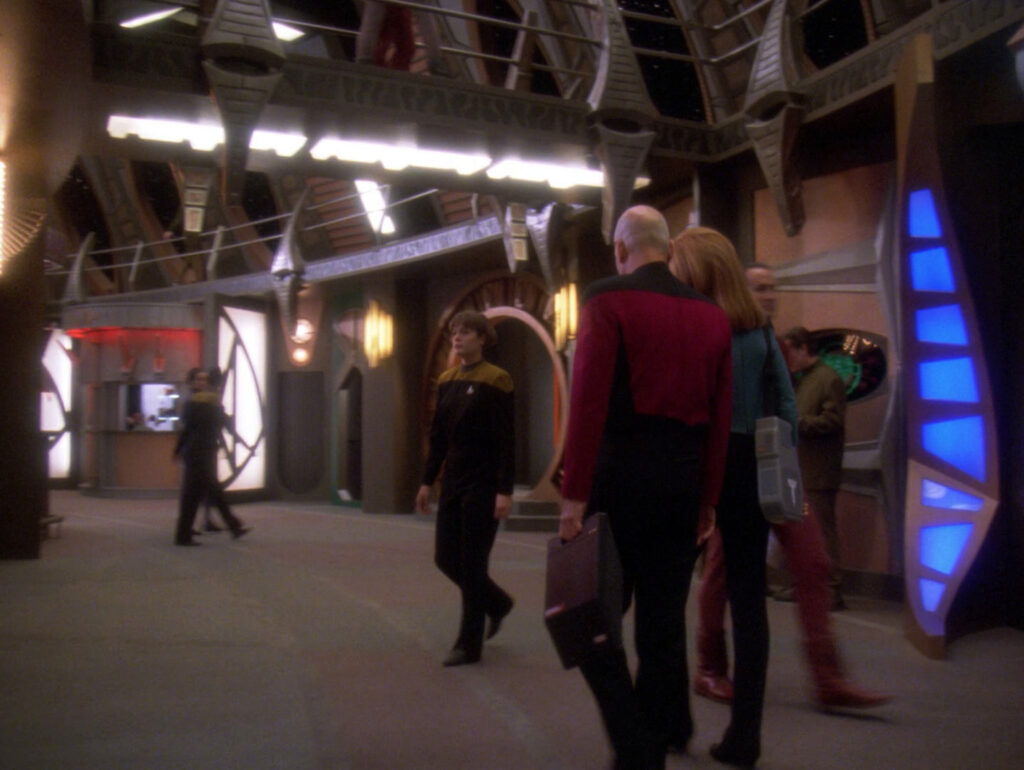
That optimism would be worth little if the questions were easy, and they are not. Trek takes a genuine moral problem, sets it in front of you, and then declines to hand you the answer. As a piece of storytelling, the Prime Directive is brilliant because obeying it can be as monstrous as breaking it. The best of them traps a commander between an absolute principle and a heartbreaking human consequence, then refuse to resolve it cleanly on your behalf. This is the part most imitators get wrong. They stage the dilemma beautifully and then tidy it away in the third act, reassuring and complete, and the moment they do that the thing stops being Trek and becomes a lecture with good lighting. Trek trusts you to sit in the room with the argument and work it out yourself.
The same instinct applies to whoever is on the other side of the viewscreen. The Vulcans even have a name for it: Infinite Diversity in Infinite Combinations, but the idea is much simpler than the slogan. Difference isn’t something to be feared or tidied away. It’s where understanding starts. Whether it’s a Klingon, a Borg drone, a Cardassian, or an android trying to become more than the sum of his programming, Trek keeps asking the same question. Have we really understood this person yet?

Then watch how a Trek story actually wins. There are battles and explosions when the plot calls for them, but firepower is almost never the point, and the victory rarely belongs to the bigger gun. The triumph is the chief engineer reconfiguring the deflector dish, or the science officer working out how an anomaly behaves, or a crew talking through the options until the right one surfaces. Competence is treated as heroism. And before anyone reaches for a weapon, the instinct that defines these people is the one that asks “what is this?” before it asks “how do we destroy it?”
Run the convictions as a test and the answer stops depending on the medium. A piece can get every visible detail right and still fail it. The furniture can be flawless and the thing still missing from the room. That gap is the only version of the “that isn’t real Trek” complaint worth taking seriously. Most of that discourse is an argument about furniture, the wrong uniform, the wrong era, the wrong amount of humour, and most of it is noise from people who reached the verdict before they watched a frame. But every so often a piece genuinely drops the posture. It stops believing the future is worth arguing toward, or it stops believing that understanding is worth pursuing before force becomes inevitable, and at that point the complaint is real and worth making. The trouble is that telling the two apart takes more effort than most of the discourse wants to spend, and the furniture is so much easier to point at.

Which is why that courtroom still feels like Star Trek, even if you imagine it on an empty stage. It never needed the Enterprise to make its point.
So, the honest answer is that you can tell a Star Trek story without the Enterprise. You can tell one without Kirk, without Spock, without the Federation, even without Starfleet. What you cannot lose is the curiosity, the refusal to treat understanding as weakness, and the stubborn belief that tomorrow can be made better than today. The delta was only ever a badge. The conviction behind it is Star Trek.