Star Trek: Strange New Worlds — “Tomorrow’s Enterprise” (S04E10) Review
There is something wonderfully reassuring about an episode of Star Trekopening with the Enterprise investigating a mysterious stellar phenomenon, only for things to go spectacularly wrong before the opening credits have even started.
When Uhura hears Scotty screaming for help, suffers a head injury from the temporal interference, and then finds herself communicating with another version of herself, I was immediately invested. I’ve recently been rewatching Voyager, including episodes such as “Future’s End”, so I was more than ready for a proper temporal mystery, and “Tomorrow’s Enterprise” wasted very little time convincing me that we were in for something special.
A white hole, quantum entanglement, two versions of the same person separated by a year, and a mystery that can only be solved by working across time. This is precisely the sort of science-fiction storytelling that made me fall in love with Star Trek in the first place.
And after a fourth season that has frequently left me wondering what Strange New Worlds actually wants to be, I think we may finally have arrived at the answer.
Becoming the Enterprise
What makes “Tomorrow’s Enterprise” so satisfying isn’t simply that it introduces familiar costumes, hairstyles, and characters from The Original Series. Those things certainly made me smile, but there is something much more interesting happening beneath the surface.
For the first time in quite a while, Strange New Worlds feels entirely comfortable with its place in the franchise.
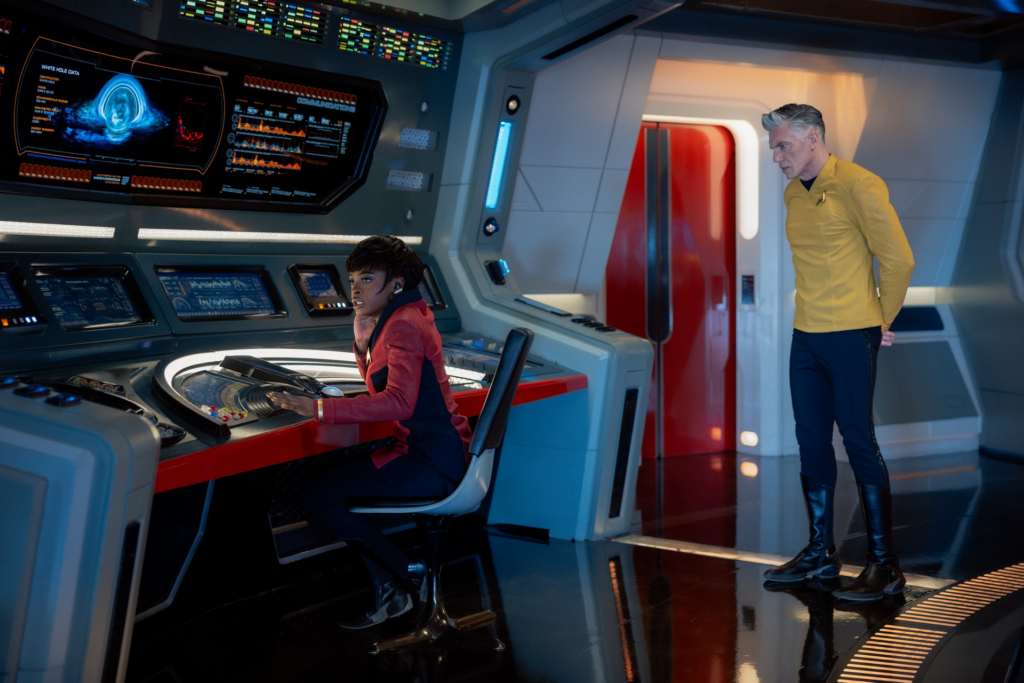
We know where these characters are going. We know Kirk will eventually command the Enterprise, that Scotty will become its chief engineer, and that Uhura will take her place at the communications station. The interesting part of a prequel has never been whether those things will happen, but how the people we’re following become the people we already know.
“Tomorrow’s Enterprise” understands that distinction, and I think that’s why it works so well.
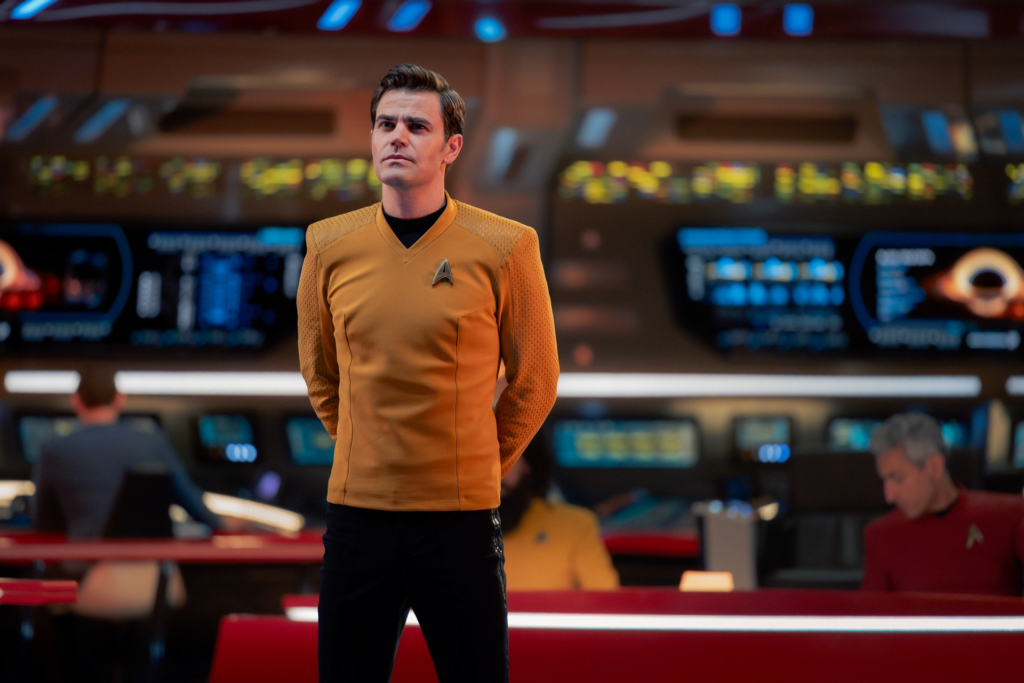
Seeing the future Enterprise, with Kirk in command and the familiar aesthetic gradually emerging, gave me that wonderful feeling of watching different periods of Star Trek come together. The production design, costumes, hairstyles, and even the way the characters carry themselves begin to resemble the world we first encountered in 1966.
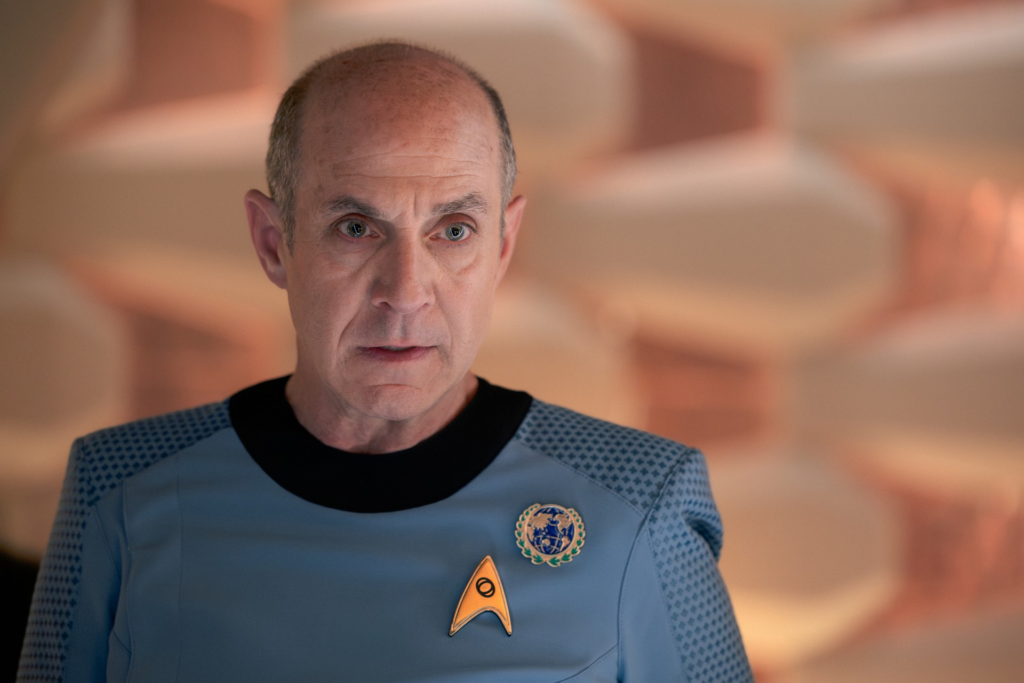
Having spent years working in hair and fashion, I pay particular attention to the way visual changes communicate character development, and there is plenty here to appreciate. Future Chapel looks fantastic, and seeing her with a hairstyle that brings her closer to the original series was a lovely moment. The changing silhouettes, colours, and styling help sell the passage of time without the production needing to make a great fuss about it.
It would have been easy to treat the future Enterprise as an opportunity to recreate familiar imagery and wait for the audience to applaud, but the episode does something more interesting. It allows us to see the future gradually arriving, with the characters beginning to look and behave like the people we’ve known for decades.
And nobody demonstrates this better than Celia Rose Gooding.
Two Uhuras, One Remarkable Performance
Gooding has been gradually developing her interpretation of Uhura throughout the series, and I think “Tomorrow’s Enterprise” may be her finest performance yet.
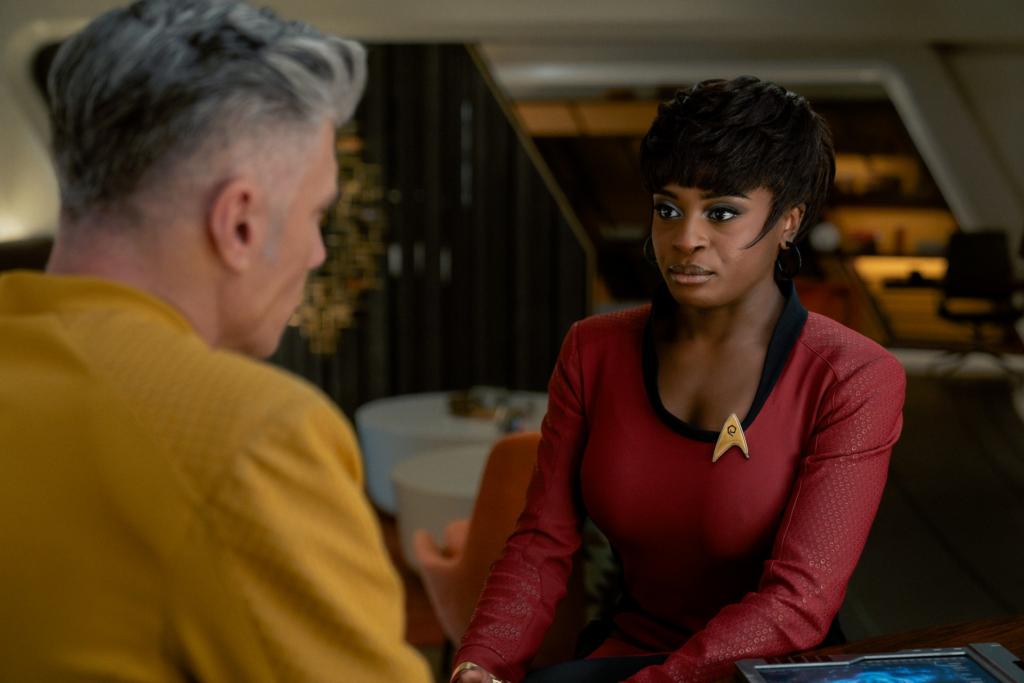
Seeing the two versions of Uhura working together, separated by a year but connected through the anomaly, is an excellent idea that gives Gooding room to demonstrate how much the character has grown. There is something particularly satisfying about watching someone encounter their future self and realise that the person they hope to become is already beginning to emerge.
I’ve been a massive Doctor Who fan since I was young, so stories involving different versions of the same person working together have always appealed to me. They can become unnecessarily complicated, particularly when writers spend so much time explaining the mechanics that they forget about the characters caught inside them.
Here, the temporal entanglement remains relatively contained. The problem involves the Enterprise, two points in time, and a disaster that the characters have an opportunity to prevent. The episode gives itself enough science-fiction complexity to remain interesting without allowing the mechanics to overwhelm the emotional story.
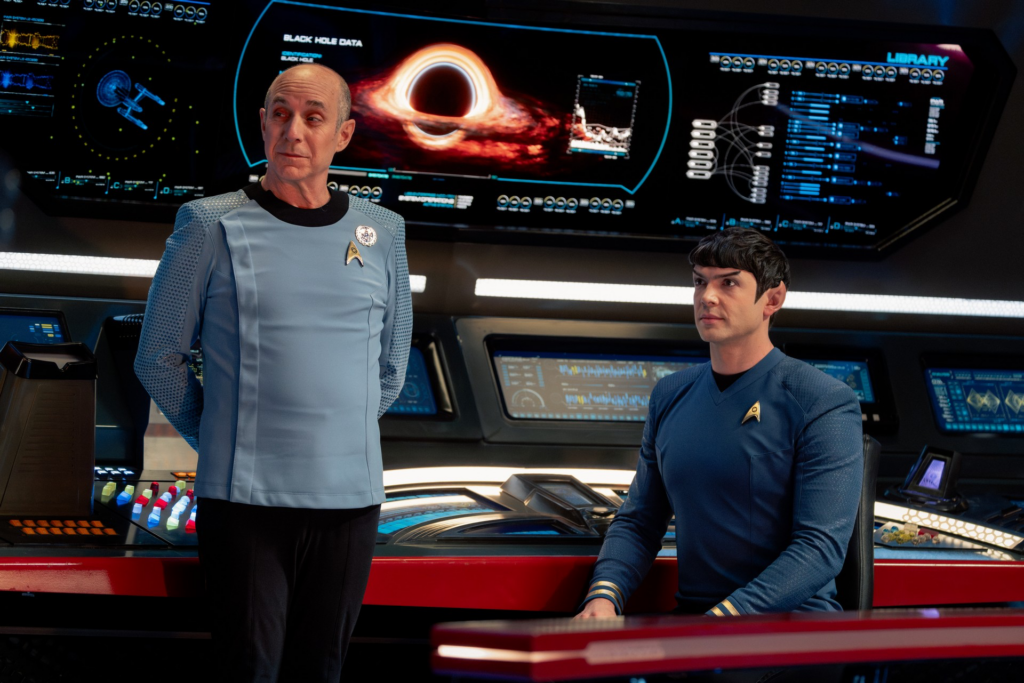
Having spent years writing and lettering comics, I appreciate that sort of storytelling economy. There is only so much room available for an idea to develop, and the discipline comes from understanding which elements genuinely matter. I’ve seen plenty of stories with interesting concepts collapse under the weight of everything the writer wants to squeeze into them, and time travel is particularly vulnerable to that problem.
“Tomorrow’s Enterprise” avoids most of those pitfalls by keeping its attention on Uhura.
We already know that Scotty has a future, so the possibility of his death isn’t particularly convincing as a permanent alteration to established history. What matters is how Uhura responds to the possibility of losing him, and what working alongside herself reveals about the woman she is becoming.
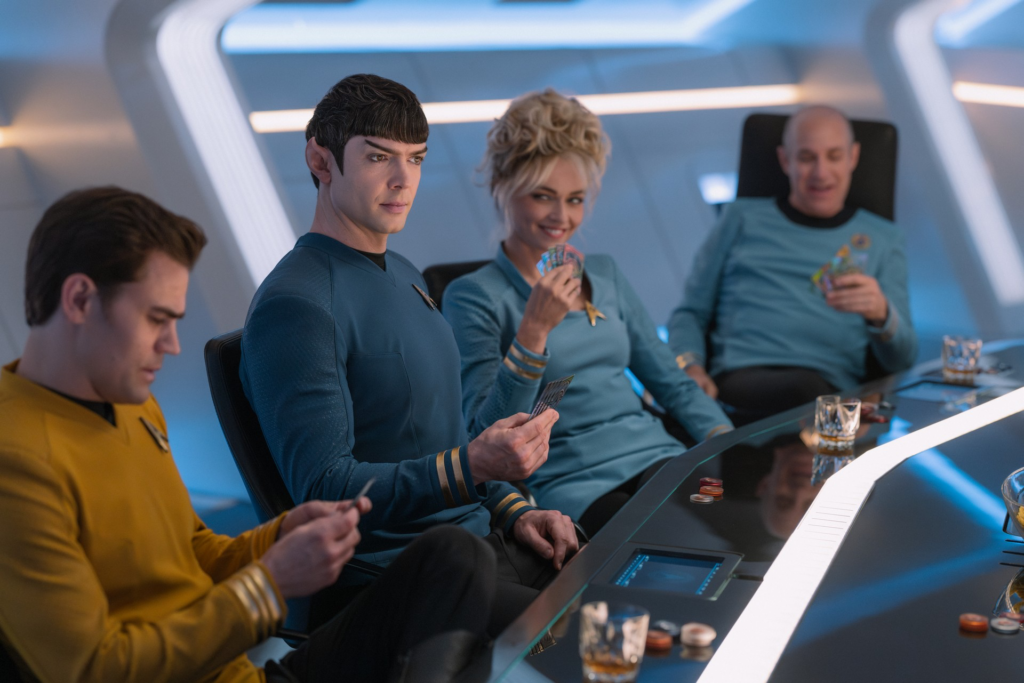
I’m still not entirely sold on the romantic direction between Uhura and Scotty. I’ve never been particularly fond of the idea, including its treatment in The Final Frontier and other material, and it isn’t something I’ve been hoping the series would explore. However, I appreciate that their connection gives Uhura a personal reason to fight for a solution, and I enjoyed seeing the two characters working together.
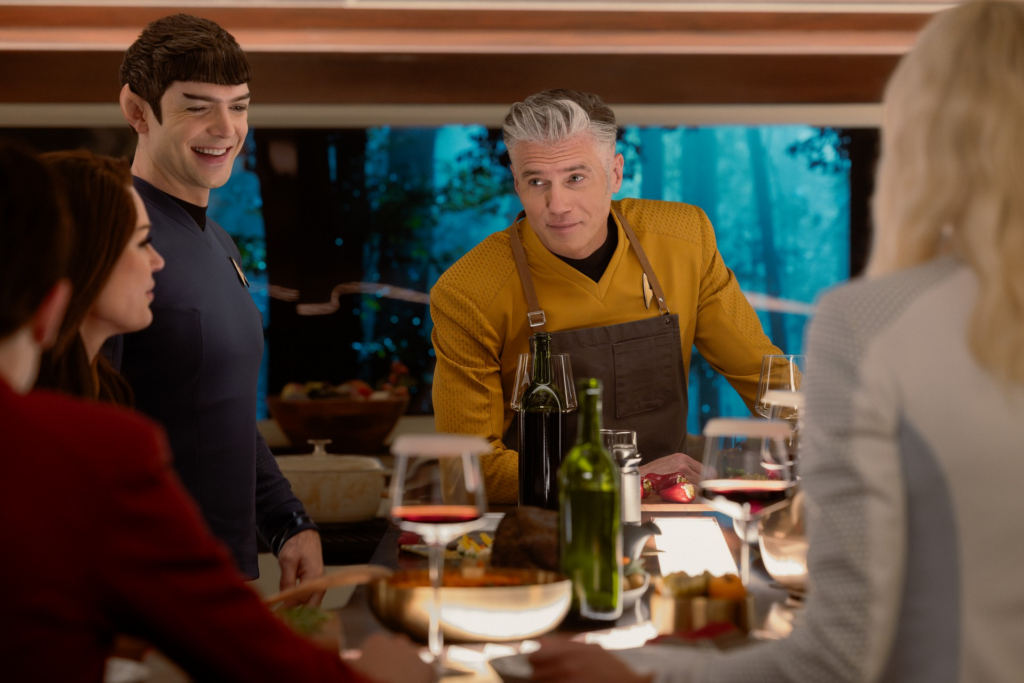
Martin Quinn has also become one of the quieter strengths of the series. His Scotty feels increasingly comfortable aboard the Enterprise, and I particularly enjoyed Ortegas doing her impression of him. It’s a small moment, but exactly the sort of character interaction that makes the crew feel like people who have spent years serving together.
Gooding, though, remains the centre of everything.
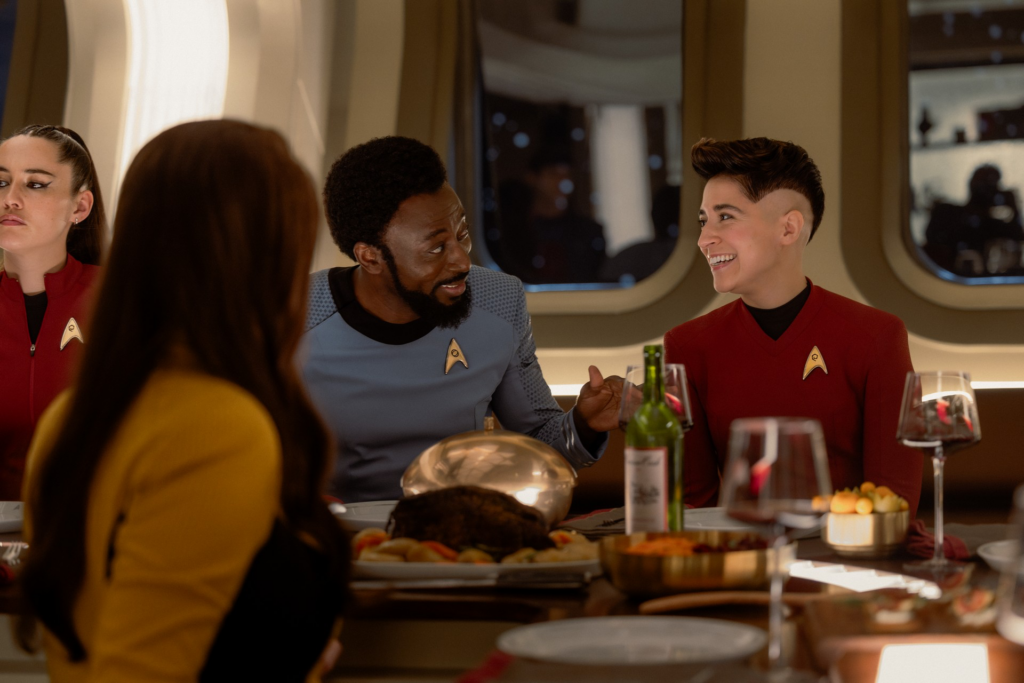
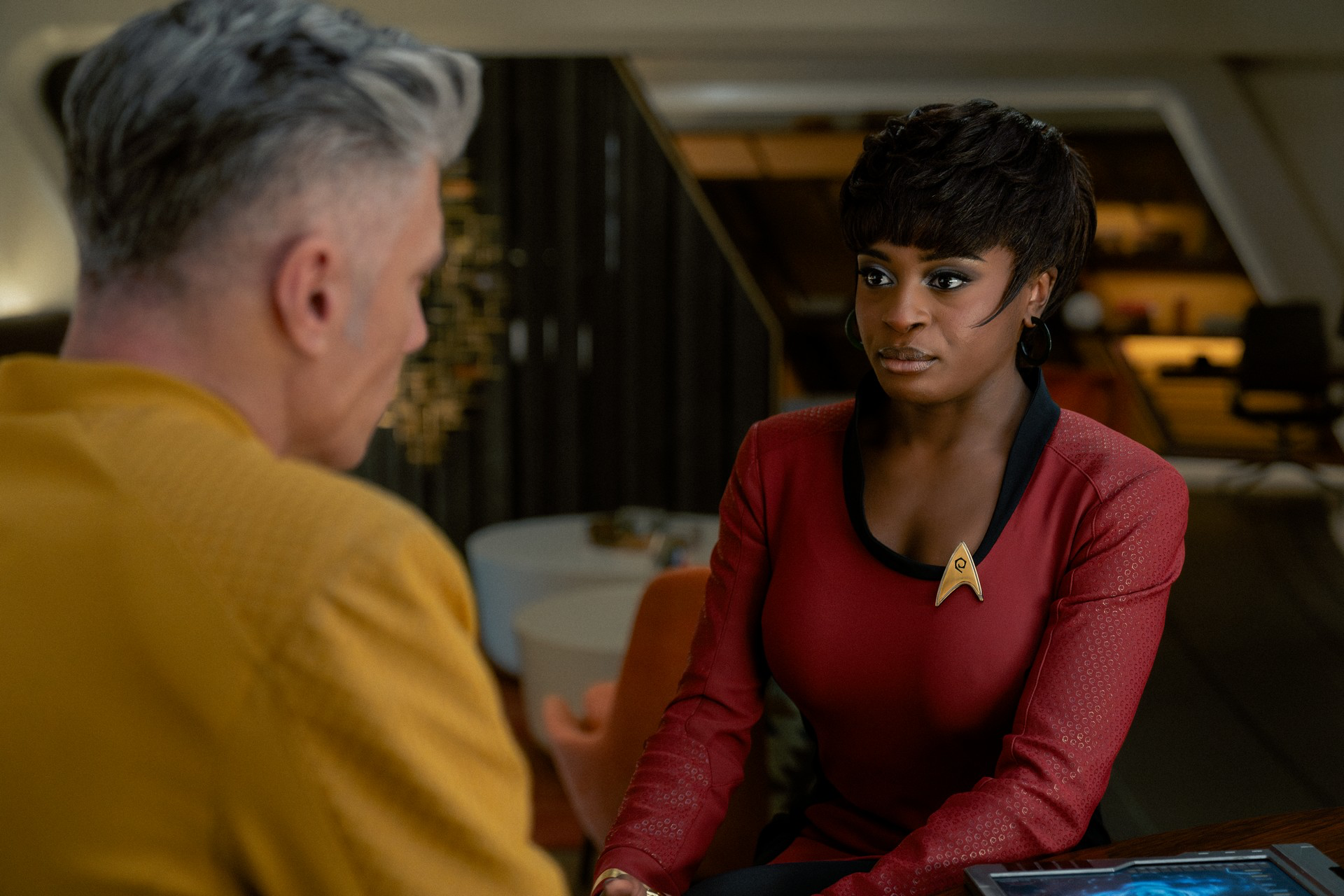
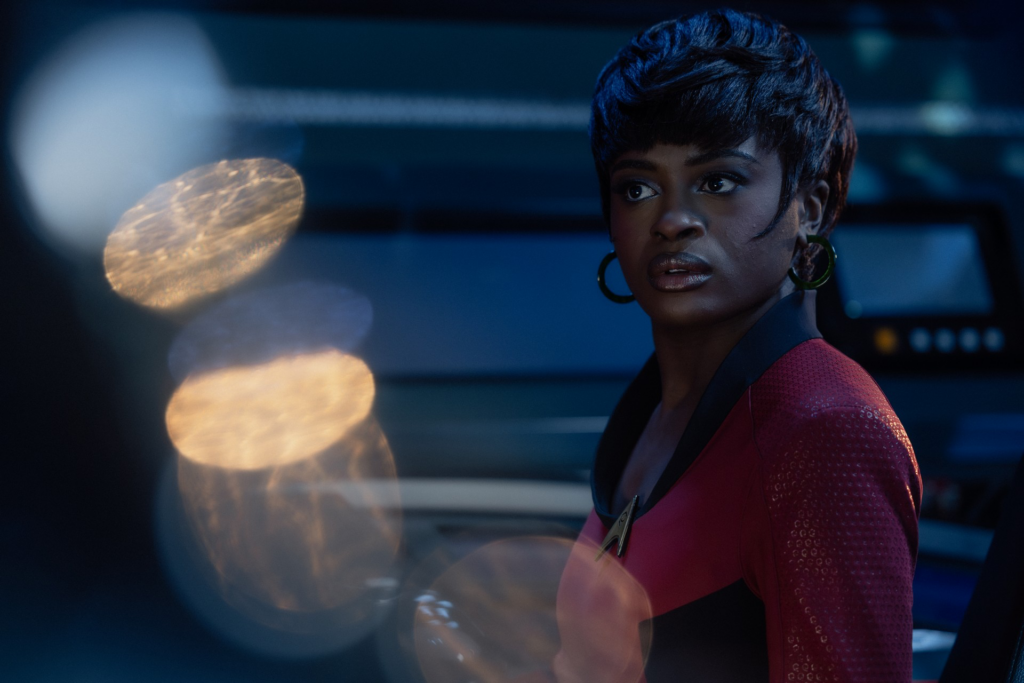
When future Uhura appears in the classic-inspired look, it feels like a genuine moment of arrival. The costume and hair are wonderful, but the performance completes the transformation. Her posture, confidence, and quiet competence bring her closer to Nichelle Nichols’ character without simply imitating her.
The sequences involving both Uhuras are also beautifully handled from an editorial perspective. The way they move in parallel and share the frame gives the story a visual identity beyond the usual science-fiction effects, and I particularly enjoyed how the editing allows us to see the similarities and differences between them.
That final image of both versions standing together might be my favourite moment of the entire season.
Pike Remembers How to Be a Captain
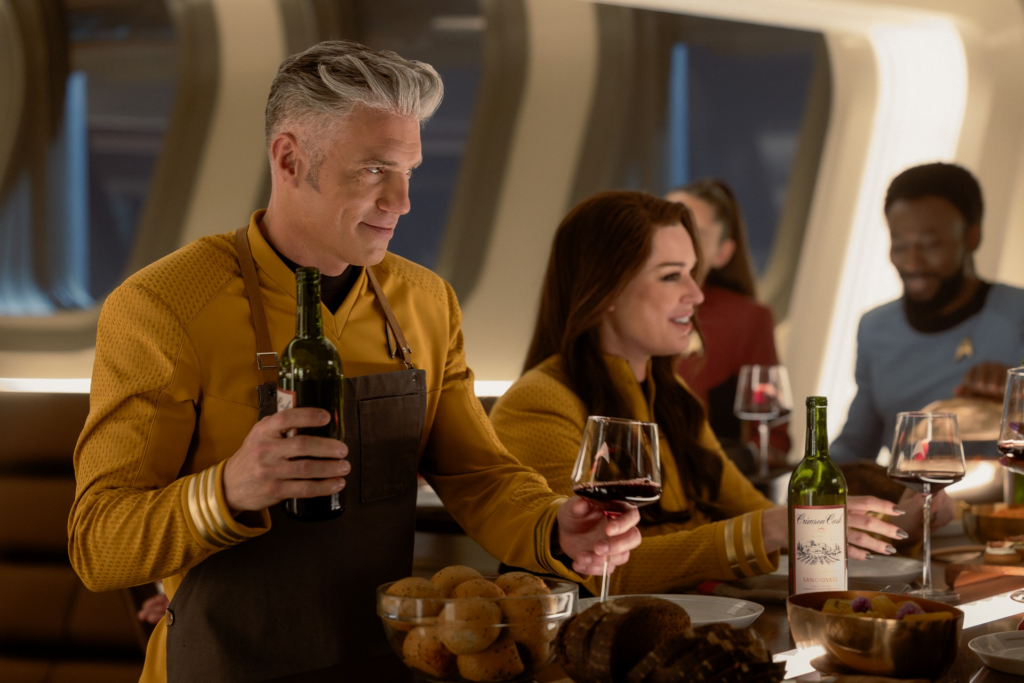
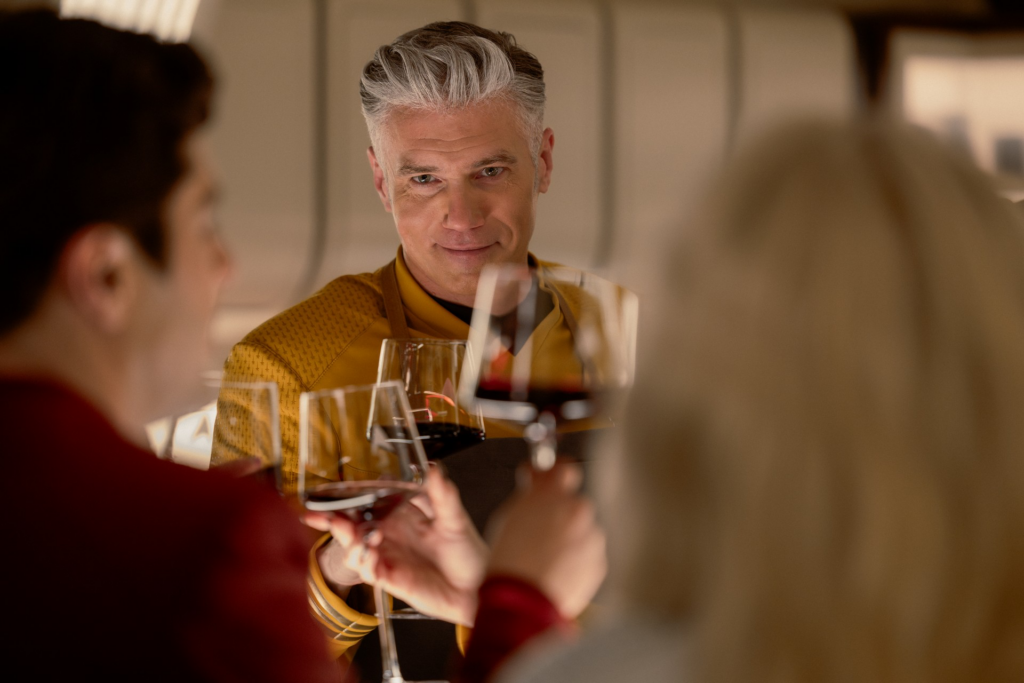
Another unexpected pleasure was Anson Mount’s performance as Christopher Pike.
I’ve often enjoyed Mount’s interpretation of the character, but I think this is one of his strongest episodes, despite the story belonging primarily to Uhura.
There is something particularly good about the way Pike recognises that something is happening with his communications officer, listens to her, and allows her the room to work through it. He doesn’t need to take over the investigation or become the person who solves every problem, and his confidence in Uhura is enough.
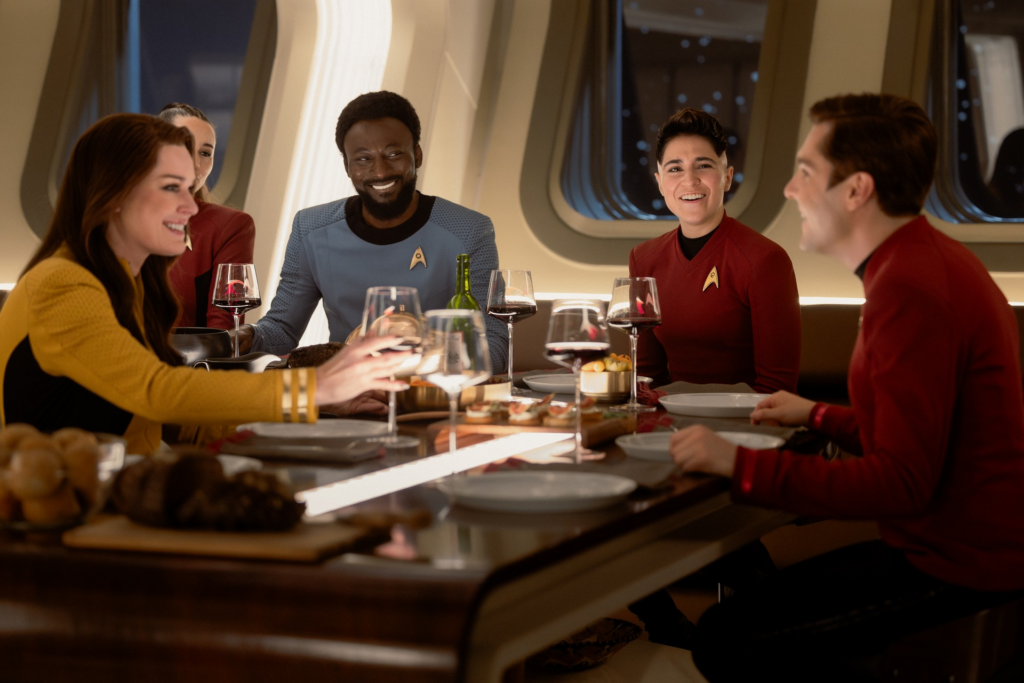
It’s a small distinction, but one that has always mattered to me when it comes to Star Trek captains. Leadership isn’t necessarily about having the answer. Sometimes it’s about recognising who might have it and giving them the support they need to find it.
Pike’s willingness to trust Uhura demonstrates why these officers are developing into the people we know they will become, and it gives Mount an opportunity to play the captain without the episode needing to revolve around Pike’s personal struggles.
I would happily have watched more of this Pike throughout the season.
A Space Baby. Of Course.
I should probably address the Space Baby.
When the episode reveals that the apparent threat is connected to an alien birth, it ventures dangerously close to the sort of concept that could have sent my eyes rolling after some of this season’s more eccentric adventures.
A glowing baby emerging from a stellar anomaly, assisted by mysterious entities calling themselves the Midwives, sounds utterly ridiculous when you write it down.
But strange alien life has always been part of Star Trek, and some of the franchise’s most memorable stories have involved encounters with beings that initially appear threatening, incomprehensible, or simply bizarre.
“The Corbomite Maneuver” and “The Devil in the Dark” both ask us to reconsider our assumptions about unfamiliar life. “Metamorphosis” gave us the Companion, The Next Generation explored a remarkable variety of unconventional life-forms, and Deep Space Nine built much of its mythology around beings whose relationship with time and physical existence differs fundamentally from our own.
The concept itself isn’t the problem, and I certainly wouldn’t want Star Trekto become so concerned with appearing serious that it forgets how strange the universe is supposed to be.
My hesitation is with the visual execution, which occasionally pushes the Space Baby towards something more whimsical than the story really needs. I understand what the production is trying to achieve, and there is something rather lovely about the underlying idea, but I don’t think the physical representation entirely matches the ambition of the concept.
The Midwives are intriguing, though, and I found myself wondering whether there might be some connection to the Prophets from Deep Space Nine. Their unusual relationship with time and the nature of their existence certainly invite the comparison, although there isn’t enough here to establish that they are connected.
What works particularly well is the discovery that music provides the key to understanding what the Enterprise is encountering.
Uhura interpreting the apparent message as an A minor chord rather than ordinary language is exactly the sort of discovery that makes her position aboard the ship meaningful. She brings knowledge and a different perspective to the investigation that the more conventional scientific approach hasn’t provided.
Nami Melumad’s score also becomes an essential part of the storytelling, giving the alien life a means of communication that feels appropriately unfamiliar. I particularly liked that music wasn’t simply there to accompany the emotional moments, but became part of the mystery itself.
And the idea that the Enterprise has mistaken a birth for a potentially dangerous phenomenon is rather lovely.
The eventual spacewalk is visually impressive, even if the glowing Space Baby itself doesn’t entirely work for me. The wider imagery of the white and black holes, the Midwives, and the coordinated attempt to assist this unfamiliar form of life gives the finale a sense of wonder that I have missed throughout parts of this season.
It is wonderfully strange, occasionally ridiculous, and unmistakably Star Trek.
Why Did We Have to Wait Until Episode Ten?
My biggest frustration with “Tomorrow’s Enterprise” has very little to do with the episode itself.
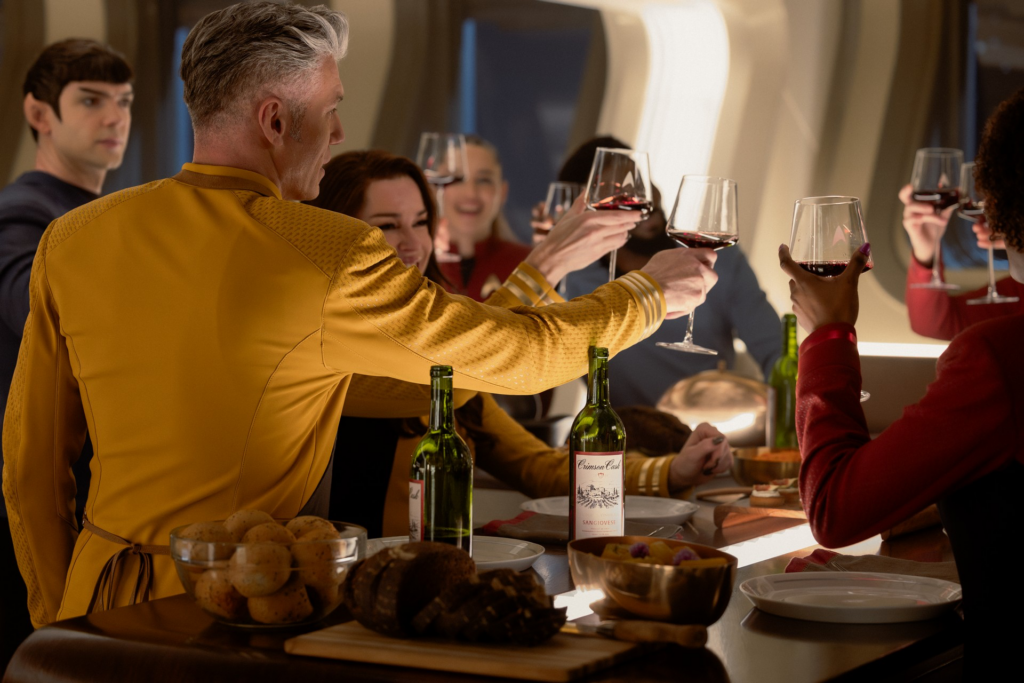
It’s that we’ve reached the end of Season 4 before Strange New Worlds has delivered something this focused, confident, and comfortable with its own identity.
I’ve enjoyed elements of this season, and I don’t object to experimentation. Star Trek has always borrowed from other genres, sometimes with remarkable results, and I wouldn’t want the franchise to abandon that willingness to try something different.
But there is a difference between experimenting with the format and allowing the experiments to become the format.
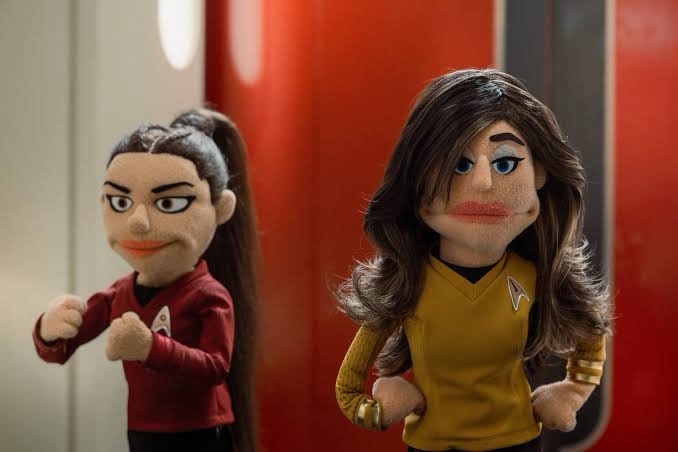
Between the puppets, the soap opera, and another excursion into fairy-tale territory, there have been moments when I’ve felt that Strange New Worldswas becoming more interested in what kind of programme it could pretend to be this week than in exploring the potential of the programme it already is.
That is why this finale feels like such a relief.
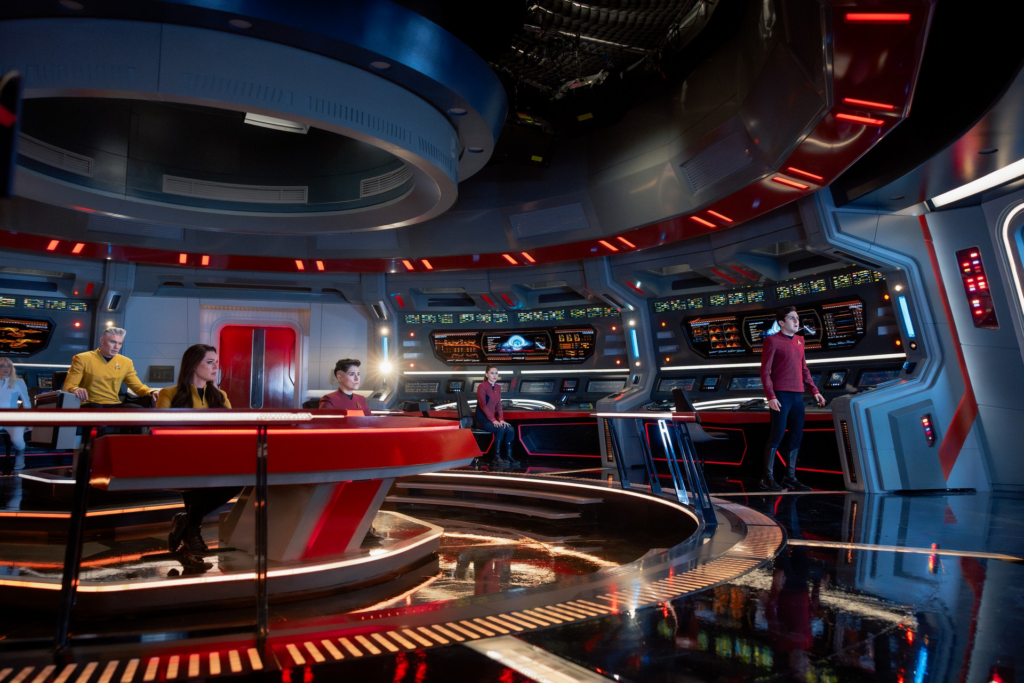
The mystery has enough complexity to be interesting, but remains understandable. The character development emerges from the story rather than interrupting it, the humour works because it comes from the relationships between the crew, and the production design supports the narrative instead of becoming the main attraction.
There are still some weaknesses. Once the two Uhuras begin cooperating, the solution becomes relatively straightforward, and the glimpse of the future occasionally feels like the writers are arranging characters into their eventual positions rather than allowing those changes to happen naturally.
Ortegas moving towards the Academy, M’Benga’s connection with Vulcan, the return of Dr Boyce, and the prospect of McCoy all provide interesting glimpses of what lies ahead. But with only six episodes remaining in the series, there is an awful lot of ground left to cover.
That’s a frustrating prospect when the show has finally demonstrated just how effective this approach can be.
However, none of that diminishes how much I enjoyed this episode.
The title “Tomorrow’s Enterprise” inevitably invites comparison with The Next Generation’s “Yesterday’s Enterprise”, but I think there is something especially appropriate about the choice.
One looks back at a history that might have been. The other looks forward towards a history we already know, reminding us that the journey towards it still matters.
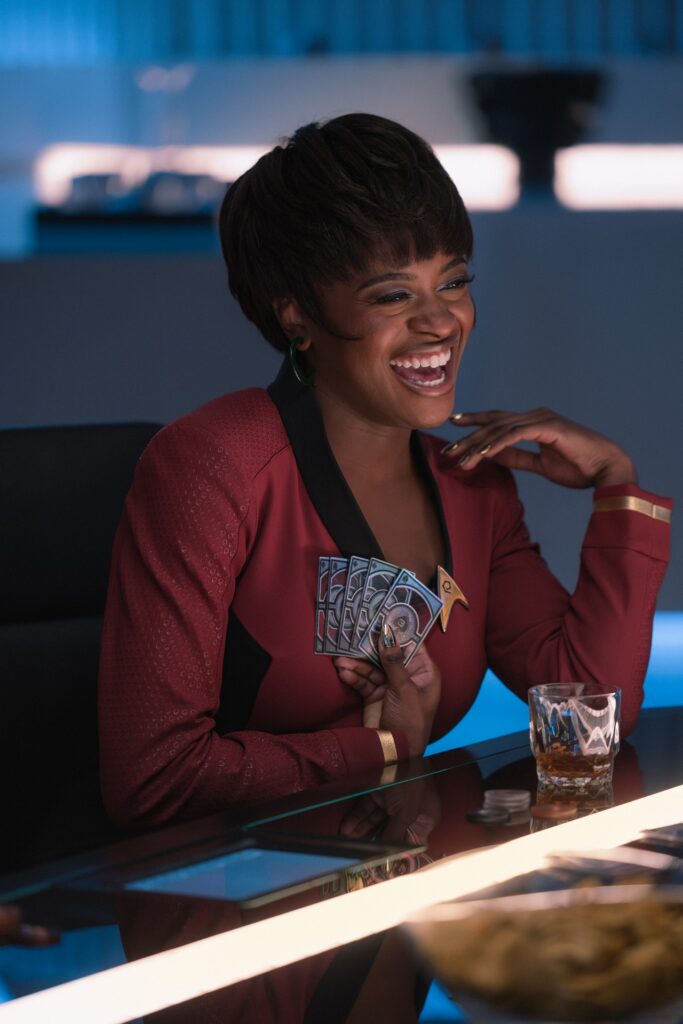
When future Uhura offers her younger self encouragement to keep growing, the sentiment works because we’ve spent four seasons watching precisely that happen.
And perhaps that’s what I’ve been waiting for from Strange New Worlds. Not another reminder that these characters will eventually become familiar faces aboard Kirk’s Enterprise, but a reason to believe in the people they are becoming along the way.
“Tomorrow’s Enterprise” reminded me why I fell in love with Star Trek, and why, despite my frustrations, I’ve kept coming back to Strange New Worlds. It’s the sort of episode I’ve wanted from this series for a long time, and quite possibly my favourite it’s produced.
I just wish we hadn’t had to wait until the end of Season 4 to get here.
8/10