Character Spotlight — Data: The Android Who Was Never Just Trying to Become Human
When Captain Picard argues for Data’s rights in “The Measure of a Man”, some of the evidence sitting on the table is remarkably ordinary. There is a book, his Starfleet medals, and a hologram of Tasha Yar. None of it demonstrates how quickly Data can calculate, how strong he is, or how much information he can hold, and none of it proves consciousness in any scientific sense. They are simply things Data has chosen to keep because, for reasons entirely his own, they matter to him.
Decades later, Star Trek: Picard comes back to much the same idea when Data is struggling with Lore. Lore takes the things and memories Data gives him because he assumes they have little real value: Sherlock Holmes, poker games, Tasha, Spot. To Lore they are sentimental distractions, certainly nothing compared with power, superiority, or control. He completely misses the point, because these things matter precisely because Data decided they mattered. They are part of the life he built, and by taking them Lore is not stripping Data away so much as absorbing everything that helped make Data who he was.
For much of The Next Generation, Data describes his ambition in fairly straightforward terms: he wants to become more human. He studies humour, attempts romance, paints, plays music, creates a child, keeps a cat, learns to dance, and regularly asks the Enterprise crew to explain bits of human behaviour which would probably be difficult enough to explain to another human. It makes the Pinocchio comparison almost unavoidable, and Star Trek itself was hardly shy about using it, but the more I think about Data, the less satisfying that description becomes.
Data was already real. His development was never simply about adding enough human characteristics until he finally qualified as a proper person. He wanted to understand humanity and experience things that were unavailable to him, but his story gradually became much more about curiosity, friendship, judgement, failure, responsibility, and the freedom to decide for himself what sort of person he wanted to become. Data certainly wanted to become more human, but over time he also had to learn what it meant to become more Data.
He did not have to earn personhood
“The Measure of a Man” is the obvious place to start, although I think it is sometimes remembered as answering a question the episode deliberately leaves open. Captain Louvois does not declare that Data is human, and she cannot give Picard a grand answer about whether Data possesses a soul or consciousness in a way that would satisfy every philosophical argument. What she can decide is whether Starfleet has the right to treat him as property, dismantle him against his wishes, and regard his existence as something belonging to the institution rather than to Data himself.
That distinction matters because Data does not need to understand humour first, receive his emotion chip, develop biological skin, fall in love, or successfully imitate human behaviour before his wishes count. He does not have to perform humanity well enough for everyone else to decide he has passed. The important thing is much simpler: Data has the right to decide what happens to Data.
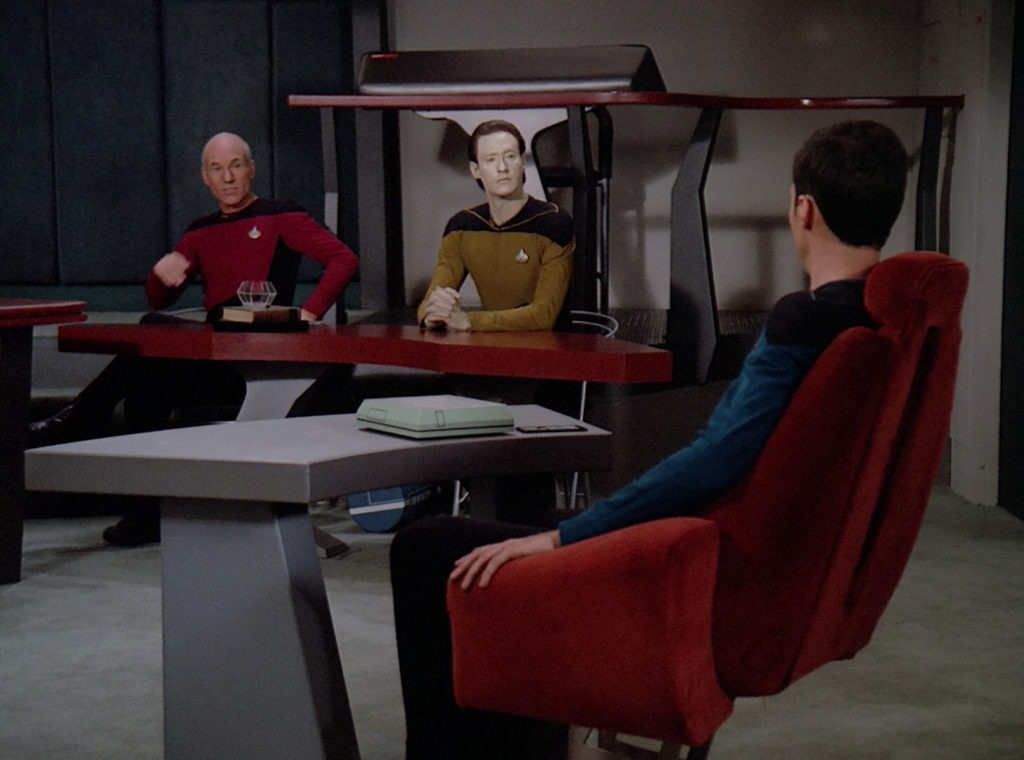
Maddox’s position is revealing because nobody seriously doubts Data’s intelligence. The problem is what that intelligence is worth when it belongs to something Maddox still regards as machinery. He sees the possibility of studying Data, reproducing him, and potentially creating thousands more like him, and Data’s individuality becomes almost inconvenient beside the scientific opportunity. Picard’s defence insists that the individual matters first, but what makes this much more interesting than a single courtroom victory is that Data eventually takes the principle he benefited from and applies it to others.
In “The Offspring”, Data creates Lal but never treats her as a possession. He gives her considerable freedom to determine her own identity, and when Starfleet wants to remove her from him, he immediately recognises the problem because Lal does not belong to Starfleet simply because somebody constructed her. Then “The Quality of Life” pushes the idea further when the Exocomps may be sentient and Data refuses to sacrifice them merely because their personhood has not yet been proved beyond doubt.
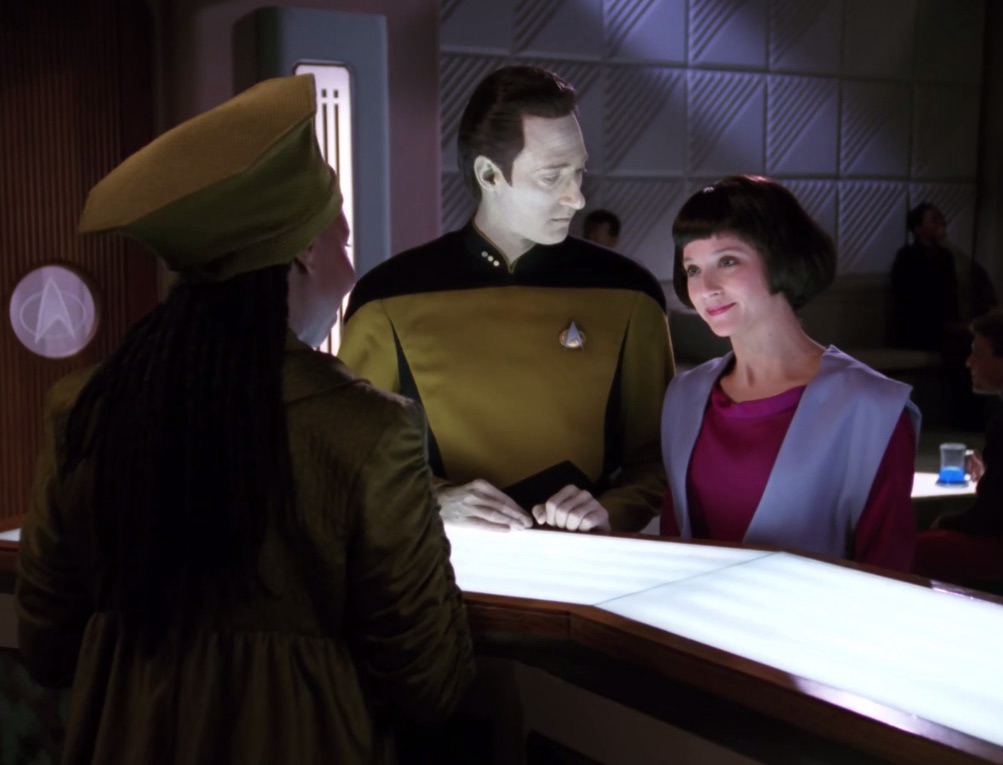
That is a considerable change from the android who once stood in Louvois’s courtroom waiting for other people to decide whether his existence counted. Data begins by needing somebody else to defend his right to be treated as a person, then eventually becomes willing to defend beings who cannot yet prove their own personhood either. For me, that says far more about his growth than whether he has learned to laugh convincingly.
Knowing something is not the same as understanding it
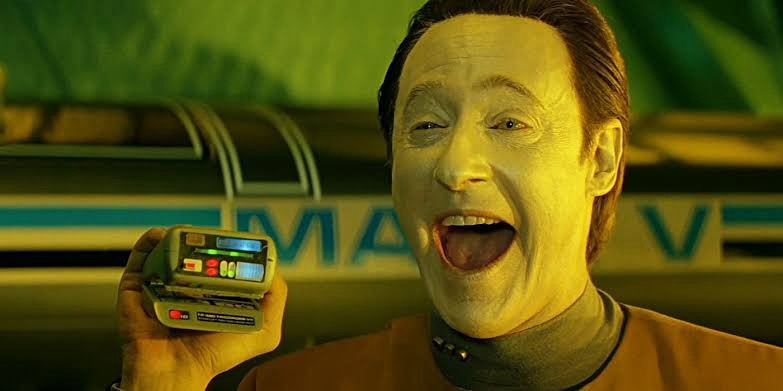
Data has access to more information than any human around him could hope to remember, yet the things which fascinate him most are usually the ones information cannot settle. He wants to know why something is funny, why people fall in love, why music matters, why people keep useless objects because somebody gave them to them, why they grieve, why they create art, and why anyone would willingly bring a cat onto a starship when the cat clearly has no respect whatsoever for their authority.
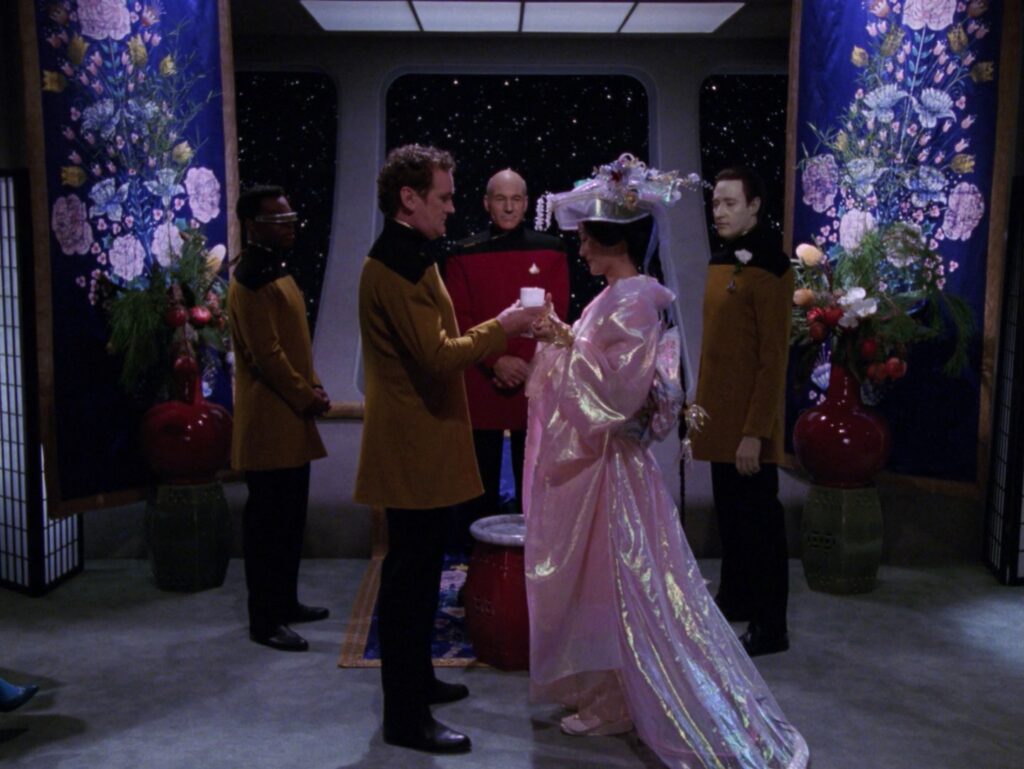
He can retrieve the facts. What he keeps looking for is the meaning behind them, and that is one reason “Data’s Day” works so well as a character piece. Data is not saving the Federation or confronting some enormous existential threat; he is watching people get married, dealing with friendships and misunderstandings, navigating the ordinary routines of life aboard the Enterprise, and finding all of it worth studying.
Near the end, Data talks about wanting to continue learning, changing, and growing. I think those words are more revealing than the repeated claim that he wants to become human because there is no obvious finish line contained within them. Data does not imagine personal development as something he will eventually complete, and that becomes even clearer in “Birthright” when he begins dreaming and immediately does exactly what we would expect him to do: he researches it.
He looks at mythology, psychology, spirituality, and the traditions of other cultures, searching for something that will explain his experience. Picard gives him a more difficult answer, because there may not be an existing culture capable of telling Data what his dreams mean. There has never been anyone exactly like him, so at some point he may have to interpret the experience for himself rather than finding an authoritative answer written by somebody else.
That is one of my favourite ideas in Data’s development. So much of his early life is spent asking what humans do, how humans behave, what humans feel, and why they react the way they do. Gradually another question becomes possible: what does Data think? There is a real difference between learning from other people and needing those people to tell you what your own experiences mean.
Friendship may be the thing Data understood best
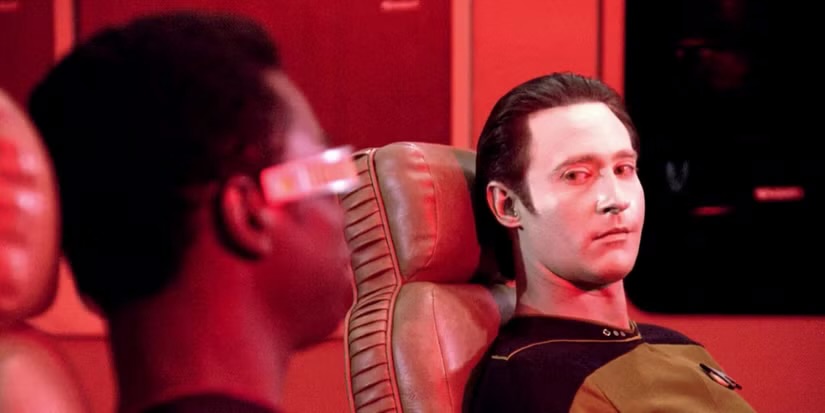
Geordi is central to this because, for all the discussion about Data wanting to become human, his closest friendship is built with somebody who never requires that of him. When Data believes Geordi has died in “The Next Phase”, he explains that Geordi treated him no differently from anyone else and accepted him for what he was. That, Data has come to understand, is what friendship means.
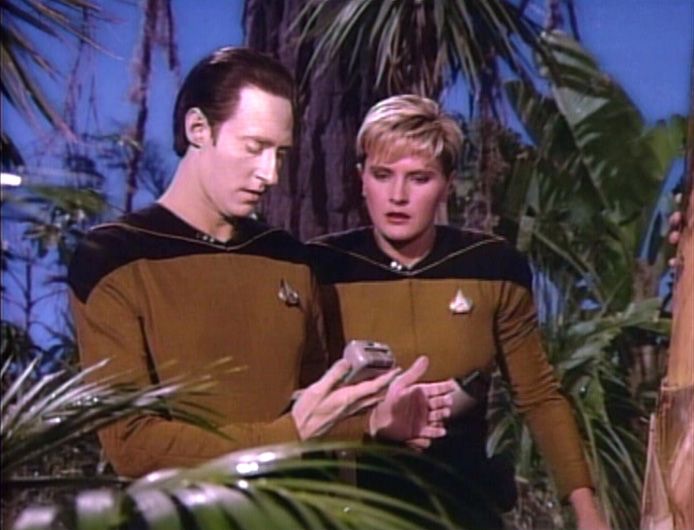
I think that matters enormously. Geordi certainly helps Data understand human behaviour, answers questions, gives advice, occasionally gets frustrated, and sometimes has to explain something so obvious to everyone else that you can almost feel his afternoon disappearing, but he never treats Data as a project waiting to be completed. He treats him as Data, and Data eventually recognises how important that acceptance is.
Tasha gives us an earlier version of the same idea. After her death, Data worries because his thoughts are centred on what losing her means to him, and he seems uncertain whether that makes his response selfish or somehow proves that he does not understand grief. Picard reassures him because thinking about what somebody’s absence means to you is part of grief, and the scene becomes more interesting if we resist the temptation to look backwards from the emotion chip and declare that Data must secretly have possessed human emotions all along.
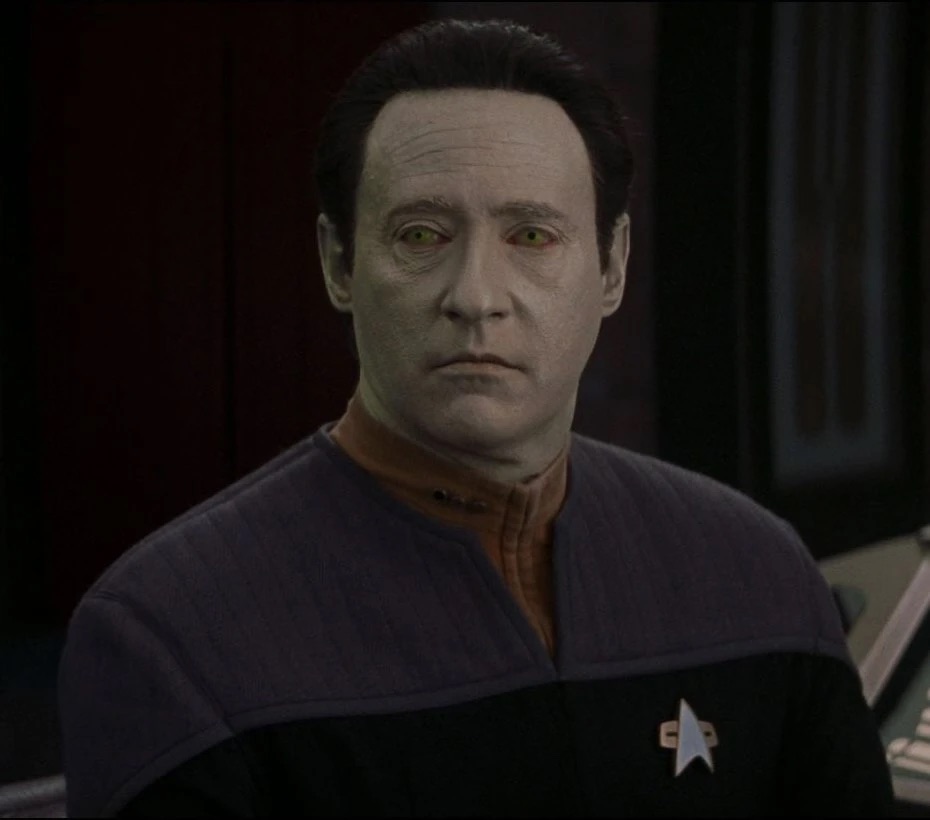
The series repeatedly tells us that Data does not experience emotion in the way humans do, and I think the tension works better if we allow that to remain true. Tasha still matters to him, as do Geordi, Lal, Spot, his paintings, his violin, his memories, and all the other things that accumulate around him over the years. At some point, endlessly asking whether those attachments meet a technical definition of emotion becomes less interesting than recognising that together they form a life.
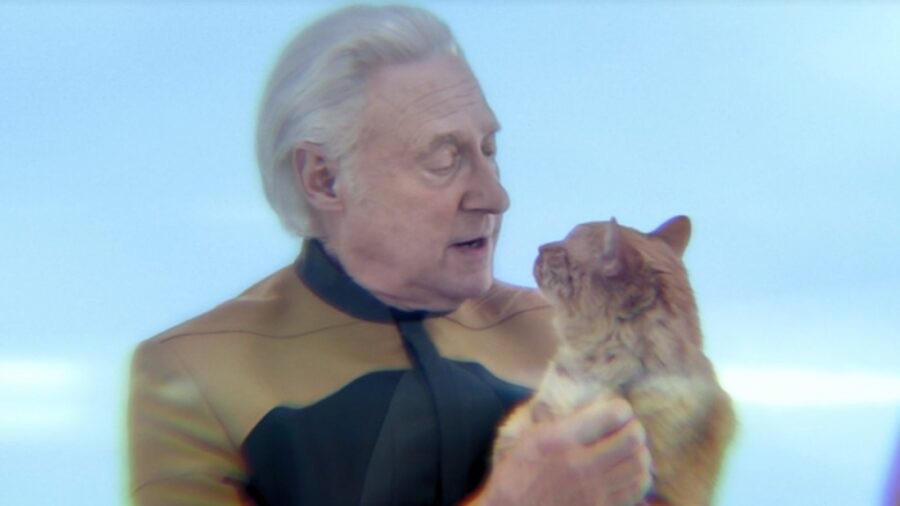
Spot becomes particularly revealing when Picard returns to the character. For years, the relationship is played partly for comedy: Data writes poetry about his cat, cares for him meticulously, and receives roughly the level of gratitude you would expect from a cat. Decades later, however, Data associates his memories of Spot with learning about love, which gives all of that earlier material a little more weight. The ridiculous poem mattered because Data cared enough to write it.
Being good is not the same as following instructions
It would be very easy for Data’s morality to feel unearned if we assumed Soong simply gave him excellent ethical programming and sent him on his way. His best stories steadily make that explanation harder to maintain, because Data repeatedly finds himself in situations where the correct choice cannot be produced simply by following a rule.
“Redemption II” is a good example. Data finally receives command of the Sutherland, where he has to deal with Hobson’s obvious discomfort at having an android captain before facing a tactical situation that no longer fits neatly within Picard’s orders. Data eventually disobeys him, not because he has malfunctioned or suddenly discovered rebellion, but because the situation has changed and he judges that acting independently is the right thing to do.
When he reports what happened afterwards, he expects discipline. Picard instead recognises that command requires judgement and that an officer who follows every instruction literally, no matter what happens around him, is not much use as an officer. There is something wonderfully appropriate about Data proving himself in command by refusing to behave like a machine following a script.
“The Most Toys” makes that independence much less comfortable. Kivas Fajo sees Data as an object in perhaps the purest possible sense: Data is valuable because he is unique, and Fajo wants to possess things nobody else can have. It is the same underlying problem as Maddox, stripped even of the excuse of scientific progress, and the situation eventually leads to one of the most unsettling moments in Data’s history when Fajo kills Varria and Data appears to fire the Varon-T disruptor at him just before being transported away.
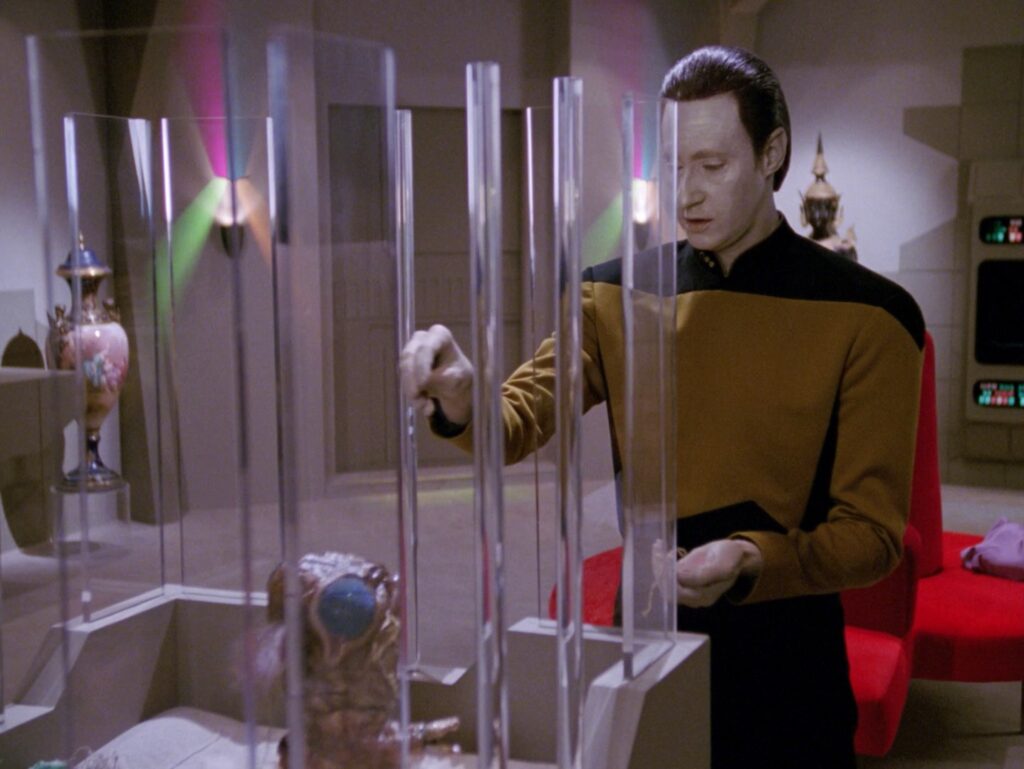
His explanation to Riker afterwards does not quite settle what happened, and I like that the scene remains uncomfortable. If we want to argue that Data is genuinely a person, we cannot then demand that personhood means he always makes morally spotless decisions. Agency has to include the possibility that he might make a choice we do not like, because a Data who literally cannot do wrong because his programming prevents it would actually be less interesting and, in a strange way, less free.
“Inheritance” presents the same question more quietly when Data discovers the truth about Juliana Tainer and has to decide whether she should know what she really is. Soong has left instructions, but the decision still belongs to Data. He weighs what knowing might do to Juliana and chooses to preserve the life and identity she already understands as her own. Whether we agree with him is almost secondary; what matters is that he is making the judgement rather than simply retrieving the correct answer.
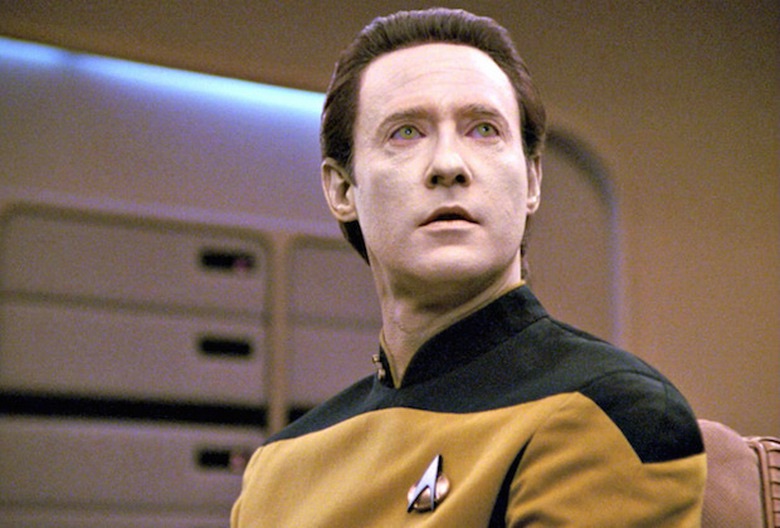
Lore proves emotion was never the magic ingredient
Lore complicates almost every simple argument about Data because, if emotion is the missing piece required to turn an android into a fully realised person, Lore should be well ahead of him. Lore feels jealousy, resentment, anger, pride, insecurity, affection, and a desperate need for recognition, and some of those feelings are understandable when we consider his relationship with Soong and his belief that Data received the acceptance he was denied.
None of that makes Lore a better person. Data develops loyalty, restraint, friendship, compassion, and responsibility without possessing anything like Lore’s emotional range, while “Descent” makes the contrast harsher still by giving Data access to powerful negative emotions while Lore interferes with his ethical programming. Data can finally feel anger and pleasure, but neither experience moves him any closer to being the person he wants to become.
Emotion and morality are not the same thing, and that is why I have never liked the idea of the emotion chip as Data’s graduation ceremony. It matters enormously to him in Generations, as it should, because an entire range of experience he has spent years studying from the outside suddenly becomes available from within. But Data was already a friend before the chip, had already been a father, created art, commanded a starship, defended other forms of life, mourned people he had lost, and repeatedly put himself in danger for people he cared about.
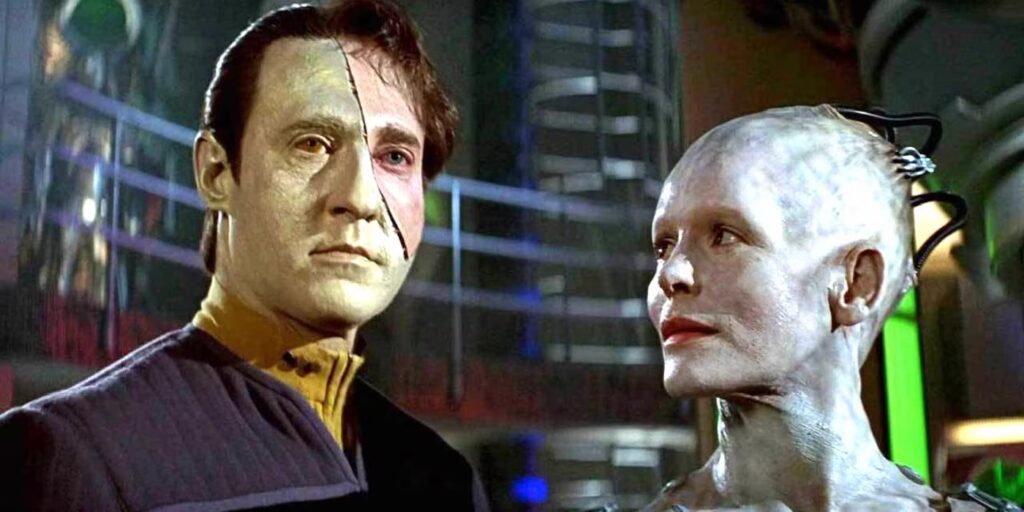
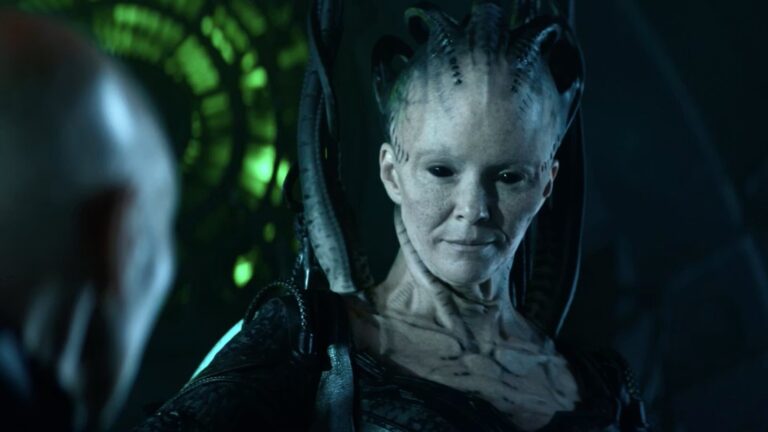
The chip gives Data something new; it does not make everything before it real. First Contact pushes the point further because the Borg Queen offers Data something much closer to literal humanity through organic skin, physical sensation, and experiences he once believed were beyond his reach. Data is tempted, and I am glad he is because anything else would make the whole situation meaningless, but he ultimately rejects her because his desire for those experiences has limits. There are things he values more than becoming human at any cost, and that feels like genuine growth.
Data had to learn how to fail
One of Data’s recurring problems is that he sometimes approaches self-improvement like debugging. If something goes wrong, he assumes there must be a fault that can be identified and corrected, which is why “Peak Performance” works so well when he loses at Strategema to Kolrami. Data knows what he is capable of, cannot identify an obvious error, and concludes that something must therefore be wrong with him.
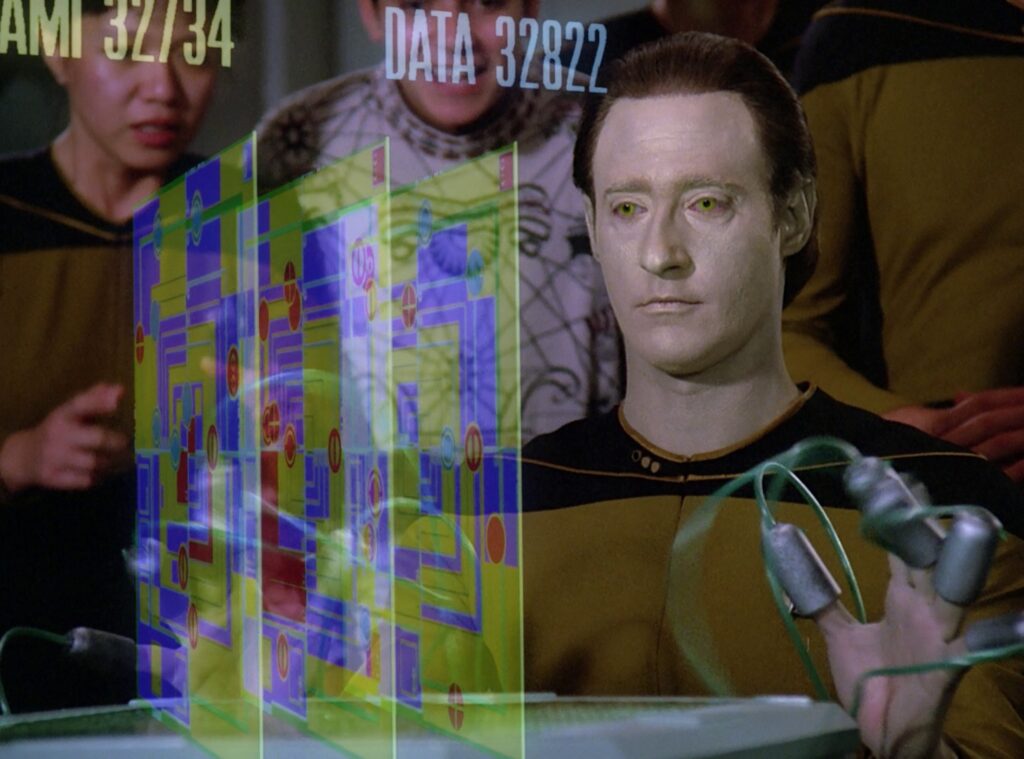
Picard has to explain one of those irritating truths about existence which no amount of processing power can eliminate: you can make the right decisions and still lose. Failure does not automatically mean malfunction, and it is a relatively small lesson compared with some of the grand philosophical questions Data faces, but perhaps that is why it works so well. He has to stop treating himself like equipment which should always produce the correct result.
“In Theory” offers something similar through his relationship with Jenna D’Sora. Data approaches romance sincerely, takes advice, changes his behaviour, and constructs routines intended to make him a better partner, yet the relationship still fails. The important part is that Data does not respond by declaring romance irrational or blaming Jenna because she failed to behave according to his model. The experience tells him something about the limits of what he can reproduce and understand, and sometimes self-improvement means discovering something you cannot do, or cannot yet do, rather than eliminating another flaw.
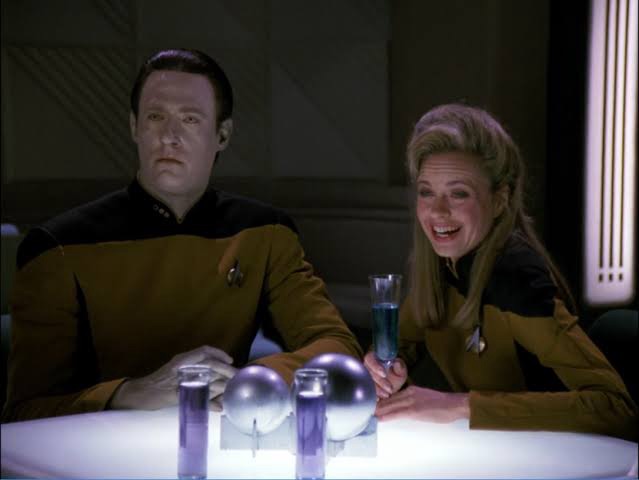
“Thine Own Self” strips the question back even further by removing almost everything Data normally uses to understand himself. He loses his memory and wakes among people who know nothing about him, unable to remember Starfleet, Picard, Geordi, Soong, or his lifelong ambition to become more human. He does not even know what he is, yet almost immediately he begins observing, asking questions, experimenting, reasoning from evidence, and trying to help when people become sick.
Even when those people become frightened of him and turn against him, he continues trying to save them. Take away Data’s biography and his conscious project of understanding humanity, and something recognisably Data remains: his curiosity, his reasoning, and his instinct to help. Those qualities cannot simply be behaviours he learned because he thought that was how humans were supposed to act. There is nobody around him to impress and no humanity project to pursue. That is simply who he is.
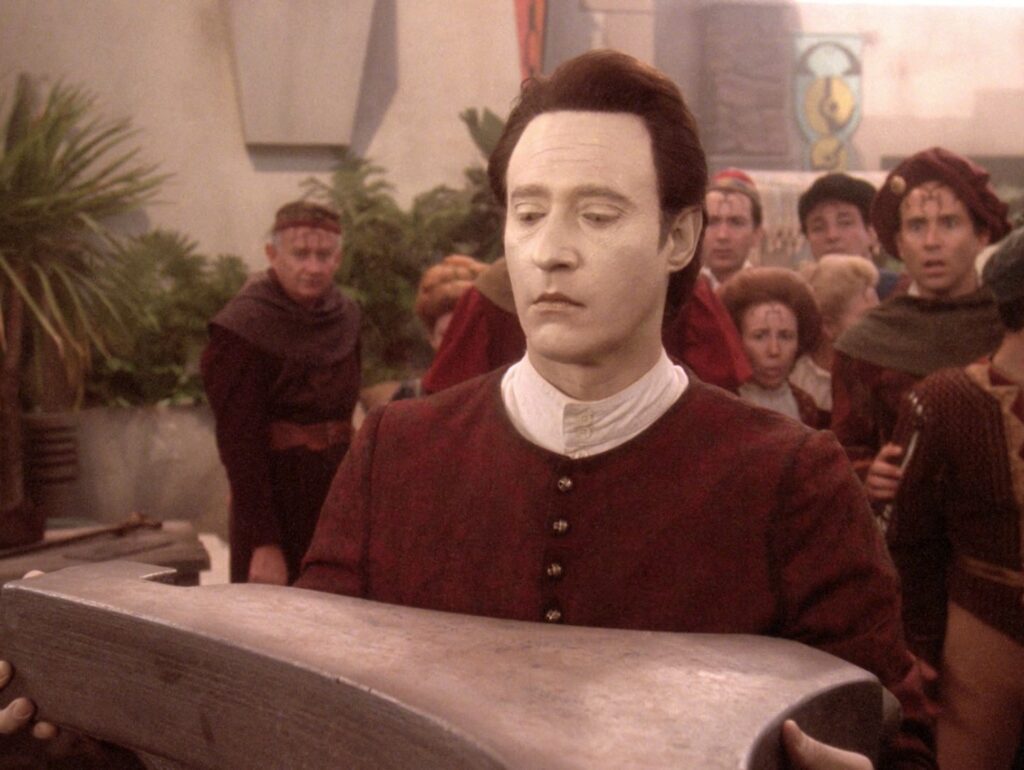
What Data chose to keep
Nemesis appears to give Data the sort of ending Star Trek had been building towards for years when he sacrifices himself to save Picard and the Enterprise. It is very easy to describe that as his most human act, but I am not convinced “human” is the most useful word. Data does not need to become human before Picard’s life can matter to him, and he does not need an emotion chip to decide that the lives of his friends are worth more to him in that moment than his own survival.
Picard later allows Data to make another choice, this time about mortality itself. The version of Data Picard encounters does not want an existence that continues indefinitely, and he comes to see an ending as part of what gives life meaning. Once again the important thing is that the decision belongs to him, even if Season 3 then complicates that conclusion by bringing him back in a form that makes the old question of whether Data finally became human feel even less useful.
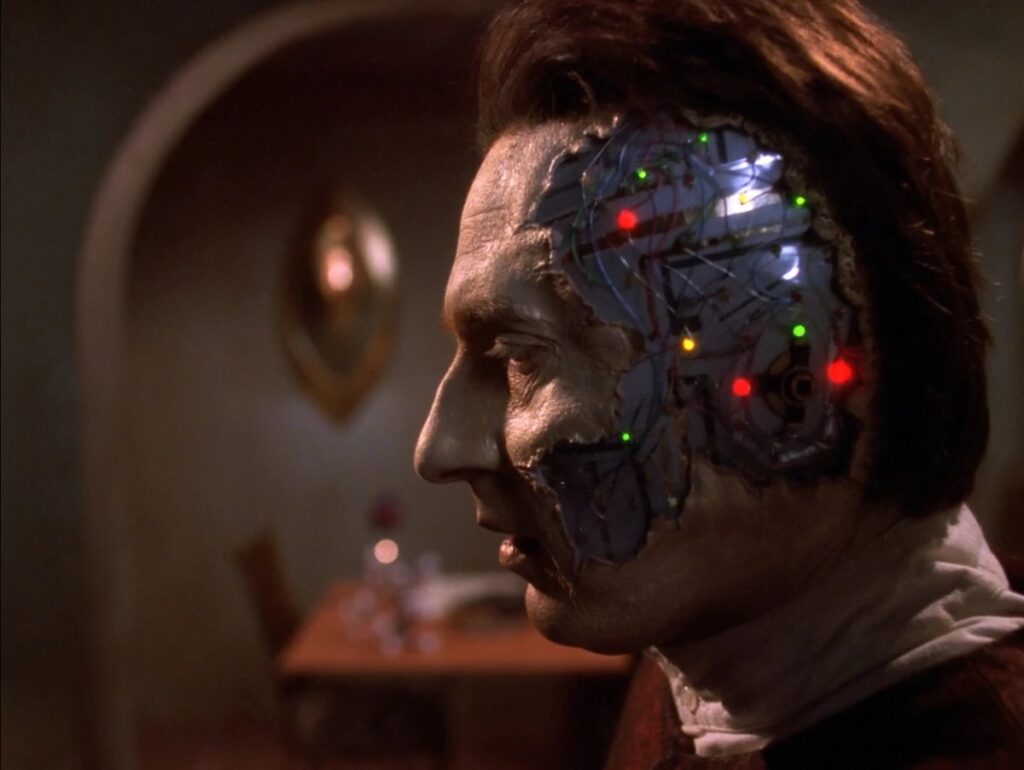
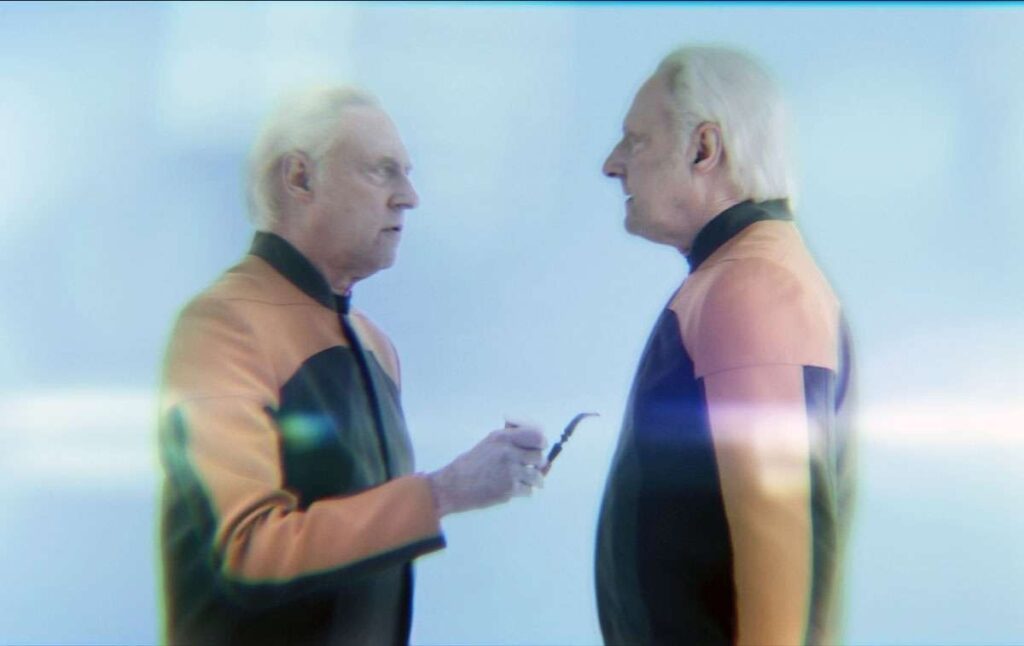
This Data contains more than Data. Lore is there, B-4 is there, Lal and other parts of Soong’s work are part of the whole, while Data himself now has emotions, feels physical discomfort, uses contractions naturally, tells terrible jokes, and seems less certain about where Data ends and everything else begins. In some ways he is finally closer to the human experience he spent decades pursuing, but his most important moment is not really about any of that.
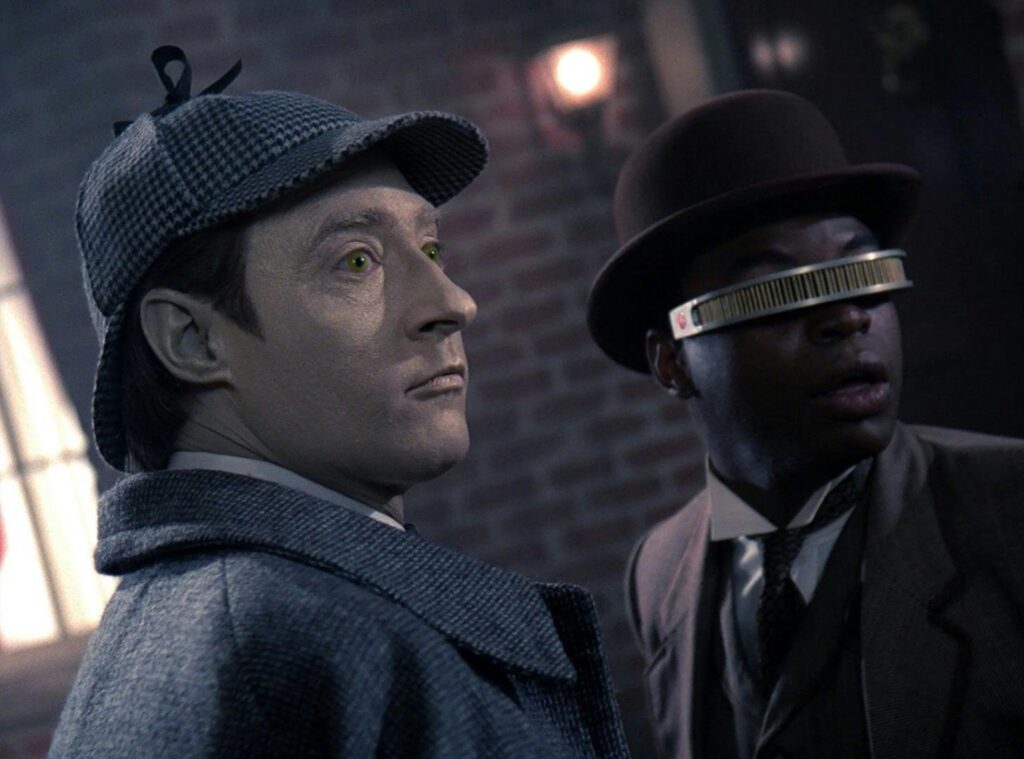
It is his confrontation with Lore. Lore believes the struggle is about dominance, while Data begins giving him memories: Sherlock Holmes, poker with his friends, Tasha, Spot. Lore accepts them because he believes Data is surrendering pieces of himself, but every memory changes him. That is the mistake he never sees coming, because you cannot absorb everything that made Data who he was without being affected by it, and Data himself does not emerge untouched either. Lore becomes part of him.
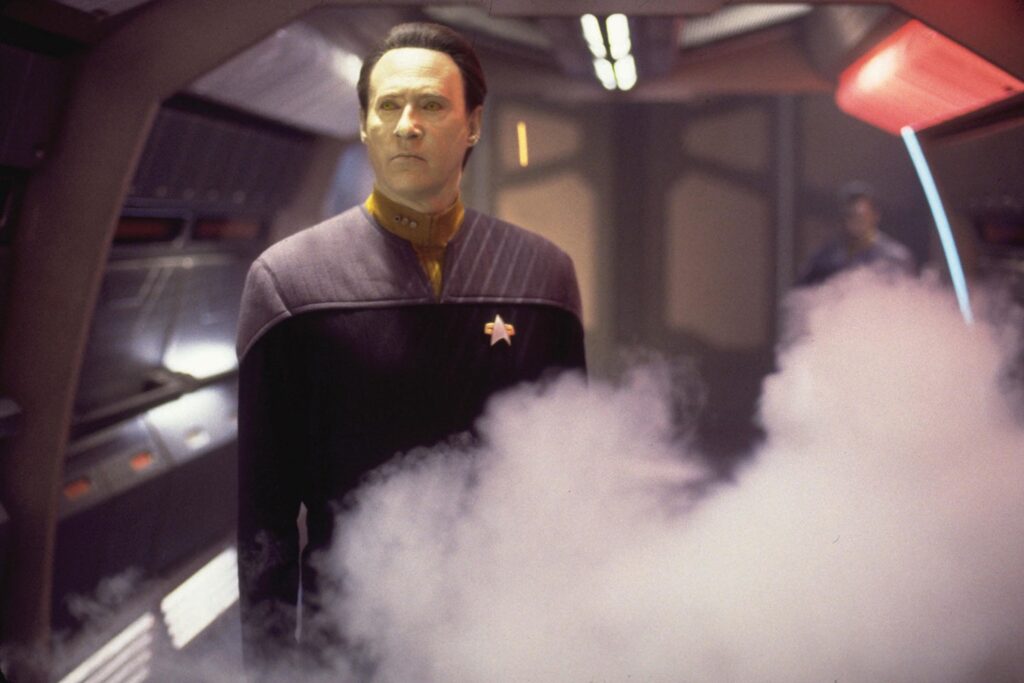
I think that is a far more appropriate ending for Data than simply ticking enough boxes to qualify as human. Back in “The Measure of a Man”, Picard puts Data’s belongings on a table because they might help other people understand that something exists inside this android which cannot be measured by his technical specifications. Years later, Data no longer needs those things to prove anything because he understands why they matter.
He spent years looking at humanity and asking what he was missing, but perhaps the biggest change came when he stopped thinking of himself as a collection of missing pieces. He had friendships, made mistakes, created things, lost people, failed, changed his mind, questioned himself, and made choices nobody else could make for him. Data wanted to understand what made humans human, but somewhere along the way he learned what made Data Data.