Why I Can’t Make Myself Care About Star Trek Novels
There is a Wikipedia page that attempts to define Star Trek canon. It is, in the way of most Wikipedia pages on contested topics, thorough, carefully footnoted, and ultimately incapable of settling the argument it was written to resolve. The page lists what counts, what doesn’t count, what Gene Roddenberry said, what he later contradicted, and the various positions Paramount has taken over the decades. It will not tell you whether the Deep Space Nine relaunch novels matter. It will not tell you whether Destiny counts. These are questions canon cannot answer, because they are not really canon questions.
The question was whether Paramount should do what Disney did after acquiring Lucasfilm, draw a firm line, reclassify most of the old Expanded Universe as Legends, and rebuild Trek’s novels and comics into a unified, acknowledged continuity. My initial instinct was yes. Of course. Why spend forty years writing stories if none of them count?
The more I sat with that, the more I realised I was solving the wrong problem.
Canon is a legal term dressed up as a creative one. It tells you what the official owners of a franchise recognise as part of the recorded history of their intellectual property. It tells you very little about whether a story is good, whether it matters to anyone, or whether the events it depicts have any emotional weight. You can have an entirely canonical story that leaves no trace on anyone who watched it. You can have an entirely non-canonical story that fans have been arguing about for thirty years. Canon is the bureaucracy of fiction. Consequence is the point.
What I actually want from a story, any story, is for the events to matter. Characters should change. Decisions should carry forward. If someone dies, they should stay dead, or there should be a real cost to bringing them back. If a government falls, the rubble should still be there in the next book. If a character is broken by what they experienced, the cracks shouldn’t simply seal over by the following chapter because the tone of the next episode demands it. I want the narrative world to have memory. That’s what makes fiction feel real enough to invest in.
This is why I was drawn to the old Star Wars Expanded Universe before Disney cleared the shelf. The quality was wildly uneven, some of it extraordinary, a lot of it ordinary, and some of it best left unexamined. But it felt like one ongoing story. Luke Skywalker aged. Han and Leia’s marriage had friction and history. The galaxy had scars that didn’t heal between chapters. Characters could die and stay dead. That continuity gave even the weaker entries a structural dignity they hadn’t fully earned on their own. You were reading the next chapter, not taking a side trip.
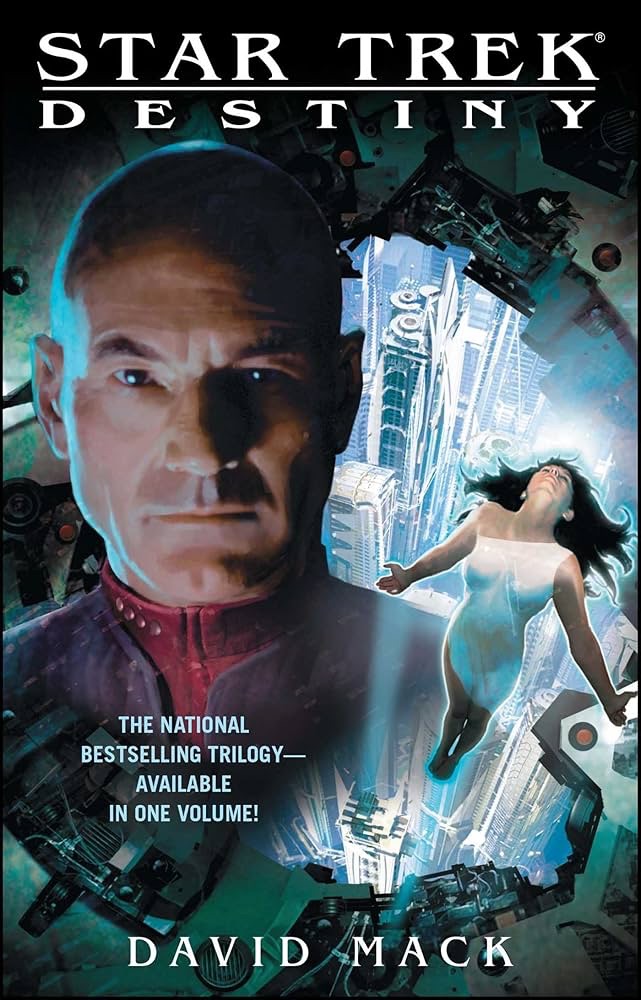
I have never felt that way about Star Trek novels, and I want to be honest about why. It isn’t that the books aren’t good. Many of them are, by any measure, better than a lot of canonical television Trek. The Deep Space Nine relaunch. The Destiny trilogy. Vanguard. These are serious, ambitious works by people who clearly love the franchise and understand it deeply. The problem is that I can’t quite make myself care about what happens in them, and the reason I can’t care is that I know nothing that happens will ever matter to anything I watch on screen. The emotional investment has a ceiling. I know where that ceiling is before I open the first page.

Here is where I have to challenge my own position, because the honest version of this argument requires it.
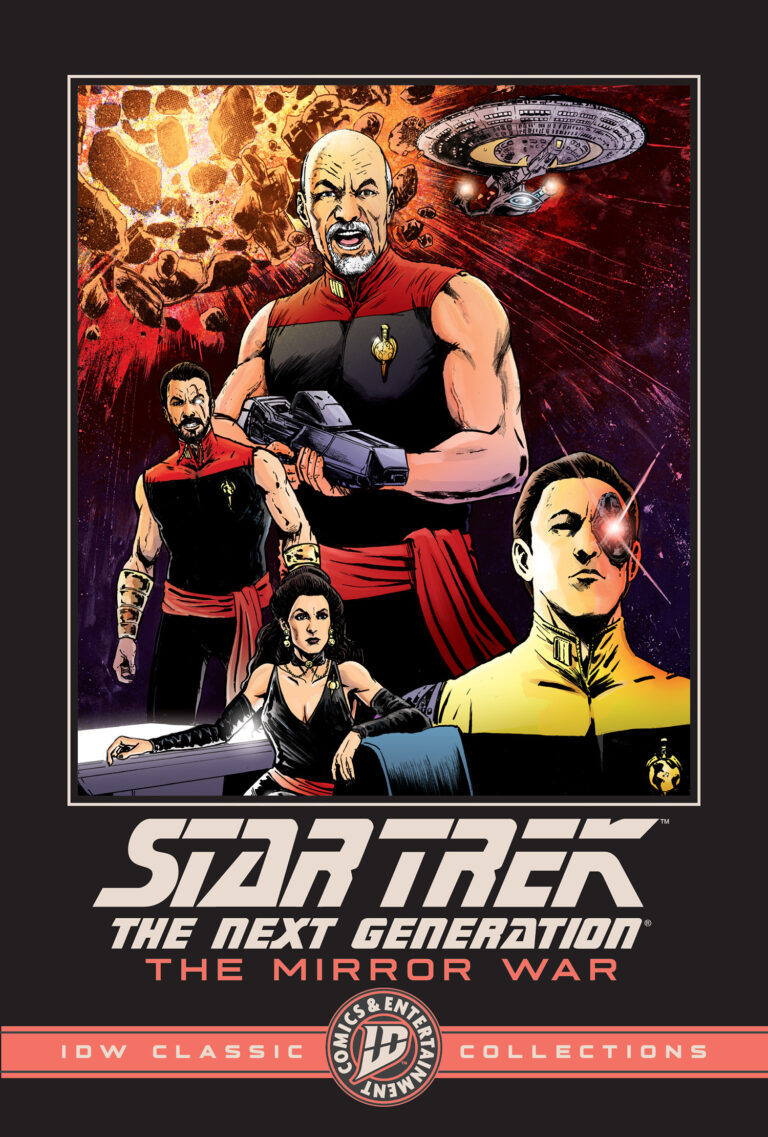
I love “Yesterday’s Enterprise”. I love the Deep Space Nine Mirror Universe episodes. I’ve watched “Trials and Tribble-ations” more times than I could count. These stories operate outside the primary timeline in one way or another. Their events cannot simply carry forward into the main narrative as ongoing continuity. And yet they work on me completely. The death of Tasha Yar in that dark future hits harder than most canonical deaths in Trek history. The Mirror Universe version of Kira in “Crossover” is genuinely unsettling precisely because she’s Nana Visitor wearing the same face with entirely different eyes. These stories have stakes that feel real even though they aren’t advancing the primary timeline.
So the question shifts. It isn’t whether alternate universes are bad. It’s what separates the ones that feel meaningful from the ones that feel disposable.
I think the answer is internal consequence.
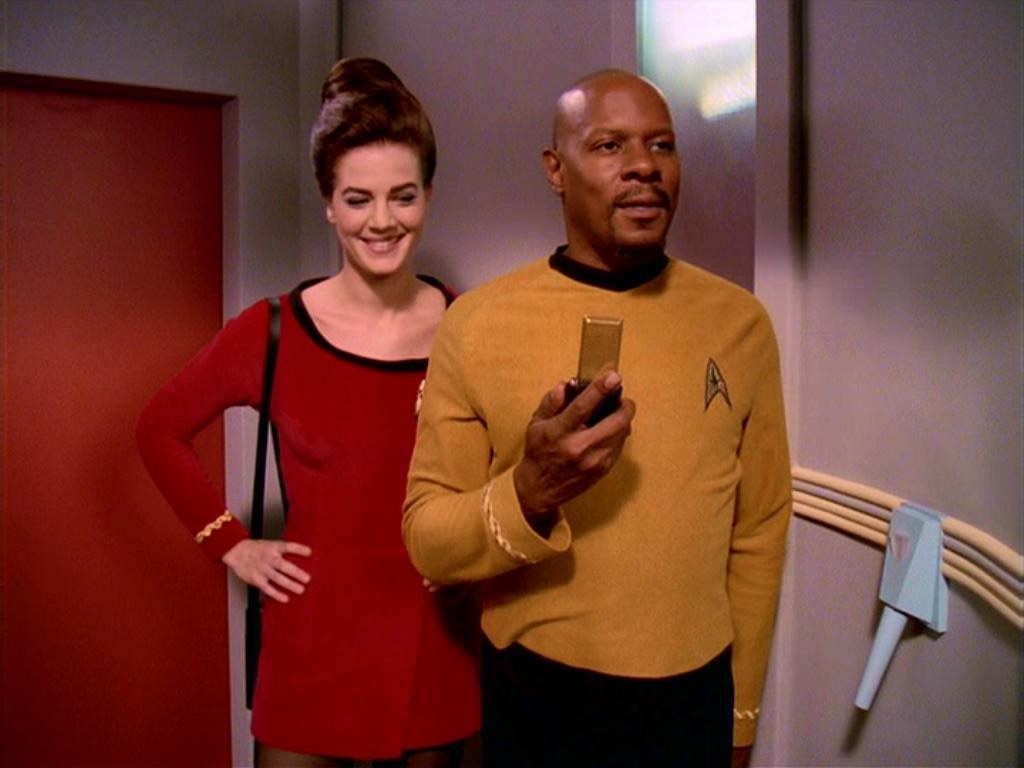
“Yesterday’s Enterprise” has stakes because characters within it make irreversible choices and pay real prices, even if the reality they inhabit ultimately disappears. The episode earns its alternate timeline by being ruthlessly serious about what that timeline costs. The Mirror Universe episodes in Deep Space Nine work because they aren’t really about the Mirror Universe at all. They’re about what the primary universe characters discover about themselves when they’re dropped into a world without the values that shaped them. The alternate setting is a pressure test, not an escape hatch.

What doesn’t work, for me, is the alternate continuity where the point is the deviation itself. The story that exists primarily to ask “what if things were different?” rather than “what can we learn about these characters by putting them through something extreme?” The Marvel Ultimate Universe never interested me. The various DC reboots mostly haven’t. The Age of Apocalypse, whatever its qualities, left me cold. Not because they’re badly made, but because the difference between them and the primary continuity was the story rather than a tool the story was using. I could feel the authorial shrug underneath them. This is a separate thing, so nothing here has to stick.
The strongest argument against the position I’m describing is the freedom argument. Star Trek novels can do things television can’t, partly because they’re not constrained by production budgets or casting contracts, but mainly because they’re not canonical. Destiny kills billions of people across the Federation in a Borg invasion. A Ceremony of Losses pushes the Deep Space Nine characters into genuinely dark territory. These stories are possible because the authors knew they wouldn’t be undone by next season’s writers’ room. The freedom of non-canonicity isn’t a bug. For a lot of great Trek fiction, it’s the entire operating condition.
I can’t dismiss that.
The best Trek novels exist in their own quiet continuity precisely because that continuity is protected from whatever happens on television next. The return of televised Star Trek ultimately ended an entire line of post-Nemesis fiction that had spent years building something genuinely interesting. Canon, when it arrives, tends to arrive like a bulldozer.
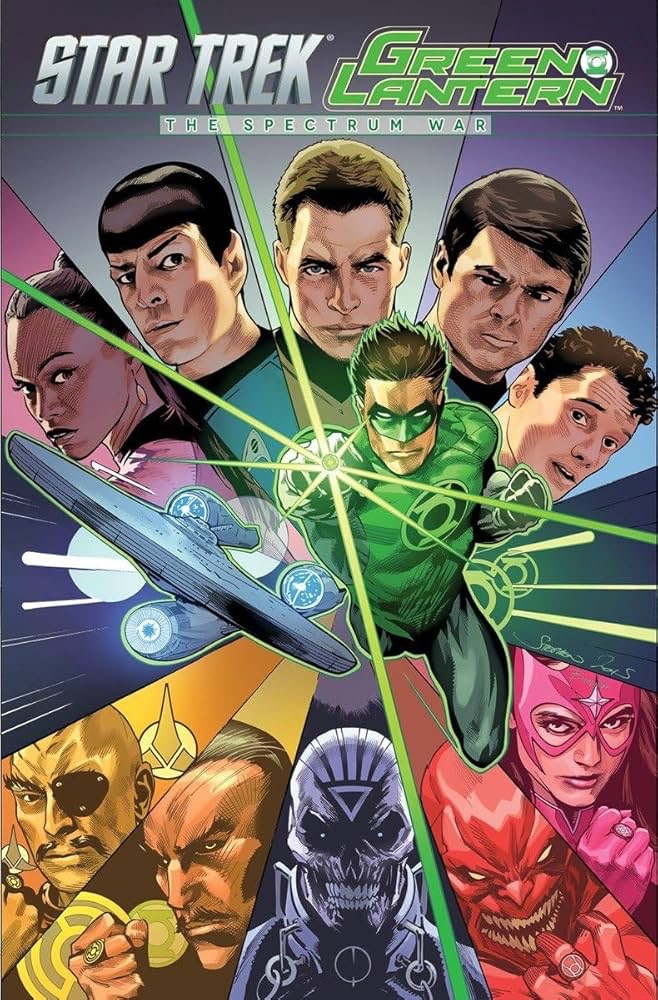
What I keep coming back to is that neither canon nor non-canon solves the actual problem. The actual problem is investment. Will I care what happens? Will the story trust me enough to let things matter? The canonical episodes of every Trek series include plenty of reset-button storytelling where yesterday’s trauma is functionally forgotten by the next teaser. Those episodes feel consequence-free despite being entirely official. The best Trek novels carry real weight despite existing in a category most television productions will never acknowledge. Canon is not consequence, and consequence is what I’m actually after.
Maybe the question isn’t whether Paramount should make the books canonical. Maybe the question is why we’ve all been so preoccupied with canon when what we actually want is for stories to take themselves seriously. To trust that the reader, or the viewer, or the viewer who hasn’t yet picked up the book, is capable of caring about something that doesn’t have official Paramount endorsement stamped on the spine.
Canon is what happened.
Consequence is why it matters.
The two are not the same thing, and conflating them is why I spent years ignoring a bookshelf full of stories that deserved better.
I haven’t solved this for myself, not entirely. I still find it harder to pick up a Trek novel than I probably should. The ceiling is still there. But I understand now that the ceiling isn’t the franchise’s fault. It’s mine, and that’s at least a more interesting problem to have.