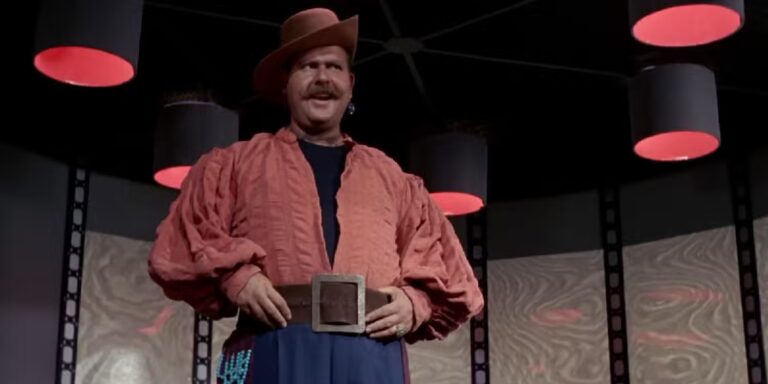
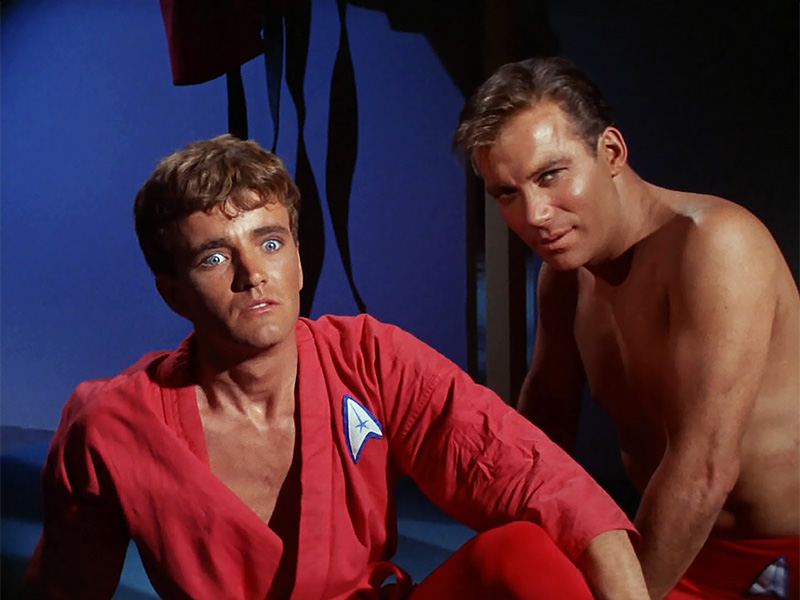
Charlie Evans sits in red training clothes while a shirtless Captain Kirk leans beside him during a gym scene in “Charlie X”.
|

Star Trek: TOS — Charlie X (S01E02)

The premise of “Charlie X” sounds like something you’d find stapled to a bus stop in 1966. Lonely teenager. Godlike powers. Spaceship full of people he makes uncomfortable. On paper it’s disposable, the kind of high-concept Twilight Zone material that could collapse under its own gimmick in twenty minutes. What Dorothy C. Fontana does instead, in her first Trek teleplay credit, working from a story by Gene Roddenberry, is turn it into something quietly unsettling.

Fontana went on to become the show’s story editor for the bulk of the first two seasons, and her absence from the third remains one of the more convincing explanations for why that year fell apart so completely. Her fingerprints are all over the show when it works best, and “Charlie X” shows you why. She treats the premise less as a monster story than a character study. Charlie is dangerous, but he’s also recognisable. A boy who wants to belong and has absolutely no idea how.
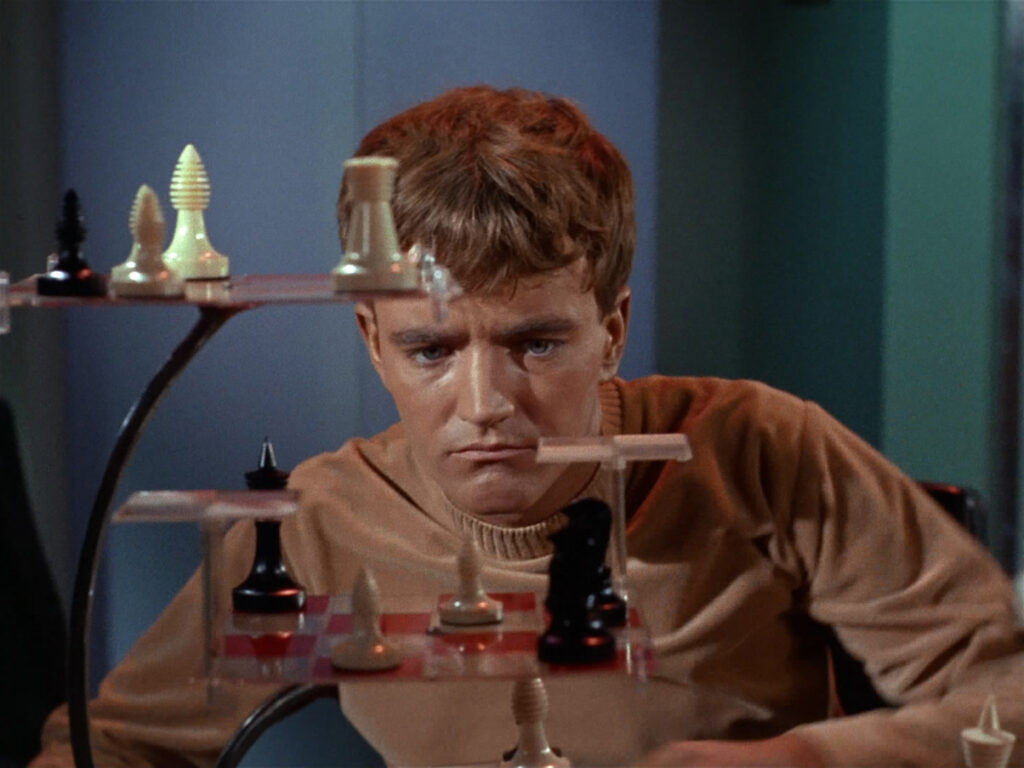
LOS ANGELES – SEPTEMBER 15: Robert Walker Jr. as Charlie Evans in the STAR TREK episode, “Charlie X.” Season 1, episode, 2. Original air date September 15, 1966. Image is a screen grab. (Photo by CBS via Getty Images)

Robert Walker Jr makes the episode work. The role should fail immediately. He’s visibly older than seventeen, and Charlie is written to be irritating by design. But Walker keeps finding the vulnerability underneath the tantrums. You don’t excuse Charlie, but the episode never lets him become simple either. When the Thasians arrive and Charlie screams that he can’t even touch them, that they don’t love, the desperation lands because the episode has earned it. He isn’t raging at the crew so much as raging at the fact he briefly got close to humanity before being told he can’t stay there.

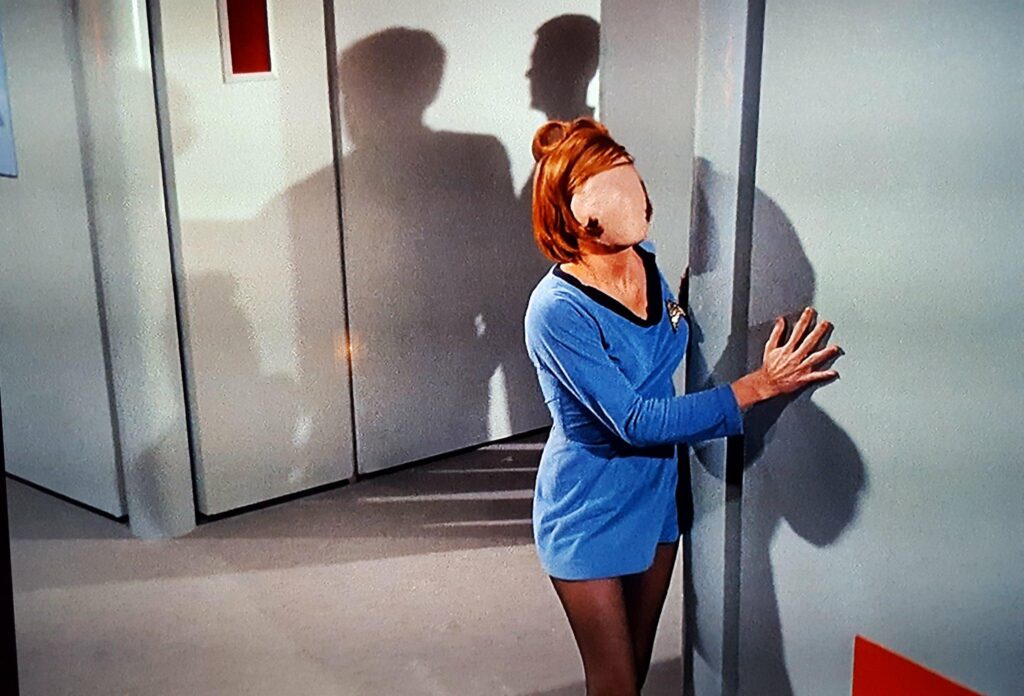
That’s the thing early season one The Original Series does unusually well. Space still feels strange and unsettling. The faceless woman scene works because nobody treats it like camp. A woman laughs, then suddenly she can’t anymore, and the episode just sits with how wrong that feels. The escalation from awkward card tricks to quiet horror is handled with far more patience than the episode usually gets credit for.
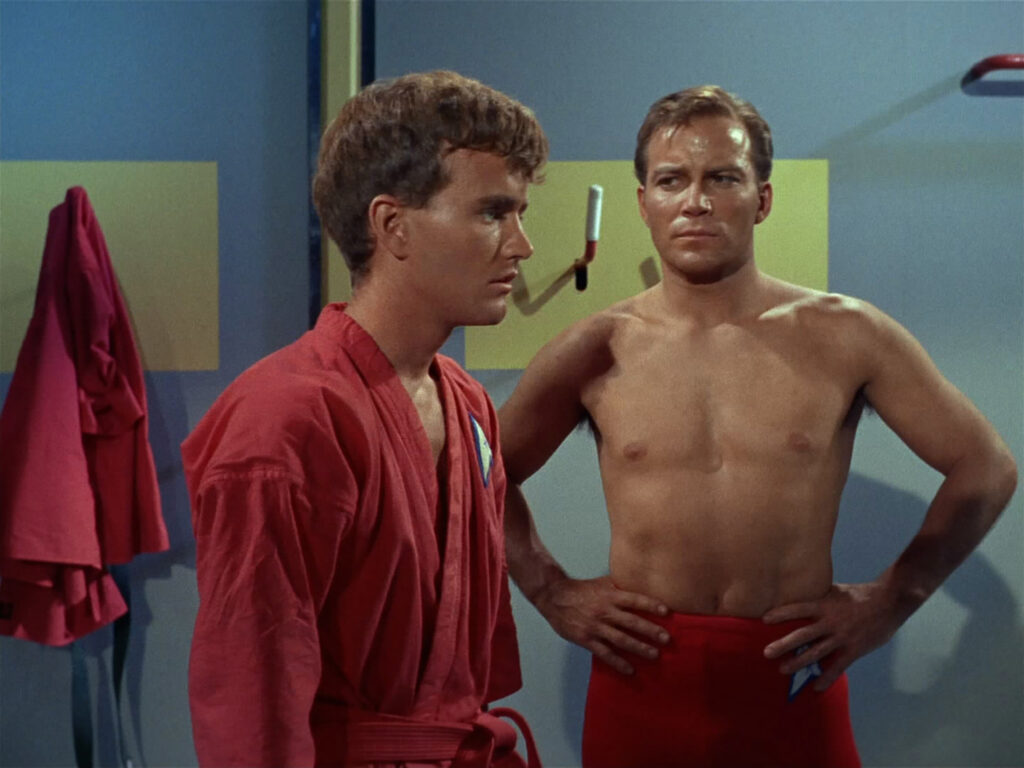
LOS ANGELES – SEPTEMBER 15: Robert Walker Jr. as Charlie Evans and William Shatner as Captain James T. Kirk in the STAR TREK episode, “Charlie X.” Season 1, episode, 2. Original air date September 15, 1966. Image is a screen grab. (Photo by CBS via Getty Images)

Shatner is good here in the way he sometimes is when people have forgotten to mention it. Early Kirk isn’t the pop culture parody yet. He’s competent, intelligent, occasionally funny, and completely out of his depth trying to play father figure to a traumatised teenager with unlimited power. The scene where he awkwardly tries to explain to Charlie why slapping Rand’s backside was wrong is still fascinating. It’s funny in exactly the stumbling way it was intended to be, but it’s also the moment where the episode most obviously fails Janice Rand. Kirk eventually gets to the right point later, explaining that love requires the other person to actually choose you. But the earlier scene still lingers awkwardly.

Rand is probably the episode’s biggest weakness overall. Grace Lee Whitney does decent work, but the character mostly exists as the object Charlie wants and the crew tries to protect. The episode gestures toward her perspective without ever fully caring about it. Trek kept promising more for Rand and never really delivered before writing her out.
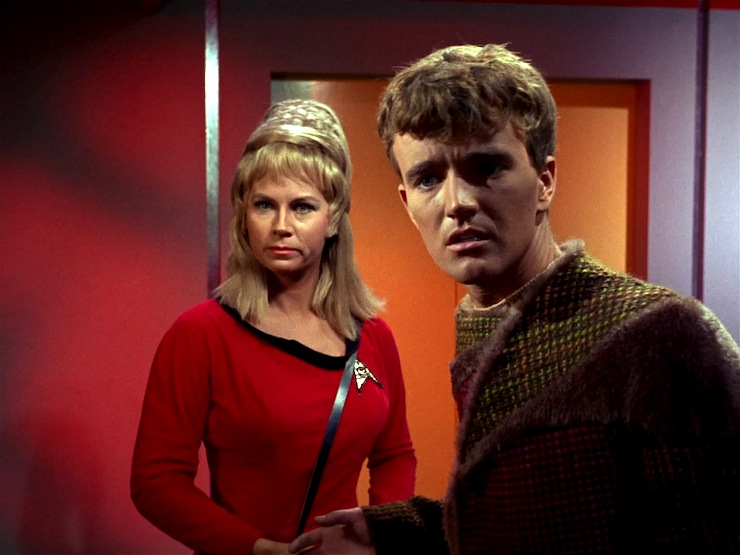
The Thasians arriving to take Charlie away is absolutely a deus ex machina, and structurally it’s a weak ending. The crew do not solve the problem. Kirk’s attempt to overwhelm Charlie was going nowhere. But emotionally the ending still works because the episode was never really asking whether Charlie could be stopped. It was asking whether he could be helped. The answer turns out to be no.

What stays with me most is the contrast between Kirk and Charlie. Kirk has enormous authority, but he exercises it with restraint. Charlie has enormous power and absolutely no framework for restraint at all, because nobody ever gave him one. He learned from tapes and records instead of people. He never had the ordinary humiliations that teach you how to lose, how to hear no, and how to survive disappointment without lashing out.
“There are a million things in this universe you can have and a million things you can’t have,” Kirk tells him. It’s almost the right speech at almost the right moment, from a man who is trying and slowly realising he isn’t getting through.

Fred Steiner’s score deserves mentioning as well. Early The Original Series uses music in a way later Trek often avoids, and here it does real work. The cues around Charlie’s power shifts are genuinely unsettling without ever overselling themselves.
“Charlie X” is uneven, dated in places, and the ending will probably always frustrate people who wanted the crew to solve things themselves. But it was only the second episode to hit the airwaves, and it already understands something important. The real question isn’t whether the dangerous thing can be defeated. It’s whether the person underneath it could have been reached before it was too late.

That question still lands.

8/10

Continue exploring

  • Star Trek: The Mirror War — Emperor Riker and the Long Road to Earning It

    The premise of The Mirror War has almost everything going for it on paper. The TNG crew, transplanted to the Mirror Universe. Captain Picard not as the man who reads archaeology and quotes Plutarch, but as an Imperial officer building an armada to drag the Terran Empire back from the edge of extinction. It should be irresistible. The question, after sitting with this collected edition for a while, is whether the execution lives up to what the concept promises. The answer is mostly yes. The caveats are where things get interesting.

  • |

    The Klingons: A Code, or a Costume? (Race Spotlight)

    A man stands in the Great Hall on Qo’noS, accused of a treason his father never committed, and the most powerful Klingon in the room knows he is innocent.

    Chancellor K’mpec has the truth in front of him. The defence codes that allowed the Romulans to destroy Khitomer, four thousand dead in a single night, were not transmitted by Worf’s father Mogh. They were sent by Ja’rod, father of Duras, whose house carries too much weight on the Council to be touched without splitting the Empire. So the Council does the arithmetic and lets an innocent name carry the guilt. K’mpec asks Worf to swallow it, to accept discommendation and a lifetime of public shame, so that the Empire does not crack along the fault line the truth would open. And Worf does. He turns, and a hall full of warriors crosses their wrists and turns their backs on him, one by one, for a crime that did not happen.

    That is the most honour-obsessed culture in Star Trek, transacting in a lie, in the one building where honour is supposed to mean something. Remember that image. Everything else here pulls against it.

  • |

    Star Trek: TOS – The Enemy Within (S01E05)

    There’s a moment roughly halfway through “The Enemy Within” where good Kirk, gentle, compassionate, and increasingly useless, tries to give an order and physically can’t hold the sentence together. He knows what he wants to say. The words just won’t come with any weight behind them. It’s a small moment, easy to lose in an episode full of bigger ones, but it’s the most honest thing the episode does. The argument isn’t really about good and evil. It’s about what actually holds a command together, and whether the things we’d rather not own about ourselves are, inconveniently, structural.

  • |

    The Ferengi Were Never the Joke: Greed Is Eternal

    The joke of the Ferengi was never that they were aliens. The joke was that they weren’t. Strip away the oversized ears and the obsession with latinum and what you’re left with is a society built around competition, acquisition, branding, exploitation, and the belief that success excuses almost anything. The Ferengi were funny because they exaggerated attitudes that already existed in the real world. The uncomfortable part is how much less exaggerated they feel now than they did in 1987.

  • The Vulcans: Logic, or Emotion? (Race Spotlight)

    A single tear forms at the corner of Sarek’s eye during a chamber recital. It should be almost nothing. By the time it reaches his cheek, the Enterprise is beginning to come apart.

    That is “Sarek”, and it might be the most devastating hour Star Trek ever built around a Vulcan. Ambassador Sarek, two hundred and two years old, arrives aboard the Enterprise-D for one last diplomatic triumph. He has spent ninety-three years preparing for negotiations with the Legarans, a species willing to deal with nobody else, and Picard greets him with the respect due to one of the Federation’s greatest living figures.

  • |

    Why I Can’t Make Myself Care About Star Trek Novels

    There is a Wikipedia page that attempts to define Star Trek canon. It is, in the way of most Wikipedia pages on contested topics, thorough, carefully footnoted, and ultimately incapable of settling the argument it was written to resolve. The page lists what counts, what doesn’t count, what Gene Roddenberry said, what he later contradicted, and the various positions Paramount has taken over the decades. It will not tell you whether the DS9 relaunch novels matter. It will not tell you whether Destiny counts. These are questions canon cannot answer, because they are not really canon questions.

Leave a Reply

Your email address will not be published. Required fields are marked *