The Art of Star Trek & Defiant — The Bright and The Stolen Ships
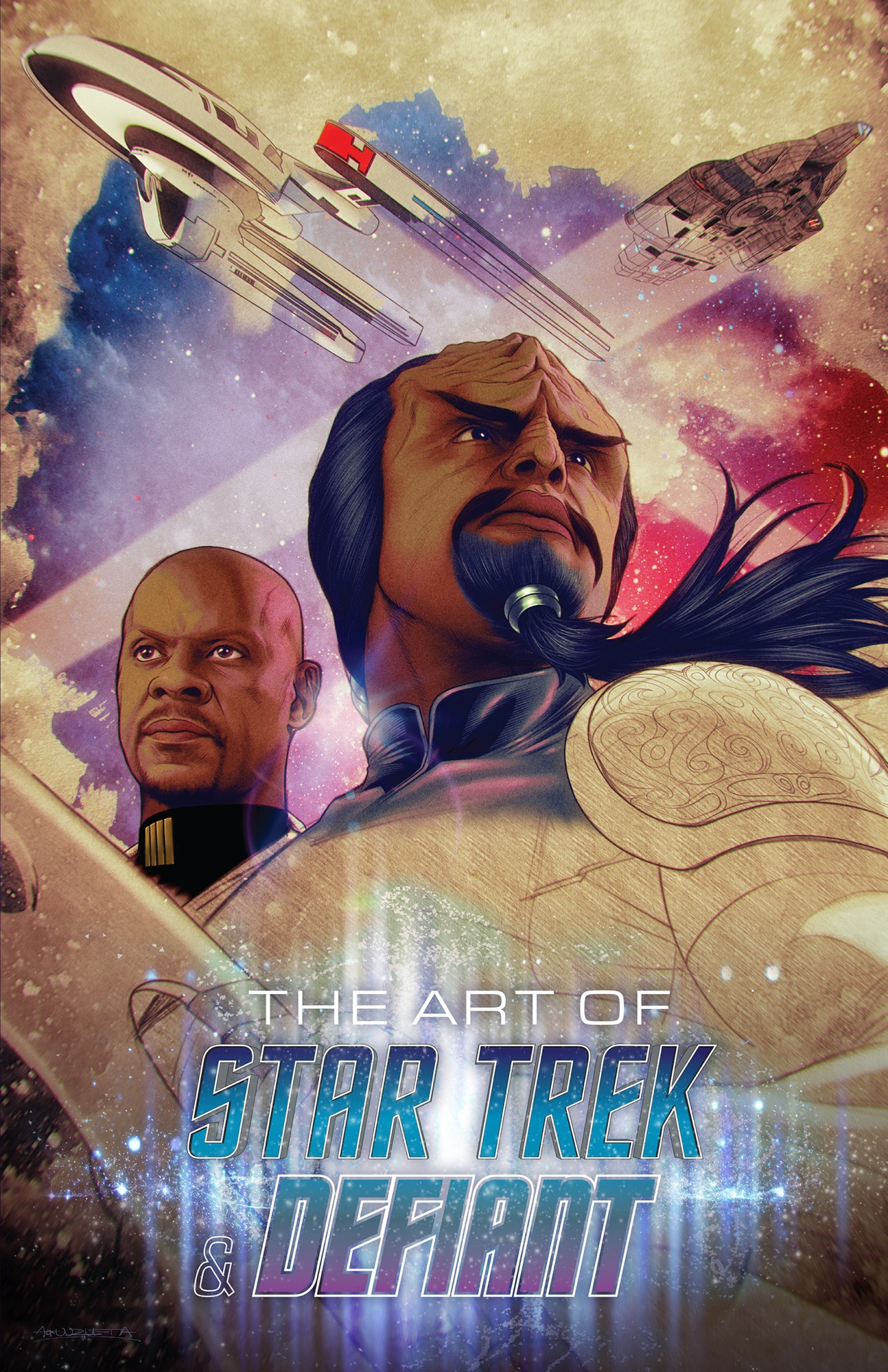
Flip from the Star Trek half of this book to the Defiant half and you can feel the temperature drop. One minute you are looking at Ramón Rosanas’s clean, sunlit bridges, the kind of art that makes the 24th century look like somewhere you would actually want to live. The next you are in Ángel Unzueta’s painted murk, where a crew of rogues aboard a stolen ship glower out of the shadows like they have somewhere worse to be. The Art of Star Trek & Defiant collects two years of comics that ran side by side, and the cleverest thing about it is that it never once pretends they were the same show.
I should admit my bias before going further, the same one I owned up to with the Lower Decks book a few weeks ago. I love books like this. Give me development sketches, cover roughs, and artists explaining why a thing changed, and the afternoon is gone. So when I tell you this one works, take it as someone who was always going to be a soft touch for the format, then found enough to argue with to keep it honest.
The volume runs over 200 pages and arrives during Star Trek’s 60th-anniversary year, which gives it the air of a celebration. Heather Antos sets that tone in her introduction, and her framing is the right one. IDW did not set out to continue a legacy run so much as build a new era around it, an interconnected saga that pulled Sisko back into the captain’s chair, gave him a new ship in the Theseus, and let the flagship title and its grittier sibling tell one story across 65 issues. The book is organised around that split, and it works because neither side tries to become the other.
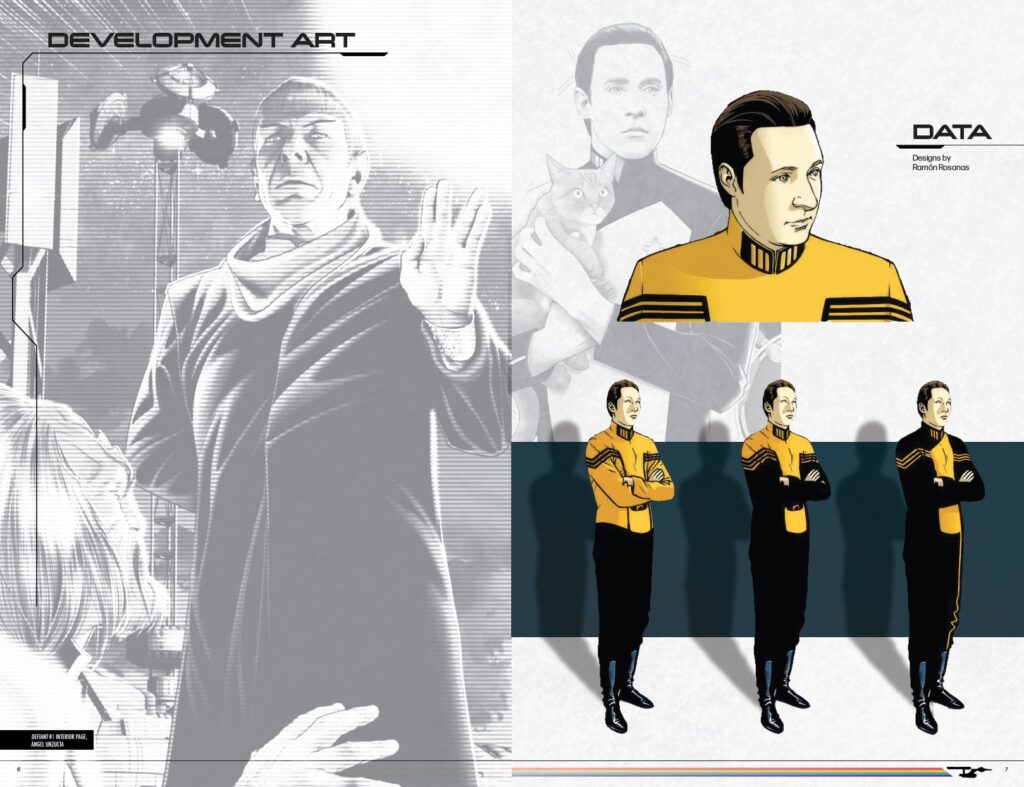
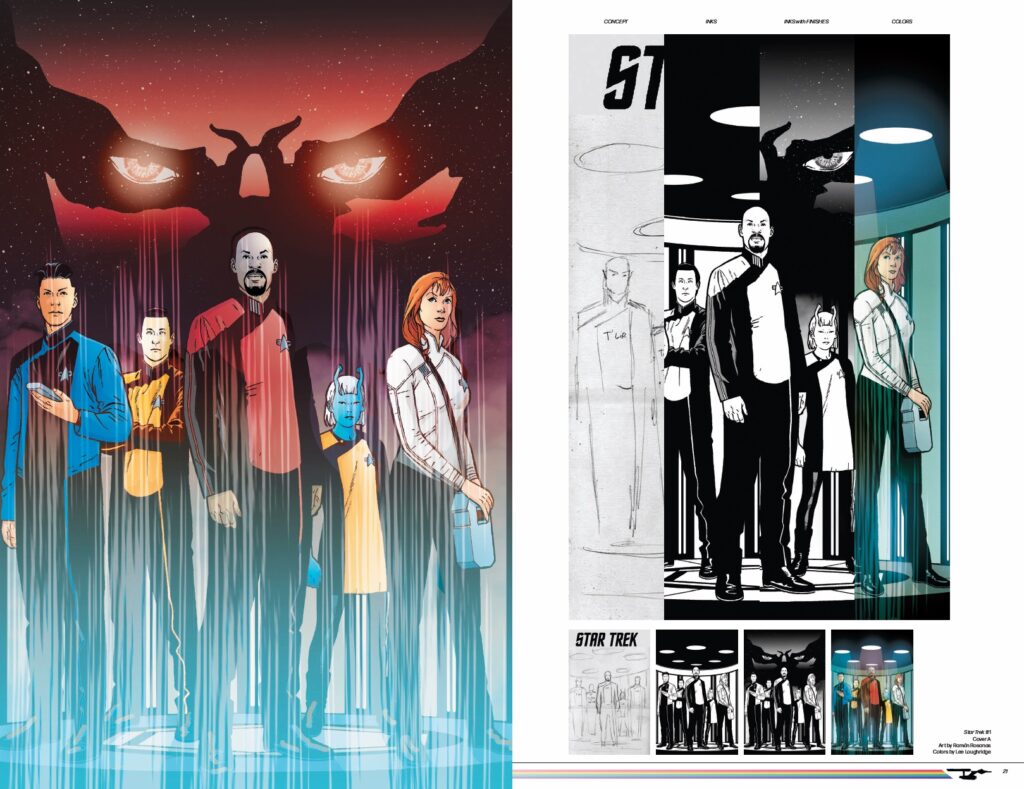
The bright ship comes first. Rosanas’s Star Trek is the optimistic one, and Antos is right that his art puts you on the bridge rather than in front of it. There is a confidence to those clean lines that does not need to announce itself, the same quality I have always rated in the best The Next Generation-era storytelling. The development section near the front is where this side of the book earns its keep, and it is the part I turn to first. Years of writing and lettering comics will do that to you. Rosanas’s Data turnarounds, command gold tried three different ways with a faint sketch of him cradling Spot in the background, are exactly the gap between a good idea and the final version that keeps me reading books like this. Marcus To’s Tzenkethi pages are better still, a species Trek name-dropped for decades and never properly showed, built here from rough kaiju silhouettes up to finished armour. The comics got to draw what the shows never dared, and the book lets you watch them decide how.
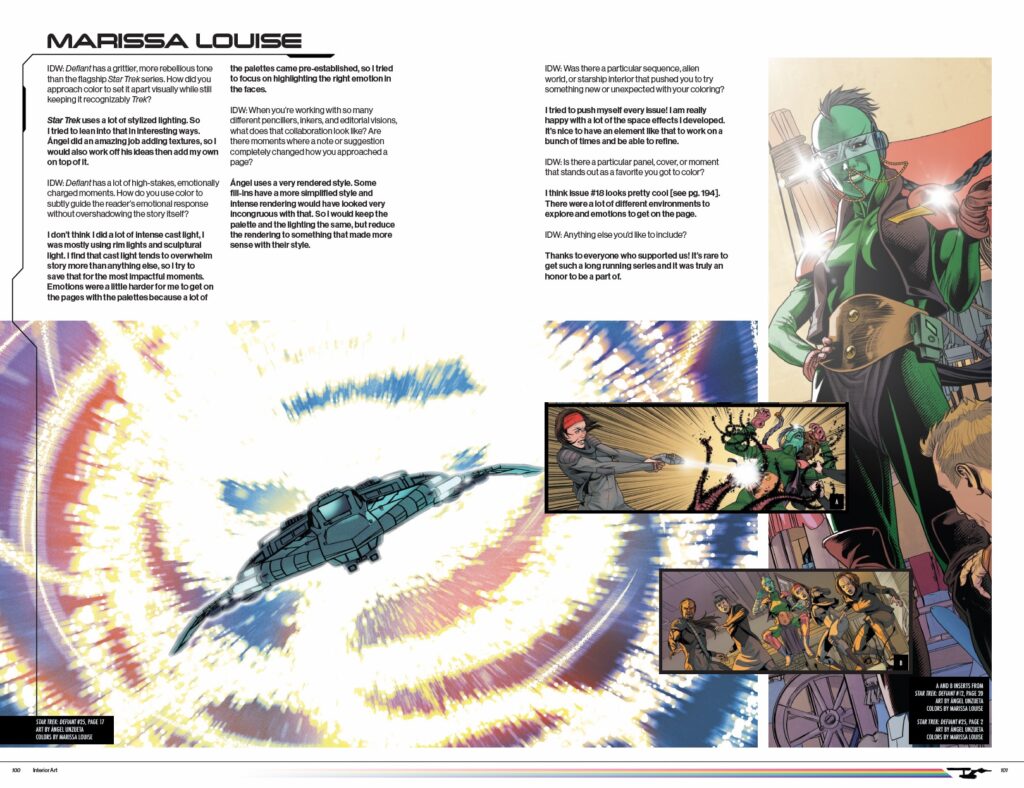
Then the temperature drops. Christopher Cantwell’s Defiant is the stolen ship, and Unzueta’s commentary lays out the brief with no romance attached. Heather and Chris told him to break from the Federation look entirely, to make these people read as real badasses, something closer to The Dirty Dozen than to Starfleet. Cantwell goes further in his own pages at the back: a crew aboard a stolen ship, nobody holding official rank, and, in his phrase, no uniforms in sight. They were rogues, sometimes villains, all of them looking for a second chance. For anyone who has spent any time thinking about what a Starfleet uniform actually communicates, watching a book deliberately strip that signal away is one of the more interesting things in it. The Defiant crew look wrong on purpose, and that is exactly the point.
That gap between the two ships is the spine of the book, and it is also where the commentary does its real work. This is the thing the Lower Decks volume could not give me. I closed that review wishing it had more written history and fewer pages of finished art, and this book answers that wish directly. Lanzing and Kelly walk through the years of failed pitches that finally became this run, the decision to return to Sisko, the invention of perspective characters like Lily Sato, a descendant of Enterprise‘s Hoshi Sato, and T’Lir, who experiences none of it in a straight line. Cantwell explains why Worf had to splinter from Sisko and go his own way, reactivating Lore in the first issue and dragging everyone toward the human cost the flagship would never quite pay. This is the long-form creator voice I keep asking art books for, and it is genuinely here.
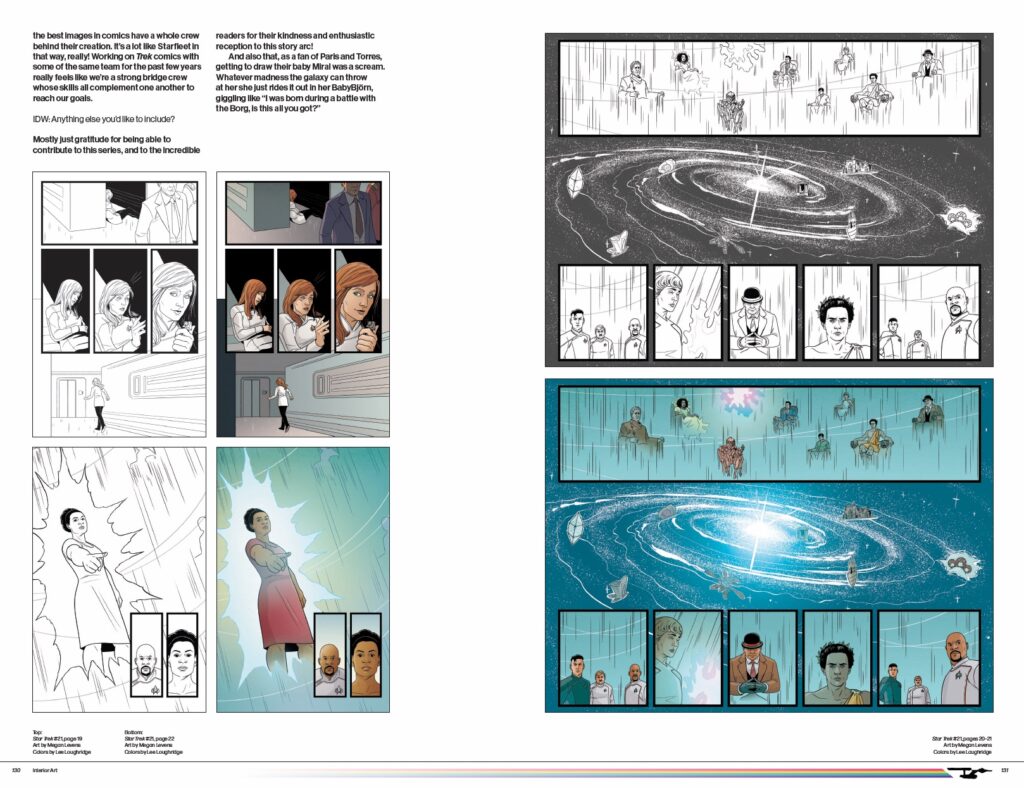
The best material is the stuff where people stop sounding like they’re being interviewed. Rachael Stott admits, cheerfully, that she still has not seen Discovery, and that the danger of drawing Spock when you have only met the later versions is ending up with a goofball doing finger guns. She would rather draw James Doohan’s Scotty anyway, for the emotive face. Davide Tinto describes approaching the Lore War arc by imagining what Star Trek would have looked like if it had been made in the 1980s instead of 1966, all Escape from New York and Mad Max. These are working artists telling you how the sausage gets made, and it is far more useful than another paragraph of how honoured everyone was to be involved.
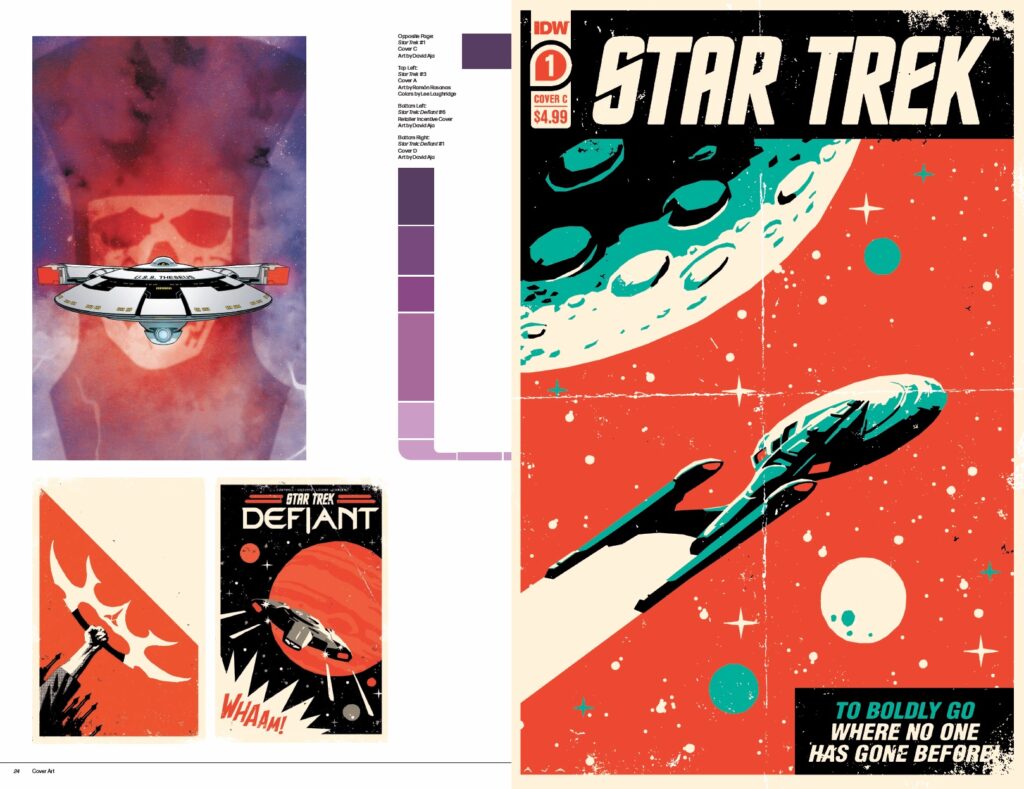
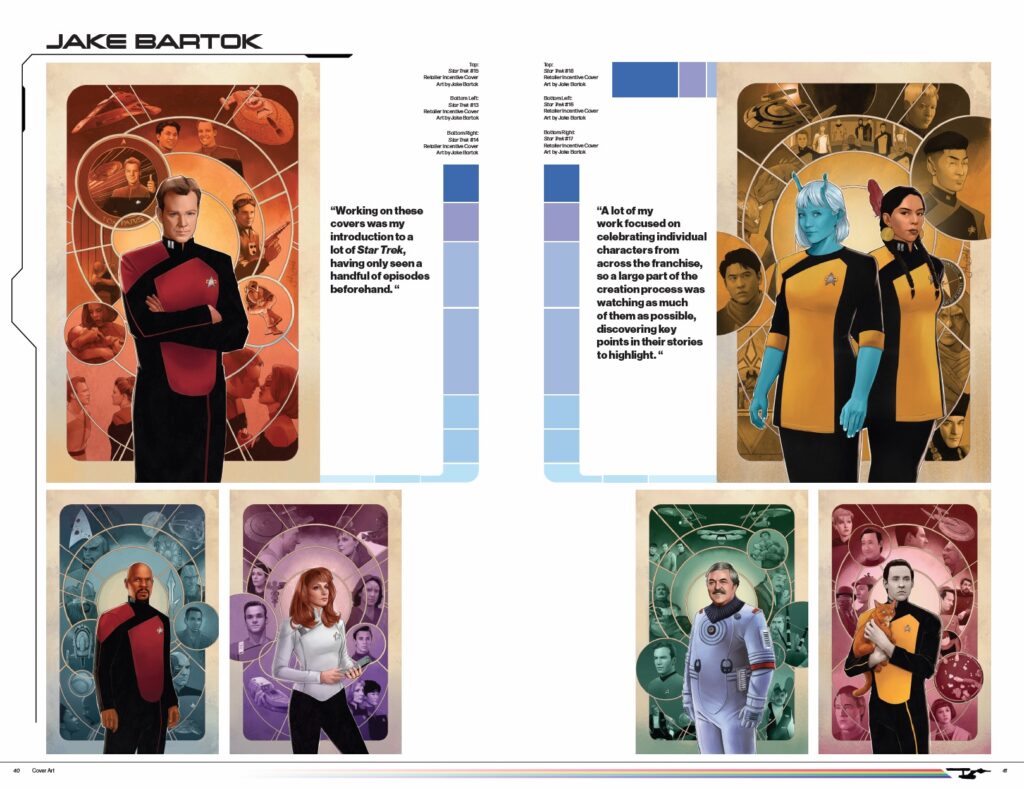
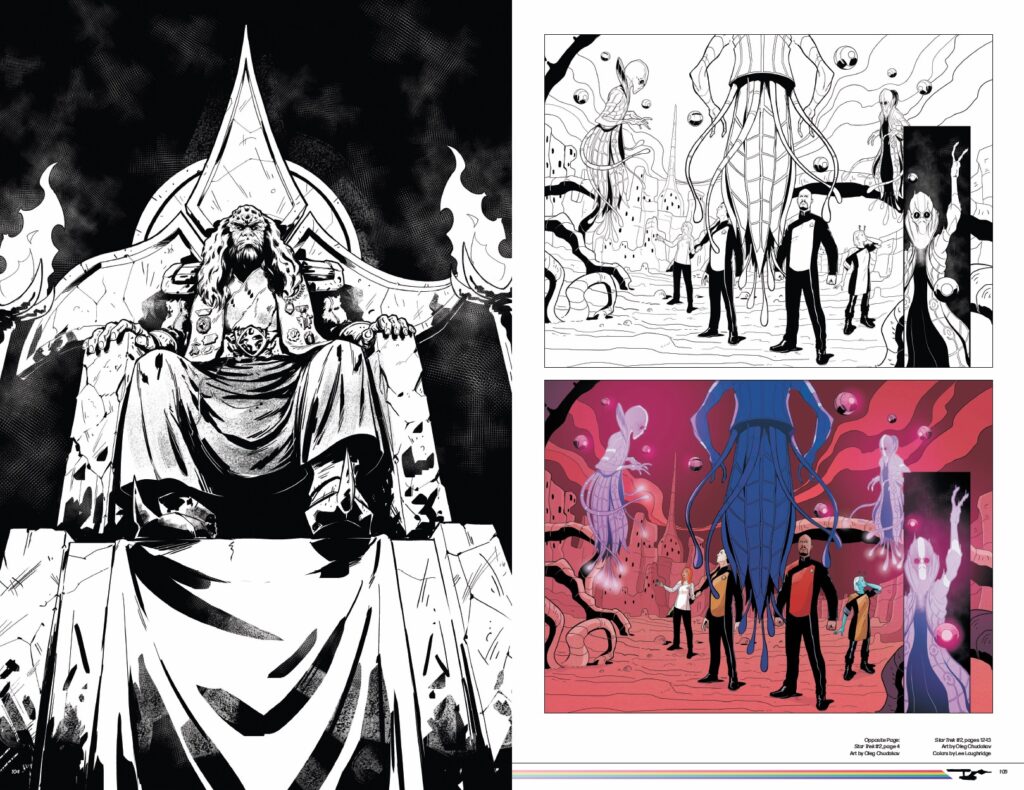
Which brings me to the honest part. For all that the commentary delivers, the book is weighted heavily toward its cover gallery. The Cover Art section is the single largest block, the better part of eighty pages, and a good deal of it is variant covers reproduced one after another. They are often beautiful. Francesco Francavilla’s pulpy, limited-palette Sisko looming over the Theseus is the kind of bold graphic work I will stop and stare at, and Joe Quiñones turning the same ship into a Dark Side of the Moon prism made me grin. But a gallery is not the same as a record of how the work was built, and after the development section rations its process material into a dozen early pages, the back half asks you to admire rather than understand. Some of those painted covers get shrunk to a quarter of a page in four-up spreads, too, which works against the entire point of sitting and looking closely.
There is a faint melancholy to it as well, and I want to be straight about that rather than dress it up twice in a month. This is a handsome memorial to a run that has just been cancelled, arriving in an anniversary year as a kind of victory lap for a line that is already over. That does not make it a lesser book. It does give the whole thing a valedictory quality the Lower Decks volume shared, two records in quick succession of Trek projects that did not get to keep going.
So, admiration and enjoyment, the two things I always try to keep separate. I admired the craft on nearly every page, and I enjoyed the book most in its two extremes, the development sketches at the front and the creator commentary at the back, with the long cover parade in between earning respect more than affection. If you loved this run, it is a generous and well-made farewell to it. If you came for the why behind the work, you will find more of it here than IDW has given us before, just not quite as much as the format could hold.
The bright ship and the stolen one, bound into the same covers. That tension was what made the comics interesting in the first place, and it is what makes this book worth owning.
7/10