Star Trek: Strange New Worlds — “Once La’an a Time” (S04E09) Review
There is a moment in “Once La’an a Time” where a high-fantasy dragon breathes fire across the clean, geometric shields of the Enterprise. It is completely ridiculous, but it also looks fantastic, and that image probably sums up the episode better than anything else I could write. There is so much genuinely impressive work on screen here. The costumes are lavish, the creature work is excellent, the production design commits completely to the fantasy conceit, and the cast throw themselves into material that asks rather more of them than simply putting on funny clothes and shouting medieval nonsense. Christina Chong, in particular, gets exactly the sort of acting showcase she deserves.
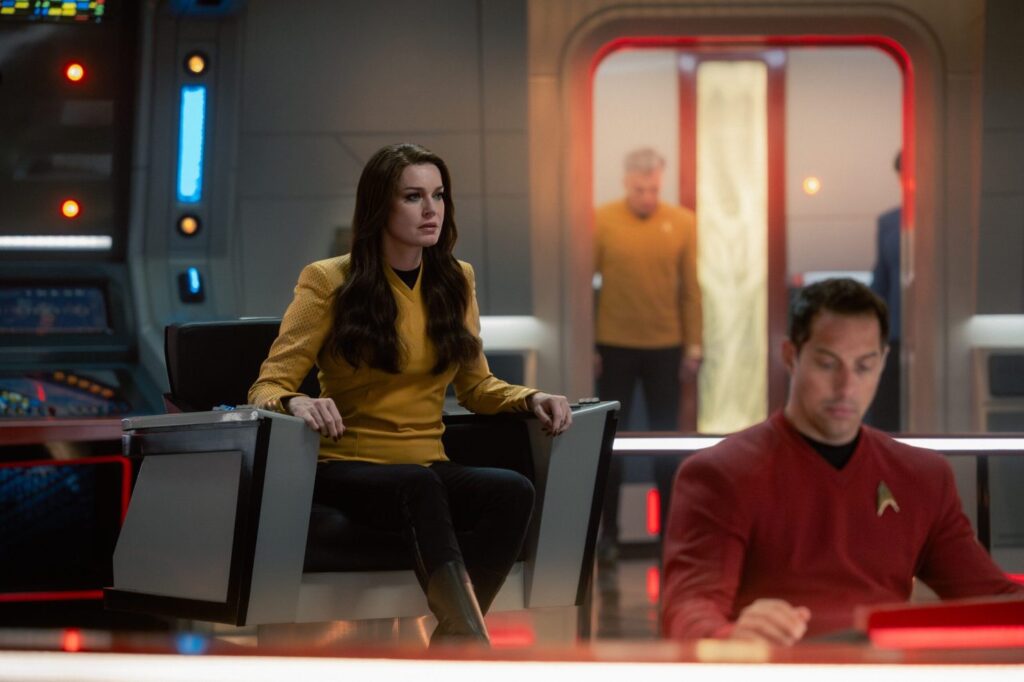
The problem is that all of this craft is supporting a story that feels considerably thinner than it looks. “Once La’an a Time” is not a disaster, and pretending there is nothing worthwhile here would not be criticism, just posture. There is a genuine character idea underneath it, some very good performances, and a level of visual imagination that I wish more television possessed. But it also arrives at almost exactly the wrong point in this season of Strange New Worlds, where another episode built around the crew becoming exaggerated, altered, or completely different versions of themselves no longer feels particularly daring. It feels like a pattern.
Christina Chong is easily the best thing about the episode. La’An has always been one of the most compelling characters on Strange New Worlds because there is so much tension sitting just beneath the surface. Her trauma from the Gorn, the Noonien-Singh name, her relationship with her Augment heritage, and that lingering fear about what all of it might mean have given Chong a character who often feels as though she is constantly holding parts of herself in place. Princess Thalia gives that conflict a literal face.
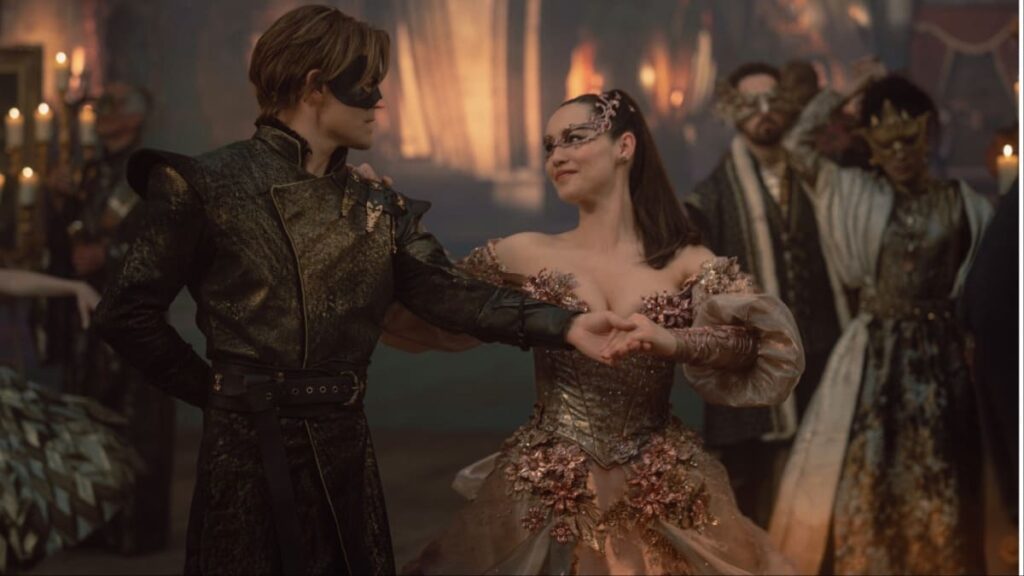
The metaphor is hardly subtle. La’An has spent years armouring herself against vulnerability, while Thalia represents the emotional, romantic, softer part of herself that she finds much harder to accept. By forcing each of them to experience something of what the other carries, the episode eventually asks La’An to stop treating those different pieces of herself as though one must defeat the other. It is a simple idea, but simplicity is not a problem when there is something honest underneath it, and what makes it work is Chong.
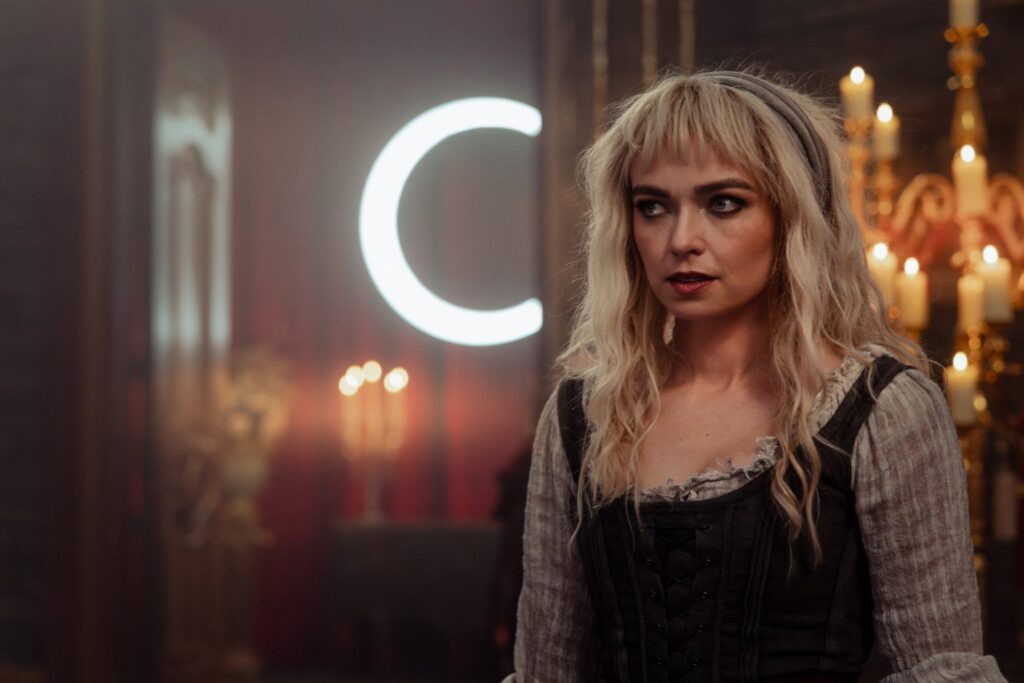
She does not simply play La’An in one costume and Thalia in another. They feel like genuinely different people before the episode starts shifting their emotional states around, and Chong then has the much harder job of letting those personalities bleed into one another without ever making it difficult to understand who we are watching. Even when the script starts explaining the metaphor more loudly than it needs to, she keeps the emotional distinction clear. It is proper acting craft, and probably the biggest reason the episode works at all for me.
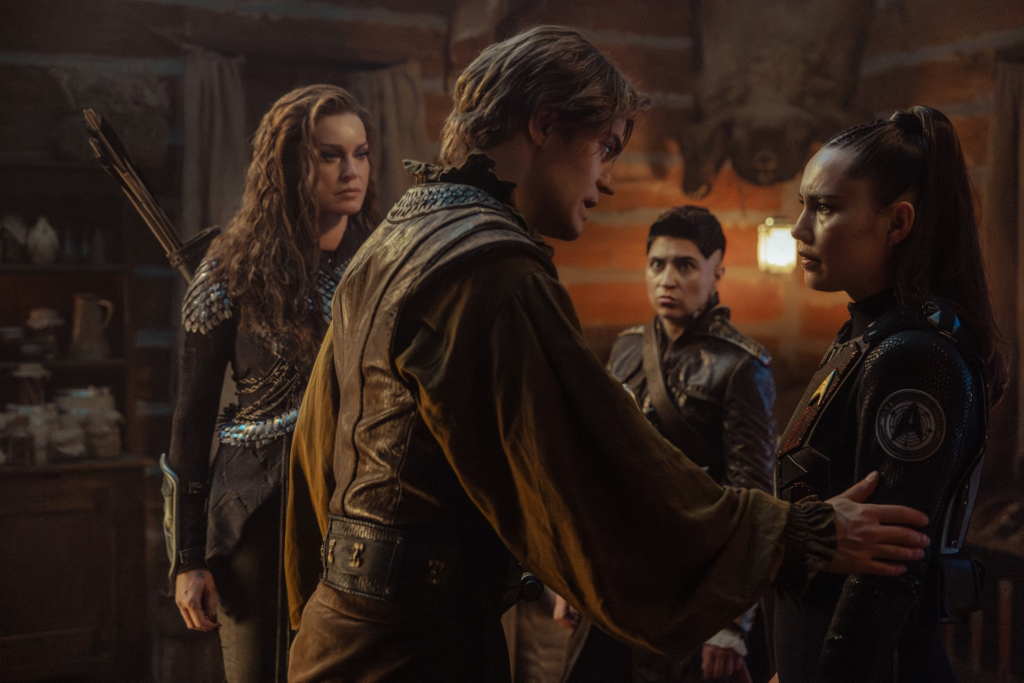
The masquerade material with Paul Wesley also works better than I expected. For us as viewers, Chong and Wesley’s chemistry was established back in “Tomorrow and Tomorrow and Tomorrow”, even though the Kirk La’An fell for there belonged to another timeline, and there is enough of that connection still sitting between the performers to give these scenes some weight beneath the fairy-tale silliness. Prince Dashing is deliberately ridiculous, but the comedy never completely swallows the people underneath it. More importantly, ending with La’An actually agreeing to a date rather than giving us yet another meaningful glance across a room feels earned. After everything this character has done to keep people at arm’s length, actually taking a step towards somebody matters.
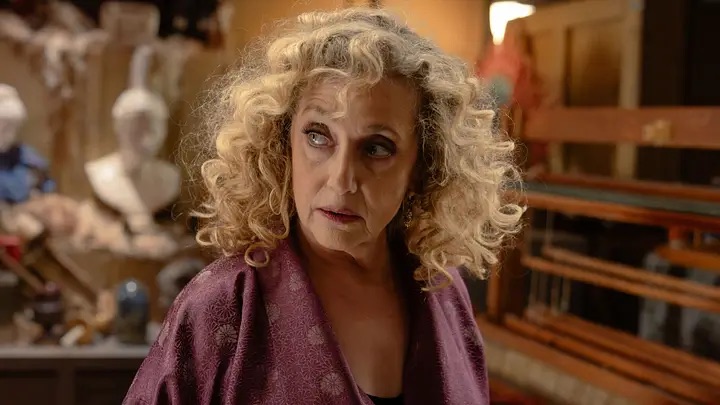
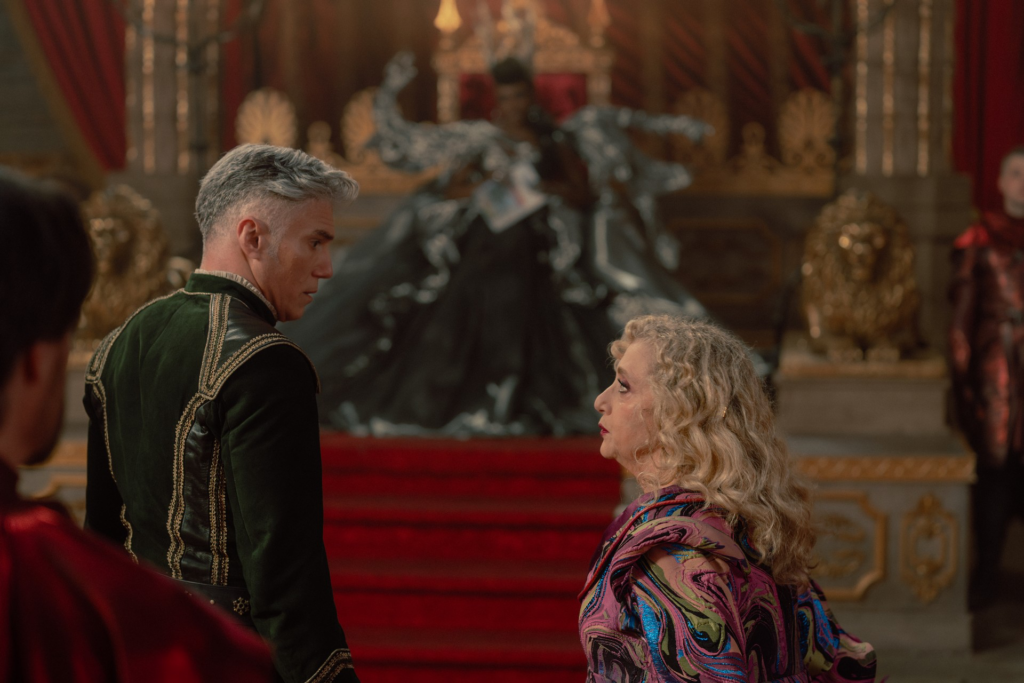
Chong is not carrying the whole thing alone, either. Anson Mount and Ethan Peck have a surprisingly complicated comic job because they are essentially playing Pike and Spock playing Sir Rauth and Pollux, before Rauth and Pollux then have to pretend to be Pike and Spock. That could easily have become exhausting nonsense, but both actors understand exactly which layer of ridiculousness they are supposed to be inhabiting. Rebecca Romijn and Melissa Navia get some good material as well, while Carol Kane continues to find line readings that I am not convinced anybody else on television would even attempt.
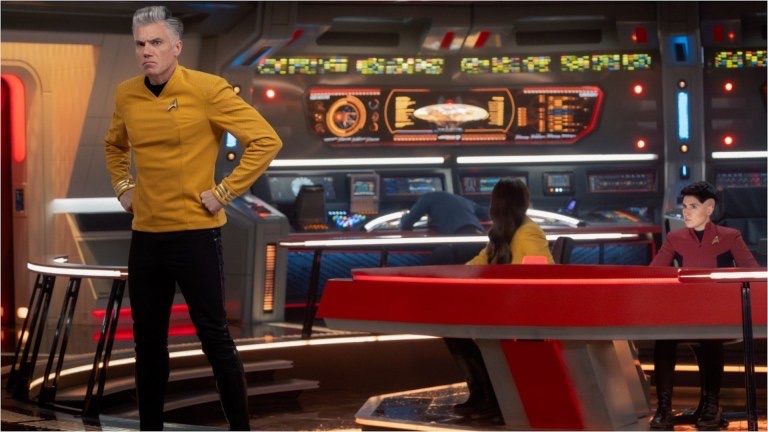
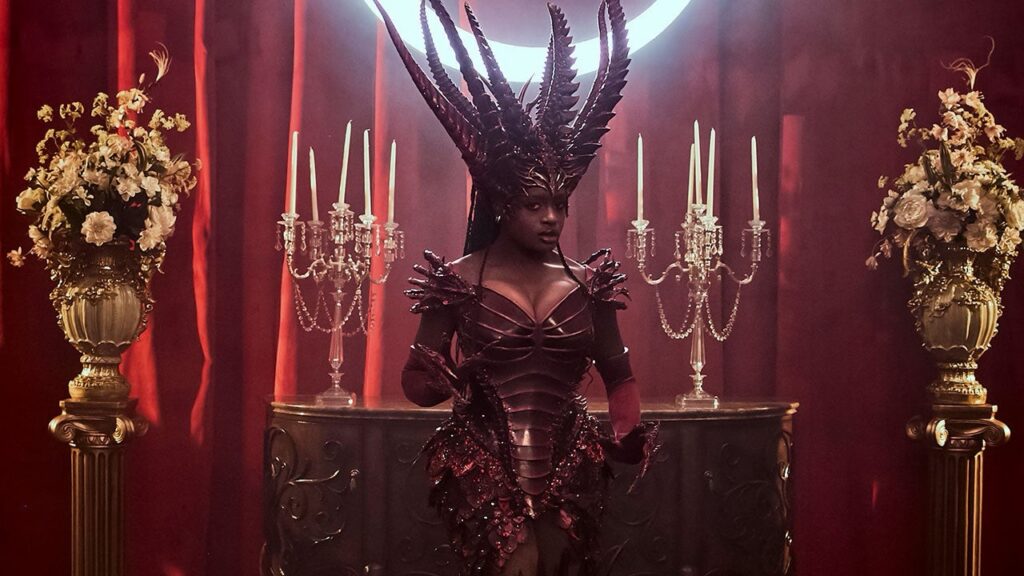
The cast are clearly having fun, and visually the production team were allowed to have just as much. The costumes are gorgeous. Chong’s tailored fantasy wardrobe and Uhura’s darker ensemble have genuine personality rather than looking as though somebody has simply emptied the generic fantasy cupboard. The werewolf prosthetic works, the dragon is convincing enough to sell some deliberately absurd imagery, and the whole thing has that increasingly rare quality of looking as though somebody actually spent the budget where we can see it.
There is also something wonderfully Star Trek about smashing those aesthetics together. A fantasy dragon attacking a Constitution-class starship ought to look absurd, yet the contrast between the dragon’s fire and the precise technological shapes of the Enterprise shields produces one of the best images in the episode. I just wish the writing underneath all of that work were as confident.
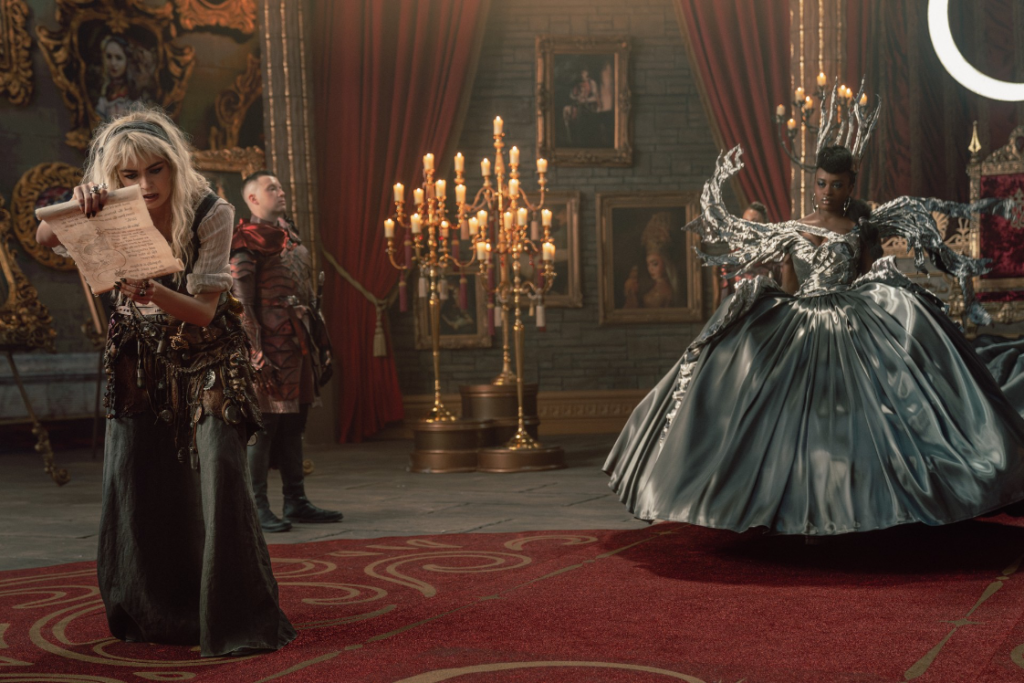
The opening, in particular, is messy. There is dialogue here that feels unusually blunt, especially when M’Benga effectively explains La’An’s internal struggle before the story has really had the chance to dramatise it. Coming from comics, this always bothers me. If I need a caption box telling me exactly what the character in the panel is feeling, there is a decent chance something in the panel has failed. You have Christina Chong here; let her show us.
There are also some distracting technical moments early on. The ADR and lip-sync around Pelia stood out immediately to me, while some of the exposition has that slightly awkward rhythm of scenes that feel as though they may have been reshaped somewhere along the way. I cannot say that is what happened in production, because I do not know, but portions of the episode certainly feel that way while watching them. That slightly awkward quality extends to the explanation for why any of this is happening in the first place.
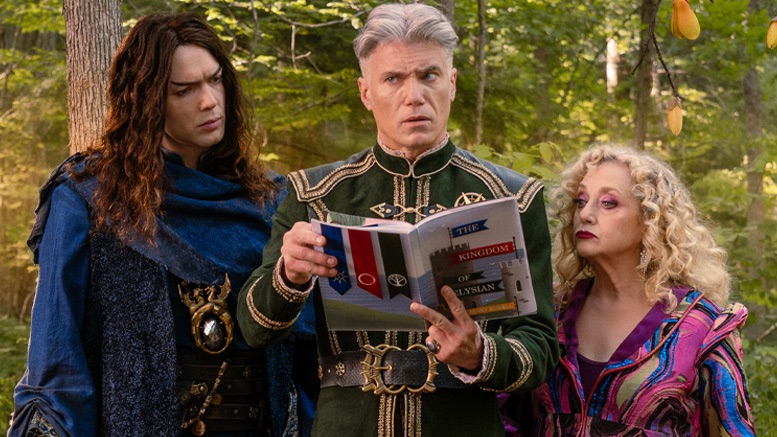
The original “The Elysian Kingdom” could get away with its fairy-tale reality because the absurdity was part of the mystery. Here, trying to give the expanded kingdom a more physical explanation somehow makes the whole thing less convincing to me. Star Trek has been using sufficiently advanced technology as a route to apparent magic for decades, so I am perfectly willing to meet an episode halfway. This one keeps asking me to take another step.
The actual fantasy quest is surprisingly thin as well. La’An moves through a series of encounters that are clearly designed to push her towards a lesson the episode has already told us she needs to learn, which leaves her surprisingly reactive for long stretches. The Rauth and Pollux subplot gets a considerable amount of screen time for a payoff that feels disproportionately slight, even though their actions do feed into the dragon confrontation at the end.
Then there is Pelia. If this really is where the character is being left, having her essentially decide to help pilot the kingdom home is an oddly casual way to do it. Carol Kane has brought something completely distinctive to Strange New Worlds, so if this does turn out to be her departure, it feels less like a farewell and more like the story suddenly remembering that it needs somewhere to leave her.
The larger problem with “Once La’an a Time”, though, sits outside this individual episode. If Strange New Worlds still had twenty-odd episodes in a season, I suspect I would be far more relaxed about all of this. Give me a fantasy episode, give me a puppet episode, get everybody high on an alien planet, or trap them inside a soap opera. One of the pleasures of episodic Star Trek has always been that it can wander into something completely ridiculous and then turn up for work again the following week as though nothing happened.
But there are only ten episodes here, and that changes the balance.
We have already had the inebriating atmosphere, the puppets, and the soap opera. Now we have returned to the fairy-tale kingdom. Four episodes out of nine have built much of their comedy around altering, exaggerating, or replacing the personalities and identities of the people we actually came to watch. Less really is more with this kind of thing.
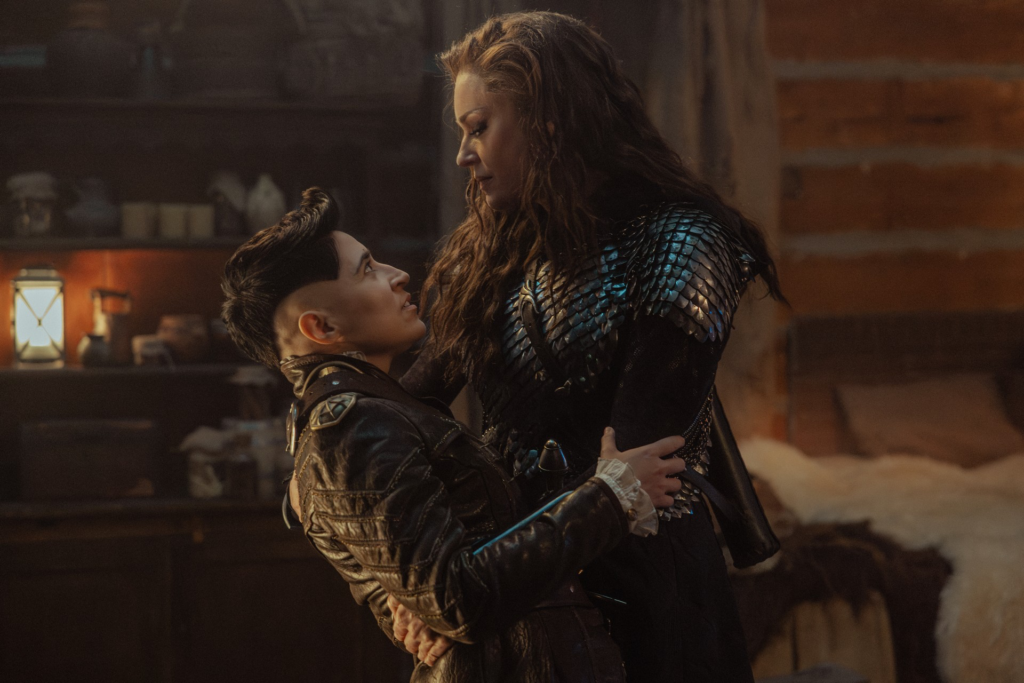
I have said it before this season, but Strange New Worlds is at its best when it puts serious people into ridiculous situations and allows them to remain themselves. Some of the funniest Star Trek works precisely because Kirk, Picard, Sisko, Janeway, or whoever else has found themselves in the middle of absolute nonsense continues to treat the situation with complete sincerity. There is a difference between putting a somewhere ridiculous and making the ridiculousness their entire personality for forty-five minutes.
“Once La’an a Time” occasionally gets that balance right, particularly once La’An’s actual story begins to take over in the second half. There is even something recognisably TOS about stranding the crew somewhere impossible, bending reality around them, and waiting to see what shakes loose. But within the wider shape of this season, I am beginning to wonder whether Strange New Worlds still trusts these characters without a genre costume wrapped around them.
That frustrates me because underneath all of the fantasy decoration is a La’An story I genuinely like. A woman who has spent years frightened of what her name, her genetics, her trauma, and her anger might mean is finally being forced to stop dividing herself into acceptable and unacceptable pieces. There is something honest in that. The image of La’An literally confronting another version of herself works, as does the idea that strength does not require the absence of softness. Even the fairly basic “inner princess” metaphor works better than it probably should because vulnerability has always been difficult for this character.
But Chong gives the idea considerably more depth than the script does, and that is where I keep landing with “Once La’an a Time”. The production design is better than the story needs it to be, the actors find more nuance than much of the dialogue gives them, and the central metaphor works more effectively as an image than it does whenever somebody starts explaining it.
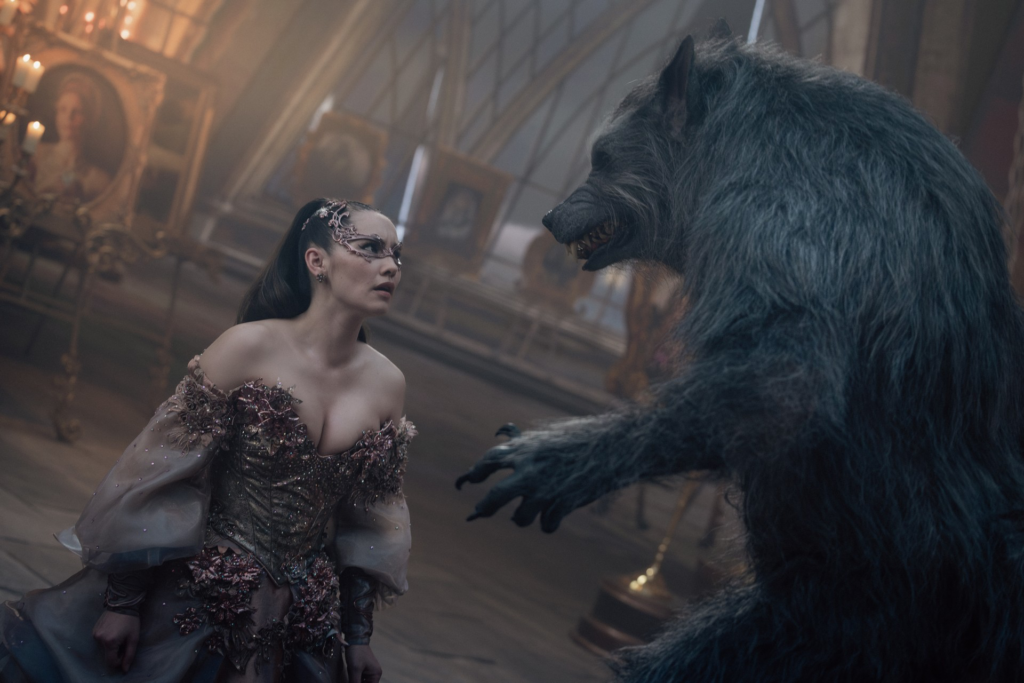
There is a good La’An story in here, and Christina Chong does almost everything necessary to make it visible. I just wish Strange New Worlds trusted her enough to strip away some of the clutter and let La’An Noonien-Singh be interesting without first turning her into somebody else.
After nine episodes of a season increasingly fascinated with watching its characters wear different faces, the person I most wanted to spend time with was standing there all along.
5.5/10