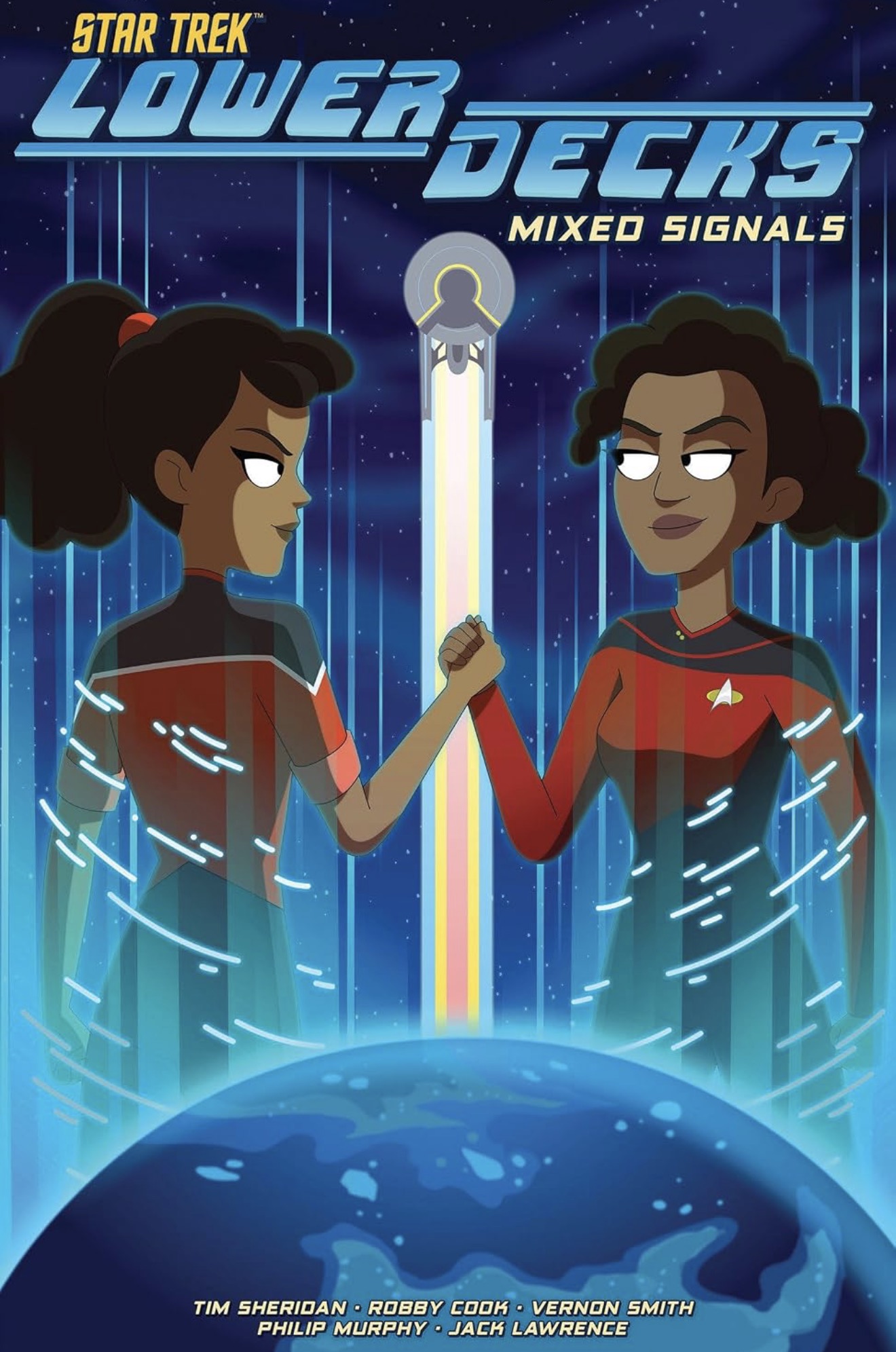
Star Trek: Lower Decks, Vol. 2 — Mixed Signals Review
At some point, somebody in Starfleet was always going to have to look at the numbers.
James T. Kirk travelled back to 1986, brought George and Gracie into the twenty-third century, saved Earth from an alien probe, and presumably expected everybody else to sort out the details afterwards. Gracie was pregnant, and this comic gives her calf the name Ronald, but that still does not exactly amount to a healthy breeding population.
It is a wonderfully heroic ending to Star Trek IV: The Voyage Home, provided nobody asks what happens a century later when the population still has not recovered.
Lower Decks asks, because of course it does.
That instinct sits right at the heart of Star Trek: Lower Decks, Vol. 2 — Mixed Signals. The first volume had something to prove about whether the frantic energy of the animated series could survive being flattened onto a comics page. This time, the book feels much more comfortable with what it is.
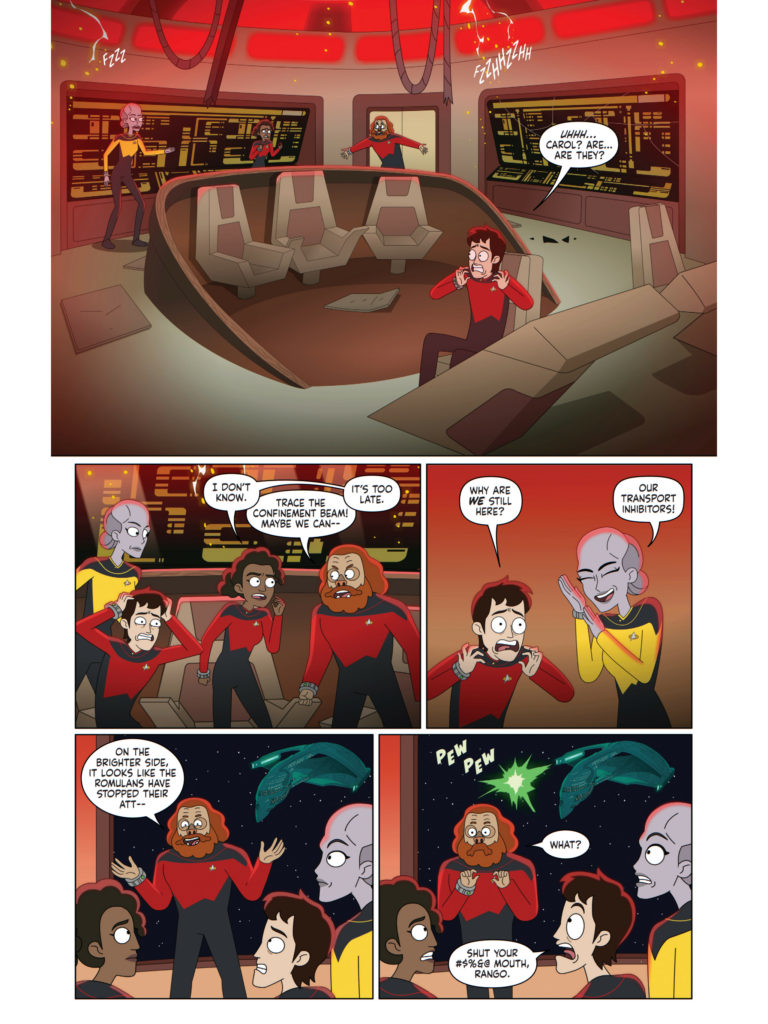
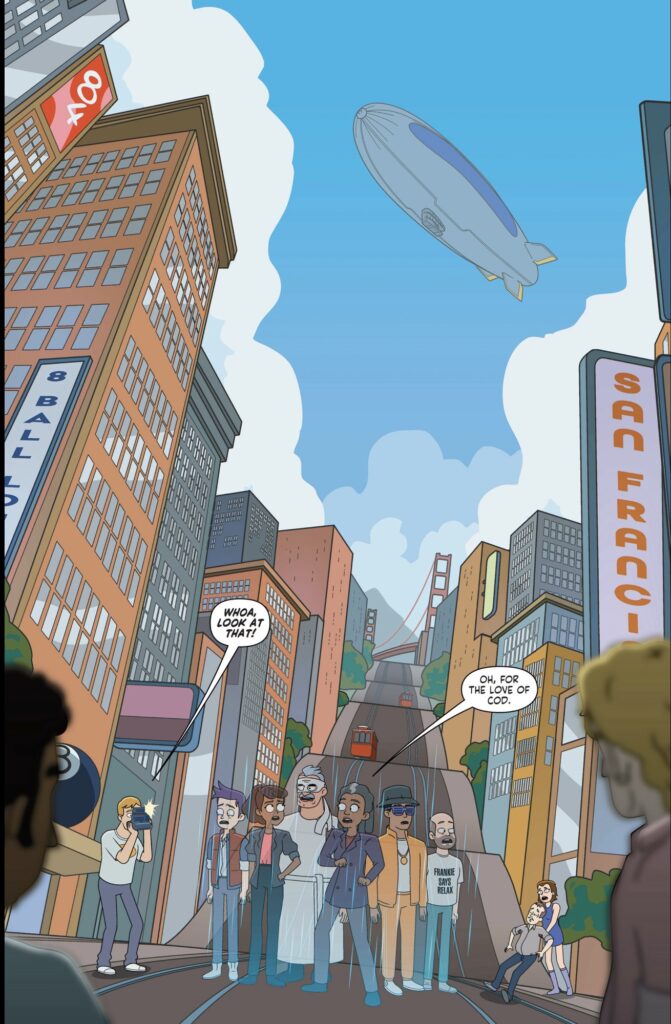
Tim Sheridan takes over writing duties from Ryan North and gives the stories a little more room to breathe rather than simply trying to imitate what came before. Six issues are divided into three two-part arcs which, taken together, feel almost like a small lost season of Lower Decks. One digs into Carol Freeman’s past alongside Doctor Katherine Pulaski, another traps Tendi between Starfleet and some extremely persistent Ferengi debt collectors, and the last sends the crew back to 1980s San Francisco to deal with the ecological loose end Kirk left behind.
It is ridiculous, obviously, but Lower Decks has always understood that Star Trek can be ridiculous and wonderful at exactly the same time.
That is why I have never really thought of the series as parody. It is too affectionate for that. The jokes work because the people making them know this universe well enough to see all its strange little corners without treating the whole thing as stupid. When Lower Decks points at something absurd in Trek history, somebody has usually just stopped long enough to think about the consequences.
Volume 2 is at its best when Sheridan pulls at one of those loose threads and discovers there is an actual story attached.
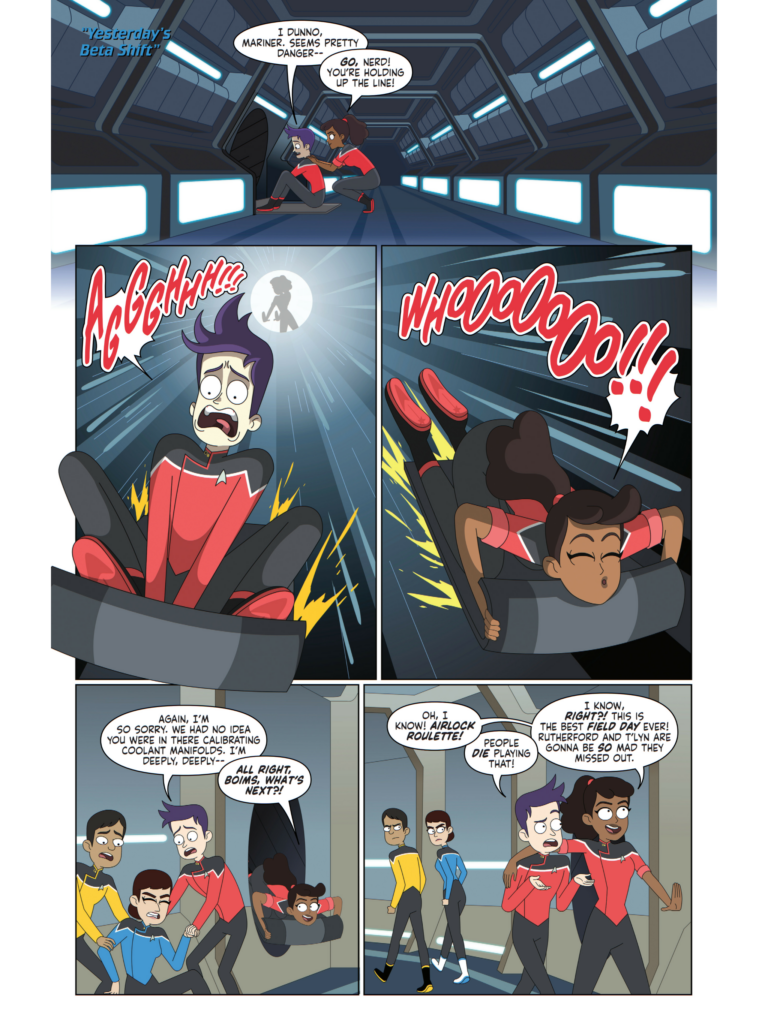
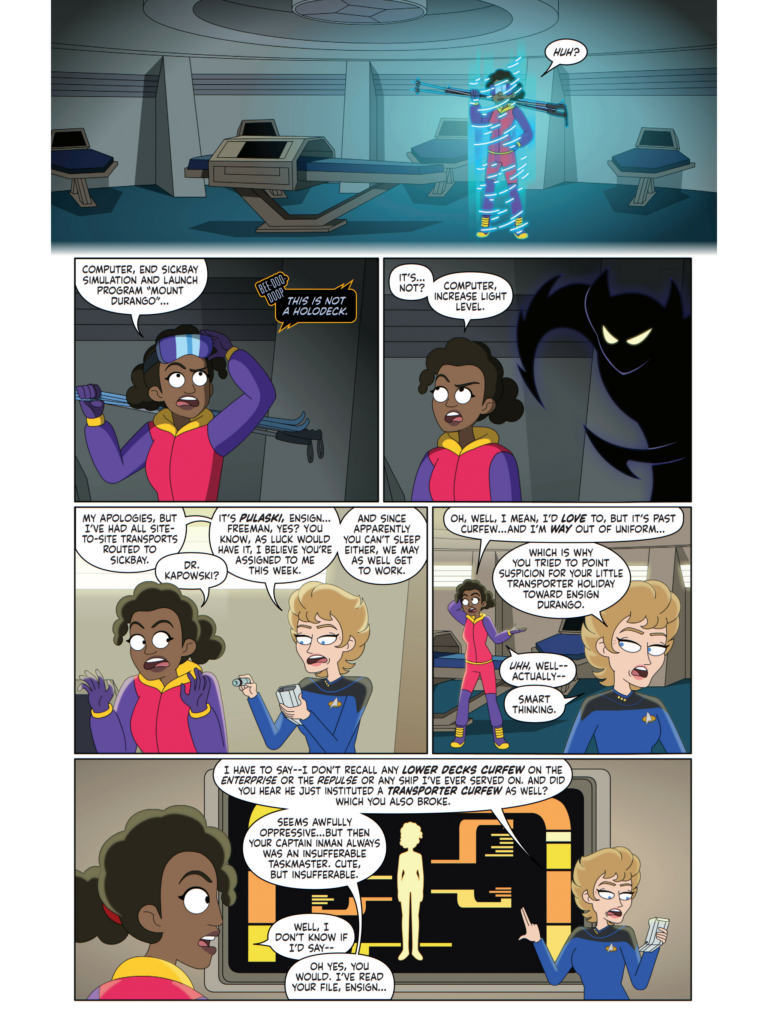
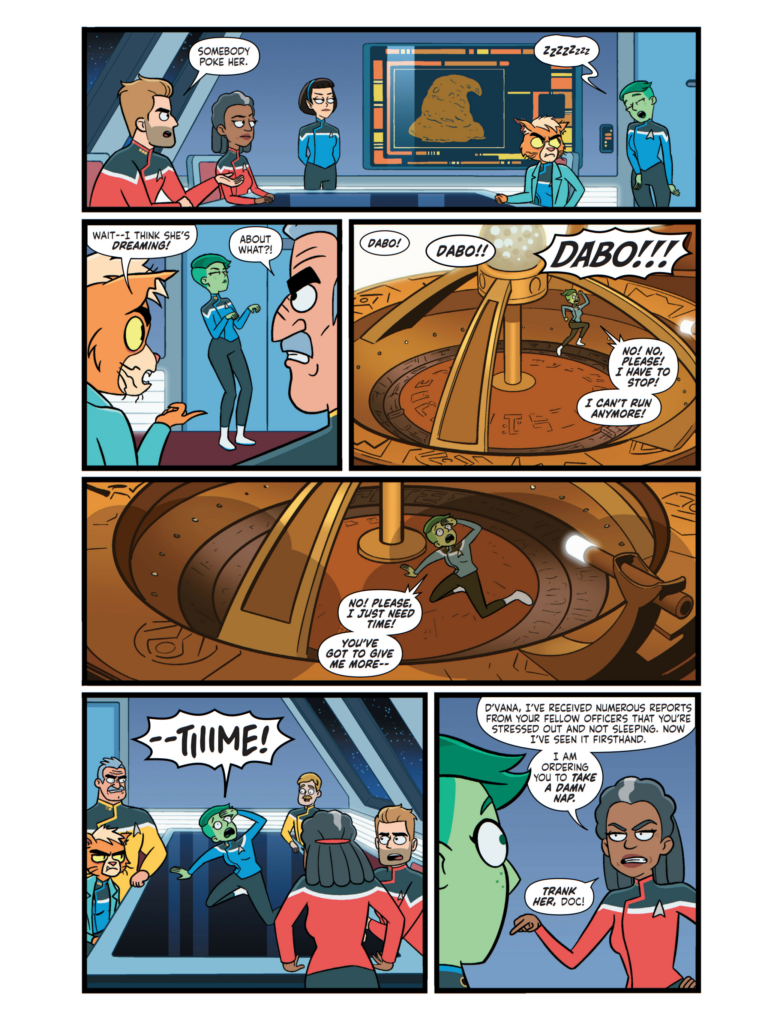
The strongest of the three is the opening arc, “Yesterday’s Beta Shift”, which takes us back fifteen years to a younger Carol Freeman serving aboard the USS Illinois. Freeman is still an ensign, considerably more impulsive than the captain we know, and paired with Doctor Katherine Pulaski.
That last part should probably have been enough to put me off.
I have never particularly warmed to Pulaski. There are good ideas behind the character in the second season of The Next Generation, but too often the attempt to recreate something like the McCoy and Spock dynamic with Data simply made her unpleasant. She could be dismissive and patronising in ways that never developed enough for me to find the rough edges particularly interesting.
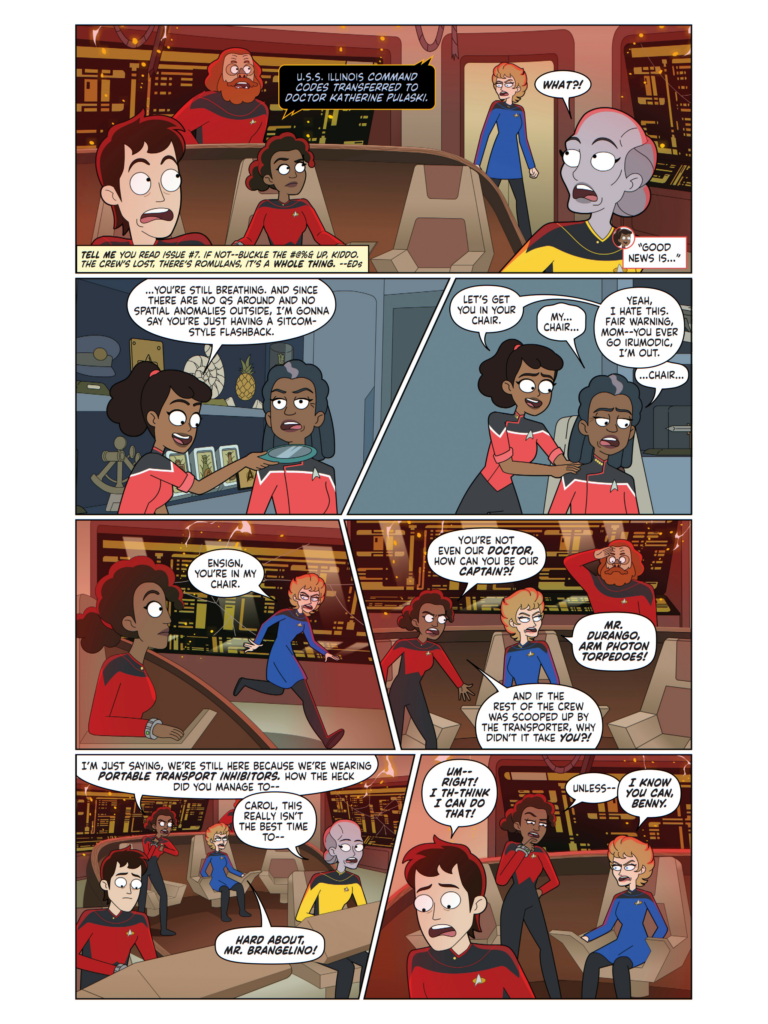
Somehow, Sheridan makes her genuinely delightful here without sanding away everything that made Pulaski Pulaski. She is still blunt, confident, and completely uninterested in whether everybody approves of her, but those qualities work far better in this setting. She feels experienced rather than simply abrasive, and putting her alongside a younger Freeman gives both characters somebody worthwhile to bounce off.
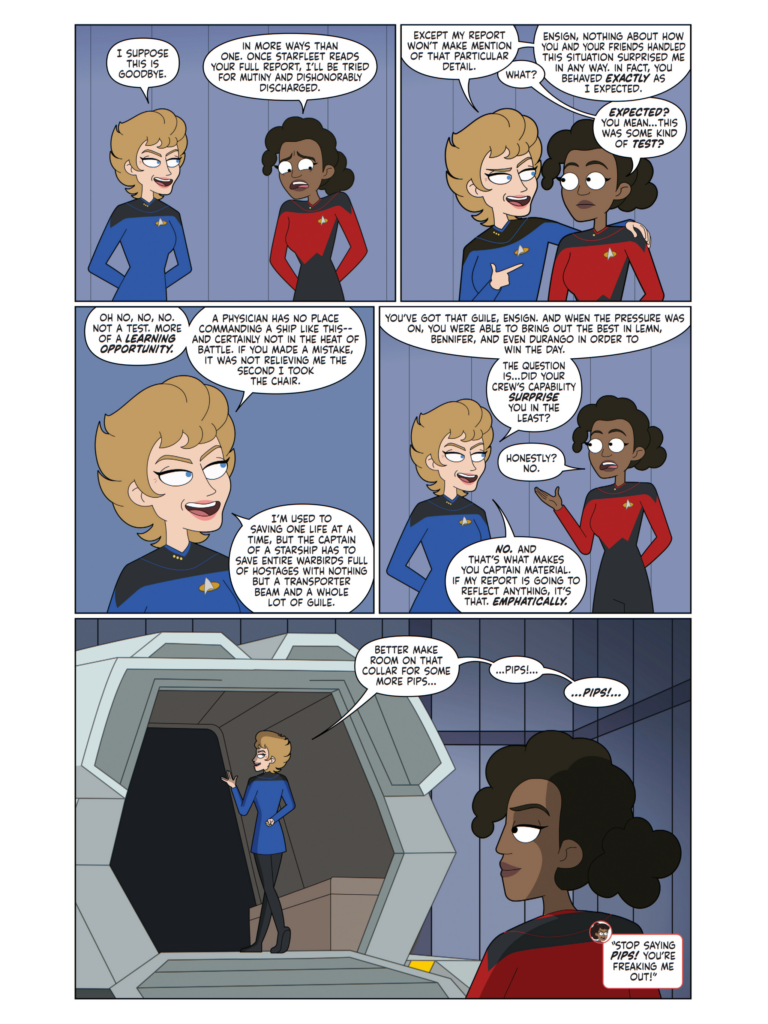
There is an easy version of this story where the whole point is simply that Carol Freeman used to be Mariner. Sheridan goes further and uses the flashback to explain some of the way Freeman reacts to her daughter without pretending that one story suddenly resolves their entire relationship.
Mariner’s recklessness is not alien to her mother. Freeman recognises it because she has lived through her own version of it. The difference is that Carol eventually learnt what happens when being clever, impulsive, and convinced you can fix everything stops being charming and starts putting other people’s lives in your hands.
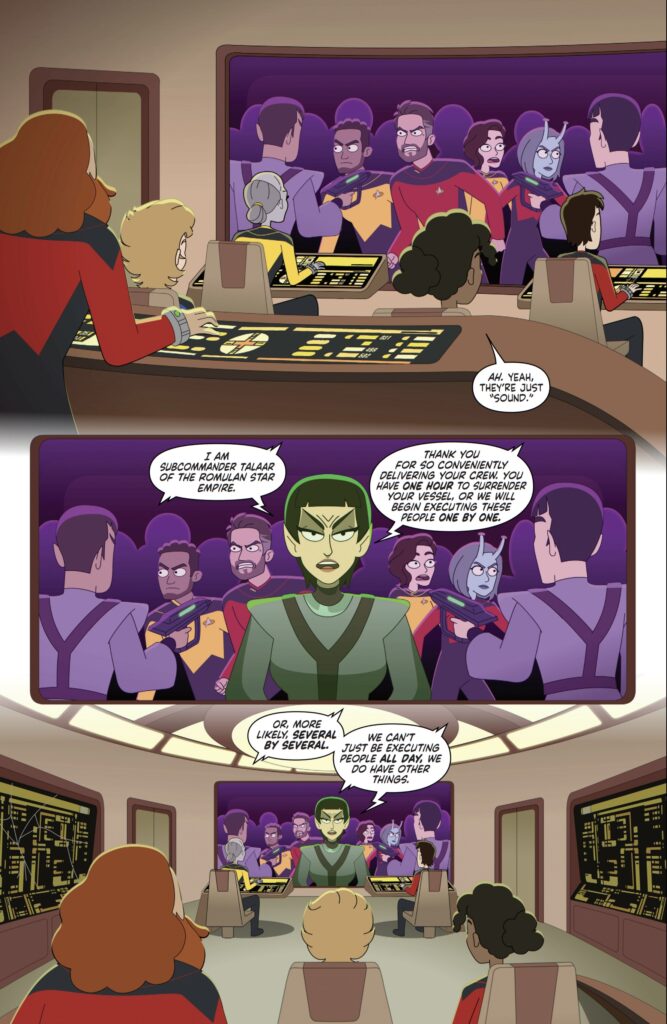
Freeman is not always frustrated with Mariner because she fails to understand her. Sometimes she is frustrated because she understands her rather too well.
That is probably my favourite part of the volume. We have watched this relationship for years, and the comic manages to turn it slightly so we can see another side without suddenly announcing that everything we knew before was wrong. It rewards the long-term viewer without demanding a spreadsheet of continuity notes, which is exactly how this sort of material should work.
The obvious cost is that the story spends a lot of time away from the Lower Deckers themselves. Boimler, Rutherford, Tendi, and the others are not the centre of this one, and if what you want is another chaotic Cerritos adventure, the flashback can feel like a detour. I did not mind because the material earns it, but it feeds into a wider problem I had with the collection.
There are moments when the characters feel as though they have slipped backwards slightly.
Across the television series, this crew gets a surprising amount of growth, and Ryan North’s first volume generally understood that rather than simply returning everyone to their earliest and easiest versions. Here, the dials occasionally seem to have been nudged backwards because those older personalities make the joke easier.
It never wrecks the book, but I noticed it enough that it became difficult to ignore.
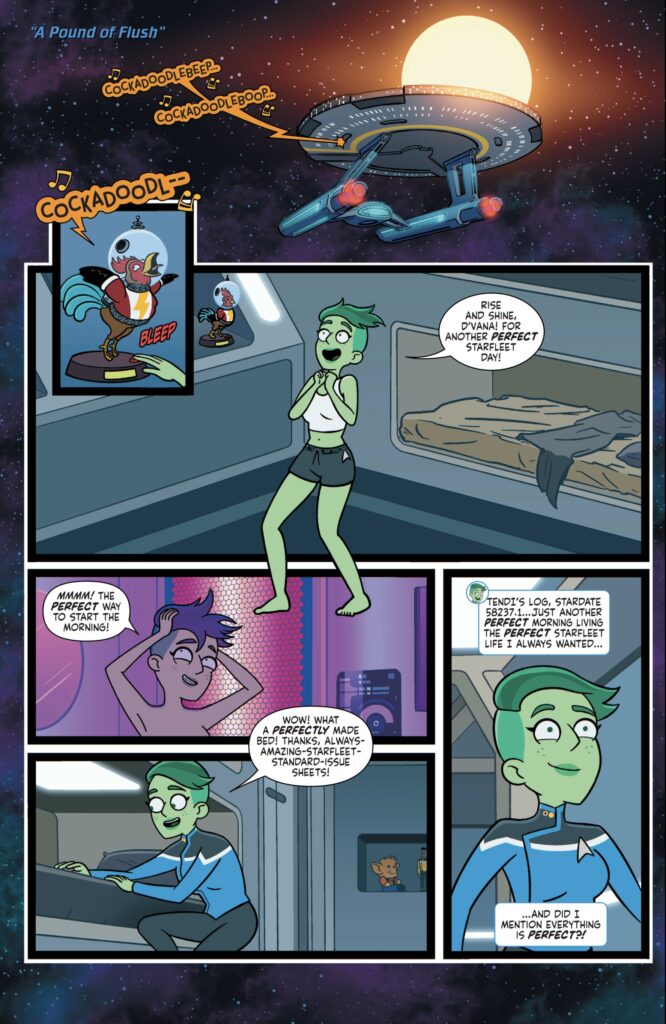
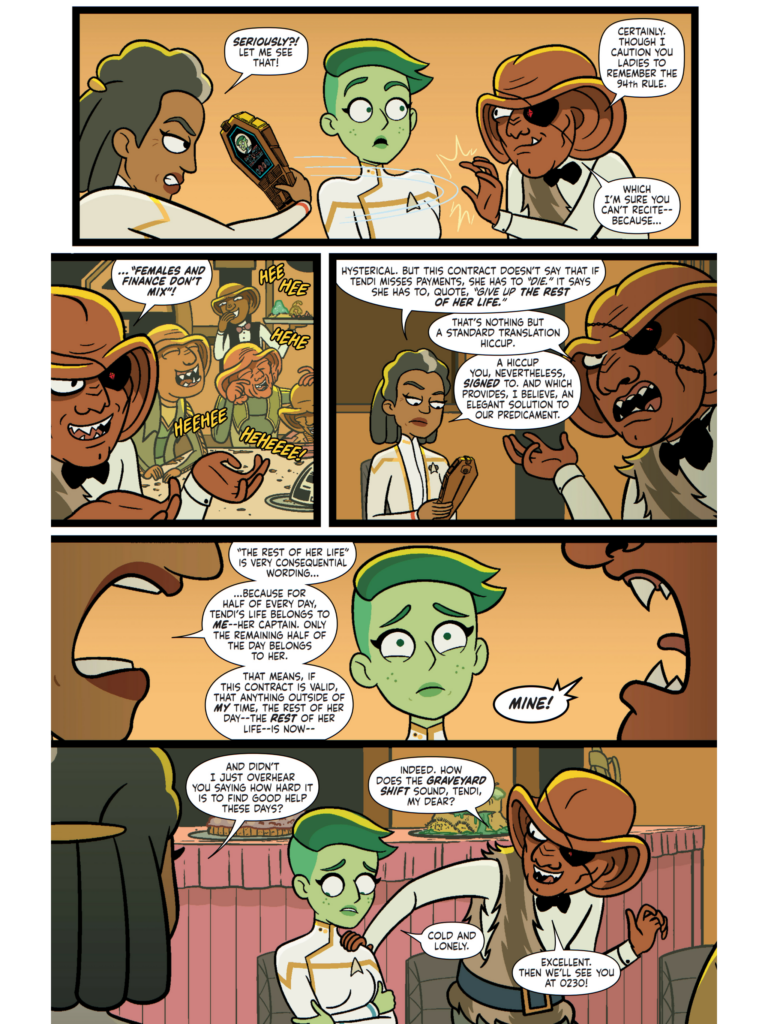
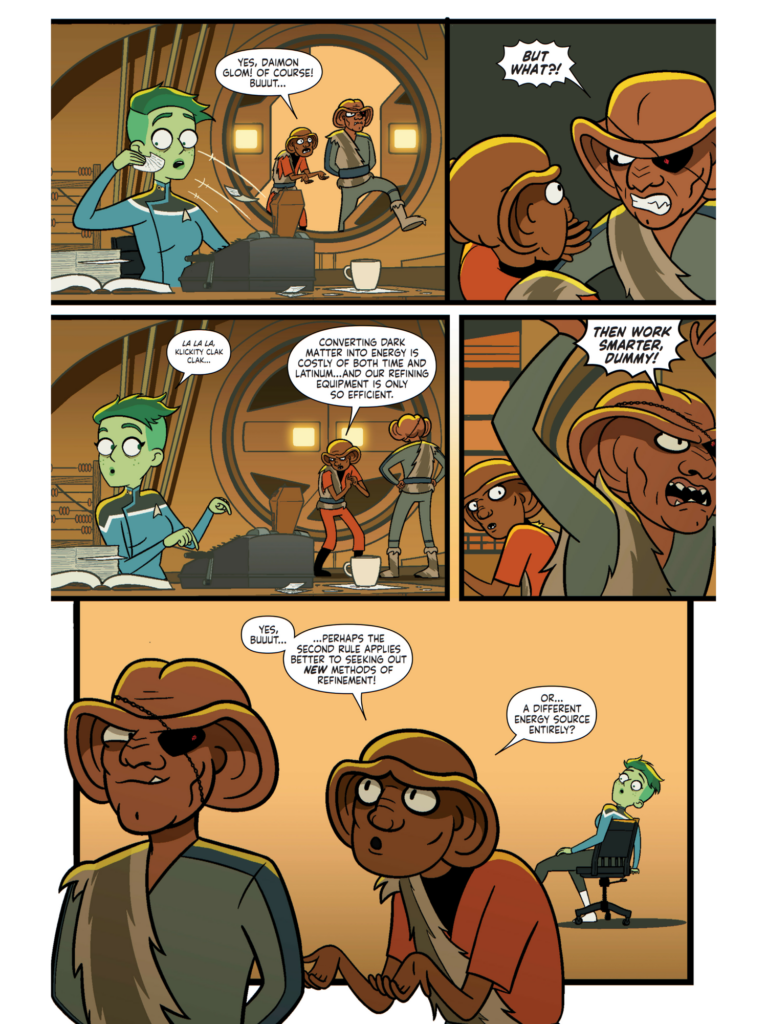
The middle story, “A Pound of Flush”, is probably the purest Lower Decks premise of the three. Tendi owes a fortune in student debt to Ferengi swindlers and, as a Starfleet officer, has no obvious way of earning the money she needs to repay them.
That would probably be enough for an episode on its own. Then the gormagander excrement turns up.
The student-debt parallel is not subtle, but it does not need to be. What makes the setup work is the collision between two parts of Star Trek which operate according to completely different assumptions. The Federation has supposedly moved beyond wealth as the main force driving people’s lives, while Ferengi society has turned the acquisition of it into something approaching religion. Put somebody between those systems and suddenly the utopian absence of money becomes extremely inconvenient.
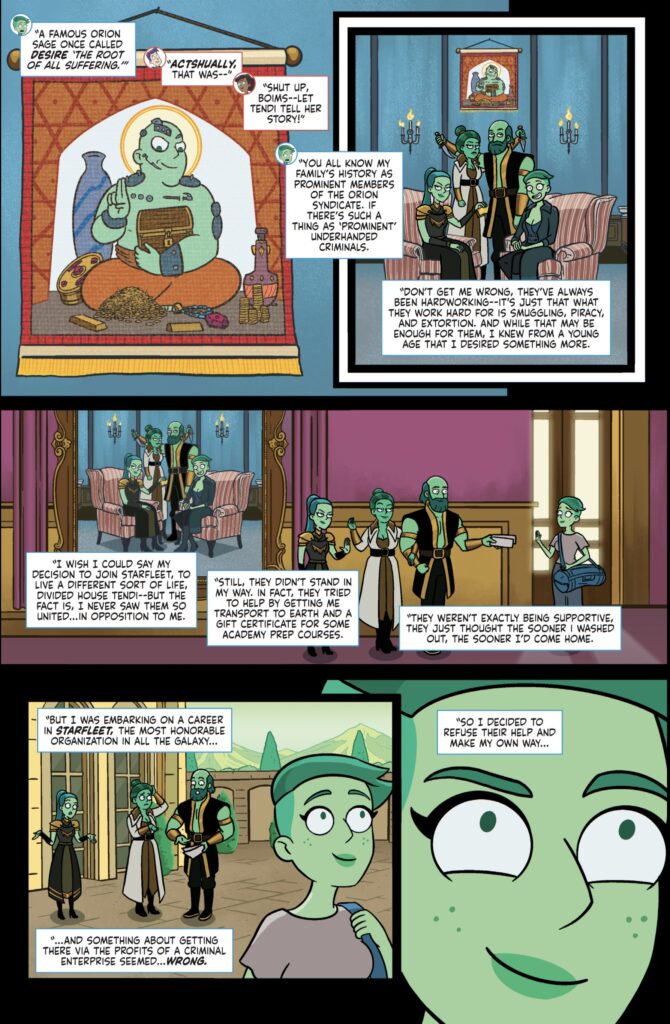
Tendi is a particularly good person to put in the middle of that mess. Her Orion background already places her between Starfleet idealism and cultures which do not necessarily share the Federation’s assumptions, and Sheridan gets plenty of comedy out of the clash.
The story also manages to make gormagander waste genuinely relevant rather than using it solely as a poo joke, which is about as Lower Decks a compliment as I can give anything.
It is still the weakest of the three arcs for me.
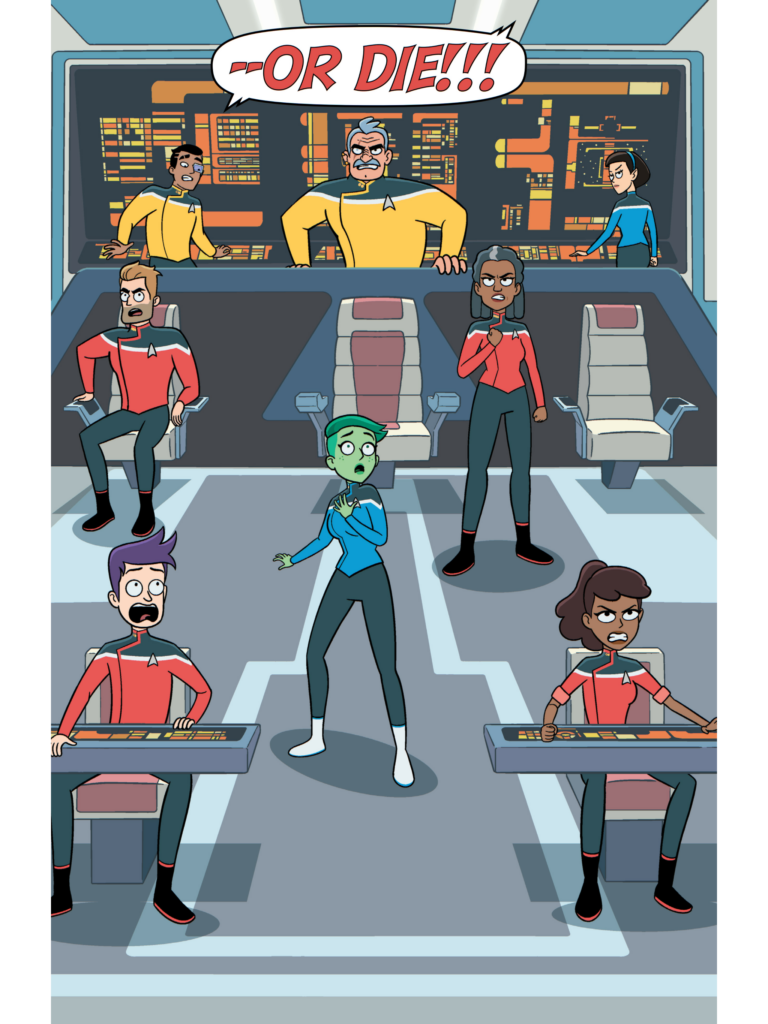
A lot of that comes back to characterisation. There are moments where Freeman, Mariner, Tendi, and Ransom seem pushed into whatever shape the joke requires rather than the humour growing naturally out of who they have become. The Ferengi can also drift back towards being broad capitalist caricatures, which feels slightly disappointing after Deep Space Nine spent years making their culture much more complicated.
Comedy has to simplify things to some extent, but Lower Decks is usually better when it remembers that whatever it is mocking has a life beyond the joke. The premise here is strong, and it moves along quickly enough, but some of the character work gets lost underneath the mechanics.
Then Matt and Kimolu decide that Kirk did not bring back enough whales, and everything starts working again.
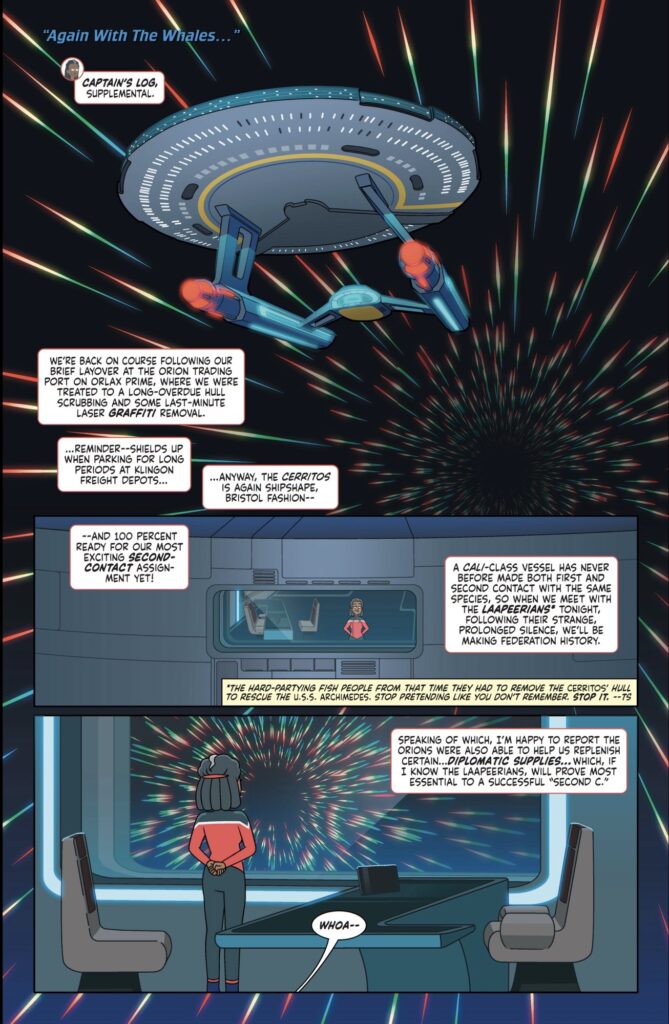
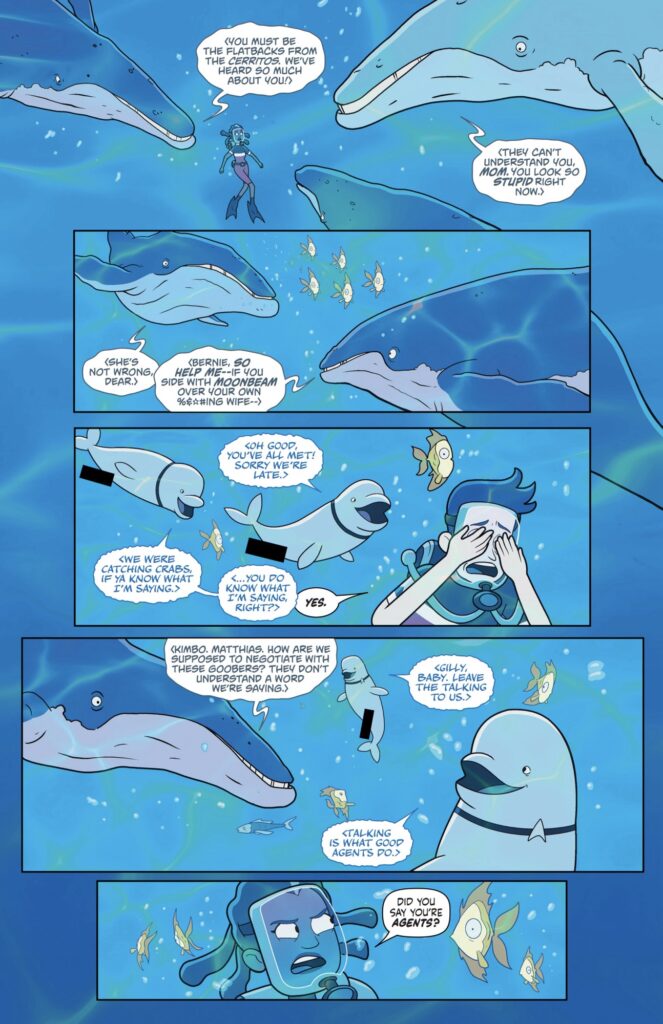
“Again with the Whales…” might not have the emotional weight of the Freeman story, but it is probably the clearest example of why this comic exists. Taking the crew back to 1980s San Francisco to deal with the consequences of The Voyage Home is exactly the sort of “somebody eventually has to do the paperwork” Star Trek story that Lower Decks was built for.
Quite which year they arrive in is apparently another mystery. The comic variously places them in 1984 and 1985, while the original promotional material suggested 1987. It is a small but rather noticeable continuity slip in a story built around correcting Star Trek’s own continuity. I can forgive it, but there is something amusing about a comic setting out to tidy up Kirk’s mistakes and managing to create a new one along the way.
Kirk gets to save Earth in the big heroic film. Nearly a century later, another Starfleet crew discovers that the long-term solution was not quite as sustainable as everybody hoped.
Nobody is tearing The Voyage Home apart or smugly pointing at a plot hole. The comic accepts what the film tells us and then asks what happened afterwards. George and Gracie saved the day, Gracie gave birth to Ronald, and yet the humpback population still needs help.
That is the sort of continuity I enjoy. It treats canon as something that keeps moving after the credits roll.
Tie-in material for a franchise this old can easily fall into one of two traps. It can treat continuity as sacred text, terrified to disturb anything, or regard itself as disposable fluff where nothing really matters. Lower Decks works somewhere in between, where old stories are respected but are still allowed to have consequences.
The best references here do exactly that. Freeman’s Starfleet history changes how we see her relationship with Mariner. Tendi’s position between cultures creates the problem rather than simply decorating it. The whale population from The Voyage Home becomes the reason the story exists at all.
That is when fan service earns its place.
Giving Matt and Kimolu the spotlight helps as well. Cetacean Ops began as one of those wonderfully silly background ideas that Lower Decks could probably have kept around forever without explaining too much, and bringing it this far forward risks killing the joke simply by showing it.
The whale arc gets away with it because Matt and Kimolu actually have something to do. They are not there simply so we can point at the talking belugas and recognise them. Their role grows naturally out of the problem the story is trying to solve, which is a much better use of a recurring joke than dragging it on stage and waiting for applause.
Visually, the collection continues to make something quite difficult look deceptively easy.
Robby Cook handles the opening two issues and understands that translating animation into comics does not mean producing screenshots with panel borders around them. The characters still have to act on the page. Expressions need to sell jokes, body language has to carry information that movement and voice performance would normally provide, and the layouts have to create their own timing.
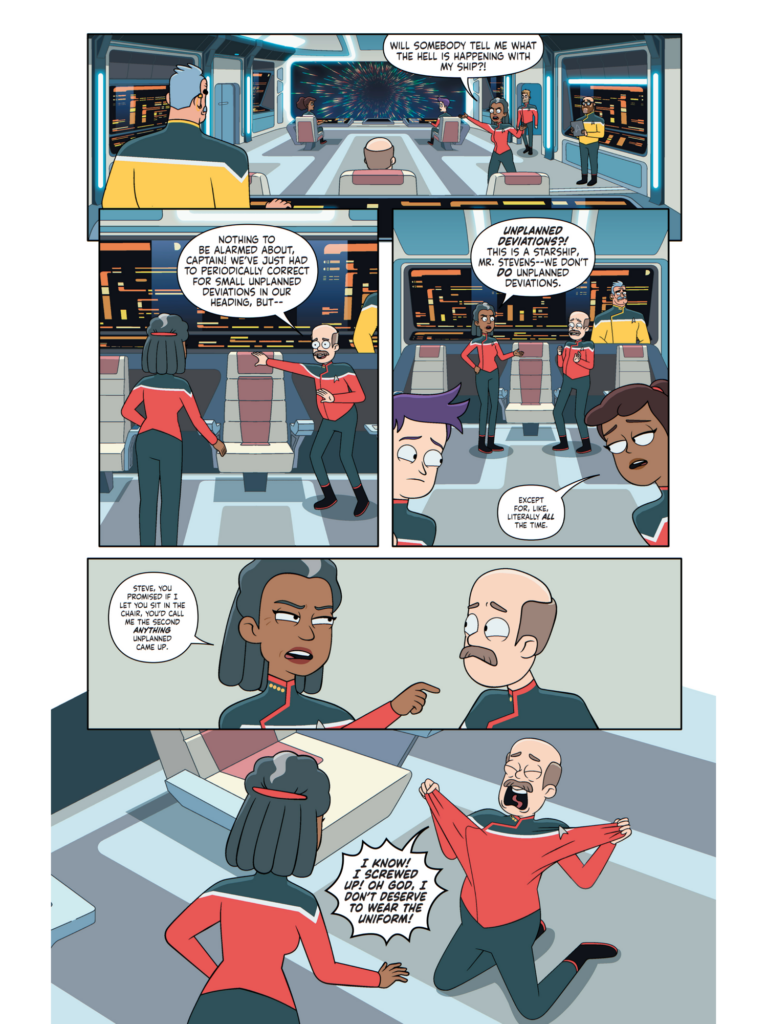
Cook gets that. Freeman can look defensive before she says anything, and Mariner’s posture can tell you exactly how seriously she is taking a conversation. The character acting remains exaggerated enough for Lower Deckswithout turning every reaction into a giant comedy face.
I notice this stuff because I have lettered comics and done some colouring myself. Comedy on a comics page is incredibly dependent on timing, and timing is not simply the writer putting a funny line in the script. It is where the eye lands, how much room exists before the next beat, whether a reaction gets its own panel, where the balloon sits, and whether the layout accidentally gives away the punchline before you reach it.
Clayton Cowles’ lettering is part of that throughout the volume. The dialogue can move at the speed Lower Decksneeds without the pages turning into a wall of balloons, which is a much harder balance than it looks.
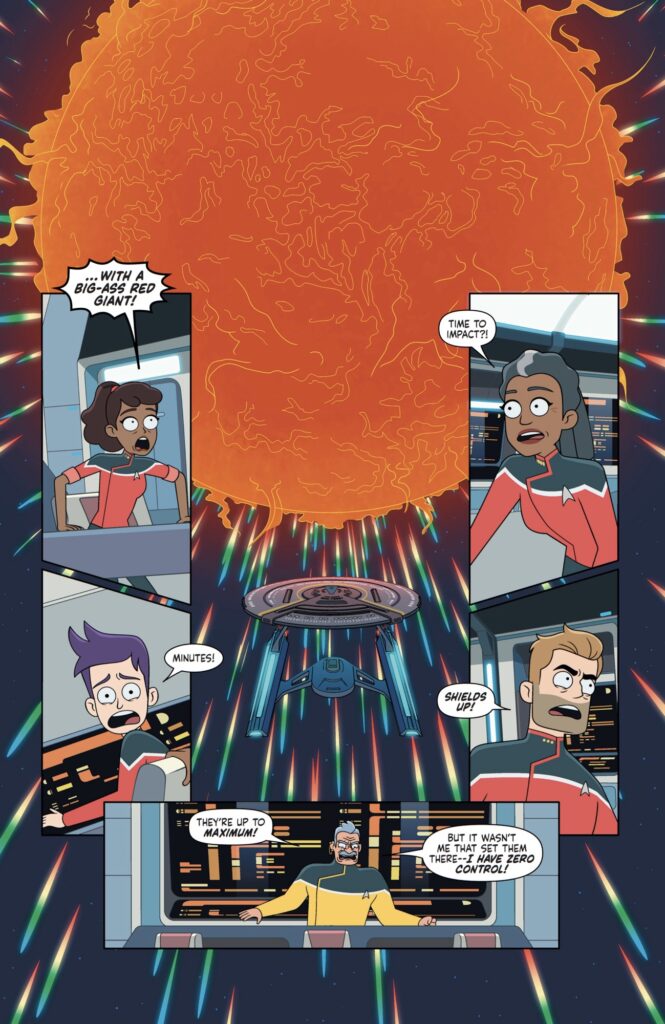
Vernon Smith handles the Ferengi story, Philip Murphy takes over for “Again with the Whales…”, and the final issue also includes pages by Jack Lawrence, with Maria Keane inking portions of it. Charlie Kirchoff colours issues #9–12.
That amount of movement between artists could easily make a trade feel stitched together, especially when the source material has such a recognisable animated style, but the book remains surprisingly coherent. They do not all draw identically, nor should they, but the characters still feel like the same people from one arc to the next.
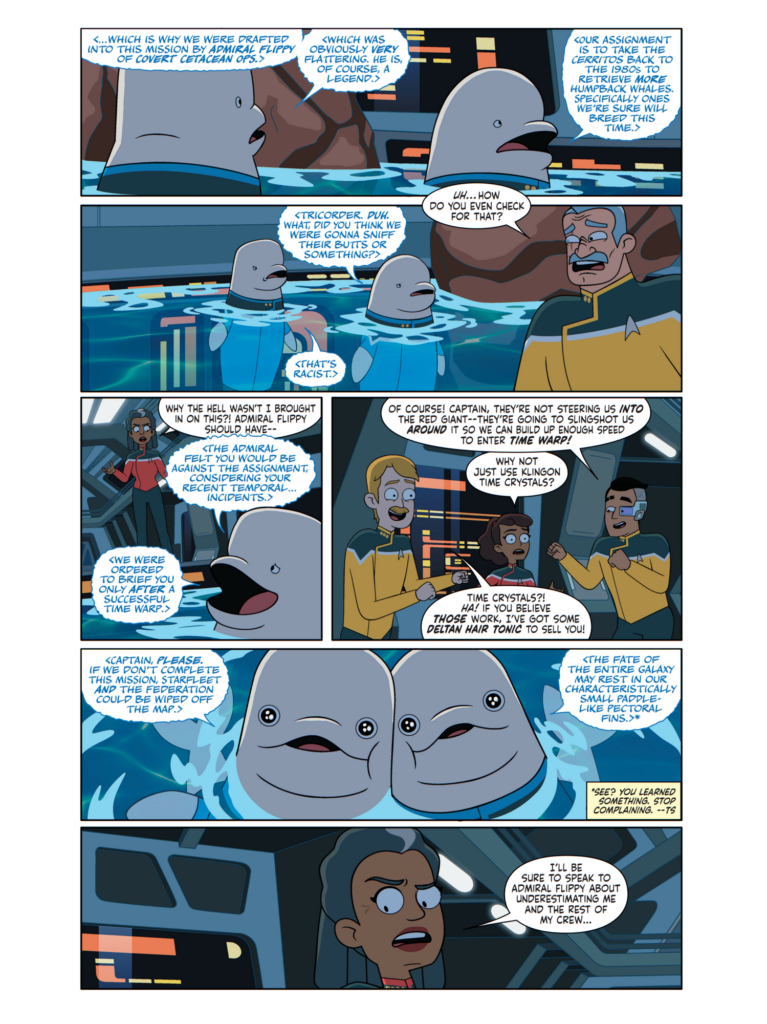
Kirchoff’s colours help with that continuity. The Cerritos keeps the bright, clean visual language of the series while the environments around it are allowed to change, and the 1980s material feels different without suddenly looking as though it belongs in another comic.
I also like that the Cerritos continues to feel like somewhere people actually work. Star Trek comics can sometimes turn every vessel into a pristine hero ship because glossy starships look good on the page. The Cerritos should not feel like that. It is busy, practical, occasionally chaotic, and inhabited.
The art understands the comedy without becoming subordinate to it.
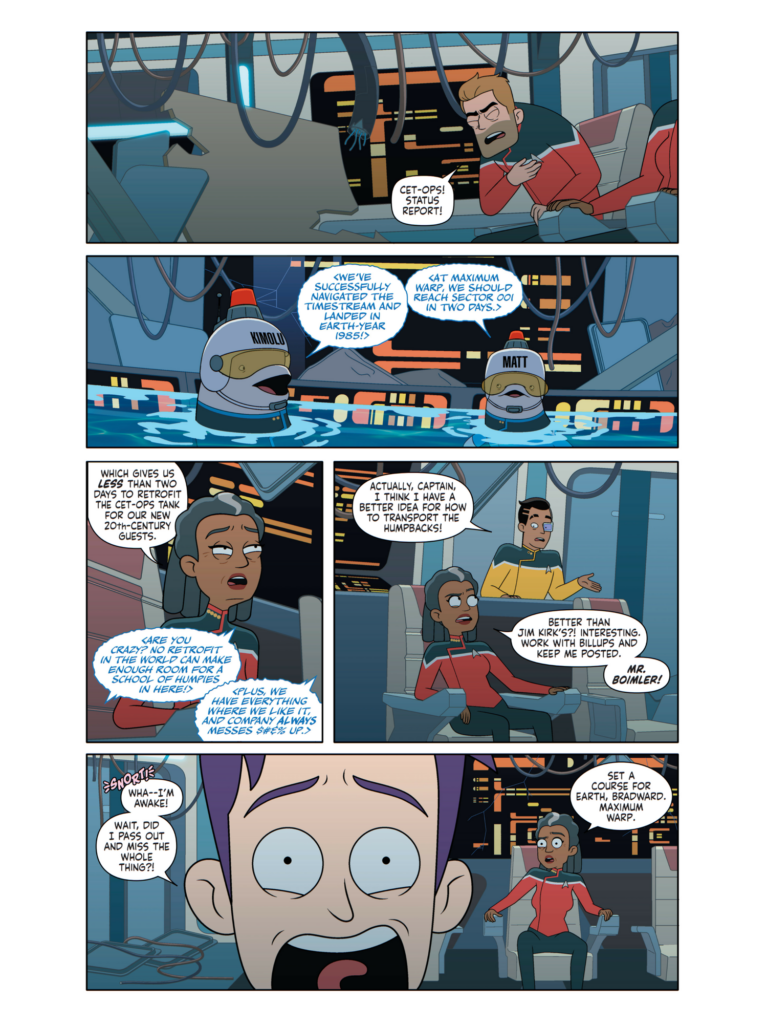
Sheridan’s writing finds a similar balance when it is working. His run is a little quieter than North’s first volume. There are not quite as many references being fired across every panel, and the rhythm is less relentlessly manic. Creative changes on comedy books can be brutal because voice and timing matter so much, so I was expecting the handover to be more obvious than it is.
Sheridan does not pretend nobody changed seats, and I think that helps.
The extra breathing room lets the Freeman material land properly, gives Tendi’s problem enough space to become more than one joke, and allows the whale story to build around its ridiculous premise instead of simply throwing Voyage Home references at the page. When the writing trusts the characters, Volume 2 feels like Lower Decksrather than somebody doing an impression of it.
When it does not, the weaknesses stand out.
Beneath all the shouting, technobabble, bodily functions, exploding consoles, and terrible decisions, Lower Decksworks because these people actually care about one another. Take that away and the chaos becomes noise, and a few stretches here get closer to that line than I would have liked.
That is why this is a step down from Volume 1 for me, even though the best material here may actually be stronger than anything in that first collection. Volume 1 was more consistent. Volume 2 peaks higher with Freeman and Pulaski, gets patchier through the middle, and then finishes with an idea so perfectly suited to the series that I can forgive quite a lot.
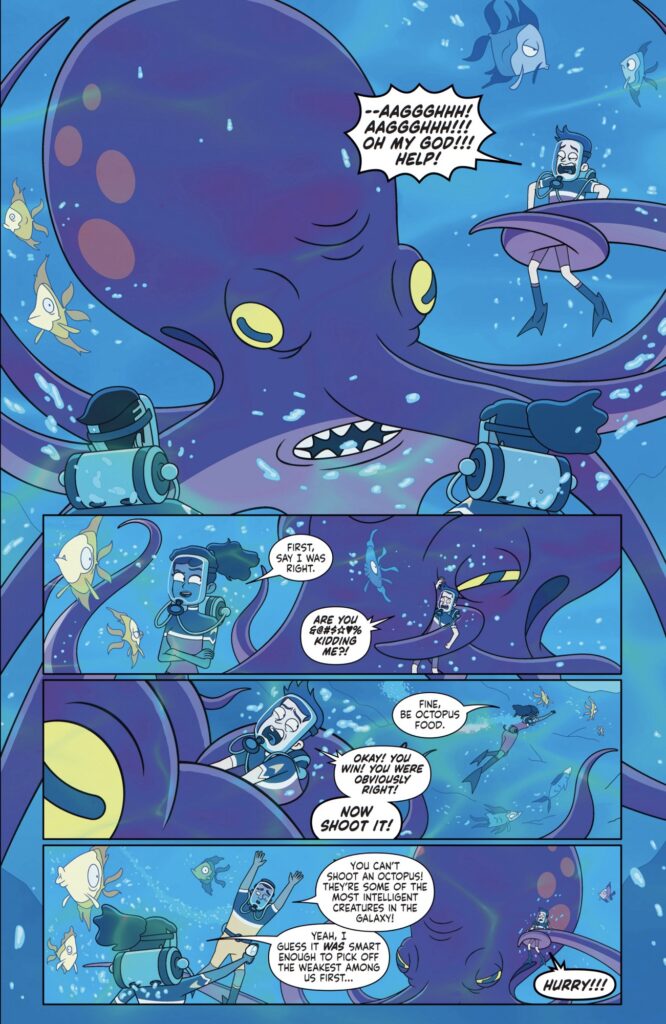
This is a comic where Katherine Pulaski can become genuinely likeable, Ferengi can chase down a Starfleet officer over student debt, and two beluga whales can decide that Starfleet needs to go back in time because James T. Kirk failed at population genetics.
It is comfort food, but comfort food is not automatically good just because you recognise the flavour.
Mixed Signals works because, more often than not, its references are there for a reason. They reveal something about a character, create a problem, or ask a question the original story never needed to answer. The collection does not simply occupy the space left behind by the television series. At its best, it extends it.
Volume 1 had to prove these characters could survive without animation, voice performances, and twenty-five minutes of movement. Volume 2 no longer seems particularly concerned with proving that point. It simply gets on with telling stories.
Some are stronger than others, and occasionally the characters feel like versions of themselves from a few seasons ago. That inconsistency keeps it below the first volume for me.
Then the comic spots a forty-year-old ecological problem nobody asked it to solve and sends Cetacean Ops back through time to deal with it.
That is not a television episode trapped on paper.
That is Lower Decks.
6.5/10