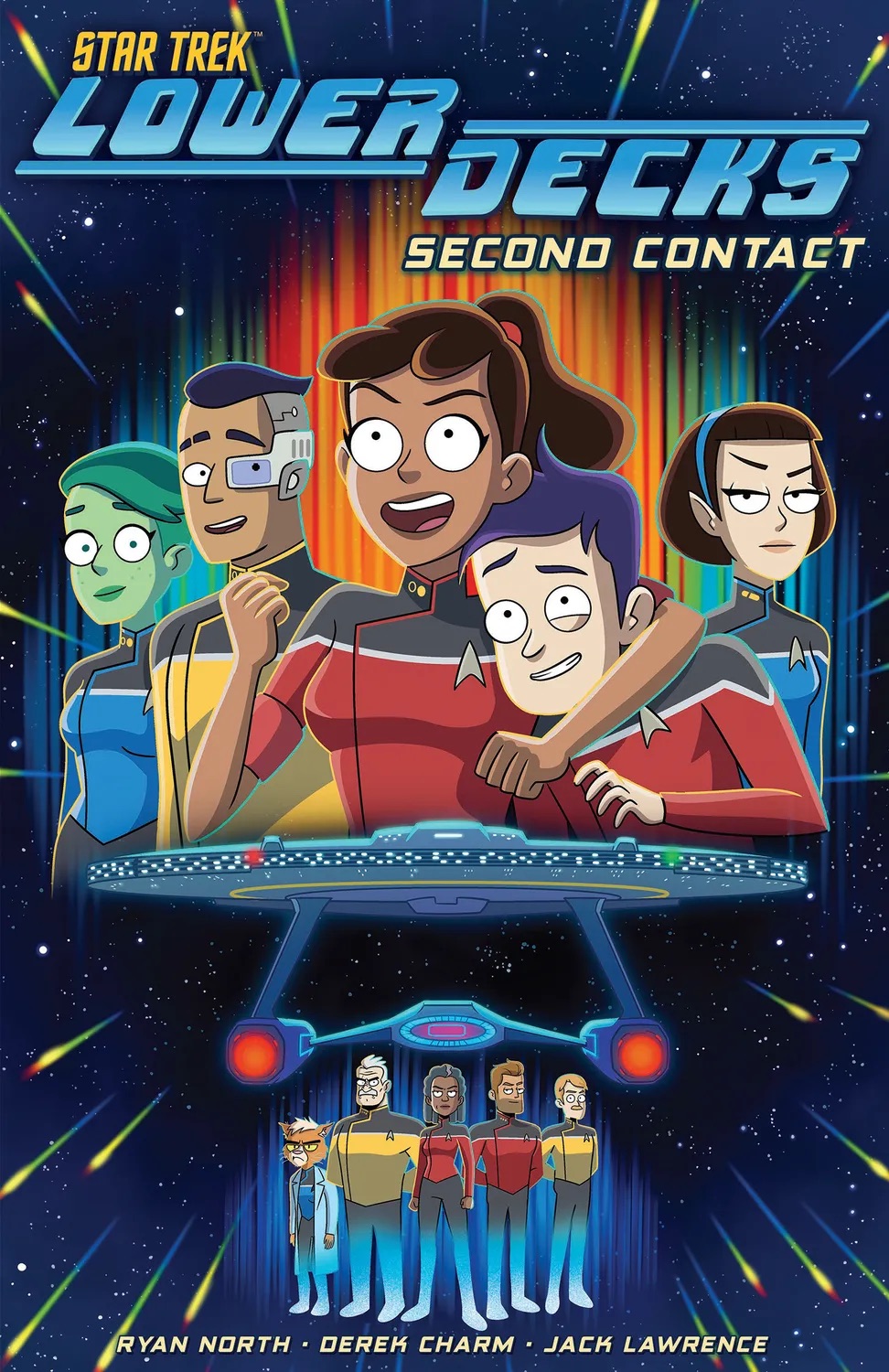
Star Trek: Lower Decks, Volume 1: Second Contact Review
Ryan North writing Star Trek: Lower Decks feels like such a natural fit.
The television series has always occupied a strange place within Star Trek. It is incredibly fast, frequently ridiculous, and stuffed with references that sometimes seem designed specifically to test whether somebody remembers a prop from thirty-five years ago. Underneath all of that noise, though, is a remarkably sincere affection for Star Trek and the people who live inside it. That combination is a large part of why Lower Decks works, but translating it into comics is not nearly as straightforward as it might sound.
Animation gives you voices, movement, music, editing, and comic timing. Tawny Newsome can tear through a Mariner rant at a speed that barely gives you time to process one joke before the next arrives, while a background gag flashes past and Jerry Goldsmith is probably being referenced somewhere underneath it all. A comic page has none of those luxuries. Every joke sits there waiting to be read, every speech balloon occupies physical space, and every reference has to justify the panel it is taking up.
That makes Star Trek: Lower Decks, Volume 1: Second Contact an interesting adaptation before we even get to the actual stories.
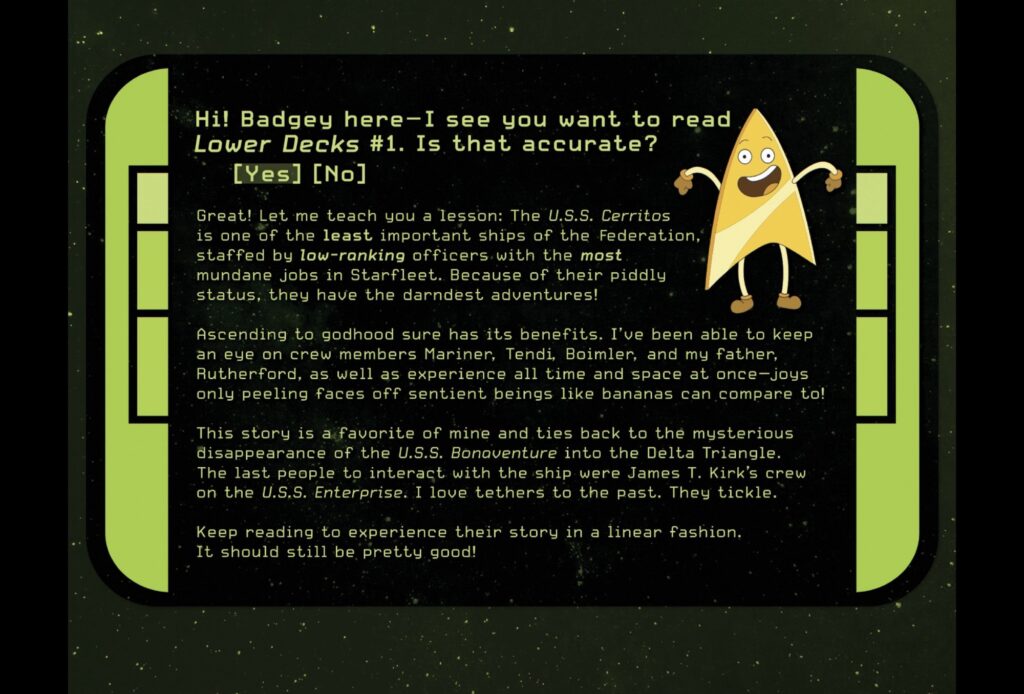
The six issues are divided into three two-part adventures, each essentially functioning as another episode of Lower Decks, and that structure worked for me immediately. Having lettered comics myself, one thing the medium teaches you very quickly is that a page rewards a clean idea. There is only so much physical room before the dialogue, artwork, action, and pacing all start fighting one another, and North seems to understand that. He gives each story a premise, gives it two issues, and gets on with telling it.
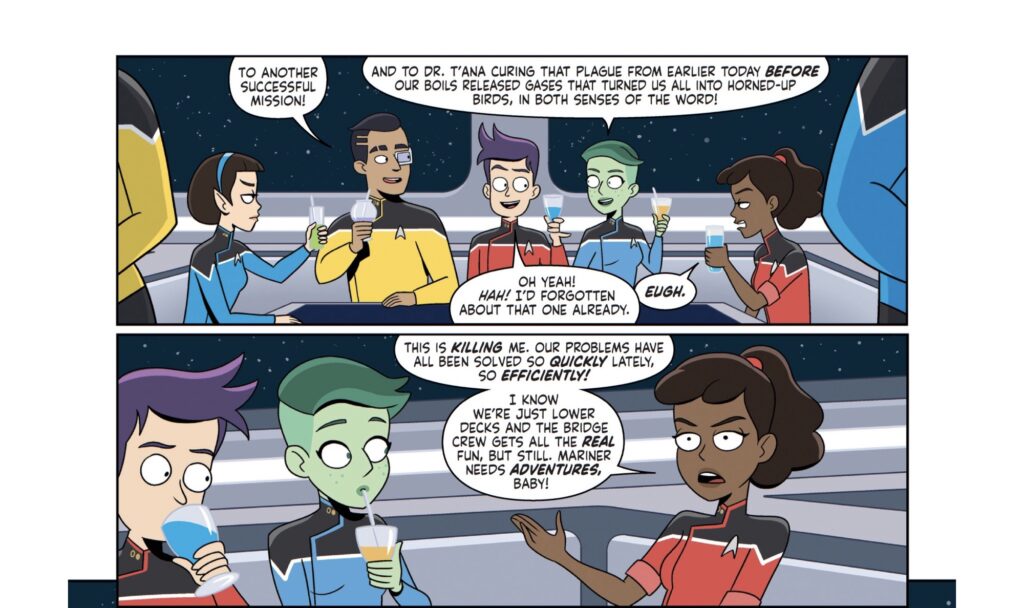
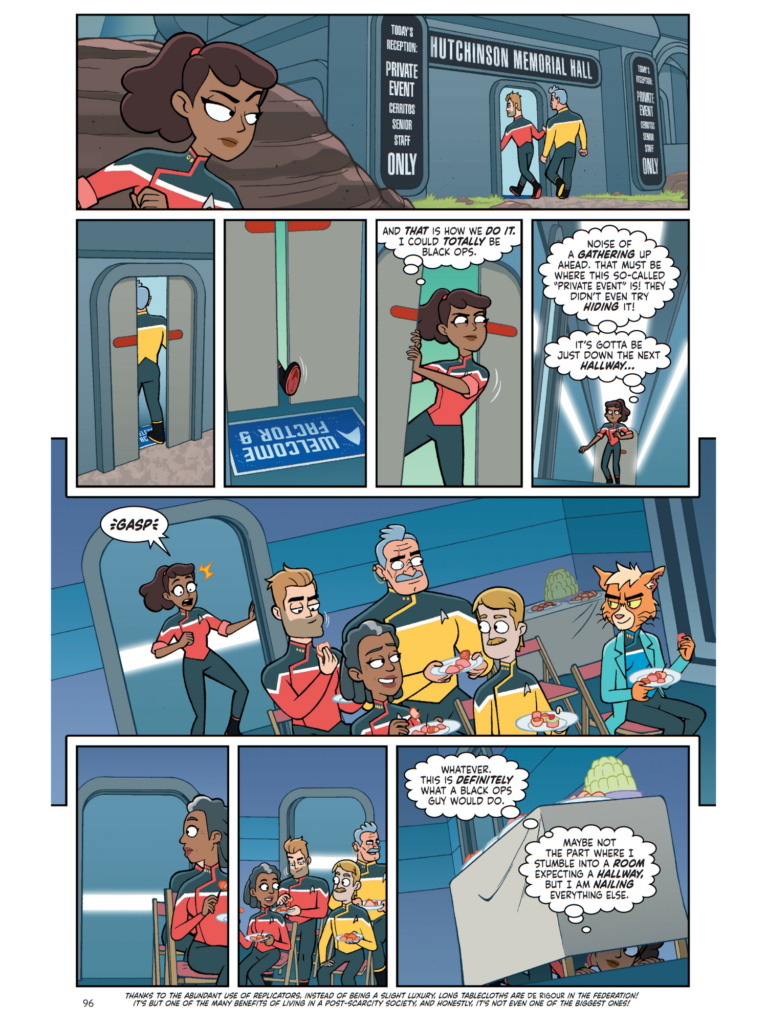
The opening story begins with Mariner facing perhaps her worst nightmare: everything aboard the Cerritos is going perfectly well. Problems are being solved, strange phenomena are dealt with, and everyone else seems perfectly content with this impressive display of Starfleet competence while Mariner is practically offended that none of it has turned into a proper adventure. She wants something exciting to happen, which is normally the point in Star Trek where you should be very careful what you wish for.
The discovery of the long-lost U.S.S. Bonaventure, originally seen in Star Trek: The Animated Seriesepisode “The Time Trap”, immediately establishes what North intends to do with Trek history. Mariner recognises the ship and admits that she had a model of it as a child, even joking that she assumed she had built its strange design incorrectly. It is a tiny character moment, but I love it because it does more than demonstrate that Mariner knows Starfleet history. It makes her feel like somebody who actually grew up inside this universe and had favourite starships, much as generations of Trek fans have done outside it.
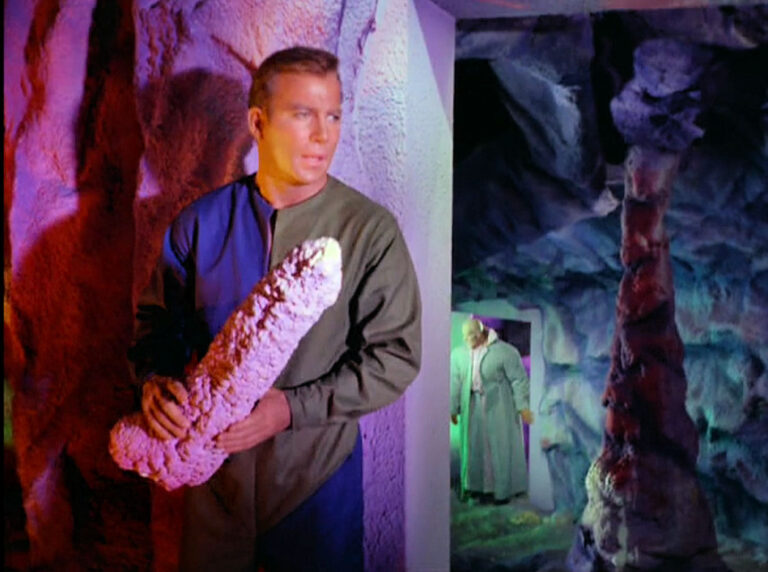
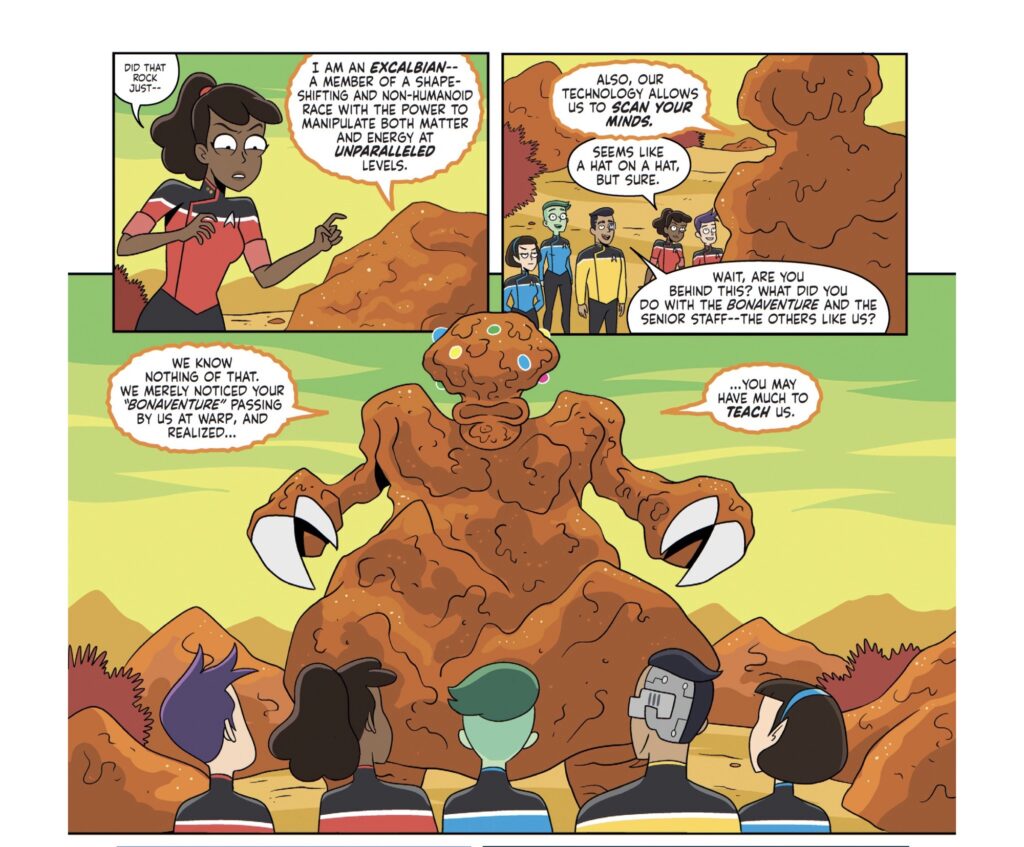
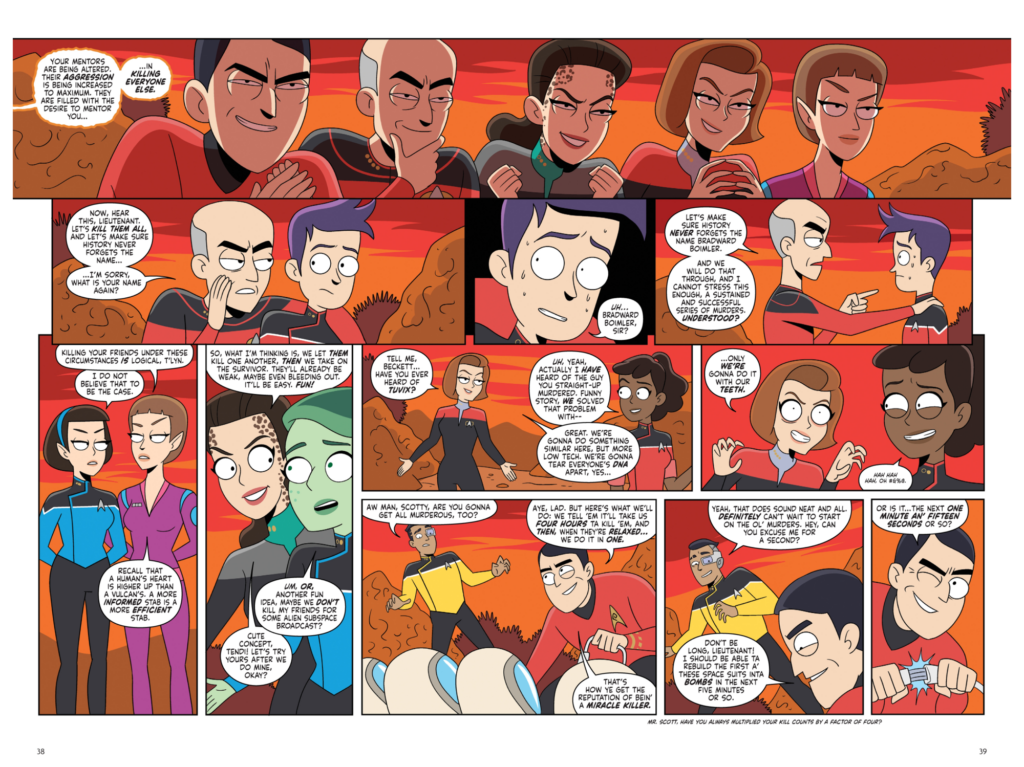
The investigation eventually brings back the Excalbians from “The Savage Curtain”, who are now trying to understand mentorship by pairing the Lower Deckers with recreations of famous Starfleet officers. Mariner gets Janeway, Boimler gets Picard, Tendi gets Jadzia Dax, Rutherford gets Scotty, and T’Lyn gets T’Pol, which sounds like precisely the sort of fan-service pile-up that could become exhausting very quickly.
Instead, it became one of my favourite parts of the collection because the references actually have something to do.
Boimler asking specifically for the stern, early version of Picard because of his own authority issues is exactly where Lower Decks works for me. You need to know Picard well enough for the joke to land, but the joke also tells us something about Boimler. Trek history becomes character material rather than an applause cue, and that distinction runs through most of the collection.
I have always been suspicious of nostalgia being used as a substitute for storytelling. Pointing at something I recognise is not inherently interesting, and neither is reminding me that another episode existed. North mostly avoids that trap because the Bonaventure, the Excalbians, famous captains, and eventually the Department of Temporal Investigations are not simply pulled off the shelf and displayed for the audience. They create situations for this particular group of characters to deal with.
That is when fan service works for me. Not when it says, “Remember this?”, but when it asks what can be done with it now.
There is also a genuinely interesting idea sitting underneath all the fighting and absurdity. Star Trek is full of legendary captains, scientists, and engineers, but the mythology around those people can easily obscure the question of what younger officers actually learn from them. What happens when the legend meets the reality, and what does mentorship actually mean when the people you admire are just as flawed, strange, or inconsistent as everybody else?
The setup is ridiculous, but the question underneath it is not.
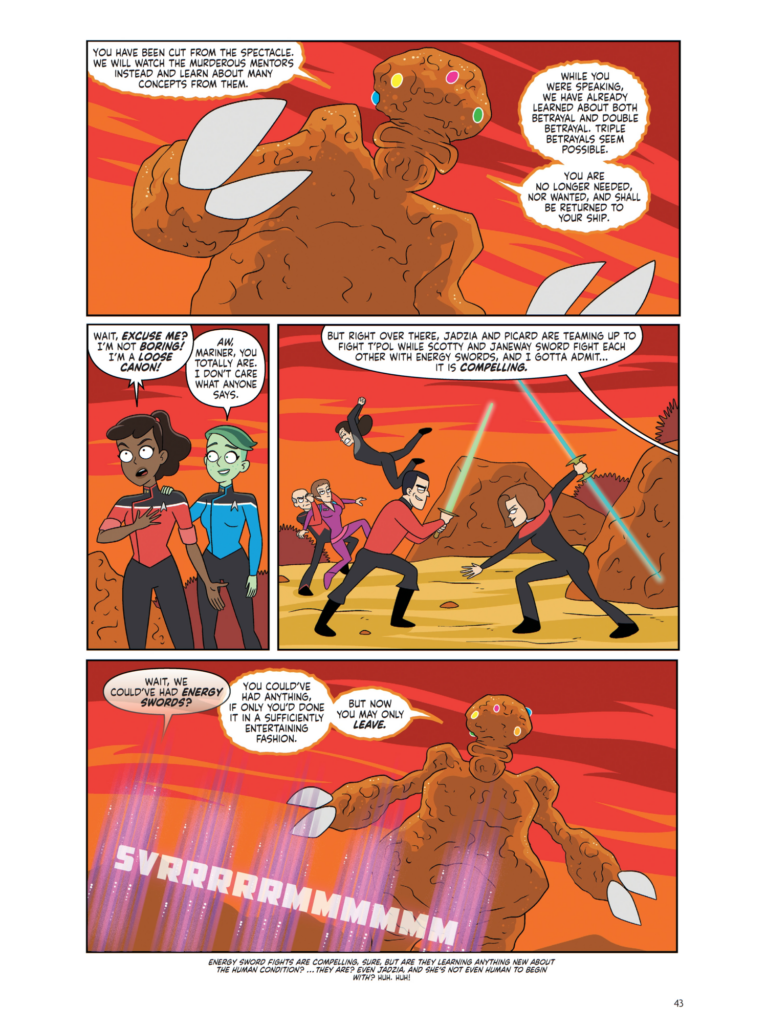
Boimler eventually challenges the Excalbians’ assumption that understanding requires conflict at all. Starfleet explores because it wants knowledge, and that knowledge can come through conversation, collaboration, and cooperation rather than people beating one another senseless for somebody else’s entertainment. The Excalbians listen to him and seem to understand the point. They just appear to prefer the beating-one-another-senseless version, which is Lower Decks in miniature.
The second story is where the collection becomes considerably more interesting, and I think it is probably my favourite of the three.
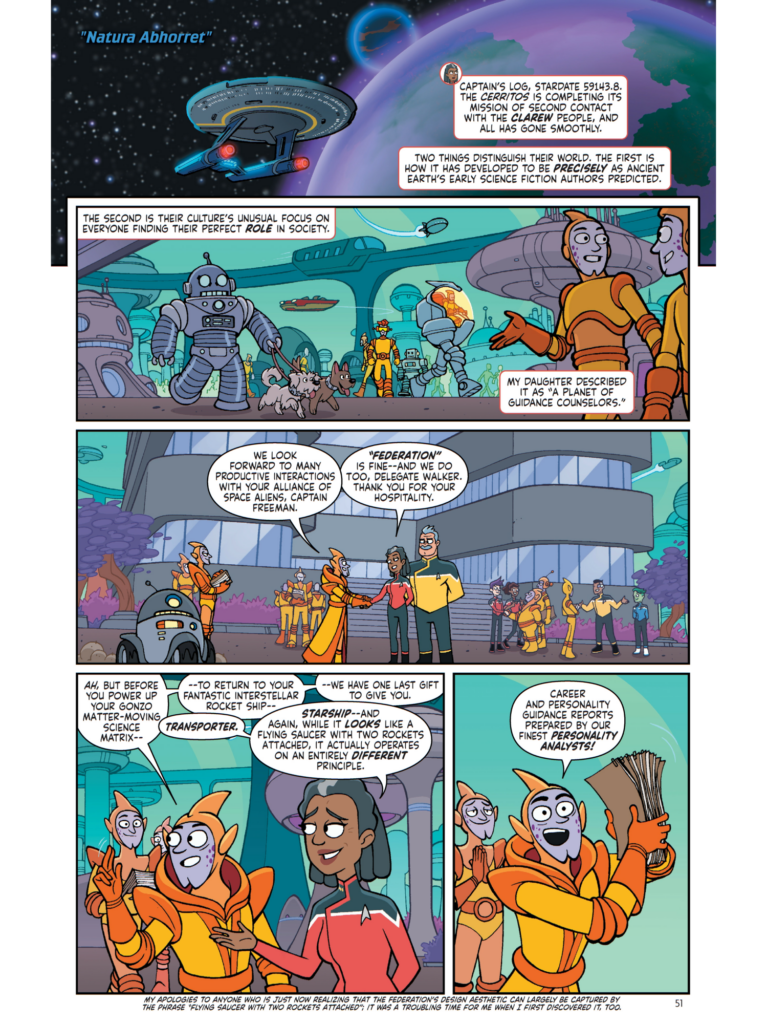
The Cerritos is supposed to be making a relatively straightforward supply run when the crew discovers that the Alecto system has disappeared. It has not exploded, been hidden by a cloaking device, or fallen through another convenient spatial anomaly. There is simply a piece of the universe where the system no longer exists.
What follows begins like a fairly typical Tendi and Rutherford adventure, full of experiments, technical enthusiasm, failed ideas, and increasingly desperate science. Gradually, though, the comedy moves aside as the crew begins to understand what it is actually dealing with, and I really liked the willingness to let the science-fiction breathe.
The crew do not simply wait until somebody produces a perfectly timed burst of technobabble that solves the problem. They form hypotheses, test them, get things wrong, blow things up, reconsider their assumptions, and try again. There is something refreshingly Star Trek about watching Starfleet officers solve a problem by actually doing science rather than merely saying scientific words quickly enough that the audience accepts them.
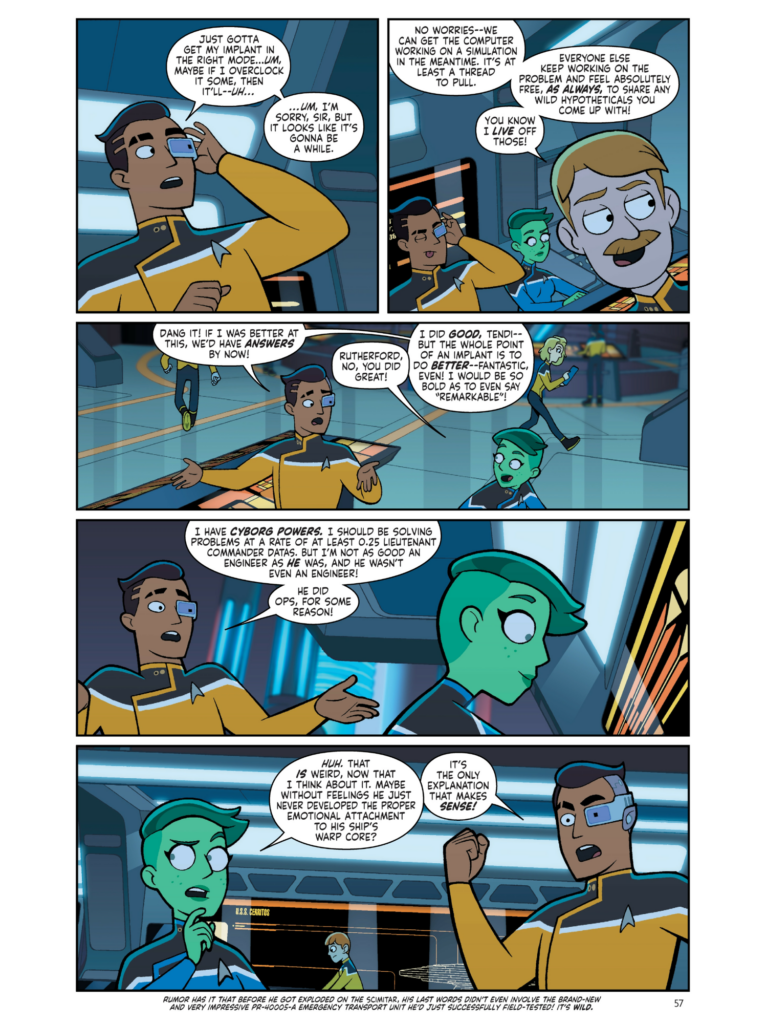
There is a quieter Rutherford story running underneath all of this as well. His implant leaves him questioning whether augmentation means he should somehow be exceptional all the time, as though anything short of maximum performance represents some kind of failure. Tendi gently pushes back against that assumption, and the story allows his relationship with the implant to become more complicated than simply having a supercomputer attached to his head.
Then they discover that the vacuum collapse threatening their universe contains another universe, and that universe contains life.
At that point the entire problem changes. This is no longer a story about destroying a dangerous anomaly because, from the perspective of the beings inside it, Starfleet is trying to destroy their entire existence. From Starfleet’s perspective, however, their expanding universe has already consumed Alecto and will eventually destroy everything else.
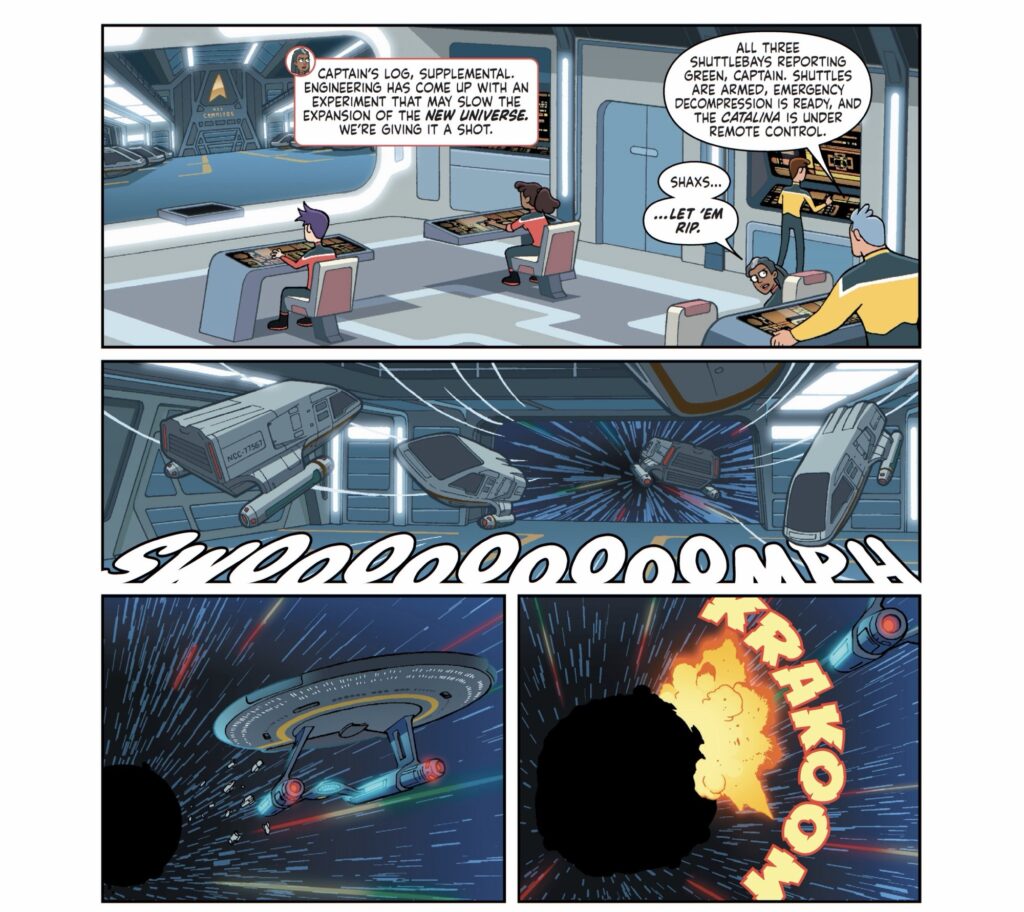
Nobody secretly turns out to be evil, nobody is conveniently revealed as the real villain, and there is no simple moral escape hatch. Both sides want to live, and both have every right to.
That is a far more interesting problem, and it is also where the comic shows that it understands another part of Lower Decks which can easily disappear underneath all the jokes. The series is often at its strongest when the comedy stops for a moment and Starfleet idealism is allowed to take over.
The crew try to find the solution where everybody survives, because that is what Starfleet officers are supposed to do. This time they cannot.
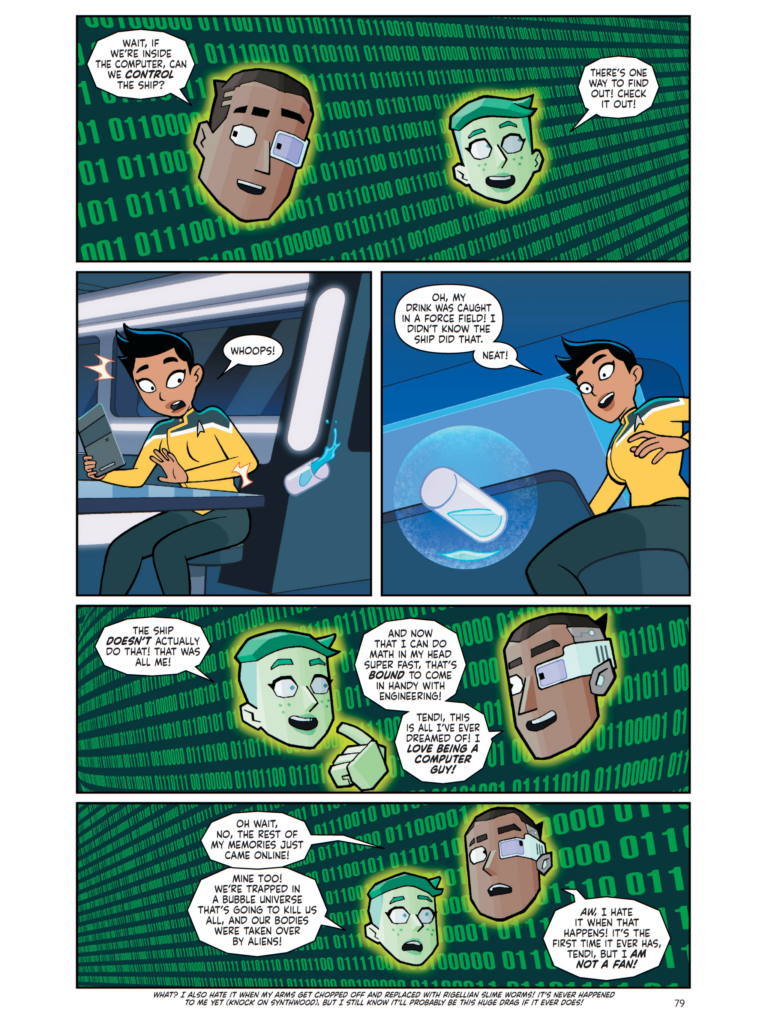
By the end, the alien universe has collapsed, its inhabitants are gone, and the people who lived in the Alecto system are still dead. Tendi sits afterwards and reflects on the fact that they watched an entire universe die, while Mariner complains that nobody won. T’Lyn’s response is one of the moments that stuck with me most from the whole collection: they did not win, they survived.
That is a surprisingly bleak place for a Lower Decks comic to go, and I think it earns it precisely because North does not immediately undo the consequences. There is no last-minute revelation that everybody was secretly transported somewhere safe, no extra burst of science that suddenly makes everything fine. People died, an entire form of life disappeared, and the Cerritos carries on.
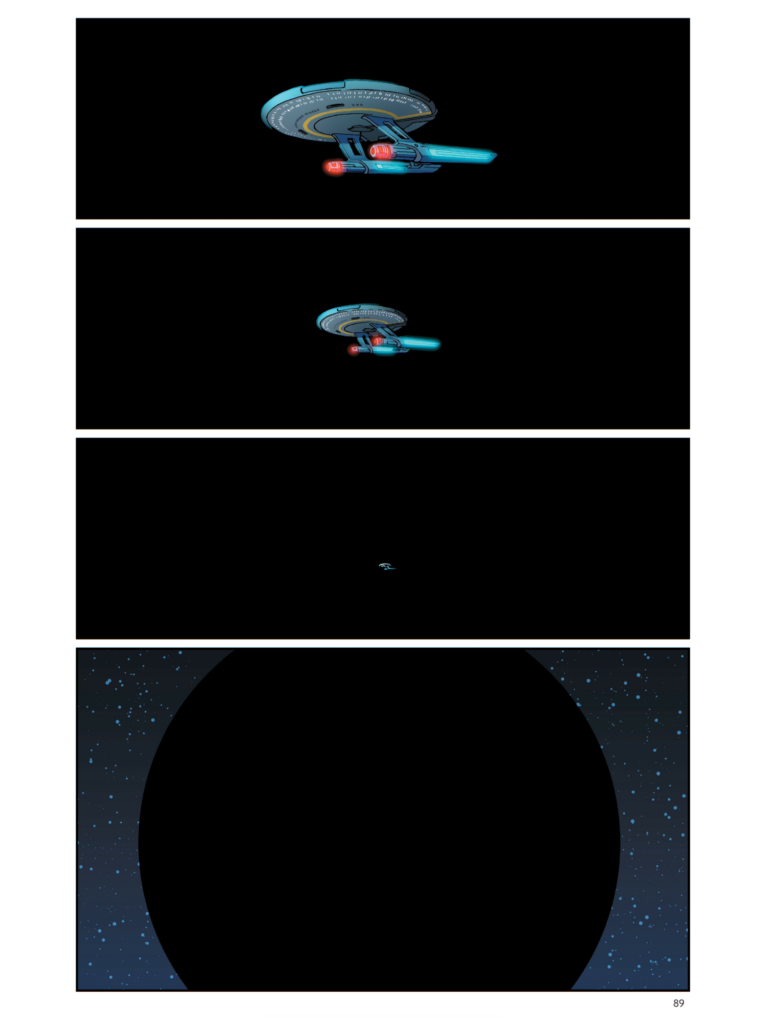
There is still humour around all of this, because this is still Lower Decks, but the comic allows the consequences to sit there for a while rather than immediately stepping over them to reach the next joke.
That willingness to be sincere has always been the secret ingredient of the television series. Strip away the references, shouting, background jokes, and absurdity, and these are still people trying to understand who they are, what serving in Starfleet means, and what sort of officers they want to become. The Alecto story remembers that, and it is considerably stronger because of it.
The final two issues bring in the Department of Temporal Investigations and initially look as though they are heading into much more familiar territory. History begins changing around the crew, the Cerritos passes through increasingly strange versions of itself, different species become dominant, and eventually everybody ends up aboard the Titanic before dinosaurs inevitably become involved.
Star Trek has spent plenty of time travelling through time, and Boimler and Mariner already have some fairly memorable personal experience of it after “Those Old Scientists”, so there were moments when I wondered whether this was becoming a tour through familiar material rather than doing anything particularly new with it.
Then we discover who has been rewriting history.
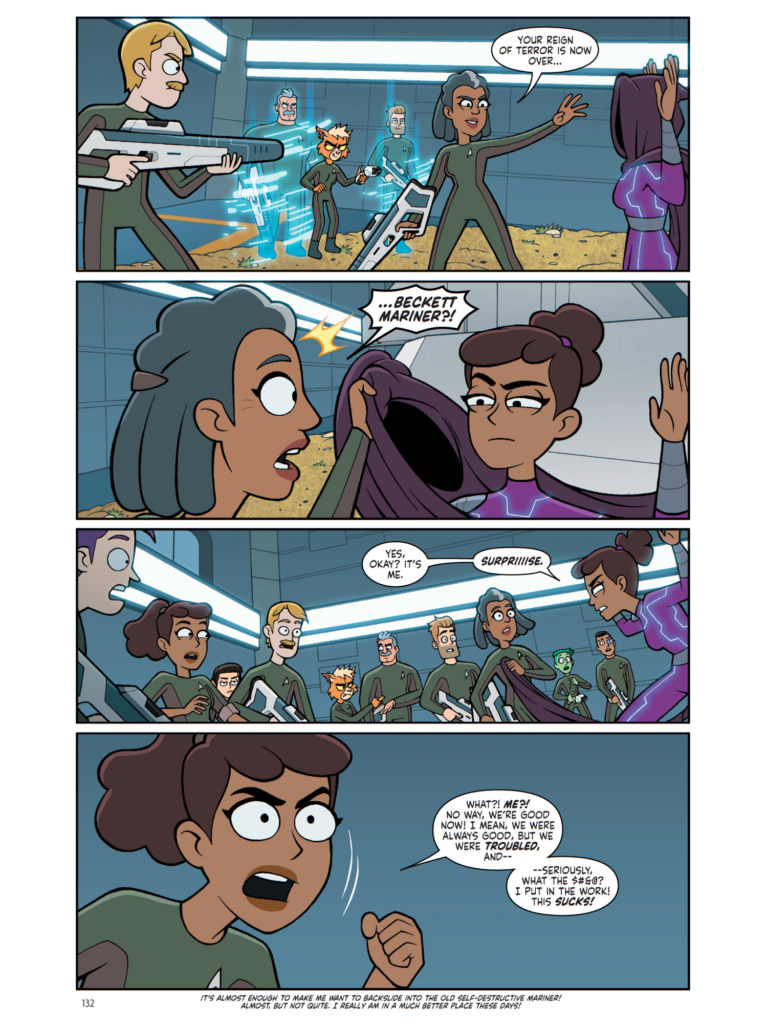
It is Mariner, or rather an older Mariner from a future where Tendi, Rutherford, T’Lyn, and Boimler were all killed during an away mission. She travelled back to save them, failed, and kept trying. Nothing she changed worked, her friends continued to die, and eventually grief became something much uglier. If the universe did not care what she wanted, she decided there was no particular reason she should care what happened to the universe either.
That revelation gives the whole collection a shape I had not really expected when I started reading it.
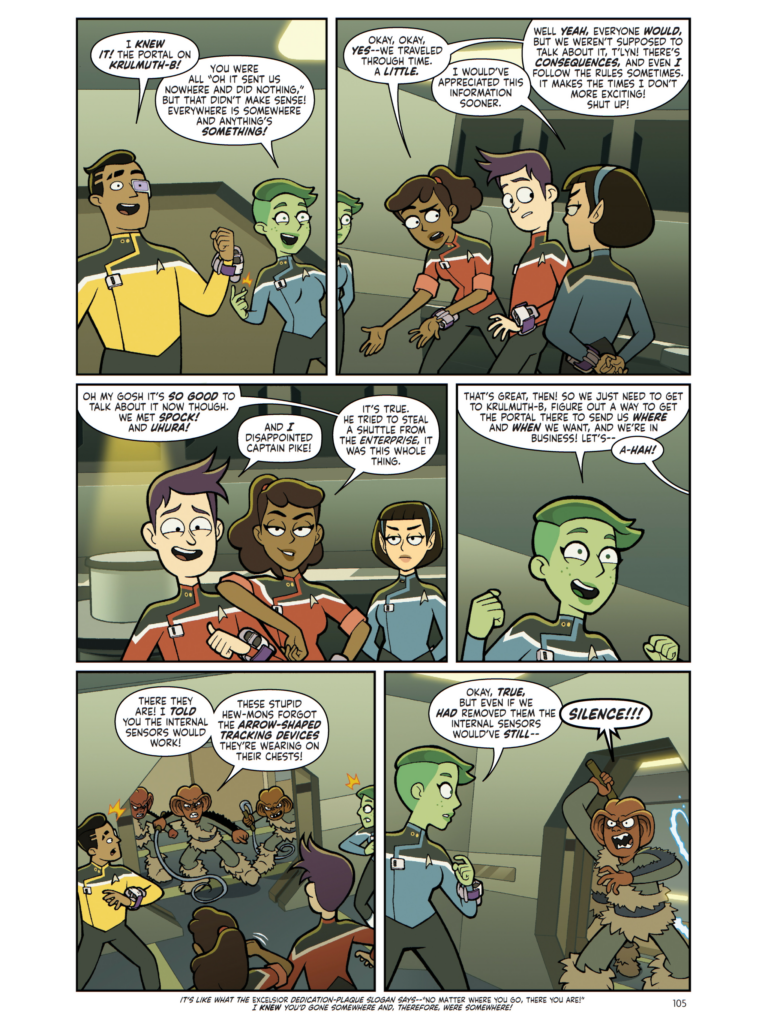
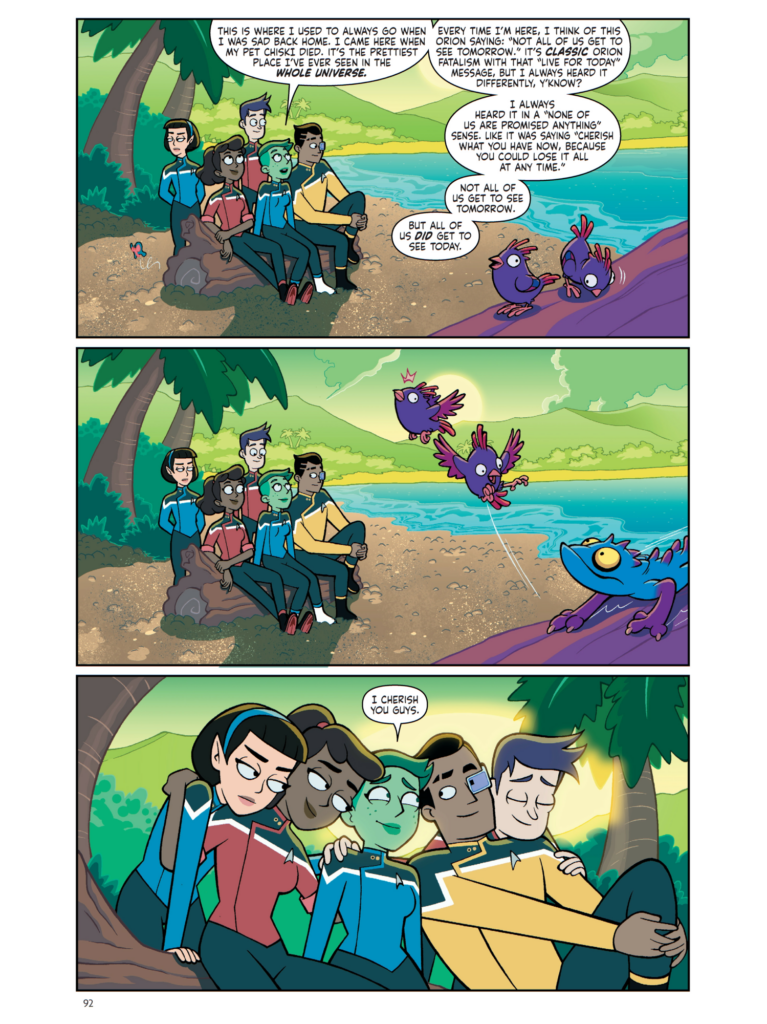
At the beginning of the book, Mariner is frustrated because life aboard the Cerritos is too safe. She wants danger, excitement, and one of those enormous Starfleet adventures that always seem to happen to somebody else. By the end, she is standing in front of the version of herself who got all of that and lost everyone she cared about.
Future Mariner is not really a villain in any conventional sense. She is somebody who survived when her friends did not and broke under the weight of it, which makes what she has done understandable without making it right. When T’Lyn eventually points out that changing the future means this version of Mariner may never exist at all, she accepts that because saving her friends matters more than preserving what she has become.
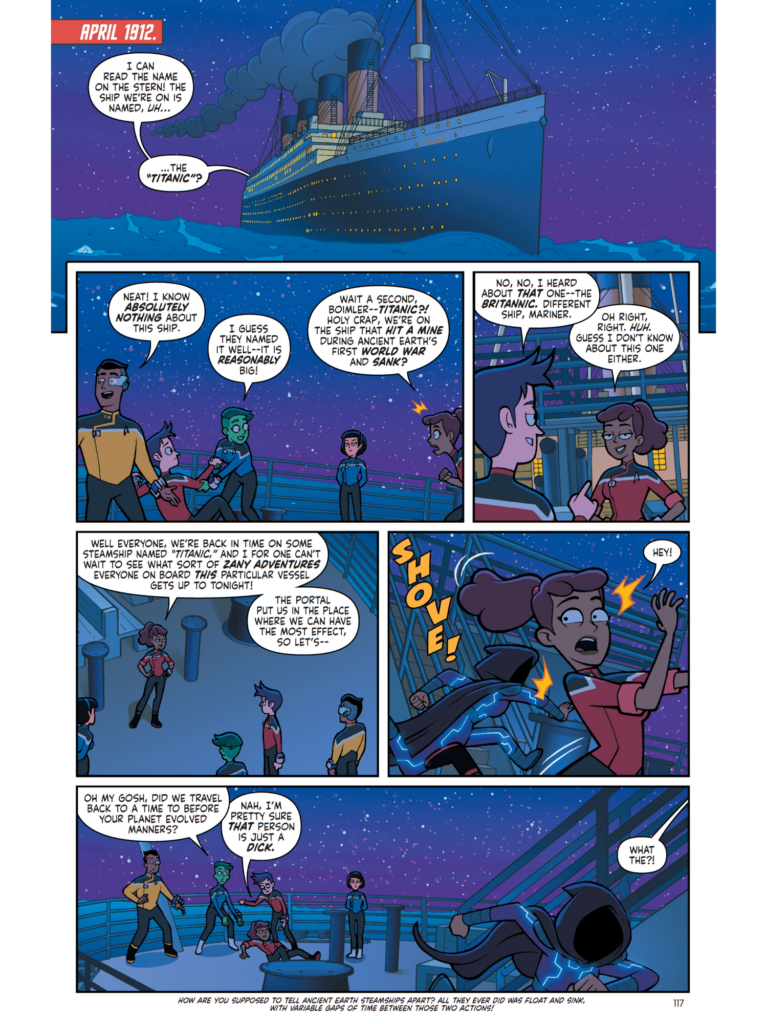
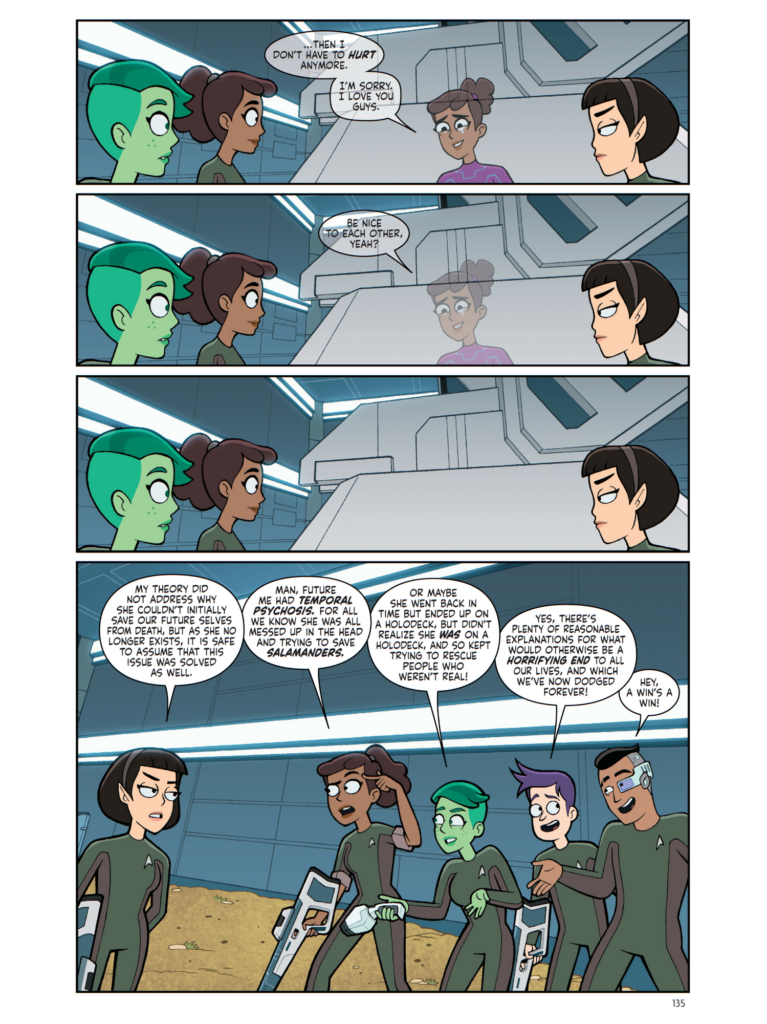
Her final moments, apologising and asking them to be nice to one another before she disappears, are surprisingly affecting for a story which has also featured dinosaurs aboard the Titanic.
Current Mariner eventually records the mission as a happy ending because everyone she loves is still alive, and that makes the joke at the beginning of the volume look rather different. A boring day aboard the Cerritos, where nothing spectacular happens and everybody gets home safely, suddenly does not sound like such a terrible thing.
That thread is probably what holds the collection together for me more than anything else.
It would have been very easy to produce six issues of cameos, references, recognisable starships, and jokes, then call it Lower Decks. North understands that all of those things are only the surface. The series has always been about people living in the gap between the mythology of Starfleet and the ordinary reality of serving in it. Somebody handles second contact, somebody repairs the ship afterwards, and somebody fills out the report after the Enterprise-shaped people have finished saving civilisation.
That gap between the idea of Star Trek and actually living in it is where Lower Decks finds both its comedy and its heart.
The comic is not flawless, though, and its biggest problem is probably closely related to one of the things that makes it so much fun: it is incredibly dense.
North clearly knows Star Trek extraordinarily well, but there are moments where the book feels slightly too determined to prove it. References, margin notes, dialogue, visual jokes, and actual plot information can all find themselves competing for the same piece of page. I enjoy a deep-cut reference as much as anyone, particularly when it is being used for something, but there is a point where a nudge becomes a checklist.
The running commentary along the bottom of many pages illustrates both sides of that problem. As someone who has worked in comic lettering, I really like the idea of using otherwise dead space to add another layer of humour. It gives the comic something resembling the television show’s constant background chatter without forcing everything into the dialogue balloons, and when it works it can be very funny.
There are also moments when it simply becomes one more thing asking me to look at it.
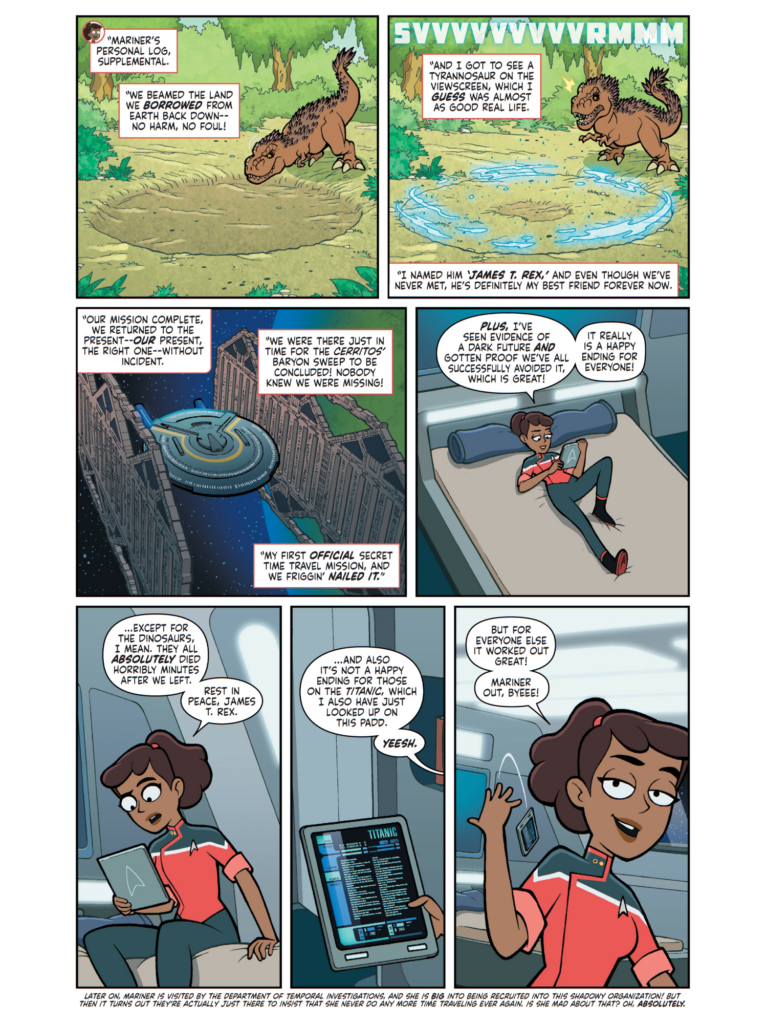
That wider problem is difficult to avoid when adapting something like Lower Decks. Animation can throw several jokes at you in seconds because editing, movement, performance, and sound are all controlling your attention. A comic page cannot hide its density in the same way. Put several characters, multiple balloons, a background gag, another Trek reference, and a footnote into the same grid, and eventually the page simply stops breathing.
That is not solely a writing problem either. It becomes an art and lettering problem because somebody still has to make all of those elements work together without leaving the reader wondering where their eye is supposed to go next.
Derek Charm handles the first two issues, including the colours, before Jack Lawrence takes over the art for the remaining four, with Charlie Kirchoff on colours. The change is noticeable, and I generally find changing artists within a collected story a little disruptive. With a comic based on an animated series, the difference becomes even more obvious because your eye has already been trained to expect a consistent visual language.
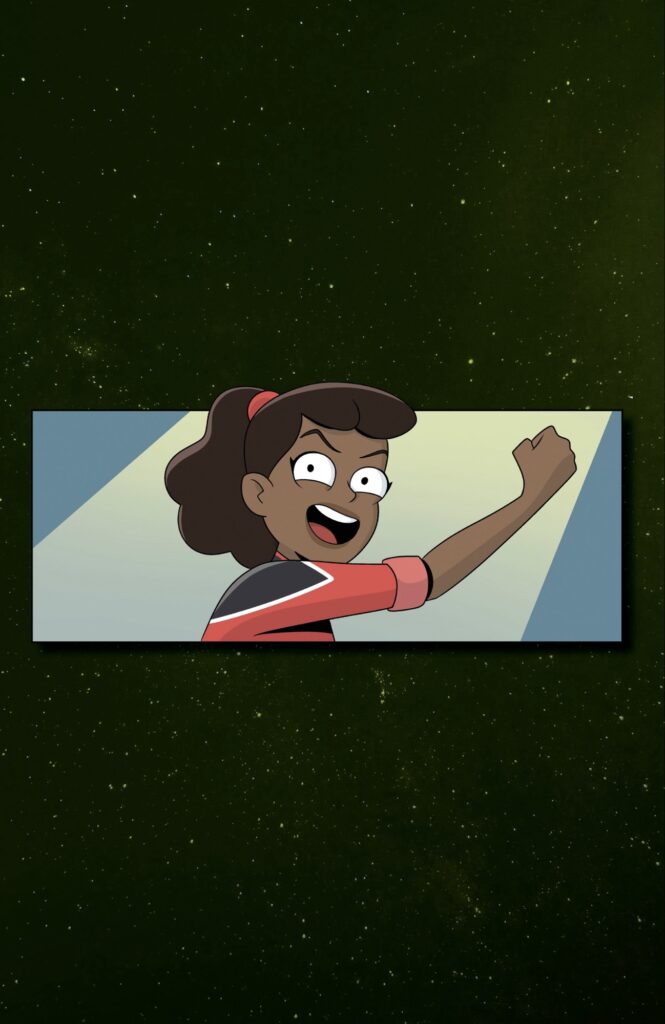
Both approaches work, though, and they suit the material they have been given.
Charm stays particularly close to the graphic simplicity of the television series. His clean shapes, expressions, and silhouettes allow the jokes to land without burying them beneath unnecessary detail, while the deliberate visual nods towards The Animated Series are exactly the sort of reference I enjoy because the artwork communicates the joke without somebody stopping to explain it.
Lawrence gets much of the stranger material and makes particularly good use of it during the Alecto story. As more and more of the universe disappears, the amount of empty space starts doing some of the storytelling itself. Putting the familiar brightness and exaggerated visual language of Lower Decks against that absolute nothingness gives the threat a genuine sense of scale and makes the darker turn in the story feel visually earned rather than simply announced through dialogue.
Clayton Cowles’ lettering probably has one of the hardest jobs across all six issues because the pages are constantly asking him to accommodate North’s dialogue, large sound effects, overlapping conversations, margin commentary, and all the other visual noise that comes with trying to recreate Lower Decks on paper. Something as simple as the transporter SVRRRRRMMMMMM might not look particularly significant, but those little decisions contribute enormously to how a comic reads.
Having done the job myself, I probably notice that craft more than some readers. Good lettering should guide you through the page without making you consciously think about being guided, and most of the time Cowles manages that despite the amount of material being thrown at him.
The book does not try to reinvent comics as a medium, and I do not think it needs to. Its first job is simply to make Lower Decks work on paper, which is difficult enough.
The more interesting question is whether it understands why Lower Decks works in the first place, and for the most part it absolutely does.
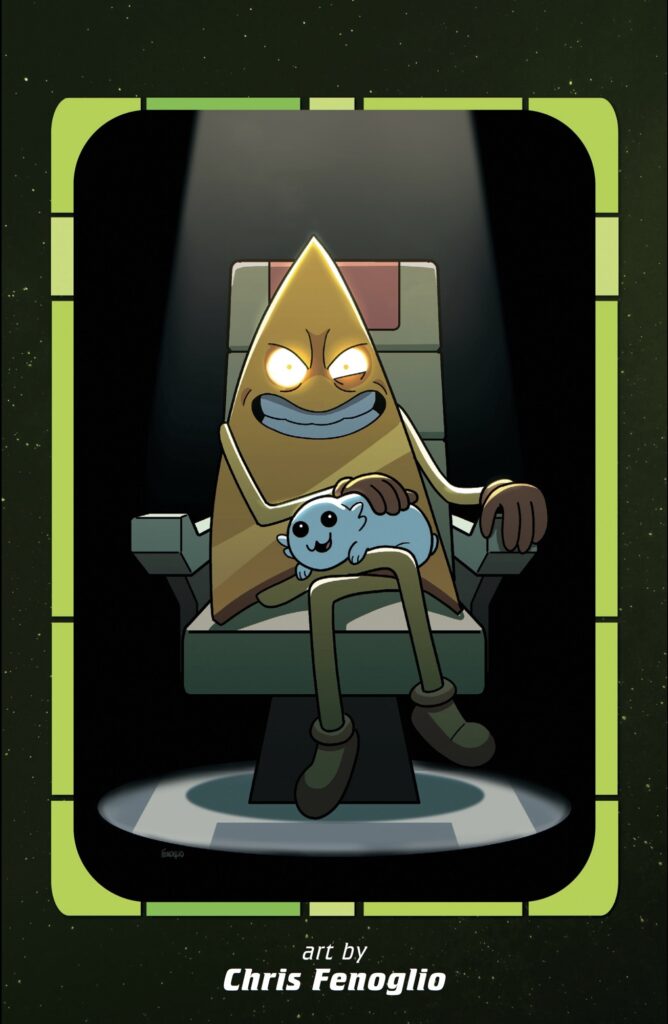
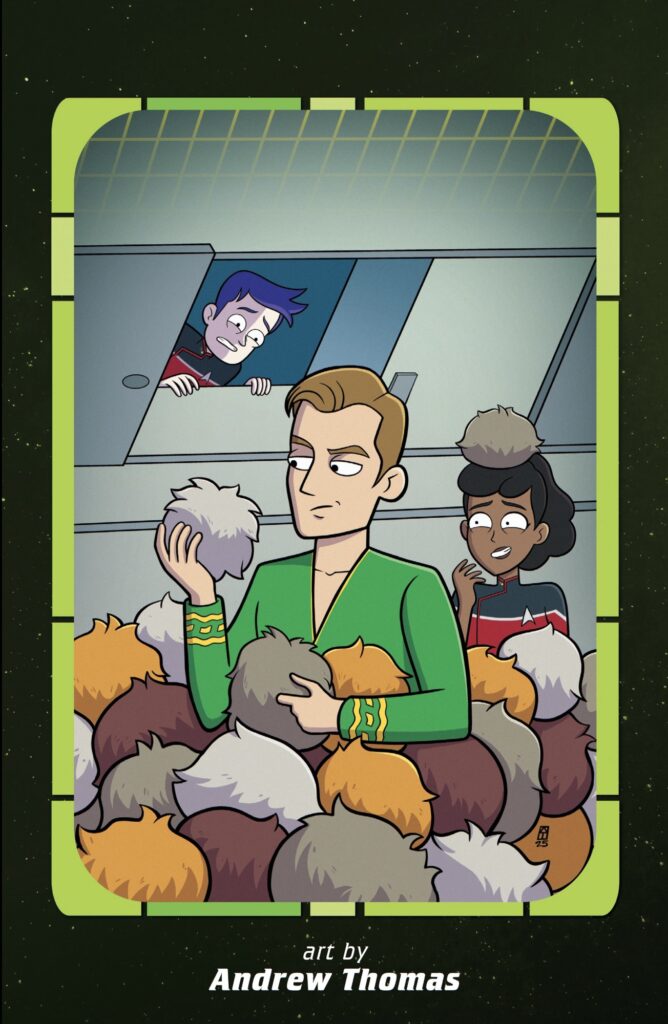
It is comfortable laughing at Kirk, Picard, Starfleet bureaucracy, time-travel logic, and decades of occasionally ridiculous Trek continuity because the joke comes from knowing and liking the material rather than being embarrassed by it. That self-awareness has always been one of the strengths of Lower Decks. It laughs at Star Trek because it understands Star Trek, not because it thinks it is above it.
That distinction matters to me.
Star Trek: Lower Decks, Volume 1: Second Contact is not trying to reinvent the warp core, nor should it. Its success comes from taking familiar pieces of Trek history and making them useful again rather than simply displaying them, while allowing these characters to remain recognisably themselves in a completely different medium.
More importantly, underneath the Excalbians, collapsing universes, time travel, dinosaurs, absurd footnotes, and all the other chaos, it remembers what actually matters to the people aboard the Cerritos.
They want the adventure, because of course they do.
They just want everybody to come home afterwards.
7.5/10