Star Trek: TOS — The Man Trap (S01E01)
There is a specific kind of irony in the fact that Star Trek, a franchise built on the idea that humanity could sort itself out and reach for something better, began its broadcast life by killing the last member of a species and then moving on to the next episode. That’s not a criticism. Or rather, it isn’t only a criticism. It’s the most interesting thing about The Man Trap, an episode that is simultaneously the wrong introduction to Star Trek and, in its final thirty seconds, one of the most honest expressions of what Star Trek was trying to be.
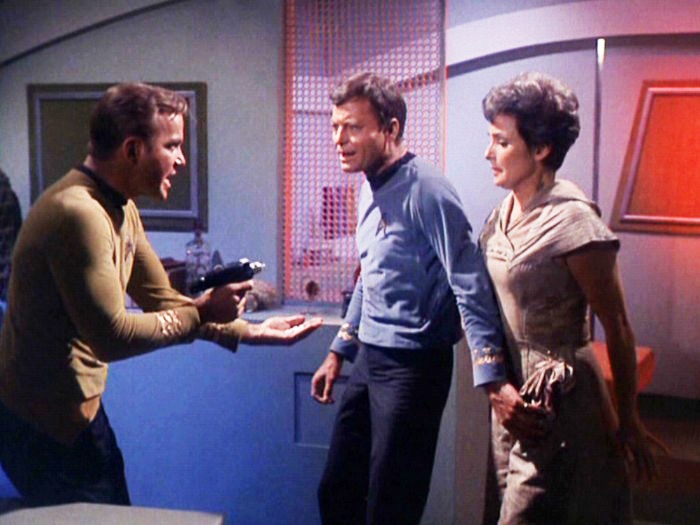
NBC chose it as the first episode broadcast in September 1966. The actual first pilot was The Cage, rejected and shelved. The second, Where No Man Has Gone Before, was accepted but considered a less accessible introduction for new audiences. The Man Trap was produced early in the season and chosen because it was accessible, because it had a monster and a body count and a clear narrative shape that didn’t demand too much of an audience encountering this universe for the first time. That logic is understandable. It’s also telling. The episode they chose to launch the franchise is a creature feature. What Trek would become is something else entirely.
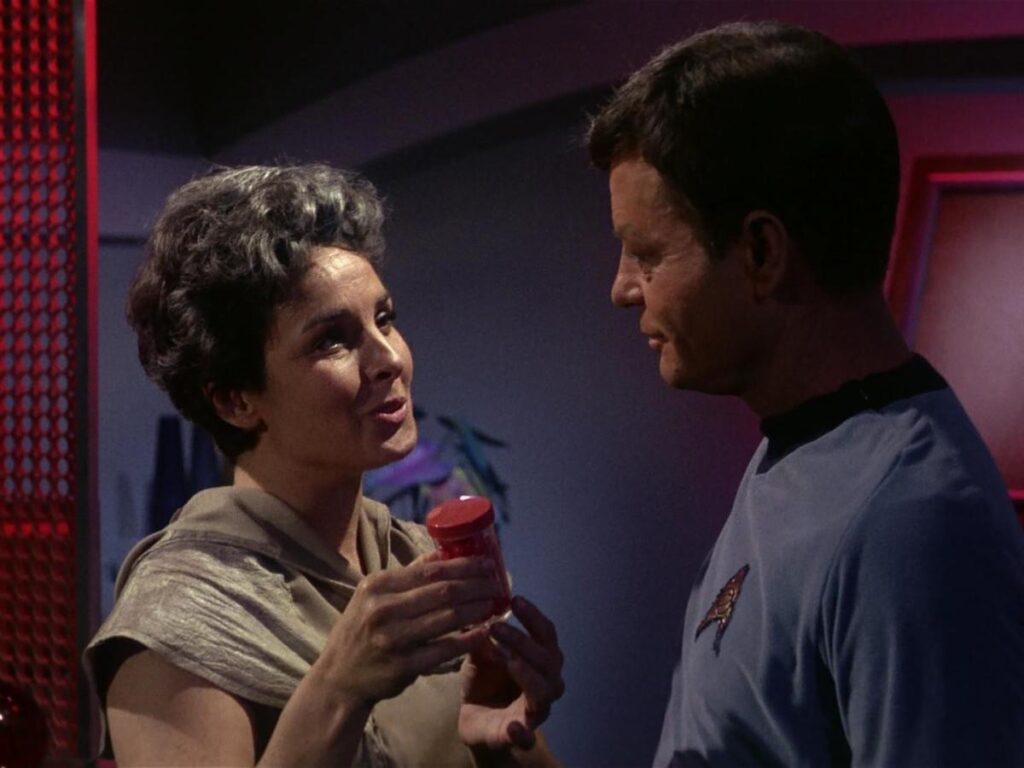
What The Man Trap does well, and does quickly, is people. DeForest Kelley’s McCoy arrives fully formed. Within the first scene on M-113, you understand his warmth, his sentimentality, his particular vulnerability, the way old attachments can override professional judgement. That’s not a flaw in the character, it’s the point of him, and Kelley makes it without overplaying. The rapport between Kirk and McCoy is easy and credible from the first exchange, the kind of friendship that doesn’t need to explain itself. William Shatner, sometimes criticised for the broader choices he’d make later in the run, plays it straight here, and the dynamic between the two of them gives the episode more human texture than its premise strictly requires.
The Uhura and Spock scene on the bridge is two minutes of careful character work that tells you everything you’ll ever need to know about both of them. Nichelle Nichols is warm and lightly sardonic in equal measure. Leonard Nimoy establishes the Spock note immediately, the particular brand of blankness that is actually, on closer inspection, a choice rather than an absence. Strange New Worlds would later give that scene additional resonance, but it doesn’t need it. It works on its own.
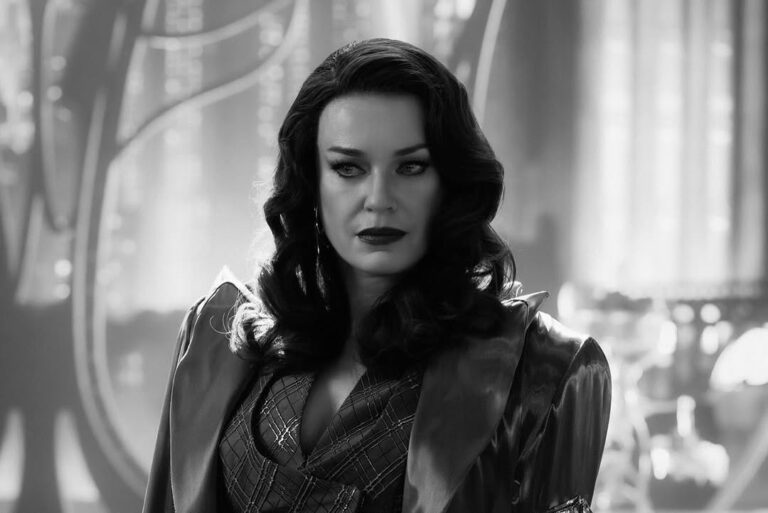
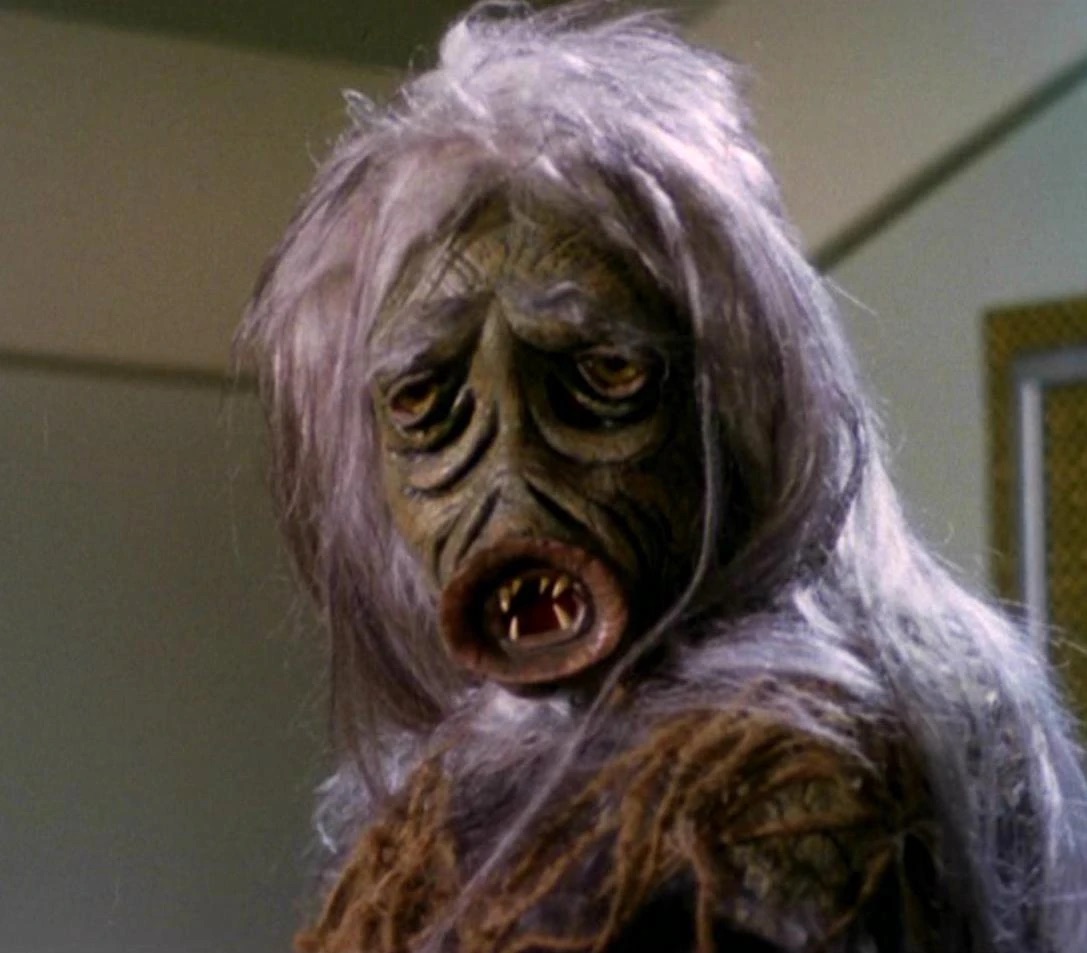
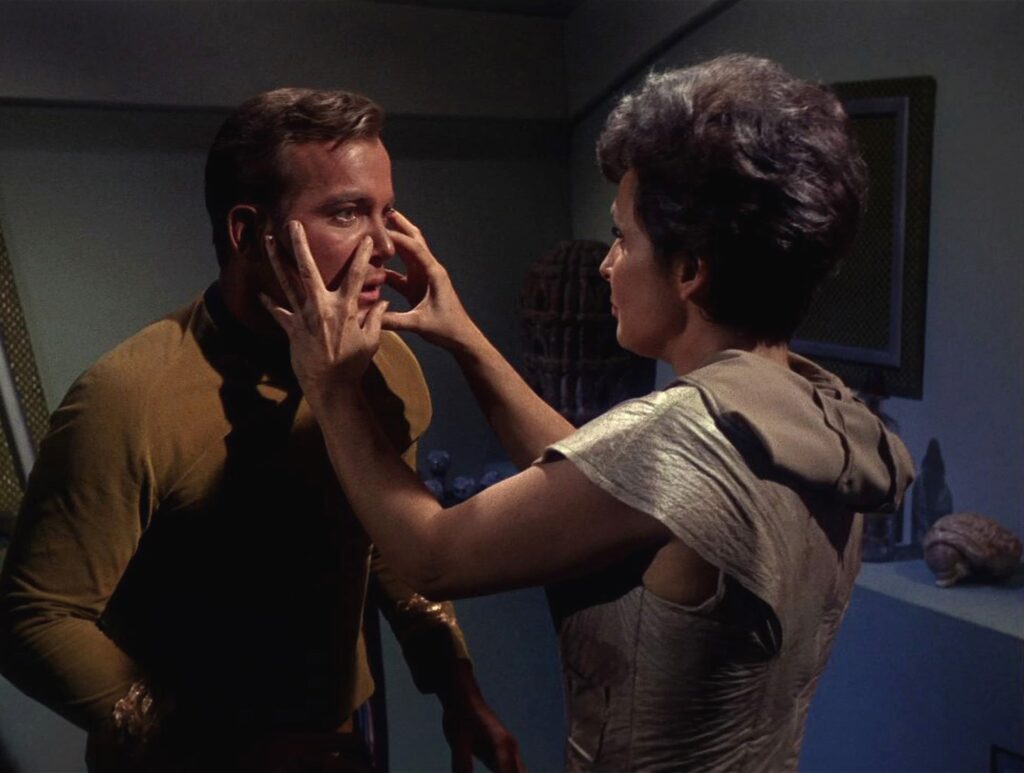
The shapeshifting mechanic at the centre of the plot is more interesting than the episode quite realises. The creature doesn’t project a single disguise onto everyone who sees it. Each member of the landing party sees a different Nancy Crater, drawn from their own psychology, their own idea of desire or recognition. That’s genuinely unsettling as a concept. It implies a level of telepathic intimacy that the horror genre rarely makes good on, because to fully explore it you’d have to spend time in each character’s interior life, and a forty-five minute monster episode doesn’t have that kind of room. The show engages with the idea in the plot mechanics, but doesn’t press as hard on it as it might. That’s not a failure exactly, more a hint of what a longer, more ambitious version of this story could have done.
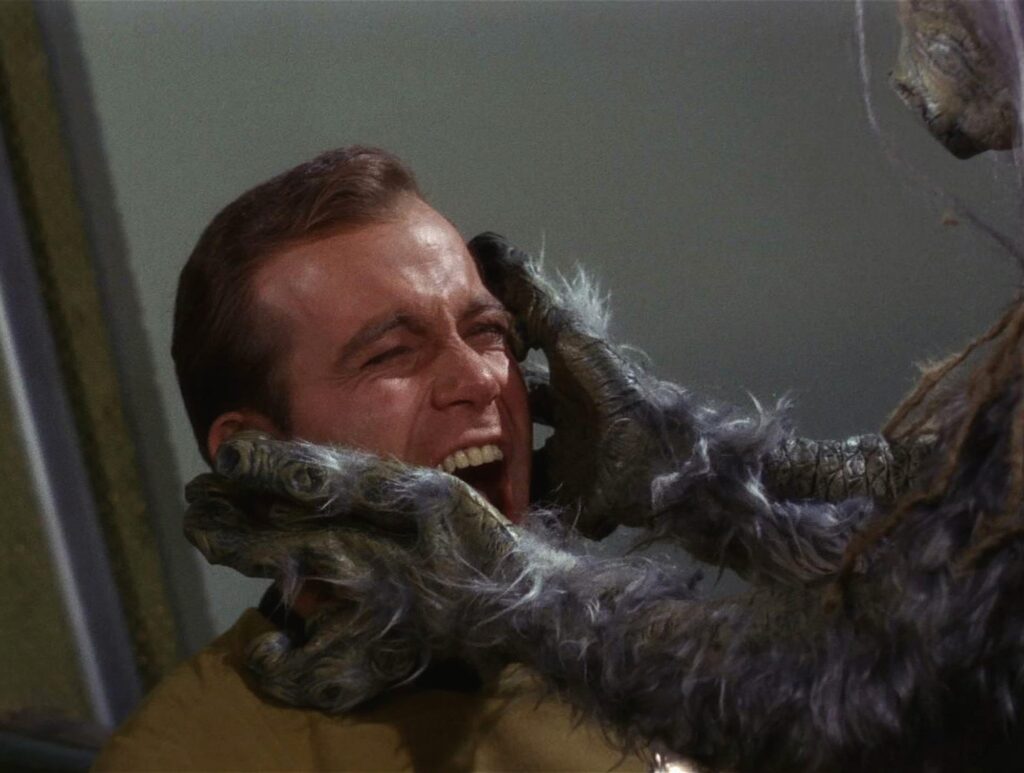
The sexism, though. You can’t simply note it and move on, because it isn’t incidental. It’s structural. The title itself functions as a double meaning that frames women as the danger, which is a framing the episode does very little to complicate. A scene in a corridor where Rand is objectified by crewmen is uncomfortable enough on its own, and the fact that one of them is already compromised by the creature doesn’t entirely redeem it as a storytelling choice. Uhura’s introduction involves her flirting with Spock and describing herself as an illogical alien, which is a line that exists entirely to establish Spock’s emotional indifference rather than to serve Uhura’s character. The episode’s dominant coding is feminine throughout, the creature as seductress, the creature as the face of an old love, the creature as something that pulls men toward it and then takes from them. That’s a recognisable template, and not one Trek should be proud of. You can note that it reflects 1966 American television rather than Trek’s ideals, but Trek was supposed to be better than 1966 American television. That was the whole point.
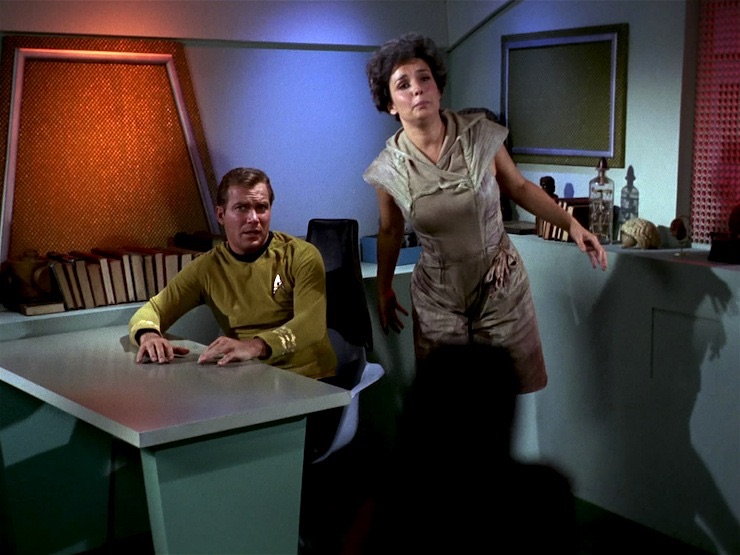
What redeems the episode, and what has kept people arguing about it for sixty years, is the conservation question that Robert Crater raises and that the script never quite answers satisfactorily. The creature was killing to survive. Salt is not a scarce resource in the 23rd century. Crater’s comparison to the American buffalo is coherent: here is the last of a species, intelligent enough to mimic, old enough to remember when there were millions of its kind, and it is being hunted because it hungers. Kirk dismisses the argument with an ad hominem attack on Crater’s state of mind. It’s a reasonable point in the moment, given that people are dying. It’s also a way of avoiding the harder question, which is whether there was a third option that nobody tried very hard to find. Hindsight makes this easy to judge, and the episode’s pacing doesn’t really allow for the deliberation it would have taken. But the question hangs there regardless, unanswered and uncomfortable.
And then the final scene. The creature is dead. The last of its kind is gone, not stunned, not relocated, not fed and contained, but killed. Kirk stands on the bridge and tells Spock he was thinking about the buffalo. It’s a quiet, understated moment, played without sentimentality, and it is the most honest thing the episode does. Trek knew what it had just depicted. It killed the last of something and then had the integrity to feel bad about it. That small admission carries more moral weight than the preceding forty minutes of plot.
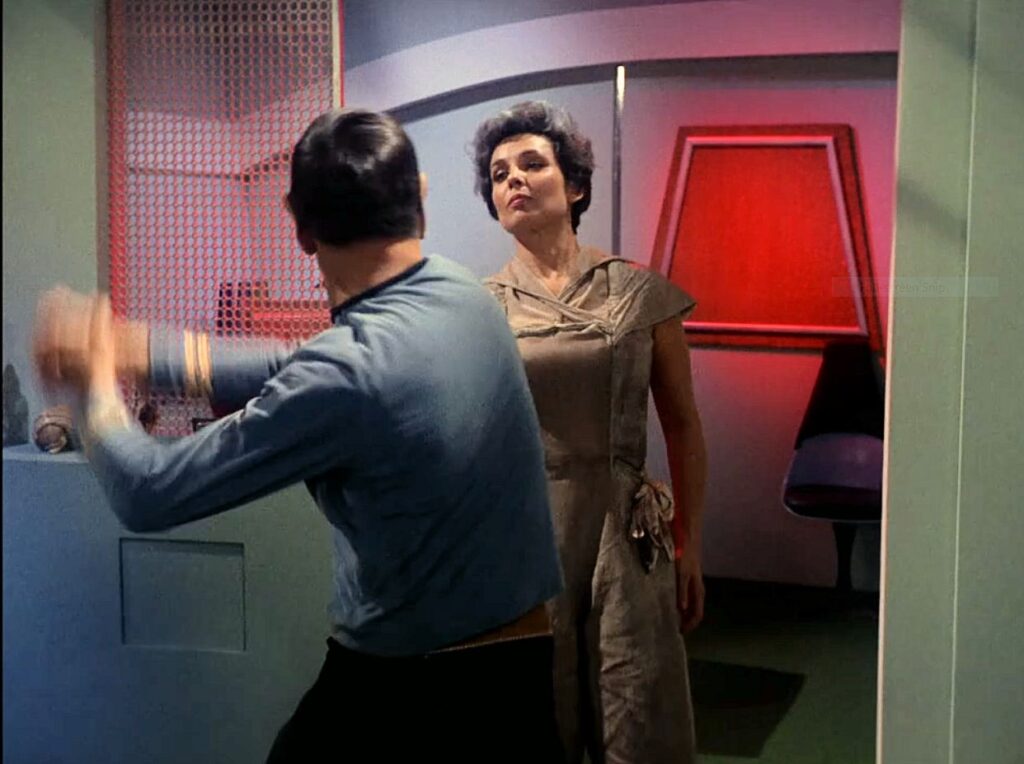
That’s the contradiction The Man Trap lives inside. It’s a monster story that kills its monster, chosen to begin a franchise whose deepest values argue against exactly that kind of clean resolution. It’s not a good introduction to what Star Trek is. It is, though, in spite of itself, a demonstration of what Star Trek could be honest about: the uncomfortable things that don’t resolve neatly, the choices that were probably wrong, the last of something walking into the dark while someone else thinks about the buffalo.
McCoy stands frozen in horror after he fires. The episode doesn’t tell you if the silence that follows is enough.
It shouldn’t.
7/10