Star Trek: TOS — The Menagerie, Parts I & II (S01E11–12) Review
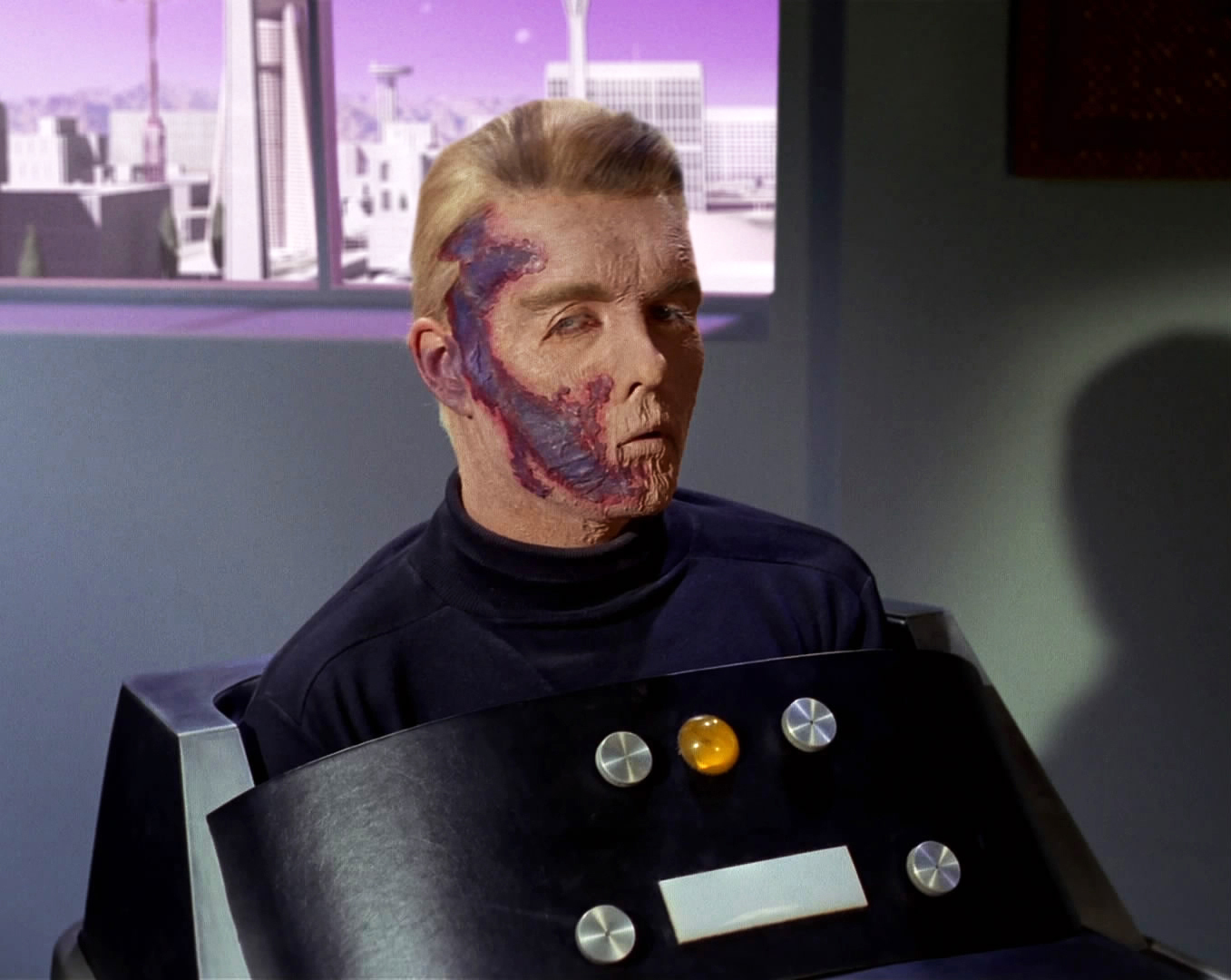
Christopher Pike can cross the galaxy, command the Enterprise, and survive Talos IV. Then Star Trek puts him in a black box and gives him two words. One light for yes, two for no. There is something genuinely horrific about Pike when Kirk first sees him on Starbase 11, his face scarred, his body immobile, and this enormous black chair effectively built around what remains of a former captain. It is a brilliant image, grotesque, tragic, and instantly memorable. It is also, technologically speaking, completely ridiculous. Starfleet has warp drive, transporters, and machines that can translate alien languages more or less on the fly, yet apparently the finest medical minds of the 23rd century looked at Christopher Pike and thought one flash for yes, two for no. Job done.
I will come back to that chair.
What matters at first is the man sitting inside it, because this is the former captain of the Enterprise. Not a stranger, not simply another injured officer, but the hero of another version of Star Trek. A version that failed. And that, more than Spock’s mutiny or the Talosians or even Pike himself, is what fascinates me about “The Menagerie.” Star Trek takes its rejected beginning, digs it up, cuts it apart, puts a new frame around it, and says this happened. Christopher Pike existed, this was his Enterprise, Spock served under him, and Talos IV happened. The failed pilot becomes history. The discarded captain becomes legend. Star Trek effectively holds a funeral for the show it might have been, then quietly folds the body into its own mythology.
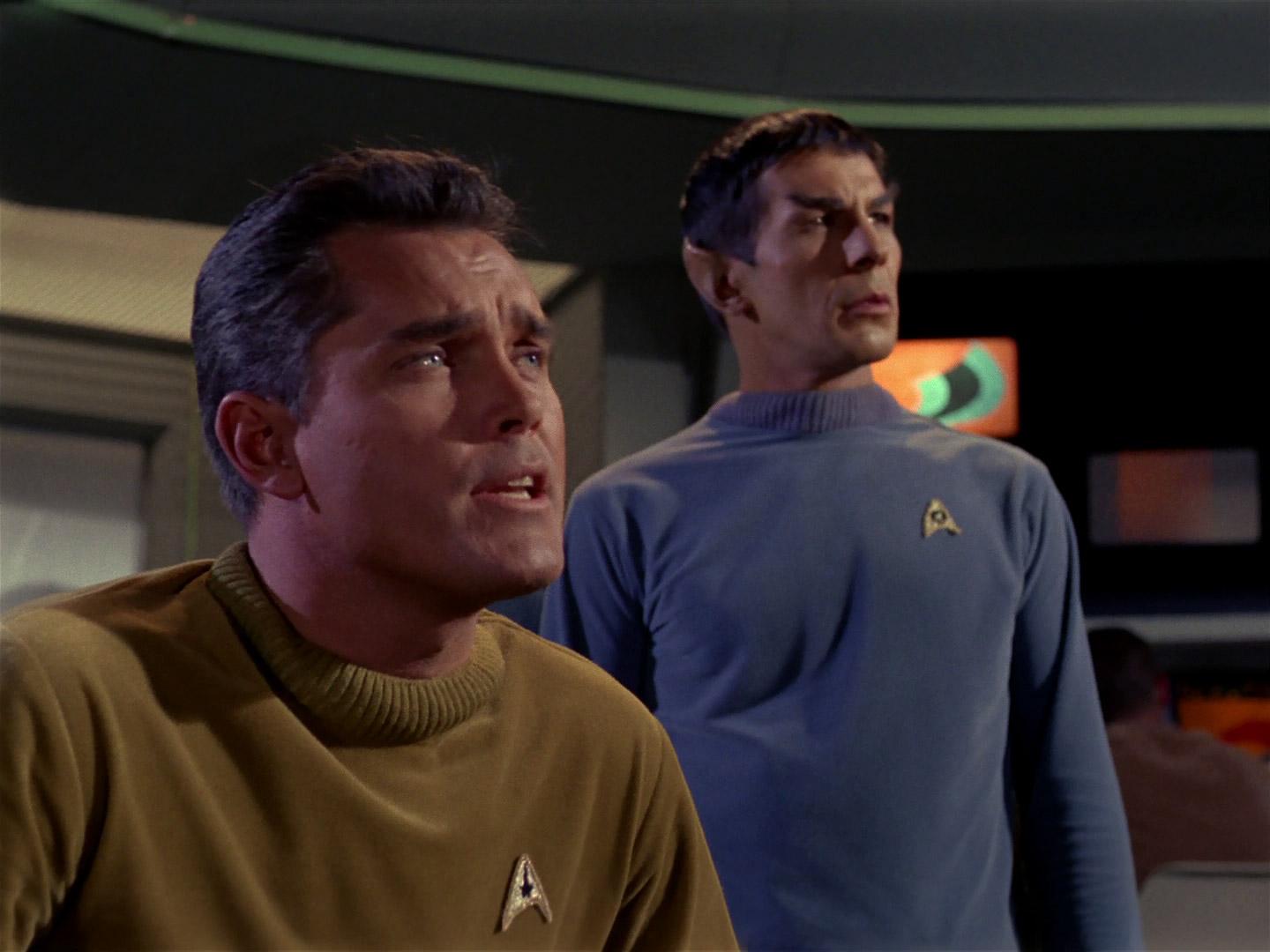
The practical reasons for doing it were less poetic. Desilu and NBC had already invested heavily in “The Cage,” the footage existed, and Gene Roddenberry’s newly filmed framing story effectively turned one episode’s production work into a two-part story. It was a production shortcut at a point when the weekly schedule was causing problems, but it is also a rather magnificent piece of storytelling economy. As someone who used to write and letter comics, I love the sheer brass of it, because comics teach you very quickly that space matters and every panel has to pull its weight. Sometimes one image needs to carry the plot, the emotion, and the transition into the next scene at the same time. Change the caption, alter what comes before it, or put an old image beside something new, and suddenly it means something completely different.
That is exactly what “The Menagerie” does to “The Cage.” It does not simply replay old footage, it changes what the footage means. In the original pilot, Pike fights the Talosians because he refuses to exchange reality for illusion. He wants the bruises and the skinned knees. He would rather suffer through a real life than live happily inside a fantasy designed by somebody else. Now we watch him make that argument while the man in the black chair sits beside Kirk, looking at his younger self and knowing exactly where reality eventually took him.
That is not recap. It is retrospective tragedy.
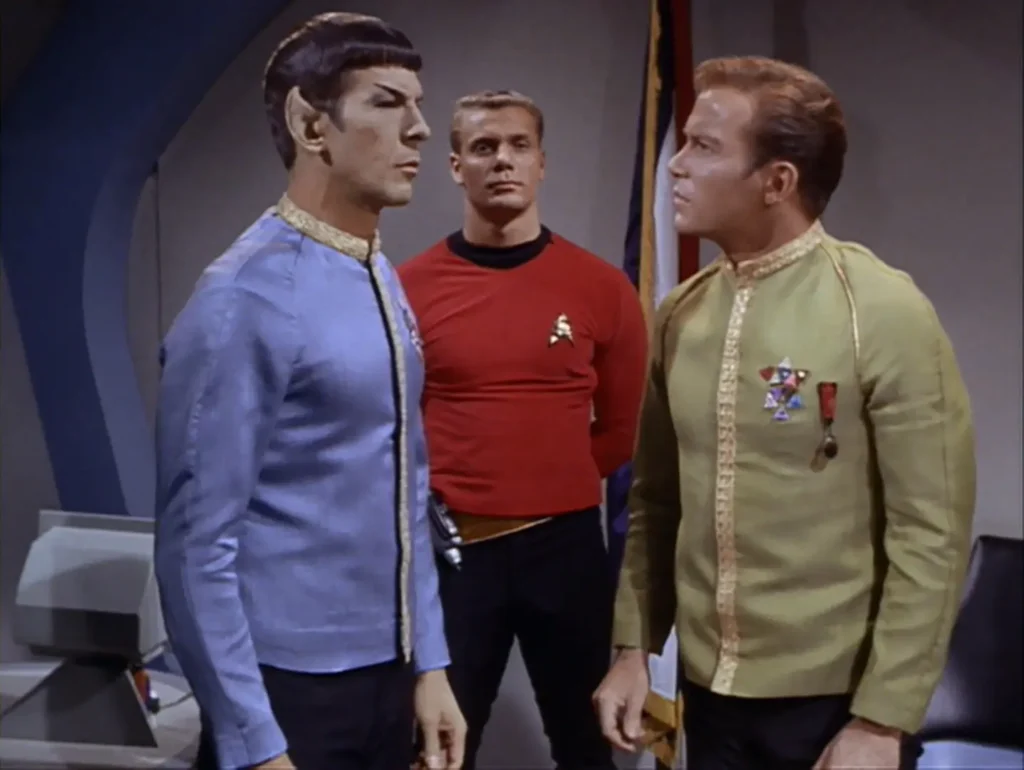
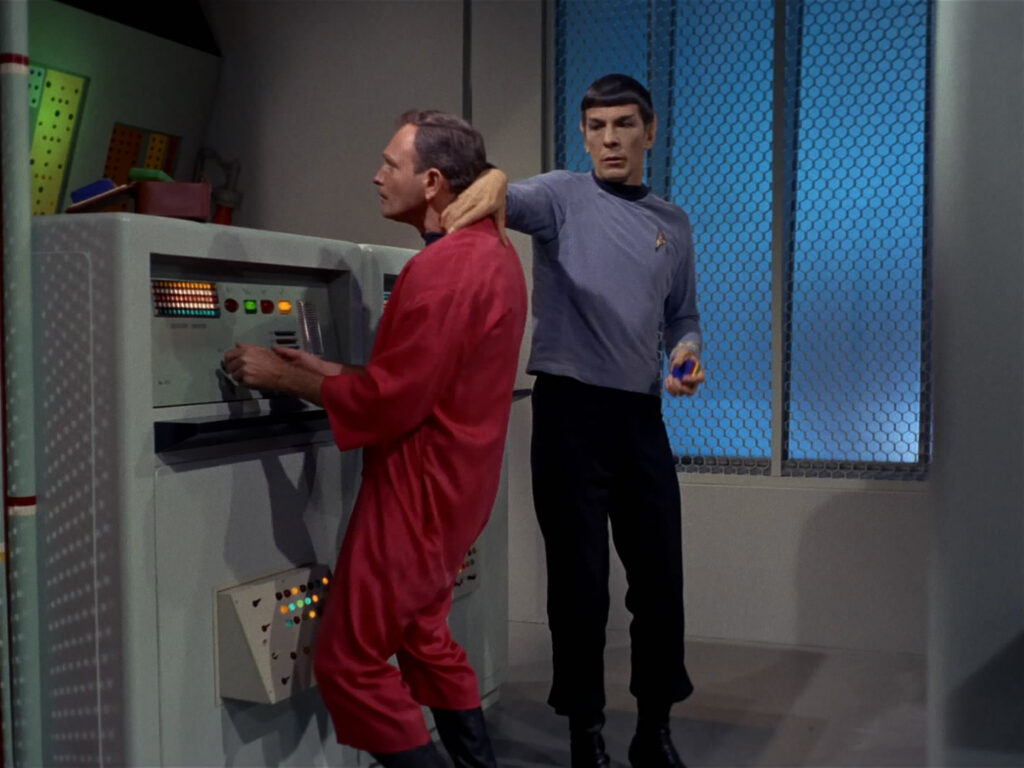
Before we get there, though, Spock steals the Enterprise, and I absolutely love it. My day job is in digital forensics and incident response, so Spock’s little one-Vulcan mutiny presses several specific buttons in my brain. He is essentially the nightmare trusted insider. He already has access, understands the systems and procedures, knows where the controls are, and, more importantly, knows the people who are supposed to stop him. Spock uses falsified recordings of Kirk’s voice to manufacture orders, nerve-pinches a technician, abducts Pike, places him aboard the Enterprise, and locks the ship under computer control. He does all of this while everyone around him confidently explains why he cannot possibly be responsible. A Vulcan cannot lie. A Vulcan cannot be disloyal. Spock cannot betray his captain. Meanwhile, Spock is quietly stealing the Enterprise from under their noses.
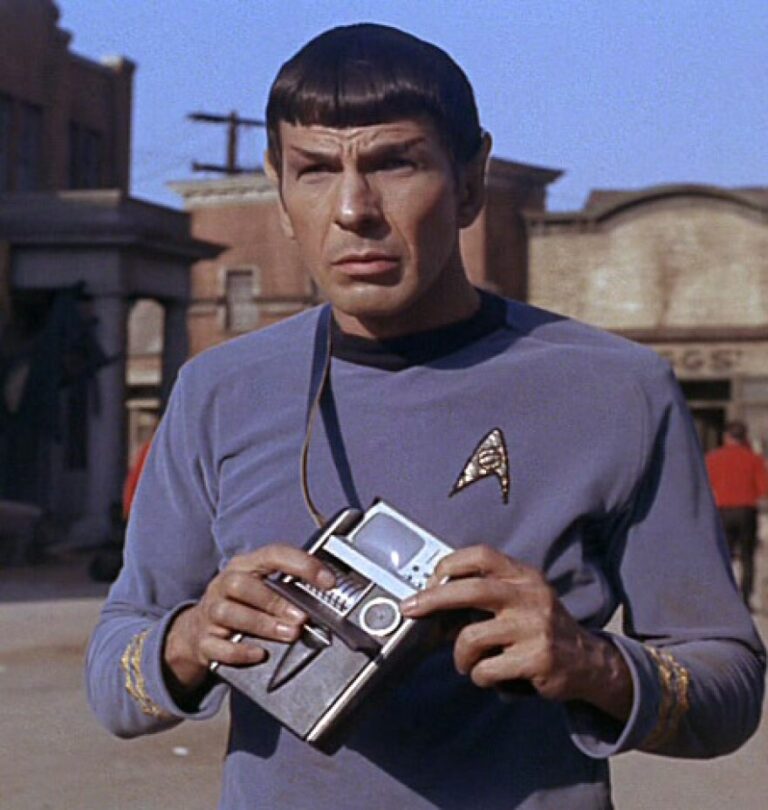
Leonard Nimoy is wonderful through all of this because he never plays Spock as a man who has suddenly lost control of his emotions. There is no wild-eyed desperation, no big breakdown, and no moment where the Vulcan mask slips and a completely different person appears underneath. He is calm, deliberate, and prepared. His motivation is compassion, but his execution is ruthlessly logical. He feels something profoundly human and solves it like a Vulcan.
For me, this is the first time we see a genuinely complete Spock. We have seen the scientist and the outsider, the man fascinated by Balok while everyone else is staring at a countdown clock, occasionally amused and frequently baffled by the humans around him. “The Menagerie” actually tests him, not with a logic puzzle but with somebody he loves. I do not think Spock would ever call it love, obviously. He would probably raise one eyebrow, explain the limitations of an imprecise human word, and make McCoy want to throw something at him. But look at what he does. Pike is alive. Starfleet can keep him alive. Spock is not rescuing his former captain from death, he is risking his career and his own life because he believes Christopher Pike might still have a chance at happiness.
That is huge, and I do not entirely buy the argument that Spock is simply behaving illogically because his human emotions have overwhelmed him. The reason for his actions is deeply emotional. Pike matters to him, and Pike’s suffering matters to him. The plan itself is anything but impulsive. Spock has thought through the systems, the access he needs, the likely responses, and how to keep the rest of the crew from sharing responsibility for what he is doing. It is almost perfect, right up until Kirk gets in a shuttle.
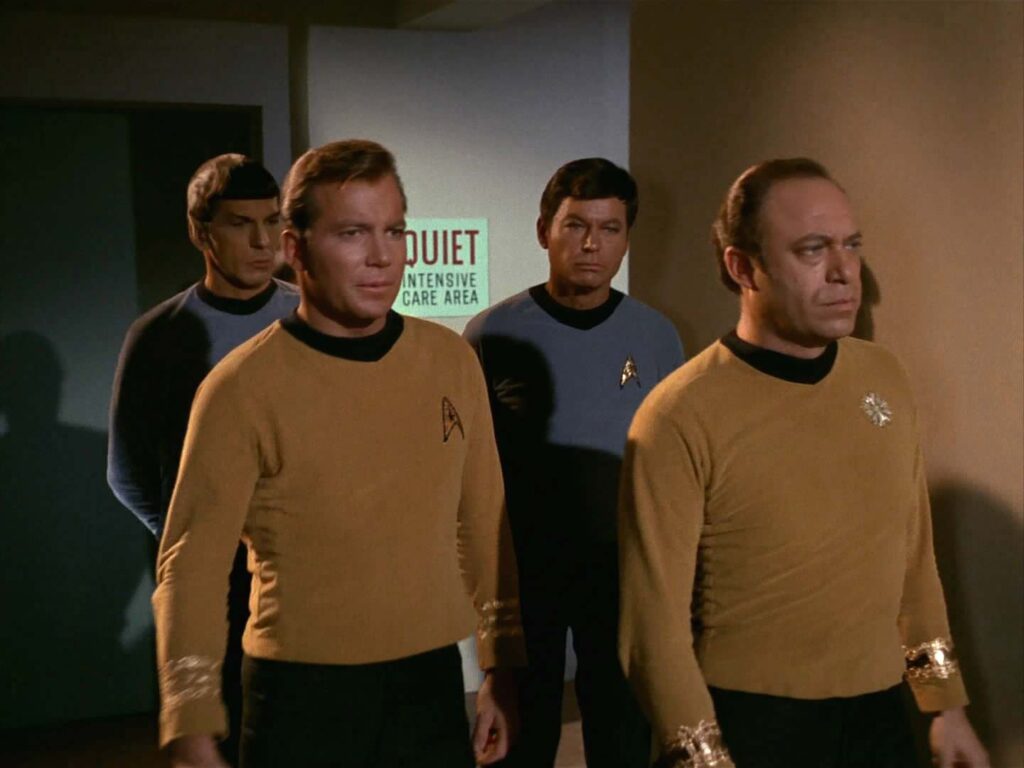
Spock understands Starfleet procedure rather well. What he slightly underestimates is James T. Kirk’s willingness to do something completely reckless. Kirk and Commodore Mendez pursue the Enterprise without enough fuel to return to Starbase 11, knowing that Spock will eventually have to choose between completing his mission and allowing his current captain to die. Kirk is right and Spock surrenders, a lovely little collision between two characters who understand completely different things. Spock understands systems. Kirk understands Spock.
That trust gives Part I most of its weight. Kirk simply cannot make the evidence in front of him fit the man he knows, and McCoy is much the same. Both of them keep reaching for Spock’s Vulcan nature as proof that he cannot be responsible, and both of them are wrong. Not because Spock has suddenly stopped being Vulcan, but because neither man quite understands what being Spock actually means yet. By the end, Kirk knows more. He learns that Spock can lie, deceive, and commit mutiny with almost frightening efficiency, but he also learns how far Spock’s loyalty can go. That, for me, is the real Spock story here.
Unfortunately, “The Menagerie” still has to build two hours of television around all of this, and this is where you can start hearing the gaffer tape creak. Part I is miles better than Part II, and I do mean by a lot. The first half is a proper mystery thriller. Why has Pike supposedly contacted Kirk? What is Spock doing? Why is Talos IV forbidden? Why would Spock steal the Enterprise? Why is the death penalty involved? Spock’s behaviour becomes more extreme while Kirk’s certainty slowly falls apart, and the episode keeps enough hidden that almost every new piece of information creates another question.
Then the court martial begins, and Part II has to pay the bill.
The framing device is held together with gaffer tape and optimism. Spock pleads guilty, yet the proceedings continue. Evidence stops and starts with the rhythm of commercial breaks. The Enterprise remains locked on course while everybody settles down to watch increasingly large chunks of “The Cage,” and the revelation that the Mendez sitting in the courtroom is a Talosian illusion raises about six new questions while answering one. I understand what the episode needs the court martial to do, but understanding the scaffolding does not stop me seeing it
Then there is the death penalty. Look, I understand what the script is doing here as well. Talos IV needs to feel dangerous, Spock cannot simply tell Kirk what he is planning without involving him, Pike cannot casually agree to the journey, and the episode needs stakes. So Starfleet apparently has one remaining death penalty on its books, and it is for visiting a planet full of big-headed telepaths. Death. Not prison, dismissal from Starfleet, or a lifetime processing requisition forms at Starbase 11. Death. It is legal babble, the narrative needs the largest possible threat, so the script puts on a uniform and starts shouting about General Order 7.
The problem is what happens at the other end. Starfleet eventually suspends the same order for one occasion because of Pike’s historic importance to space exploration, which apparently means existential telepathic quarantine comes with a distinguished-service exception. Come on. Either Talos IV represents an extraordinary danger or it does not. I have read arguments trying to make the order work, that the Talosians could destroy a civilisation through illusion, their abilities are too dangerous to study, or the Federation might become addicted to manufactured reality in the same way the Talosians did. Those are interesting ideas. The episode barely does the work. Starfleet’s system behaves according to the emotional requirements of the story rather than its own rules, and I work in a job where spotting systems behaving differently from their stated rules is rather difficult to switch off.
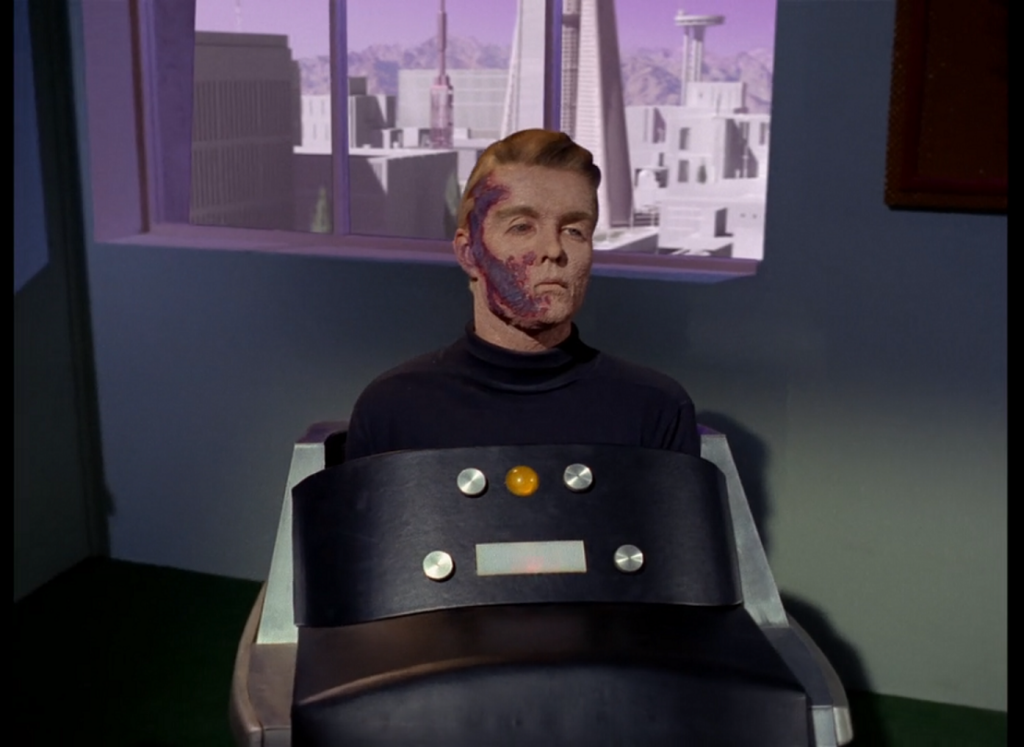
Which brings me back to the chair.
Christopher Pike’s mind works. The episode specifically tells us that. He understands Spock, follows the proceedings, and reacts to what he sees. The chair itself responds to his brain waves strongly enough that he can control its movement, meaning Starfleet has successfully created a brain-machine interface. Excellent. His communication options are still beep and beep beep. Morse code exists. Binary encoding exists. Even the most basic scanning interface could offer Pike letters or words and allow him to make selections. The chair already reads his brain impulses, so apparently everybody got that part working, looked at the clock, and went home early.
It is one of those bits of 1960s science fiction where I can normally smile, accept that nobody predicts the future perfectly, and move on, but this one collapses after about five seconds of thought. Even by the standards of its own fictional technology, it makes no sense. There is a reason, of course, because the screenplay needs Pike to have consciousness without agency. If he can explain himself properly, Spock’s mystery becomes much harder to maintain. Pike can tell Kirk what Spock is planning, explain why he keeps signalling no, and participate properly in the decisions being made about his own life. So Pike has to be present, aware, and almost completely voiceless. The technology fails because the story needs the man trapped inside it.
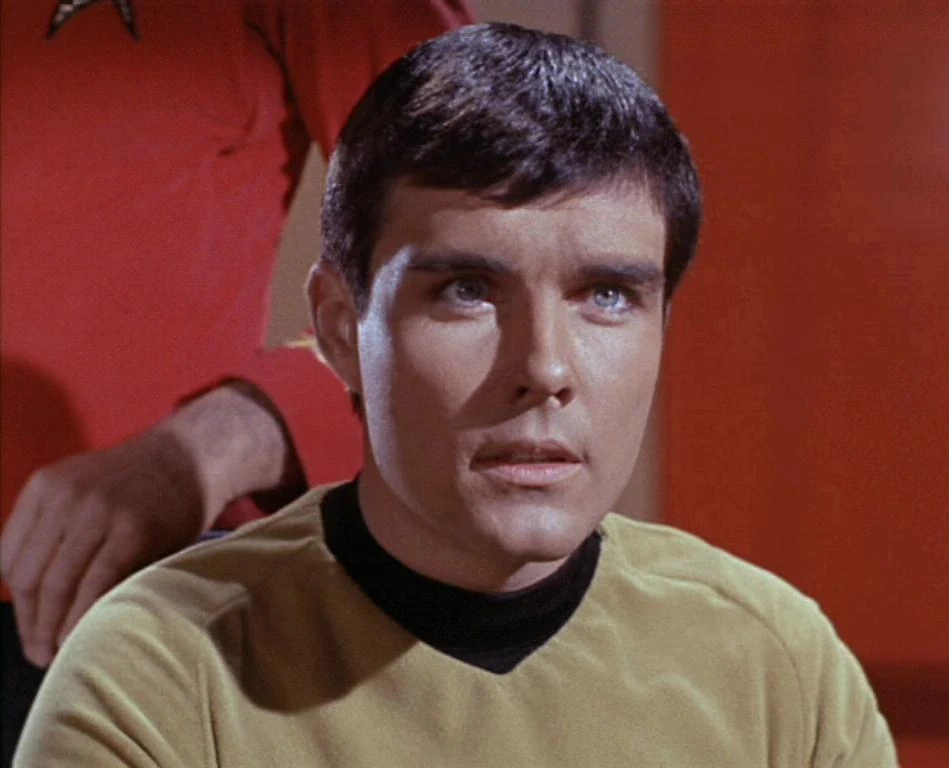
Somehow, Sean Kenney makes the whole ridiculous thing work. He has almost nothing available to him physically, the makeup fixes Pike’s face, the chair encloses his body, and the light manages his dialogue, so he acts through his eyes. There is panic when Spock begins his plan, anger, warning, and concern. Most importantly, Pike understands that Spock is destroying himself on his behalf. He can see his former science officer risking his career and possibly his life, and all Pike can do is flash that light. Kenney makes Pike feel present, not merely alive but present, and that distinction matters. The chair is ridiculous. Sean Kenney is not.
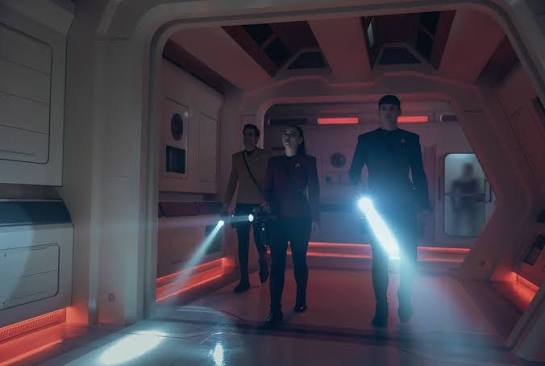
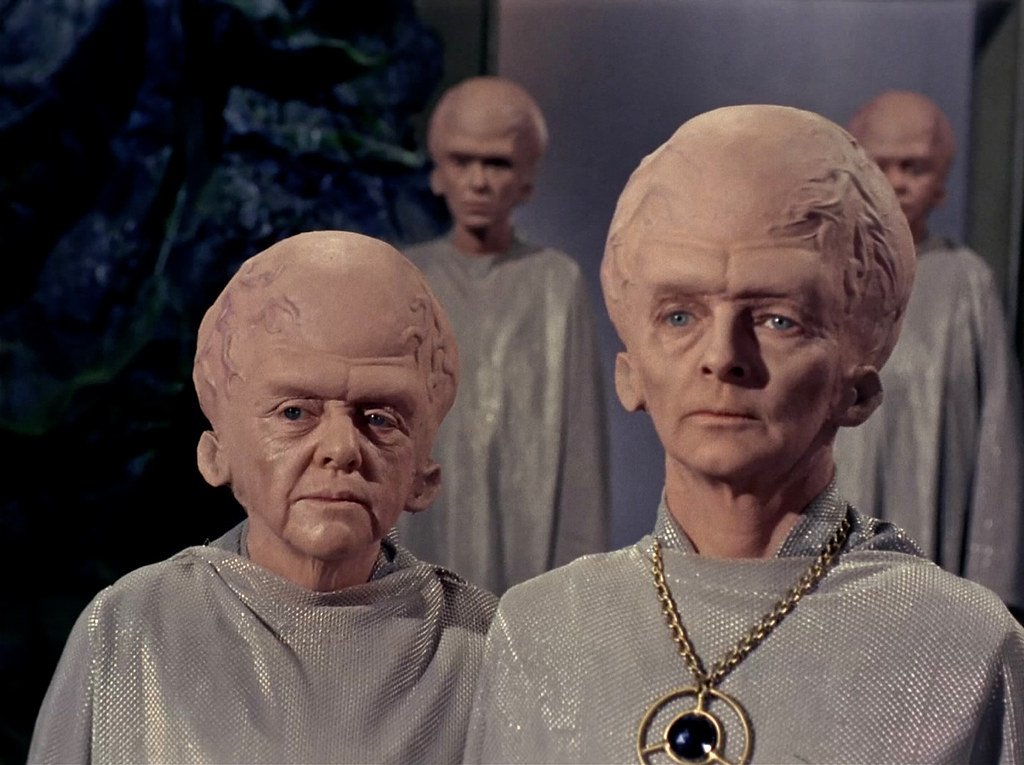
Then we have “The Cage” itself, and visually this is where “The Menagerie” becomes fascinating for a completely different reason. We are watching two versions of Star Trek sharing the same screen. Pike’s Enterprise is cooler and more austere, the colours muted and the mood heavier. There is something almost Forbidden Planet about parts of it, and the slightly dreamlike atmosphere suits Talos IV beautifully. Then we return to Kirk’s Enterprise and get colour, movement, warmth, and William Shatner.
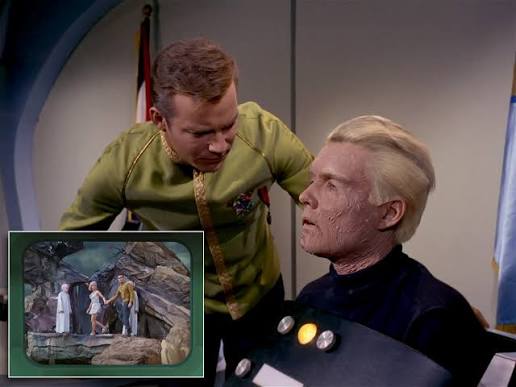
Whatever else anyone wants to say about Shatner, the man brings kinetic energy to the screen. Jeffrey Hunter is good as Pike. I believe his exhaustion, frustration, and anger at being held captive, and I do not dislike him at all. But I also understand why this was not the Star Trek that survived. The contrast is quite brutal when the two productions sit beside one another because Kirk’s Star Trek feels alive in a way Pike’s version often does not. I said in my review of “The Corbomite Maneuver” that it felt like the moment Star Trek worked out what it believed. “The Menagerie” lets us look backwards at the prototype. The ideas are already there, the curiosity is there, and the visual imagination is absolutely there. It just has not yet worked out how to communicate all of that with enough life.
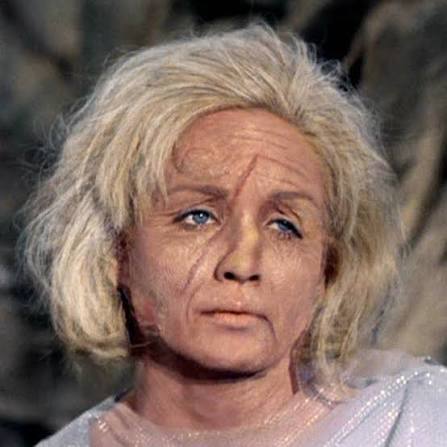
Visually, though, “The Cage” remains gorgeous in places. Susan Oliver is magnetic as Vina, particularly during the Orion illusion. Perhaps my years in hairdressing and fashion make me notice this stuff more than I otherwise would, but the green makeup against Oliver’s eyes is striking, and the colour contrast and framing give the sequence a visual richness beyond the fairly obvious 1960s titillation of an Orion slave girl dancing for Pike. She looks incredible. The Talosians may be even better. The enlarged heads, the veins, the restrained performances, and the Keeper’s eerie, altered voice still work. Nearly sixty years of Star Trek has given us an awful lot of aliens, and an awful lot of foreheads, but there is still something genuinely uncanny about the Talosians. They feel alien, and that matters.
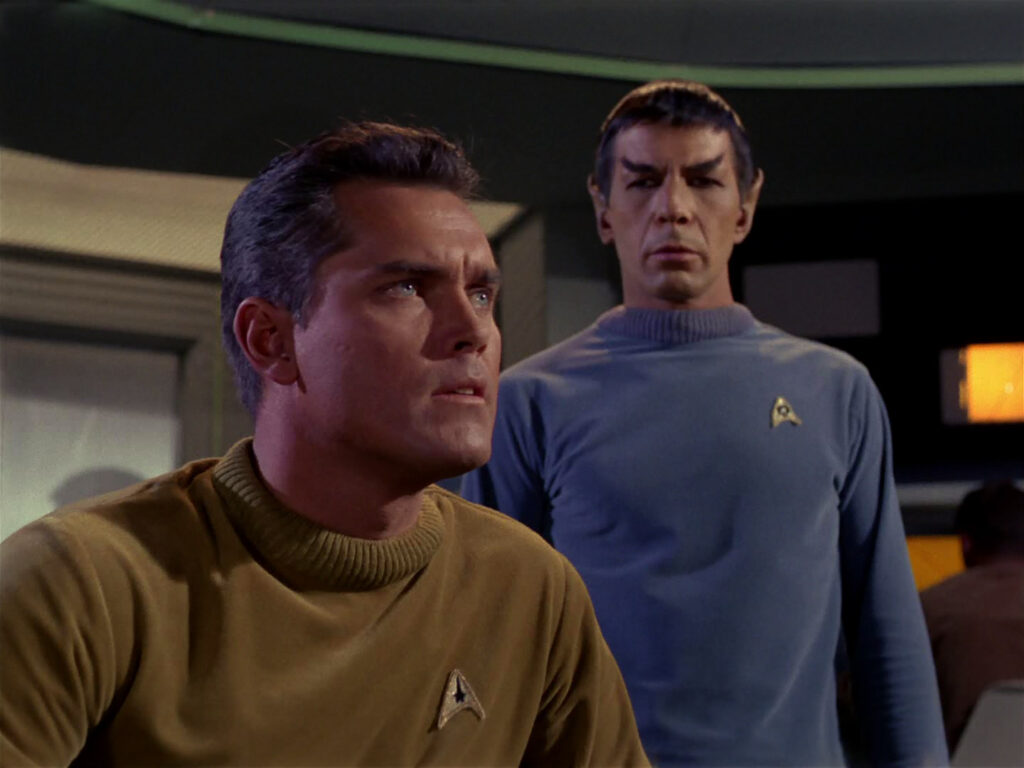
The reason “The Menagerie” stays with me, though, is not Spock stealing the Enterprise, the production trick, or even Christopher Pike sitting in that awful chair. It is the argument the episode has with its own past. In “The Cage,” Pike says you either live life with the bruises and the skinned knees or you turn your back on it and begin to die. I love that idea. Reality matters, experience matters, and pain is part of being alive. It is exactly the kind of thing Star Trek would spend decades returning to in different forms.
Then “The Menagerie” brings Pike back and asks a much nastier question. What if reality becomes unbearable?
The younger Pike can reject the Talosians because he has something to return to, a ship, a crew, a body that works, and a future he recognises. The Pike sitting beside Kirk no longer has the ship, the crew, or the functioning body he had then, and the future in front of him has narrowed brutally. His body has become the cage. Suddenly the Talosians’ offer looks different, and the episode does not resolve “The Cage” so much as argue with it.
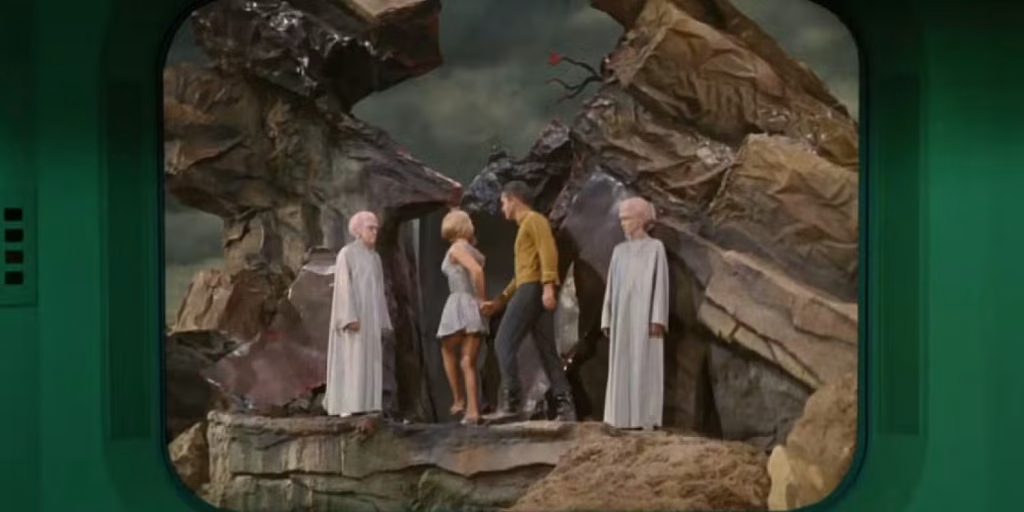
Star Trek gives Christopher Pike heaven and never quite asks whether heaven is another cage.
That contradiction is what makes the ending work for me. The same man who fought desperately to escape a manufactured reality eventually chooses one or perhaps chooses the only meaningful version of life he believes is still available to him. I do not know if Pike makes the right decision, and I am not convinced the episode knows either. Good. The interesting question was never really whether illusion is good or bad, because “The Cage” had already planted its flag there. “The Menagerie” asks how much suffering reality must contain before choosing illusion stops looking like cowardice, and that is much harder.
It changes every piece of old footage we have just watched. Young Pike is fighting for reality while the older Pike watches himself fight, and Spock is watching both. Spock knows the man Pike was, and that may be the most human part of his plan. He does not insist that Pike remain loyal to a principle simply because Pike believed it thirteen years earlier. Spock understands that suffering has changed the question.
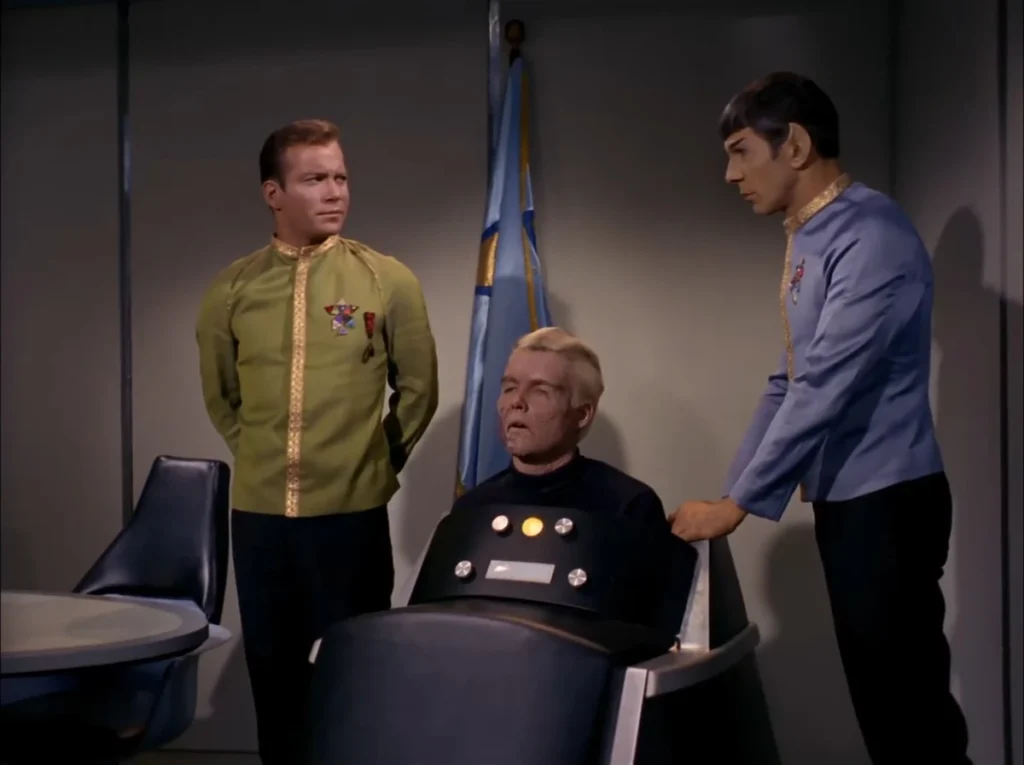
His methods, mind you, are still questionable. Pike repeatedly signals no and Spock ignores him, taking his former captain to Talos IV anyway. For all my praise of Spock’s compassion, he does effectively kidnap a severely disabled man because he thinks he knows what is best for him, and the episode rather skates past the ugliness of that because Spock turns out to be right. There is a difference, though, between forcing Pike to make the journey and making the final decision for him. Spock gambles everything on the choice Pike might make when he reaches Talos IV, then Kirk finally asks Pike directly whether he wants to go.
Pike says yes. One flash.
After two hours of Spock lying, stealing, calculating, and risking everything, the final decision comes down to the stupid light. Maybe that is why the chair works after all.
For all my problems with “The Menagerie,” the emotional truth carries it. Part II drags, the court martial is nonsense, General Order 7 collapses under the slightest scrutiny, and Pike’s chair should still be fired directly into the nearest matter-antimatter chamber. You can see the stitching and hear it creak, but that is part of why I love what the episode is trying to do.
“The Menagerie” is made from damaged material, a rejected pilot, a broken captain, and a story whose original argument no longer quite fits the man at its centre. Star Trek takes what survives, cuts around the damage, changes the context, and gives it another meaning.
Spock does exactly the same thing for Pike.
“The Menagerie” saves Star Trek’s failed pilot in the same way Spock saves its discarded captain. It cannot undo what happened, so it takes what remains, changes the context, and gives it another life.
8/10