Star Trek: TOS – Dagger of the Mind (S01E09)
A plastic dome hangs from the ceiling of a treatment room, a small light turning inside it. That is the entire neural neutraliser, the device the whole episode is built around, and on paper it is nothing. A prop the art department could have thrown together in an afternoon. By the closing minutes it is one of the most frightening objects The Original Series ever put on screen, and the distance between the first impression and the last is most of what makes “Dagger of the Mind” worth talking about.
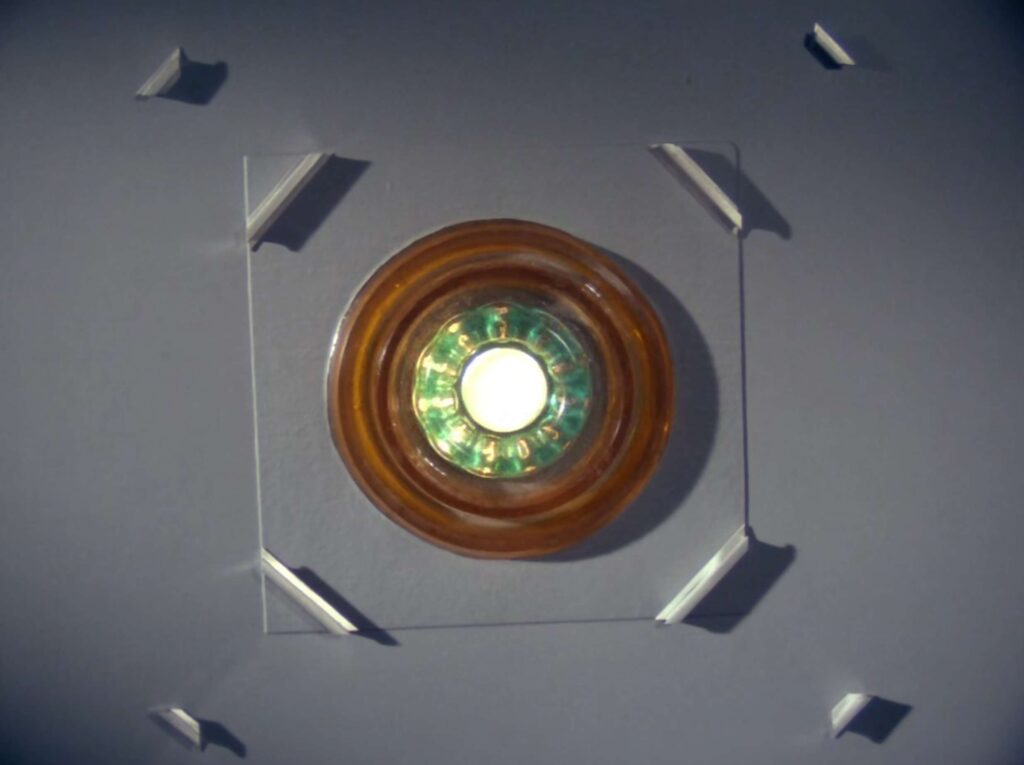
The horror is not in what the machine does to a body. It is in what it does to the absence of one. Tristan Adams does not use it to inflict pain in any way the camera can point at. He uses it to empty a mind out, to scrape away thought and memory and leave a person intact enough to feel that everything has gone. “Can you imagine a mind emptied by that thing,” Kirk asks near the end, “without even a tormentor for company.” That is the bleakest idea the show had reached for this early in its run, and it is the thing the episode earns outright. A death by loneliness, administered in a chair, in a building run by one of the most respected men in known space.
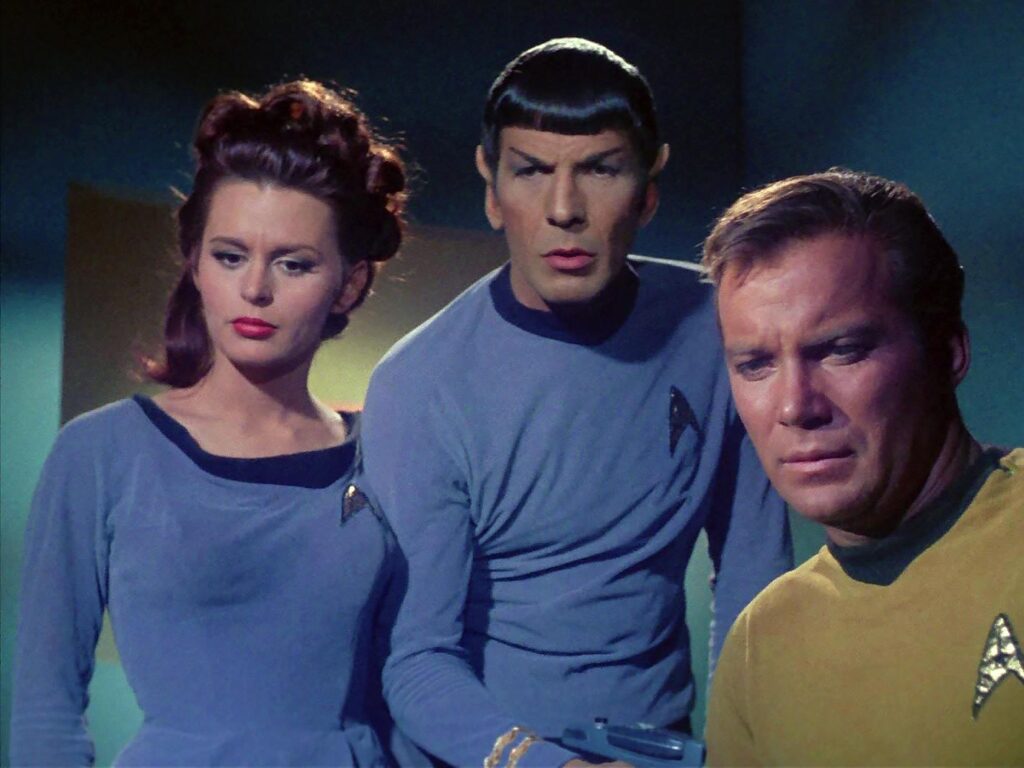
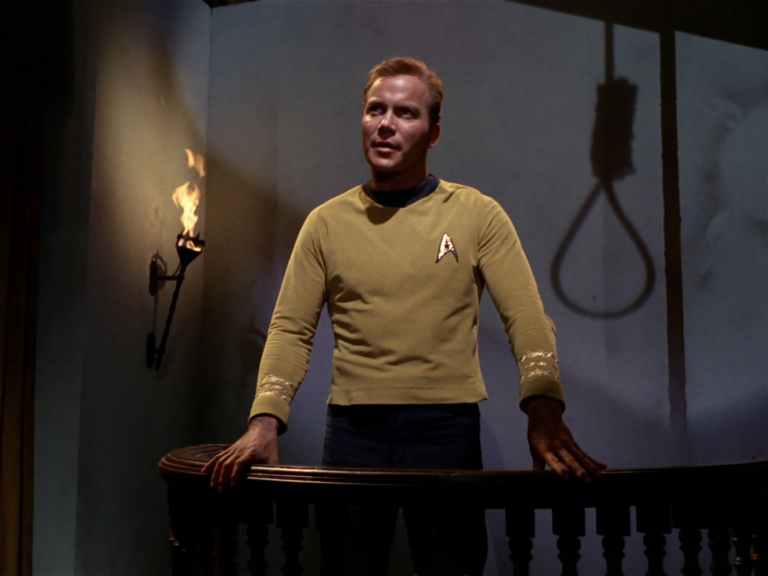
This is the ninth episode to air, arriving straight after Miri, and it is the most serious attempt the show has made so far to ask an uncomfortable question about its own future. What does a humane society do with the people it cannot let walk free? The framing is utopian on the surface. Kirk talks about penal colonies as though they were resorts, and McCoy answers him with the best line in the episode, “A cage is a cage, Jim.” The exchange tells you where the hour is heading before it has properly started. Trek is about to put its own optimism in the chair and turn the light on.
And the episode does not let Kirk off the hook for the resort-colony line. McCoy gets the better of that exchange, and the hour spends its running time proving him right. A cage is a cage. The neutraliser is that argument made literal, a humane-sounding therapy that turns out to be a cell with bars you cannot see. What the episode is less willing to settle is whether the gentler cage is any kinder than the old one. Adams speaks the language of reform and rehabilitation, and the result is a colony where people can be made docile by having pieces of themselves taken away. The episode appears to side with McCoy. You can dress imprisonment in whatever vocabulary you like and it remains imprisonment. It raises the question and then gets on with the thriller, which is the recurring habit of first-season Trek and the thing that keeps a sharp idea from cutting as deep as it might.
Morgan Woodward carries the front half almost single-handed as Simon Van Gelder. He plays a man whose mind has been half scraped away and who is fighting to hold on to the words for what was done to him, and the performance lives permanently on the edge of being too much. It never quite tips over. The screaming and the clawing for language stay controlled enough to read as real damage rather than an actor reaching, and the early scenes work because Woodward refuses to let Van Gelder become a curiosity. He is a person in pain, and the episode is honest enough to make that uncomfortable to watch.
What makes the central idea land is that Adams is not a fringe lunatic alone on a rock. James Gregory plays him as charming, reasonable, and entirely trusted, an authority on rehabilitation whose writings are respected across the cosmos and who runs his colony with almost no oversight. The threat is institutional. Nobody was paying attention, because nobody thought they needed to. This is Trek cracking its own utopia open before the Federation has even been named, and it foreshadows the kind of questions Deep Space Nine would spend years exploring. The optimism is not abandoned. It is tested, and the test is allowed to hurt.
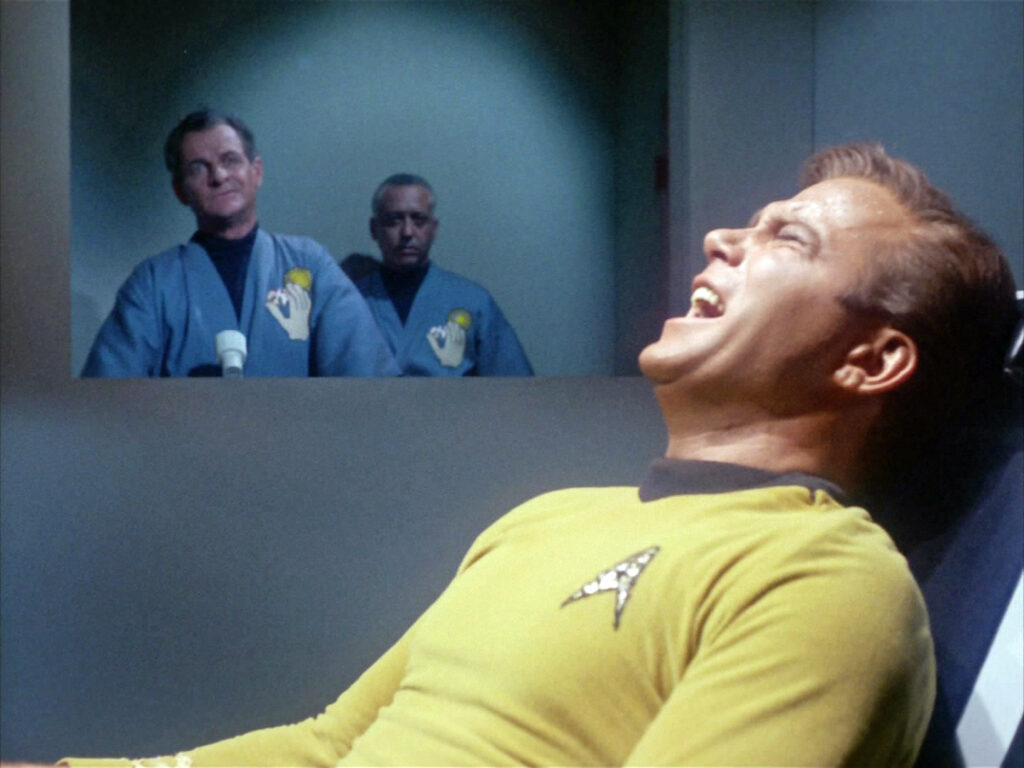
Which makes the hole at the centre of the episode all the more frustrating. Adams has no motive. He turns from benevolent reformer to sadist somewhere off screen, and the script never works out why. The closest it comes is the suggestion that he simply grew drunk on what the machine let him do, and there is a version of the episode where that is enough. This is not that version. A story whose entire subject is how trusted authority curdles cannot afford to leave the man who curdled as a blank. The premise promises to show us how a respected man becomes corrupted, then quietly skips the most interesting part. You can almost see the missing scene every time Gregory has to switch from charm to menace.
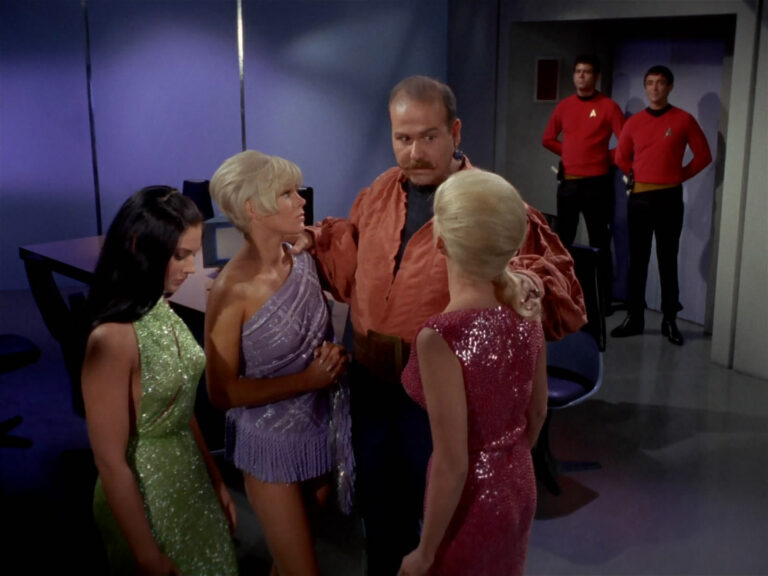
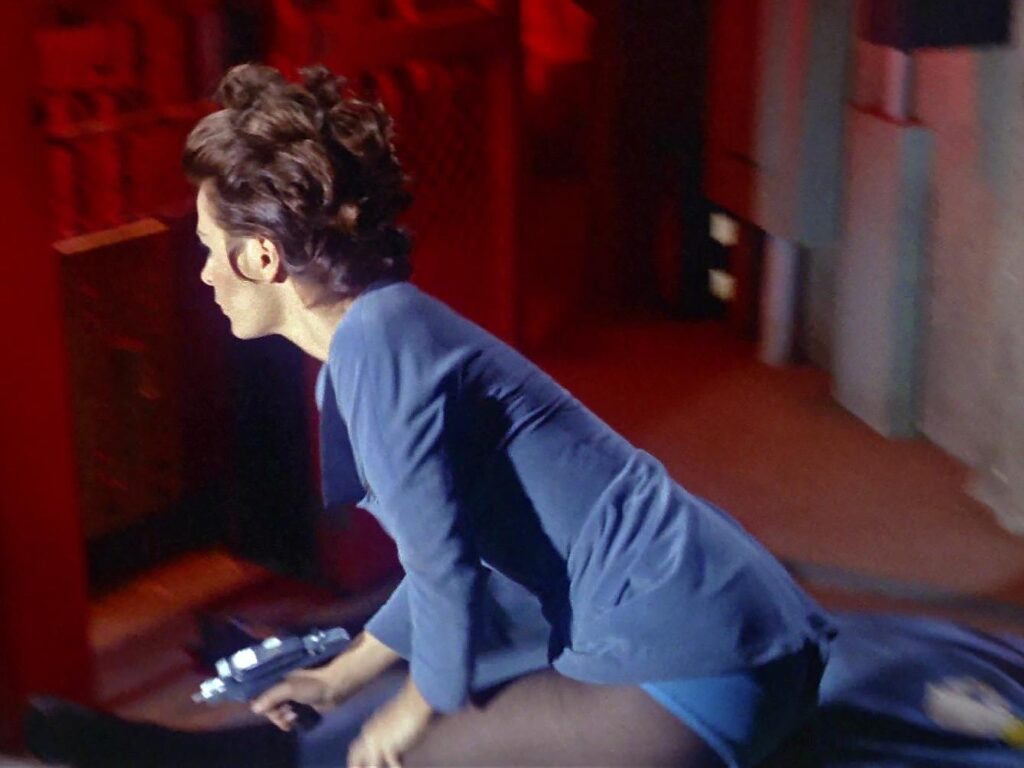
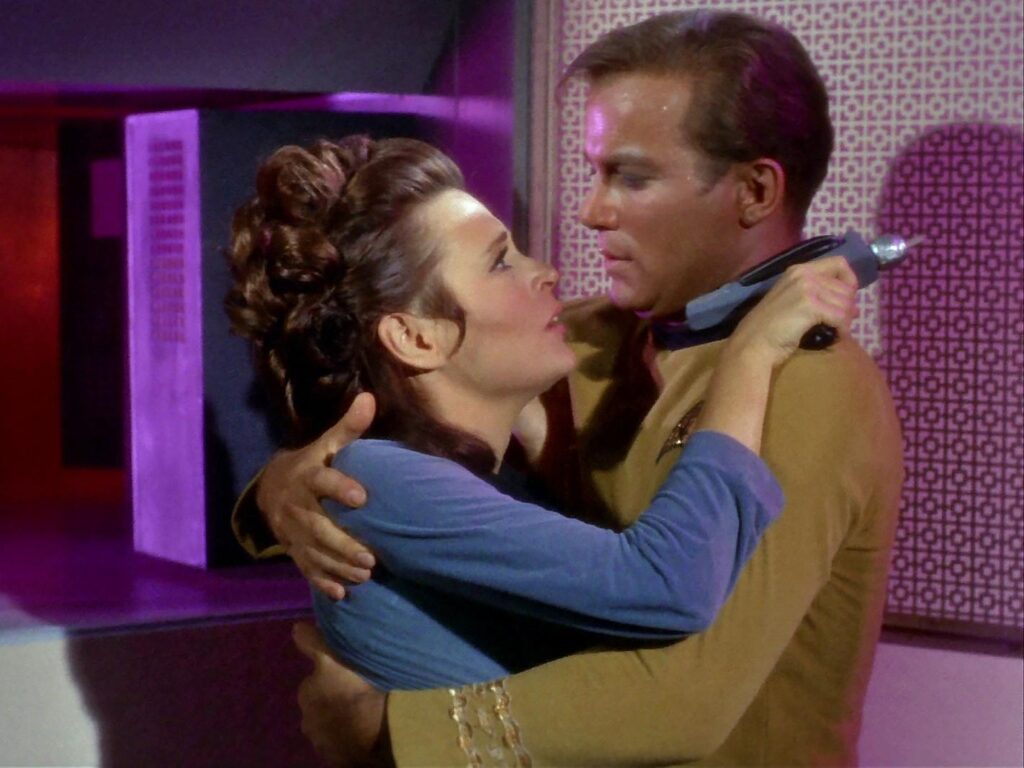
The Helen Noel subplot is the other problem, and it is worth being precise about what the problem actually is. The easy complaint, the one the comment sections have argued about for sixty years, is the costume and the camera treating Marianna Hill as set dressing. That is there, but it is not the interesting failure. The interesting failure is tonal. This is an episode about the horror of having your mind rewritten without your consent, and it runs a subplot in which Noel rewrites Kirk’s memory while he sits captive in the chair, planting a false history of romance, and the script plays it as a flirtation beat. Noel herself is written competent or obtuse depending on what the plot needs from one scene to the next, which leaves Hill stranded. The subplot is not offensive so much as it is at war with the story it has been dropped into.
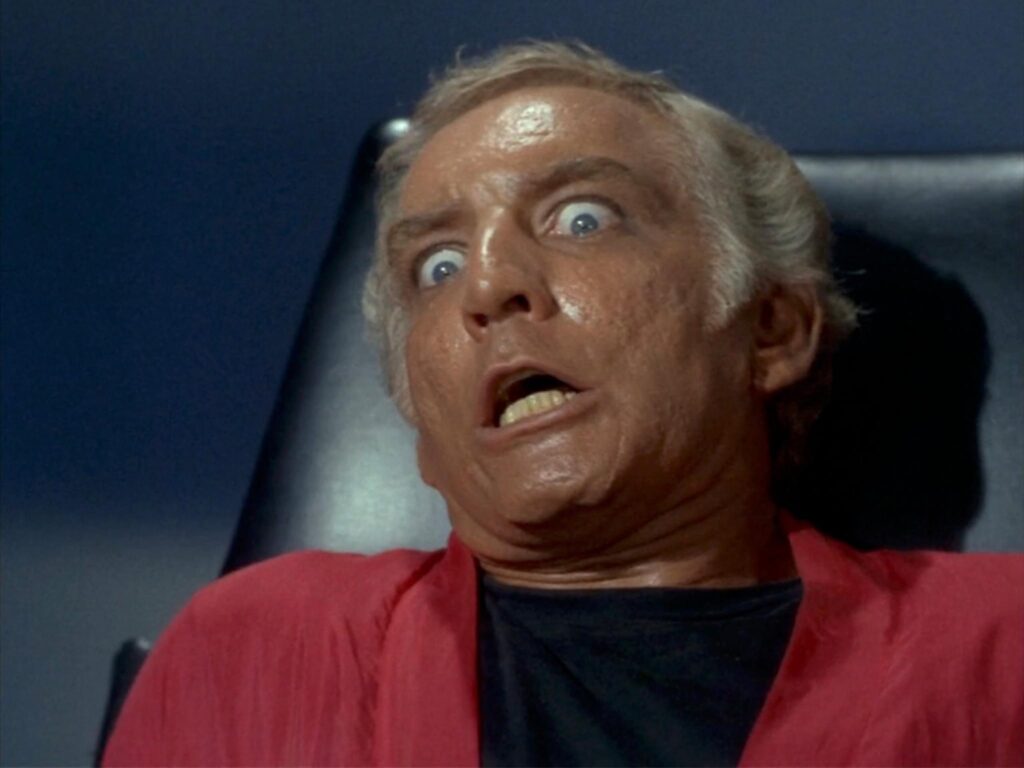
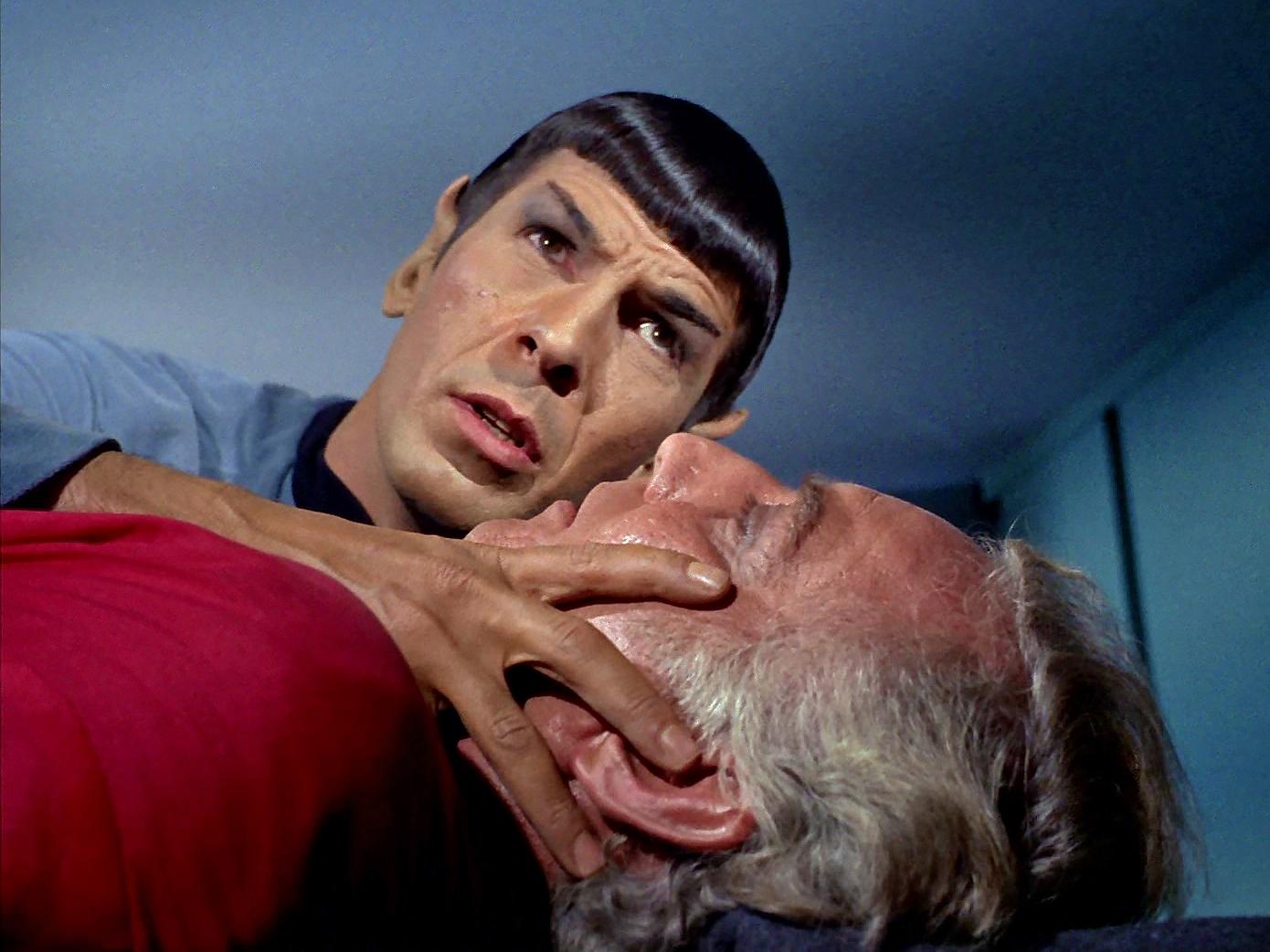
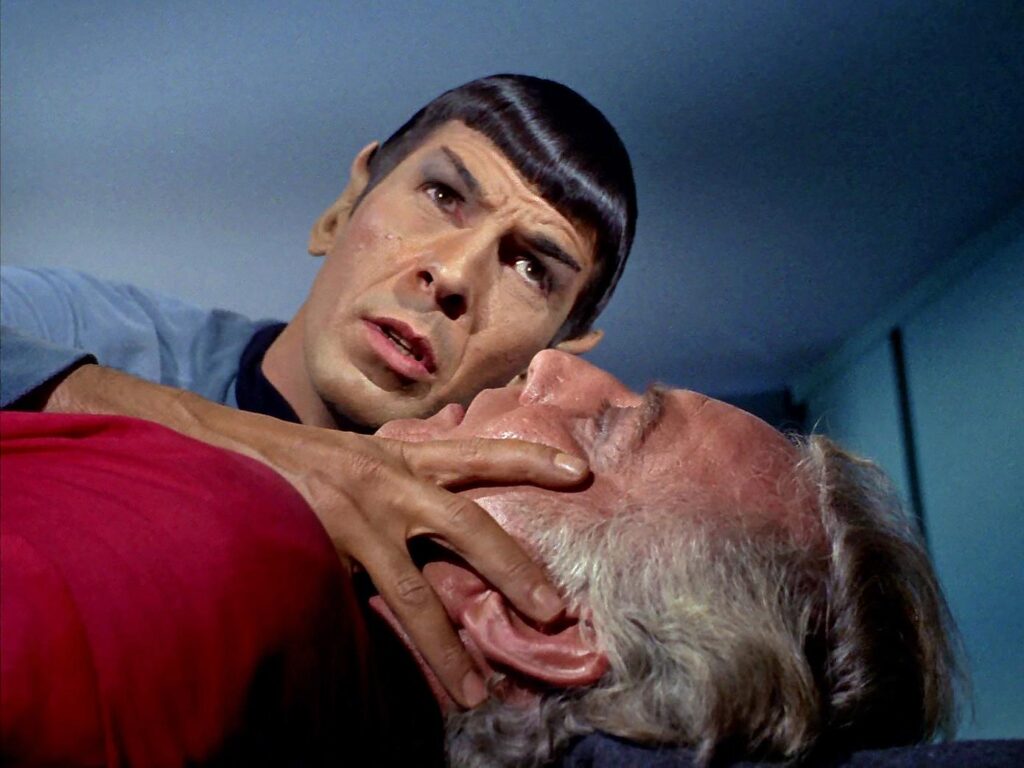
For all that, this is the episode that gives us the first Vulcan mind meld seen in Star Trek, and the show treats it with a seriousness it would rarely manage again. Spock describes it as a deeply personal thing and tells McCoy he has never used it on a human, and Vincent McEveety shoots it as something genuinely strange, Nimoy’s hands moving across Van Gelder’s face under odd angles and alien light, the technique presented as active, difficult, and slightly dangerous. It is a long way from the casual telepathic handshake the meld later became. Worth noting in passing that Strange New Worlds has since shown Spock performing mind melds with humans on several occasions, which sits awkwardly against the line Nimoy delivers here.
Elsewhere, the craft holds up better than the writing. William Ware Theiss dresses the civilian staff in deliberately vivid, off-key fabrics that make the colony feel subtly wrong before anything is confirmed, and Alexander Courage’s score turns properly alien under the meld. McEveety stages the introduction of Noel and the mind meld with real confidence even where the material lets him down. And then there is the dome itself, a cheap little prop that the episode, through acting and lighting and accumulated dread, slowly converts into something you do not want to look at. That transformation is the episode at its best. It builds fear out of almost nothing, which is a harder trick than building it out of a monster.
The ending is more troubling than the episode quite acknowledges. Adams dies in his own chair, mind emptied by the machine he built, alone in exactly the way Kirk had described, and the hour presents it as a kind of poetic justice. The man who hollowed out other people is hollowed out in turn. Look at it for more than a second, though, and it sits uneasily. Nobody chooses that death for him.
It happens by accident, the power left on, the controls unattended, and what the crew witnesses is not a sentence handed down but a man suffering the worst thing the episode has shown us, with nobody having decided he deserved it. Kirk’s reaction is the right one, closer to horror than satisfaction, and McCoy’s closing disbelief that a man could die of loneliness is met with Kirk’s quiet correction that he could, if you had sat in that room. The ending leaves more discomfort than triumph, which feels like the right choice. It just does not pause long enough to ask whether justice was served or only witnessed.
So this is an hour to admire more than to enjoy, and the two are not the same thing. The ambition is real, and the central idea is one of the strongest the first season produced, Woodward is excellent, and the mind meld alone earns it a place in the franchise’s history. Set against that is a villain with no inside, a subplot that undermines the very thing the rest of the episode is frightened of, and a Kirk written more credulous than the character usually allows. The bones are genuinely good. The script just keeps getting in its own way.
“Dagger of the Mind” is frightened of exactly the right thing. It just never works out what put the man at the controls, and a horror story about why good people empty other people out cannot quite afford to leave that chair empty.
7/10