The Klingons: A Code, or a Costume? (Race Spotlight)
A man stands in the Great Hall on Qo’noS, accused of a treason his father never committed, and the most powerful Klingon in the room knows he is innocent.
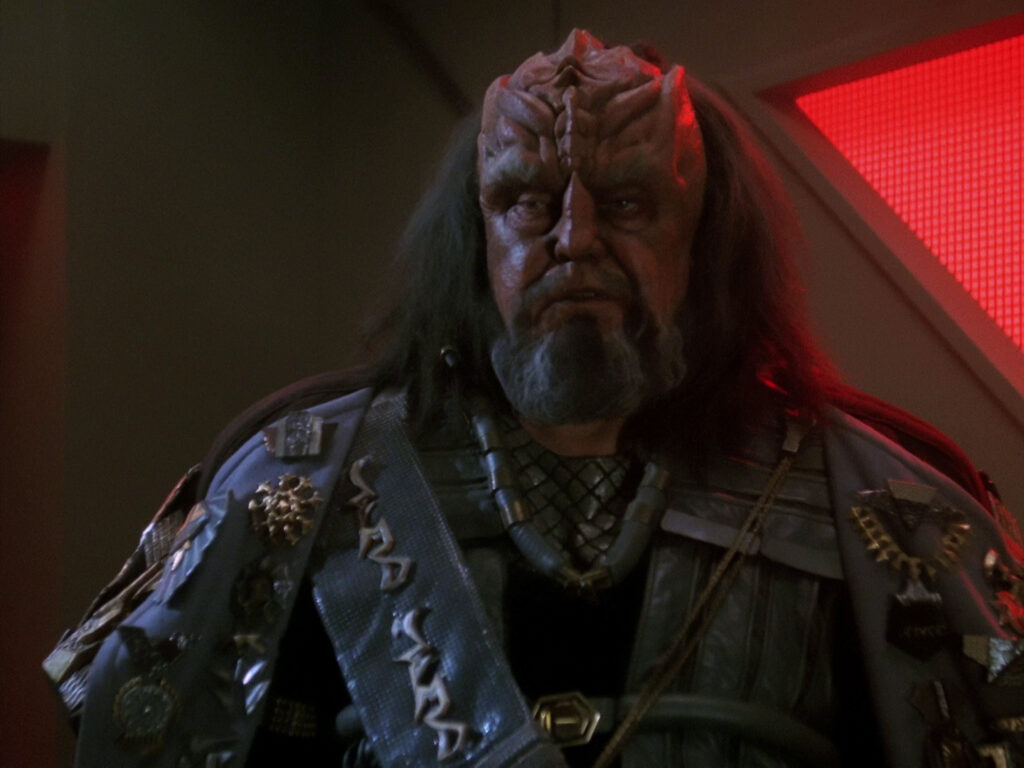
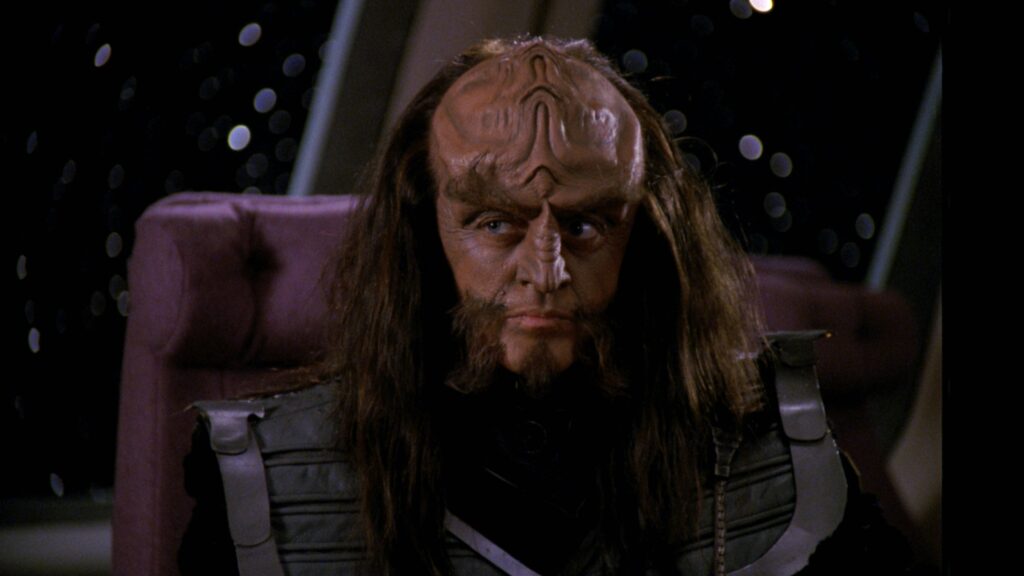
Chancellor K’mpec has the truth in front of him. The defence codes that allowed the Romulans to destroy Khitomer, four thousand dead in a single night, were not transmitted by Worf’s father Mogh. They were sent by Ja’rod, father of Duras, whose house carries too much weight on the Council to be touched without splitting the Empire. So the Council does the arithmetic and lets an innocent name carry the guilt. K’mpec asks Worf to swallow it, to accept discommendation and a lifetime of public shame, so that the Empire does not crack along the fault line the truth would open. And Worf does. He turns, and a hall full of warriors crosses their wrists and turns their backs on him, one by one, for a crime that did not happen.
That is the most honour-obsessed culture in Star Trek, transacting in a lie, in the one building where honour is supposed to mean something. Remember that image. Everything else here pulls against it.
A Confession
I should be honest about where I’m starting from. For most of my life, the Klingons left me cold.
I never got the hype. The warrior-poet routine, the endless speeches about glory and dying well, the business of roaring at the ceiling and reaching for a bat’leth at the first sign of disagreement, all of it struck me as a bit much. I thought they were the most overrated thing in the franchise, a species that had talked its way into a reputation for depth that the screen didn’t always earn. Give me the Cardassians, with their quiet menace and their paperwork. The Klingons felt like cosplay with a body count.
It took me years, and a specific run of Deep Space Nine, to work out what I had been missing. And what I had been missing was the gap. Not the honour itself, but the distance between the honour they preach and the way they actually behave. Once I started watching for that distance instead of the speeches, the whole species opened up. The question was never really whether the Klingons are noble. It is the only one worth asking about them: are they living by a code, or wearing a costume?
The Accidental Empire
The Klingons did not begin with a culture at all. They were assembled, piece by piece, over decades.
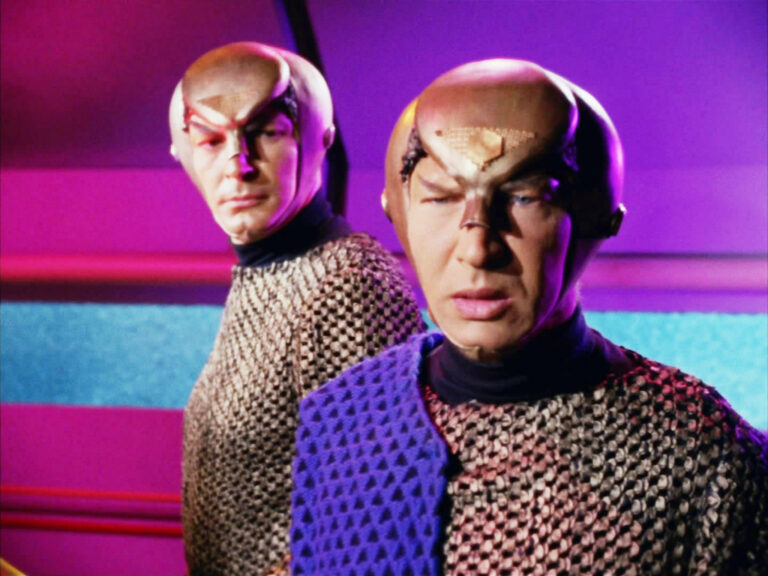
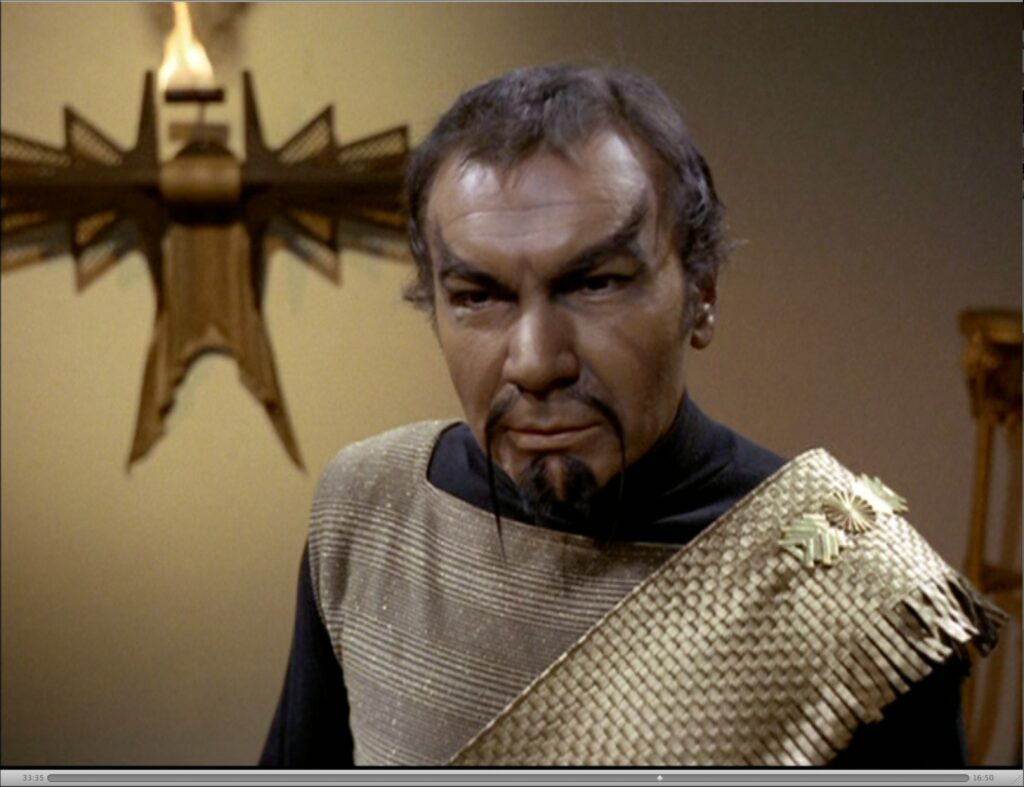
When they first appeared in “Errand of Mercy” in 1967, there was no Sto-Vo-Kor, no bat’leth, no Kahless, no honour to speak of. There were no forehead ridges either. There was John Colicos as Kor, swarthy and cunning, playing a Cold War antagonist in a decade that needed one. The Klingons borrowed heavily from the Soviet Union, expansionist and cold, and that was the whole of them. The honour came later. The ridges arrived first, in The Motion Picture, which gave them the armoured skulls everyone now pictures. The philosophy followed across the eighties and nineties, much of it explored through Worf, until a one-note villain had quietly become the richest alien society the franchise possessed.
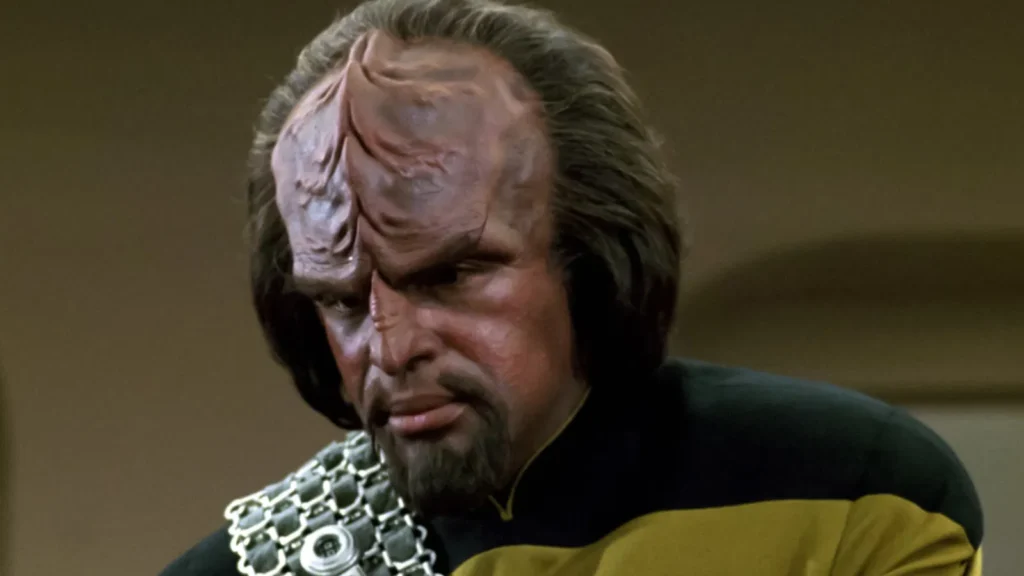
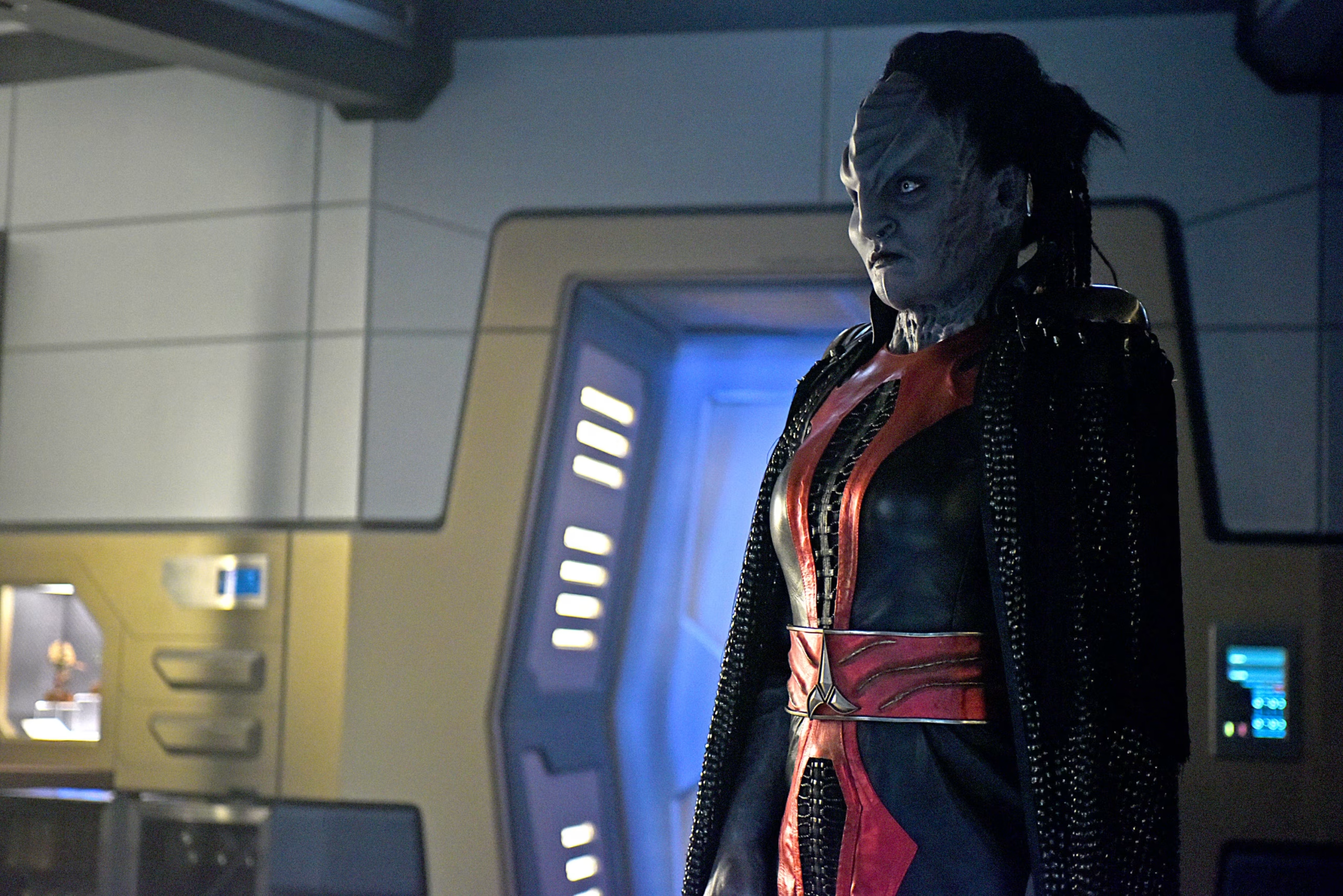
The franchise has never been comfortable with how much it changed them. The look kept mutating, through Discovery‘s startling bald redesign and back again in Strange New Worlds, and at one point the writers were self-conscious enough about the smooth-headed sixties Klingons that Enterprise invented an augment virus to explain the foreheads away. Deep Space Nine got there first and funnier, with Worf waving the whole question off: “we do not discuss it with outsiders”.
Forget the continuity arguments for a moment. This is the important bit. The honour wasn’t there at the beginning. Star Trek built it over decades, one story at a time.
The Speech and the Knife
Every Klingon story eventually circles back to Kahless. He is less a historical figure than the measuring stick the Empire pulls out whenever it wants reminding of what it claims to be, and the irony is that the people reaching for his name are usually the ones behaving least like him. A clone of Kahless turns up in “Rightful Heir” to a wave of devotion. The interesting part isn’t that Kahless returns. It’s how desperately the Empire wants him to be real.
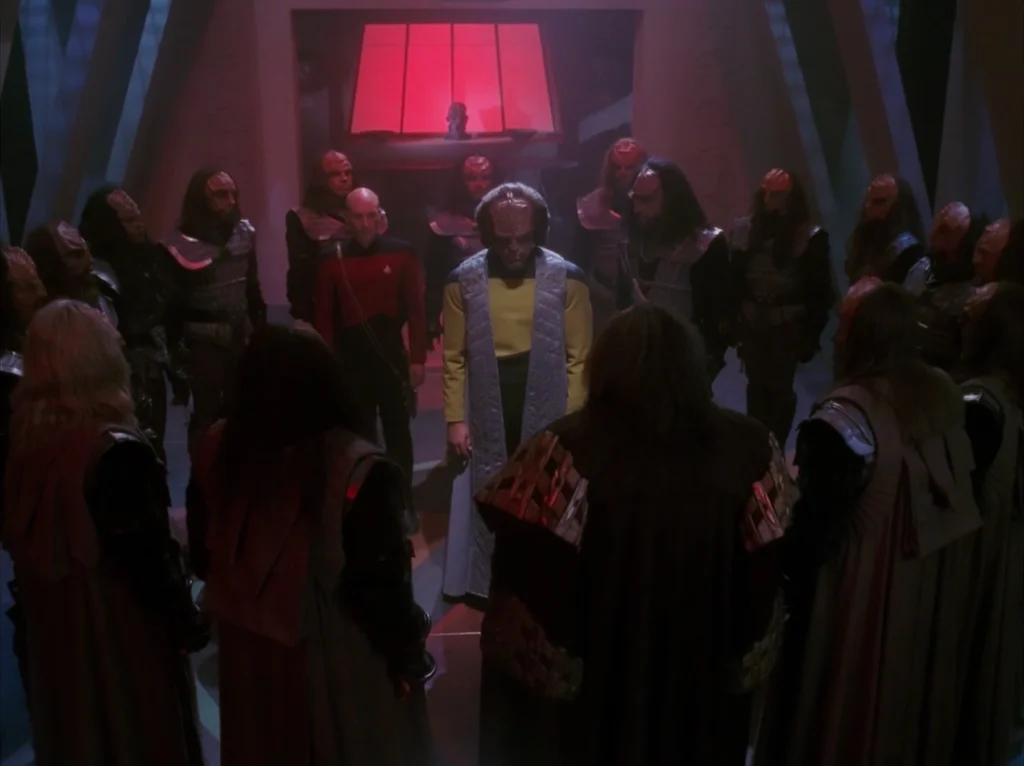
It usually isn’t, at least not where the power is. Go back to that Great Hall. “Sins of the Father” is not a story about one corrupt chancellor. It is a story about a system that knows the truth and prices it out, because the honourable thing and the stable thing point in opposite directions and stability wins. The House of Duras is the engine of this for years. Duras murders K’Ehleyr the moment she gets close to the truth, and is run through by Worf for it. His sisters take Romulan money and drag the Empire into civil war over an illegitimate heir. The Council knows what the Duras line is, and accommodates it anyway, because the alternative is the kind of honesty that gets people killed and governments toppled.
Gowron is the sharper example, because Gowron is not a villain. He is a legitimately installed leader who treats honour as an instrument, something to be invoked when it serves him and set aside when it doesn’t. By the depths of the Dominion War he is sending Martok on suicidal assaults out of naked jealousy, spending Klingon lives to cut a rival down to size while the Alpha Quadrant burns. It falls to Worf, of all people, to stop him, challenging and killing Gowron in “Tacking Into the Wind” not out of ambition but because the man leading the Empire had put his own ego above its survival. Then Worf refuses the throne and hands it to Martok, who never asked for it.
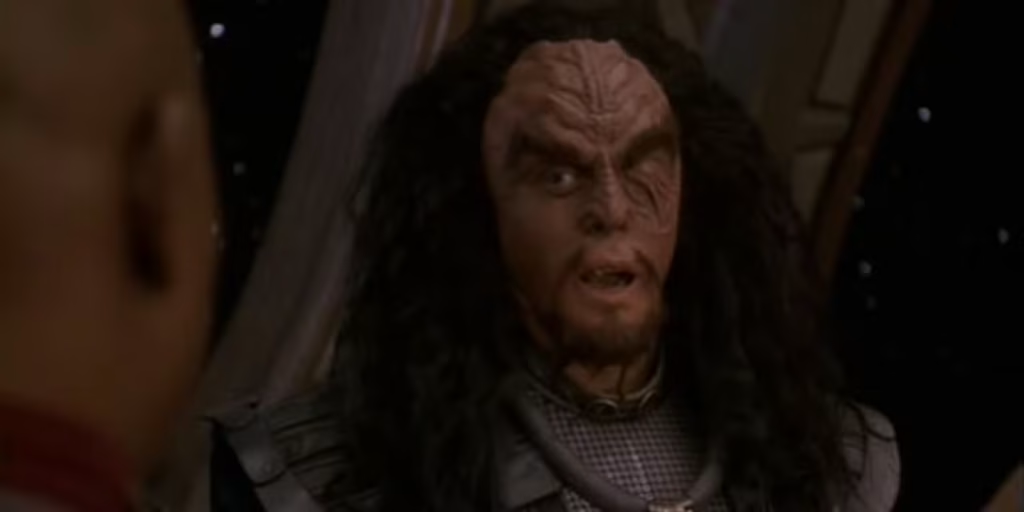
Martok is the answer to everyone else. He was born in the Ketha lowlands with no noble blood, passed the officer’s exam on the first attempt, and was rejected by Kor, who thought it inappropriate for a commoner to join the elite. Kor’s rejection closed the officer’s path before it had even begun, and Martok spent the next five years hauling cargo aboard a transport until a Romulan attack gave him the chance to earn a battlefield commission. The man who best embodies everything the Empire claims to value was nearly shut out of it entirely by an aristocrat citing the divine right of Kahless’s bloodline. Kor, decades later, does not even remember doing it.
Set the three of them side by side and the species finally comes into focus.
Worf believes the stories. The Empire performs them. Martok lives them.
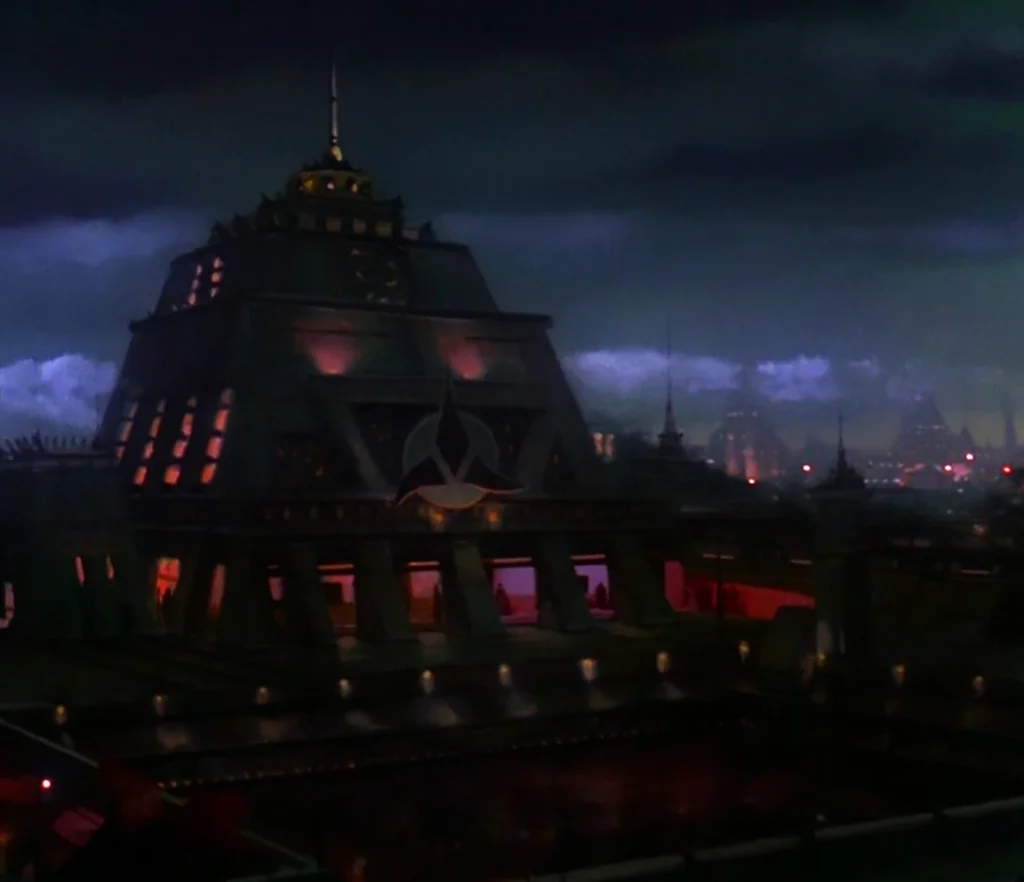
That is the whole thing, really. And it is why the easy reading of Worf, the human-raised outsider who learned his heritage from books and holodecks, gets him slightly wrong. The standard line is that Worf is naive, that he worships an Empire that does not exist. But Worf is not wrong about honour. He is wrong about Klingons. The ideal he believes in is real and worth believing in. He has simply mistaken the speeches for the practice, and spends most of two series discovering, painfully, that the people who talk loudest about honour are usually the ones with the least.
Who Is Honour Really For?
Watch the Empire long enough and a pattern surfaces. The honour comes out when there is an audience.
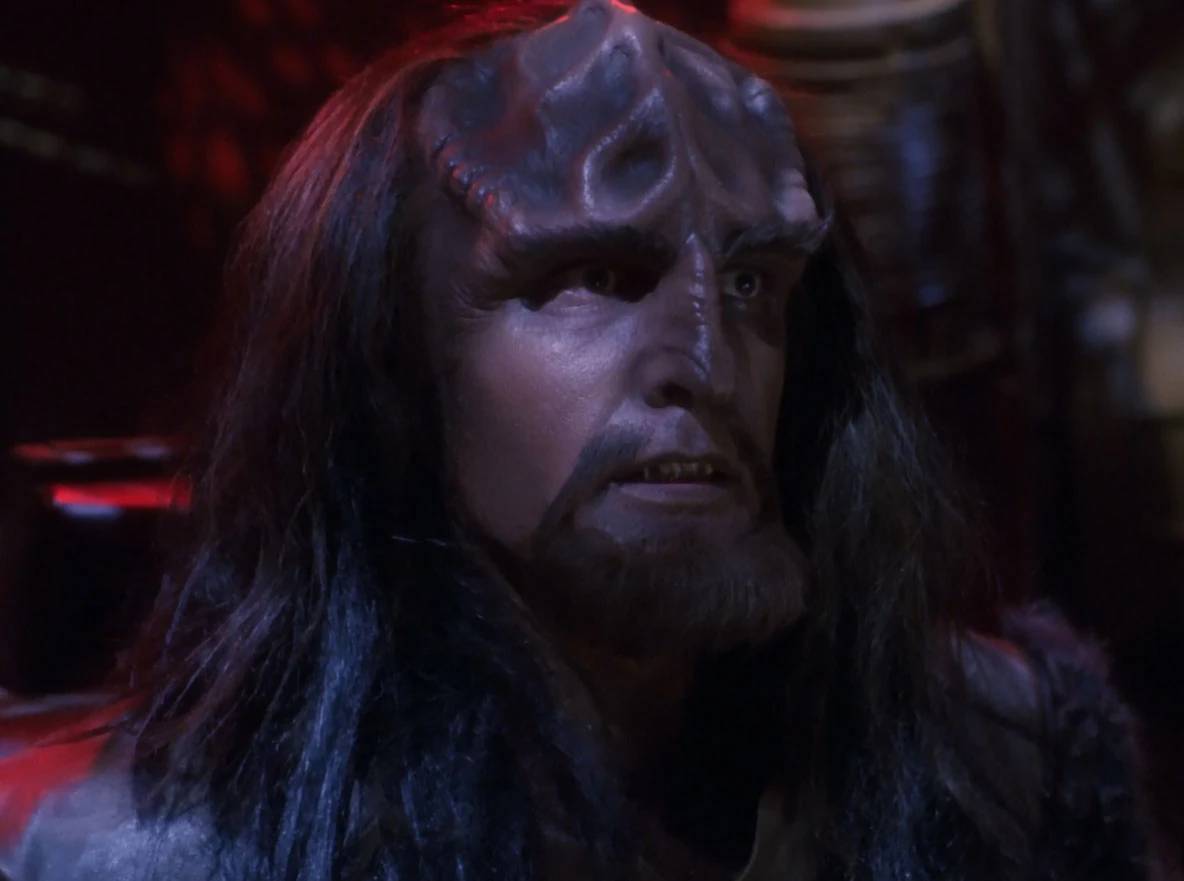
In public, everyone gives the speeches. In private, the Council buries the truth about Mogh, Duras knifes an unarmed woman in a corridor, Gowron manoeuvres a war hero toward a pointless death, and the great houses scheme behind closed doors with whoever will fund them. The speeches are sincere enough in the moment. They are reputation rather than morality, a currency you spend in front of other people rather than a conscience you carry when no one is watching. Honour, for a great deal of the Empire, is what you are seen to have. Ask who Klingon honour is actually for and the answer is rarely yourself. It is everyone else.
Which is what makes the Death Ritual such a strange and important counterweight.
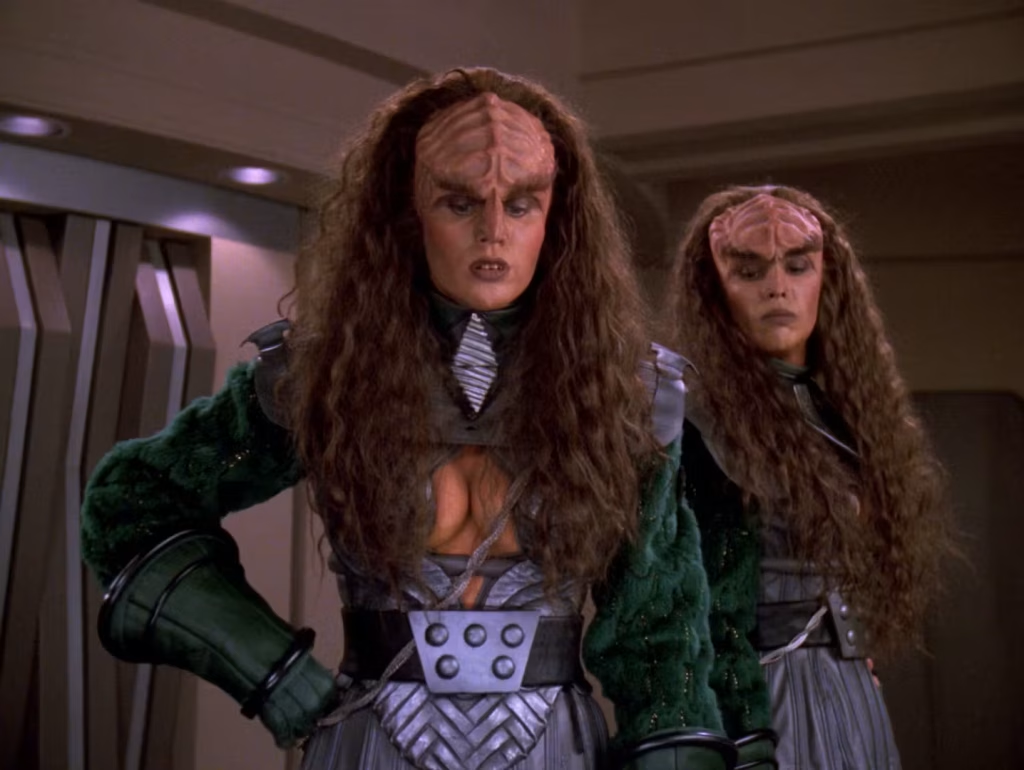
When a Klingon dies, those nearby force the eyes open, look into them, and then howl at the ceiling, a warning to the dead that a warrior is on his way. After that the body is discarded without ceremony, because the warrior is gone and what remains is only an empty shell. Nobody gains status from it. No house is strengthened, no rival is undercut, no audience is being played. It is the one piece of Klingon honour that buys nothing, and they do it anyway, which tells you the belief underneath all the performance is genuine. For me, the most pointed version comes at the end of “Tacking Into the Wind.” Worf kills Gowron for corruption, and then howls him into Sto-Vo-Kor regardless, because the ritual honours the ideal rather than the man. The culture is not false. It is the Empire that corrupts it.
Where It Won Me
For me the turn came on Deep Space Nine, and it came through “Blood Oath.“
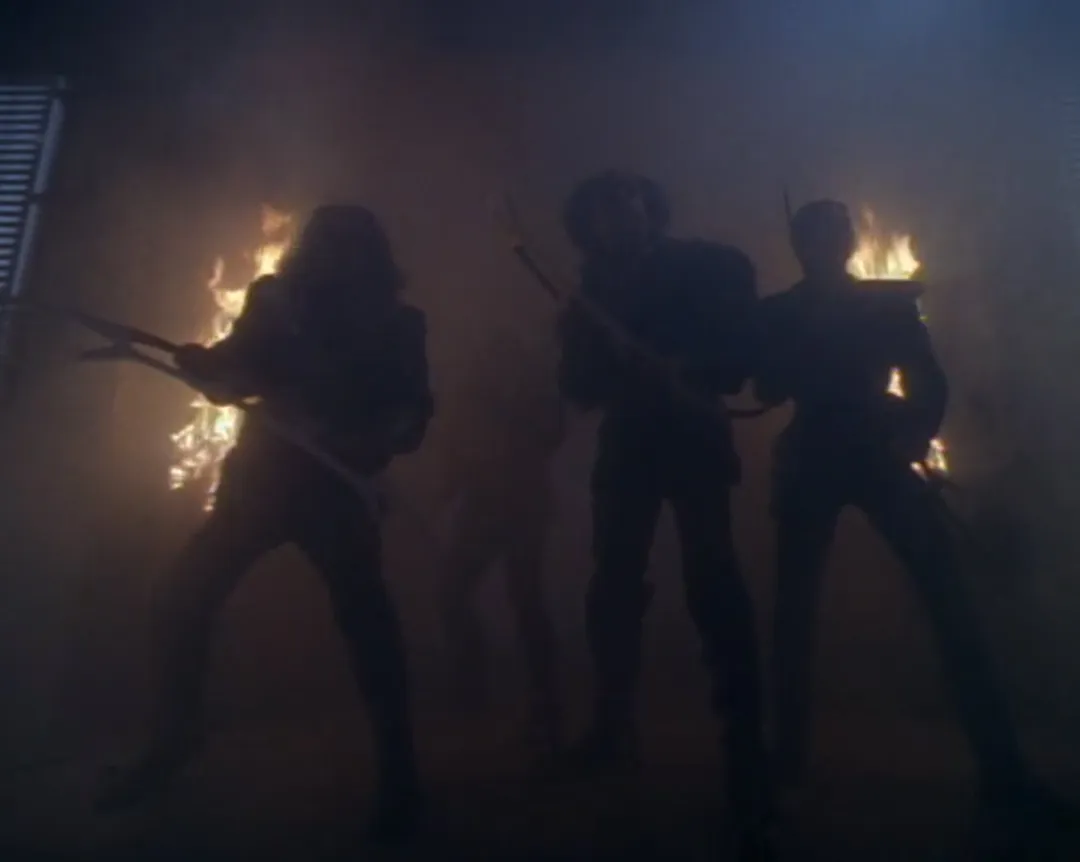
The episode pulls Kor, Kang, and Koloth, three Klingons played by their original sixties actors, out of the franchise’s past and gives them one last cause: a decades-old blood oath against the man who murdered their sons. It should not work as well as it does. It works because the show treats their honour as something with weight and history and cost, not as a slogan, and because Jadzia Dax has to earn her place beside them rather than being handed it. From there I followed the Klingons into the worst stretches of the Dominion War, the alliance breaking and reforming, Martok’s grim competence, the sheer texture of a people under real pressure, and somewhere in there I stopped resisting them.
I want to be precise about why, because it is not the obvious reason. I didn’t start liking the Klingons because they became more honourable. I started liking them because Star Trek admitted they often weren’t.
The Undiscovered Country
If the whole argument crystallises anywhere, it is in 1991, in the best Klingon story the franchise has told.
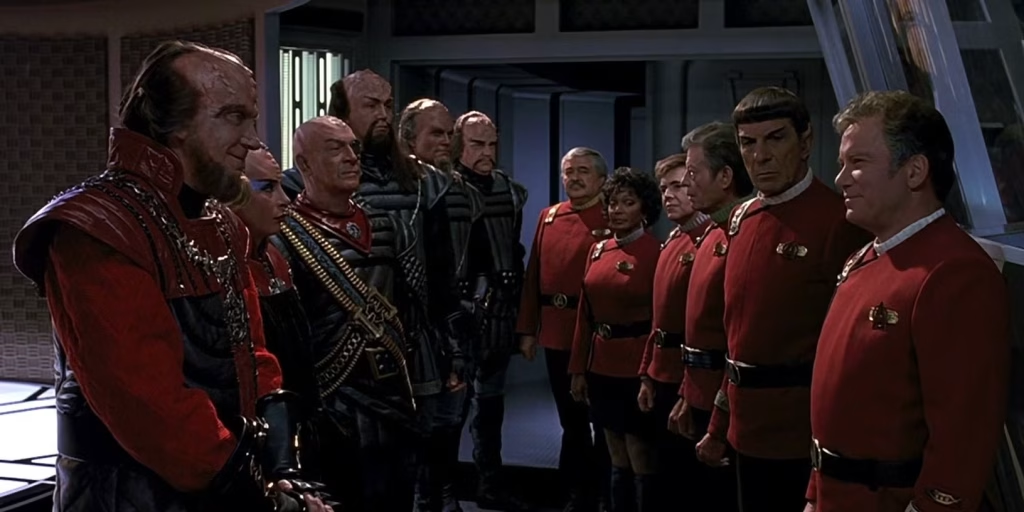
The Undiscovered Country is the one openly historical film in the series, and it knows it. Praxis goes up like Chernobyl, the Klingon economy follows, and Chancellor Gorkon, named for Gorbachev and played by David Warner with weary decency, extends a hand toward a peace his own people are not ready for. It is Gorkon who delivers the film’s most quoted line, that you have not experienced Shakespeare until you have read him in the original Klingon, and the joke matters, because it is a man reaching across a sixty-year war to find common ground in something human.
Standing against him is General Chang, and Chang is the reason the film is more than a parable. It would be easy to write him as a hypocrite, a brute mouthing honour while plotting murder. He is something far more dangerous. Chang genuinely believes that preserving the warrior Empire is the honourable course, that Gorkon’s peace will hollow his people out and leave them prey, and he is willing to assassinate his own chancellor and frame Kirk and McCoy to prevent it. He quotes Shakespeare into the teeth of battle and dies on “to be, or not to be,” and he is sincere to the last. Crucially, his conspiracy is not even Klingon. It runs through a Starfleet admiral and a Romulan ambassador, all of them honourable in their own estimation, all of them certain that peace is the real betrayal.
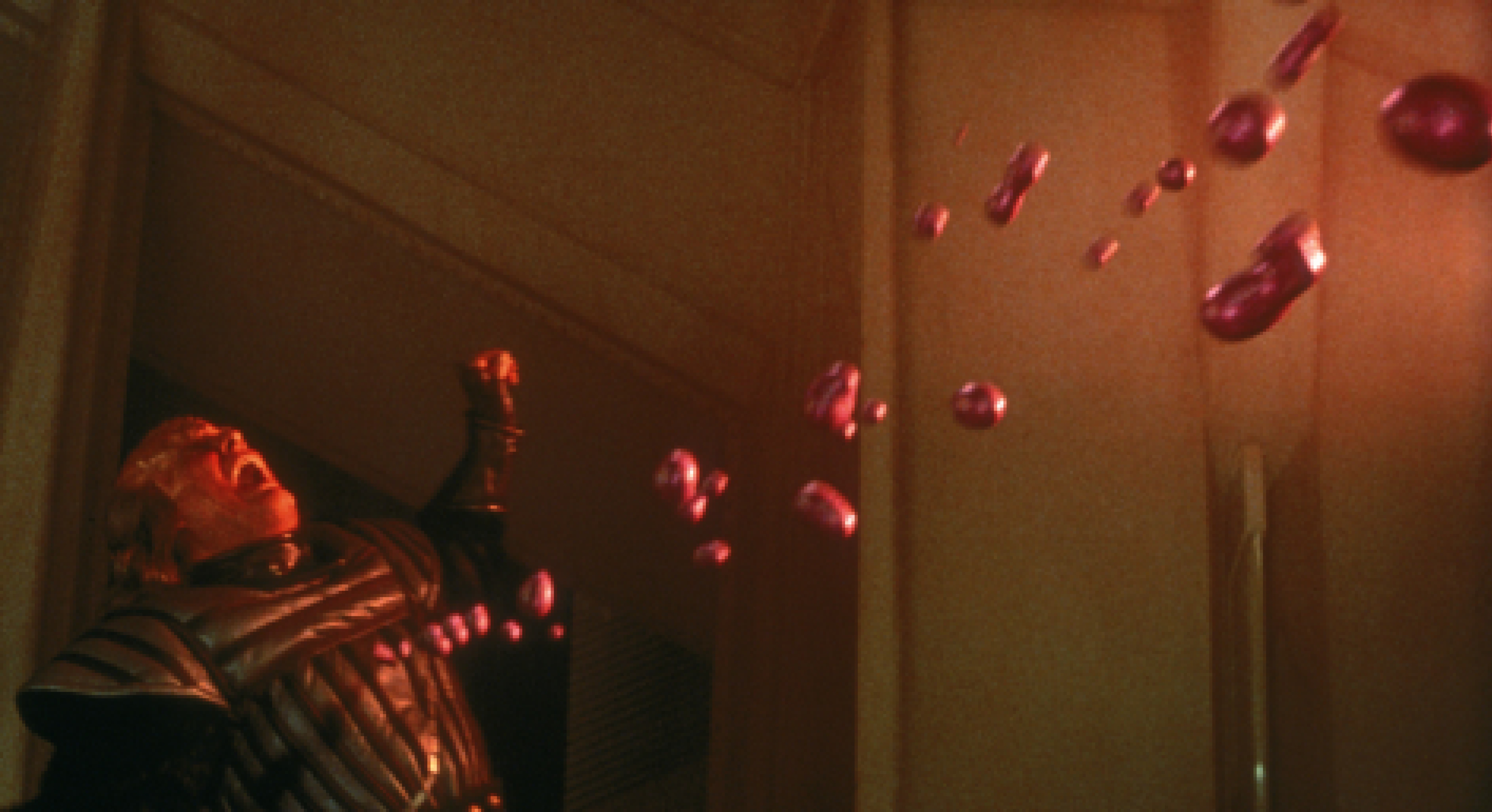
Everything I’ve been talking about ends up here. Gorkon and Chang are not honour against dishonour. They are two honourable men who have looked at the same ideal and drawn opposite conclusions about what it demands. The gap does not run between Klingons who have honour and Klingons who don’t. It runs straight through the idea of honour itself, and the best Klingon stories are the ones brave enough to stand in it.
Still Telling This Story
The franchise has never really stopped asking the question, which is how you know it was always the good stuff.
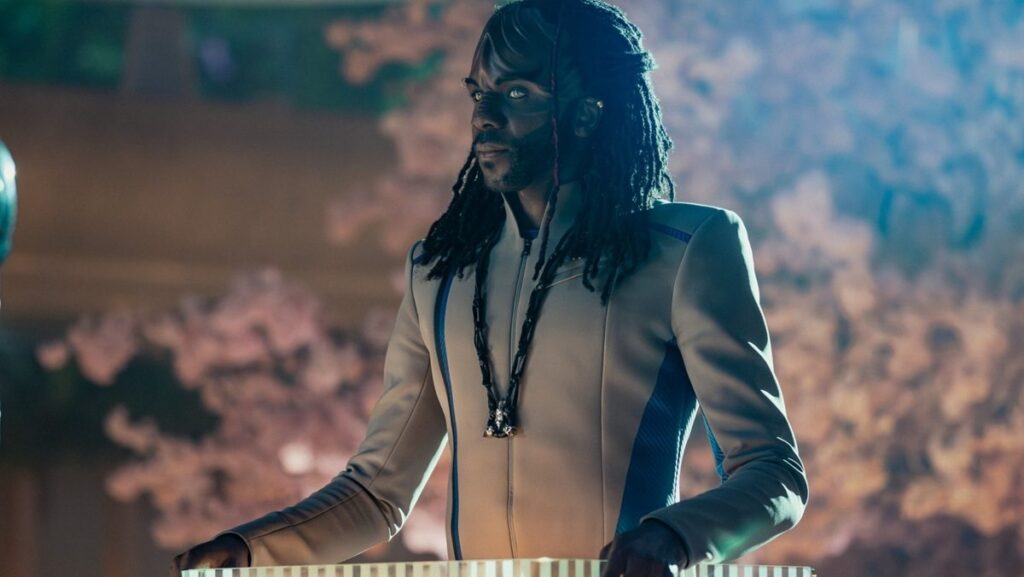
Strange New Worlds went back to it in “Under the Cloak of War,” with a Klingon ambassador named Dak’Rah who rebranded himself as a man of peace on a reputation he had not earned. He took the credit for killing his own officers to stop a massacre, when the killings were in fact a Starfleet doctor’s, and the massacre itself was his own order. His entire honourable second life is a costume stitched over someone else’s act. It is, openly, a story reaching back toward Gorkon’s assassination, the same wound reopened a generation later.
And when a Klingon story forgets the gap, you can feel the floor give way. Starfleet Academy‘s Jay-Den Kraag is the clearest recent example, a Klingon medical cadet who never breaks through from concept into person, because the writing mistakes ‘Klingon’ for a personality. Strip out the gap, the cost, the politics, and you are left with the rubber-suit villain of 1967, the species before it became interesting.
A Code, or a Costume?
So which is it. After all of it, the speeches and the knives, Kahless and the Council, Worf’s Empire and Gowron’s Empire, the honest answer is that it was never one or the other, and the franchise is at its best when it refuses to choose.
The Klingons are most interesting not when they embody honour, but when they fall short of it. Every great Klingon story lives in that gap.
Which is where we started. A man in the Great Hall, taking the blame for a crime he did not commit, in a room full of people who know the truth and look away. The honour in that room was real. Nobody in the Hall recognised it. It just belonged to the only man willing to lose everything for it.