Star Trek: The Mirror War — Emperor Riker and the Long Road to Earning It
The premise of The Mirror War has almost everything going for it on paper. The The Next Generation crew, transplanted to the Mirror Universe. Captain Picard not as the man who reads archaeology and quotes Plutarch, but as an Imperial officer building an armada to drag the Terran Empire back from the edge of extinction. It should be irresistible. The question, after sitting with this collected edition for a while, is whether the execution lives up to what the concept promises. The answer is mostly yes. The caveats are where things get interesting.
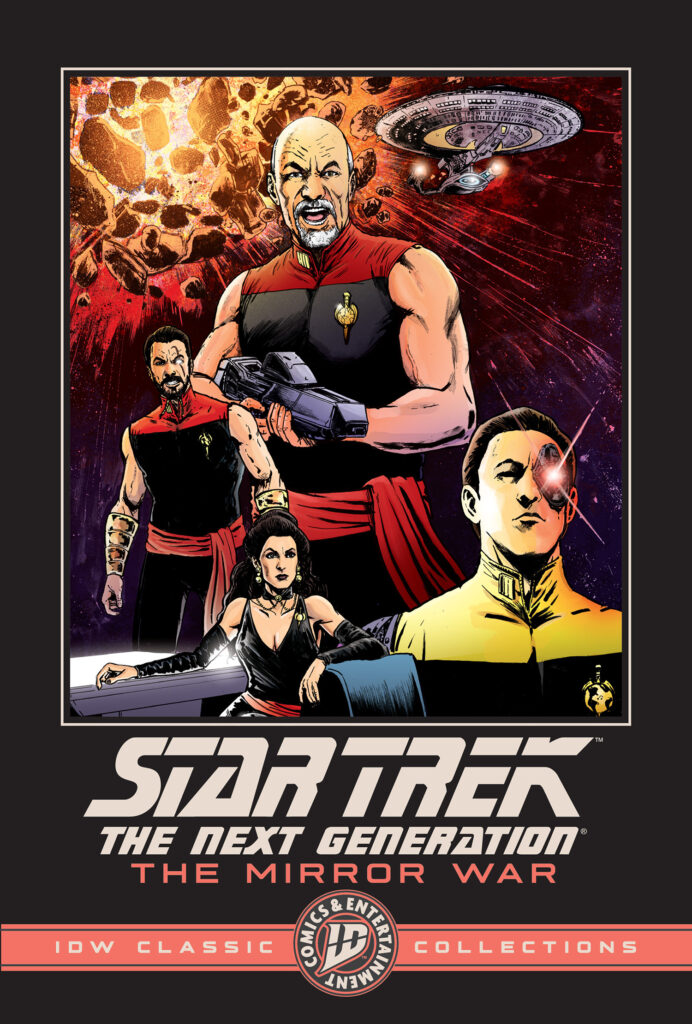
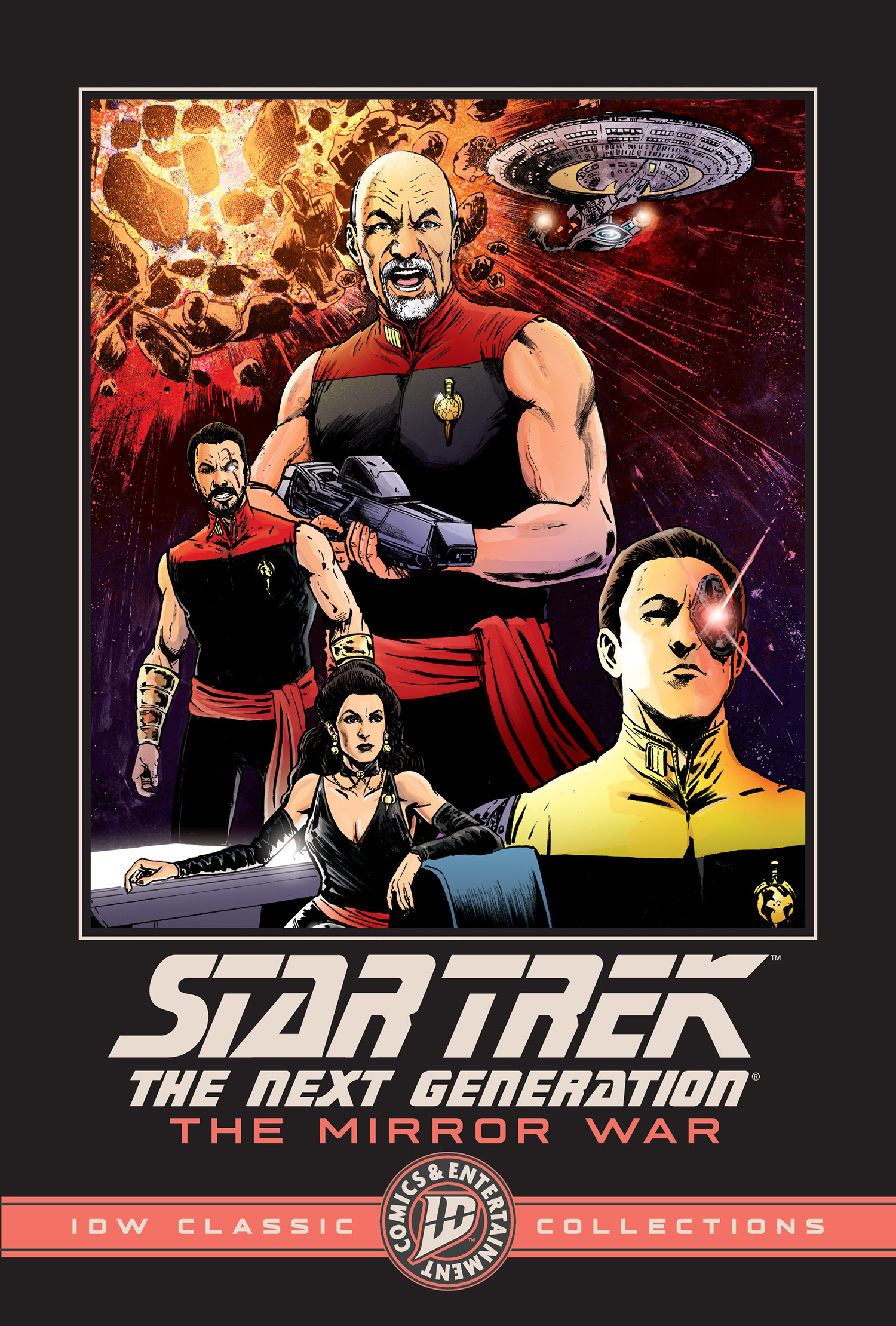
As part of IDW Publishing’s modern Star Trek comics line, The Mirror War sits in that awkward space between fan-service premise and long-form execution.
The Mirror War was originally published by IDW across 2021 and 2022, comprising a prelude issue #0 and an eight-issue main series by Scott and David Tipton, supplemented by four character one-shots from different creative teams. This IDW Classic Collections volume gathers all of it — issues #0 through #8, plus the Data, Geordi, Sisko, and Troi specials — into a single 300-plus page edition. The ambition is obvious. Unfortunately, so are the growing pains.
The setup, established efficiently in issue #0, is this: the Klingon-Cardassian Alliance has driven the Terran Empire back to Earth, leaving only a handful of Imperial ships still operational. One of those ships is the I.S.S. Enterprise, under the command of Captain Picard. He is not rebuilding in a spirit of Starfleet optimism. He wants the Empire restored to supremacy, and his plan involves seizing a shipbuilding operation on the planet Faundora and constructing an armada powerful enough to break the Alliance’s hold. Issue #0 works well as an entry point: the stakes are clear, the political dynamics are introduced without fanfare, and Mirror Picard is in motion before you’ve had time to miss his prime-universe version.
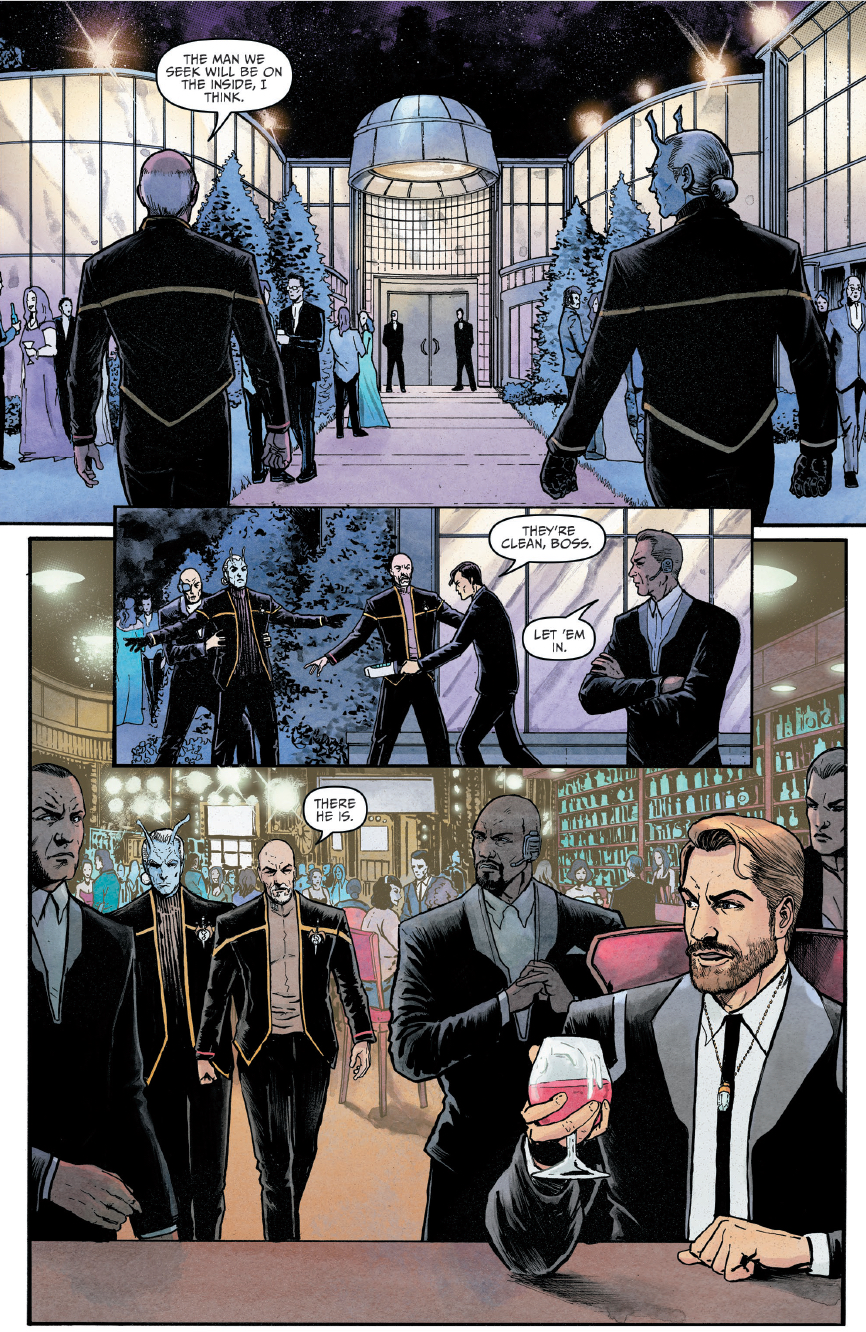
The Tiptons clearly know their Mirror Universe continuity. The political texture is rendered with real care: the Imperial Council watching Picard with suspicion, the Alliance monitoring the Empire’s remaining ships, Riker operating as something between confidant and rival, Troi running her own quiet game of information and leverage. Where the main series is at its strongest is in how it handles the ensemble as a unit. These are not heroes behaving badly. They are ambitious, capable people whose moral framework runs in the opposite direction to the crew we know, and the book mostly resists the temptation to make them secretly sympathetic. Mirror Picard earns your attention not because he’s likeable but because he’s competent and dangerous in exactly the way the setting requires.
That’s actually what makes The Mirror War work better than many Mirror Universe stories. The setting is not interesting because everyone has a goatee and stabs each other at dinner. It’s interesting because it takes familiar characters and asks which parts of them survive when every incentive points the wrong way. Mirror Picard is still recognisably Picard. He’s still strategic, still charismatic, still capable of inspiring the kind of loyalty that functions even here. The difference is what he’s trying to build and who gets hurt in the process. The Tiptons understand that. Not every Mirror Universe comic does.
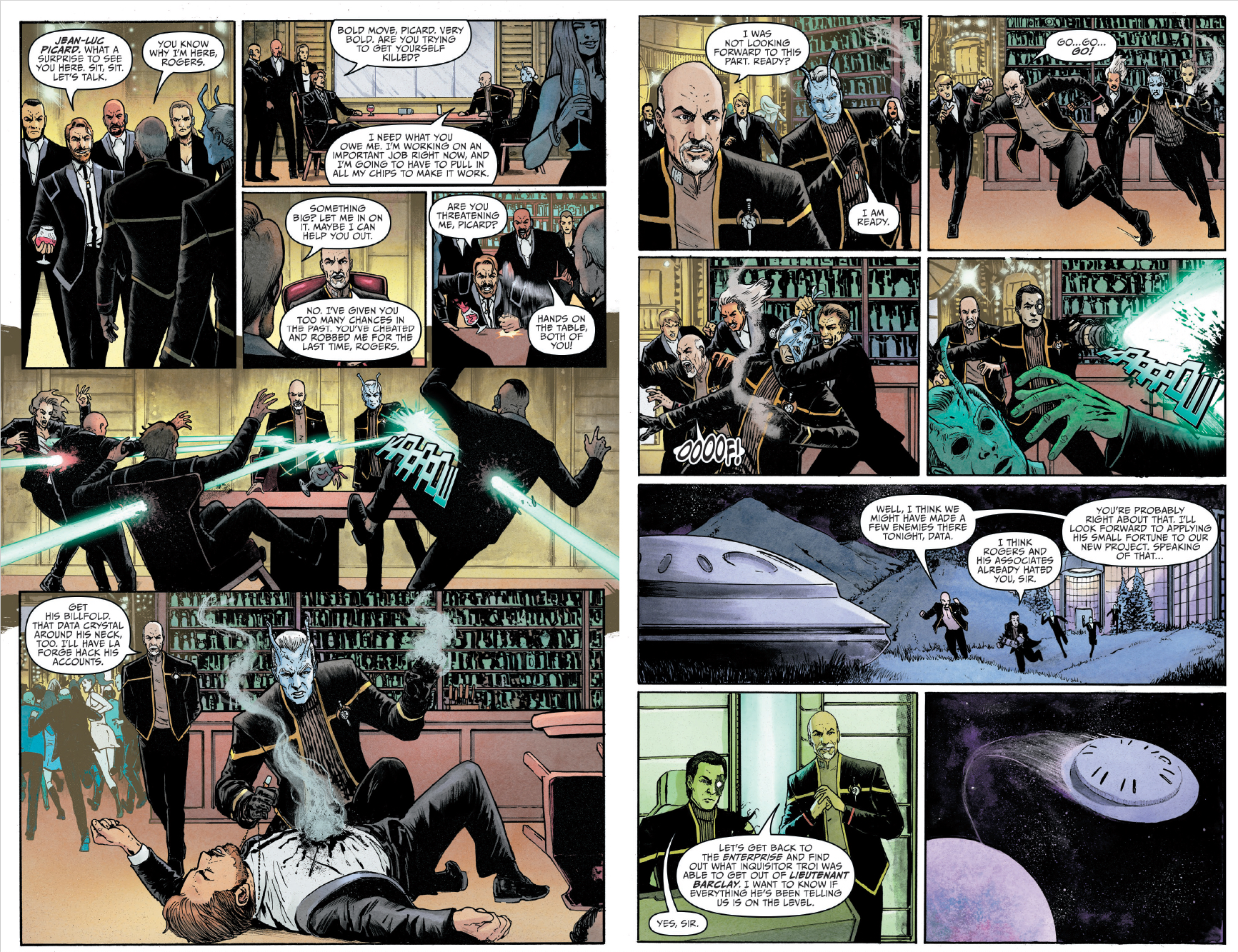
Gavin Smith’s line art across the main run does the job reliably. His Picard is lean and authoritative, his action sequences are clear, and the Imperial ship interiors have a functional grimness that suits the tone. Charlie Kirchoff’s colours lean into deep, cool tones punctuated by the hot reds and golds of combat, giving the book a consistent visual identity across nine issues. The art rarely blows you away, but it never becomes a problem either. For a story this long, that’s probably the right trade.
The main series does run into trouble around its mid-section. The Faundora arc proceeds through several issues without quite escalating the tension the way it should. The plotting is competent, the individual scenes function, but the cumulative momentum flags. There are stretches where the book is going through the motions of an epic without quite generating one. Barclay’s shifting loyalties are introduced with more dramatic promise than they’re ultimately given room to pay off, and that’s symptomatic of a wider pacing problem: the series has more plot than it has space to breathe in.
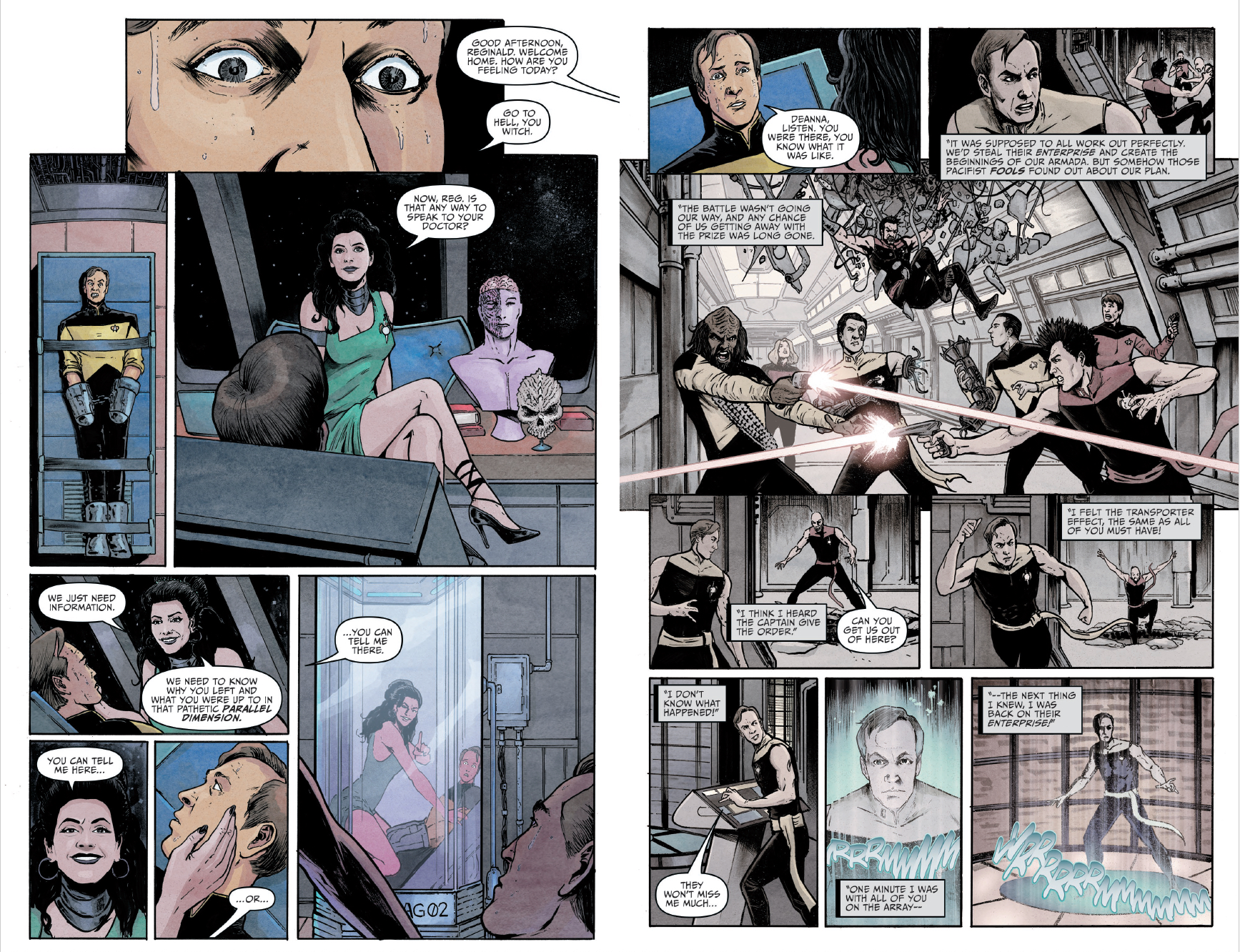
The four one-shots are where the collection becomes a noticeably different reading experience, and the quality variance between them is significant.
The Data one-shot, written by Celeste Bronfman with art by Roberta Ingranata, is the best of the four by a clear margin. It takes Mirror Data’s interiority seriously, exploring what it means to be a being optimised for logic and observation living inside a society built on betrayal and brutality. Ingranata’s art is softer and more expressive than the main series, which suits a story about internal conflict rather than external action. It is the most complete piece of writing in the entire collection.
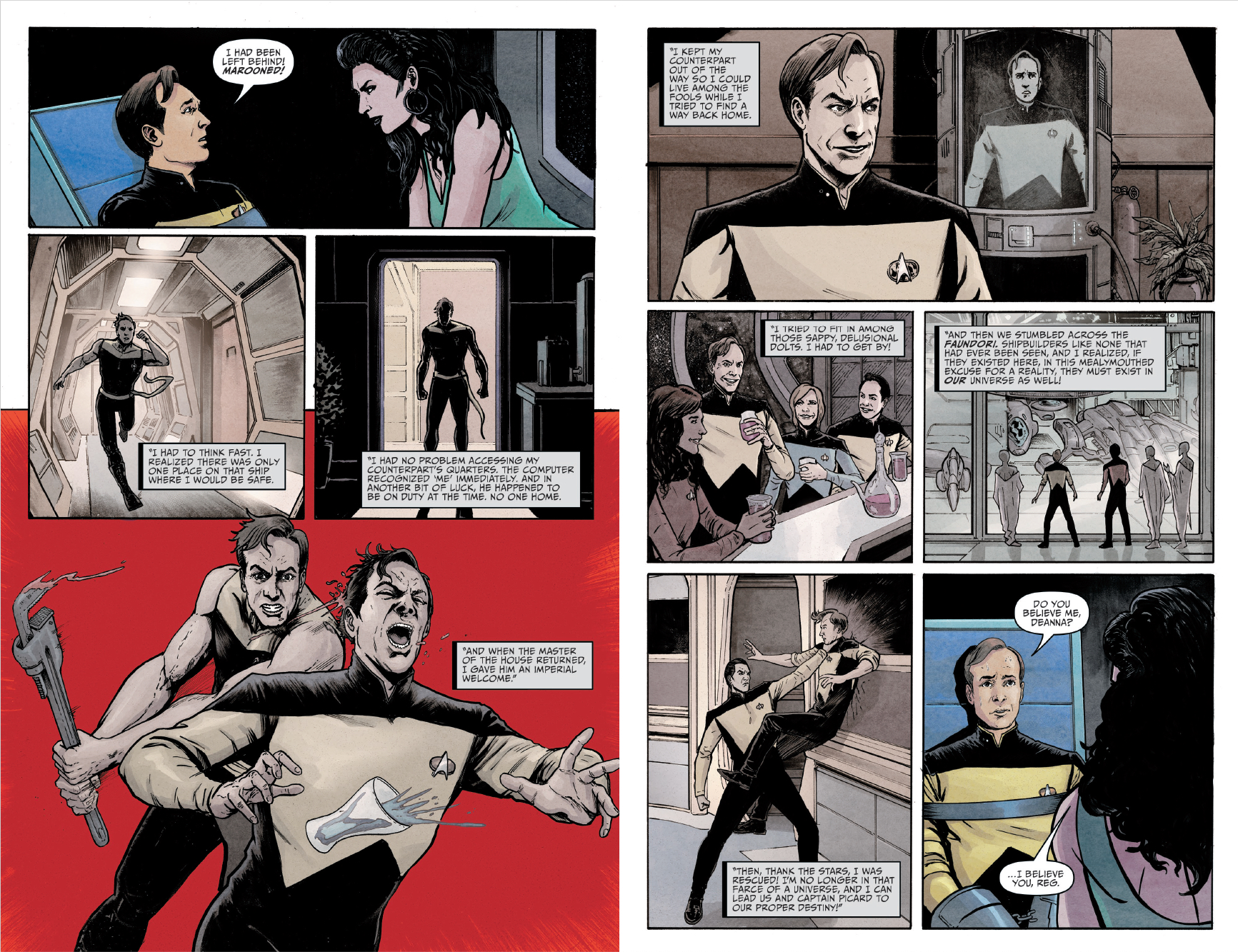
The Geordi one-shot by J. Holtham is more functional. It does useful work establishing how Mirror La Forge fits into Picard’s command structure, and the relationship dynamics it sets up pay dividends later in the main series. Carlos Rodriguez’s art is clean and efficient. It’s the definition of a comic that does exactly what it sets out to do and nothing more.
The Sisko one-shot by Danny Lore is the most purely entertaining of the four. Mirror Sisko has been dragged out of the Terran resistance and into a deeply compromised position, and Lore handles his navigation of that situation with a propulsive energy the main series occasionally lacks. Hendry Prasetya’s art matches the pace. The final page’s caption, lingering on Sisko’s particular quality as a captain, is the single best line in the entire collection.
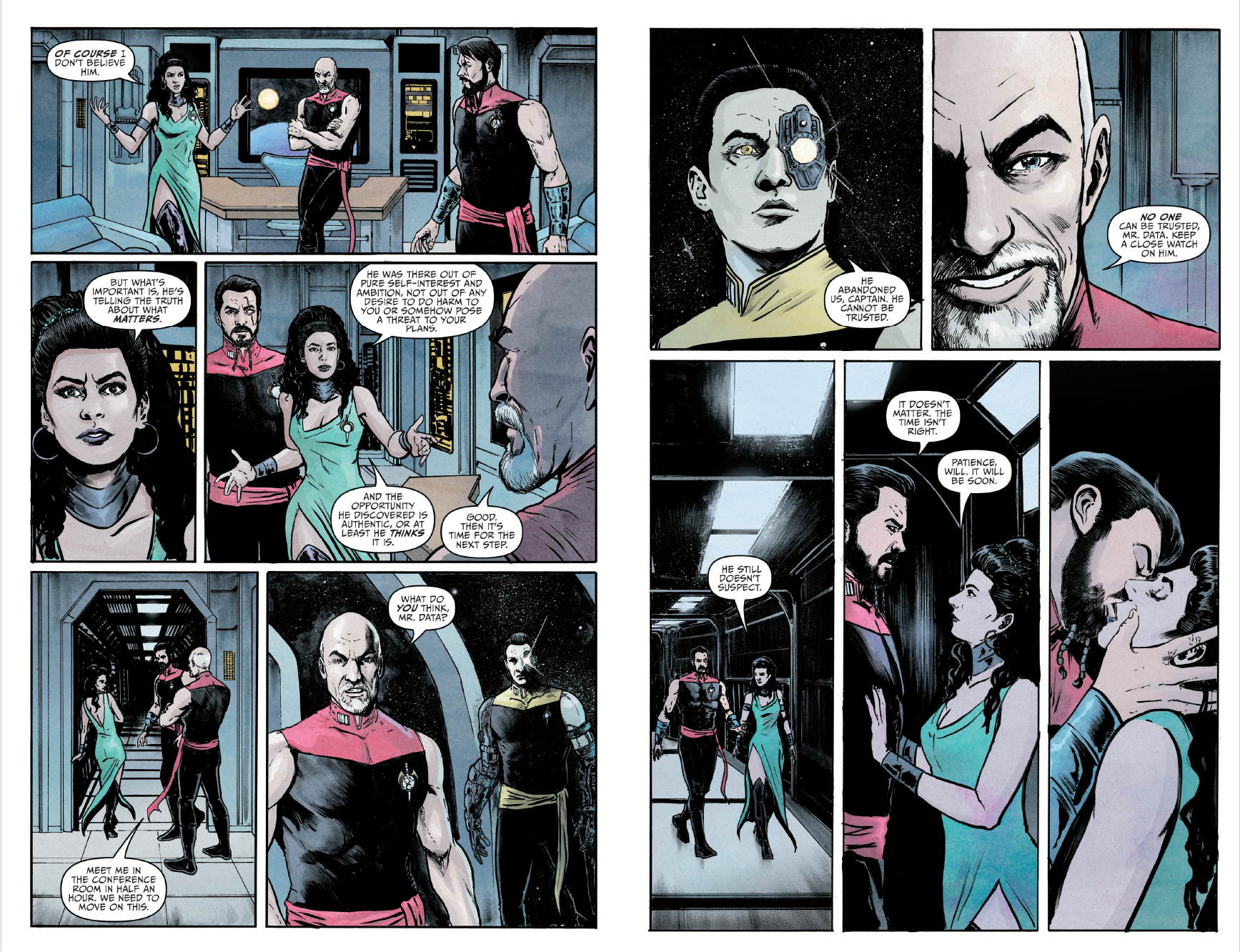
The Troi one-shot by Marieke Nijkamp and Megan Levens sits somewhere between the others. Nijkamp has a clear handle on what Mirror Troi is — a woman who built her position through reading people and weaponising what she found — and Levens, whose work appeared in the Red Shirts collection reviewed here previously, is a reliable hand with expressive character work. The issue suffers slightly from feeling like a prologue to a story the main series then doesn’t quite tell.
What The Mirror War ultimately adds up to is a Trek comic with more on its mind than most. It doesn’t always land what it’s aiming for, but when it does, it’s genuinely good. The main series is a solid, occasionally flat epic that peaks at both ends and has a mid-section that doesn’t quite deserve them. The finale, culminating in Riker’s coronation as Emperor and the Enterprise emerging battered but operational, is the right ending to the story. It feels earned in a way that some of the middle section doesn’t.
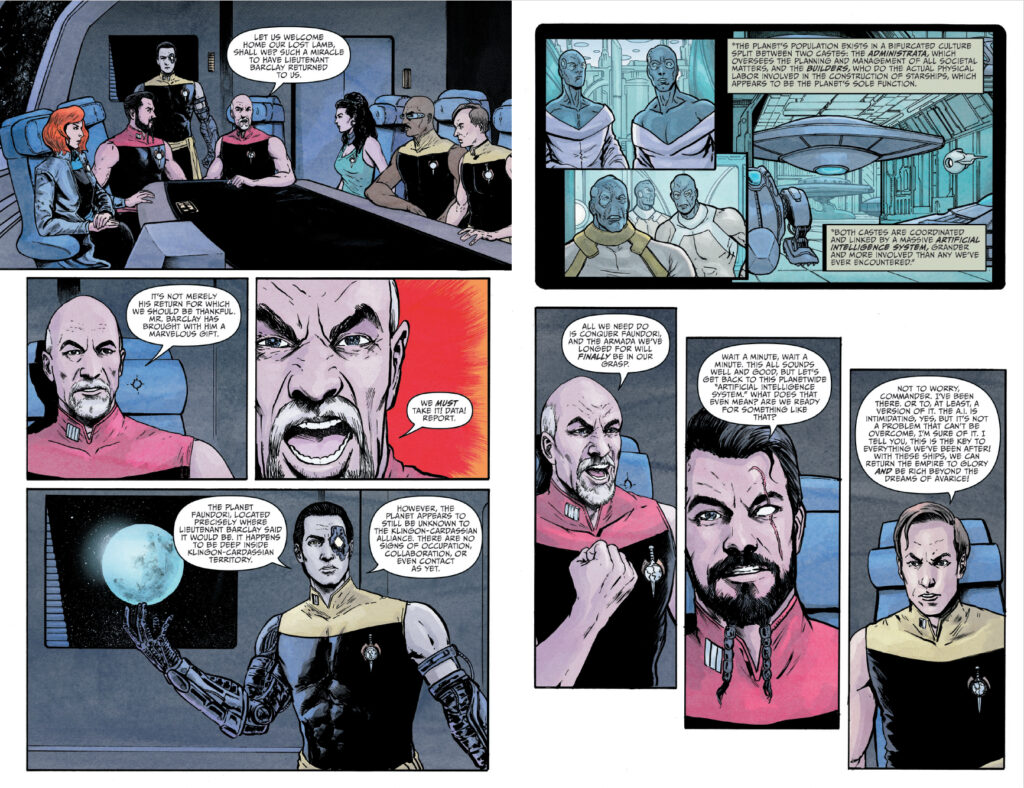
The Klingon-Cardassian Alliance, Terran resistance fighters, the consequences of a century of Imperial degradation: all of it is present and handled with consistency. The book clearly knows where it sits in the broader Mirror Universe timeline, and that knowledge gives the worldbuilding a solidity that many similar projects lack.
It also sits beside other BoldlyTrek comics coverage, including Red Shirts, which has its own very different way of pulling apart a familiar Star Trek idea.
At over 300 pages, the IDW Classic Collections format packages everything into a single volume, making it the most straightforward way to experience the entire saga. The Data and Sisko one-shots alone make the collection worth a look. If you want to spend time with a The Next Generation crew stripped of its Federation values and left to operate on ambition and survival instinct, The Mirror War delivers that. Just be prepared for the middle stretch to test your patience before it gets good again.
7/10