The Vulcans: Logic, or Emotion? (Race Spotlight)
A single tear forms at the corner of Sarek’s eye during a chamber recital. It should be almost nothing. By the time it reaches his cheek, the Enterprise is beginning to come apart.
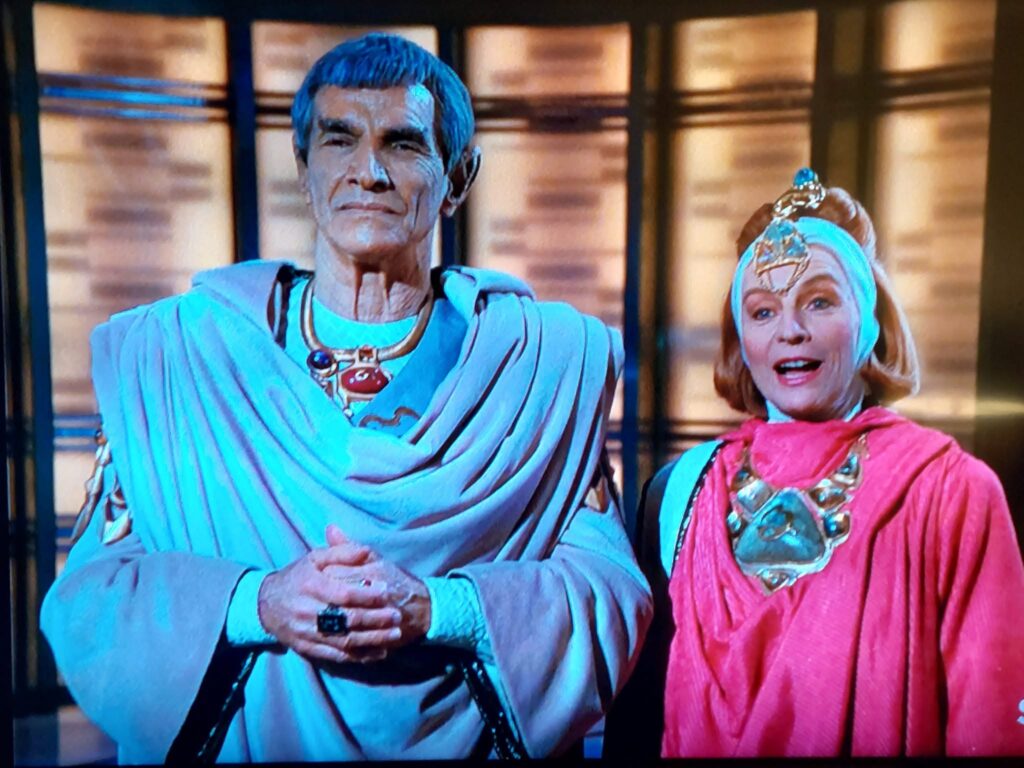
That is “Sarek”, and it might be the most devastating hour Star Trek ever built around a Vulcan. Ambassador Sarek, two hundred and two years old, arrives aboard the Enterprise-D for one last diplomatic triumph. He has spent ninety-three years preparing for negotiations with the Legarans, a species willing to deal with nobody else, and Picard greets him with the respect due to one of the Federation’s greatest living figures.
There is a concert. Data plays violin. Sarek cries.
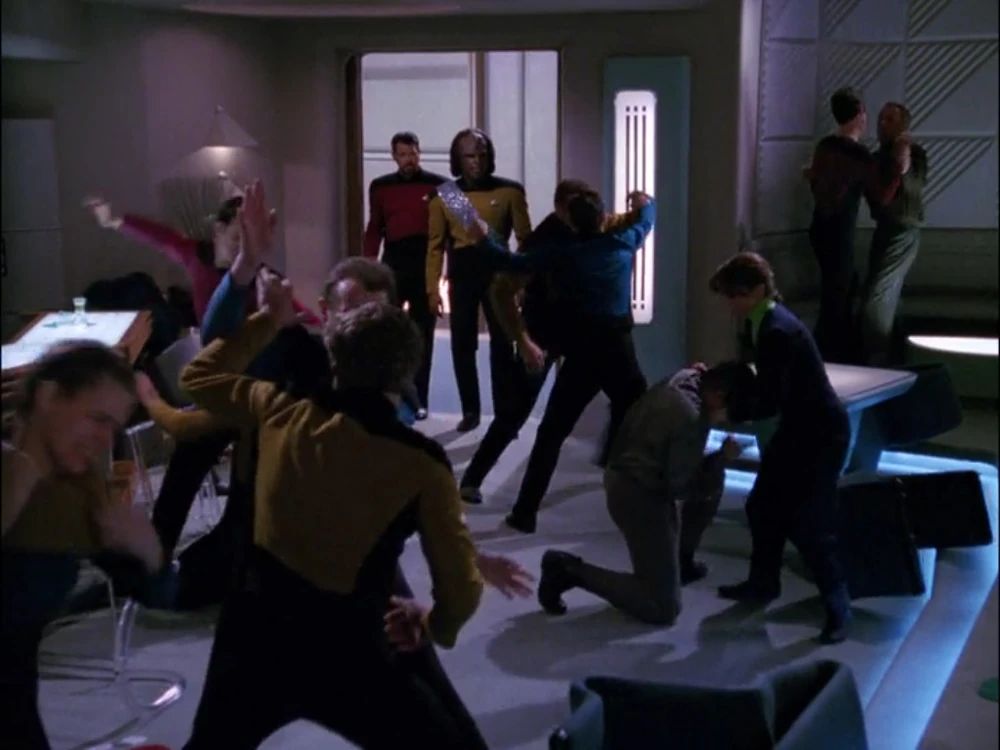
Elsewhere on the ship, people who have worked peacefully beside each other for years begin snapping, shoving, and swinging fists over a table in Ten Forward. Geordi and Wesley come close to blows. Worf reports an officer for insubordination. Even Picard and Riker start turning on each other.
The two things are connected. Sarek has Bendii Syndrome, a degenerative condition affecting some elderly Vulcans. His control is failing, and the emotions he can no longer contain are being projected at random into everyone around him.
By the end, Picard agrees to a mind meld. Sarek receives enough of Picard’s stability to complete the negotiations, while Picard is left in his quarters with Beverly, overwhelmed by everything Sarek has carried beneath the surface: anger, shame, exhaustion, regret, and love he wanted to express but could never quite allow himself to show.
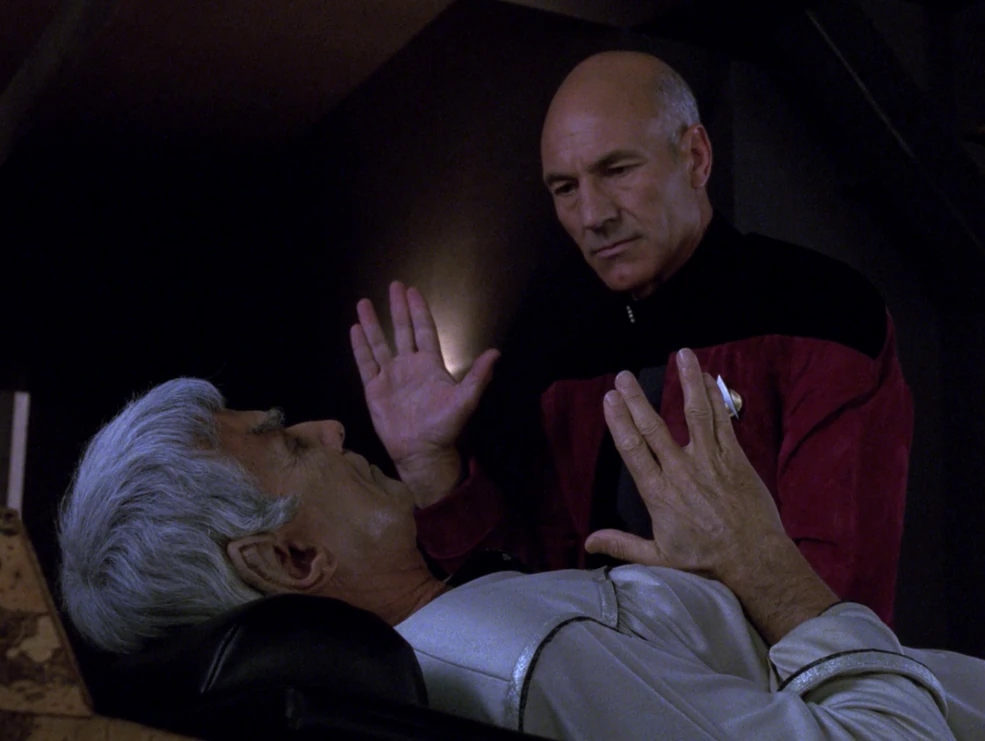
Ask most people what defines a Vulcan and they will say logic. Ask what “Sarek” is actually about, and the answer is much closer to the opposite. It is about how much feeling one person can carry for two centuries without letting it show, and what happens when the structure holding it back finally cracks.
Logic is the word Star Trek gives us for Vulcans almost immediately, and it is the word that has followed them for sixty years. It is also, on close inspection, not quite what the franchise shows.
Vulcans are not a species without emotion. They are a species whose emotions are so intense that they built an entire civilisation around controlling them.
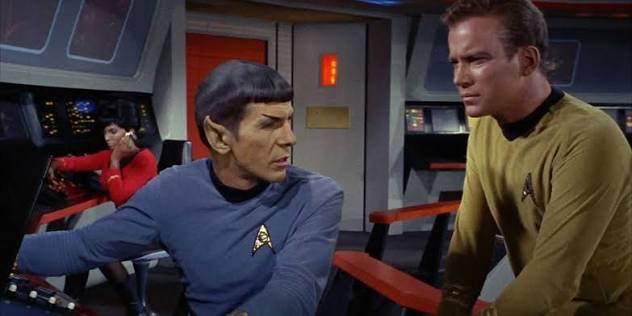
Logic was never the absence of feeling.
It was the survival mechanism.
A Civilisation Built After the Fire
Vulcan was not always calm.
Spock admits as much in “Balance of Terror”, describing ancient Vulcan as savage even by Earth’s standards. Enterprise later lets Surak say it plainly: war is tearing Vulcan apart. The Time of Awakening was not a gentle philosophical movement conducted through lectures and thoughtful correspondence. It came out of a civilisation killing itself.
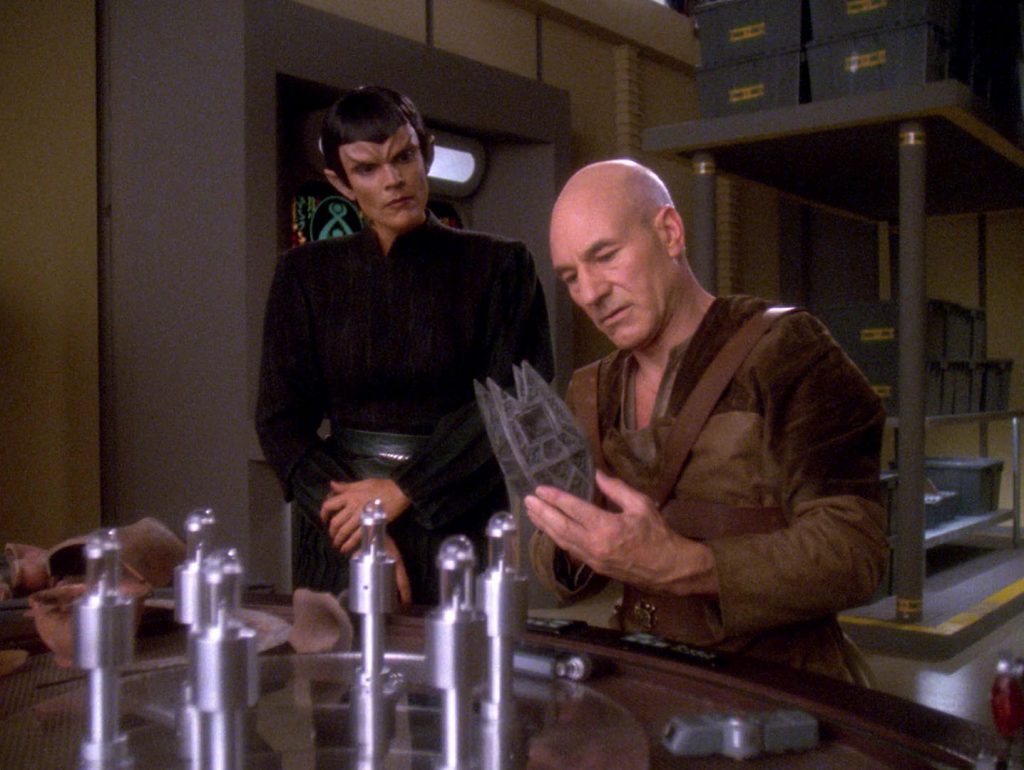
The weapons were not always conventional, either. “Gambit, Part II” reveals that ancient Vulcans learned to turn telepathy into a weapon. The Stone of Gol could focus aggression and kill through thought alone. A species capable of reaching directly into another mind had worked out how to make that intimacy lethal.
Surak’s teachings were not an interesting new school of philosophy. They were triage.
That changes what “the logical species” actually means. Logic is not simply a Vulcan personality trait. It is cultural memory. It is damage control. It is a civilisation that remembers what happened the last time it stopped trying.
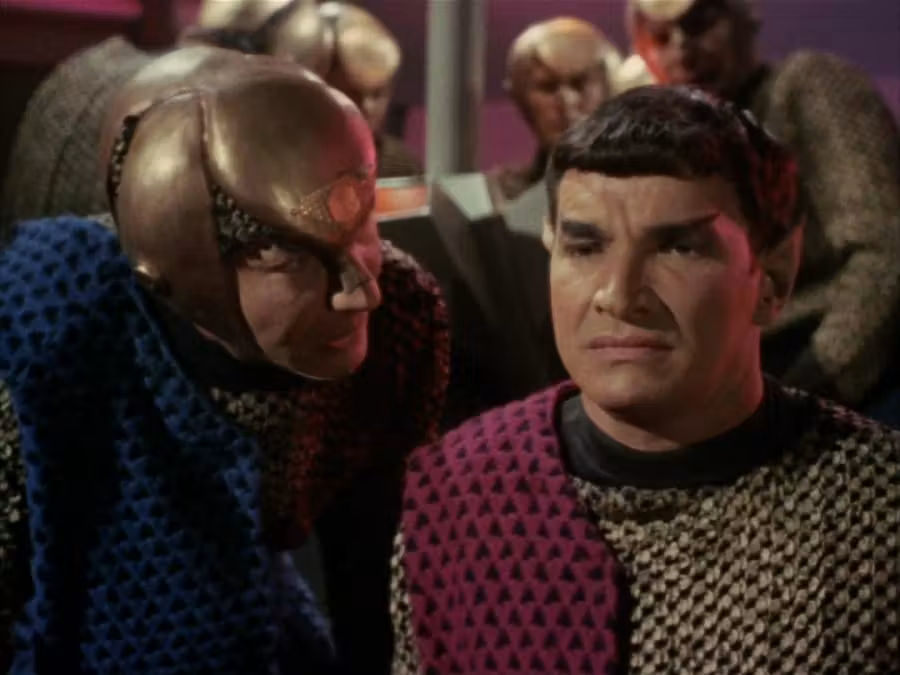
The Romulans remain the clearest shadow cast by that history. They share Vulcan ancestry, but emerged from the part of the ancient schism that rejected Surak’s path. Two cultures grew from the same emotional intensity and built almost opposite structures around it. Vulcans turned inward and made control sacred. Romulans turned outward and made suspicion political.
Neither culture stopped feeling.
They simply decided what feeling was allowed to look like.
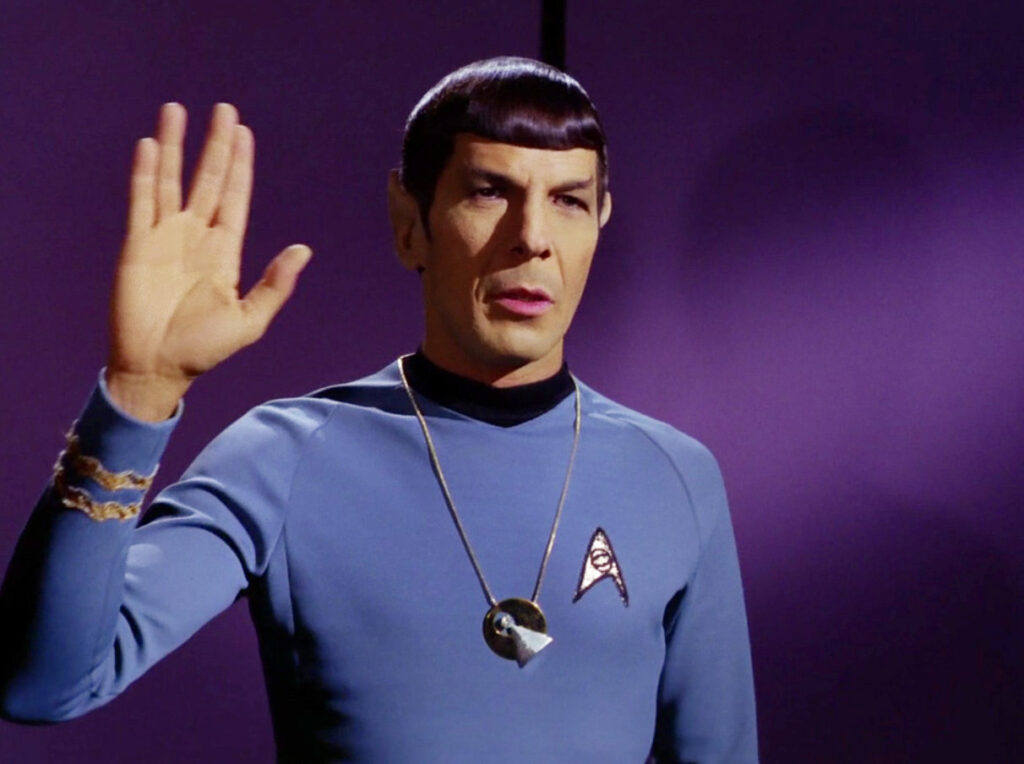
Even IDIC, perhaps the most recognisable statement of Vulcan philosophy, entered Star Trek through a contradiction. Infinite Diversity in Infinite Combinations is a fine idea. Its first substantial appearance, in “Is There in Truth No Beauty?”, was also built partly around Gene Roddenberry’s intention to sell replica medallions through Lincoln Enterprises. Leonard Nimoy objected to performing what he saw as an extended advertisement, and the scene was reduced.
The idea survived the sales pitch and became much larger than the way it was introduced. That feels strangely appropriate. Vulcan philosophy began on screen as something pure wrapped around something rather more commercial.
Even Vulcans cannot keep the mess outside forever.
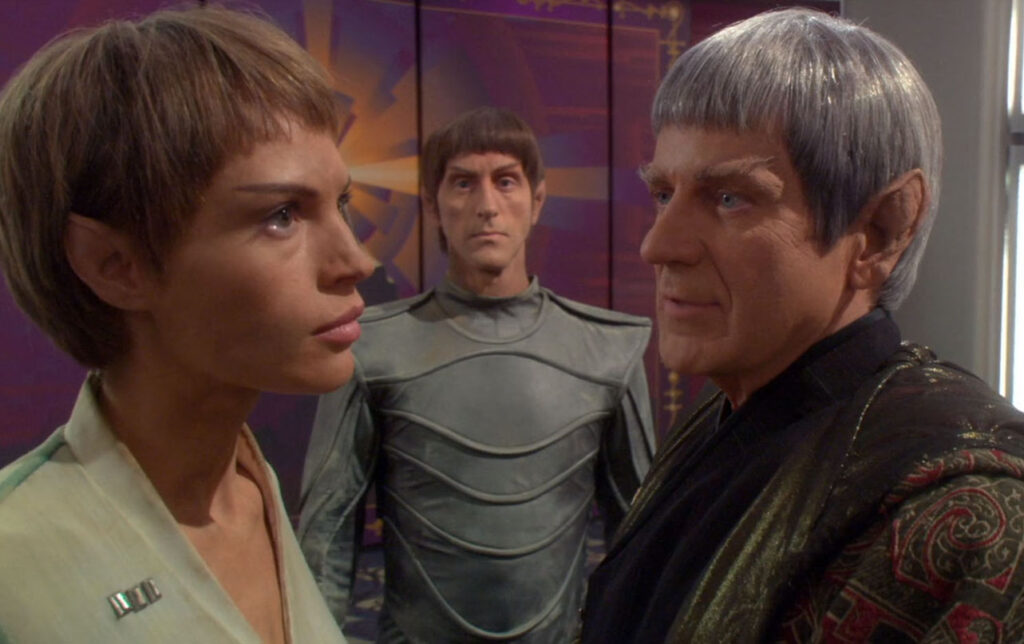
The Architecture of Fear
If logic were simply a peaceful cultural achievement, you would expect the people running Vulcan society to be rather good at it.
Enterprise makes that difficult.
Administrator V’Las, head of the Vulcan High Command, speaks the language of order, security, and rational necessity. In practice, he uses the bombing of Earth’s embassy as justification for attacking the Syrrannites, dismisses objections to a pre-emptive strike against Andoria, and tries to destroy the one group carrying a surviving record of Surak’s original teachings.
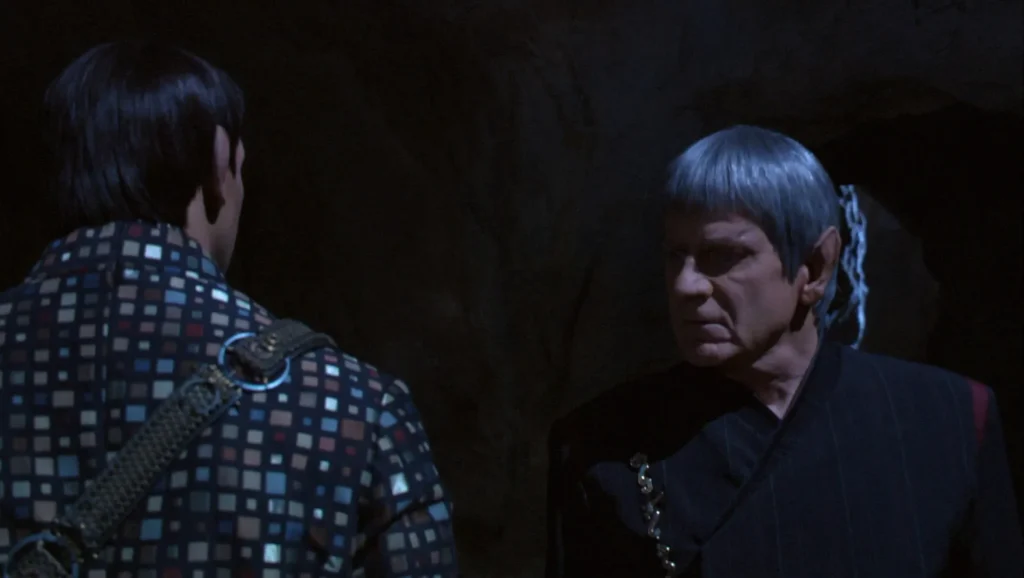
The end of “Kir’Shara” shows V’Las secretly meeting Talok, a Romulan operative involved in a long-term attempt to reunify the two peoples under Romulan influence. His precise responsibility for every part of the conspiracy is not laid out neatly, but he is plainly more than an innocent official making a few unfortunate decisions under pressure.
This is not emotional restraint.
It is fear wearing a clean robe.
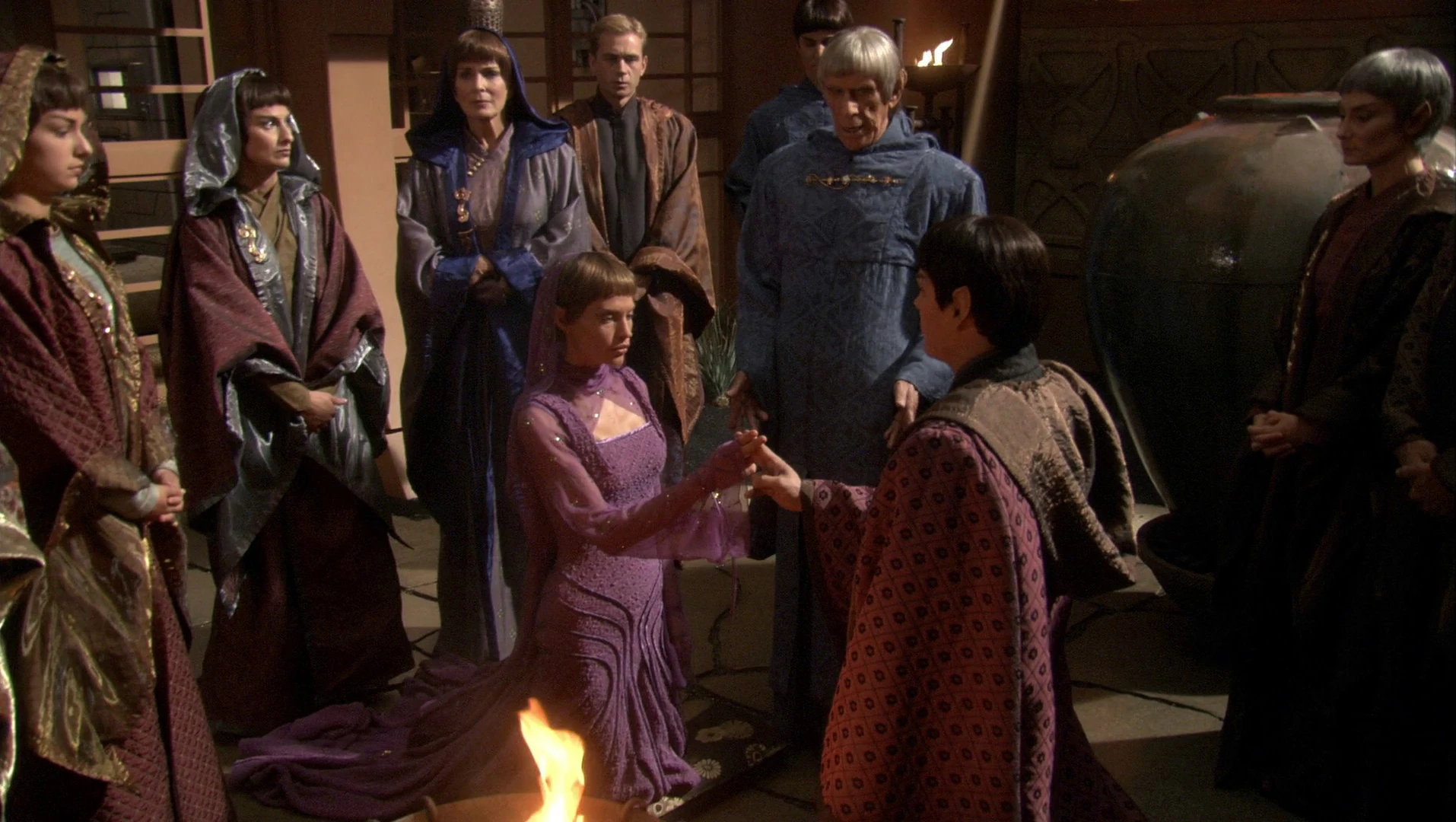
The treatment of Pa’nar Syndrome makes the point more quietly. The disease is real. T’Pol contracts it after Tolaris forces an improperly conducted meld upon her in “Fusion”. The lie is everything Vulcan society builds around it.
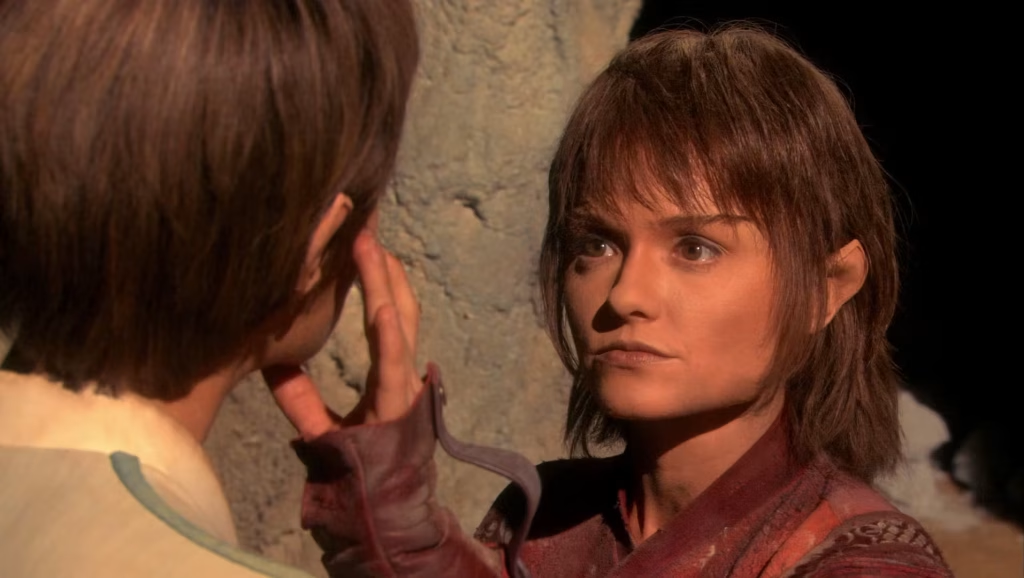
The High Command treats Pa’nar as incurable. It allows sufferers to be stigmatised, uses the condition to reinforce the idea that mind melds are deviant, and encourages Vulcans to fear an ancient part of their own nature. T’Pau eventually cures T’Pol through a properly performed meld and explains that Pa’nar is caused by damage, not by mind-melding itself.
The authorities do not invent the illness. They take something real, remove the context, and turn it into a tool of control.
That may be worse.
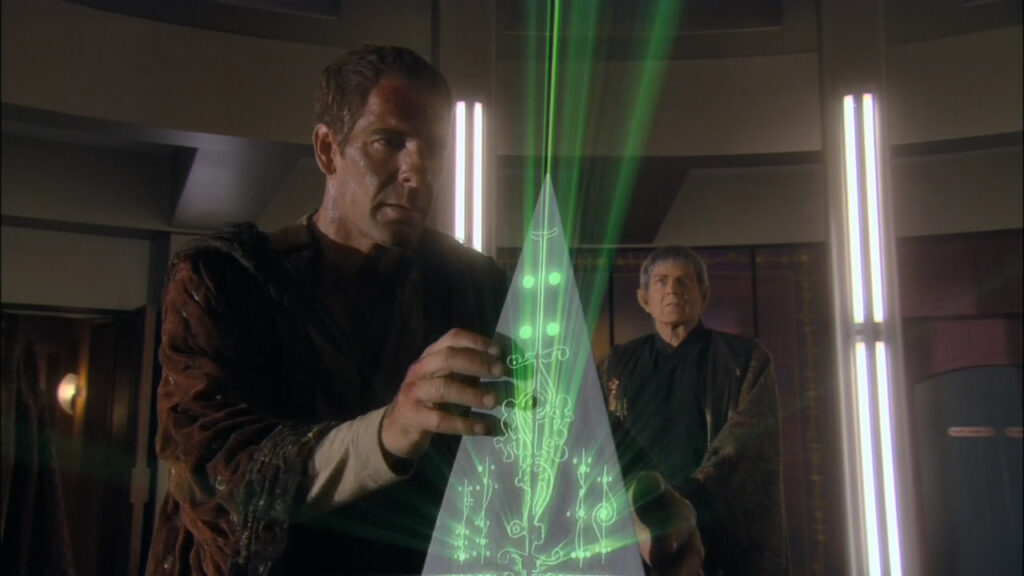
Manny Coto compared the Vulcan arc to the Protestant Reformation, with the High Command as an entrenched religious institution and T’Pau helping recover teachings that had been altered or suppressed. The comparison works because the story is not really about Vulcans abandoning logic. It is about an institution claiming exclusive ownership of it.
V’Las does not need to believe he is acting emotionally. He only needs to call his fear security, his prejudice medicine, and his ambition stability.
The Klingons perform honour.
The Vulcans perform control.
The difference is tailoring.
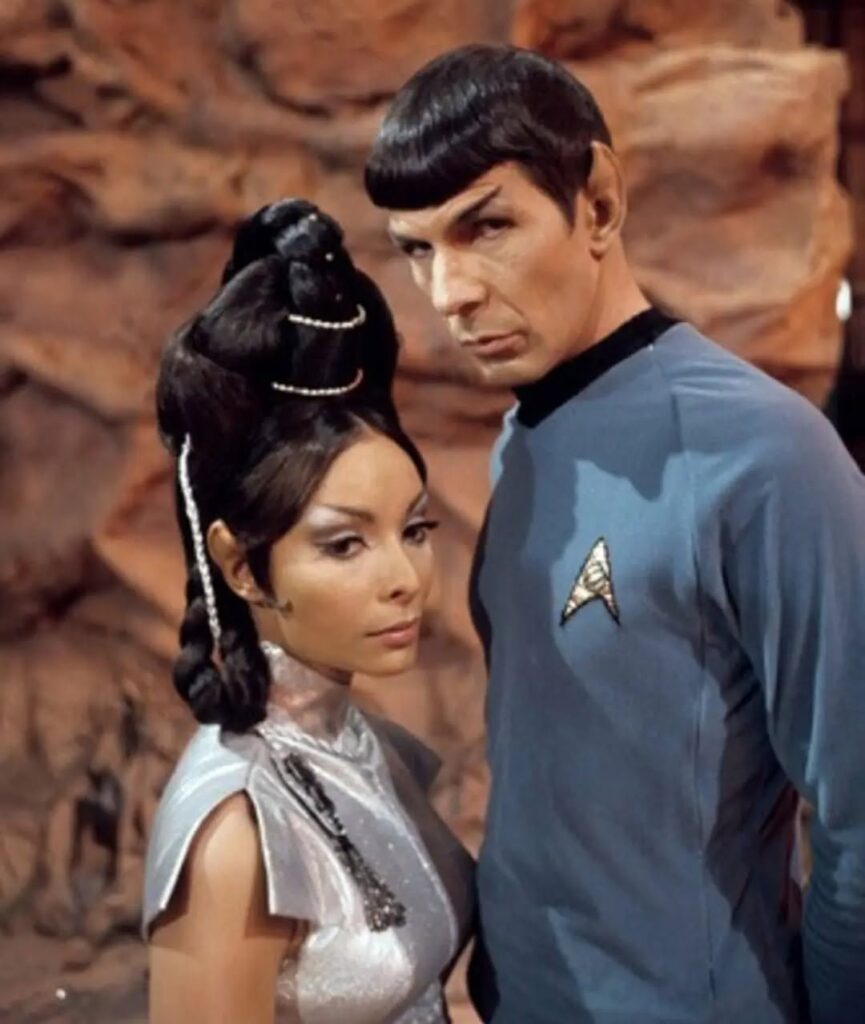
Where the Control Slips
Sarek is not the exception. He is the pattern with the mask worn thin.
Pon farr is the biological version of the same argument. Roughly every seven years, the Vulcan mating drive can overwhelm meditation, dignity, and years of discipline. “Amok Time” surrounds it with ceremony, ritual combat, and enough solemn faces to furnish a small cathedral, but the basic truth remains rather less dignified.
The body has stopped listening.
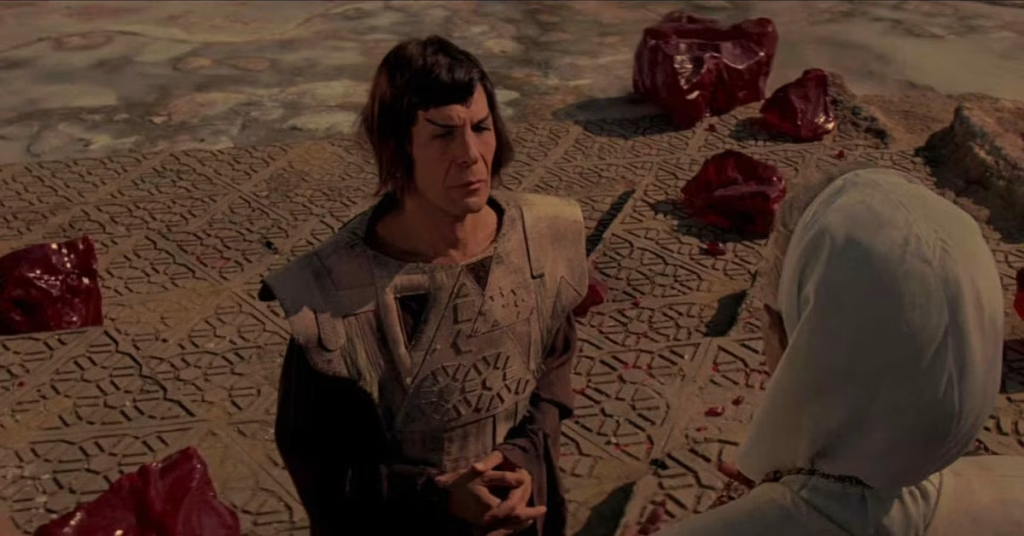
That does not make pon farr a failure of Vulcan culture. It proves why the culture exists. The pressure was never removed. It was managed, ritualised, and kept behind closed doors until it could not be managed any longer.
Kolinahr approaches the same problem from the other direction. It is not ordinary Vulcan discipline, but the final purging of emotion altogether. At the beginning of The Motion Picture, Spock has spent years preparing to attain it. He reaches the final ceremony, feels the consciousness of V’Ger reaching across space, and is told he has not succeeded. His emotions are still there.
The important part comes later. Spock finally touches a consciousness built from pure knowledge without feeling, and discovers not perfection but emptiness. V’Ger knows almost everything and understands almost nothing. The thing Spock has spent years trying to become turns out to be desperately searching for the very connection he has tried to remove from himself.
That is not simply Spock failing at Kolinahr.
It is Spock discovering why failure mattered.
Tuvok offers a cleaner test because he does not share Spock’s Human heritage. He is a full Vulcan, raised in the culture, committed to its disciplines, and often quietly irritated by Humans treating basic self-control as an exotic party trick.
Then “Meld” puts him inside the mind of Lon Suder.
The contact leaves Tuvok struggling with violent impulses powerful enough to break through his conditioning. At first he treats them as contamination, something Suder has placed inside him. Eventually he has to face a less comfortable possibility. Violence is not alien to the Vulcan mind. Logic does not prove the darkness was never there. It is what keeps the darkness from choosing the furniture.
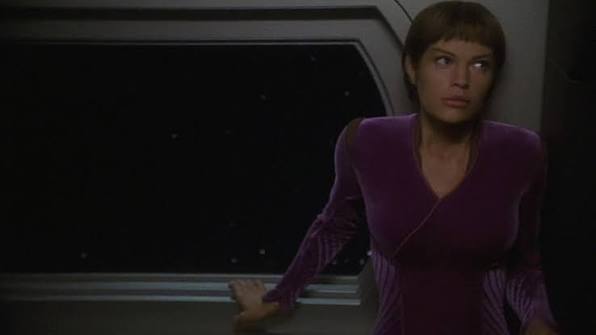
T’Pol’s experience with Trellium-D is more painful because part of it is voluntary. Her job initial exposure aboard the Seleya destroys her emotional control and leaves her terrified by what comes through. Later, however, she begins injecting small amounts deliberately. The emotions are overwhelming, but they also give her access to something she has spent her life holding at a distance. She wants more.
It becomes an addiction.
That storyline is not always handled gracefully, but the idea underneath it is strong. T’Pol does not take Trellium-D because she has no emotions. She takes it because the emotions are already there, and for a time the drug lets her experience them without the structure that has always stood between feeling and expression.
The cost is permanent damage to the part of her brain responsible for emotional control.
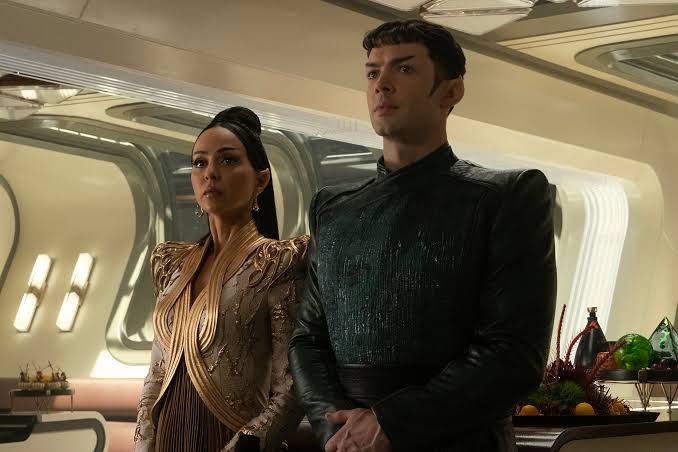
Strange New Worlds does something equally useful with T’Pring by allowing her to be right occasionally. She is no longer just the cold woman waiting at the end of “Amok Time”. She has a career, boundaries, expectations, and perfectly understandable reasons to be frustrated by a fiancé who keeps missing important conversations because the Enterprise has found another crisis.
In “Spock Amok”, she and Spock try to understand each other through a ritual and accidentally exchange bodies. The comedy comes from the situation. The character work comes from the discovery that neither of them understood the other as well as they believed.
T’Pring’s composure does not mean she feels less. Her feelings appear as expectation, disappointment, loyalty, resentment, and self-protection. She is not cold. She is controlled.
Star Trek has spent years pretending those are the same thing.
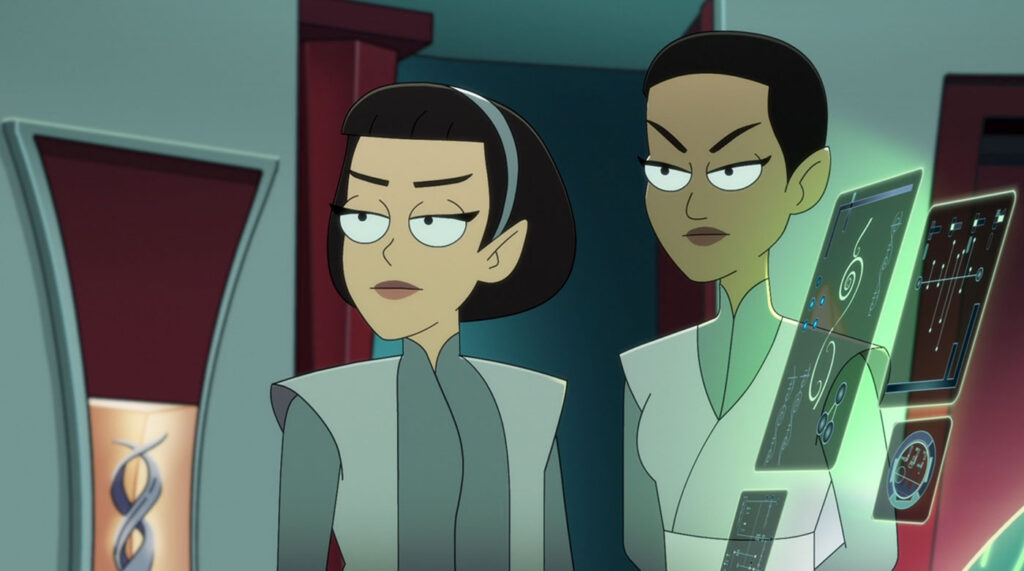
The Logical Species Keeps Telling on Itself
The funny thing is that Star Trek itself seems incapable of treating Vulcans as emotionless for very long.
Every time the franchise tells us they are creatures of pure logic, it follows that claim with someone grieving, falling in love, losing their temper, nursing a resentment, or carrying a burden they cannot quite put into words.
The stereotype survives because Vulcans keep repeating it.
The evidence survives because the stories keep contradicting them.
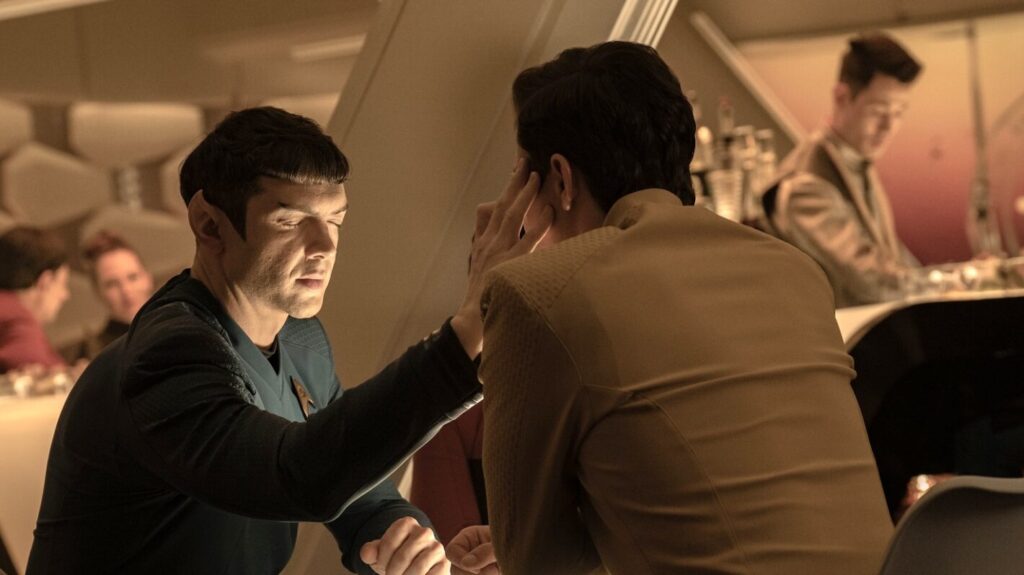
Take the claim that Vulcans do not lie. Versions of it appear throughout the franchise, usually delivered with enough confidence to make everyone in the room feel slightly uncivilised. Vulcans may prefer precision, but they lie, omit, misdirect, and rationalise with the best of them.
T’Pol sends her captors towards Mount Seleya when she knows Archer and T’Pau are heading elsewhere. The High Command deceives its own population about mind melds, the Syrrannites, and Surak’s teachings. Spock spends much of “The Enterprise Incident” taking part in an elaborate intelligence operation while maintaining just enough technical truth to preserve his self-image.
Vulcans do not avoid deception.
They give it better grammar.
That does not make the culture meaningless, or every Vulcan a hypocrite. Ideals do not become worthless because people fail to meet them. If anything, the failure tells us how seriously the ideal matters.
Nobody is disappointed when a Ferengi becomes greedy. The disappointment comes when a Vulcan uses logic to excuse something they already wanted to do.
There is a difference between logic as a method and logic as a verdict. The method asks whether the evidence supports the conclusion. The verdict begins with the conclusion and tidies up the evidence afterwards.
Vulcans are capable of both.
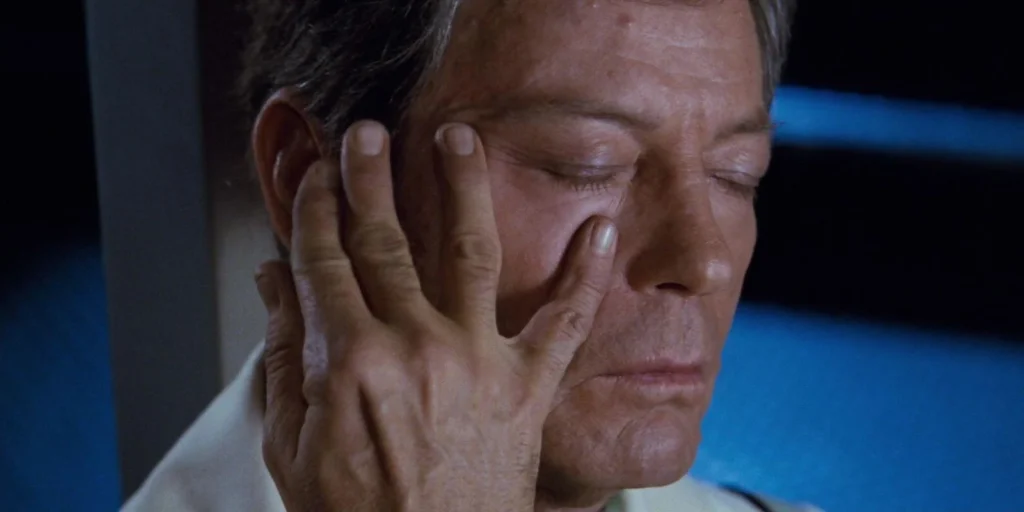
Their spirituality complicates the image further. This supposedly austere, rational species preserves katras, undertakes pilgrimages, maintains sacred mountains, passes consciousness between minds, guards ancient relics, and performs ceremonies capable of restoring a dead man’s identity to his regenerated body.
Fal-tor-pan is not presented as a metaphor. Spock’s katra is genuinely held by McCoy, returned to him on Mount Seleya, and accepted as part of Vulcan life. Surak’s consciousness survives for centuries, moving from a katric ark to Syrran, then Archer, and finally another Vulcan priest.
Vulcan culture has never placed science on one side and spirituality on the other. It treats the mind as something that can be studied, trained, transferred, damaged, healed, and preserved.
The contradiction only exists if we assume logic must strip a civilisation of mystery.
Vulcans never made that assumption.
They simply gave the mystery procedures.
What the Discipline Costs
The strongest Vulcan stories are rarely about logic winning. They are about what control demands from the person practising it.
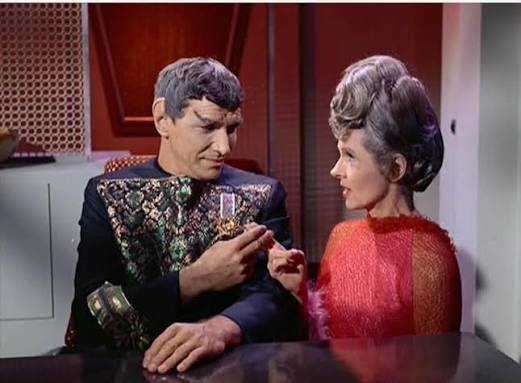
Sarek spends much of his life believing that love can be understood without being expressed. He loves Amanda, Spock, Perrin, and, in Discovery, Michael Burnham. The problem is not the absence of feeling. It is his conviction that feeling should never be allowed to disturb the structure around it.
That works until the people closest to him need more than the knowledge that love must logically exist somewhere.
Spock spends much of his life caught in a slightly different trap. Humans tell him he is too Vulcan. Vulcans tell him he is too Human. Both groups treat his restraint as proof that one side is winning, when much of his discipline comes from never being allowed to forget that he contains both.
His growth is not a simple movement from logic towards emotion. It is the slow rejection of the idea that either side must defeat the other. The older Spock does not become less Vulcan. He becomes less frightened of everything else he is.
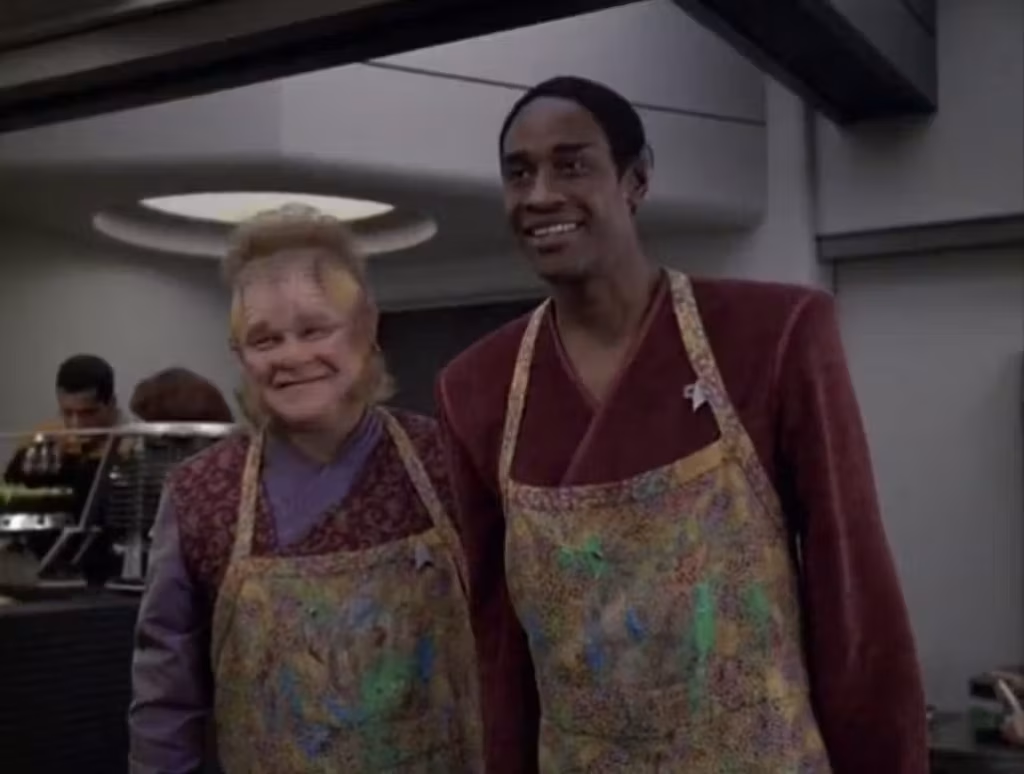
Tuvok has no Human half to blame, which is why he matters so much to the wider picture. His control is not an attempt to disguise a mixed identity. It is a chosen way of living. He values it, practises it, and sometimes genuinely enjoys reminding Neelix that he has failed to understand it.
Even then, the work never ends.
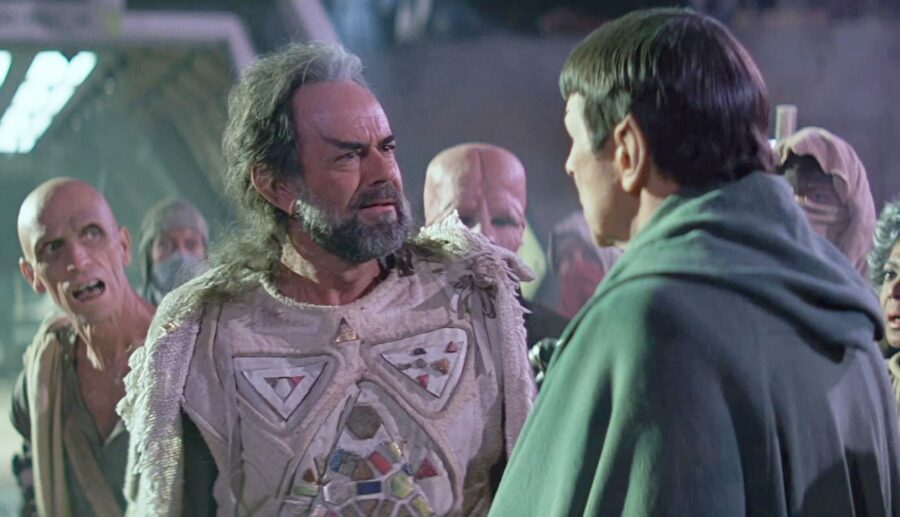
T’Pol’s control is damaged. T’Pring’s becomes defensive. Sarek’s eventually collapses. Spock tries to purge emotion and discovers that a life without it is not enlightenment. Sybok rejects restraint entirely and leaves wreckage behind him while insisting he has found freedom.
None of them settles the argument.
That may be the point.
Vulcan logic is often discussed as though it were a destination: a perfect state reached by removing everything irrational. Star Trek generally presents it as a practice instead. It requires meditation, study, ritual, repetition, honesty, and a willingness to begin again after failure.
The people who treat themselves as finished are usually the ones causing the damage.
Logic, or Emotion?
Go back to the concert.
A two-hundred-and-two-year-old ambassador, one of the most controlled minds the Federation has ever known, listens to a piece of music and sheds a single tear.
It is a tiny thing. Picard almost convinces himself he imagined it.
By the end of the episode, that tear has become a brawl, a medical crisis, a mind meld, and one of Patrick Stewart’s finest scenes in the whole franchise. Sarek does not suddenly develop emotions in that concert hall. He has always had them. The tragedy is that nobody can fully see what he carries until he loses the ability to decide who else must carry it with him.
That is not a Vulcan failing to be Vulcan.
It is what being Vulcan costs.
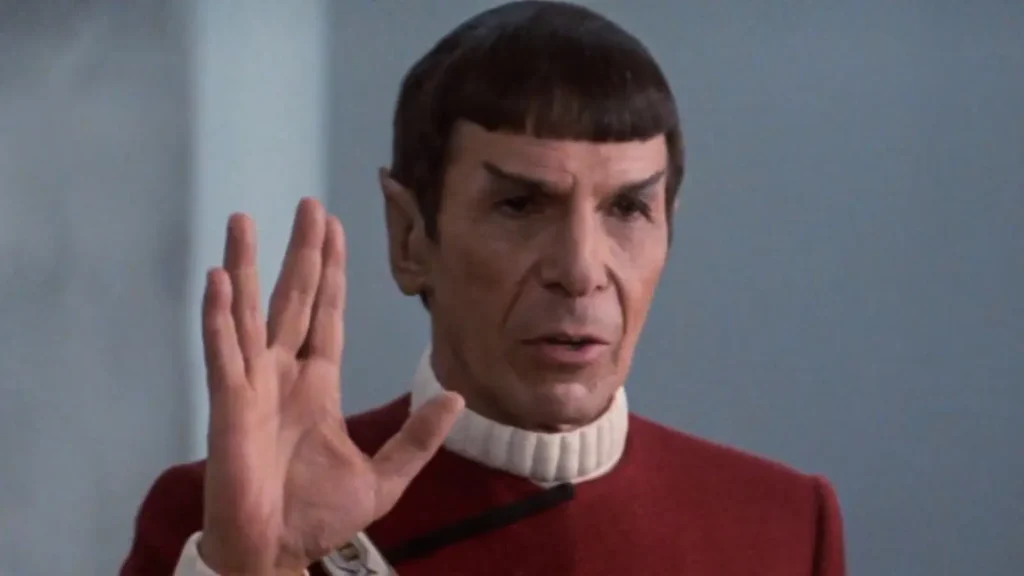
Logic was never the absence of feeling. It is the discipline required to live with feeling without letting it rule every decision. Sometimes that discipline produces patience, clarity, and extraordinary compassion. Sometimes it becomes denial. Sometimes governments hide fear inside it. Sometimes families use it to avoid saying what needs to be said.
Sometimes it holds for two centuries.
Sometimes one piece of music is enough.
Vulcans were never the species without emotion.
They are the species that built an entire civilisation to make sure emotion never again got the final word.