The Tricorder: Star Trek’s Faith in Evidence Made Physical
There’s a familiar rhythm to a Star Trek away mission. The landing party beams down, takes in a landscape nobody has seen before, and someone reaches for a tricorder.
The lid flips open. The display comes alive. That electronic scanning sound begins, halfway between a chirp and a mechanical heartbeat. Spock lowers his eyes towards the instrument, Data runs his fingers across the controls, or McCoy sweeps a sensor over someone who has chosen a spectacularly inconvenient moment to collapse. Then comes the answer. The atmosphere is toxic. The ruins are thousands of years old. There’s a lifeform nearby. The radiation levels are climbing
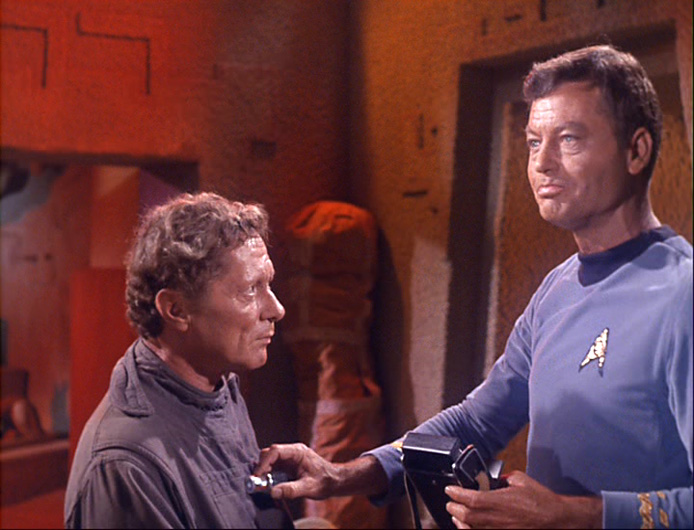
The tricorder is often treated as one of Star Trek’s useful gadgets. It saves time, gives the characters information, and allows the story to move on. All of that is true, but it sells the device rather short.
The tricorder is Star Trek’s faith in evidence made physical.
It’s a machine designed not to overpower the unknown, but to examine it. Before Starfleet fires, interferes, retreats, or makes one of its occasional spectacularly confident mistakes, somebody is supposed to stop and ask a simple question:
What’s actually going on here?
Curiosity in a Box
I’ve spent much of my adult life working in cybersecurity and digital forensics, where the job often begins with uncertainty. Something has happened inside an environment. A system is behaving strangely. The available information is incomplete, noisy, and occasionally contradictory. You don’t begin by deciding what you want the answer to be. At least, you shouldn’t. You collect evidence, establish a baseline, identify the anomalies, and work out what the artefacts can genuinely support.
That’s what a tricorder does.
When Spock scans a planet, he isn’t merely looking at unusually photogenic rocks. He’s conducting an environmental audit: checking atmospheric composition, radiation, energy readings, structural stability, biological activity, and whatever localised subspace unpleasantness the story has prepared for him that week. The device ingests raw information, filters it, compares it, and presents something usable. It’s a self-contained field laboratory, sensor platform, recorder, and analytical workstation that can be carried over one shoulder.
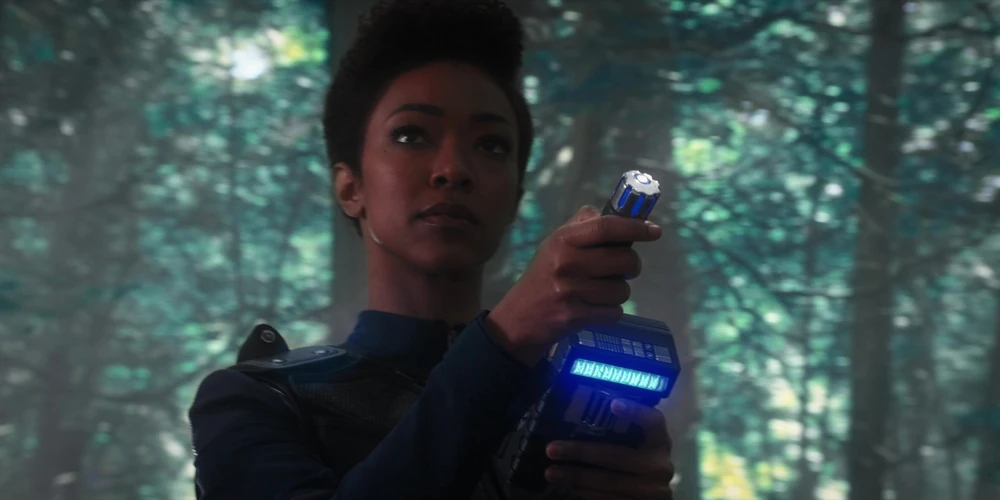
The fantasy remains enormously appealing. Point an instrument at a confusing situation, let it process everything, and receive a clear answer before anyone makes matters worse. That’s catnip to someone who has spent years staring at logs, packet captures, and forensic artefacts.
But the part I like most isn’t that the tricorder knows things. It’s that reaching for it represents a discipline. Observation comes before conclusion. Evidence comes before action.
That’s a deeply Star Trek idea.
The tricorder is one of the franchise’s few signature technologies that isn’t fundamentally concerned with power. A phaser can defend, stun, or kill. A transporter removes physical distance. A starship takes human ambition and throws it across the galaxy.
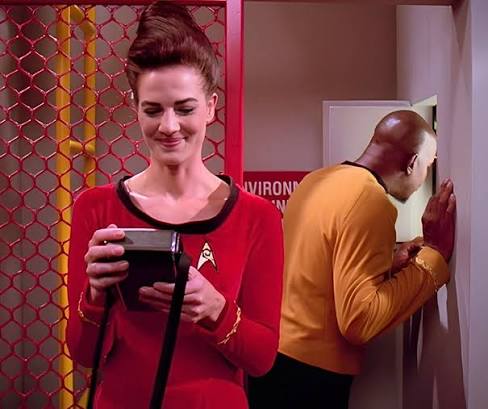
The tricorder asks questions.
The Future, Built to Be Held
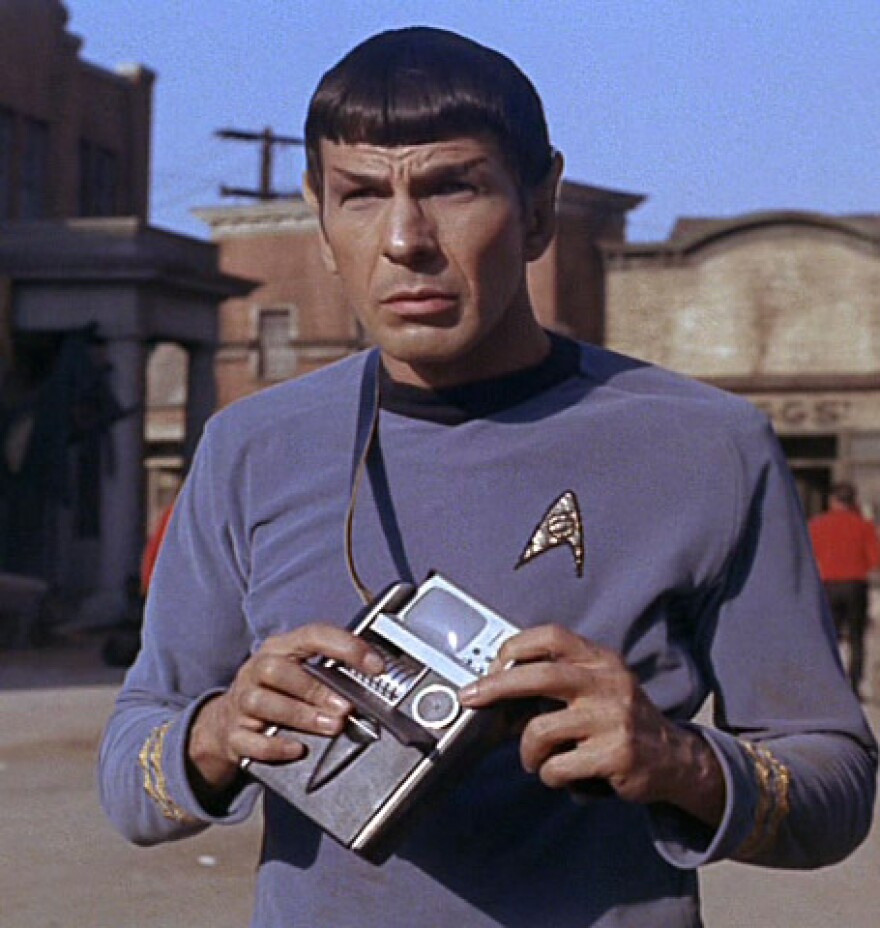
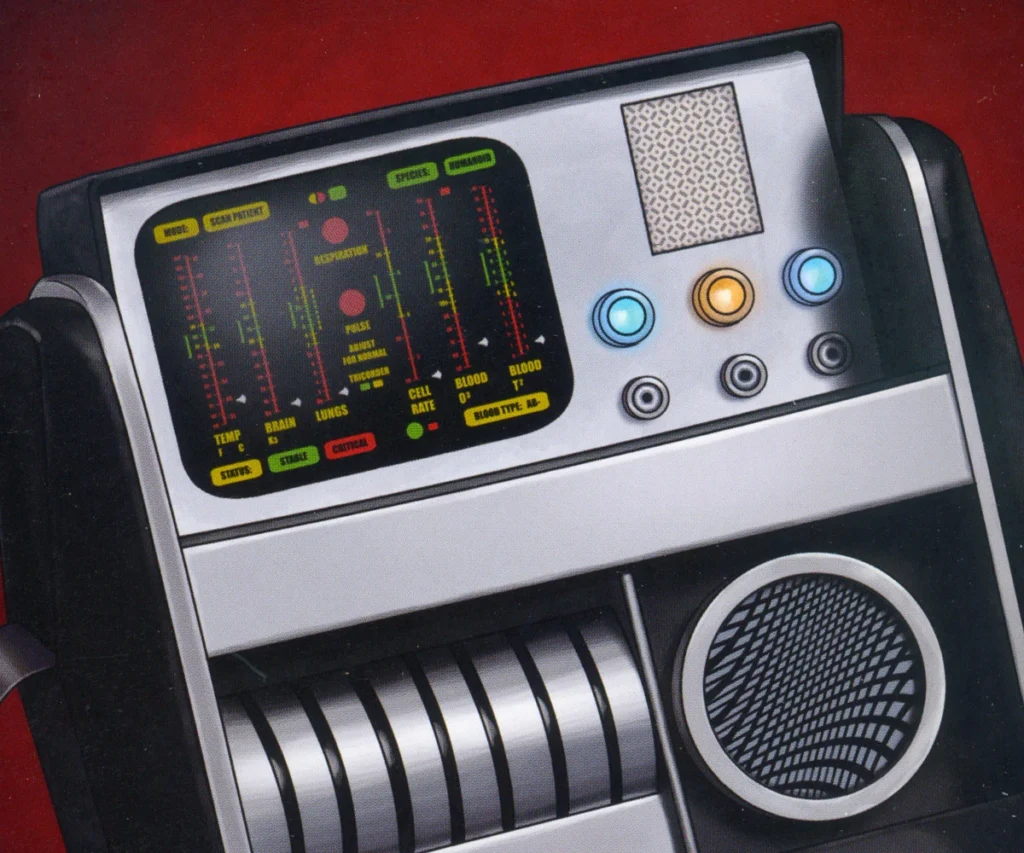
Wah Chang’s original tricorder remains one of the finest pieces of production design in Star Trek. It doesn’t resemble a modern smartphone or a smooth slab of featureless glass. It looks like a serious piece of 1960s scientific equipment: part camera bag, part portable tape recorder, and part machine nobody was quite qualified to operate without a clipboard nearby.
It has texture and weight. The black Kydex body, aluminium details, leather shoulder strap, opening compartments, and hooded display make it feel engineered rather than imagined. You can see how it’s carried, where the operator’s hands go, and which parts move. The top pivots open. The display is protected by a hood. The controls occupy their own space. Opening it becomes a small ritual that tells the audience an investigation has begun. The moiré display doesn’t communicate anything meaningful to us, but it doesn’t need to. The movement suggests hidden complexity, while the actor provides the interpretation.
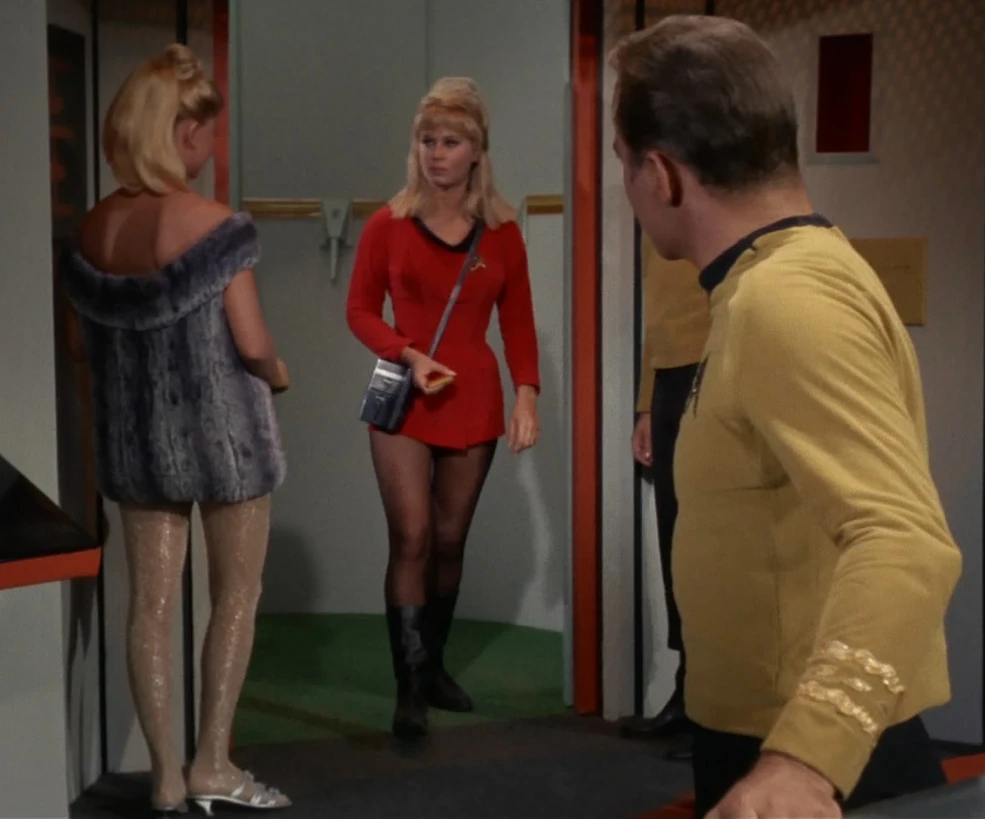
That physical logic matters. The prop gives the performance something to build around.
It also carries that mid-century belief that advanced technology would remain mechanical: switches, compartments, removable components, and reassuringly sturdy straps. Humanity might cross interstellar space, but our equipment would still resemble something an engineer could open with a screwdriver.
Apparently, Starfleet could analyse the molecular composition of an alien rock with a handheld box, while Christopher Pike still received one blinking light for yes and two for no.
The future arrived unevenly.
Rick Sternbach’s tricorder for The Next Generation tells a different story. Sternbach has explained that the HP-41C programmable calculator inspired the initial design, while the folding body partly existed to give the actor something visually interesting to do. The shoulder strap and boxy mass disappear. In their place is a compact grey clamshell that fits against the uniform and opens into a clean information surface.
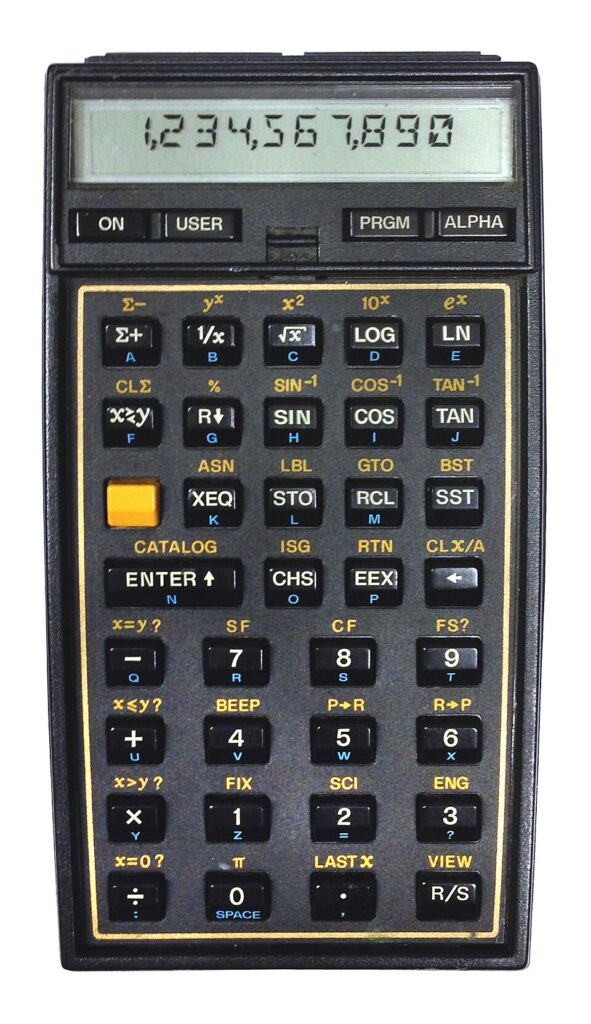
The Original Series tricorder looks like a machine containing information. The Next Generation version looks like an interface through which information flows.
That shift mirrors how our own expectations changed. By the late 1980s, advanced technology no longer needed to look industrial. The hardware could recede. Buttons became flatter, surfaces cleaner, and information itself became the visual centre. I don’t think one design is simply better than the other. The original has more personality and tactile presence. The Next Generation version has an elegant economy that belongs perfectly within the Enterprise-D’s wider design language.
One feels built. The other feels designed.
Later tricorders became flatter, sleeker, and more screen-led, but there’s a danger in taking that progression too far. Once every instrument becomes a glowing rectangle or a floating hologram, it loses some of its identity. Actors need something to hold, open, adjust, and react to. A prop has to work for the fictional user, but it also has to work for the camera.
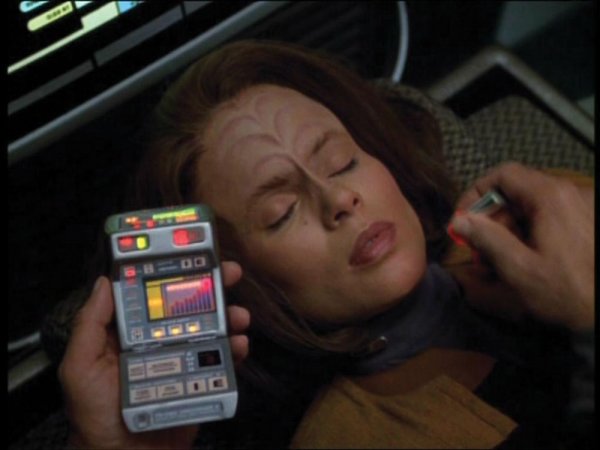
The tricorder succeeds when both needs meet.
One Prop, Whole Scenes Removed
I spent years writing and lettering comics, which left me mildly obsessed with storytelling economy. A comic page has limited space, and every panel has to earn its place. When an idea takes three speech balloons to explain, the problem usually isn’t the size of the lettering. It’s the execution.
The tricorder is one of television science fiction’s finest pieces of visual shorthand. A character scans. The sound changes. Their expression tightens. They give us one sentence: the lifeform is dying.

That single action can replace a laboratory scene, a lengthy scientific explanation, and several minutes of people asking each other what the readings mean. The tricorder carries the technical complexity, leaving the actor to deliver the human consequence. One prop. One gesture. One sound effect. The audience understands, and the story keeps moving.
“Contagion” uses the tricorder’s place in Star Trek’s technological hierarchy particularly well. Captain Donald Varley describes an Iconian artefact that has completely baffled his engineers:
“I’m like a caveman confronted by a tricorder.”
It’s a wonderfully economical line. The audience already understands the tricorder as a symbol of advanced, comprehensible technology. By imagining it in the hands of a caveman, the script instantly establishes how far beyond the Federation the Iconians may have been. No lecture is required. Seven words do the work.
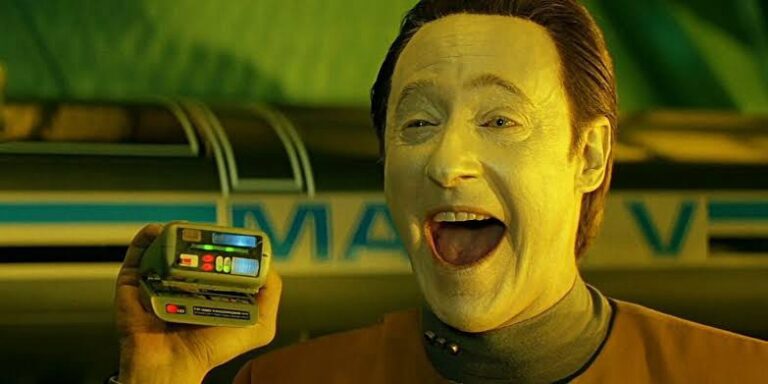
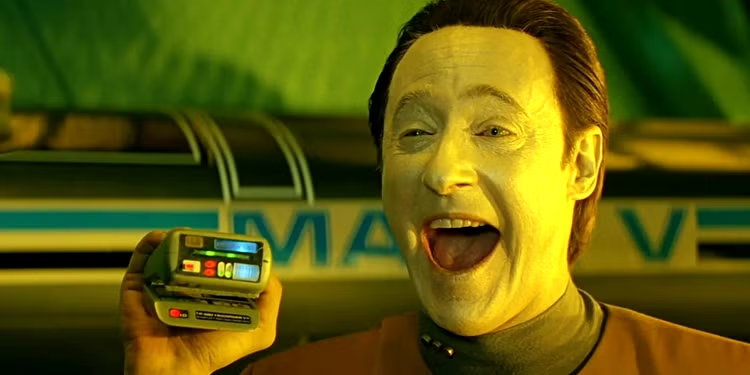
The tricorder also works as a character prop. Spock handles it with quiet concentration. McCoy often uses one while sounding personally offended that biology has once again refused to behave itself. Data’s “Mr. Tricorder” routine in Star Trek Generations works because he takes an ordinary professional instrument and suddenly uses it as a hand puppet. B’Elanna’s guess of “Baby’s first tricorder?” in Voyager’s “Human Error” lands for the same reason. In this world, a tricorder isn’t a miracle. It’s something people carry to work.
That everyday quality makes the future feel inhabited.
But…
None of this works unless the actor treats the device as real. Watch Spock scan an environment. His movements have intention. He positions the tricorder, studies it, pauses, and appears to interpret what it gives him. Data and Geordi adjust settings as though they’re filtering results rather than pressing whichever coloured square happens to be nearest.
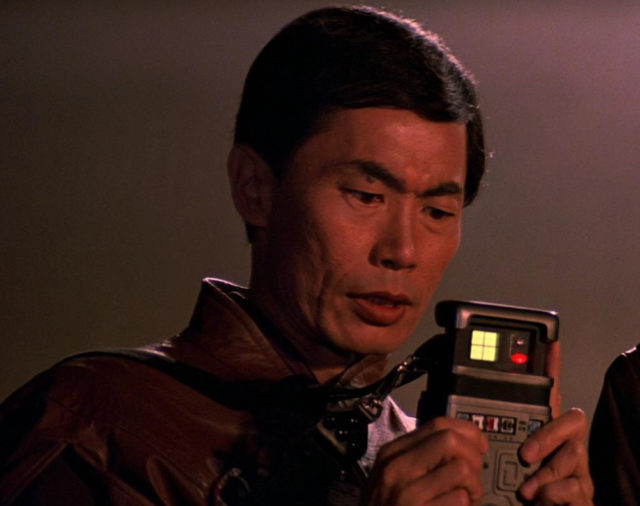
When performers handle a prop with respect, they imply rules the audience never needs explained. When they wave it vaguely at the scenery and announce an answer, it becomes painted resin again.
An Instrument, Not an Oracle.
The tricorder’s greatest strength is also where it can become lazy.
It’s tempting for writers to treat it as an oracle: point it towards the mystery and receive whatever fact the plot needs. Alien physiology, ancient materials, invisible energy fields, concealed lifeforms, dimensional distortions — apparently all can be identified in seconds, unless the episode requires atmospheric interference to make the tricorder suddenly useless.
Some flexibility is inevitable. Star Trek was never an engineering manual, and real sensors have limits. Interference, range, calibration, and incomplete data should affect what an instrument can tell us. The problem comes when the tricorder stops producing evidence and starts announcing truth.

A forensic tool doesn’t tell you what happened. It gathers artefacts from which a careful person can build an explanation. Those artefacts may be incomplete, contaminated, misleading, or interpreted against the wrong assumptions. Automated analysis can help, but it can also produce an answer that sounds far more certain than the underlying evidence deserves.
Add artificial intelligence to the equation and the tricorder becomes even more plausible, but also more dangerous. A confidently delivered answer isn’t the same thing as a correct one. Anyone who has worked with modern AI for more than five minutes has probably noticed.
A believable tricorder should sometimes offer confidence levels, competing interpretations, and the deeply unfashionable response: insufficient data.
Star Trek is more interesting when its characters still have to think.
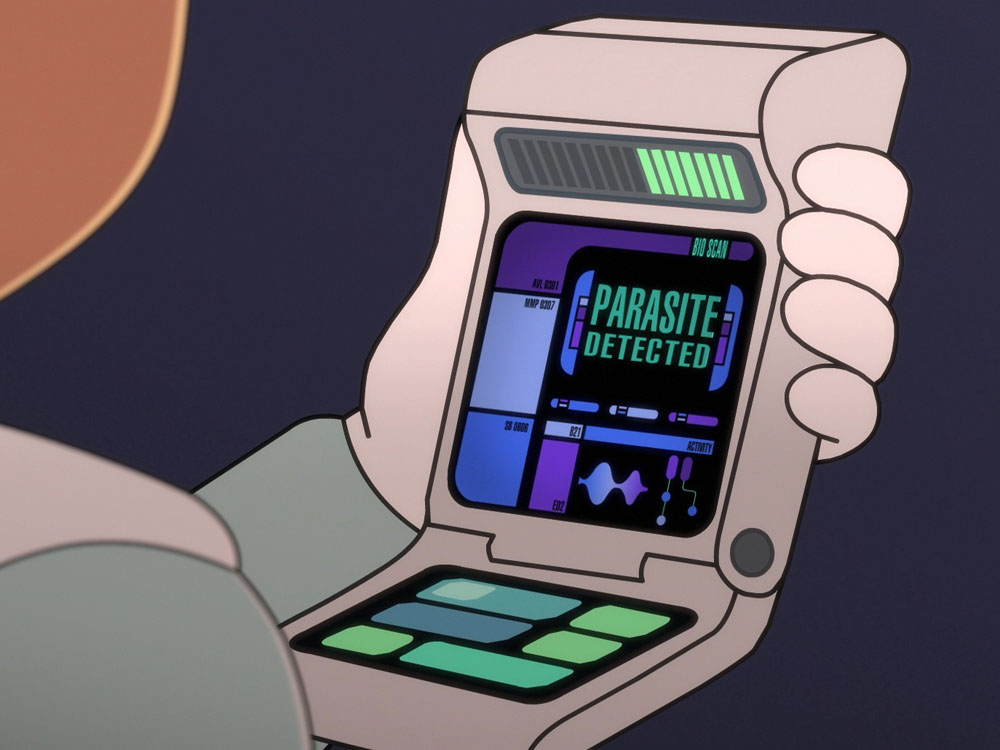
The franchise has also usually resisted turning the tricorder into its version of the sonic screwdriver, a device that can open whichever door the script has just locked. Tricorders can be modified, rigged, and occasionally made to do things their designers probably wouldn’t put in the manual, but their main purpose remains diagnosis rather than resolution.
They tell the crew what the problem is. They don’t automatically solve it.
That distinction protects the drama. Information creates choices. A magic wand removes them.
Fiction Pointing Back at Reality
The tricorder is also one of the clearest examples of Star Trek giving the real world something to aim towards.
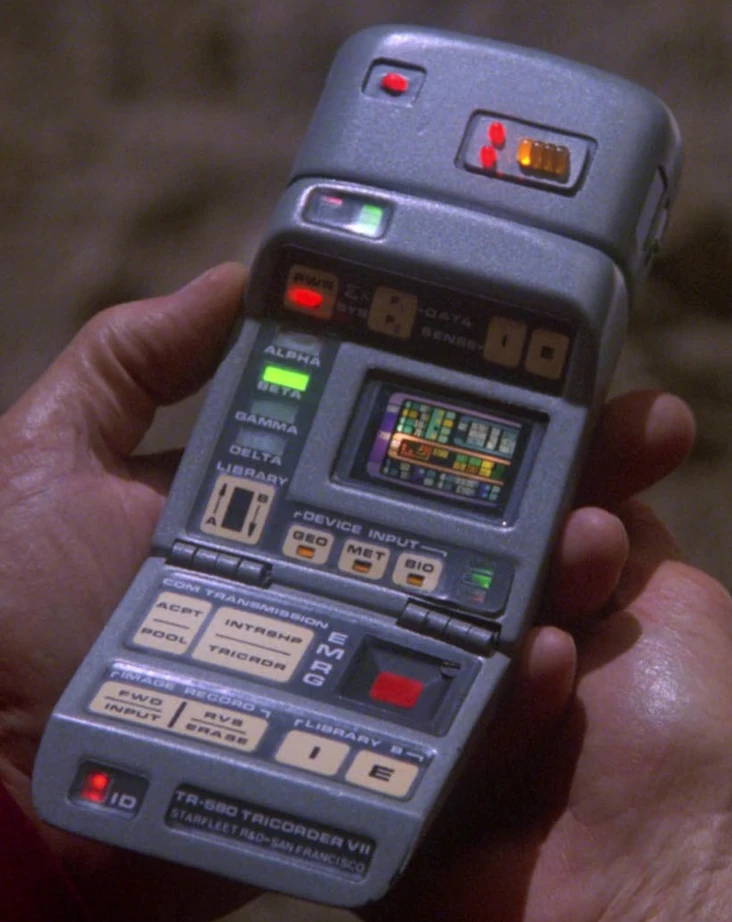
We haven’t built the Starfleet version. Modern diagnostic and environmental devices remain more specialised, often depending on laboratories, networks, and trained people that can’t be compressed into one grey box. Still, researchers and engineers have repeatedly used the tricorder as a reference point.
The Qualcomm Tricorder XPRIZE explicitly challenged teams to develop portable consumer technology capable of monitoring vital signs and helping diagnose medical conditions. Final Frontier Medical Devices took the top prize with DxtER, which combined non-invasive sensors with an AI-based diagnostic engine. It wasn’t McCoy’s medical tricorder, and it wasn’t pretending to be. What mattered was the ambition behind it: sophisticated analysis made portable, understandable, and available closer to the person who needs it.
Star Trek didn’t provide an engineering diagram. It provided a direction of travel.
The tricorder imagined a future in which knowledge could leave the laboratory.
For all its impossible capabilities, the tricorder’s appeal isn’t really technological.
It’s moral.
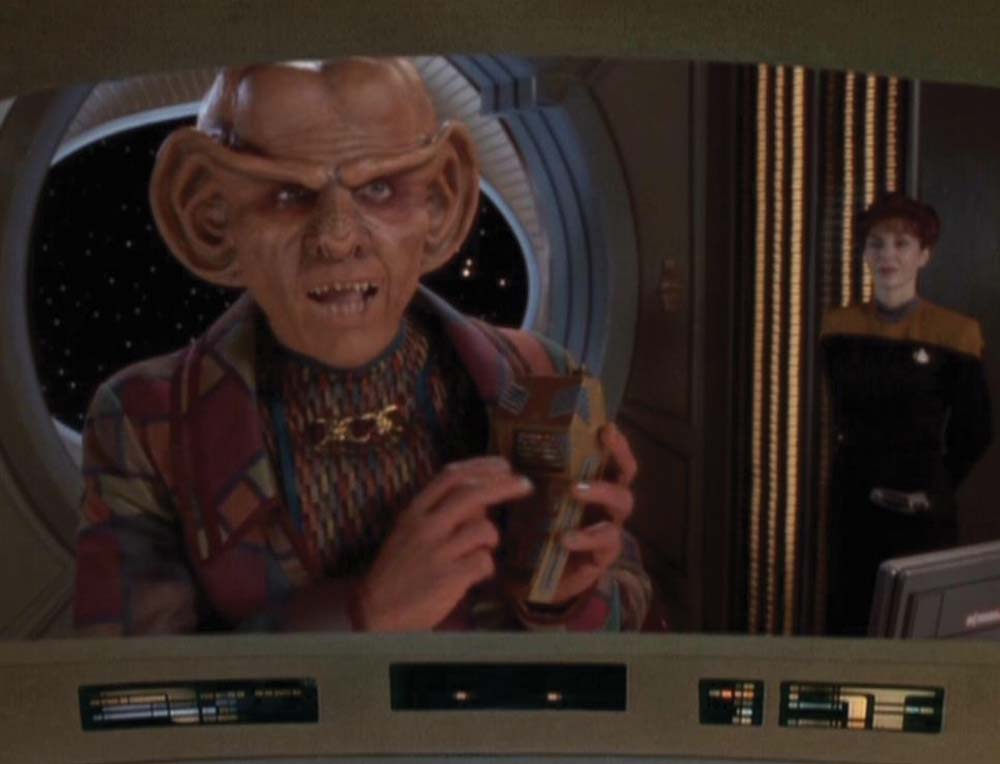
It represents the belief that the universe can be approached through curiosity rather than fear, and that understanding should come before reaction. It gives Starfleet officers the ability to walk into a place they don’t recognise and begin not with certainty, but with observation.
That doesn’t guarantee wisdom. Evidence still has to be interpreted. Readings can be wrong. People can ignore what the instrument tells them, or see only what they expected to find. The tricorder doesn’t remove judgement. It makes responsible judgement possible.
That’s why Spock opening one remains such an enduring image. It isn’t simply the device or the sound effect, although both help. It’s the clarity of purpose behind the gesture.
We’re somewhere unknown.
Let’s look properly before we decide what it means.