Star Trek: Strange New Worlds — Valles Marineris (S04E01) Review
It takes a special kind of Thursday to accidentally orchestrate the extinction of the dinosaurs.
Star Trek: Strange New Worlds is back for Season 4, and I am beginning my reviews with episode one despite not having reviewed the first three seasons. Depending on how far in the future you are reading this, I may eventually have corrected that. For now, let us accept that chronology is already having a difficult week.
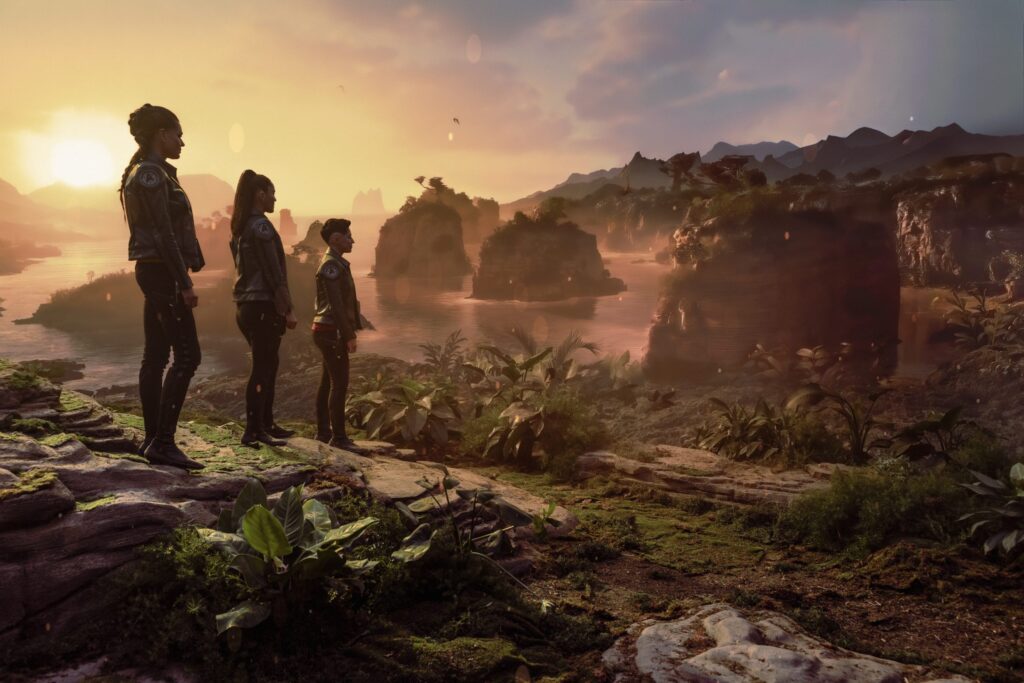
“Valles Marineris” throws the Enterprise into a violent interstellar squall and spits it out 65 million years in the past. The crew finds itself in our own Solar System, although not one it recognises. Earth is covered in dinosaurs, Mars supports an advanced civilisation, and a mysterious fifth planet is home to the insectoid Dol’drm.
It is a huge idea wrapped inside a reassuringly familiar adventure-of-the-week structure: strange phenomenon, disabled ship, dangerous away mission, first contact, and a Prime Directive problem that becomes steadily worse. After a third season that sometimes seemed more interested in finding its next gimmick than its next strange new world, this feels like the series remembering what it is actually for.
The problem is that “Valles Marineris” keeps adding things to an episode that already had more than enough. Finding prehistoric Earth would have been enough. An inhabited ancient Mars would have been enough. A vanished fifth planet and a war between two lost civilisations would have been enough. Instead, the episode wants all of them, then decides it should also explain Valles Marineris, the asteroid belt, the death of the dinosaurs, the transformation of Mars, and the eventual rise of humanity.
It is ambitious, certainly. It is also what happens when a perfectly good Star Trek premise is left unattended beside the entire history of the Solar System.
Running From the Future
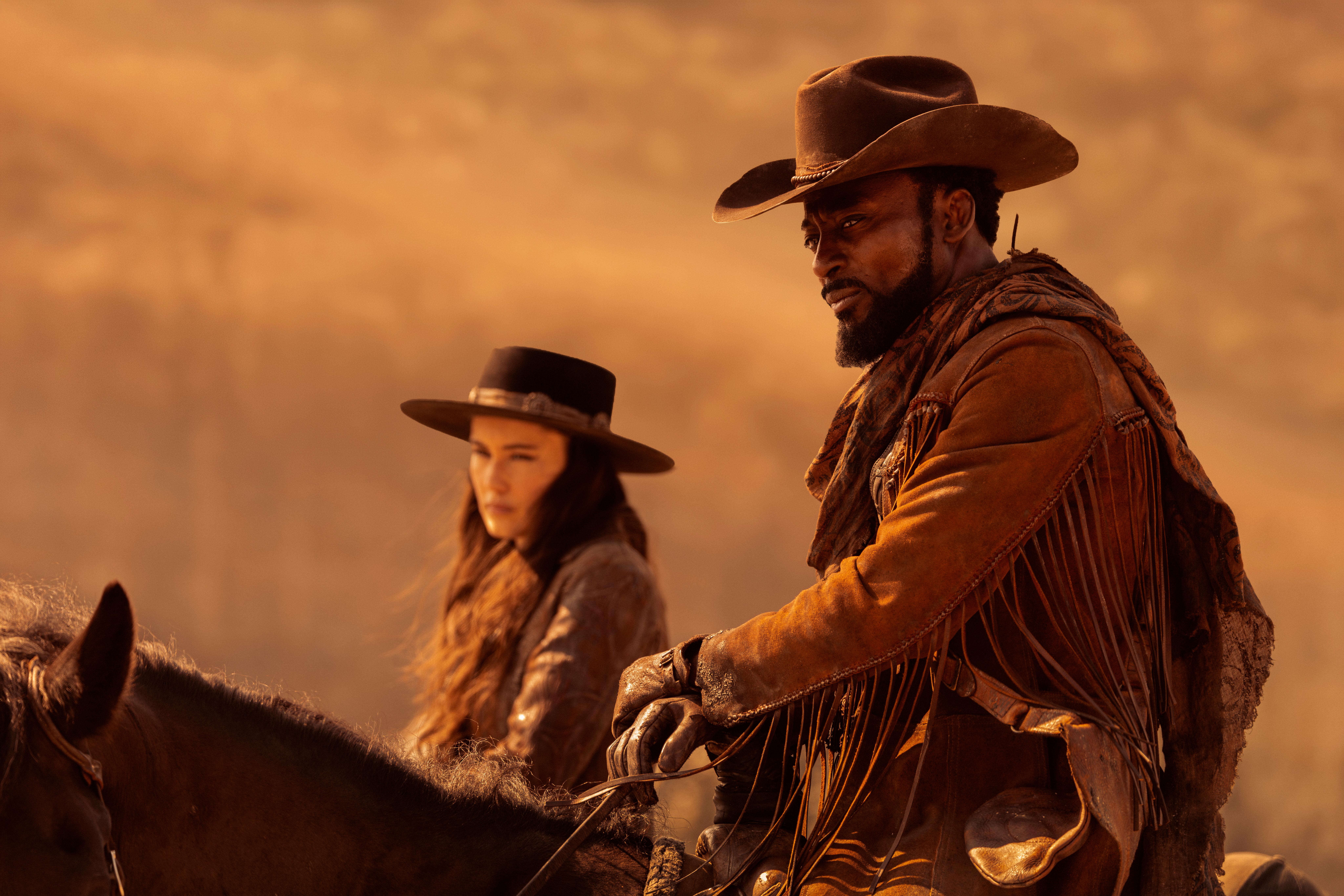
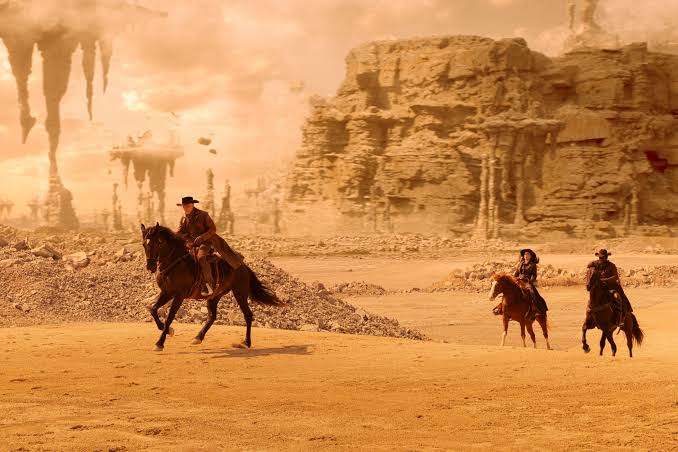
The episode begins with Pike, M’Benga, and La’An riding across Tulaxar after completing another routine mission. As someone who enjoys cowboys, horses, and Yellowstone, I would quite happily have watched more of this than the plot strictly required.
It feels right for Pike too. His love of horses reaches back to “The Cage”, and Anson Mount makes the sequence feel like part of the character rather than an obvious reference being ticked off. Pike is briefly relaxed in the saddle, but the peace does not last. He has buried himself beneath one mission after another, trying to avoid both the loss of Batel and the future he knows is waiting for him.
Una sees exactly what he is doing. Admiral April’s offer of promotion to commodore gives Pike another possible escape route, this time upwards rather than forwards. He could leave the Enterprise, move into diplomacy, and pretend that changing jobs means changing fate.
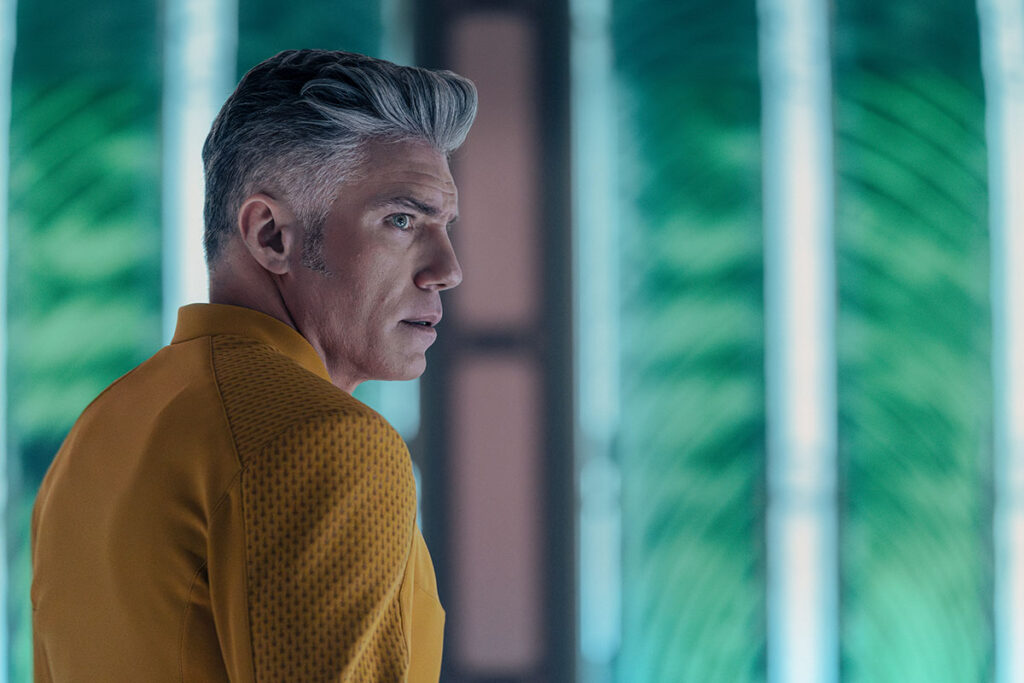
Mount plays this exceptionally well. Pike does not collapse beneath his grief or spend the episode announcing how haunted he is. He just keeps moving. His knowledge of his own future has always been one of Strange New Worlds’ strongest character ideas, and here it shapes his behaviour without requiring another speech about the accident waiting for him.
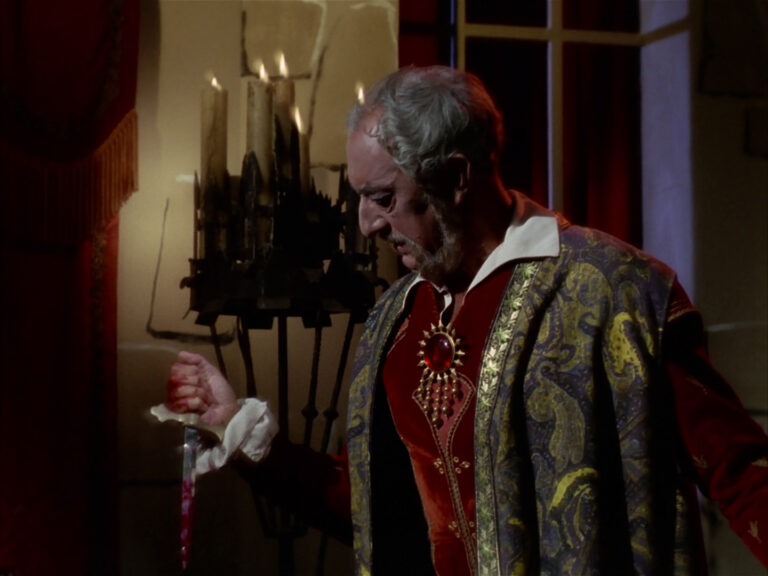
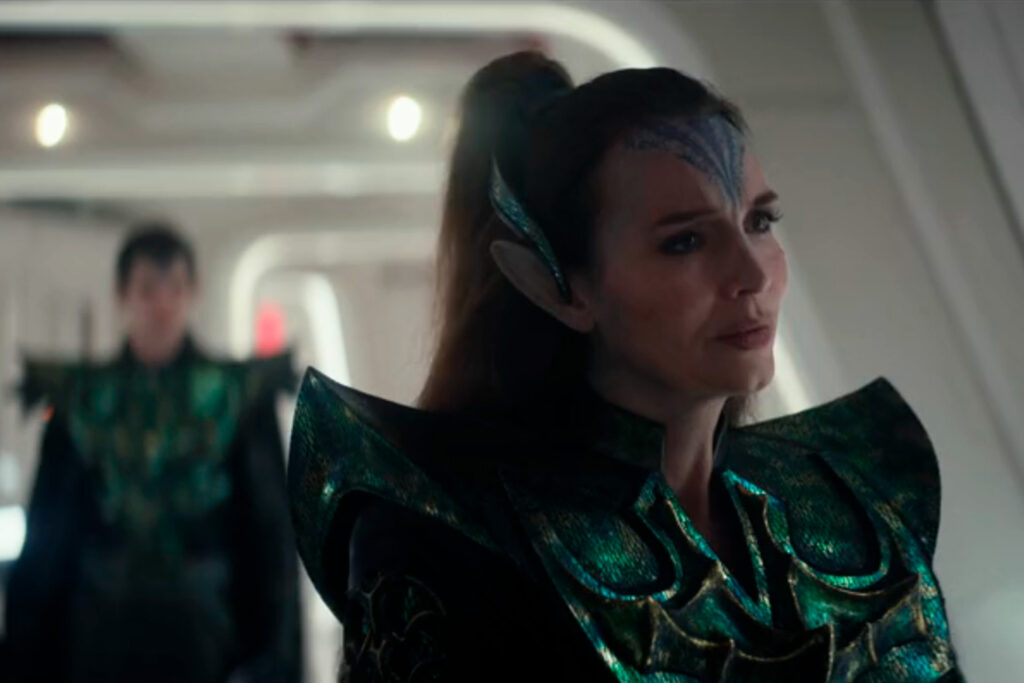
Saffron Burrows is equally strong as Commander Cassell, the Martian officer who captures the powerless Enterprise. Cassell is not treated as a simple villain. She is intelligent, exhausted, compassionate towards her own people, and absolutely convinced that the Dol’drm are an existential threat that cannot be reasoned with.
Her conversations with Pike are the best part of the episode. Pike talks about cooperation, diplomacy, and a Federation in which former enemies work together. Cassell listens, but she comes from a civilisation fighting for its survival. To her, Pike’s optimism sounds less like wisdom than the luxury of someone who has never watched his world being destroyed.
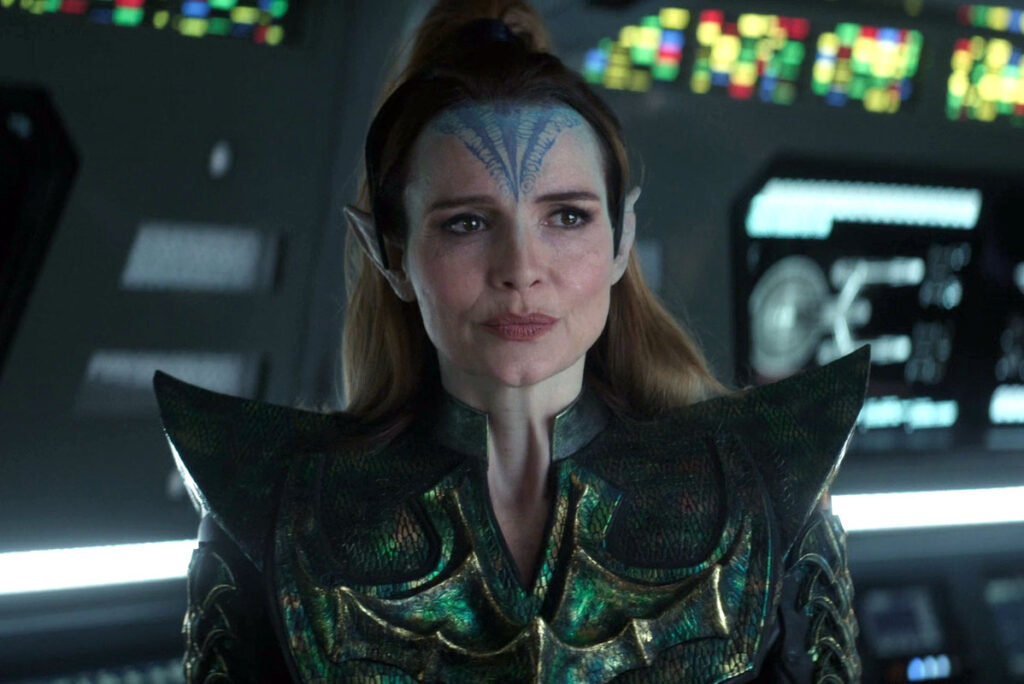
That makes her a proper foil for him. Pike is not simply trying to defeat her. He is trying to prove that the future he represents is possible, perhaps because he needs to believe in it as much as she does.
There is also a small, painful moment when the universal translator interprets Pike’s description of being alone through the Martian concept of widowhood. Cassell offers her sympathy, and Pike does not correct her. The episode is at its best in moments like this, when the enormous science-fiction machinery falls away and leaves two people quietly understanding one another.
Dinosaurs, Engineers, and People Doing Their Jobs
Una leading the away team feels overdue and entirely earned. She is calm, practical, and clearly capable of commanding beyond the bridge. Her eventual promotion to full commander does not feel like a piece of season-opening administration. It feels like Starfleet catching up with the person she already is.
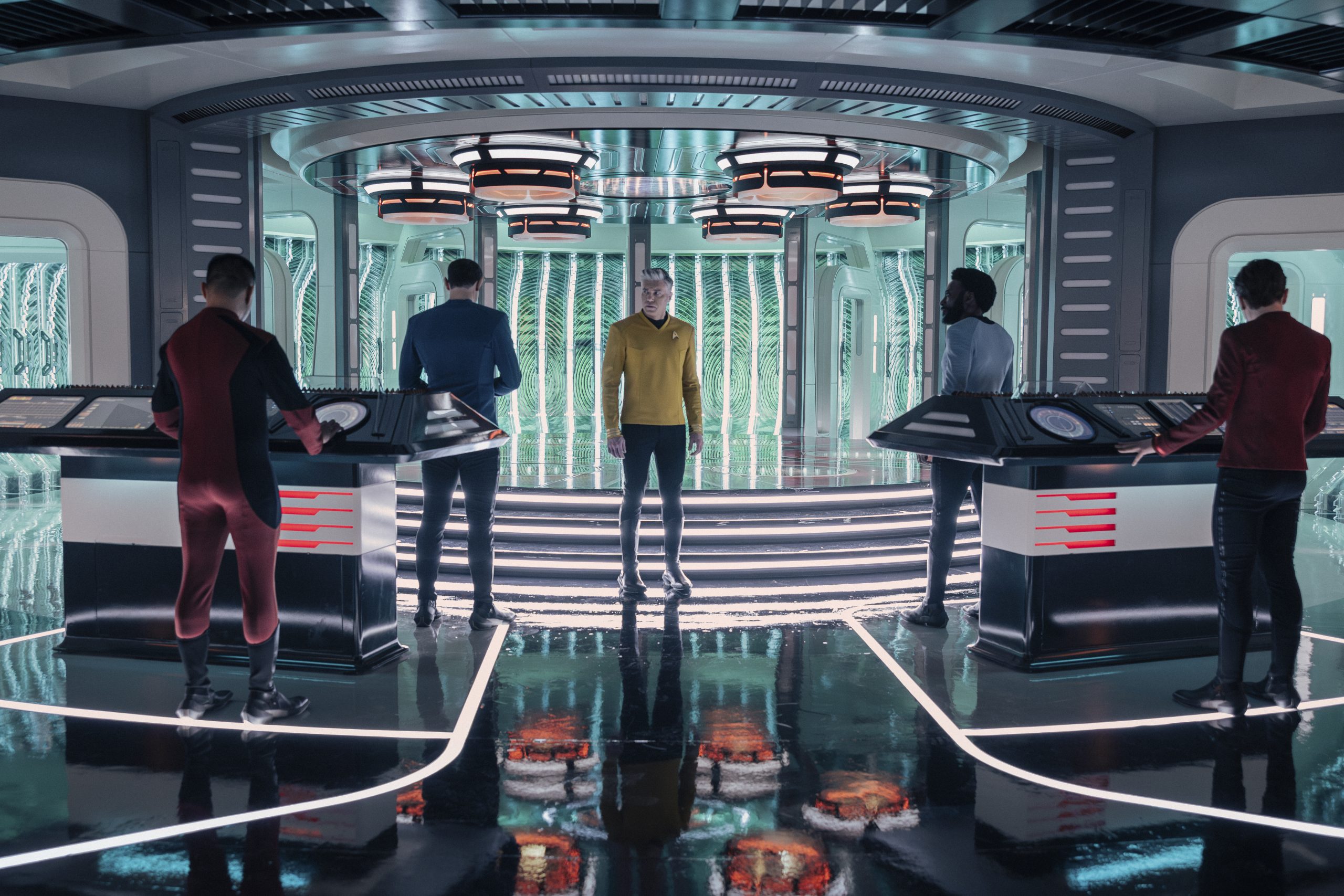
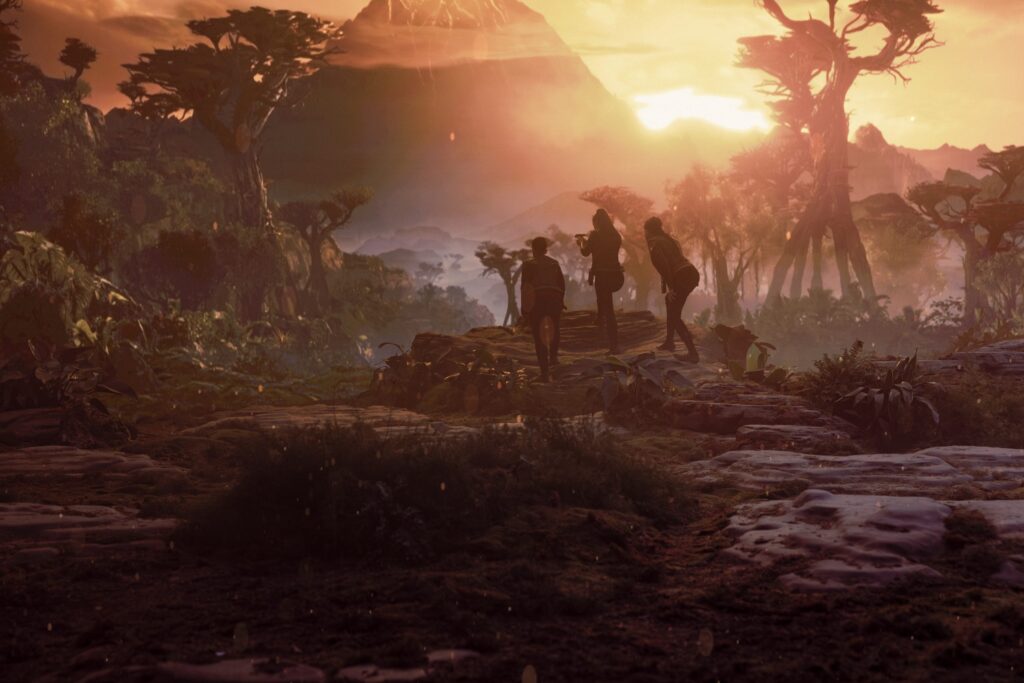
The Enterprise crew generally comes across as a group of professionals who enjoy working together. Ortegas, La’An, and Una approach prehistoric Earth with a mixture of caution and wonder, while the bridge crew handles the storm and loss of power without everyone taking turns explaining that the situation is dangerous.
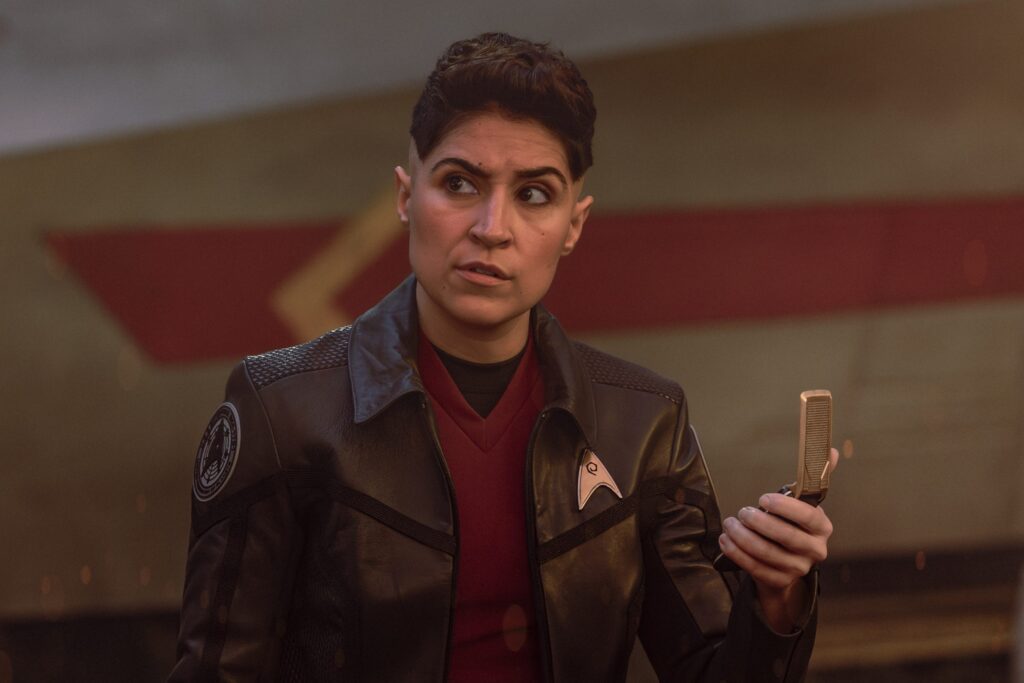
Scotty and Ortegas are particularly good together. I have never been especially bothered one way or the other by Ortegas, but her patter with Scotty is genuinely funny. Martin Quinn’s Scotty is becoming one of the show’s most reliable pleasures, and this gives both characters someone who can match their energy without every conversation immediately becoming romantic drama.
The series should grow this relationship. Their insults feel affectionate, their timing works, and they behave like colleagues who trust one another even while getting on each other’s nerves. That is often far more entertaining than another carefully signposted attraction.
Then there is Pelia.
I already love Scotty, but Pelia remains one of my favourite characters introduced by modern Star Trek. I have even started a Character Spotlight about her, which I will presumably finish once I stop being distracted by everything else on the website.
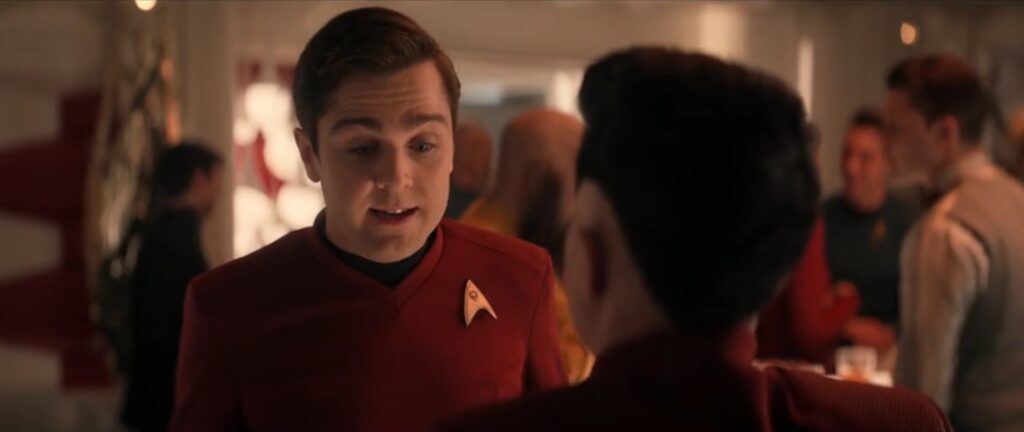
Carol Kane makes Pelia hilarious and intelligent without sanding away any of her strangeness. Her apparent memory of travelling inside a police box is an extremely obvious Doctor Who joke, but coming from Pelia it almost works. She treats the interstellar squall like theatre, appears delighted by every dangerous possibility, and provides the sort of engineering officer Star Trek could use more often.
You can keep your solemn science officers for a minute. Give me a mad engineer who understands the crisis perfectly and is enjoying herself far too much.
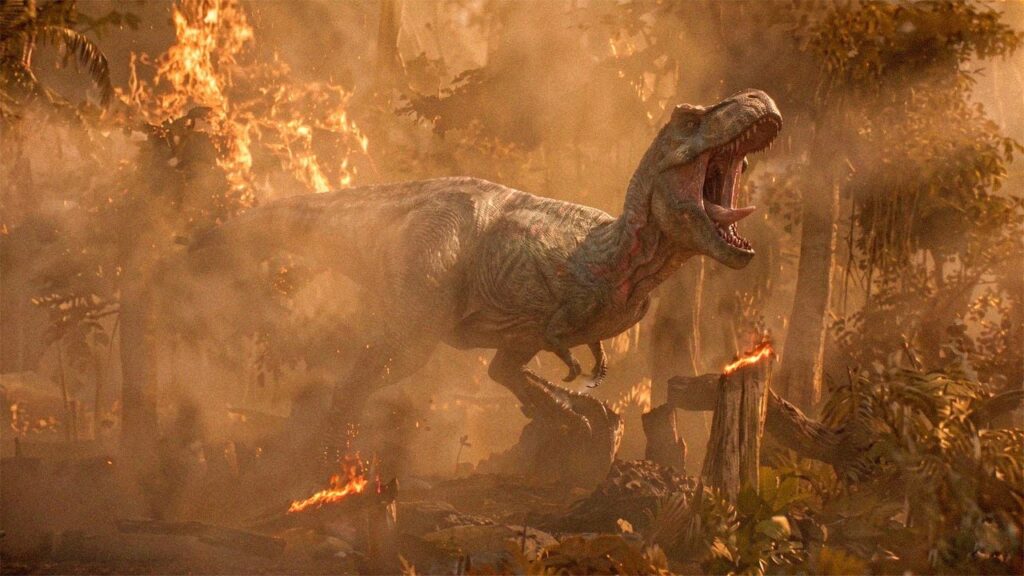
The dinosaurs provide the episode’s biggest visual attractions. The confrontation with the Tyrannosaurus rex is fun, the feathered smaller predators look convincing, and the mix of puppetry, practical foreground elements, digital creatures, and virtual environments gives prehistoric Earth a welcome sense of weight.
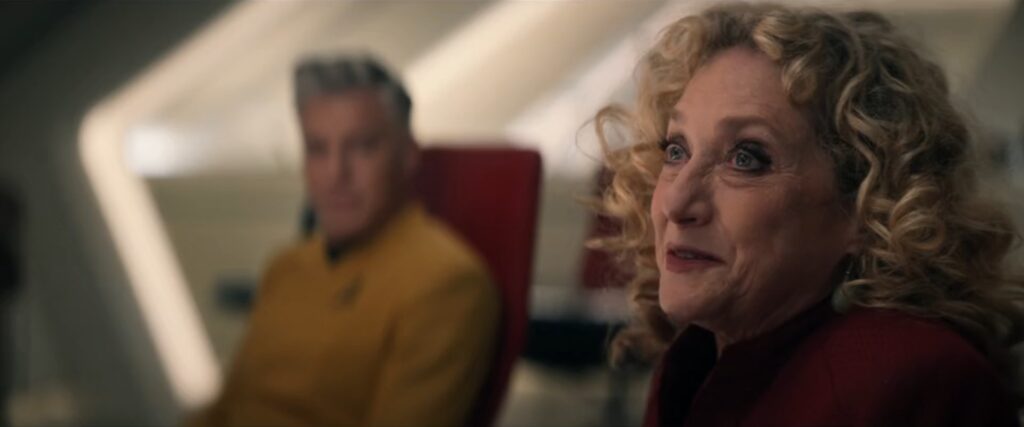
La’An punching a dinosaur is both ridiculous and undeniably entertaining. As a single image, it works. As part of an episode moving towards planetary genocide, it becomes rather harder to place.
That tonal problem follows “Valles Marineris” throughout. It wants prehistoric wonder, workplace comedy, romantic teasing, grief, first contact, pulp Martians, and a moral catastrophe. Star Trek can contain all of those things, but placing them beside one another does not automatically make them belong together.
The introduction of Cadet A’Sha does not help. Once again, Vulcan behaviour is reduced to being dismissive, arrogant, and unnecessarily rude. Vulcans may find humans emotional or imprecise, but they still understand discipline, hierarchy, and professional conduct. A’Sha does not feel intriguingly alien. She feels irritating because the episode has decided Uhura requires an irritating subordinate.
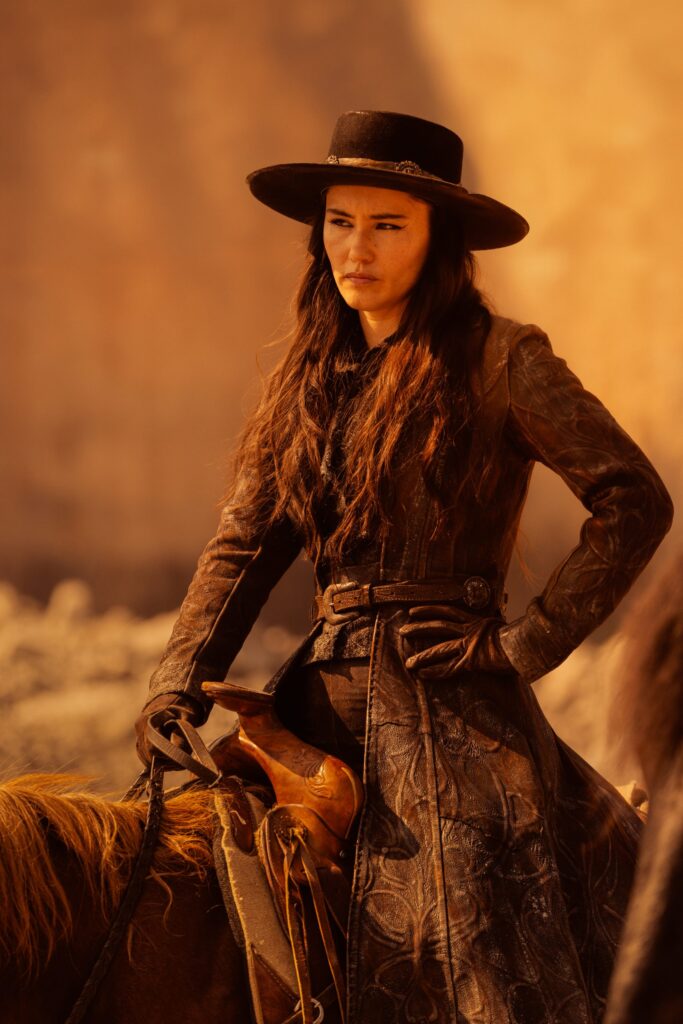
The quieter Spock and La’An material is less abrasive, but it still takes up space the central story badly needs. The suggestion that La’An’s dormant Augment traits are reawakening may become important later, although using a dinosaur punch to introduce it feels like a splash page from a much sillier comic accidentally inserted into an issue about genocide.
The Prime Directive, Until It Gets in the Way
Pike’s treatment of the Martians creates the episode’s first serious ethical problem, and not necessarily the one the writers intended.
The away team is warned not to interfere with prehistoric Earth. They worry about stunning dinosaurs, disturbing the environment, and changing the future through the smallest action. A dead animal could alter an evolutionary chain stretching across millions of years.
On the Enterprise, Pike gives representatives of a pre-warp civilisation access to Starfleet technology, Federation history, and knowledge of humanity’s future. He hides the temporal displacement, but otherwise allows Cassell and her people to inspect the ship with remarkably little caution.
Those two attitudes cannot comfortably exist inside the same episode.
A stunned dinosaur may change something. Giving an advanced civilisation access to antimatter technology and evidence of its own extinction could change almost everything. The Martians then steal an antimatter fuel cell and turn it into a planet-destroying weapon, which is less an unfortunate accident than a fairly thorough demonstration of why the Prime Directive exists.
Cassell is also right to accuse Pike of dishonesty. He presents Federation openness while withholding the one fact that would completely change her understanding of their encounter. Pike wants her to trust his ideals without trusting her with the truth.
That contradiction should have become the heart of the episode. Pike has compromised first-contact protocols, lost catastrophic technology, and helped a desperate commander discover that her civilisation has no future. There should be consequences, or at least a serious reckoning with what he has done.
Instead, the episode moves briskly onwards. Pike declines his promotion, Una receives hers, and the classified mission disappears into Starfleet’s increasingly crowded cupboard of things that apparently never happened.
A Difficult Decision With the Answer Supplied
Once the Enterprise regains power, Cassell begins a suicide attack on the Dol’drm homeworld. Pike initially prepares to stop her. Una argues that they cannot simply watch an inhabited planet be destroyed, regardless of what their historical records say.
Then Pike recognises the shape of the Solar System.
There is no fifth planet in the future. Therefore, the fifth planet must be destroyed.
The scene is presented as Pike’s “City on the Edge of Forever” moment: a captain allowing an atrocity because preventing it would erase the future he knows. The explosion creates the asteroid belt, alters Mars, and sends a fragment towards Earth, causing the mass extinction that eventually gives mammals, and humanity, their opportunity to evolve.
In scale, it is astonishing. In moral terms, it is strangely hollow.
Pike does not really choose between two unknown futures. He already has the answer. He knows the Dol’drm planet does not exist, the asteroid belt does, Mars is dead, and humanity survives. The predestination loop tells him that Cassell’s attack has already happened and that stopping it could destroy everything he knows.
That makes his decision understandable, but it removes much of its weight. The episode frames Pike as allowing genocide, yet gives him no real alternative unless he is willing to gamble the entire Federation and every life shaped by human history.
A stronger version of this story would have left some uncertainty. Perhaps the fifth planet’s destruction was not necessary. Perhaps stopping Cassell would create a different but equally valid future. Perhaps the Enterprise caused the catastrophe through its own interference, and Pike had to decide whether preserving his history justified refusing to repair the damage.
Instead, he looks at the Solar System, understands what the plot requires, and orders everyone to stand down.
The characters barely have time to process what they have witnessed. Billions of Dol’drm are gone. Cassell and the remaining Martians are dead. Mars has been condemned, Earth’s dominant life has been wiped out, and the Enterprise has become part of the chain of events that creates humanity.
The episode then more or less pats everyone on the back for surviving an especially memorable away mission.
There is a genuinely troubling question here: does preserving our history justify allowing another civilisation to be exterminated? “Valles Marineris” raises it, looks at it for a moment, and then hides behind predestination.
Beautiful Nonsense
Star Trek has never been a scientific textbook. Warp drive, transporters, and subspace communications all require a generous amount of cooperation from physics. The difference is that the franchise usually establishes a fictional rule and asks us to accept it for the sake of the story.

“Valles Marineris” rewrites things we know about our own Solar System, and it does so repeatedly.
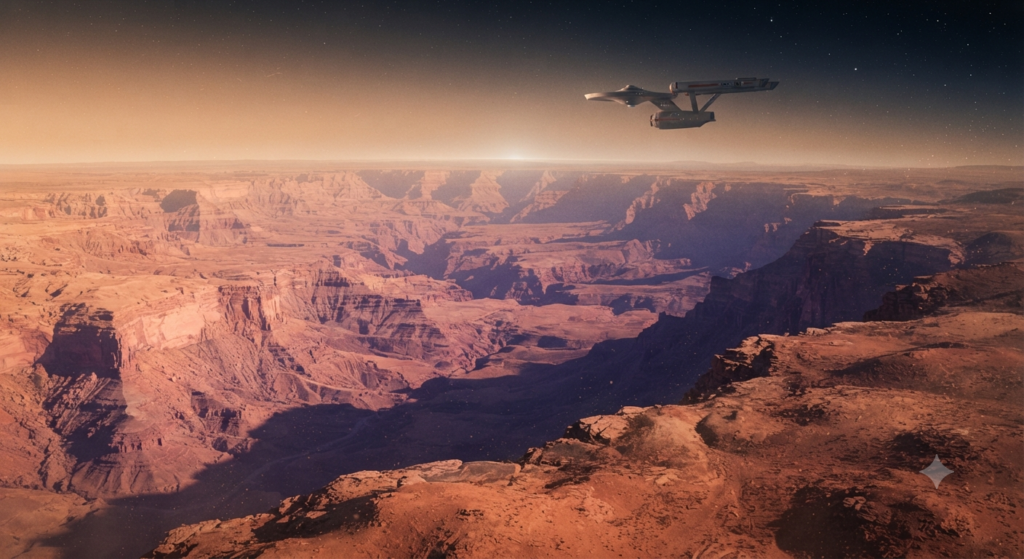
The real Valles Marineris is mainly the result of tectonic stretching, faulting, and collapse, not a containment trench carved around an alien wreck 65 million years ago. Mars’s warmer and wetter period belonged billions of years earlier. The asteroid belt is ancient material left over from the formation of the Solar System, not the remains of a recently destroyed planet, and the Chicxulub impact occurred roughly 66 million years ago rather than 65 million.
Any one of these could be dismissed as alternative Star Trek history. Together, they make the premise feel less like imaginative speculation and more like the writers selecting whichever pieces of Solar System history happened to be useful.
The technobabble is similarly careless. Subspace is discussed as though it consists of physical particles waiting to tear the ship apart, while the interstellar storm somehow leaves the engines without the solid iridium they require. If iridium is so critical that its absence disables the Enterprise, keeping some spare aboard might have been worth sacrificing one of the ship’s many fireplaces.
None of this ruins the episode by itself. It does, however, weaken a story that depends on the audience accepting an enormous chain of cause and effect.
Visually, the production does almost everything it can to sell the material. Rotating the frame as the Enterprise tumbles through the storm recalls older visual storytelling while making full use of modern effects. The lighting, colour grading, and energy gripping the ship turn Pike’s internal turmoil into literal cosmic weather.
The mixture of horses, Martian canyons, prehistoric forests, retro aliens, and the sleek Enterprise should not work, but it mostly does. The Martian costumes and facial designs sit close to 1950s pulp science fiction, although I still cannot decide whether they are a deliberate homage or simply look cheap. The virtual environments occasionally reveal their seams, but the overall scale remains impressive.
Strange New Worlds continues to understand the value of tactile production. The dinosaurs have weight. The sets feel occupied. The camera is willing to move, tilt, and make the Enterprise look like a physical object fighting against something much larger than itself.
Yes. Give me more of that.
“Valles Marineris” is a strong premise delivered with messy, overcrowded execution. It is ambitious, visually confident, frequently entertaining, and much more human than its enormous plot might suggest. After a wobbly third season, it feels like Strange New Worlds remembering that its best format remains a self-contained adventure built around wonder, character, and an ethical problem.
Pike’s grief gives the episode emotional weight, Cassell is a thoughtful and well-performed adversary, Una’s growing authority feels earned, and the Enterprise crew once again resembles a group of capable people who genuinely enjoy working together. Scotty and Ortegas may be the unexpected pairing to watch, while Pelia remains glorious.
The episode’s failure is not that it aims too high. Star Trek should aim high. Its failure is that it keeps adding scale while removing complexity. Ancient Mars, a vanished fifth planet, the asteroid belt, the extinction of the dinosaurs, and the origin of humanity are enormous ideas, but they crowd out the smaller moral questions that could have made the episode matter.
Finding prehistoric Earth was enough. Meeting Cassell was enough. Pike being forced to confront the limits of Federation idealism was more than enough.
There is a great episode buried inside “Valles Marineris”. This version remains good, but it keeps flinching whenever its own ideas become uncomfortable.
It remembers that Star Trek works best when it asks a difficult question. Its mistake is handing Pike the answer before he has to give one.
7.5/10