Star Trek: TOS – The Naked Time (S01E04)
Let’s begin where any honest review of this episode has to begin: with a trained Starfleet officer, suited up in a quarantine environment where everyone on the research team is already dead, calmly removing his glove and scratching his nose with his bare hand.
That is how this gets started.
That single act of breathtaking stupidity is the load-bearing beam holding up the entire plot.
Lieutenant JG Tormolen then doubles down, wandering around the frozen station with an ungloved hand and eventually making contact with a mysterious contaminant. There is no excuse for it. The episode knows there is no excuse for it. It is bad writing disguised as a plot catalyst, and it needs acknowledging upfront because it would be dishonest to spend the rest of this review praising The Naked Time without mentioning the giant hole in its foundations.
Because The Naked Time is, for the most part, very good.
Once the virus starts spreading through the ship, lowering inhibitions and stripping away the barriers between what people feel and what they allow themselves to show, the episode becomes one of the most important hours Star Trek ever produced. Not the best. Not the most polished. But one of the most important.
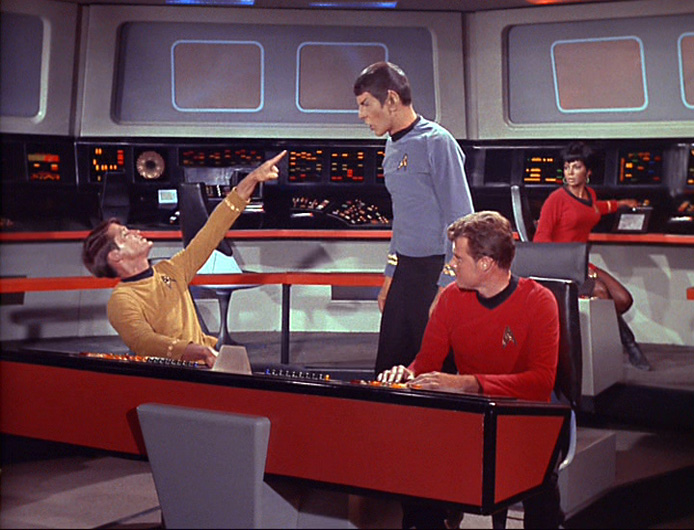
What it understands, and what some earlier episodes were still figuring out, is that the most interesting thing about the Enterprise is not the ship. It’s the people aboard it.
The Naked Time gives Kirk, Spock, Sulu, Uhura, Chapel, and even Scotty moments that reveal character rather than simply moving the plot along. For a series only four broadcast episodes old, that matters.
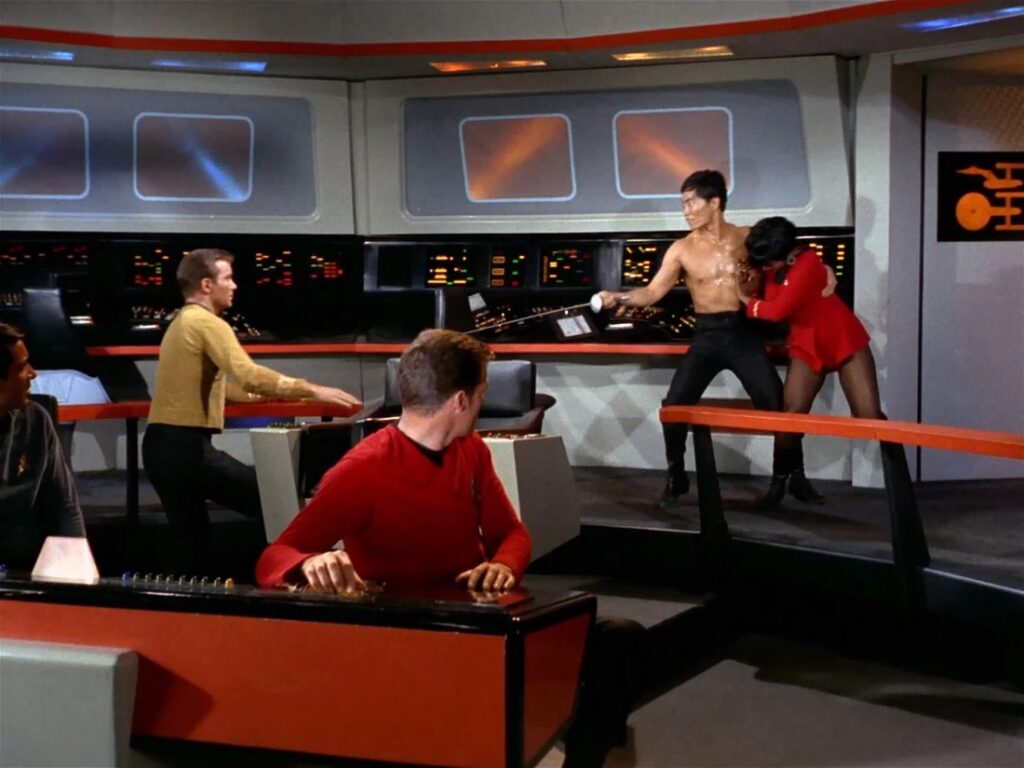
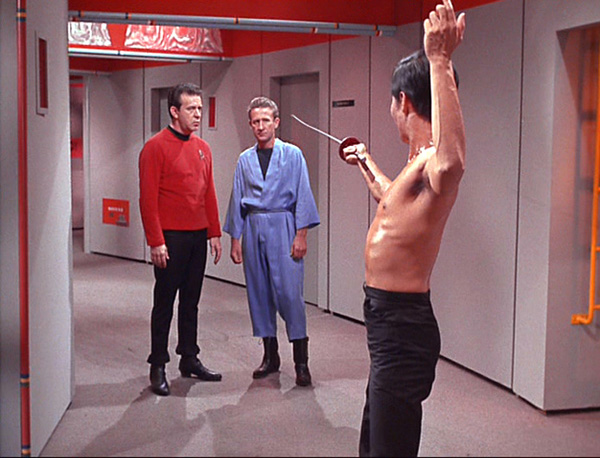
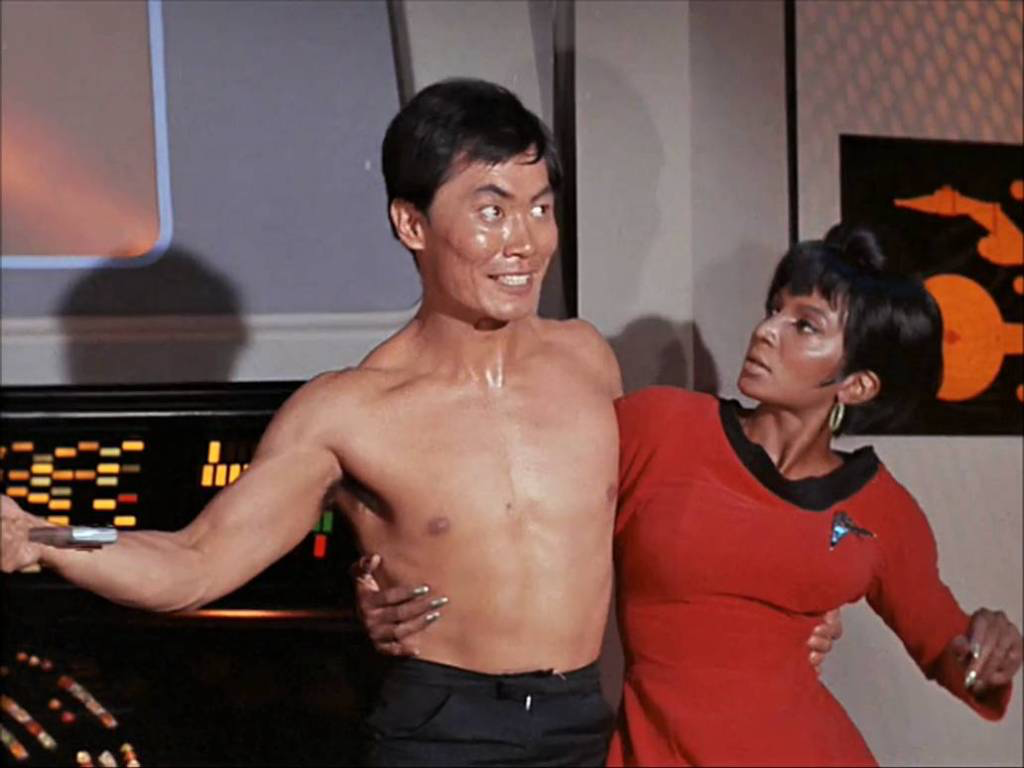
Sulu charging around the ship shirtless with a fencing foil has become the episode’s defining image, but the more interesting detail is why he’s carrying a foil at all. George Takei objected to an earlier idea that would have given Sulu a samurai sword, arguing that a 23rd century Starfleet officer should be more than a stereotype attached to his ethnicity. The foil was the result.
It is a small detail, but Star Trek has always lived or died on small details.
Uhura’s response when Sulu calls her a fair maiden is another one.
“Sorry, neither.”
Two words. Perfectly delivered. Completely unbothered.
Then there’s Spock.
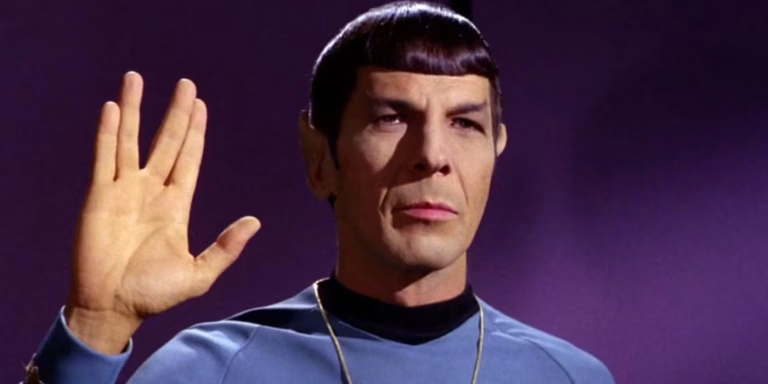
What Leonard Nimoy accomplishes here is establish something the series would spend decades building on. Spock’s control is not the absence of emotion. It is the management of emotion.
The feelings are there. They are deep, messy, and painful. He is ashamed of rejecting part of his humanity, ashamed he never told his mother he loved her, and ashamed of the friendship he feels for Kirk. Watching him desperately cling to logic and mathematics as an anchor while everything underneath starts breaking loose remains one of the most affecting performances in the early run of the series.
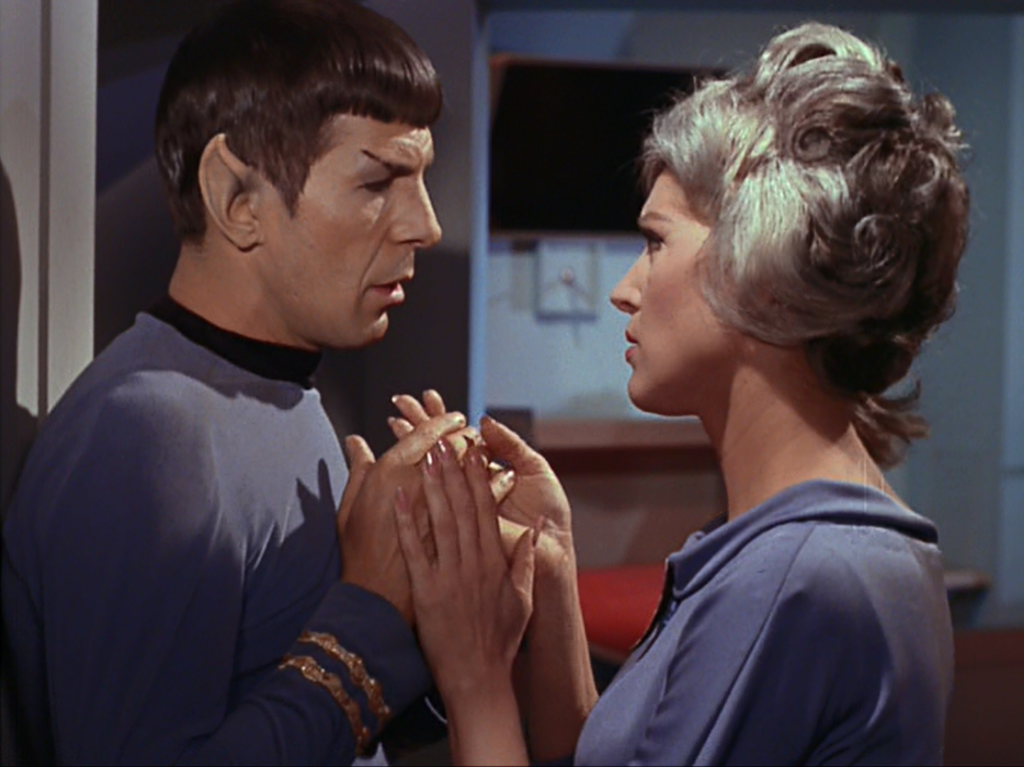
The counting. The struggle for control. The gradual collapse of both.
It is remarkable work from Nimoy.
Kirk’s breakdown tends to be overshadowed by Spock’s, but it deserves attention as well. His monologue about being married to the ship and unable to pursue a normal personal life is not really about Yeoman Rand. It is about isolation. Responsibility. The cost of command.
Shatner is doing better work here than he is often given credit for, and the Kirk that emerges is not the caricature popular culture remembers. He’s fundamentally decent, deeply committed to his duty, and far lonelier than he lets anyone see.
Kevin Riley is where the episode starts to wobble.
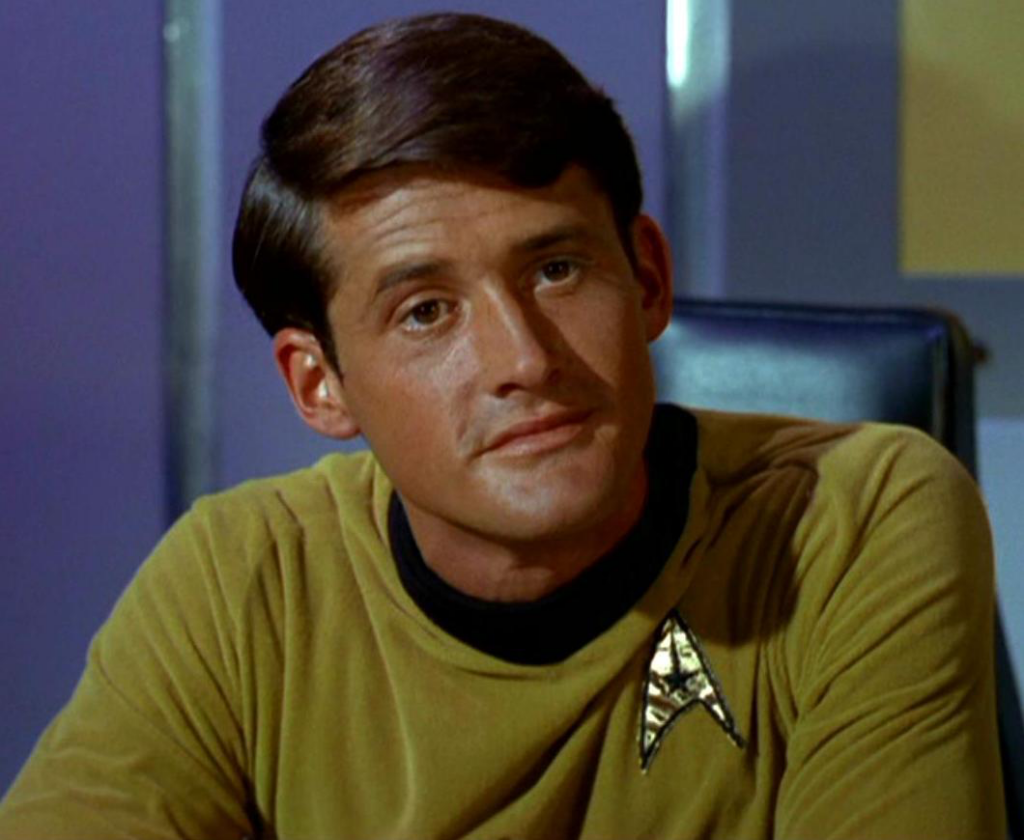
The basic idea works. An infected officer singing Irish songs over the intercom while convinced of his own importance has comic potential, and Bruce Hyde throws himself into it enthusiastically. The problem is that Riley functions less as a character and more as a plot device. When the story needs a crisis, he creates one. When it no longer needs him, he’s removed from the board.
The security procedures that allow him to take over a critical section of the Enterprise are somewhere between incompetent and embarrassing, and some of the singing material outstays its welcome.
Then there is the ending.
The matter-antimatter restart sends the Enterprise backwards in time by 71 hours. Spock calmly notes that they can now travel back to any planet, any era. Kirk essentially says they’ll think about it later, and the episode ends.
By any reasonable standard it is a complete narrative non sequitur.
It is also the first step towards one of Star Trek’s most enduring recurring ideas, which makes it surprisingly difficult to complain about.
It is held together by a spectacularly irresponsible crewman, a virus that behaves however the script requires, and a time travel ending that seems to arrive from another episode entirely.
None of that really matters.
This is the episode where Star Trek stopped introducing its characters and started understanding them.
8/10